Controlled low strength flowable fill composition with iron chelating compounds
US20070006777A1
2007-01-11
10/552,345
2004-03-10
✅ Patent granted
US 7,344,592 B2
2008-03-18
WO; PCT/US2004/007247; 20040310
WO; WO2004/080911; 20040923
Paul Marcantoni
2024-03-10
Abstract:
A rapid setting, controlled low strength composition of Class C fly ash is provided having a quantity of hydrated lime and an iron chelating compound in an amount sufficient to accelerate the hydration and set time of the fly ash. In some examples, a filler material is added. A method for acceleration of the hydration and set time of a cementitious mixture is provided wherein hydrated lime is added to the cementitious mixture in an amount in the range of 0.1% to 15% by weight and an iron chelating compound in an amount in the range of 0.01% to 5.0% by weight of the cementitious material. Further, a calcium source and an iron chelating compound may be added to a Class C fly ash to accelerate the hydration and set time of the ash.
Inventors:
- JERRY SETLIFF 3 🇺🇸 CORPUS CHRISTI, TX, United States
- Scott F. Timmons 7 🇺🇸 San Antonio, TX, United States
- Clinton W. Pike 4 🇺🇸 Cypress, TX, United States
Assignee:
- Flowable Fill, Ltd. 1 🇺🇸 Corpus Christi, TX, United States
Interested in similar patents?
Get notified when new applications in this technology area are published.
Classification:
C04B18/06 » CPC further
Use of agglomerated or waste materials or refuse as fillers for mortars, concrete or artificial stone ; Treatment of agglomerated or waste materials or refuse, specially adapted to enhance their filling properties in mortars, concrete or artificial stone; Waste materials; Refuse Combustion residues, e.g. purification products of smoke, fumes or exhaust gases
Y02W30/91 » CPC further
Technologies for solid waste management; Reuse, recycling or recovery technologies Use of waste materials as fillers for mortars or concrete
Y02W30/91 » CPC further
Technologies for solid waste management; Reuse, recycling or recovery technologies Use of waste materials as fillers for mortars or concrete
C04B28/021 » CPC main
Compositions of mortars, concrete or artificial stone, containing inorganic binders or the reaction product of an inorganic and an organic binder, e.g. polycarboxylate cements containing hydraulic cements other than calcium sulfates Ash cements, e.g. fly ash cements ; Cements based on incineration residues, e.g. alkali-activated slags from waste incineration ; Kiln dust cements
Y10S106/01 » CPC further
Compositions: coating or plastic Fly ash
C04B22/08 » CPC further
Use of inorganic materials as active ingredients for mortars, concrete or artificial stone, e.g. accelerators, shrinkage compensating agents Acids or salts thereof
C04B24/2652 » CPC further
Use of organic materials as active ingredients for mortars, concrete or artificial stone, e.g. plasticisers; Macromolecular compounds obtained by reactions only involving carbon-to-carbon unsaturated bonds Nitrogen containing polymers, e.g. polyacrylamides, polyacrylonitriles
C04B14/185 » CPC further
Use of inorganic materials as fillers, e.g. pigments, for mortars, concrete or artificial stone; Treatment of inorganic materials specially adapted to enhance their filling properties in mortars, concrete or artificial stone; Granular materials, e.g. microballoons; Silica-rich materials; Silicates; Minerals of vulcanic origin; Perlite expanded
C04B24/04 » CPC further
Use of organic materials as active ingredients for mortars, concrete or artificial stone, e.g. plasticisers Carboxylic acids; Salts, anhydrides or esters thereof
C04B2103/0086 » CPC further
Function or property of ingredients for mortars, concrete or artificial stone; Ingredients with a function or property not provided for elsewhere in Chelating or complexing agents
C04B14/06 » CPC further
Use of inorganic materials as fillers, e.g. pigments, for mortars, concrete or artificial stone; Treatment of inorganic materials specially adapted to enhance their filling properties in mortars, concrete or artificial stone; Granular materials, e.g. microballoons; Silica-rich materials; Silicates Quartz; Sand
C04B14/10 » CPC further
Use of inorganic materials as fillers, e.g. pigments, for mortars, concrete or artificial stone; Treatment of inorganic materials specially adapted to enhance their filling properties in mortars, concrete or artificial stone; Granular materials, e.g. microballoons; Silica-rich materials; Silicates Clay
C04B14/108 » CPC further
Use of inorganic materials as fillers, e.g. pigments, for mortars, concrete or artificial stone; Treatment of inorganic materials specially adapted to enhance their filling properties in mortars, concrete or artificial stone; Granular materials, e.g. microballoons; Silica-rich materials; Silicates; Clay Shale, slate
C04B14/16 » CPC further
Use of inorganic materials as fillers, e.g. pigments, for mortars, concrete or artificial stone; Treatment of inorganic materials specially adapted to enhance their filling properties in mortars, concrete or artificial stone; Granular materials, e.g. microballoons; Silica-rich materials; Silicates; Minerals of vulcanic origin porous, e.g. pumice
C04B14/18 » CPC further
Use of inorganic materials as fillers, e.g. pigments, for mortars, concrete or artificial stone; Treatment of inorganic materials specially adapted to enhance their filling properties in mortars, concrete or artificial stone; Granular materials, e.g. microballoons; Silica-rich materials; Silicates; Minerals of vulcanic origin Perlite
C04B14/28 » CPC further
Use of inorganic materials as fillers, e.g. pigments, for mortars, concrete or artificial stone; Treatment of inorganic materials specially adapted to enhance their filling properties in mortars, concrete or artificial stone; Granular materials, e.g. microballoons; Carbonates of calcium
C04B16/08 » CPC further
Use of organic materials as fillers, e.g. pigments, for mortars, concrete or artificial stone; Treatment of organic materials specially adapted to enhance their filling properties in mortars, concrete or artificial stone; Macromolecular compounds porous, e.g. expanded polystyrene beads or microballoons
C04B18/08 » CPC further
Use of agglomerated or waste materials or refuse as fillers for mortars, concrete or artificial stone ; Treatment of agglomerated or waste materials or refuse, specially adapted to enhance their filling properties in mortars, concrete or artificial stone; Waste materials; Refuse; Combustion residues, e.g. purification products of smoke, fumes or exhaust gases Flue dust, i.e. fly ash
C04B18/141 » CPC further
Use of agglomerated or waste materials or refuse as fillers for mortars, concrete or artificial stone ; Treatment of agglomerated or waste materials or refuse, specially adapted to enhance their filling properties in mortars, concrete or artificial stone; Waste materials; Refuse from metallurgical processes Slags
C04B22/064 » CPC further
Use of inorganic materials as active ingredients for mortars, concrete or artificial stone, e.g. accelerators, shrinkage compensating agents; Oxides, Hydroxides of the alkali or alkaline-earth metals of the alkaline-earth metals
C04B24/122 » CPC further
Use of organic materials as active ingredients for mortars, concrete or artificial stone, e.g. plasticisers; Nitrogen containing compounds organic derivatives of hydrazine Hydroxy amines
C04B18/18 IPC
Use of agglomerated or waste materials or refuse as fillers for mortars, concrete or artificial stone ; Treatment of agglomerated or waste materials or refuse, specially adapted to enhance their filling properties in mortars, concrete or artificial stone; Waste materials; Refuse organic
C04B14/40 IPC
Use of inorganic materials as fillers, e.g. pigments, for mortars, concrete or artificial stone; Treatment of inorganic materials specially adapted to enhance their filling properties in mortars, concrete or artificial stone; Fibrous materials; Whiskers Asbestos
C04B28/08 IPC
Compositions of mortars, concrete or artificial stone, containing inorganic binders or the reaction product of an inorganic and an organic binder, e.g. polycarboxylate cements containing hydraulic cements other than calcium sulfates Slag cements
C04B2/00 IPC
Lime, magnesia or dolomite
C04B2/00 IPC
Lime; Magnesia; Slag
C04B14/00 IPC
Use of materials as fillers
C04B14/00 IPC
Use of inorganic materials as fillers, e.g. pigments, for mortars, concrete or artificial stone; Treatment of inorganic materials specially adapted to enhance their filling properties in mortars, concrete or artificial stone
C04B24/00 IPC
Use of organic materials as active ingredients for mortars, concrete or artificial stone, e.g. plasticisers
Description
This application claims priority to co-pending U.S. Provisional Application Ser. No. 60/453,231 filed Mar. 10, 2003.
BACKGROUND OF THE INVENTIONThis invention relates to Controlled Low-Strength Mixtures (CLSMs), or flowable back-fills. This class of materials has utility as pipe bedding materials has utility as pipe bedding materials where they are used to both protect the pipe from external agents and internal loads. They have also been used as an erosion barrier in embankments and as a mine fill material. CLSMs typically have strengths of less than 2000 psi and, in cases where removal is contemplated, less than 200 psi for ease of removal. The material should be initially in the form of an easily pumpable, self-leveling slurry. Rapid early strength development (approximately 50-70 psi) is a desirable property and is currently not obtainable with commercial products without the penalty of high strength development at later stages. U.S. Pat. No. 5,106,422 discloses Class C Fly ash in a rapid setting flowable backfill composition and method for its use.
However, such existing compositions are based upon the use of either Portland cement or Class C fly ash used individually or in combination as the hydraulic cement component of the CLSM system. Typically these cementitious materials are used at less than 5% by weight in the case of Portland cement or as much as 50% in the case of Class C fly ash with the remainder being some form of aggregate, usually fine sand or soil from the spoil with small amounts of additional rock and gravel or Class F fly ash. Cement-based materials can take days to hydrate, cure, and achieve even a modest strength of 50 psi which is typically the minimum strength required for a man to walk upon the surface of the bedding material and represents the minimum safe time before the cover fill may be placed. Class C fly ash based systems may take as long as four hours to hydrate, cure, and achieve this strength. In many cases; locally available-Class C fly ash is not desirable for use in these types of product due to slow hydration, cure, and set times and low strengths. Strength may be compensated for by the use of additional Class C fly ash but the cost of the additional fly ash may result in cost prohibitive products.
Thus, the system of the present invention minimizes the down time before cover fill may be placed and represents a significant savings of both time and money for the user. Furthermore, the present inventive composition and method allow for control variability in strength and hydration, cure, and set times of a CLSM system utilizing Class C fly which results in a Class C-based flowable fill capable of competing in markets previously inaccessible.
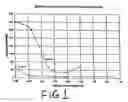
BRIEF DESCRIPTION OF THE DRAWINGSFIG. 1 is a graphic representation of the effect of set time of Class C mortars with lime.
DETAILED DESCRIPTION OF THE PREFERRED EMBODIMENTClass C fly ash as defined in ASTM C 618 is a coal combustion product that meets particular size requirements and mineralogical specifications. A typical chemical composition for this class of fly ash is as follows:
| Percent by | |
| Weight | |
| Silicon dioxide (SiO2) plus aluminum | 50.0 | |
| oxide (Al2O3) plus iron oxide (Fe2O3), min. | ||
| Sulfur trioxide (SO3), max. | 5.0 | |
| Moisture content, max. | 3.0 | |
| Loss on ignition, max. | 6.0 | |
This is a rather broad description for this class of material, and significant variability may exist for materials conforming to this requirement. The variability manifests itself as differences in hydration and set time and strength between several samples of Class C fly ash either from the same or different sources. It has been found that a major factor contributing to variability is the amount of available calcium present in the sample. Additionally, soluble iron content contributes to slow setting times. Furthermore, the addition of small amounts of calcium to Class C fly ash has no deleterious effects upon flowable fill and can accelerate the rate of hydration and cure while minimizing the differences in set time and strength of flowable fill mixtures containing Class C fly ash.
Where soluble iron is present in sufficient quantity and extra calcium alone is inadequate to accelerate the rate of hydration, iron chelating compounds may be added, even in very small amounts, to offset the soluble iron effect. The iron chelating compound may include:
-
- sodium chloride, sodium thiosulfate, triethanolamine, diethanolamine, polyethyleneimine, amino-substituted acrylic monomers or polymers, morpholine and substituted morpholine compounds, urea, guanidine salts, pyrole and pyrole compounds, polyvinylpyrole, imidizole compounds, pyrazoles, pyridine and pyridine compounds (especially ortho alkoxy-substituted pyridines), amino phenol (especially ortho amino phenol), amino cresol, ortho anisidine, amine acetate surfactants (such as Armac HT and Armac 18D-40 from Akzo Nobel Chemicals), amine oxide surfactants (such as Ammonyx series of surfactants from Stepan Company, Schercamox series of surfactants from Scher Chemicals, Foamox series of surfactants from Alzo, Inc., Chemoxide series of surfactants from Chemron Corp.,), amine surfactants (such as the Armeen and Redicote series of surfactants from Akzo Nobel Chemicals, the Incromine series of surfactants from Croda, Inc., the Tealan series of surfactants from R.I.T.A. Corp.), and mercapto surfactants (such as Burco TME from Burlington Chemicals).
The iron chelating compound may be in quantities in the range of 0.01% or 5.0% by weight. Effective results have been obtained and reasonably should be obtained from chelting agents or compounds selected from the group consisting of an alkanolamine, a polymer of ethyleneimine, a block copolymer containing polyethyleneimine segments, an amino-substituted polymer of acrylic acid, the salt of an amino-substituted polymer of acrylic acid, a carboxyated amine compound, a salt of a carboxyated amine compound, ethylenediaminetetraacetic acid and salts thereof; nitrilotriacetic acid and salts thereof, an amine substituted surfactant, an amine oxide substituted surfactant, and a guanidine salt.
The following examples illustrate the nature of the present invention. Set times were determined when a 0.25″ diameter penetrometer needle, provided a reading of 200 psi on insertion to a depth of 1.0″.
EXAMPLE 1Coal Fly ash from Deeley Power Plant, San Antonio, Tex., as obtained and used as received. 50 grams of Class C Fly ash, 250 grams ASTM C 33 graded washed silica sand (Espey Sand, San Antonio, Tex.) and 35 mL deionized water were mixed for 1 minute and poured into a 2″ cube mold. The set time was determined to be 62 minutes as shown in Table 1 below.
EXAMPLES 2-8Coal Fly ash from Deeley Power Plant, San Antonio, Tex., was obtained and used as received. 50 grams of Class C Fly ash, 250 grams ASTM C 33 graded washed silica sand (Espey Sand, San Antonio, Tex.), varying amounts of type S hydrated lime and 35 mL deionized water were mixed for 1 minute and poured into a 2″ cube mold. The set time for these examples are shown in Table 1 for the varying amounts of lime.
EXAMPLES 9-13Coal Fly ash from Scherer Power Plant, Atlanta, Ga., was obtained and used as received. 50 grams of Class C Fly ash, 250 grams ASTM C 33 graded washed silica sand (Espey Sand, San Antonio, Tex.), varying amounts of type S hydrated lime and 35 mL deionized water were mixed for 1 minute and poured into a 2″ cube mold. The set times for these examples are shown in Table 1 for the varying amounts of lime.
A graphic representation of the effect of set time of these Class C motars with lime of varying amounts is shown in FIG. 1.
| TABLE 1 |
| Set times of Class C Fly ash motar cubes containing |
| varying amounts of type S lime. |
| Set Time | Set Time | |||
| Lime | Example | (minutes) | Example | (minutes) |
| (grams) | Number | Deeley | Number | Scherer |
| 0.00 | 1 | 62 | 9 | 348 |
| 0.07 | 2 | 51 | — | — |
| 0.13 | 3 | 26 | — | — |
| 0.25 | 4 | 12 | 10 | 303 |
| 0.50 | 5 | 10 | 11 | 71 |
| 0.75 | 6 | 8 | 12 | 37 |
| 1.00 | 7 | 12 | 13 | 76 |
| 1.50 | 8 | 9 | ||
| Ingredient | Amount (g) | |
| Concrete Sand | 0 | |
| Type C Fly Ash | 100 | |
| Hydrated Lime | .003 | |
| Triethanolamine | .04 | |
| Water | 25 | |
The dry ingredients were mixed together and the water was added with mixing until a smooth, pourable consistency was obtained. The set time was 17 minutes.
EXAMPLE 15
| Ingredient | Amount (g) | |
| Concrete Sand | 200 | |
| Type C Fly Ash | 100 | |
| Hydrated Lime | .3 | |
| Triethanolamine | .48 | |
| Water | 39 | |
The dry ingredients were mixed together and the water was added with mixing until a pourable consistency was obtained. The set time was 17 minutes.
EXAMPLE 16
| Ingredient | Amount (g) | |
| Concrete Sand | 250 | |
| Type C Fly Ash | 50 | |
| Hydrated Lime | 7.5 | |
| Triethanolamine | .1 | |
| Water | 40 | |
The dry ingredients were mixed together briefly and the water and triethanolamine added with continued mixing. The set time was 23 minutes.
Claims
1. (canceled)
2. (canceled)
3. (canceled)
4. A rapid setting, controlled low strength composition of Class C fly ash comprising a calcium source in the amount of 0.1% to 15% by weight and an iron chelating alkanolamine in the amount of from 0.01% to 5% by weight sufficient to accelerate the hydration and set time of said fly ash.
5. The composition of claim 4 wherein said source is quicklime.
6. (canceled)
7. The composition of claim 4 wherein said calcium source is a circulating fluidized bed coal ash containing free lime in the amount of 0.25% to 70% by weight of Class C fly ash.
8. The composition of claim 4 further comprising a filler material selected from the group consisting of Class F fly ash, silica sand, dolomitic calcium carbonate sand, limestone sand, expanded perlite, expanded styrofoam, bottom ash, slag, foundry sand, expanded shale, clay, ground granite sand, pumice and gravel in the amount of 1:10 to 10:1 parts by weight.
9. (canceled)
10. The composition of claim 4 wherein said source is hydrated lime.
11. The composition of claim 4 wherein aid alkanolamine is triethanolamine.
Images & Drawings included:
Sources:
- United States Patent and Trademark Office - verify current appl. status at the USPTO↗
Similar patent applications:
Recent applications in this class:
- » 20250223229 2025-07-10
CEMENTITIOUS HEMATITE-BASED GEOPOLYMER COMPOSITION - » 20250136512 2025-05-01
CONCRETE MIXTURE - » 20240083818 2024-03-14
Dry mix and concrete composition containing bed ash and related methods - » 20240059613 2024-02-22
Curing agent for disposal of municipal solid waste incineration (MSWI) fly ash and preparation method and use method thereof - » 20230406772 2023-12-21
Paenibacillus Mucilaginosus, Microorganism-Activated Circulating Fluidized Bed (CFB) Fly Ash-Based Cementitious Material, Preparation Method and Use - » 20230373859 2023-11-23
POZZOLAN BASED CEMENT AND METHOD OF MAKING AND USING SAME - » 20230219849 2023-07-13
AGRICULTURAL WASTE ASH AS CEMENTITIOUS MATERIAL AND METHODS OF MAKING THE SAME - » 20230106549 2023-04-06
Dry mix and concrete composition containing bed ash and related methods - » 20210403379 2021-12-30
Lithium-treated calcium aluminate cement (CAC)-based products, concretes, and related techniques - » 20210198145 2021-07-01
Dry mix and concrete composition containing bed ash and related methods