Bisstyryl compound and high density recording media utilizing the same
US20070009825A1
2007-01-11
11/254,663
2005-10-21
✅ Patent granted
US 7,598,360 B2
2009-10-06
-
-
Fiona T Powers
2026-02-28
Abstract:
A bisstyryl compound. The bisstyryl compound has formula (I):
-
- wherein Z1 and Z2 are benzene, naphthalene, or heterocyclic ring, R1 is H, C1-5 alkyl, hydroxyl, halogen atoms, or alkoxy, R2 is H, halogen atoms, C1-5 alkyl, nitro, ester, carboxyl, sulfo, sulfonamide, sulfuric ester, amide, C1-3 alkoxy, amino, alkylamino, cyano, C1-6 alkylsulfonyl, or C2-7 alkoxy carbonyl, R3, R4, R5, and R6 are H, halogen atoms, alkyl, aralkyl, or heterocyclic ring containing O, S, or N, or R3 and R4 are joined to a nitrogen atom or R5 and R6 are joined together to form a ring, R7 and R8 are H or alkyl, W is nitrogen with or without Z1 and Z2 or aromatic group without Z1 and Z2, Y is carbon, oxygen, sulfur, selenium, —NR, or —C(CH3)2, m is 1-3, n is 1-18, and X1 and X2 are anionic groups or anionic organometallic complexes.
Inventors:
- Tzuan-Ren Jeng 36 🇹🇼 Hsinchu, Taiwan
- Chien-Wen Chen 6 🇹🇼 Pingtung County, Taiwan
- Wen-Yih LIAO 20 🇹🇼 Taichung City, Taiwan
- Shin-Shin WANG 9 🇹🇼 Hsinchu, Taiwan
- Hui-Ping TSAI 16 🇹🇼 Hsinchu, Taiwan
- Chien-Liang Huang 13 🇹🇼 Taoyuan County, Taiwan
- An-Tse Lee 6 🇹🇼 Taipei County, Taiwan
- Ching-Yu Hsieh 5 🇹🇼 Hsinchu County, Taiwan
- Wen-Ping Chu 4 🇹🇼 Taichung City, Taiwan
- Jong-Lieh Yang 6 🇹🇼 Hsinchu, Taiwan
- Chii-Chang Lai 4 🇹🇼 Taichung Hsien, Taiwan
- Wen-Yih Liao 18 🇹🇼 Taichung, Taiwan
- Wen-Ping Chu 4 🇹🇼 Taichung, Taiwan
Assignee:
- INDUSTRIAL TECHNOLOGY RESEARCH INSTITUTE 7,890 🇹🇼 HSINCHU, Taiwan
Interested in similar patents?
Get notified when new applications in this technology area are published.
Classification:
G11B7/246 » CPC main
Recording or reproducing by optical means, e.g. recording using a thermal beam of optical radiation , reproducing using an optical beam at lower power ; Record carriers therefor; Record carriers characterised by shape, structure or physical properties, or by the selection of the material characterised by the selection of the material of recording layers comprising organic materials only containing dyes
C09B23/0091 » CPC further
Methine or polymethine dyes, e.g. cyanine dyes having only one heterocyclic ring at one end of the methine chain, e.g. hemicyamines, hemioxonol
C09B69/045 » CPC further
Dyes not provided for by a single group of this subclass; Dyestuff salts, e.g. salts of acid dyes with basic dyes of anionic dyes with nitrogen containing compounds of anionic azo dyes
C09B69/06 » CPC further
Dyes not provided for by a single group of this subclass; Dyestuff salts, e.g. salts of acid dyes with basic dyes of cationic dyes with organic acids or with inorganic complex acids
G11B7/2467 » CPC further
Recording or reproducing by optical means, e.g. recording using a thermal beam of optical radiation , reproducing using an optical beam at lower power ; Record carriers therefor; Record carriers characterised by shape, structure or physical properties, or by the selection of the material characterised by the selection of the material of recording layers comprising organic materials only containing dyes azo-dyes
G11B7/2495 » CPC further
Recording or reproducing by optical means, e.g. recording using a thermal beam of optical radiation , reproducing using an optical beam at lower power ; Record carriers therefor; Record carriers characterised by shape, structure or physical properties, or by the selection of the material characterised by the selection of the material of recording layers comprising organic materials only containing organometallic compounds as anions
G11B7/2533 » CPC further
Recording or reproducing by optical means, e.g. recording using a thermal beam of optical radiation , reproducing using an optical beam at lower power ; Record carriers therefor; Record carriers characterised by shape, structure or physical properties, or by the selection of the material characterised by the selection of the material of layers other than recording layers of substrates comprising resins
G11B7/2534 » CPC further
Recording or reproducing by optical means, e.g. recording using a thermal beam of optical radiation , reproducing using an optical beam at lower power ; Record carriers therefor; Record carriers characterised by shape, structure or physical properties, or by the selection of the material characterised by the selection of the material of layers other than recording layers of substrates comprising resins polycarbonates [PC]
G11B7/2535 » CPC further
Recording or reproducing by optical means, e.g. recording using a thermal beam of optical radiation , reproducing using an optical beam at lower power ; Record carriers therefor; Record carriers characterised by shape, structure or physical properties, or by the selection of the material characterised by the selection of the material of layers other than recording layers of substrates comprising resins polyesters, e.g. PET, PETG or PEN
G11B7/2585 » CPC further
Recording or reproducing by optical means, e.g. recording using a thermal beam of optical radiation , reproducing using an optical beam at lower power ; Record carriers therefor; Record carriers characterised by shape, structure or physical properties, or by the selection of the material characterised by the selection of the material of layers other than recording layers of reflective layers based on aluminium
G11B7/259 » CPC further
Recording or reproducing by optical means, e.g. recording using a thermal beam of optical radiation , reproducing using an optical beam at lower power ; Record carriers therefor; Record carriers characterised by shape, structure or physical properties, or by the selection of the material characterised by the selection of the material of layers other than recording layers of reflective layers based on silver
G11B7/2595 » CPC further
Recording or reproducing by optical means, e.g. recording using a thermal beam of optical radiation , reproducing using an optical beam at lower power ; Record carriers therefor; Record carriers characterised by shape, structure or physical properties, or by the selection of the material characterised by the selection of the material of layers other than recording layers of reflective layers based on gold
G11B2007/24612 » CPC further
Recording or reproducing by optical means, e.g. recording using a thermal beam of optical radiation , reproducing using an optical beam at lower power ; Record carriers therefor; Record carriers characterised by shape, structure or physical properties, or by the selection of the material characterised by the selection of the material of recording layers comprising organic materials only containing dyes two or more dyes in one layer
Y10S430/146 » CPC further
Radiation imagery chemistry: process, composition, or product thereof Laser beam
G03C5/18 IPC
Photographic processes or agents therefor; Regeneration of such processing agents Diazo-type processes, e.g. thermal development, or agents therefor
C09B45/00 IPC
Complex metal compounds of azo dyes
C07D403/06 IPC
Heterocyclic compounds containing two or more hetero rings, having nitrogen atoms as the only ring hetero atoms, not provided for by group containing two hetero rings linked by a carbon chain containing only aliphatic carbon atoms
C07D401/14 IPC
Heterocyclic compounds containing two or more hetero rings, having nitrogen atoms as the only ring hetero atoms, at least one ring being a six-membered ring with only one nitrogen atom containing three or more hetero rings
B32B3/02 IPC
Layered products comprising a layer with external or internal discontinuities or unevennesses, or a layer of non-planar form ; Layered products having particular features of form characterised by features of form at particular places, e.g. in edge regions
Description
BACKGROUNDThe present invention relates to a bisstyryl compound, and more specifically to a bisstyryl compound used in a high density recording medium.
With advances in information and multimedia generation, computer, communication, and consumer (3C) electronic products with increased recording density and capacity, microminiaturization, and low cost are demanded. Currently, magnetic recording media are often replaced by high density optical recording media.
Conventional 650 MB CD-R or 4.7 GB DVD-R media are insufficient for 2-hour digital programs, requiring 25-50 GB or more. Blue laser disks with 405 nm read-out wavelength and 25 GB single-layer capacity or more provide a workable option, thus, development of applicable organic dyes is desirable.
SUMMARYThe invention provides a bisstyryl compound having formula (I):
wherein Z1 and Z2 are the same or different and comprise benzene, naphthalene, or heterocyclic ring containing O, S, or N, R1 is H, C1-5 alkyl, hydroxyl, halogen atoms, or alkoxy, R2 is H, halogen atoms, C1-5 alkyl, nitro, ester, carboxyl, sulfo, sulfonamide, sulfuric ester, amide, C1-3 alkoxy, amino, alkylamino, cyano, C1-6 alkylsulfonyl, or C2-7 alkoxy carbonyl, R3, R4, R5, and R6 comprise H, halogen atoms, alkyl, aralkyl, disubstituted amino, or heterocyclic ring containing O, S, or N, R7 and R8 comprise H or alkyl, W comprises nitrogen with or without Z1 and Z2 or aromatic group without Z1 and Z2, Y comprises carbon, oxygen, sulfur, selenium, —NR, or —C(CH3)2, m is 1˜3, n is 1˜18, and X1 and X2 are the same or different and comprise an anion or an anionic organometallic complex, wherein R3 and R4 are joined to a nitrogen atom or R5 and R6 are joined together to form a ring, and R bonded to nitrogen is C1-5 alkyl.
The invention provides a high density recording medium comprising a first substrate, a recording layer formed thereon comprising the disclosed bisstyryl compound, a reflective layer formed on the recording layer, and a second substrate formed on the reflective layer.
The invention provides another high density recording medium comprising a first substrate, a reflective layer formed thereon, a recording layer formed on the reflective layer comprising the disclosed bisstyryl compound, and a protective layer formed on the recording layer.
A detailed description is given in the following embodiments with reference to the accompanying drawing.
BRIEF DESCRIPTION OF THE DRAWINGSThe invention can be more fully understood by reading the subsequent detailed description and examples with references made to the accompanying drawing, wherein:
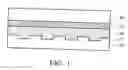
FIG. 1 is a cross section of a high density recording medium of the invention.
FIG. 2 is a cross section of another high density recording medium of the invention.
DETAILED DESCRIPTIONThe invention provides a bisstyryl compound having formula (I):
In formula (I), Z1 and Z2 are the same or different such as benzene, naphthalene, and heterocyclic ring containing O, S, or N, such as furan, pyrazine, pyrrole, pyrazole, pyridazine, pyridine, pyridone, pyrimidine, thiazole, thiophene, quinine, and isoquinine.
R1 may comprise H, C1-5 alkyl, hydroxyl, halogen atoms, or alkoxy. R2 may comprise H, halogen atoms, C1-5 alkyl, nitro, ester, carboxyl, sulfo, sulfonamide, sulfuric ester, amide, C1-3 alkoxy, amino, alkylamino, cyano, C1-6 alkylsulfonyl, or C2-7 alkoxy carbonyl.
R3, R4, R5, and R6 may comprise H, halogen atoms, alkyl, aralkyl, disubstituted amino, or heterocyclic ring containing O, S, or N. R3 and R4 may be joined to a Nitrogen atom or R5 and R6 may be joined together to form a ring. Substituted groups in R3, R4, R5, and R6 may comprise H, halogen atoms, alkyl, alkyl halide, nitro, cyano, hydroxyl, carboxyl, ester, sulfo, sulfuric ester, or sulfoamide.
R7 and R8 may comprise H or alkyl. W may be nitrogen atom with or without Z1 and Z2 or aromatic group without Z1 and Z2. Y may be carbon, oxygen, sulfur, selenium, —NR, or —C(CH3)2, wherein R is C1-5 alkyl. m is 1-3, n is 1-18, and X1 and X2 may be anionic groups or anionic organometallic complexes, such as halogen atoms, ClO4−, BF4−, PF6−, BPh4−, SbF6−, tetracyano p-quinodimethane (TCNQ−), tetracyano ethylene (TCNE−), benzene sulfonate,
The disclosed bisstyryl compound has an absorbing wavelength of about 300-550 nm, an absorbing coefficient (ε) exceeding 104, and solubility exceeding 1% in organic solvent, such as C1-6 alcohol, C1-6 ketone, C1-6 ether, dibutyl ether (DBE), halide, and amide.
The bis(styryl) compounds provided by the invention comprise
The compound of formula (I) is prepared as follows. First, a compound such as
solvent such as ethanol or methanol, and a aldehyde compound such as N,N,-dimethylformaldehyde, N,N-dibutylformaldehyde, N,N-dimethylpropanal, or
are added to a flask and reacted for 20-24 hours at 80-100° C. A bisstyryl compound is prepared after extracting solvent. The bisstyryl compound, solvent such as methanol or ethanol, and a metal salt, an anionic organometallic complex or an oxonol are added to a flask and reacted overnight at 80-100° C. The metal salt may comprise Li, Na, or K salt such as NaSbF6, NaClO4, or NaPF6. The anionic organometallic complex may comprise
or
After cooling to room temperature and filtration, a bisstyryl compound is produced.
The invention also provides a high density recording medium comprising a first substrate, a recording layer formed thereon comprising the disclosed bisstyryl compound, a reflective layer formed on the recording layer, and a second substrate formed on the reflective layer.
The invention further provides another high density recording medium comprising a first substrate, a reflective layer formed thereon, a recording layer formed on the reflective layer comprising the disclosed bis(styryl) compound, and protective layer formed on the recording layer.
The first substrate is a transparent substrate having trenches. The second substrate is a transparent substrate without trenches. The first and second substrates may comprise polyester, polycarbonate ester, polyolefin, or metallocene based cyclic olefin copolymer. The recording layer has a thickness of about 50-300 nm and may further comprise cyanine dye, azo metal chelate compounds, or oxonol compounds. The bisstyryl compound and cyanine dye, azo metal chelate compounds, or oxonol compounds have a weight ratio of about 1:99-99:1. The reflective layer may comprise Au, Ag, Al, Si, Cu, Cr, Ti, or alloys thereof.
The high density recording medium has a reflectance of above 30%. The high density recording medium may comprise a high density Disk-Recordable (HD DVD-R and BD-R).
A method of fabricating a high density recording medium is also provided. A first substrate is provided and a solution containing a bisstyryl compound and solvent is prepared simultaneously. The solvent may comprise C1-6 alcohol, C1-6 ketone, C1-6 ether, dibutyl ether (DBE), halide, or amide. The C1-6 alcohol may be methanol, ethanol, isopropanol, diacetone alcohol (DAA), 2,2,3,3-tetrafluoropropanol (TFP), trichloroethanol, 2-chloroethanol, octafluoropentanol, or hexafluorobutanol. The C1-6 ketone may be acetone, methyl isobutyl ketone (MIBK), methyl ethyl ketone (MEK), or 3-hydroxy-3-methyl-2-butanone. The halide may be chloroform, dichloromethane, or 1-chlorobutane. The amide may be dimethyl formamide (DMF), dimethyl acetamide (DMA), or methyl cyclohexane (MCH). The solution is then coated on the first substrate and dried to form a recording layer, utilizing spin coating, vacuum deposition, spray coating, immersion coating, stick coating, fluid coating, print coating, or tape coating, preferably spin coating. Next, a reflective layer is sputtered on the recording layer. Finally, a second substrate is bonded to the reflective layer to form a high density recording medium, utilizing spin coating, printing coating, thermal melted-glue, or double-faced tape bonding. A protective layer may be coated on the reflective layer before the second substrate is bonded.
Another method of fabricating a high density recording medium is further provided. A first substrate is provided and a solution containing a bisstyryl compound and solvent is prepared simultaneously. The solvent may comprise C1-6 alcohol, C16 ketone, C16 ether, dibutyl ether (DBE), halide, or amide. The C1-6 alcohol may be methanol, ethanol, isopropanol, diacetone alcohol (DAA), 2,2,3,3-tetrafluoropropanol (TFP), trichloroethanol, 2-chloroethanol, octafluoropentanol, or hexafluorobutanol. The C1-6 ketone may be acetone, methyl isobutyl ketone (MIBK), methyl ethyl ketone (MEK), or 3-hydroxy-3-methyl-2-butanone. The halide may be chloroform, dichloromethane, or 1-chlorobutane. The amide may be dimethyl formamide (DMF), dimethyl acetamide (DMA), or methyl cyclohexane (MCH). A reflective layer is sputtered on the first substrate. The solution is then coated on the reflective layer and dried to form a recording layer, utilizing spin coating, vacuum deposition, spray coating, immersion coating, stick coating, fluid coating, print coating, or tape coating, preferably spin coating. Finally, a protective layer is coated on the recording layer to form a high density recording medium.
EXAMPLES Example 1 Preparation of Compound 1
6.28 g,
2.92 g N,N-dimethylformaldehyde, and 50 ml methanol were added to a flask with thermal reflux overnight. After cooling to room temperature and filtration, 4.13 g brown compound 1 was prepared with yield of 56%. Compound 1 had a maximum absorbing wavelength of 367 nm in methanol.
7.38 g compound 1, 2.44 g NaClO4, and 50 ml methanol were added to a flask with thermal reflux overnight. After cooling to room temperature and filtration, 6.01 g brown compound 2 was prepared with yield of 88%. Compound 2 had a maximum absorbing wavelength of 367 nm in methanol.
Example 3 Preparation of Compound 3)
12.56 g,
9.20 g,
and 50 ml methanol were added to a flask with thermal reflux overnight. After cooling to room temperature and filtration, 13.05 g brown solid compound was prepared. 8.22 g brown solid compound, 5.16 g NaSbF6, and 50 ml methanol were added to a flask with thermal reflux overnight. After cooling to room temperature and filtration, 9.36 g red-brown compound 3 was prepared with yield of 90%. Compound 3 had a maximum absorbing wavelength of 372 nm in methanol.
14.22 g,
9.21 g
and 50 ml methanol were added to a flask with thermal reflux overnight. After cooling to room temperature and filtration, 15.94 g brown solid compound was prepared. 9.45 g brown solid compound, 5.16 g NaSbF6, and 50 ml methanol were added to a flask with thermal reflux overnight. After cooling to room temperature and filtration, 10.6 g red-brown compound 4 was prepared with yield of 90%. Compound 4 had a maximum absorbing wavelength of 373 nm in methanol.
14.22 g,
12.58 g N,N-dibutylformaldehyde, and 50 ml methanol were added to a flask with thermal reflux overnight. After cooling to room temperature and filtration, 15.93 g brown solid compound was prepared. 10.29 g brown solid compound, 3.35 g NaPF6, and 50 ml methanol were added to a flask with thermal reflux overnight. After cooling to room temperature and filtration, 9.62 g red-brown compound 5 was prepared with yield of 89%. Compound 5 had a maximum absorbing wavelength of 370 nm in methanol.
13.94 g
5.85 g N,N-dimethylformaldehyde, and 50 ml methanol were added to a flask with thermal reflux overnight. After cooling to room temperature and filtration, 14.2 μg brown solid compound was prepared. 8.07 g brown solid compound, 2.44 g NaClO4, and 50 ml methanol were added to a flask with thermal reflux overnight. After cooling to room temperature and filtration, 6.62 g brown compound 6 was prepared with yield of 88%. Compound 6 had a maximum absorbing wavelength of 368 nm in methanol.
13.94 g,
12.58 g N,N-dibutylformaldehyde, and 50 ml methanol were added to a flask with thermal reflux overnight. After cooling to room temperature and filtration, 16.58 g brown solid compound was prepared. 9.74 g brown solid compound, 5.16 g NaSbF6, and 50 ml methanol were added to a flask with thermal reflux overnight. After cooling to room temperature and filtration, 10.74 g brown compound 7 was prepared with yield of 90%. Compound 7 had a maximum absorbing wavelength of 370 nm in methanol.
13.94 g,
7.93 g 3-(Dimethylamino) acrolein, and 50 ml methanol were added to a flask with thermal reflux overnight. After cooling to room temperature and filtration, 13.38 g green solid compound was prepared. 7.60 g green solid compound, 6.47 g NaSbF6, and 50 ml methanol were added to a flask with thermal reflux overnight. After cooling to room temperature and filtration, 8.62 g green compound 8 was prepared with yield of 80%. Compound 8 had a maximum absorbing wavelength of 468 nm in methanol.
12.58 g
7.93 g 3-(Dimethylamino)acrolein, and 50 ml methanol were added to a flask with thermal reflux overnight. After cooling to room temperature and filtration, 11.75 g green solid compound was prepared. 6.91 g green solid compound, 4.20 g NaPF6, and 50 ml methanol were added to a flask with thermal reflux overnight. After cooling to room temperature and filtration, 7.03 g green compound 9 was prepared with yield of 85%. Compound 9 had a maximum absorbing wavelength of 472 nm in methanol.
11.92 g
5.84 g N,N-dimethylformaldehyde, and 50 ml methanol were added to a flask with thermal reflux overnight. After cooling to room temperature and filtration, 12.15 g brown solid compound was prepared. 7.06 g brown solid compound, 3.35 g NaPF6, and 50 ml methanol were added to a flask with thermal reflux overnight. After cooling to room temperature and filtration, 6.46 g brown compound 10 was prepared with yield of 87%. Compound 10 had a maximum absorbing wavelength of 370 nm in methanol.
11.92 g
7.93 g 3-(Dimethylamino)acrolein, and 50 ml methanol were added to a flask with thermal reflux overnight. After cooling to room temperature and filtration, 13.35 g green solid compound was prepared. 7.58 g green solid compound, 4.20 g NaPF6, and 50 ml methanol were added to a flask with thermal reflux overnight. After cooling to room temperature and filtration, 6.99 g green compound 11 was prepared with yield of 88%. Compound 11 had a maximum absorbing wavelength of 469 nm in methanol.
Maximum absorbing wavelengths (λmax), absorbing coefficient (ε), degradation temperature (° C.), and reflectance (%) of compounds 1-11 are shown in Table 1.
| TABLE 1 | ||||
| Maximum | ||||
| absorbing | ||||
| wavelengths | Absorbing | Degradation | ||
| (nm) | coefficient | temperature | Reflectance |
| Compounds | methanol | film | (×104) | (° C.) | (%) |
| 1 | 367 | 375 | 8.32 | 243.8 | 52 |
| 2 | 367 | 375 | 8.49 | 263.5 | 53 |
| 3 | 372 | 378 | 6.92 | 191.8 | 51 |
| 4 | 373 | 379 | 7.55 | 232.4 | 52 |
| 5 | 370 | 377 | 7.02 | 185.5 | 52 |
| 6 | 368 | 377 | 7.23 | 205.7 | 51 |
| 7 | 370 | 379 | 8.03 | 245.8 | 50 |
| 8 | 468 | 477 | 7.78 | 210.5 | 50 |
| 9 | 472 | 480 | 7.53 | 208.6 | 52 |
| 10 | 370 | 378 | 8.22 | 258.6 | 51 |
| 11 | 469 | 478 | 7.88 | 212.3 | 53 |
The bisstyryl compounds provided by the invention comprise
Example 12 Fabrication of High Density Recording Medium (1))Referring to FIG. 1, a method of fabricating a high density recording medium is disclosed according to the following example, in which a polycarbonate ester first substrate 10 at a diameter of 120 mm and a thickness of 0.6 mm having trenches 12 at a depth of 83 nm and a width of 220 nm was provided. A solution (1.5 wt %) containing a compound 2 and 2,2,3,3-tetrafluoropropanol (TFP) was prepared simultaneously. Next, the solution was coated on the first substrate 10 by spin coating and dried at 80° C. for 5 min to form a recording layer 20. An Ag layer was then sputtered on the recording layer 20 to form a reflective layer 30 at a thickness of 150 nm. Finally, a second substrate 40 was bonded to the reflective layer 30 to form a blue-laser high density recording medium. A UV resin was coated on the reflective layer 30 to form a protective layer of about 10 μm (not shown) before the second substrate 40 was bonded. The disk had a reflectance of about 53% under 405 nm.
Example 13 Fabrication of High Density Recording Medium (2))Referring to FIG. 2, another method of fabricating a high density recording medium is disclosed according to the following example, in which a polycarbonate ester first substrate 10 at a diameter of 120 mm and a thickness of 0.6 mm having trenches 12 at a depth of 83 nm and a width of 220 nm was provided. A solution (1.5 wt %) containing a compound 5 and 2,2,3,3-tetrafluoropropanol (TFP) was prepared simultaneously. An Ag layer was then sputtered on the first substrate 10 to form a reflective layer 50 at a thickness of 150 nm. Next, the solution was coated on the reflective layer 50 by spin coating and dried at 80° C. for 5 min to form a recording layer 60. Finally, a UV resin was coated on the recording layer 60 to form a protective layer 70 of about 10 μm. The disk had a reflectance of about 52% under 405 nm.
The blue-laser high density recording media with modified recording layer of the invention provides better reflectance than related products (about 45%). The media also provide high recording sensitivity and high carrier-to-noise ratio (CNR).
While the invention has been described by way of example and in terms of preferred embodiment, it is to be understood that the invention is not limited thereto. To the contrary, it is intended to cover various modifications and similar arrangements (as would be apparent to those skilled in the art). Therefore, the scope of the appended claims should be accorded the broadest interpretation so as to encompass all such modifications and similar arrangements.
Claims
What is claimed is:1. A bisstyryl compound having formula (I):
wherein Z1 and Z2 are the same or different and comprise benzene, naphthalene, or heterocyclic ring containing O, S, or N, R1 is H, C1-5 alkyl, hydroxyl, halogen atoms, or alkoxy, R2 is H, halogen atoms, C1-5 alkyl, nitro, ester, carboxyl, sulfo, sulfonamide, sulfuric ester, amide, C1-3 alkoxy, amino, alkylamino, cyano, C1-6 alkylsulfonyl, or C2-7 alkoxy carbonyl, R3, R4, R5, and R6 comprise H, halogen atoms, alkyl, aralkyl, or heterocyclic ring containing O, S, or N, R7 and R8 comprise H or alkyl, W comprises nitrogen with or without Z1 and Z2 or aromatic group without Z1 and Z2, Y comprises carbon, oxygen, sulfur, selenium, —NR, or —C(CH3)2, m is 1˜3, n is 1˜18, and X1 and X2 are the same or different and comprise an anion or an anionic organometallic complex, wherein R3 and R4 are joined to a nitrogen atom or R5 and R6 are joined together to form a ring, and R bonded to nitrogen is C1-5 alkyl.
2. The bisstyryl compound as claimed in claim 1, wherein Z1 and Z2 comprise furan, pyrazine, pyrrole, pyrazole, pyridazine, pyridine, pyridone, pyrimidine, thiazole, thiophene, quinine, or isoquinine.
3. The bisstyryl compound as claimed in claim 1, wherein substituted groups in R3, R4, R5, and R6 comprise H, halogen atoms, alkyl, alkyl halide, nitro, cyano, hydroxyl, carboxyl, ester, sulfo, sulfuric ester, or sulfoamide.
4. The bisstyryl compound as claimed in claim 1, wherein X1 and X2 comprise halogen atoms, ClO4−, BF4−, PF6−, BPh4−, SbF6−, tetracyano p-quinodimethane (TCNQ−), tetracyano ethylene (TCNE−), benzene sulfonate,
5. The bisstyryl compound as claimed in claim 1, wherein the bisstyryl compound has an absorbing wavelength of about 300-550 nm.
6. The bisstyryl compound as claimed in claim 1, wherein the bisstyryl compound has solubility exceeding 1% in organic solvent.
7. The bisstyryl compound as claimed in claim 6, wherein the organic solvent comprises C1-6 alcohol, C1-6 ketone, C1-6 ether, dibutyl ether (DBE), halide, or amide.
8. A high density recording medium, comprising:
a first substrate;
a recording layer formed on the first substrate comprising a bisstyryl compound as claimed in claim 1;
a reflective layer formed on the recording layer; and
a second substrate formed on the reflective layer.
9. The high density recording medium as claimed in claim 8, wherein the first and second substrates comprise polyester, polycarbonate ester, polyolefin, or metallocene based cyclic olefin copolymer.
10. The high density recording medium as claimed in claim 8, wherein the recording layer comprises cyanine dye, azo metal chelate compounds, or oxonol compounds.
11. The high density recording medium as claimed in claim 10, wherein the bisstyryl compound and cyanine dye, azo metal chelate compounds, or oxonol compounds have a weight ratio of about 1:99-99:1.
12. The high density recording medium as claimed in claim 8, wherein the reflective layer comprises Au, Ag, Al, Si, Cu, Cr, Ti, or alloys thereof.
13. The high density recording medium as claimed in claim 8, wherein the recording layer is formed on the first substrate by spin coating, vacuum deposition, spray coating, immersion coating, stick coating, fluid coating, printing coating, or tape coating.
14. A high density recording medium, comprising:
a first substrate;
a reflective layer formed on the first substrate;
a recording layer formed on the reflective layer comprising a bisstyryl compound as claimed in claim 1; and
a protective layer formed on the recording layer.
15. The high density recording medium as claimed in claim 14, wherein the first and second substrates comprise polyester, polycarbonate ester, polyolefin, or metallocene based cyclic olefin copolymer.
16. The high density recording medium as claimed in claim 14, wherein the reflective layer comprises Au, Ag, Al, Si, Cu, Cr, Ti, or alloys thereof.
17. The high density recording medium as claimed in claim 14, wherein the recording layer comprises cyanine dye, azo metal chelate compounds, or oxonol compounds.
18. The high density recording medium as claimed in claim 17, wherein the bisstyryl compound and cyanine dye, azo metal chelate compounds, or oxonol compounds have a weight ratio of about 1:99-99:1.
19. The high density recording medium as claimed in claim 14, wherein the recording layer is formed on the first substrate by spin coating, vacuum deposition, spray coating, immersion coating, stick coating, fluid coating, print coating, or tape coating.
Images & Drawings included:


Sources:
- United States Patent and Trademark Office - verify current appl. status at the USPTO↗
Recent applications in this class:
- » 20160071538 2016-03-10
Recording material and optical information recording medium - » 20150380042 2015-12-31
Optical information recording medium - » 20140036650 2014-02-06
STORAGE MEDIUM, REPRODUCING METHOD, AND RECORDING METHOD - » 20140029403 2014-01-30
Optical information recording medium and method for recording information in optical information recording medium - » 20140010063 2014-01-09
Information storage medium, reproducing method, and recording method - » 20140010062 2014-01-09
Information storage medium, reproducing method, and recording method - » 20140010061 2014-01-09
Information storage medium, reproducing method, and recording method - » 20140010060 2014-01-09
Information storage medium, reproducing method, and recording method - » 20140003220 2014-01-02
Information storage medium, reproducing method, and recording method - » 20140003219 2014-01-02
Information storage medium, reproducing method, and recording method
Recent applications for this Assignee:
- » 20250289330 2025-09-18
MOBILE VEHICLE CHARGING PROTECTION DEVICE FOR ELECTRICAL SAFETY IN LIVESTOCK HOUSES - » 20250287224 2025-09-11
COMMUNICATION DEVICE AND COMMUNICATION METHOD - » 20250286593 2025-09-11
COMMUNICATION DEVICE AND METHOD OF BEAM MANAGEMENT - » 20250284336 2025-09-11
SYSTEM AND METHOD FOR ADJUSTING IMAGE BASED ON PHYSIOLOGICAL INFORMATION AND POSTURE - » 20250281908 2025-09-11
ELECTROCATALYST COMPOSITION AND PREPARATION METHOD THEREOF - » 20250273403 2025-08-28
CAPACITOR AND ELECTRONIC DEVICE - » 20250271759 2025-08-28
POLYMER, POSITIVE PHOTORESIST COMPOSITION, AND METHOD FOR FORMING PATTERNED PHOTORESIST LAYER - » 20250265803 2025-08-21
MULTI-SENSOR COORDINATION METHOD, PROCESSING DEVICE, AND INFORMATION DISPLAY SYSTEM - » 20250263659 2025-08-21
METHOD AND KIT FOR PREPARING AN IMMUNE CELL DIFFERENTIATED FROM A STEM CELL - » 20250252547 2025-08-07
CORROSION POSITIONING SYSTEM, CORROSION INSPECTION VEHICLE AND CORROSION POSITIONING METHOD USING THE SAME