Polyelectrolyte membranes as separator for battery and fuel cell applications
US20070020501A1
2007-01-25
11/186,937
2005-07-21
Abstract:
Herein provided are polyelectrolyte membranes that block dendrite growth in rechargeable batteries, possess low inherent electrical resistance to be used as separators, possess high ionic conductivities, and block fuel crossover in direct fuel feeding fuel cells. Further provided are cost-effective processes for forming polyelectrolyte membranes. The herein described polyelectrolyte membranes are useful in electrochemical cells such as primary batteries, secondary batteries such as Ag—Zn, Ni—Zn, Ni-MH, Li polymer, and Li-ion; fuel cells including but not limited to metal air battery or fuel cells, proton exchange membrane hydrogen fuel cells, direct liquid feed fuel cell.
Inventors:
- Sadeg M. Faris 50 🇺🇸 Pleasantville, NY, United States
- Ling-Feng Li 1 🇺🇸 Croton, NY, United States
- Fuyuan Ma 2 🇺🇸 Yorktown, NY, United States
- Boris Kukovitskiy 2 🇺🇸 Brooklyn, NY, United States
Interested in similar patents?
Get notified when new applications in this technology area are published.
Classification:
H01M8/1009 » CPC main
Fuel cells; Manufacture thereof; Fuel cells with solid electrolytes with one of the reactants being liquid, solid or liquid-charged
H01B1/122 » CPC further
Conductors or conductive bodies characterised by the conductive materials; Selection of materials as conductors mainly consisting of other non-metallic substances organic substances Ionic conductors
H01M8/04197 » CPC further
Fuel cells; Manufacture thereof; Auxiliary arrangements, e.g. for control of pressure or for circulation of fluids; Arrangements for control of reactant parameters, e.g. pressure or concentration Preventing means for fuel crossover
H01M8/1023 » CPC further
Fuel cells; Manufacture thereof; Fuel cells with solid electrolytes characterised by the electrolyte material; Polymeric electrolyte materials characterised by the chemical structure of the main chain of the ion-conducting polymer having only carbon, e.g. polyarylenes, polystyrenes or polybutadiene-styrenes
H01M8/1025 » CPC further
Fuel cells; Manufacture thereof; Fuel cells with solid electrolytes characterised by the electrolyte material; Polymeric electrolyte materials characterised by the chemical structure of the main chain of the ion-conducting polymer having only carbon and oxygen, e.g. polyethers, sulfonated polyetheretherketones [S-PEEK], sulfonated polysaccharides, sulfonated celluloses or sulfonated polyesters
H01M8/103 » CPC further
Fuel cells; Manufacture thereof; Fuel cells with solid electrolytes characterised by the electrolyte material; Polymeric electrolyte materials characterised by the chemical structure of the main chain of the ion-conducting polymer having nitrogen, e.g. sulfonated polybenzimidazoles [S-PBI], polybenzimidazoles with phosphoric acid, sulfonated polyamides [S-PA] or sulfonated polyphosphazenes [S-PPh]
H01M8/1039 » CPC further
Fuel cells; Manufacture thereof; Fuel cells with solid electrolytes characterised by the electrolyte material; Polymeric electrolyte materials halogenated, e.g. sulfonated polyvinylidene fluorides
H01M8/1044 » CPC further
Fuel cells; Manufacture thereof; Fuel cells with solid electrolytes characterised by the electrolyte material; Polymeric electrolyte materials; Polymer electrolyte composites, mixtures or blends Mixtures of polymers, of which at least one is ionically conductive
H01M8/106 » CPC further
Fuel cells; Manufacture thereof; Fuel cells with solid electrolytes characterised by the electrolyte material; Polymeric electrolyte materials characterised by a porous support having no ion-conducting properties characterised by the chemical composition of the porous support
H01M50/411 » CPC further
Constructional details or processes of manufacture of the non-active parts of electrochemical cells other than fuel cells, e.g. hybrid cells; Separators; Membranes; Diaphragms; Spacing elements inside cells; Separators, membranes or diaphragms characterised by the material Organic material
H01M50/449 » CPC further
Constructional details or processes of manufacture of the non-active parts of electrochemical cells other than fuel cells, e.g. hybrid cells; Separators; Membranes; Diaphragms; Spacing elements inside cells; Separators, membranes or diaphragms characterised by the material having a layered structure
H01M10/0525 » CPC further
Secondary cells; Manufacture thereof; Accumulators with non-aqueous electrolyte; Li-accumulators Rocking-chair batteries, i.e. batteries with lithium insertion or intercalation in both electrodes; Lithium-ion batteries
H01M10/0565 » CPC further
Secondary cells; Manufacture thereof; Accumulators with non-aqueous electrolyte characterised by the materials used as electrolytes, e.g. mixed inorganic/organic electrolytes the electrolyte being constituted of organic materials only Polymeric materials, e.g. gel-type or solid-type
H01M10/30 » CPC further
Secondary cells; Manufacture thereof; Alkaline accumulators Nickel accumulators
H01M10/32 » CPC further
Secondary cells; Manufacture thereof; Alkaline accumulators Silver accumulators
H01M10/345 » CPC further
Secondary cells; Manufacture thereof; Gastight accumulators Gastight metal hydride accumulators
H01M12/06 » CPC further
Hybrid cells; Manufacture thereof composed of a half-cell of the fuel-cell type and of a half-cell of the primary-cell type with one metallic and one gaseous electrode
H01M2300/0082 » CPC further
Electrolytes; Non-aqueous electrolytes; Solid electrolytes Organic polymers
H01M2300/0094 » CPC further
Electrolytes; Composites in the form of layered products, e.g. coatings
Y02E60/10 » CPC further
Enabling technologies; Technologies with a potential or indirect contribution to GHG emissions mitigation Energy storage using batteries
Y02E60/10 » CPC further
Enabling technologies; Technologies with a potential or indirect contribution to GHG emissions mitigation Energy storage using batteries
Y02E60/50 » CPC further
Enabling technologies; Technologies with a potential or indirect contribution to GHG emissions mitigation; Hydrogen technology Fuel cells
Y02E60/50 » CPC further
Enabling technologies; Technologies with a potential or indirect contribution to GHG emissions mitigation; Hydrogen technology Fuel cells
H01M8/10 IPC
Fuel cells; Manufacture thereof Fuel cells with solid electrolytes
Description
TECHNICAL FIELDThe present invention is related to separators for batteries and fuel cells, particularly electrically insulating separators with high ionic conductivity.
BACKGROUND ARTDendrite growth is a common source of rechargeable battery failure. Dendrite growth is a phenomenon that occurs during battery recharging, whereby active materials, usually metals such as zinc or lithium, are reduced from their oxidized state and deposited onto a substrate (e.g., electrode being charged). Depending on the charging condition, the metal may be deposited a dendritical form, and has potential to penetrate the separator or membrane and short the cell.
Conventional membranes or separators cannot block dendrite growth effectively in rechargeable batteries or fuel cells. For example, zinc dendrite growth is a common problem in Ni—Zn batteries, Ag—Zn batteries, and Zn-Air batteries and fuel cells. Lithium dendrite growth is also common in rechargeable lithium batteries.
Many commercially available separators or membranes depend upon reducing pore size prevent dendrites. However, reduced pore size usually results in increased resistance and decreased ionic conductivity. More importantly, effectively blockage of dendrites is not possible by merely reducing pore size.
In certain commercially available separators or membranes, chemical reactions are used to block dendrites. However, regeneration of the chemical agent is required, or the reactants would be consumed.
It is important for a rechargeable battery to have a high cycle numbers i.e. cycle life. It is also important that components of batteries such as membranes are simple to fabricate and cost effective. The membrane also should have high ionic conductivity and low electrical resistance. A need remains in the art for a membrane having these characteristics.
Furthermore, Nafion® is commonly used in the direct liquid feed (such as methanol, NaBH4, LiBH4) fuel cell application. However, fuel crossover is a commonly encountered problem. A membrane that can block the fuel crossover will be highly desirable.
BRIEF SUMMARY OF THE INVENTIONHerein provided are polyelectrolyte membranes that block dendrite growth in rechargeable batteries, possess low inherent electrical resistance to be used as separators, possess high ionic conductivities, and block fuel crossover in direct fuel feeding fuel cells. Further provided are cost-effective processes for forming polyelectrolyte membranes.
The herein described polyelectrolyte membranes are useful in electrochemical cells such as primary batteries, secondary batteries such as Ag—Zn, Ni—Zn, Ni-MH, Li polymer, and Li-ion; fuel cells including but not limited to metal air battery or fuel cells, proton exchange membrane hydrogen fuel cells, direct liquid feed fuel cell.
BRIEF DESCRIPTION OF THE FIGURESThe foregoing summary as well as the following detailed description of preferred embodiments of the invention will be better understood when read in conjunction with the appended drawings. For the purpose of illustrating the invention, there is shown in the drawings embodiments which are presently preferred. It should be understood, however, that the invention is not limited to the precise arrangements and instrumentalities shown. In the drawings, where:
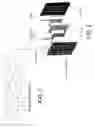
FIG. 1 is a schematic representation of a membrane formed according to the invention herein; and
FIG. 2 is a schematic representation of the testing apparatus used in certain exampled of the present invention.
DETAILED DESCRIPTION OF THE FIGURESProvided herein are polyelectrolyte membranes including charged polymer chains. In particular, oppositely charged polyelectrolytes are layered and electrical double layers are formed at the interface of the polymer chains (see FIG. 1). Thus, the polymers are held together electrostatically.
In certain embodiments, polyelectrolyte membranes may be prepared layer-by-layer by sequentially immersing a substrate in negatively charged polyelectrolyte (i.e. polyanion) solution, then positively charged polyelectrolyte (i.e. polycation) solution (or vice versa). In further embodiments, this process is repeated in a cyclic procedure to produce polyelectrolyte multilayer membranes.
Novel properties of types including electrical, magnetic, and optical can be derived from simple, low cost, and wet-bench techniques described herein, with oppositely charged polymers.
Examples of positively charged polymers (polycations) include but are not limited to poly(diallyldimethylammonium chloride). Poly(N-methyl-4-vinylpyridinium iodide), poly(allylamine hydrochloride), poly(butyl acrylate-co-N-methyl-4-vinylpyridinium iodide), poly(butadiene-co-N-methyl-4-vinnylpyridinium) iodide, poly(styrene-co-4-vinylpyridine), poly(ethyl acrylate-co-4-vinylpyridine), polyaniline-based polymers, polypyrrole-base polymers, or other suitable polycations.
In one embodiment, a polycation may have the general structure
wherein R1 is -Ch3, —CH2CH3, —CH2CH2CH3, —(CH2)nCH3, R2 is _—CH3, —CH2CH3, —CH2CH2CH3, —(CH2)nCH3; X is Cl−, Br−, I−, F−, CO32−, SO42−, PO43−, etc.
Examples of polymers having the above formula 1 include but are not limited to poly(diallyldimethylammonium chloride), poly(allylamine hydrochloride).
In another embodiment, a polycation may have the general structure
wherein R is —CH3, —CH2CH3, —CH2CH2CH3, —(CH2)nCH3, X is Cl−, Br−, I−, F−, CO32−, SO42−, PO43−, etc.
Examples of polymers having the above formula 2 include but are not limited to Poly(N-methyl-4-vinylpyridinium iodide).
The negatively charged polyelectrolyte (polyanion) can be any negatively charged polymer. Examples of negatively charged polymers include but are not limited to poly(sodium styrene sulfonate). poly(acrylic acid) sodium salt, poly(acrylic acid)-co-polymers, (poly(styrene-co-sodium styrenesulfonate), poly(sulfone-co-sodium sulfonate), poly(ethy acrylate-co-sodium acrylate), poly(butadiene-co-lithium methacrylate), poly(ethylene-co-sodium methacrylate), poly(ethylene-co-magnesium methacrylate), zinc-sulfonated ethylene-propylen-terpolymer, carboxymethyl cellulose sodium salt, Nafion (Du Pont), PFSI (Dow Chemical).
In one embodiment, a polyanion may have the general structure:
wherein M is Na+, Li+, K+, Zn2+, Mg2+, Al3+, Cu2+, Ag+, Ni2+, etc.
Examples of polymers having the above formula 3 include but are not limited to poly(sodium styrene sulfonate).
In another embodiment, a polyanion may have the general structure:
wherein M is Na+, Li+, K+, Zn2+, Mg2+, Al3+, Cu2+, Ag+, Ni2+, etc.
Examples of polymers having the above formula 4 include but are not limited to poly(acrylic acid) sodium salt.
In further embodiments, additives such as neutral polymers may be added to the positively charged, negatively charged or both the positively charged and negatively charged polyelectrolyte solutions. Such additives may include any neutral polymer such as PVA, PEO, PVDF, PPO, PA, PEA, PEEK, PET, PMMA, poly2,6-dimethyl-1,4-phenylene odixe), poly2,6-diphenyl-1,4-phenylene oxide), poly(4-vinylpyridine). Particularly, PVA, PEO, PVDF, and other similar polymers may be used. Such additives may be incorporated into the polyelectrolyte to improve properties including but not limited to the thin-film forming effect of the polyelectrolyte membranes.
In another embodiments, a porous substrate, such as nonwoven nylon, polypropylene (PP) or other suitable substrate may be used. The polyelectrolyte membrane will be coated on top of the substrate.
EXAMPLEThe following non-limiting example describes an embodiment of the polyelectrolyte membrane.
5% poly(diallyldimethylammonium chloride) plus 3.5% PVA solution was used to coat the nonwoven substrate such as FS2225 from Freudenberg to layer A; and 5% poly(sodium styrene sulfonate) plus 3.5% PVA was used to coate the nonwoven substrate as layer B. Repeat A and B two times, so the result membrane has a general structure of BABABA. Thus, a polyelectrolyte membrane having a thickness of about 0.1 mm to about 0.25 mm was produced. The conductivity is in the order of 10−1 S/cm in 45% KOH.
Using the above described polyelectrolyte membrane, dendrite shorting tests were conducted using the set-up described herein. The herein polyelectrolyte as separator demonstrates longer shorting time as compared to conventional separators (see Table 1).
| TABLE 1 |
| Dendrites test with commercial separators |
| and polyelectrolyte membranes |
| Separators |
| Celgard | Celgard | Celgard | ||
| 5550 | 5550 | 3407 | Polyelectrolyte | |
| 1 layer | 2 layers | 1 layer | 1 layer | |
| Shorting | 1 | 1.3 | 1.6 | 5 | |
| Time (hr) | |||||
The dendrite shorting test is set up as in FIG. 2. In the set-up, Ni-sponge and Zn-plate are used as charging electrodes. The testing membrane is sandwiched between PP separators and the distance is controlled by washers on the back supporters. Rigid back supporters are used to fix the distance of the set-up and screws are used to hold the set-up tightly. During zinc dendrite shorting tests, 45% KOH+6% ZnO electrolyte was used. The Zn-electrode has a size of 3 cm×3 cm and 1A constant current was used for charging. The shorting time was recorded and some typical shorting data is listed in Table 1.
By using the herein polyelectrolyte as separator, the time for dendrite shorting test has been prolonged as shown in Table 1. As the longer time for dendrites shorting is better for a rechargeable battery so as to provide a longer cycle life, higher cycle numbers are expected for rechargeable batteries by using the polyelectrolyte membrane.
While preferred embodiments have been shown and described, various modifications and substitutions may be made thereto without departing from the spirit and scope of the invention. Accordingly, it is to be understood that the present invention has been described by way of illustrations and not limitation.
Claims
1. A membrane for an electrochemical cell comprising:
at least one pair of oppositely charged membranes including a polyanion membrane and adjacent a polycation membrane, wherein electrical double layers are formed at the interface of the polyanion and polycation membranes.
2. An electrochemical cell comprising the membrane of claim 1.
3. The membrane as in claim 1, wherein plural, pairs of oppositely charged membranes are provided adjacent one another.
4. The membrane as in claim 1, wherein at least one of the polyanion membrane or the polycation membrane includes a neutral polymer.
5. The membrane as in claim 1, wherein an anionic polymer forming the polyanion membrane is selected from the group consisting of poly(sodium styrene sulfonate). poly(acrylic acid) sodium salt, poly(acrylic acid)-co-polymers, (poly(styrene-co-sodium styrencsulfonate), poly(sulfone-co-sodium sulfonate), poly(ethy acrylate-co-sodium acrylate), poly(butadiene-co-lithium, methacrylate), poly(ethylene-co-sodium methacrylate), poly(ethylene-co-magnesium methacrylate), zinc-sulfonated ethylene-propylen-terpolymer carboxymethyl cellulose sodium salt, Nafion, and other suitable polyanions.
6. The membrane as in claim 1, wherein an anionic polymer forming the polyanion membrane has the structure
wherein M is selected from the group consisting of Na+, Li+, K+, Zn2+, Mg2+, Al3+, Cu2+, Ag+, Ni2+.
7. The membrane as in claim 1, wherein an anionic polymer forming the polyanion membrane has the structure
wherein M is selected from the group consisting of Na+, Li+, K+, Zn2+, Mg2+, Al3+, Cu2+, Ag+, Ni2+.
8. The membrane as in claim 1, wherein an cationic polymer forming the polycaiton membrane is selected from the group consisting of poly(diallyldimethylammonium chloride). Poly(N-methyl-4-vinylpyridinium iodide), poly(allylamine hydrochloride), poly(butyl acrylate-co-N-methyl-4-vinylpyridinium iodide), poly(butadiene-co-N-methyl-4-vinnylpyridinium) iodide, poly(styrene-co-4-vinylpyridine), poly(ethyl acrylate-co-4-vinylpyridine), polyaniline-based polymers, polypyrrole-base polymers, and other suitable polycations.
9. The membrane as in claim 1, wherein an cationic polymer forming the polycaiton membrane has the structure
wherein R1 is selected from the group consisting of -Ch3, —CH2CH3, —CH2CH2CH3, —(CH2)nCH3, R2 is _—CH3, —CH2CH3, —CH2CH2CH3, —(CH2)nCH3; X is Cl−, Br−, I−, F−, CO32−, SO42−, PO43−.
10. The membrane as in claim 1, wherein an cationic polymer forming the polycaiton membrane has the structure
wherein R is selected from the group consisting of —CH3, —CH2CH3, —CH2CH2CH3, —(CH2)nCH3, X is Cl−, Br−, I−, F−, CO32−, SO42−, PO43−.
11. The membrane as in claim 4, wherein the neutral polymer is selected from the group consisting of PVA, PEO, PVDF, PPO, PA, PEA, PEEK, PET, PMMA, poly2,6-dimethyl-1,4-phenylene odixe), poly2,6-diphenyl-1,4-phenylene oxide), and poly(4-vinylpyridine).
12. The membrane as in claim 1, wherein the polyanion and polycation are formed on a substrate.
13. The membrane as in claim 12, wherein the substrate is a porous substrate.
14. The membrane as in claim 13, wherein the porous substrate comprises nylon or polypropylene.
15. The membrane as in claim 1, wherein the electrochemical cell comprises a secondary battery, and the membrane protects the secondary battery from dendrite related ineffectiveness.
16. The membrane as in claim 1, wherein the electrochemical cell comprises a direct fuel feed fuel cell, and the membrane protects the direct fuel feed fuel cell from fuel crossover.
Images & Drawings included:



Sources:
- United States Patent and Trademark Office - verify current appl. status at the USPTO↗
Recent applications in this class:
- » 20210280887 2021-09-09
SYSTEM AND METHOD FOR ELECTROCHEMICAL ENERGY CONVERSION AND STORAGE - » 20210066739 2021-03-04
Air-water concentration cell - » 20190260053 2019-08-22
Solid state glucose-powered micro fuel cell - » 20180212265 2018-07-26
Air-water concentration cell - » 20180053957 2018-02-22
SYSTEM AND METHOD FOR ELECTROCHEMICAL ENERGY CONVERSION AND STORAGE - » 20160268619 2016-09-15
FUEL CELL - » 20160028098 2016-01-28
Passive formic acid fuel cell - » 20150333353 2015-11-19
Metal battery having liquid anode and liquid cathode - » 20150249255 2015-09-03
Method and device for producing energy - » 20150044598 2015-02-12
Liquid drum type fuel cell-metal recovery apparatus