Antimicrobial polymers
US20070036743A1
2007-02-15
11/201,223
2005-08-10
Abstract:
An antimicrobial polymer which is stable to aqueous hydrolysis contains a phenolic antimicrobial agent covalently bounded to one or more polymerized ethylenically unsaturated monomer units preferably through an imide and/or amide group.
Inventors:
- Karen Winkowski 31 🇺🇸 Springfield, NJ, United States
- Krystyna Plochocka 1 🇺🇸 Scotch Palins, NJ, United States
- Jeffrey Lynn 1 🇺🇸 West Milford, NJ, United States
Interested in similar patents?
Get notified when new applications in this technology area are published.
Classification:
C09D135/00 » CPC main
Coating compositions based on homopolymers or copolymers of compounds having one or more unsaturated aliphatic radicals, each having only one carbon-to-carbon double bond, and at least one being terminated by a carboxyl radical, and containing at least another carboxyl radical in the molecule, or of salts, anhydrides, esters, amides, imides or nitriles thereof; Coating compositions based on derivatives of such polymers
C08F289/00 » CPC further
Macromolecular compounds obtained by polymerising monomers on to macromolecular compounds not provided for in groups -
C08F290/00 » CPC further
Macromolecular compounds obtained by polymerising monomers on to polymers modified by introduction of aliphatic unsaturated end or side groups
C08F291/00 » CPC further
Macromolecular compounds obtained by polymerising monomers on to macromolecular compounds according to more than one of the groups -
C08G73/10 » CPC further
Macromolecular compounds obtained by reactions forming a linkage containing nitrogen with or without oxygen or carbon in the main chain of the macromolecule, not provided for in groups - ; Polycondensates having nitrogen-containing heterocyclic rings in the main chain of the macromolecule Polyimides; Polyester-imides; Polyamide-imides; Polyamide acids or similar polyimide precursors
C08F2800/10 » CPC further
Copolymer characterised by the proportions of the comonomers expressed as molar percentages
C08F2810/50 » CPC further
Chemical modification of a polymer wherein the polymer is a copolymer and the modification is taking place only on one or more of the monomers present in minority
A01N25/10 » CPC further
Biocides, pest repellants or attractants, or plant growth regulators, characterised by their forms, or by their non-active ingredients or by their methods of application, e.g. seed treatment or sequential application ; Substances for reducing the noxious effect of the active ingredients to organisms other than pests containing solids as carriers or diluents Macromolecular compounds
A01N31/08 » CPC further
Biocides, pest repellants or attractants, or plant growth regulators containing organic oxygen or sulfur compounds Oxygen or sulfur directly attached to an aromatic ring system
A01N2300/00 » CPC further
Combinations or mixtures of active ingredients covered by classes - with other active or formulation relevant ingredients, e.g. specific carrier materials or surfactants, covered by classes -
C08F8/48 » CPC further
Chemical modification by after-treatment Isomerisation; Cyclisation
C08F8/32 » CPC further
Chemical modification by after-treatment; Introducing nitrogen atoms or nitrogen-containing groups by reaction with amines
C08F8/14 » CPC further
Chemical modification by after-treatment Esterification
C08F210/10 » CPC further
Copolymers of unsaturated aliphatic hydrocarbons having only one carbon-to-carbon double bond; Monomers containing three or four carbon atoms; Butenes Isobutene
A61K31/787 » CPC further
Medicinal preparations containing organic active ingredients; Synthetic polymeric materials; Polymers containing nitrogen containing heterocyclic rings having nitrogen as a ring hetero atom
C08L35/00 IPC
Compositions of homopolymers or copolymers of compounds having one or more unsaturated aliphatic radicals, each having only one carbon-to-carbon double bond, and at least one being terminated by a carboxyl radical, and containing at least one other carboxyl radical in the molecule, or of salts, anhydrides, esters, amides, imides or nitriles thereof; Compositions of derivatives of such polymers
Description
CROSS-REFERENCE TO RELATED U.S. PATENTS AND APPLICATIONSThis application is related to U.S. Pat. Nos. 5,869,695; 5,886,194; 5,959,122; 5,994,385; 6,025,501; U.S. Ser. No. 10/233,838, filed Aug. 30, 2002; Ser. No. 10/353,390, filed Jan. 29, 2003; and Ser. No. 10722,787, filed Nov. 26, 2003, all assigned to the same assignee as herein.
BACKGROUND OF THE INVENTION1. Field of the Invention
This invention relates to antimicrobial polymers, and compositions and delivery systems thereof, and, more particularly, to aqueous hydrolysis-resistant antimicrobial polymers which contain a phenolic group covalently bonded to the main chain of the polymer preferably through an imide and/or amide linkage.
2. Description of the Prior Art
Newington, I. et al, in U.S. Pat. No. 5,532,290, described antimicrobial polymers containing a phenolic antimicrobial agent bound through an anionic quaternary nitrogen atom to one or more polymerized ethylenically unsaturated monomer units. These ionic quaternary polymers were used as sanitizing agents in aqueous solutions, e.g. to clean surfaces such as bathroom and kitchen surfaces. However, such polymers are disadvantageous for certain applications because the ionic quaternary ammonium group is relatively unstable to aqueous hydrolysis over a long-term period, i.e. they do not provide adequate antimicrobial protection for building materials where very long-term resistance to moisture or rain is essential.
U.S. Pat. No. 2,875,097 disclosed antimicrobial agents used to make fabrics resistant to fungi and insects. U.S. Pat. No. 4,908,381 described polymers derived from ethylenically unsaturated monomers having side chains terminating in a pyran derivative which released glutaraldehyde upon contact with water.
Accordingly, it is an object of this invention to provide an antimicrobial polymer which will maintain its antimicrobial activity in the presence of water or rain over a long term period.
Another object of the invention is to provide stable antimicrobial polymers having a phenolic group covalently bonded to the main chain of the polymer preferably through an imide and/or amide linkage.
Another object of the invention is to provide an antimicrobial composition which is particularly suitable for use in protecting building materials from bacteria and/or fungi.
Still another object herein is to provide such antimicrobial compositions which can be used in delivery systems.
These and other objects and features of the invention will be made apparent from the following description.
SUMMARY OF THE INVENTIONWhat is described herein is an antimicrobial polymer which is very stable to aqueous hydrolysis and which contains a phenolic antimicrobial agent covalently bounded to one or more polymerized ethylenically unsaturated monomer units preferably through an imide and/or amide linkage.
DETAILED DESCRIPTION OF THE INVENTION A. The antimicrobial polymers of the invention has the following general formula:
main polymer chain —X— is a single bond phenol-containing group or spacer group.
A preferred formula of the invention includes a phenol-group attached to the main polymer chain through an amide or imide bond,
or maleimide bond.
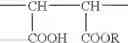
Other substituents which may be present in the main polymer chain include a carboxylic group, an ester group, particularly alpha-carboxyamide:
and alpha-carboxy ester
The main chain of the polymer can contain other optional monomer units, such as
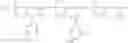
A preferred polymer of the invention has the general formula:
where m, n and o are present, in mole %, of 0-100; 0-50 and 0-99.5, with the proviso that at least one of m and n are present respectively;
R is H or alkyl;
A is H, alkyl, halogen or haloalkyl;
X is a single bond or a spacer group; e.g. alkylene, alkyleneoxy, silicone or alkylene carbonate;
Y is hydrogen, halogen, alkyl, thionyl, nitro or aromatic ring;
Z is an optional comonomer, alkene, vinylpyrrolidone, vinylcaprolactam, vinyl acetate, alkyl vinyl ether, styrene;
p is 1-5;
q is 1-3, and
p+q≦5.
A representative polymer has the formula:
where m is 40-100; n is 0-50, and 0 is 0-50; Y is chloro or nitro and q is 0-3.
The antimicrobial polymers of the invention may be made by reacting an anhydride, acid or half-ester side group-containing polymer, e.g. Gantrez® AN (maleic anhydride), IBT, IB/MAN (isobutylene-maleic anhydride), VP/MAN (vinylpyrrolidone/maleic anhydride), vinyl acetate/maleic anhydride, itaconic acid or anhydride, with an aminophenol, e.g. an amino cresol, amino resorcinol, aminonapthol, and the like. In this process, the amine group of the phenol reacts with the anhydride to form a stable imide and/or amide linkage, while its —OH group remains free to kill fungi, mold, mildew and other microorganisms.
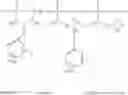
Preparation of Polymers of Invention 1. Reaction with Copolymer of Maleic Anhydride
2. Reaction with Copolymer Containing Alpha Carboxy Ester Groups:
Antimicrobial polymers containing such aromatic (phenolic) —OH side groups of the invention are used effectively as antifouling materials for building materials and other solid surfaces, coated thereon or incorporated therein.
The antimicrobial polymers herein are even more active if the phenolic—OH is bound to the main chain via a spacer group. Suitable spacers include alkylene, oxyalkylene (e.g. EO or PO), polypropyleneoxy, polyethyleneoxy, silicone, etc. A preferred spacer is a —CH2— unit.
Suitable polymers can be prepared by reacting an aminophenol with itaconic anhydride monomer, to produce the desired itaconic imide and/or amide.
Similarly, alkyl itaconates can be used as starting materials for preparing the antimicrobial polymers of the invention.
Other polymers containing a
group can be made by reacting amino phenols, optionally substituted with a —SO2Cl group, e.g. with a chloride of styrene sulfonic acid or a chloride of vinyl sulfonic acid. This reaction will generate preferentially a sulfonamide, which is stable to hydrolysis. Then polymerization follows.
Similar monomers can be made by reacting —SO2Cl with phenol, or bis-phenol, where only one —OH group is reacted.
Other monomers in the copolymer can be selected to provide desired properties for the polymer.
The antimicrobial polymers or copolymers of the invention are particularly advantageous in commercial use because they are resistant to hydrolysis whereupon the phenol —OH group present therein can manifest its antimicrobial or antifouling activity over a prolonged period without regard to the effect of rain or other forms of moisture. Furthermore, the phenol group is permanently covalently bonded to the main chain of the biocidal polymer through a stable imide and/or amide bond. Thus the invention polymer will prevent microbial colonization in or on a substrate material, e.g. a building material, such as a shingle or gypsum board, while also killing fungi on its surface, or plastics, e.g. polyvinyl chloride materials, and can be delivered alone or with a drug in a delivery system.
The invention will now be described by reference to the following examples, in which:
EXAMPLE 1 Antibacterial Polymer Containing p-Aminophenol77 g IB/MAN (1:1) copolymer (isobutylene/maleic anhydride) (0.5 mol equivalent of anhydride unit) and 250 g ethanol were charged into 1-liter Parr reactor. The reactor was sparged with nitrogen. The reaction was heated to 100° C. over 1 hour and the temperature was held for 4 hours; the ethyl half-ester was generated in this step. Then the reactor was cooled down to room temperature and left overnight. Thereafter 43.6 g (0.4 mole) of 4-amino-phenol dissolved in 65 g ethanol was added. The reactor was again sparged with nitrogen and heated to 100° C. over 0.5 hour and held at that temperature for 3 hours. Then the temperature was increased to 130° C. and held there for 8 hours. The reactor then was cooled to room temperature and discharged. The product was a brownish solution containing 27.6 wt. % solids. Based on 13C NMR analysis, it contained 74 mole % imide and less than 1 mole % unreacted amino-phenol.
EXAMPLE 2 Antibacterial Polymer Containing 4-Amino-2,6-Dichlorophenol77 g IB/MAN (1:1) copolymer (0.5 mol equivalent of anhydride unit) and 400 g ethanol were charged into 1-liter Parr reactor. The reactor was sparged with nitrogen. The reaction was heated to 100° C. over 1 hour and the temperature was held for 5 hours; the ethyl half-ester was generated in this step. Then the reactor was cooled to room temperature and left overnight. Then 53.4 g (0.3 mole) of 4-amino-2,6-dichlorophenol (powder) was added. The reactor was again sparged with nitrogen and heated to 100° C. over 0.5 hour and held for 3 hours. Then the temperature was increased to 130° C. and held for 8 hours. Thereafter the reactor was cooled down to room temperature and discharged. The product was a brownish solution containing 25.2 wt. % solids. Based on 13C NMR analysis, it contained 49 mole % imide and 1 mole % unreacted amino-phenol.
EXAMPLE 3 Antibacterial Polymer Containing 2-Amino-6-Chloro-4-Nitrophenol115.5 g IB/MAN (1:1) copolymer (0.75 mol equivalent of anhydride unit) and 345 g ethanol were charged into 1-liter Parr reactor. The reactor was sparged with nitrogen. The reaction was heated to 100° C. over 1 hour and the temperature was held for 6 hours; ethyl half-ester was generated in this step. Then the reactor was cooled down to room temperature and left overnight. Then 47.0 g (0.25 mole) of 2-amino-2,6-dichloro-4 nitrophenol (powder). The reactor was again sparged with nitrogen and heated to 100° C. over 0.5 hour and held for 6 hours. Then the reaction temperature was raised to 110° C. and held for 6 hours, then to 130° C. and held for 6 hours. Thereafter the reactor was cooled to room temperature and discharged. The product was a brownish solution containing 25.2 wt. % solids. Based on 13C NMR analysis, it contained 10 mole % imide and 40 mole % unreacted amino-phenol. The sample was purified by ultrafiltration before bio-testing.
Biological Activity of Invention Examples on Gypsum BoardsA. The derivitized polymers of the invention examples were diluted in dimethyl sulfoxide (DMSO) to contain 100 or 1000 ppm of total solids. Then the grey side of a gypsum board sample (2×2×½ in.) was brush coated with each test formulation and allowed to dry for 24 hours. The control was a gypsum board treated with DMSO alone. The thus-treated gypsum boards were placed onto a Petri dish and water was added to saturate the sample. The water-saturated gypsum samples were then inoculated with a mixed fungal inoculum (Aspergillus niger, Penicillium funiculosum and Stachybotrys chartarum) containing e.g. 105 spores/ml. The samples then were incubated at 28° C./80% RH for 30-45 days and rated for the presence (+) or absence (−) of fungal growth on the surface. The results are shown in Table 1 below.
| TABLE 1 |
| Fungal Growth Data |
| Test Sample | Amt (ppm) | Activity | |
| Control (DMSO) | + | ||
| Example 1 | 100 | + | |
| Example 1 | 1,000 | − | |
| Example 2 | 100 | − | |
| Example 2 | 1,000 | − | |
B. The derivatized polymer of Example 3 was used to coat paper disks. The disks were allowed to dry for 24 hours and placed on the surface of Tryptic Soy Agar (TSA). 10 ml of the TSA containing the following microorganisms to a total concentration of about 106 cells/ml was pipetted onto the surface of the plates containing the disks treated disks: Pseudomonas aeruginosa (ATCC 10145) or a mixed fungal inoculum containing Penicillium funiculosum (ATCC 11797) and Aspergillus niger (ATCC 6275) the plates containing the bacterial species were incubated at 32° C. for 48 hours. The plates containing fungal species were incubated at 28° C., 85% RH for 5-7 days. At the end of the incubation period the extent of growth on the surface of the disk was rated as + (growth) or − (no growth). The results are shown in Table 2 below.
| TABLE 2 | |||
| Active Ingredient | P. aeruginosa | Mixed Fungal | |
| Control (Untreated) | + | + | |
| Isobutylene/maleic | + | + | |
| anhydride copolymer | |||
| Example 3 | − | − | |
While the invention has been described with particular reference to certain embodiments thereof, it will be understood that changes and modifications may be made which are within the skill of the art.
Claims
What is claimed is:1. An antimicrobial polymer stable to aqueous hydrolysis containing a phenolic antimicrobial agent covalently bounded to one or more polymerized ethylenically unsaturated monomer units through an amide and/or imide group.
2. An antimicrobial polymer according to claim 1 wherein said ethylenically unsaturated monomer unit is maleic anhydride, an alkyl half-ester and/or full acid thereof.
3. An antimicrobial polymer according to claim 1 wherein said ethylenically unsaturated monomer unit comprises itaconic anhydride, its alkyl half-ester and/or its full acid.
4. An antimicrobial polymer according to claim 1 wherein said ethylenically unsaturated monomer unit comprises a copolymer of at least two monomer units.
5. An antimicrobial polymer according to claim 1 wherein said polymer is covalently bonded through an imide group.
6. An antimicrobial polymer according to claim 1 wherein said ethylenically unsaturated monomer unit is selected from maleic anhydride or itaconic anhydride, optionally including a comonomer selected from an α-olefin, vinyl acetate, alkyl vinyl ether, α-unsaturated carboxylic acid (meth)acrylic acid or its ester, vinyl pyrrolidone, vinyl caprolactam and styrene.
7. An antimicrobial polymer according to claim 1 wherein said phenolic antimicrobial agent is an aminophenol, an aminocresol, an amino resorcinol or an aminonapthol.
8. An antimicrobial polymer according to claim 1 wherein said phenol is bound to the main chain of the polymer via a spacer group.
9. An antimicrobial polymer according to claim 9 wherein said spacer group is an alkylene, oxyalkylene, or silicone.
10. An antimicrobial polymer according to claim 1 which has the formula:
where m, n and o are present, in mole %, of 0-100; 0-50 and 0-99.5, with the proviso that at least one of m and n are present respectively;
R is H or alkyl;
A is H, alkyl, halogen or haloalkyl;
X is a single bond or a spacer group; e.g. alkylene, alkyleneoxy, silicone or alkylene carbonate;
Y is hydrogen, halogen, alkyl, thionyl, nitro or aromatic ring;
Z is an optional comonomer, alkene, vinylpyrrolidone, vinylcaprolactam, vinyl acetate, alkyl vinyl ether, styrene;
p is 1-5;
q is 1-3, and
p+q≦5.
11. An antimicrobial polymer according to claim 10 which has the formula:
where m is 40-100; n is 0-50, and 0 is 0-50.
12. An antimicrobial polymer according to claim 10 which has the formula:
13. An antimicrobial polymer according to claim 10 wherein Y is a halogen and/or a nitro group.
14. An antimicrobial polymer according to claim 10 which is the p-aminophenol derivative of isobutylene-maleic anhydride.
15. An antimicrobial polymer according to claim 10 which is the 4-amino-2,6-dichlorophenol derivative of isobutylene-maleic anhydride copolymer.
16. An antimicrobial polymer according to claim 10 which is the 2-amino-2,6-chloro-4-nitrophenol derivative of isobutylene-maleic anhydride copolymer.
17. A composition including the antibacterial polymer of claim 1.
18. A building material product containing the antibacterial polymer of claim 1.
Images & Drawings included:






Sources:
- United States Patent and Trademark Office - verify current appl. status at the USPTO↗
Similar patent applications:
- » 20250127175
ANTIMICROBIAL POLYMER COMPOSITIONS, ANTIMICROBIAL POLYMER ARTICLES, AND METHODS OF MAKING THE SAME - » 20200085057
ANTIMICROBIAL POLYMER COATING COMPOSITION AND ANTIMICROBIAL POLYMER FILM - » 20200048476
Antimicrobial polymer coating composition and antimicrobial polymer film - » 20210130625
Antimicrobial polymer coating composition and antimicrobial polymer film - » 20200085045
ANTIMICROBIAL POLYMERS AND ANTIMICROBIAL HYDROGELS - » 20170029608
Method of Synthesizing Biodegradable Antimicrobial Polymer Containing Low-Density Polyethylene (LDPE), Waste Material of Paper Tissue (WMPT) and Antimicrobial Agents - » 20060062850
Controlled release antimicrobial polymer compositions - » 20080242794
COLOR STABILIZED ANTIMICROBIAL POLYMER COMPOSITES - » 20080269451
Antimicrobial Polymers - » 20060228966
Chemical vapor deposition of antimicrobial polymer coatings
Recent applications in this class:
- » 20250163292 2025-05-22
METHOD FOR PRODUCING A RELEASE AGENT, A RELEASE AGENT AND USE OF THE RELEASE AGENT - » 20180100084 2018-04-12
Curable composition, conductive coated film, and antistatic coated film - » 20140079923 2014-03-20
Polymer coatings - » 20120245277 2012-09-27
Aqueous binders for granular and/or fibrous substrates - » 20100272668 2010-10-28
ANTIVIRAL SUBSTANCE, ANTIVIRAL FIBER, AND ANTIVIRAL FIBER STRUCTURE - » 20080171195 2008-07-17
Method For Applying Integrated Pre-Treatment Layers Containing Dicarboxylic Acid Olefin Copolymers To Metallic Surfaces - » 20070066729 2007-03-22
Scratch resistant coatings compositions - » 20060231487 2006-10-19
Coated filter media