Process for the preparation of -substituted formamides
US20070037985A1
2007-02-15
10/546,291
2004-02-19
✅ Patent granted
US 7,268,255 B2
2007-09-11
WO; PCT/EP2004/001593; 20040219
WO; WO2004/074234; 20040902
Shailendra Kumar
2024-02-19
Abstract:
N-Aryl or N-heteroarylformamides are prepared by hydrogenating a corresponding nitroarene or nitroheteroarene with formic acid and/or ammonium formate as hydrogen donor and formylating agent in the presence of at least one noble metal-based hydrogenation catalyst and a vanadium or molybdenum compound as co-catalyst.
Inventors:
- Dominique Roberge 16 🇨🇭 Sierre, Switzerland
- Ulrich KAMPFEN 2 🇨🇭 Brig, Switzerland
- Dario Veghini 1 🇨🇭 Brig-Glis, Switzerland
- Jared Randall 1 🇺🇸 Smyma, NY, United States
Assignee:
- LONZA AG 62 🇨🇭 Basel, Switzerland
Interested in similar patents?
Get notified when new applications in this technology area are published.
Classification:
B01J23/22 » CPC main
Catalysts comprising metals or metal oxides or hydroxides, not provided for in group of arsenic, antimony, bismuth, vanadium, niobium, tantalum, polonium, chromium, molybdenum, tungsten, manganese, technetium or rhenium; Vanadium, niobium or tantalum Vanadium
B01J21/18 » CPC further
Catalysts comprising the elements, oxides, or hydroxides of magnesium, boron, aluminium, carbon, silicon, titanium, zirconium, or hafnium Carbon
B01J23/002 » CPC further
Catalysts comprising metals or metal oxides or hydroxides, not provided for in group Mixed oxides other than spinels, e.g. perovskite
B01J23/28 » CPC further
Catalysts comprising metals or metal oxides or hydroxides, not provided for in group of arsenic, antimony, bismuth, vanadium, niobium, tantalum, polonium, chromium, molybdenum, tungsten, manganese, technetium or rhenium; Chromium, molybdenum or tungsten Molybdenum
B01J23/38 » CPC further
Catalysts comprising metals or metal oxides or hydroxides, not provided for in group of noble metals
B01J23/40 » CPC further
Catalysts comprising metals or metal oxides or hydroxides, not provided for in group of noble metals of the platinum group metals
B01J27/045 » CPC further
Catalysts comprising the elements or compounds of halogens, sulfur, selenium, tellurium, phosphorus or nitrogen; Catalysts comprising carbon compounds; Sulfur, selenium or tellurium; Compounds thereof; Sulfides with iron group metals or platinum group metals Platinum group metals
C07D235/08 » CPC further
Heterocyclic compounds containing 1,3-diazole or hydrogenated 1,3-diazole rings, condensed with other rings condensed with carbocyclic rings or ring systems; Benzimidazoles; Hydrogenated benzimidazoles with only hydrogen atoms, hydrocarbon or substituted hydrocarbon radicals, directly attached in position 2 Radicals containing only hydrogen and carbon atoms
B01J2523/00 » CPC further
Constitutive chemical elements of heterogeneous catalysts
B01J2523/62 » CPC further
Constitutive chemical elements of heterogeneous catalysts of Group VI (VIA or VIB) of the Periodic Table Sulfur
B01J2523/828 » CPC further
Constitutive chemical elements of heterogeneous catalysts of Group VIII of the Periodic Table; Metals of the platinum group Platinum
C07C233/15 » CPC further
Carboxylic acid amides having carbon atoms of carboxamide groups bound to hydrogen atoms or to acyclic carbon atoms having the nitrogen atom of at least one of the carboxamide groups bound to a carbon atom of a hydrocarbon radical substituted by halogen atoms or by nitro or nitroso groups with the substituted hydrocarbon radical bound to the nitrogen atom of the carboxamide group by a carbon atom of a six-membered aromatic ring
C07C233/25 » CPC further
Carboxylic acid amides having carbon atoms of carboxamide groups bound to hydrogen atoms or to acyclic carbon atoms having the nitrogen atom of at least one of the carboxamide groups bound to a carbon atom of a hydrocarbon radical substituted by singly-bound oxygen atoms with the substituted hydrocarbon radical bound to the nitrogen atom of the carboxamide group by a carbon atom of a six-membered aromatic ring having the carbon atom of the carboxamide group bound to a hydrogen atom or to a carbon atom of an acyclic saturated carbon skeleton
C07C233/43 » CPC further
Carboxylic acid amides having carbon atoms of carboxamide groups bound to hydrogen atoms or to acyclic carbon atoms having the nitrogen atom of at least one of the carboxamide groups bound to a carbon atom of a hydrocarbon radical substituted by amino groups with the substituted hydrocarbon radical bound to the nitrogen atom of the carboxamide group by a carbon atom of a six-membered aromatic ring having the carbon atom of the carboxamide group bound to a hydrogen atom or to a carbon atom of a saturated carbon skeleton
C07C233/07 » CPC further
Carboxylic acid amides having carbon atoms of carboxamide groups bound to hydrogen atoms or to acyclic carbon atoms having nitrogen atoms of carboxamide groups bound to hydrogen atoms or to carbon atoms of unsubstituted hydrocarbon radicals with carbon atoms of carboxamide groups bound to acyclic carbon atoms of an acyclic saturated carbon skeleton having the nitrogen atom of at least one of the carboxamide groups bound to a carbon atom of a six-membered aromatic ring
C07C255/58 » CPC further
Carboxylic acid nitriles having cyano groups bound to carbon atoms of six-membered aromatic rings of a carbon skeleton containing cyano groups and singly-bound nitrogen atoms, not being further bound to other hetero atoms, bound to the carbon skeleton
C07C253/30 » CPC further
Preparation of carboxylic acid nitriles by reactions not involving the formation of cyano groups
C07C231/10 » CPC further
Preparation of carboxylic acid amides from compounds not provided for in groups -
C07C233/03 » CPC further
Carboxylic acid amides having carbon atoms of carboxamide groups bound to hydrogen atoms or to acyclic carbon atoms having nitrogen atoms of carboxamide groups bound to hydrogen atoms or to carbon atoms of unsubstituted hydrocarbon radicals with carbon atoms of carboxamide groups bound to hydrogen atoms
C07C231/02 IPC
Preparation of carboxylic acid amides from carboxylic acids or from esters, anhydrides, or halides thereof by reaction with ammonia or amines
C07D235/04 IPC
Heterocyclic compounds containing 1,3-diazole or hydrogenated 1,3-diazole rings, condensed with other rings condensed with carbocyclic rings or ring systems Benzimidazoles; Hydrogenated benzimidazoles
Description
The invention relates to a process for the preparation of N-aryl- or N-heteroarylformamides from nitroarenes or nitroheteroarenes by reductive formylation.
N-Aryl- and N-heteroarylformamides are valuable intermediates for the synthesis of various compounds. They can, for example, be dehydrated to form isonitriles (U.S. Pat. No. 3,636,036). The formyl group can also act as an amino protective group which can be cleaved by treatment with strong acid. Other applications of N-aryl- and N-heteroarylformamides include their use as developers for thermal recording materials (JP-A-09-193553) or as additives for polymerization catalysts (U.S. Pat. No. 5,153,767).
Known methods for the production of N-Aryl- and N-heteroarylformamides are based on the reaction of the corresponding aryl- and heteroarylamines with formic acid. Common methods for she production of arylamines involve the reduction of the corresponding nitroarenes either by hydrogenation or with iron as reducing agent. WO-A-96/36597 discloses the hydrogenation of nitroarenes to arylamines with gaseous hydrogen using noble metal catalysts in the presence of minute amounts of vanadium compounds. In one example, the arylamine is acetylated in situ when sodium acetate is present in the reaction mixture. The use of pressurized (up to 20 bar) gaseous hydrogen and autoclaves is a disadvantage of that method.
An object of the present invention is to provide a simple one-step method for the production of N-aryl- and N-heteroarylformamides from the corresponding nitro compounds.
A further object of the present invention is to provide a one-step method for the production of benzimidazoles from arenes bearing nitro amino groups on adjacent ring carbon atoms. Substituted benzimidazoles are valuable intermediates in the synthesis of pharmaceutically active compounds.
It has been found that it is possible to produce N-aryl- or N-heteroarylformamides by hydrogenating corresponding nitroarenes or nitroheteroarenes with formic acid and/or ammonium formate as hydrogen donor and formylating agent in the presence of at least one noble metal-based hydrogenation catalyst and a vanadium or molybdenum compound as co-catalyst. A particular advantage of this method resides in the fact that it can he carried out at ambient pressure without using gaseous hydrogen.
The terms arene and aryl are here and hereinbelow to be understood as meaning all mono-, bi- and polycyclic aromatic hydrocarbons such as, for example, benzene, biphenyl, naphthalene, indane, indane, anthracene, phenanthrene, fluorene, pyrene and perylene and the monovalent radicals (such as phenyl, biphenylyl, naphthyl etc.) derived from the beforementioned hydrocarbons, respectively.
Accordingly, the terms heteroarene and heteroaryl are here and hereinbelow to be understood as meaning all mono-, bi- and polycyclic aromatic compounds containing at least one ring atom other than carbon, in particular nitrogen, oxygen or sulfur, and the monovalent radicals derived therefrom, respectively. Examples of heteroarenes are pyridine, pyrimidine, pyrazine, pyridazine, pyrrole, pyrazole, imidazole, furan, thiophene, thiazole, indole, isoindole, indolizine, quinoline, isoquinoline, quinoxaline, quinazoline, cinnoline, naphthyridine, carbazole, acridine and phenazine.
The term, noble metal is here and hereinbelow to be understood as meaning, in particular, the metals known as platinum metals, i.e., rhodium, rutheninum, palladium, osmium, iridium and platinum.
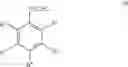
In a preferred embodiment of the present invention, the N-aryl- or N-heteroarylformamide has the formula
wherein the substituents R1 and R5 are independently selected from the group consisting of hydrogen, halogen, C1-6-alkyl, C1-6-alkoxy, cyano, carboxy, di(C1-6-alkyl)amino, C1-6-alkoxycarbonyl, and aryl;
R2 through R4 are independently selected from the group consisting of hydrogen, halogen, C1-6-alkyl, C1-6-alkoxy, cyano, carboxy, di(C1-6-alkyl)amino, C1-6-alkoxycarbonyl, aryl and —NHCHO;
and/or two or more of R1 through R5 together with the depicted phenyl moiety form a bicyclic or polycyclic fused carbocyclic or heterocyclic ring system;
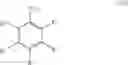
and the corresponding nitroarene or nitroheteroarene has the formula
wherein each of R1′ through R5′ has the same meaning as the corresponding substituent R1, R2, R3, R4 and R5 in formula (I) or, if said corresponding substituent is —NHCHO, is —NO2 or —NH2—. Here and hereinbelow, the term C1-6-alkyl is to be understood as meaning any linear or branched alkyl group having one to six carbon atoms, such as, for example, methyl, ethyl, propyl, isopropyl, butyl, isobutyl, sec-butyl, tert-butyl, pentyl, isopentyl, tert-pentyl, neopentyl, hexyl and the like. Consequently, the terms C1-6-alkoxy, C1-6-alkoxycarbonyl and di(C1-6-alkyl)amino are to be understood as meaning any moiety composed of the beforementioned C1-6-alkyl groups and oxygen, carbonyloxy (—OC(═O)—) or nitrogen, respectively.
Bicyclic and polycyclic fused carbocyclic and heterocyclic ring systems containing a phenyl moiety are, for example, napthalene, indane, tetrahydronaphthalene, fluorene, anthracene. phenanthrene, acenaphthene, pyrene and perylene as carbocyclic and indole, benzimidazole, thionaphthene, quinoline, quinoxaline, chroman, chromene, carbazole and acridine as heterocyclic systems.
In another preferred embodiment of the present invention, the N-aryl- or N-heteroarylformamide formed contains an amino group on a carbon atom adjacent to that bearing the nitro group which reacts in situ with the formamide moiety to form an imidazole ring, thus forming a benzimidazole system. If, for example, o-nitroaniline is employed as starting material, benzimidazole will be the product.
In a more preferred embodiment, the N-heteroarylformamide ultimately formed is a benzimidazole which has the formula
wherein the substituents R1, R4 and R5 are as defined above, and the corresponding nitroarene has the formula
wherein one of R2′ and R3′ is —NO2 and the other is —NH2;
and R1, R4 and R5 are as defined above for formula (Ia).
Especially preferred nitroarenes (IIa) are those wherein R2 is —NO2′ and R3′ is —NH2, in particular those wherein R1 is methyl and R4 is cyano. The formylamino group of the corresponding benzimidazoles (Ia) can be hydrolyzed to yield the corresponding amines which are intermediates in the synthesis of α-adrenoceptor agonists (WO-A-99/26942).
The benzimidazoles (Ia) may occur in either of two tautomeric forms (1H and 3H form) or as a mixture of both. For the sake of simplicity, only one form is depicted here.
Preferably, the noble-metal based hydrogenation catalyst is platinum, in particular platinum on a support such as charcoal.
More preferably, the platinum is “poisoned”, in particular sulfided.
In oder to obtain high yields of the desired formamides or benzimidazoles with low formation of byproducts or incompletely reduced product such as hydroxylamines or O-formylhydroxylamines, it is essential to add co-catalysts such as vanadium or molybdenum compounds. Preferably, the vanadium or molybdenum compound is selected from the group consisting of vanadium (v) oxide (V2O5), ammonium metavanadate (NH4VO3) and molybdates such as sodium molybdate (Na2MoO4).
Preferably, the hydrogenation is carried out at ambient pressure.
The present invention will be concretely illustrated with reference to the examples. It is to be noted, however, that the present invention is not limited to them.
EXAMPLE 1 Formanilide (N-phenylformamide)Nitrobenzene (12.31 g, 100 mmol), formic acid (80%; 278 mL, 328.0 g), a sulfided platinum catalyst (5% Pt on charcoal, Engelhard No. 43045, lot No. 08554; dry weight 1.55 g) and vanadium(v) oxide (57 mg) were charged under argon in a double-walled 0.3 L stirring vessel with temperature control. The argon flow was stopped and the slurry was heated to 91-94° C. for 2 h. HPLC analysis of the reaction mixture indicated a 79.9% yield of fornanilide, accompanied by 18.3% of aniline.
EXAMPLE 2 (COMPARATIVE EXAMPLE) Formanilide (N-phenylformamide)The procedure of Example 1 was repeated without vanadium(v) oxide. After 3 h reaction time the yield of formanilide was 55% and 30.6% of N-formyloxyaniline and 10.2% of aniline were formed as byproducts.
EXAMPLE 3 1-Chloro-2,4-formylamino)benzeneThe procedure of Example 1 repeated using 1-chloro-2,4-dinitrobenzene (100 mmol, 20.26 g) as starting compound. The reaction temperature was 91-95° C. and the yield of 1-chloro-2,4-bis(formylamino)benzene was 77.0%. The partially reduced compound 1-chloro-2(4)-formylamino-4(2)-nitrobenzene was formed in 20.5% yield.
EXAMPLE 4 1-Chloro-2,4-bis(formylamino)benzene1-Chloro-2,4-dinitrobenzene (4 mmol, 0.81 g), aqueous formic acid (80%; 11 mL, 13 g), sulfided platinum catalyst (5% Pt on charcoal, Engelhard No. 43045, lot No. 08554; dry weight 62 mg) and sodium molybdate dihydrate (2.3 mg) were charged under argon in a small stirring vessel. The argon flow was stopped and the slurry was heated to 90-95° C. for 2.5 h giving 1-chloro-2,4-bis(formylamino)benzene in 76.1% yield. The partially reduced compound 1-chloro-2(4)-formylamino-4(2)-nitrobenzene was formed in 20.5% yield.
EXAMPLE 5 1-Chloro-2,4bis(formylamino)benzeneThe procedure of Example 4 was repeated using ammonium metavanadate (2 mg) instead of sodium molybdate dihydrate. After 2.5 h reaction time at 90-95° C. the yield of 1-chloro-2,4-bis(formylamino)benzene was 77.2%. The partially reduced compound 1-chloro-2(4)-formylamino-4(2)-nitrobenzene was formed in 20.5% yield.
EXAMPLE 6 1-Chloro-2,4-bis(formylamino)benzene1-Chloro-2,4-dinitrobenzene (4 mmol, 0.81 g), ammonium formate (ca. 40 mmol, 2.6 g), sulfided platinum catalyst (5% Pt on charcoal, Engelhard No. 43045, lot No. 08554; dry weight 62 mg) and acetonitrile (11 mL) were charged under argon in a small stirring vessel. The argon flow was stopped and the slurry was heated to 80° C. for 2.5 h giving 1-chloro-2,4-bis(formylamino)benzene in 88.5% yield.
EXAMPLE 7 1-Chloro-2,4-bis(formylamino)benzeneThe procedure of Example 6 was repeated with addition of vanadium(v) oxide (2.3 mg). After 2.5 h reaction time at 80° C. the yield of 1-chloro-2,4-bis(formylamino)benzene was 95.7%.
EXAMPLE 8 1-Formylamino-4-methylbenzene (p-formotoluidide)The procedure of Example 7 was repeated using p-nitrotoluene (4 mmol, 0.55 g) as-starting compound. The reaction temperature was 80° C. and after 2.5 h reaction time the yield of 1-formylamino-4-methylbenzene was 87.9%. 4-Methylaniline (11.2%) was formed as byproduct.
EXAMPLE 9 1,3-Bis(formylamino)-2-methylbenzeneThe procedure of Example 4 was repeated with 2,6-dinitrotoluene (4 mmol, 0.81 g) as starting material. The combined yield of 1 ,3-bis(formylamino .2-methylbenzene and 1 -amino-3-formylamino-2-methylbenzene was 97.2%.
EXAMPLE 10 (COMPARATIVE EXAMPLE) 1,3-Bis(formylamino)-2-methylbenzeneThe procedure of Example 9 was repeated without sodium molybdate. The combined yield of 1,3-bis(formylamino)-2-methylbenzene and 1-amino-3-formylamino-2-methylbenzene was
EXAMPLE 11 1,3-Bis(formylamino)-2-methylbenzeneThe procedure of Example 9 was repeated with addition of vanadium(v) oxide (2.3 mg) instead of sodium molybdate dihydrate. The combined yield of 1,3-bis(formylamino)-2-methylbenzene and 1-amino-3 -formylamino-2-methylbenzene was 98.1%.
EXAMPLE 12 2-Amino-4-methyl-3,5-dinitrobenzonitrileA solution of 4-methyl-3,5-dinitrobenzonitrile (10.5 kg; preparation see U.S. Pat. No. 3,162,675), 4-amino-4H-1,2,4-triazole (17.0 kg) and dimethyl sulfoxide (68.6 kg) was dosed into a mixture of lithium tert-butoxide (12.2 kg) and dimethyl sulfoxide (106.6 kg) over about 50 min, while maintaining the temperature of each solution at 20-25° C. After aging at 20-25° C. for about 2 h, acetic acid (8.9 kg) was dosed into the reaction mixture at about 20° C. over about 10 min. The product was crystallized by dosing water (158 L) into the reaction mixture over about 1.5 h at about 20° C. The product slurry was cooled to 10-15° C. and held at this temperature for about 45 min. The resultant slurry was filtered, and washed with water (106 L). The wet cake obtained was dried in a vacuum tray dryer at about 50° C. and 30 Torr to provide 2-amino-4-methyl-3,5-dinitrobenzonitrile as an orange-brown solid.
Yield: 9.8 kg (87%).
EXAMPLE 13 5-Formylamino-4-methyl-1H-benzimidazole-7-carbonitrile[N-(7-Cyano-4-methyl-1H-benzoimidazol-5-yl)-formamide] (Ia, R1═Me, R4═CN, R5═H)A double-walled 1 L stirring vessel with temperature control was charged under argon with 2-amino-4-methyl-3,5-dinitrobenzonitrile (IIa, R1═Me, R2═NO2′, R3′═NH2, R4═CN, R5═H; 22.2 g, 100 mmol), formic acid (80% in water; 328.0 g), a sulfided platinum catalyst (5% Pt on charcoal, 57.8% moisture content, obtained from Engelhard Italy, Sample Code 43045; 2.44 g) and a platinum/vanadium catalyst (5% Pt+1% V on charcoal, moisture content 61.74%, Degussa CF 1082 XBA/W; 1.22 g). The argon flow was stopped and the slurry was heated to 90° C. within 50 min while a development of carbon dioxide commenced. The reaction mixture was kept for another 2 h at 90-93° C. under vigorous gas development while the reaction progress was monitored by HPLC. After the reaction was complete the mixture was cooled to 25° C. and the black suspension was filtered through a 1 cm layer of Celite® which was subsequently washed with 80% aqueous formic acid (50 g). The bright orange filtrate was concentrated to ca. 150 g in a rotary evaporator at 45° C./30 mbar. Methanol (118.0 g, 150 mL) was added and after 15 min at 45° C. the mixture was cooled to 0° C. within ½ h and stirred for another hour. The precipitated product was filtered off and the product filter cake was washed with methanol (58.2 g, 74 mL). The thus obtained product (21.7 g) was dried for 15 h at 45° C./25 mbar.
Yield: 15.3 g (75.9%, Assay (HPLC): 99.3%.
m.p. >310° C.
According to NMR data the product was a mixture of conformers and/or tautomers. In the following, only the chemical shifts of the dominating isomer (83%) are given.
1H NMR (DMSO-d6): δ=13.2 (br. s, 1H), 9.87 (br. s, 1H), 8.47 (s, 1H), 8.35 (d, J=1.8 Hz, 1H), 7.91 (s, 1H), 2.48 (s, 2H).
13C NMR (DMSO-d6): δ=160.1, 144.6, 140.5, 134.0, 129.9, 123.0, 121.6, 117.1, 97.8, 13.1.
EXAMPLE 14 5-Amino-4-methyl-1H-benzimidazole-7-carbonitrileA mixture of 5-(formylamino)-4-methyl-1H -benzimidazole-7-carbonitrile (4.8 kg), water (46 L) and concentrated hydrochloric acid (17.8 kg) was agitated at about 80° C. for about 1½ h. After the mixture was cooled to about 25° C., a solution of 50% aqueous sodium hydroxide (17.1 kg) and water (64 L) was added. The mixture was cooled to about 25° C. over about 15 min. The mixtures was then filtered and the product was washed with water (50 L). The product was dried in a vacuum tray dryer at 45-50° C. and ca. 40 Torr.
Yield: 3.8 kg (94%).
EXAMPLE 15 1-Formylamino-2-methoxybenzene (o-formoanisidide)The procedure of Example 4 was repeated using o-nitroanisole (4 mmol, 0.55 g) as starting material and vanadium(v) oxide (2.3 mg) instead of sodium molybdate dihydrate. After 2.5 h at 90-95° C. a yield of 24.8% of o-formoanisidide was obtained. o-Anisidine (62.8%) was found to be the main product.
EXAMPLE 16 1-FormylaminonaphthaleneThe procedure of Example 4 was repeated using 1-nitronaphthalene (4 mmol, 0.61 g) as starting material and vanadium(v) oxide (2.3 mg) instead of sodium molybdate dihydrate. After 2.5 h at 90-95° C. a yield of 22.3% of 1-formylaminonaphthalene was obtained. α-Naphthylamine (60.8%) was found to be the main product.
Claims
1. A method of making an N-aryl- or N-heteroarylformamide comprising hydrogenating a corresponding nitroarene or nitroheteroarene with formic acid and/or ammonium formate as hydrogen donor and formylating agent in the presence of at least one noble metal-based hydrogenation catalyst and a vanadium or molybdenum compound as co-catalyst.
2. The method of claim 1 wherein the N-aryl- or N-heteroarylformamide has the formula:
wherein the substituents R1 and R2 are independently selected from the group consisting of hydrogen, halogen, C1-6-alkyl, C1-3-alkoxy, oyano, carboxy, di(C1-6-alkyl)amino, C1-6-alkoxycarbonyl, and aryl;
R2 through R4 are independently selected from the group consisting of hydrogen, halogen, C1-6-alkyl, C1-6-alkoxy, cyano, carboxy, di(C1-5-alkyl)amino, C1-6-alkoxycarbonyl, aryl and —NHCHO;
and/or two or more of R1 through R5 together with the depicted phenyl moiety form a bicyclic or polycyclic fused carbocyclic or heterocyclic ring system; and the corresponding nitroarene or nitroheteroarene has the formula:
wherein each of R1 through R5 has the same meaning as the corresponding substituent R1, R2, R3, R4 and R5 in formula (I) or, if said corresponding substituent is —NHCHO, is —NO2 or —NH2.
3. The method of claim 1 wherein the N-aryl- or N-heteroarylformamide formed contains an amino group which reacts in situ with the formamide moiety to form an imidazole ring.
4. The method of claim 3 wherein the N-heteroarylformamide has the formula:
wherein the substituents R1, R4 and R5 are as defined in claim 2, and the corresponding nitroarene has the formula:
wherein one of R2 and R3 is —NO2 and the other is —NH2;
and R1, R4 and R5 are as defined above for formula (Ia).
5. The method of claim 4 wherein R2 is —NO2 and R3 is —NH2.
6. The method of claim 5 wherein R1 is methyl and R4 is cyano.
7. The method of to claim 6 wherein the noble metal is platinum.
8. The method of claim 7 wherein the noble metal-based hydrogenation catalyst is platinum supported on charcoal.
9. The method of claim 8 wherein the platinum is sulfided.
10. The method of claim 9 wherein the vanadium or molybdenum compound is selected from the group consisting of vanadium(V) oxide, ammonium metavanadate and sodium molybdate.
11. The method of claim 10 wherein the hydrogenation is carried out at ambient pressure.
12. The method of claim 7 wherein the platinum is sulfided.
13. The method of claim 1 wherein the N-heteroarylformamide has formula:
wherein the substituents R1 and R5 are independently selected from the group consisting of hydrogen, halogen, C1-6-alkyl, C1-3-alkoxy, cyano, carboxy, di(C-1-6-alkyl)amino, C1-6-alkoxycarbonyl, and aryl;
R4 is independently selected from the group consisting of hydrogen, halogen, C1-6 alkyl, C-1-3-alkoxy, cyano, carboxy, di(C-1-6-alkyl)amino, C1-6-alkoxycarbonyl, aryl and —NHCHO;
and the corresponding nitroarene has formula:
wherein one of R2′ and R3′ is —NO2 and the other is —NH2;
and R1, R4 and R5 are as defined above for formula (Ia).
14. The method of claim 14 wherein R2 is —NO2 and R3 is —NH2.
15. The method of claim 14 wherein R1 is methyl and R4 is cyano.
16. The method of claim 13 wherein the noble metal is platinum.
17. The method of claim 16 wherein the noble metal-based hydrogenation catalyst is platinum supported on charcoal.
18. The method of claim 16 wherein the platinum is sulfided.
19. The method of claim 17 wherein the platinum is sulfided.
20. The method of claim 13 wherein the vanadium or molybdenum compound is selected from the group consisting of vanadium(V) oxide, ammonium metavanadate and sodium molybdate.
21. The method of claim 20 wherein the hydrogenation is carried out at ambient pressure.
22. The method of claim 1 wherein the noble metal is platinum.
23. The method of claim 22 wherein the noble metal-based hydrogenation catalyst is platinum supported on charcoal.
24. The method of claim 23 wherein the platinum is sulfided.
25. The method of claim 22 wherein the platinum is sulfided.
26. The method of claim 1 wherein the vanadium or molybdenum compound is selected from the group consisting of vanadium(V) oxide, ammonium metavanadate and sodium molybdate.
27. The method of claim 26 wherein the hydrogenation is carried out at ambient pressure.
Images & Drawings included:




Sources:
- United States Patent and Trademark Office - verify current appl. status at the USPTO↗
Recent applications in this class:
- » 20250177957 2025-06-05
PROCESS FOR THE TRANSFORMATION OF A VANADIUM/PHOSPHORUS MIXED OXIDE CATALYST PRECURSOR INTO THE ACTIVE CATALYST FOR THE PRODUCTION OF MALEIC ANHYDRIDE - » 20230372903 2023-11-23
CATALYSTS FOR SELECTIVE OXIDATION OF METHANOL TO DIMETHOXYMETHANE AND RELATED METHODS - » 20230211318 2023-07-06
SUPPORTED CATALYSTS FOR NON-OXIDATIVE DEHYDROGENATION OF ALKANES - » 20220355274 2022-11-10
Catalyst for use in the selective catalytic reduction (SCR) of nitrogen oxides - » 20220288563 2022-09-15
A SELECTIVE CATALYTIC REDUCTION SUSPENSION - » 20220176350 2022-06-09
DENITRATION CATALYST AND METHOD FOR PRODUCING SAME - » 20220176349 2022-06-09
DENITRATION CATALYST, AND PRODUCTION METHOD THEREFOR - » 20220111355 2022-04-14
Catalyst for use in the selective catalytic reduction (SCR) of nitrogen oxides - » 20220055018 2022-02-24
Method for production of vanadium catalysts - » 20210387166 2021-12-16
Catalyst with a core-shell structure for methane oxidation, method of preparing the same and method of oxidizing methane using the same
Recent applications for this Assignee:
- » 20160303537 2016-10-20
Micro-reactor system assembly - » 20140322105 2014-10-30
Micro-reactor system assembly - » 20130324699 2013-12-05
Synthesis of glucagon-like peptide - » 20130310574 2013-11-21
Process for the preparation of N-monosubstituted β-amino alcohols - » 20130259768 2013-10-03
Micro-Reactor System Assembly - » 20120330023 2012-12-27
Alkyl Pyridinium Dicyanamides and Method For The Production Thereof - » 20120316350 2012-12-13
Process for the preparation of enantiomerically pure 1-substituted-3-aminoalcohols - » 20120189511 2012-07-26
Micro-reactor system assembly - » 20120135463 2012-05-31
Rhamnose promoter expression system - » 20120076705 2012-03-29
Continuous reaction micro-reactor