Transillumination having orange color light
US20070063151A1
2007-03-22
11/227,206
2005-09-16
✅ Patent granted
US 7,874,698 B2
2011-01-25
-
-
Thomas M Sember
2027-03-24
Abstract:
The transillumination device has an orange light, in the range of 580-620 nm. Orange light has been found to be beneficial for superficial veins. Red light is used for deeper veins and darker skin. The transillumination device may have a single light source able to change colors. Two different light sources, each having a different color or different transillumination devices, each having a different color, may be used for diagnostic purposes.
Interested in similar patents?
Get notified when new applications in this technology area are published.
Classification:
A61B5/0059 » CPC main
Measuring for diagnostic purposes ; Identification of persons using light, e.g. diagnosis by transillumination, diascopy, fluorescence
A61B5/489 » CPC further
Measuring for diagnostic purposes ; Identification of persons; Other medical applications; Locating particular structures in or on the body Blood vessels
Y10S362/804 » CPC further
Illumination Surgical or dental spotlight
G01J1/58 IPC
Photometry, e.g. photographic exposure meter using luminescence generated by light
A61B6/00 IPC
Apparatus for radiation diagnosis, e.g. combined with radiation therapy equipment
F21V9/00 IPC
Elements for modifying spectral properties, polarisation or intensity of the light emitted, e.g. filters
Description
BACKGROUND OF THE INVENTIONTransillumination entails shining of a light through a body cavity or organ for diagnostic purposes. Typically, transillumination is performed in a room where the lights have been dimmed or turned off to facilitate the viewing of the part being studied. A bright light is pointed at the cavity or organ and due to the slight translucence of the part under consideration, some of the light passes through the part or organ. This test is often performed on newborns or infants with hydrocephalus or males suspected of having hydrocele. In addition, for tests performed on breast tissue to detect lesions and/or cysts. In newborns, the test is used to transilluminate the chest cavity if pneumothorax is suspected. Only in newborns is transillumination of the chest possible. Transillumination is painless and quickly performed with inexpensive equipment.
Transilluminators use color to facilitate the viewing of the tissue organ under study. U.S. Pat. No. 4,651,743 (Stoller) discloses a transillumination device using red light. In addition, U.S. Pat. No. 5,957,917 (Doiron et al) discloses that red light is particularly useful for performing transillumination of tissue for diagnostic purposes.
It is an object of the invention to provide a transillumination device having different colored light for optimizing imaging.
It is another object of the invention to provide a transillumination device having an orange light.
It is another object of the invention to have a transillumination device with different colored lights for superficial veins and deeper veins.
These and other objects of the invention will become apparent to one of ordinary skill in the art after reviewing the disclosure of the invention.
SUMMARY OF THE INVENTIONThe side transillumination device has an orange light, in the range of 580-620 nm. Orange light has been found to be beneficial for superficial veins. Red light is used for deeper veins and darker skin. The transillumination device may have a single light source able to change colors. Two different light sources, each having a different color or different transillumination devices, each having a different color, may be used for diagnostic purposes. The light source may be fiber optic or LED.
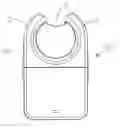
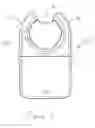
BRIEF DESCRIPTION OF THE DRAWINGSFIG. 1 is a bottom view of a transilluminator.
DETAILED DESCRIPTION OF THE INVENTIONThe transillumination device depicted in FIG. 1 has a housing 12 and a circular area of illumination 14 extending from the front edge and forming a viewing area 18. A light source 20, such as an LED, surrounds the viewing area. The housing contains a power source for the light source. The transilluminator is placed near the patient's skin for vein imaging. Other applications of transillumination devices are well known.
The use of an orange light, such as between 580 and 620 nm, allows enhanced imaging of superficial veins. Red light optimizes deeper veins and darker skin. The transillumination device may have a light source which can transmit both orange or red light. If necessary, two light sources, one of each color may be used in a single transillumination device. Alternatively, separate transillumination devices, one transmitting orange and one transmitting red, would enable the use of different colors for diagnostic testing.
While the invention has been described with reference to a preferred embodiment, variations and modifications would be apparent to one of ordinary skill in the art. Such variations and modifications are encompassed by the invention.
Claims
What is claimed is:1. A transillumination device comprising
a housing,
a light source retained by the housing, said light source emitting an orange light.
2. The transillumination device of claim 1,
wherein said orange light is between 580 and 620 nm.
3. The transillumination device of claim 1, further comprising
a circular area of illumination extending from said housing,
a viewing area formed between said circular area of illumination.
4. The transillumination device of claim 1, wherein said light source is an LED.
5. The transillumination device of claim 1, further comprising
a second light source emitting a red light.
6. The transillumination device of claim 1, wherein
said light source also emits a red light.
7. A method of view imaging, comprising
placing a light source proximate to the patient's skin, said light source emitting an orange light.
8. The method of claim 7, further comprising
using a red light to view deeper veins.
Images & Drawings included:
Sources:
- United States Patent and Trademark Office - verify current appl. status at the USPTO↗
Recent applications in this class:
- » 20250213117 2025-07-03
OPTICAL SENSOR DEVICE - » 20250185913 2025-06-12
DEVICE AND METHOD FOR ANALYZING A SPECKLE PATTERN FROM BIOLOGICAL TISSUE - » 20250160647 2025-05-22
ENHANCED VISIBLE LIGHT AND NEAR-INFRARED PHOTODIODE - » 20250134376 2025-05-01
OPTICAL BIOMEDICAL MEASUREMENT DEVICE - » 20250107714 2025-04-03
MULTIMODAL IMAGING GUIDED NONCONTACT VITAL SIGNS MONITORING SYSTEMS AND METHODS - » 20250072755 2025-03-06
SYSTEM FOR LOCALISING LIGHT IN LIGHT-SCATTERING MEDIA - » 20250064319 2025-02-27
DETECTION DEVICE - » 20250000363 2025-01-02
SENSOR MODULE FOR VITAL SIGN MONITORING AND METHOD - » 20240398234 2024-12-05
WEARABLE PULSE OXIMETER AND RESPIRATION MONITOR - » 20240358256 2024-10-31
MULTI-DIMENSIONAL SIGNAL DETECTION WITH OPTICAL SENSORS