High structural efficiency blades and devices using same
US20070104584A1
2007-05-10
11/271,096
2005-11-10
✅ Patent granted
US 7,322,798 B2
2008-01-29
-
-
Ninh H. Nguyen
2026-02-01
Abstract:
A blade for a rotor has integral stiffeners with at least one of unidirectional caps configured to carry blade bending loads in axial tension or webs to carry transverse shear resulting from blade bending.
Assignee:
- GENERAL ELECTRIC COMPANY 28,775 🇺🇸 Schenectady, NY, United States
Interested in similar patents?
Get notified when new applications in this technology area are published.
Classification:
F04D29/34 » CPC main
Details, component parts, or accessories; Rotors specially for elastic fluids for axial flow pumps Blade mountings
F03D1/0675 » CPC further
Wind motors with rotation axis substantially parallel to the air flow entering the rotor ; Rotors characterised by their construction, i.e. structural design details of the blades
F04D29/023 » CPC further
Details, component parts, or accessories; Selection of particular materials especially adapted for elastic fluid pumps
F04D29/388 » CPC further
Details, component parts, or accessories; Rotors specially for elastic fluids for axial flow pumps; Blades characterised by construction
F05B2260/96 » CPC further
Function Preventing, counteracting or reducing vibration or noise
F05B2280/2006 » CPC further
Materials; Properties thereof; Inorganic materials, e.g. non-metallic materials Carbon, e.g. graphite
F05B2280/4002 » CPC further
Materials; Properties thereof; Organic materials Cellulosic materials, e.g. wood
F05B2280/6013 » CPC further
Materials; Properties thereof; Properties or characteristics given to material by treatment or manufacturing Fibres
F05C2203/0882 » CPC further
Non-metallic inorganic materials; Ceramics; Oxides; Oxide ceramics Carbon, e.g. graphite
F05C2223/00 » CPC further
Organic materials
F05C2223/00 » CPC further
Cellulosic materials, e.g. wood
F05C2253/16 » CPC further
Other material characteristics; Treatment of material Fibres
F05D2300/224 » CPC further
Materials; Properties thereof; Oxide or non-oxide ceramics; Non-oxide ceramics Carbon, e.g. graphite
F05D2300/43 » CPC further
Materials; Properties thereof; Organic materials Synthetic polymers, e.g. plastics; Rubber
Y02E10/72 » CPC further
Energy generation through renewable energy sources; Wind energy Wind turbines with rotation axis in wind direction
Y02E10/72 » CPC further
Energy generation through renewable energy sources; Wind energy Wind turbines with rotation axis in wind direction
F04D29/38 IPC
Details, component parts, or accessories; Rotors specially for elastic fluids for axial flow pumps Blades
Description
BACKGROUND OF THE INVENTIONThis invention relates generally to blade structure and more particularly to blade structures that offer stiffness and structural strength, and to uses of such blades. Such blades are particularly suitable for (but are not limited to use in) wind turbine configurations.
Contemporary blades are made from fiberglass/epoxy composite material using monolithic, un-stiffened geometry. As a result, blades have thick, heavy, skins. If substantial care is not taken in processing, thick section laminates can be subject to porosity and delamination problems.
BRIEF DESCRIPTION OF THE INVENTIONOne aspect of the present invention therefore provides a blade for a rotor. The blade has integral stiffeners with at least one of unidirectional caps configured to carry blade bending loads in axial tension or webs to carry transverse shear resulting from blade bending.
In another aspect, the present invention provides a wind turbine having a generator, a hub, and at least one blade having integral stiffeners. The integral stiffeners include at least one of unidirectional caps configured to carry blade bending loads in axial tension or webs to carry transverse shear resulting from blade bending.
It will be seen that many configurations of the present invention can reduce blade weight at tops of towers while giving the designer several ways to adjust the strength and stiffness of blades to achieve improved structural performance.
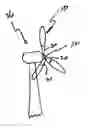
BRIEF DESCRIPTION OF THE DRAWINGSFIG. 1 is a drawing of a wind turbine configuration of the present invention.
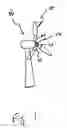
FIG. 2 is a drawing of a blade configuration having an integrally stiffened shell with a portion of the shell cut away for clarity.
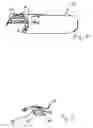
FIG. 3 is a drawing of a slice of the shell of FIG. 2 at C-C.
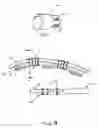
FIG. 4 a drawing of a configuration of blade/hub joint suitable for use with the blade configuration shown in FIG. 2.
FIG. 5 is a drawing showing one method for attaching the coupling of FIG. 4 to the blade of FIG. 2.
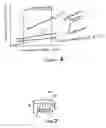
FIG. 6 is a graph showing resonant frequency as a function of cap depth for some configurations of the present invention.
FIG. 7 is an illustration showing dimensions on the blade configuration used in the graph of FIG. 6.
DETAILED DESCRIPTION OF THE INVENTIONIn some configurations of the present invention, integrally stiffened skin construction is used to replace prior art monolithic skin construction for wind turbine blades. Blade stiffness and structural strength are improved by geometry changes that are compatible with laminated composite material processing/fabrication. Improved structural efficiency results in reduced blade weight and material usage. When these blade configurations are used on wind turbines, a lighter weight hub results as does a lower tower weight at the top of the tower, both of which reduce structural requirements for the tower. Also provided in some configurations is a more robust, damage tolerant, attachment coupling for joining the blade to a hub.
Thus, and referring to FIG. 1, some configurations of the present invention provide a blade 10 for a rotor 12. Referring to FIGS. 2 and 3, blade 10 has integral stiffeners 14 with either or both unidirectional caps 16 configured to carry blade 10 bending loads in axial tension or webs 18 to carry transverse shear resulting from blade 10 bending. Unidirectional caps 16 can be carbon/epoxy caps 16 configured to carry blade bending loads in axial tension. Webs 18 can be balsa wood webs 18 to carry transverse shear resulting from blade 10 bending.
In some configurations and referring to FIGS. 1 and 4, a blade/hub attachment coupling 20 configured to transfer load from blade 10 to a supporting hub 12 is provided. Blade/hub attachment 20 can be comprised of metal, for example, and can have fingers 24 configured to transfer a load from blade 10 to supporting hub 12. One exemplary method for attaching of blade 10 to coupling 20 is shown in FIG. 5. In this method, bolts 22 are used to affix coupling 20 to blade 10. Bolts 22 transfer load from the laminated composite blade 10 by shear, reducing the likelihood of a fastener pull-through failure mechanism.
Also in some configurations, blade 10 includes stiffeners 14 and also a cap 16. In some of these configurations, stiffener 14 height, cap 16 thickness, and/or cap 16 material is/are selected to provide a predetermined strength, stiffness, or both. Cap 16 material can be a material selected from high, medium, or low modulus carbon/epoxy. Unidirectional carbon/epoxy caps 16 in some configurations are provided configured to carry blade bending loads in axial tension, and balsa wood webs 18 are provided in some configurations to carry transverse shear resulting from blade 10 bending. For example, and referring to FIGS. 5 and 6, resonant frequencies can be adjusted by adjusting cap 16 depth (hi) cap 16 elastic modulus (Ei) and/or cap thickness (ti). Adjustment of these variables can tune resonant frequencies away from critical excitation sources in the operating speed range of a blade or improve frequency margins of safety.
Blade 10 configurations of the present invention are not limited to particular applications. By way of example only, however, and referring again to FIG. 1, they are well suited for use in wind turbines 26. Wind turbine 26 configurations can include a generator (not shown in the figures), a hub 12, and at least one blade 10 of a configuration described herein. For example, blade or blades 10 can have integral stiffeners 14 with at least one of unidirectional caps 16 configured to carry blade 10 bending loads in axial tension or webs 18 to carry transverse shear resulting from blade 10 bending.
It will thus be appreciated that many configurations of the present invention reduce blade weight, and are particularly useful in reducing blade weight in wind turbines at tops of towers. Many configurations of the present invention also give designers a plurality of ways to adjust the strength and stiffness of blades to achieve improved structural performance.
While the invention has been described in terms of various specific embodiments, those skilled in the art will recognize that the invention can be practiced with modification within the spirit and scope of the claims.
Claims
What is claimed is:1. A blade for a rotor, the blade having integral stiffeners with at least one of unidirectional caps configured to carry blade bending loads in axial tension or webs to carry transverse shear resulting from blade bending.
2. A blade in accordance with claim 1 having unidirectional carbon/epoxy caps configured to carry blade bending loads in axial tension.
3. A blade in accordance with claim 1 having balsa wood webs to carry transverse shear resulting from blade bending.
4. A blade in accordance with claim 1 having both unidirectional carbon/epoxy caps configured to carry blade bending loads in axial tension and balsa wood webs to carry transverse shear resulting from blade bending.
5. A blade in accordance with claim 1 further comprising a blade/hub attachment coupling configured to transfer load from the blade to a supporting hub.
6. A blade in accordance with claim 5 wherein said blade/hub attachment is comprised of metal and has fingers configured to transfer the load from the blade to the supporting hub.
7. A blade in accordance with claim 1 having stiffeners and further comprising a cap, wherein at least one of stiffener height, cap thickness, and cap material is selected to provide a predetermined strength, stiffness, or both.
8. A blade in accordance with claim 7 wherein the cap material is selected from high, medium, and low modulus carbon/epoxy.
9. A blade in accordance with claim 7 having unidirectional carbon/epoxy caps configured to carry blade bending loads in axial tension.
10. A blade in accordance with claim 7 having balsa wood webs to carry transverse shear resulting from blade bending.
11. A wind turbine having a generator, a hub, and at least one blade having integral stiffeners with at least one of unidirectional caps configured to carry blade bending loads in axial tension or webs to carry transverse shear resulting from blade bending.
12. A wind turbine in accordance with claim 11 wherein said at least one blade has unidirectional carbon/epoxy caps configured to carry blade bending loads in axial tension.
13. A wind turbine in accordance with claim 11 wherein said at least one blade has balsa wood webs to carry transverse shear resulting from blade bending.
14. A wind turbine in accordance with claim 11 wherein said at least one blade has both unidirectional carbon/epoxy caps configured to carry blade bending loads in axial tension and balsa wood webs to carry transverse shear resulting from blade bending.
15. A wind turbine in accordance with claim 11 further comprising a blade/hub attachment coupling configured to transfer load from the at least one blade to the hub.
16. A wind turbine in accordance with claim 15 wherein said blade/hub attachment is comprised of metal and has fingers configured to transfer the load from the at least one blade blade to the hub.
17. A wind turbine in accordance with claim 11 wherein said at least one blade has stiffeners and further comprises a cap, wherein at least one of stiffener height, cap thickness, and cap material is selected to provide a predetermined strength, stiffness, or both.
18. A wind turbine in accordance with claim 17 wherein the cap material is selected from high, medium, and low modulus carbon/epoxy.
19. A wind turbine in accordance with claim 17 wherein said at least one blade has unidirectional carbon/epoxy caps configured to carry blade bending loads in axial tension.
20. A wind turbine in accordance with claim 17 wherein said at least one blade has balsa wood webs to carry transverse shear resulting from blade bending.
Images & Drawings included:
Sources:
- United States Patent and Trademark Office - verify current appl. status at the USPTO↗
Recent applications in this class:
- » 20250207606 2025-06-26
FAN BLADE QUICK INSTALLATION STRUCTURE AND A FAN USING THE SAME - » 20250122884 2025-04-17
Fan mounting system - » 20250052256 2025-02-13
Multipart Fan Wheel With A Fan Wheel Hub And A Plurality Of Fan Wheel Blades Formed Separately Therefrom - » 20250027508 2025-01-23
CEILING FAN, BLADE, AND BLADE CONNECTOR - » 20240271632 2024-08-15
Ceiling fan with snap-fit connector - » 20240167485 2024-05-23
Blade retention system for overhead fan - » 20240141916 2024-05-02
CEILING FAN AND STRUCTURE THEREOF - » 20240102484 2024-03-28
CEILING FAN HAVING DOUBLE-LAYER BLADES - » 20240093696 2024-03-21
MIXED FLOW INLINE FAN ASSEMBLY - » 20230332616 2023-10-19
CEILING FAN HAVING DOUBLE-LAYER BLADES
Recent applications for this Assignee:
- » 20250250942 2025-08-07
Overall Engine Efficiency Rating for Turbomachine Engines - » 20250243827 2025-07-31
MULTIPLE-FLOW AIRCRAFT TURBINE ENGINE - » 20250229333 2025-07-17
SYSTEMS AND METHODS FOR SMOOTHING A CONTOUR OF AN OBJECT FORMED DURING ADDITIVE MANUFACTURING - » 20250224115 2025-07-10
TURBINE ENGINE HAVING A COMBUSTION SECTION WITH A FUEL SUPPLY ASSEMBLY - » 20250223929 2025-07-10
UNDUCTED PROPELLER GAS TURBINE COMPRISING A COOLING AIR CHANNEL AND A VARIABLE BLEED VALVE EJECTION CHANNEL - » 20250222519 2025-07-10
ADDITIVE MANUFACTURING SUPPORTS AND METHODS FOR USING SAME IN ADDITIVELY MANUFACTURING PARTS - » 20250215830 2025-07-03
SUSPENSION OF A TRIPLE-FLOW AIRCRAFT TURBINE ENGINE - » 20250215826 2025-07-03
GAS TURBINE ENGINE - » 20250215811 2025-07-03
SYSTEMS AND METHODS FOR ATTACHMENT OF MATERIALS HAVING DIFFERENT THERMAL EXPANSION COEFFICIENTS - » 20250207534 2025-06-26
GAS TURBINE ENGINES AND EPICYCLIC GEARBOXES WITH PLANET GEAR CLEARANCES