Method for producing glycerol carbonate methacrylate
US20070106044A1
2007-05-10
10/580,840
2004-08-24
✅ Patent granted
US 7,414,147 B2
2008-08-19
WO; PCT/EP2004/009423; 20040824
WO; WO2005/058862; 20050630
Yvonne Eyler | Yevegeny Valenrod
2024-10-12
Abstract:
The invention relates to a method for producing glycerol carbonate methacrylate in the presence of metal-chelate catalysts of the metal ion-1,3-diketonate type.
Inventors:
- Maik CASPARI 11 🇩🇪 Alsbach-Haehnlein, Germany
- Bardo Schmitt 16 🇩🇪 Mainz, Germany
- Maik Caspari 1 🇩🇪 Hahnlein, Germany
Assignee:
- ROEHM GBMH & CO. KG 27 🇩🇪 Darmstadt, Germany
- Roehm GmbH & Co. KG 55 🇩🇪 Darmstadt, Germany
Interested in similar patents?
Get notified when new applications in this technology area are published.
Classification:
H01M10/0568 » CPC main
Secondary cells; Manufacture thereof; Accumulators with non-aqueous electrolyte characterised by the materials used as electrolytes, e.g. mixed inorganic/organic electrolytes the electrolyte being constituted of organic materials only; Liquid materials characterised by the solutes
C08F220/283 » CPC further
Copolymers of compounds having one or more unsaturated aliphatic radicals, each having only one carbon-to-carbon double bond, and only one being terminated by only one carboxyl radical or a salt, anhydride ester, amide, imide or nitrile thereof; Monocarboxylic acids having less than ten carbon atoms; Derivatives thereof; Esters; Esters containing oxygen in addition to the carboxy oxygen containing no aromatic rings in the alcohol moiety and containing one or more carboxylic moiety in the chain, e.g. acetoacetoxyethyl(meth)acrylate
H01M6/166 » CPC further
Primary cells; Manufacture thereof; Cells with non-aqueous electrolyte with organic electrolyte characterised by the electrolyte by the solute
Y02E60/10 » CPC further
Enabling technologies; Technologies with a potential or indirect contribution to GHG emissions mitigation Energy storage using batteries
Y02E60/10 » CPC further
Enabling technologies; Technologies with a potential or indirect contribution to GHG emissions mitigation Energy storage using batteries
C08F118/02 IPC
Homopolymers of compounds having one or more unsaturated aliphatic radicals, each having only one carbon-to-carbon double bond, and at least one being terminated by an acyloxy radical of a saturated carboxylic acid, of carbonic acid or of a haloformic acid Esters of monocarboxylic acids
C07D317/08 IPC
Heterocyclic compounds containing five-membered rings having two oxygen atoms as the only ring hetero atoms having the hetero atoms in positions 1 and 3
C07D317/36 » CPC further
Heterocyclic compounds containing five-membered rings having two oxygen atoms as the only ring hetero atoms having the hetero atoms in positions 1 and 3 not condensed with other rings with hetero atoms or with carbon atoms having three bonds to hetero atoms with at the most one bond to halogen, e.g. ester or nitrile radicals, directly attached to ring carbon atoms; Oxygen atoms Alkylene carbonates; Substituted alkylene carbonates
C08L67/00 IPC
Compositions of polyesters obtained by reactions forming a carboxylic ester link in the main chain ; Compositions of derivatives of such polymers
C08G65/02 IPC
Macromolecular compounds obtained by reactions forming an ether link in the main chain of the macromolecule from cyclic ethers by opening of the heterocyclic ring
Description
The invention relates to a process for preparing glycerol carbonate methacrylate in the presence of metal chelate catalysts of the metal ion 1,3-diketonate type, especially zirconium acetylacetonate.
In the coatings industry (2-oxo-1,3-dioxolan-4-yl)-methyl methacrylate (glycerol carbonate methacrylate) is a much-used crosslinker. There are a variety of preparation processes known for glycerol carbonate methacrylate.
JP 2001018729 reacts glycerol carbonate with acryloyl chloride. The chloride wastes produced constitute a large environmental burden. WO 2000031195 reacts glycidyl methacrylate with CO2. This process is carried out under high pressure. The apparatus needed for the process is intricate and expensive. DE 3937116 reacts a cyclocarbonate-containing alcohol with a carboxylic acid at elevated temperature and in the presence of an acidic catalyst. The desired product is obtained, after distillation, in a purity of 75.5%. The yield varies, as a function of the acid used, between 25.5% and 83%. With the purity achieved therein, of just 75.5%, there are numerous applications in which the product cannot be used.
It was an object of the invention to prepare glycerol carbonate methacrylate in high purity and with high yields.
This object has been achieved by a process for preparing (2-oxo-1,3-dioxolan-4-yl)methyl methacrylate in which methyl methacrylate is transesterified with glycerol carbonate in the presence of stabilizers and a metal chelate catalyst of the metal ion 1,3-diketonate type, especially zirconium acetylacetonate.
Surprisingly it has been found that through the use of zirconium acetylacetonate as a catalyst it is possible to operate under very mild conditions. The trans-esterification in the presence of zirconium acetyl-acetonate takes place at 50-80° C., preferably at 70° C.
Zirconium acetylacetonate is used preferably in amounts of 0.1-5.0% by weight, more preferably of from 1.0-3.0% by weight, based on the total weight of the batch.
As the catalyst it is possible, besides zirconium acetylacetonate, to use other metal 1,3-diketonates as well, such as lithium or zinc 1,3-diketonates, for example, or 1,3-diphenylpropane-1,3-dione.
It has been found that through the reaction regime of the invention a low crosslinker content is obtained. The effect of a low crosslinker content in applications is that improved mechanical properties are obtained in the case of copolymerization with other monofunctional monomers. The material is less brittle. Crosslinkers observed include glycerol dimethacrylate and glycerol trimethacrylate. The amount of crosslinker observed in the product is preferably less than 5% by weight, more preferably less than 3% by weight.
Additionally it has been found that the product can be prepared with high yields and in high purity. Yields above 80% are obtained, with product purities of around 90%. The purities achieved mean that costly and inconvenient distillative purification is unnecessary. The monomer possesses a high boiling point and can therefore be separated off only in a high vacuum. Costly and intricate distillation apparatus, and the risk of polymerization under the high thermal load, which is frequently observed with this monomer, both disappear.
In the preparation of (2-oxo-1,3-dioxolan-4-yl)methyl methacrylate, stabilizers are added, which prevent free-radical polymerization of the (meth)acrylic groups during the reaction. These stabilizers are widely known in the art.
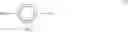
Use is made principally of 1,4-dihydroxybenzenes. Differently substituted dihydroxybenzenes, though, can also be employed. In general such stabilizers can be represented by the general formula (I)
in which
R5 is a linear or branched alkyl radical having one to eight carbon atoms, halogen or aryl, preferably an alkyl radical having one to four carbon atoms, more preferably methyl, ethyl, n-propyl, isopropyl, n-butyl, isobutyl, sec-butyl, tert-butyl, Cl, F or Br;
o is an integer in the range from one to four, preferably one or two; and
R6 is hydrogen, a linear or branched alkyl radical having one to eight carbon atoms or aryl, preferably an alkyl radical having one to four carbon atoms, more preferably methyl, ethyl, n-propyl, isopropyl, n-butyl, isobutyl, sec-butyl or tert-butyl.
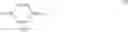
An alternative is to use compounds having 1,4-benzoquinone as their parent compound. Such compounds can be described by the formula (II)
in which
R5 is a linear or branched alkyl radical having one to eight carbon atoms, halogen or aryl, preferably an alkyl radical having one to four carbon atoms, more preferably methyl, ethyl, n-propyl, isopropyl, n-butyl, isobutyl, sec-butyl, tert-butyl, Cl, F or Br; and
o is an integer in the range from one to four, preferably one or two.
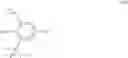
Also used are phenols of the general structure (III)
in which
R5 is a linear or branched alkyl radical having one to eight carbon atoms, aryl or aralkyl, propionic esters with mono- to tetrahydric alcohols, which may also contain heteroatoms such as S, O and N, preferably an alkyl radical having one to four carbon atoms, more preferably methyl, ethyl, n-propyl, isopropyl, n-butyl, isobutyl, sec-butyl or tert-butyl.
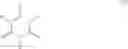
A further advantageous class of substance is represented by hindered phenols based on triazine derivatives of the formula (IV)
where R7=compound of the formula (V)
in which
R8=CpH2p+1
where p=1 or 2.
Employed with particular success are the compounds 1, 4-dihydroxybenzene, 4-methoxyphenol, 2,5-dichloro-3,6-dihydroxy-1,4-benzoquinone, 1,3,5-trimethyl-2,4,6-tris(3,5-di-tert-butyl-4-hydroxybenzyl)benzene, 2,6-di-tert-butyl-4-methylphenol, 2,4-dimethyl-6-tert-butyl-phenol, 2,2-bis[3,5-bis(1,1-dimethylethyl) -4-hydroxy-phenyl-1-oxopropoxymethyl)]1,3-propanediyl ester, 2,2′-thiodiethyl bis[3-(3,5-di-tert-butyl-4-hydroxy-phenyl)]propionate, octadecyl-3-(3,5-di-tert-butyl-4-hydroxyphenyl)propionate, 3,5-bis(1,1-dimethylethyl-2,2-methylenebis(4-methyl-6-tert-butyl)phenol, tris (4-tert-butyl-3-hydroxy-2, 6-dimethylbenzyl)-s-triazine-2,4,6-(1H,3H,5H)trione, tris(3,5-di-tert-butyl-4-hydroxy)-s-triazine-2,46-(1H,3H,5H)trione or tert-butyl-3,5-dihydroxybenzene, more preferably 4-hydroxy-2,2,6,6-tetramethylpiperidinooxyl, hydroquinone, 4-methyl-2,6-di-tert-butylphenol, hydroquinone mono-methyl ether, 2-tert-butyl-6-(3-tert-butyl-2-hydroxy-5-methylbenzyl)-4-methylphenyl acrylate, 4-(methacryloyl-oxy)-2,2,6,6-tetramethylpiperidine-1-oxyl or 2,5-di-tert-butylhydroquinone.
For the purposes of the invention a tocopherol compound is used to stabilize ethylenically unsaturated monomers.
The tocopherol compounds which can be used in the context of the invention are chroman-6-ols (3,4-di-hydro-2H-1-benzopyran-6-ols) which are substituted in position 2 by a 4,8,12-trimethyltridecyl radical. The tocopherols which can be used with preference in accordance with the invention include alpha-tocopherol, beta-tocopherol, gamma-tocopherol, delta-tocopherol, zeta2-tocopherol, and eta-tocopherol, all of the aforementioned compounds each in the (2R,4′R,8′R) form, and also alpha-tocopherol in the (all-rac) form. Preference is given to alpha-tocopherol in the (2R, 4′R,8′R) form (trivial name: RRR-alpha-tocopherol), and also to the synthetic racemic alpha-tocopherol (all-rac-alpha-tocopherol). Of these, in turn, the latter is of particular interest owing to the relatively low price.
Based on the weight of the reaction mixture as a whole, the fraction of the stabilizers, individually or as a mixture, is generally 0.01%-0.50% by weight, the stabilizer concentration being selected preferably so as not to be detrimental to the color number in accordance with DIN 55945. Many of these stabilizers are available commercially.
Glycerol carbonate methacrylate can be used as a functional monomer in copolymers of coating materials and adhesives, and allows a subsequent, polymer-analogous reaction, including crosslinking with difunctional amines in a coating formulation. Furthermore, it can be used in battery electrolytes, in extrusion resins, and for metal extraction.
The examples given below are given in order better to illustrate the present invention, but have no capacity to restrict the invention to the features disclosed herein.
EXAMPLES Example 1118 g (1.0 mol) of glycerol carbonate are heated with 600 g (6.0 mol) of methyl methacrylate and 0.14 g of 4-hydroxy-2,2,6,6-tetramethylpiperidinooxyl (Tempol) in a round-bottomed flask with distillation apparatus. Any water present is distilled off azeotropically with methyl methacrylate. The mixture is then cooled slightly. 18.0 g of zirconium acetylacetonate and the amount of methyl methacrylate equivalent to the azeotrope distillate are added to the mixture. The mixture is heated to boiling. Alcoholysis is commenced at an overhead temperature of 70° C. Toward the end of the reaction it increased to 100° C.
After the end of the alcoholysis the mixture is cooled and the zirconium acetylacetonate catalyst is precipitated with dilute phosphoric acid. The suspension is then passed through a pressure filter and the filtrate is separated off.
For the purpose of separating off the glycerol carbonate, the filtrate is shaken in a separating funnel containing a dilute NaCl solution. The filtrate is degassed on a rotary evaporator at 70° C. and 200-10 mbar.
The yield is 80.6%. The purity of the product is 91.4%.
Experiment number: B1
Example 2236 g (2.0 mol) of glycerol carbonate are heated with 1200 g (12.0 mol) of methyl methacrylate and 0.29 g of 4-hydroxy-2,2,6,6-tetramethylpiperidinooxyl (Tempol) in a round-bottomed flask with distillation apparatus. Any water present is distilled off azeotropically with methyl methacrylate. The mixture is then cooled slightly. 28.7 g of zirconium acetylacetonate and the amount of methyl methacrylate equivalent to the azeotrope distillate are added to the mixture. The mixture is heated to boiling. Alcoholysis is commenced at an overhead temperature of 70° C. Toward the end of the reaction it increased to 100° C.
After the end of the alcoholysis the mixture is cooled and the zirconium acetylacetonate catalyst is precipitated with dilute phosphoric acid. The suspension is then passed through a pressure filter and the filtrate is separated off.
For the purpose of separating off the glycerol carbonate, the filtrate is shaken in a separating funnel containing a dilute NaCl solution. The filtrate is degassed on a rotary evaporator at 70° C. and 200-10 mbar.
The yield is 87.4%. The purity of the product is 89.7%.
Experiment number: B2
Comparative Example 1Isopropyl Titanate
236 g (2.0 mol) of glycerol carbonate are heated with 600 g (6.0 mol) of methyl methacrylate and 0.14 g of 4-hydroxy-2,2,6,6-tetramethylpiperidinooxyl (Tempol) in a round-bottomed flask with distillation apparatus. Any water present is distilled off azeotropically with methyl methacrylate. The mixture is then cooled slightly. 8.4 g of isopropyl titanate and the amount of methyl methacrylate equivalent to the azeotrope distillate are added to the mixture. The mixture is heated to boiling. Alcoholysis is commenced at an overhead temperature of 70° C. The reaction, however, is very sluggish, and is therefore terminated after 3 hours, with excess methyl methacrylate (MMA) being removed by distillation. The crude ester is analyzed.
Experiment number: C1
Comparative Example 2Dioctyltin Oxide
118 g (1.0 mol) of glycerol carbonate are heated with 600 g (6.0 mol) of methyl methacrylate and 0.14 g of 4-hydroxy-2,2,6,6-tetramethylpiperidinooxyl (Tempol) in a round-bottomed flask with distillation apparatus. Any water present is distilled off azeotropically with methyl methacrylate. The mixture is then cooled slightly. 14.4 g of dioctyltin oxide and the amount of methyl methacrylate equivalent to the azeotrope distillate are added to the mixture. The mixture is heated to boiling. However, the reaction does not start, no methanol is formed, and the experiment is terminated.
Experiment number: C2
Comparative Example 3LiOH/CaO
118 g (1.0 mol) of glycerol carbonate are heated with 600 g (6.0 mol) of methyl methacrylate and 0.14 g of 4-hydroxy-2,2,6,6-tetramethylpiperidinooxyl (Tempol) in a round-bottomed flask with distillation apparatus. Any water present is distilled off azeotropically with methyl methacrylate. The mixture is then cooled slightly. 4.0 g of LiOH, 10.4 g of CaO, and the amount of methyl methacrylate equivalent to the azeotrope distillate are added to the mixture. The mixture is heated to boiling. Alcoholysis is commenced at an overhead temperature of 70° C. Toward the end of the reaction it increased to 100° C.
Subsequently the batch is cooled and passed through a pressure filter, and the filtrate is separated off. For the purpose of separating off the glycerol carbonate, the filtrate is shaken in a separating funnel containing a dilute NaCl solution. The filtrate is degassed on a rotary evaporator at 70° C. and 200-10 mbar.
The yield is 79.6%. The purity of the product is 52.7%.
Experiment number: C3
Comparative Example 4Lithium Methoxide
118 g (1.0 mol) of glycerol carbonate are heated with 600 g (6.0 mol) of methyl methacrylate and 0.14 g of 4-hydroxy-2,2,6,6-tetramethylpiperidinooxyl (Tempol) in a round-bottomed flask with distillation apparatus. Any water present is distilled off azeotropically with methyl methacrylate. The mixture is then cooled slightly. 14.4 g of lithium methoxide and the amount of methyl methacrylate equivalent to the azeotrope distillate are added to the mixture. The mixture is heated to boiling. Alcoholysis is commenced at an overhead temperature of 70° C. Toward the end of the reaction it increased to 100° C. After the end of the reaction, excess MMA is removed by distillation. The crude ester is filtered and then analyzed.
Experiment number: C4
The results of the experiments are summarized in the table below:
| Crude ester | Monomer pure | |||
| Catalyst | (containing MMA) | GC:* |
| Amount based on | Alcohol | Product | HS1 | HS2 | Polytest | Yield | Alcohol | Product | HS1 | HS2 | |
| Experiment | batch in % | area % | area % | area % | area % | in MeOH | % of th. | area % | area % | area % | area % |
| B1 | Zirconium | 8.2 | 70.1 | 0.8 | 0.6 | clear | 80.6 | 0.9 | 91.4 | 0.9 | 0.9 |
| acetylacetonate | |||||||||||
| 2.5 | |||||||||||
| B2 | Zirconium | 8.1 | 72.7 | 0.9 | 0.9 | clear | 87.4 | 0.8 | 89.7 | 1.0 | 1.3 |
| acetylacetonate | |||||||||||
| 2.0 | |||||||||||
| C1 | Isopropyl | 90.7 | 6.5 | n.d. | n.d. | n.d. | n.d. | n.d. | n.d. | n.d. | n.d. |
| titanate | |||||||||||
| 1.0 | |||||||||||
| C2 | Dioctyltin oxide# | n.d. | n.d. | n.d. | n.d. | n.d. | n.d. | n.d. | n.d. | n.d. | n.d. |
| 2.0 | |||||||||||
| C3 | LiOH/CaO | 7.5 | 49.5 | 12 | 25 | clear | 79.6 | 0.3 | 52.7 | 12.3 | 27.3 |
| 2.0 | |||||||||||
| C4 | Lithium methoxide | 2.2 | 68.9 | 1.6 | 20 | n.d. | n.d. | n.d. | n.d. | n.d. | n.d. |
| 2.5 | |||||||||||
Key: |
|||||||||||
*GC: further peaks disregarded |
|||||||||||
HS1 glycerol dimethacrylate |
|||||||||||
HS2 glycerol trimethacrylate |
|||||||||||
#no conversion |
|||||||||||
n.d. not determined |
Claims
1. A process for preparing (2-oxo-1,3-dioxolan-4-yl)-methyl methacrylate, characterized in that methyl methacrylate is transesterified with glycerol carbonate in the presence of stabilizers and a metal chelate catalyst of the metal ion 1,3-diketonate type.
2. A process for preparing (2-oxo-1,3-dioxolan-4-yl)-methyl methacrylate, characterized in that the catalyst is zirconium acetylacetonate.
3. A process for preparing (2-oxo-1,3-dioxolan-4-yl)-methyl methacrylate, characterized in that the transesterification takes place at 50-80° C.
4. A process for preparing (2-oxo-1,3-dioxolan-4-yl)-methyl methacrylate, characterized in that the transesterification takes place at 70° C.
5. A process for preparing (2-oxo-1,3-dioxolan-4-yl)-methyl methacrylate, characterized in that zirconium acetylacetonate is used in amounts of 0.1-5.0% by weight, based on the total weight of the batch.
6. A process for preparing (2-oxo-1,3-dioxolan-4-yl)-methyl methacrylate, characterized in that zirconium acetylacetonate is used in amounts of 1.0-3.0% by weight, based on the total weight of the batch.
7. A process for preparing (2-oxo-1,3-dioxolan-4-yl)-methyl methacrylate, characterized in that the amount of crosslinker formed during the preparation is less than 5% by weight, in particular less than 3% by weight.
8. A process for preparing (2-oxo-1,3-dioxolan-4-yl)-methyl methacrylate, characterized in that stabilizers are used in amounts of 0.01-0.50% by weight.
9. The use of (2-oxo-1,3-dioxolan-4-yl)methyl methacrylate prepared according to claim 1 as a crosslinker in adhesives and coating materials.
10. The use of (2-oxo-1,3-dioxolan-4-yl)methyl methacrylate prepared according to claim 1 as a battery electrolyte.
11. The use of (2-oxo-1,3-dioxolan-4-yl)methyl methacrylate prepared according to claim 1 in extrusion resins.
12. The use of (2-oxo-1,3-dioxolan-4-yl)methyl methacrylate prepared according to claim 1 for metal extraction.
Images & Drawings included:

Sources:
- United States Patent and Trademark Office - verify current appl. status at the USPTO↗
Recent applications in this class:
- » 20250293306 2025-09-18
NON-AQUEOUS ELECTROLYTE SOLUTIONS - » 20250293305 2025-09-18
POLYVALENT METAL ION-CONTAINING ELECTROLYTE FOR RECHARGEABLE BATTERY - » 20250286140 2025-09-11
NONAQUEOUS ELECTROLYTE SOLUTION AND METHOD FOR STORING SAME - » 20250279479 2025-09-04
BATTERY CELL, BATTERY, AND POWER CONSUMING APPARATUS - » 20250279478 2025-09-04
COMPOSITE, SHEET, ELECTROCHEMICAL ELEMENT, AND POWER STORAGE DEVICE - » 20250273739 2025-08-28
SECONDARY BATTERY, ELECTRONIC DEVICE, AND VEHICLE - » 20250273738 2025-08-28
SODIUM ION BATTERY, BATTERY MODULE, BATTERY PACK AND POWER CONSUMING DEVICE - » 20250266503 2025-08-21
ELECTROLYTE SOLUTION AND BATTERY - » 20250260062 2025-08-14
SECONDARY BATTERY AND ELECTRIC APPARATUS - » 20250260061 2025-08-14
BATTERY CELL, BATTERY, AND ELECTRIC DEVICE
Recent applications for this Assignee:
- » 20100075142 2010-03-25
IR reflective elements made of impact-resistance plastic, and a process for their production - » 20090229751 2009-09-17
Matt polymerization glue - » 20080237438 2008-10-02
Spring-supported suspension for noise insulation elements - » 20080158670 2008-07-03
Stable rear projection screen and method for the production thereof - » 20070208109 2007-09-06
Additive building material mixtures containing swellable polymeric formations - » 20070208107 2007-09-06
Additive building material mixtures containing microparticles swollen in the building material mixture - » 20070203286 2007-08-30
Mixtures for producing transparent plastics, transparent plastics and method for producing the same and the use thereof - » 20070197690 2007-08-23
Additive building material mixtures containing sterically or electrostatically repulsive monomers in the microparticles' shell - » 20070197671 2007-08-23
Additive building material mixtures containing microparticles having very thin shells - » 20070196655 2007-08-23
Additive building material mixtures containing microparticles whose shells are porous and/or hydrophilic