Method for manufacturing catalyzed diesel particulate filter
US20070107227A1
2007-05-17
11/497,933
2006-08-01
Abstract:
A method of manufacturing a diesel catalyzed particulate filter includes the steps of (a) preparing a plurality of segments, (b) coating each segment or group of segments with a different type or concentration of a catalyst solution, and drying the segments, and (c) binding the segments together, and sintering the segments.
Interested in similar patents?
Get notified when new applications in this technology area are published.
Classification:
B01D53/944 » CPC main
Separation of gases or vapours; Recovering vapours of volatile solvents from gases; Chemical or biological purification of waste gases, e.g. engine exhaust gases, smoke, fumes, flue gases, aerosols,; Chemical or biological purification of waste gases of engine exhaust gases by catalytic processes Simultaneously removing carbon monoxide, hydrocarbons or carbon making use of oxidation catalysts
B01J23/42 » CPC further
Catalysts comprising metals or metal oxides or hydroxides, not provided for in group of noble metals of the platinum group metals Platinum
B01J23/44 » CPC further
Catalysts comprising metals or metal oxides or hydroxides, not provided for in group of noble metals of the platinum group metals Palladium
B01J35/0006 » CPC further
Catalysts, in general, characterised by their form or physical properties Catalysts containing parts with different compositions
B01J35/04 » CPC further
Catalysts, in general, characterised by their form or physical properties; Solids Foraminous structures, sieves, grids, honeycombs
F01N3/0222 » CPC further
Exhaust or silencing apparatus having means for purifying, rendering innocuous, or otherwise treating exhaust for cooling, or for removing solid constituents of, exhaust by means of filters characterised by specially adapted filtering structure, e.g. honeycomb, mesh or fibrous the structure being monolithic, e.g. honeycombs
B01D2258/012 » CPC further
Sources of waste gases; Engine exhaust gases Diesel engines and lean burn gasoline engines
F01N3/035 » CPC further
Exhaust or silencing apparatus having means for purifying, rendering innocuous, or otherwise treating exhaust for cooling, or for removing solid constituents of, exhaust by means of filters in combination with other devices with catalytic reactors, e.g. catalysed diesel particulate filters
F01N2450/28 » CPC further
Methods or apparatus for fitting, inserting or repairing different elements by using adhesive material, e.g. cement
Y02T10/12 » CPC further
Road transport of goods or passengers; Internal combustion engine [ICE] based vehicles Improving ICE efficiencies
Y02T10/12 » CPC further
Road transport of goods or passengers; Internal combustion engine [ICE] based vehicles Improving ICE efficiencies
Y10T29/49604 » CPC further
Metal working; Method of mechanical manufacture; Multiperforated metal article making Filter
B23P15/16 IPC
Making specific metal objects by operations not covered by a single other subclass or a group in this subclass plates with holes of very small diameter, e.g. for spinning or burner nozzles
Description
CROSS-REFERENCE TO RELATED APPLICATIONSThis application claims benefit under 35 U.S.C. § 119(a) of Korean Patent Application No. 10-2005-0107333, filed Nov. 10, 2005, the entire contents of which are incorporated herein by reference.
BACKGROUND OF THE INVENTION1. Field of the invention
The present invention relates to a method of manufacturing a diesel catalyzed particulate filter. More particularly, the present invention relates to a method of manufacturing a diesel catalyzed particulate filter in which kind and/or concentration of catalysts vary across a cross-section of the filter.
2. Description of the Related Art
Generally, exhaust gas is discharged to air through an exhaust pipe. The exhaust gas includes carbon monoxide (CO), nitrogen oxide (NOx), non-combusted hydrocarbon (HC), and other toxic substances. Diesel engines emit exhaust gas containing relatively small amounts of carbon monoxide (CO) and hydrocarbon (HC) compared to gasoline engines, but relatively high amounts of particulate matter and nitrogen oxides.
A catalytic converter using a three-way catalyst is generally installed in the middle of an exhaust pipe to purify exhaust gas. Catalysts used in catalytic converters can differ because emissions vary with vehicle type. A three-way catalyst, which is generally a combination of platinum (Pt) and rhodium (Rh), a combination of palladium (Pd) and rhodium (Rh), or a combination of platinum (Pt), palladium (Pd) and rhodium (Rh), reacts with hydrocarbons, carbon monoxide, and nitrogen oxide.
There are many conventional coating methods for coating different concentrations of catalyst on a ceramic support. For example, one method is a dipping method, in which a ceramic support is sequentially dipped in catalyst solutions with different concentrations. Another method is a suction method in which one end of a support is first dipped into a catalyst solution, and the catalyst solution is suctioned through the support by applying a negative pressure to the other end of the support. This can be repeated on the other side of the support with a different concentration of catalyst solution.
The suction method cannot be used in a diesel particulate filter, which has walled cells to trap soot. However, the dipping method has a disadvantage in that the interior of the support does not have as high a concentration of catalyst as the edges. Flux and temperature of exhaust gas vary over a cross section of the filter. It would therefore be beneficial to provide a catalyzed diesel particulate filter whose catalyst concentration varies accordingly.
SUMMARY OF THE INVENTIONEmbodiments of the present invention provide a method of manufacturing a diesel catalyzed particulate filter comprising the steps of preparing a plurality of segments, the shape and size of each segment being determined according to distribution of flux and temperature of exhaust gas generated during operation of an engine, coating the segments with different types or different concentrations of catalyst solutions by sequentially dipping the segments into catalyst solutions and drying the segments, binding the coated segments together to be a single full-size filter, and sintering the bound segments. The diesel catalyst particulate filter has a cross section on which optimized types and concentrations of catalyst are coated according to flux and temperature of exhaust gas at each position.
BRIEF DESCRIPTION OF THE DRAWING FIGURESThe above aspect and other features of the present invention will become more apparent by describing in detail exemplary embodiments thereof with reference to the attached drawing figures, wherein;
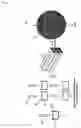
FIG. 1 is a view illustrating a sequence of manufacturing a catalyzed diesel particulate filter according to embodiments of the present invention;
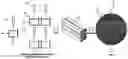
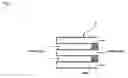
FIG. 2 is a conceptual view illustrating a cell structure of a segment of a catalyzed diesel particulate filter according to embodiments of the present invention; and
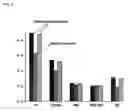
FIG. 3 is a graph illustrating a comparison of purification efficiencies of diesel catalyzed particulate filters according to conventional arts and the present invention.
DETAILED DESCRIPTION OF THE EXEMPLARY EMBODIMENTSHereinafter, embodiments of the present invention will be described in detail with reference to the accompanying drawing figures.
As shown in FIG. 1, a plurality of segments 11 is prepared. The segments 11 combine to make a full-size filter 10 when they are assembled. In some embodiments, around 16 to 20 segments are used; however, their number, shapes, and sizes may vary, as shape and size of the filter 10 depend on automobile type.
The segments are manufactured using well-known methods. Each segment may have the structure shown in FIG. 2.
A number of vessels 13, the number corresponding to the number of different kinds and/or concentrations of catalysts, are filled with catalyst solutions 14. Each segment 11 is dipped into a corresponding vessel 13 and then taken out. That is, the segments 11 are coated one by one. When coating each segment 11, the concentration and type of catalyst is selected considering flux and temperature of exhaust gas at the segment's assigned location in the cross-section of the filter.
All of the segments can be coated with different catalyst solutions or some of the segments can be coated with the same catalyst solution. For example, if one filter includes 16 segments, the segments can be coated with 16 types of catalysts. Alternatively, the segments can be separated into groups of two or four segments, and then the segments in each group can be coated with the same kind of catalyst.
After finishing the coating process, the segments 11 are dried at about 150° C.
Then, the dried segments are assembled according to their assigned positions and bound together using an adhesive such as silicon carbonate or silica, thereby producing a full-size filter 10.
Next, finally, the segment assembly is sintered below about 600° C., and preferably at about 500 to 550° C.
FIG. 3 illustrates a comparison of purification efficiencies in a diesel engine of two conventional catalyzed diesel particulate filters and the present invention catalyzed diesel particulate filter in which a cross section of the filter is coated with different types or concentrations of catalysts. In this figure, the amounts of carbon monoxide (CO), hydrocarbon+nitrogen oxide (HC+NOx), nitrogen oxide (NOx), particulate matter (PM), and total hydrocarbon (THC) are compared in g/kg.
The leftmost conventional catalyzed diesel particulate filter of FIG. 3 is manufactured by coating a support with 1.06 g/l of platinum at uniform concentration. The rightmost conventional catalyzed diesel particulate filter is manufactured by coating a support with a mixture of platinum and palladium at a platinum/palladium ratio of 2:1 and 1.06 g/l of platinum. The present invention catalyzed diesel particulate filter is manufactured by coating each of four segments disposed in a center portion of the filter with 1.5 g/l of platinum and coating each of the other segments with 0.82 g/l.
While the invention has been shown and described with reference to certain embodiments thereof, it will be understood by those skilled in the art that various changes in form and details may be made therein without departing from the spirit and scope of the invention as defined by the appended claims.
Claims
What is claimed is:1. A method for manufacturing a diesel catalyzed particulate filter, comprising:
(a) preparing a plurality of segments;
(b) coating at least a first one of said segments with a first catalyst solution, coating at least a second one of said segments with a second catalyst solution, and drying the segments; and
(c) binding the segments together and sintering the segments.
2. The method as claimed in claim 1, wherein the coating comprises dipping.
3. The method as claimed in claim 1, wherein the first catalyst solution comprises a first type of catalyst and the second catalyst solution comprises a second type of catalyst.
4. The method as claimed in claim 1, wherein the first catalyst solution comprises a first concentration of a catalyst and the second catalyst solution comprises a second concentration of the catalyst.
Images & Drawings included:
Sources:
- United States Patent and Trademark Office - verify current appl. status at the USPTO↗
Recent applications in this class:
- » 20240416280 2024-12-19
EMISSIONS TREATMENT ARTICLES WITH INORGANIC FILTRATION DEPOSITS AND CATALYTIC MATERIAL - » 20240316495 2024-09-26
METHANE CONVERSION REACTOR HAVING FORCED AIR DELIVERY - » 20240001299 2024-01-04
EXHAUST GAS PURIFICATION SYSTEM FOR STOICHIOMETRIC-COMBUSTION ENGINES - » 20230158454 2023-05-25
OXIDATION CATALYST WITH PHOSPHORUS TRAP - » 20220297063 2022-09-22
Metal foil catalyst for the control of emissions from diesel engines - » 20210322924 2021-10-21
Metal foil catalyst for the control of emissions from diesel engines - » 20210146304 2021-05-20
Integrated aftertreatment system - » 20200197866 2020-06-25
Integrated aftertreatment system - » 20200094188 2020-03-26
Device for treating exhaust gas from engine and method for manufacturing said device - » 20200070092 2020-03-05
PGM catalyst coupled with a non-PGM catalyst with HC oxidation capability