Finishing method for manufacturing wetsuits non-stitch
US20070107840A1
2007-05-17
11/281,118
2005-11-17
Abstract:
An improved finishing method in the manufacture of wetsuits, can be used in the borders of collars, sleeves, and legs of a wetsuit. The inventive method includes the steps of melding fabric and rubber sponge using pressure and heat to make the fabric and rubber combine completely as one layer. The cutting of the border is neater without being covered with other material. The new method makes the wetsuit more elastic and the wetsuit wearer feels more comfortable.
Interested in similar patents?
Get notified when new applications in this technology area are published.
Classification:
A41D27/245 » CPC main
Details of garments or of their making; Hems; Seams made by welding or gluing
B29C65/02 » CPC further
Joining of preformed parts ; Apparatus therefor by heating, with or without pressure
B29C65/18 » CPC further
Joining of preformed parts ; Apparatus therefor by heating, with or without pressure using heated tools
B29C65/743 » CPC further
Joining of preformed parts ; Apparatus therefor by welding and severing, or by joining and severing, the severing being performed in the area to be joined, next to the area to be joined, in the joint area or next to the joint area using the same tool for both joining and severing, said tool being monobloc or formed by several parts mounted together and forming a monobloc
B29C65/7435 » CPC further
Joining of preformed parts ; Apparatus therefor by welding and severing, or by joining and severing, the severing being performed in the area to be joined, next to the area to be joined, in the joint area or next to the joint area using the same tool for both joining and severing, said tool being monobloc or formed by several parts mounted together and forming a monobloc the tool being a roller
B29C66/1122 » CPC further
General aspects of processes or apparatus for joining preformed parts; General aspects dealing with the joint area or with the area to be joined; Particular design of joint configurations particular design of the joint cross-sections; Joint cross-sections comprising a single joint-segment, i.e. one of the parts to be joined comprising a single joint-segment in the joint cross-section; Single lapped joints Single lap to lap joints, i.e. overlap joints
B29C66/436 » CPC further
General aspects of processes or apparatus for joining preformed parts; General aspects of joining substantially flat articles, e.g. plates, sheets or web-like materials; Making flat seams in tubular or hollow articles; Joining single elements to substantially flat surfaces; Joining substantially flat articles ; Making flat seams in tubular or hollow articles; Joining a relatively small portion of the surface of said articles Joining sheets for making articles comprising cushioning or padding materials, the weld being performed through the cushioning material, e.g. car seats
B29C66/727 » CPC further
General aspects of processes or apparatus for joining preformed parts characterised by the composition, physical properties or the structure of the material of the parts to be joined; Joining with non-plastics material characterised by the structure of the material of the parts to be joined being porous, e.g. foam
B29C66/832 » CPC further
General aspects of processes or apparatus for joining preformed parts; General aspects of machine operations or constructions and parts thereof characterised by the movement of the joining or pressing tools Reciprocating joining or pressing tools
B29C66/83413 » CPC further
General aspects of processes or apparatus for joining preformed parts; General aspects of machine operations or constructions and parts thereof characterised by the movement of the joining or pressing tools moving with the parts to be joined; Roller, cylinder or drum types; Band or belt types; Ball types; Roller, cylinder or drum types cooperating rollers, cylinders or drums
B29C67/0044 » CPC further
Shaping techniques not covered by groups - , or for shaping edges or extremities
B29C66/137 » CPC further
General aspects of processes or apparatus for joining preformed parts; General aspects dealing with the joint area or with the area to be joined; Particular design of joint configurations particular design of the joint cross-sections; Single flanged joints; Fin-type joints; Single hem joints; Edge joints; Interpenetrating fingered joints; Other specific particular designs of joint cross-sections not provided for in groups - Beaded-edge joints or bead seals
B29K2105/04 » CPC further
Condition, form or state of moulded material or of the material to be shaped cellular or porous
B29K2313/02 » CPC further
coated
B29L2009/00 » CPC further
Layered products
B29L2031/4842 » CPC further
Other particular articles; Wearing apparel Outerwear
B29L2031/5254 » CPC further
Other particular articles; Sports equipment ; Games; Articles for amusement ; Toys Swimming or diving equipment
B29C66/71 » CPC further
General aspects of processes or apparatus for joining preformed parts characterised by the composition, physical properties or the structure of the material of the parts to be joined; Joining with non-plastics material characterised by the composition of the plastics material of the parts to be joined
B29K2021/00 » CPC further
Use of unspecified rubbers as moulding material
B29K2067/00 » CPC further
Use of polyesters or derivatives thereof , as moulding material
B32B37/00 IPC
Methods or apparatus for making layered products; Treatment of the layers or of the layered products
B32B37/00 IPC
Methods or apparatus for laminating, e.g. by curing or by ultrasonic bonding
Description
BACKGROUND OF THE INVENTION1. Field of the Invention
The present invention relates to the manufacture of wetsuits and specifically to a finishing method that includes the step of using pressure and heat to combine fabric and rubber into one integral layer of material to obviate the prior art use of additional coverings and stitching.
2. Background Art
The conventional finishing methods used for the borders of collars, sleeves, and legs of a wetsuit are:
- 1) Raw edge method: No coverings are to be added on the borders. This will usually cause numerous defects such as the cracking of the exposed rubber after a certain time of exposure to sunlight. The fabric part will tear or split, and also cause such edge to become loose after a certain time;
- 2) Fold-in stitch method: The edge or border is folded inwards and then stitched in place. This finishing method reduces the elasticity of the border due to increased thickness and stitching. Also the friction caused by this fold-in part rubbing the wearer's skin makes the wearer feel uncomfortable;
- 3) Binding method: A fabric is covered and stitched on the border as a finishing. Such finishing method reduces the elasticity of the border caused by the increase in thickness of the border with added fabric and stitching. The friction caused by this binding method rubbing the wearer's skin makes the wearer feel uncomfortable.
A wetsuit is comprised of a layer of rubber sponge laminated with fabric, nylon or polyester, on both sides and the thickness can be adjusted and changeable depending upon demand. The present invention exploits a special quality of this material to meld the fabrics and rubber sponge with pressure and heat to combine the fabric and rubber completely as one layer, the resulting cutting of the border being neat and perfect.
The new method obviates the defects caused by conventional finishing method, fold-in or binding, namely decreased elasticity and discomfort caused by friction. When the new method is applied on the borders of the collar, sleeves, and legs, the elasticity and comfort characteristics of the wetsuit are preserved.
Conventional finishing methods typically reduce the elasticity of the fabric and rubber sponges, even if the fabric or sponge is of high elasticity. The elasticity decrease is caused by the added thickness and the threads used in stitching. The present invention is applied on the borders of the collar, sleeves, and legs, in order to make the fabric and rubber combine completely and allow the finished products to maintain the original elasticity of sponge and fabric without any reduction.
The present invention utilizes the special quality of the rubber and fabric and a pressing machine (mold press) that has powerful pressing ability and instant heat-up and cool-down capability. The wetsuit material is placed on the pressing machine at the area to be processed. Using the mold press, pressure and heat is then applied to the object to be pressed to the required thickness, then instantly cooling it down to fix the object to the required form on the border and to achieve a neat and clean finishing.
BRIEF DESCRIPTION OF THE DRAWINGSThe aforementioned objects and advantages of the present invention, as well as additional objects and advantages thereof, will be more fully understood herein after as a result of a detailed description of a preferred embodiment when taken in conjunction with the following drawings in which:
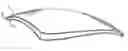
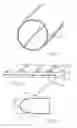
FIGS. 1 and 2 illustrate the conventional composition of a rubber sponge laminated with fabric, nylon or polyester on both sides and with the raw edge method;
FIGS. 3 and 4 illustrate the conventional fold-in stitch method;
FIGS. 5 and 6 illustrate the conventional binding method;
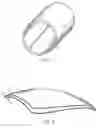
FIGS. 7-9 illustrate the use of the method of the invention to meld the fabric and rubber sponge with pressure and heat to make the fabric and rubber sponge combine completely as one layer; and
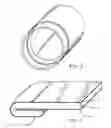
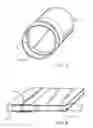
FIGS. 10 and 11 illustrate two alternative ways of carrying out the method of the invention, namely, by flat, in place, pressing (FIG. 10) and by transient rolling (FIG. 11).
DETAILED DESCRIPTION OF PREFERRED EMBODIMENTSReferring to the accompanying drawings, it will be seen that FIGS. 1 and 2 show a rubber sponge (2) laminated with fabric (1) and (3) on both sides and using a prior art raw edge method.
FIGS. 3 and 4 show the conventional fold-in stitch method typically applied to fold the edge (3) into the inner part (1) and stitch (4) to fix the fold in.
FIGS. 5 and 6 show the conventional binding method typically applied to edging by covering the edge with another fabric (5) and stitch (4) for adhesion.
FIGS. 7, 8 and 9 show the present method of the invention which melds the fabrics (1) and (3) and rubber sponge (2) with pressure and heat to make the fabric and rubber sponge combination as thin as one layer and the finishing of the border (6) will be neat without being covered with other materials. As used herein the term “meld” is intended to mean the use of pressure and heat to make the rubber sponge laminated between fabric adhere tightly as one layer, but without actually melting, blending or mixing the different materials.
FIGS. 10 and 11 illustrate alternative steps for carrying out the melding method hereof. FIG. 10 illustrates melding by simply pressing the fabric and rubber sponge together while applying heat to the stationary combination. FIG. 11 illustrates melding by rolling the combination of fabric and rubber sponge together under pressure and heat while the combination transitions through the rollers.
As an illustrative example of the present inventive method, a rubber sponge material was sandwiched between opposing layers of fabric forming a total of 0.4 to 1.2 mm thickness. Using a mold press, a pressure of at least 3 kgs/cm2 pounds per square inch (psi) was applied for 20 to 40 seconds at peak temperature and then cooled to room temperature within five seconds.
Those having skill in the art of wetsuit manufacture will now, as a result of the above disclosure, perceive various additions and modifications which may be made to the invention while preserving the innovative features thereof. Accordingly, the scope hereof is to be limited only by the appended claims and their equivalents.
Claims
We claim:1. A method for finishing wetsuits at the border areas of collars, sleeves and legs; the method comprising the steps of:
a) forming a wetsuit material by sandwiching a selected thickness of rubber sponge material between opposed layers of selected fabric;
b) applying pressure and heat to the wetsuit material at said border areas to an extent to cause a melding of the rubber sponge and fabric layers into a unitary integral layer while obviating added material and stitching; and
c) cooling said wetsuit material at said melded border areas.
2. The method for finishing recited in claim 1 wherein step b) is carried out using a pressing machine on a stationary wetsuit material.
3. The method for finishing recited in claim 1 where step b) is carried out using a rolling machine on a wetsuit material in motion.
4. The method recited in claim 1 further comprising the step of cutting said melded integral layer to form a desired shape in said border areas.
5. A method for finishing wetsuits at the border areas of collars, sleeves and legs; the method comprising the steps of:
a) forming a wetsuit material by sandwiching a selected thickness of rubber sponge material between opposed layers of an external surface material;
b) applying pressure and heat to the wetsuit material at said border areas to an extent to cause a melding of the rubber sponge and surface material layers into a unitary integral layer while obviating added material and stitching; and
c) cooling said wetsuit material at said melded border areas.
6. The method recited in claim 5 wherein said surface material is taken from the group of materials consisting of fabric, nylon and polyester.
Images & Drawings included:

Sources:
- United States Patent and Trademark Office - verify current appl. status at the USPTO↗
Recent applications in this class:
- » 20250160460 2025-05-22
KNIT TEXTILE COMPONENTS WITH FUSED AREAS ON SHOES AND ARTICLES OF FOOTWEAR CONTAINING THE SAME - » 20250160459 2025-05-22
KNITTED AND WOVEN COMPONENTS AND ARTICLES OF FOOTWEAR CONTAINING THE SAME - » 20240260694 2024-08-08
APPAREL AND OTHER PRODUCTS INCORPORATING A THERMOPLASTIC POLYMER MATERIAL - » 20240245156 2024-07-25
APPAREL AND OTHER PRODUCTS INCORPORATING A THERMOPLASTIC POLYMER MATERIAL - » 20240225157 2024-07-11
AUTOMATED GARMENT MANUFACTURING USING ADHESIVE BONDING - » 20240081451 2024-03-14
APPAREL AND OTHER PRODUCTS INCORPORATING A THERMOPLASTIC POLYMER MATERIAL - » 20240049820 2024-02-15
A METHOD OF ATTACHING AT LEAST TWO PIECES OF FABRIC AND A FOOTWEAR COMPRISING A MEMBRANE - » 20240032633 2024-02-01
Barrier System for Personal Protective Equipment - » 20230329377 2023-10-19
TAPE ATTACHMENT SYSTEMS AND METHODS - » 20230248096 2023-08-10
High tensile strength fabric seams, weldable fabric tabs and the preparation of reduced weight inflatables