Vibration transfer rate reducing device and method
US20070107972A1
2007-05-17
11/600,411
2006-11-16
Abstract:
A vibration transfer rate reducing device and method are provided that can reduce the vibration transfer rate of a shaft to improve the noise and vibration performance in a vehicle. The vibration transfer rate reducing device includes a shaft that transfers rotation driving force, joints connected to the end parts of the shaft, a weight arranged at the end portion of the shaft on the side of transmission and extended to the side of transmission, and a weight arranged at the end portion of the shaft on the side of the differential and extended to the side of the differential.
Assignee:
- NISSAN MOTOR CO., LTD. 2,049 🇯🇵 Yokohama-shi, Japan
Interested in similar patents?
Get notified when new applications in this technology area are published.
Classification:
F16F15/1201 » CPC main
Suppression of vibrations in systems ; Means or arrangements for avoiding or reducing out-of-balance forces, e.g. due to motion; Suppression of vibrations in rotating systems by making use of members moving with the system using elastic members or friction-damping members, e.g. between a rotating shaft and a gyratory mass mounted thereon for damping of axial or radial, i.e. non-torsional vibrations
B60K17/24 IPC
Arrangement or mounting of transmissions in vehicles characterised by arrangement, location, or type of main drive shafting, e.g. cardan shaft Arrangements of mountings for shafting
Description
CROSS-REFERENCES TO RELATED APPLICATIONThis application claims priority from Japanese Patent Application Serial No. 2005-332921 filed Nov. 17, 2005, which is incorporated herein in its entirety by reference.
TECHNICAL FIELDThe present invention pertains to a technology that can restrain noise in automobiles caused by flexural vibration of the shaft (such as a propeller shaft) that transfers rotation driving force used for the automobile.
BACKGROUNDIn general, the power of an engine is transferred to a propeller shaft via a transmission. The transferred power is then transferred to the left and right driving wheels via a differential.
Flexural vibration occurs in the propeller shaft due to the vibration from the engine or road surface and the eccentricity of the propeller shaft itself. As a result, the noise in the vehicle is increased, and the noise and vibration performance is deteriorated. For example, in Japanese Kokai Patent Publication No. 2003-247596, there is described means for attenuating the flexural vibration of the propeller shaft that causes reduction of the noise and vibration performance in the vehicle by arranging a dynamic damper in the propeller shaft.
SUMMARYDisclosed herein is a device that reduces the vibration transfer rate on the shaft that transfers the rotation driving force of the propeller shaft to improve the noise and vibration performance in the vehicle today.
According to one vibration transfer rate reducing device taught herein, the device comprises a shaft for transferring a rotation driving force, a rotary member connected to an end portion of the shaft via a joint, the rotating member rotatable with the shaft and a weight arranged at the end portion and extending axially in a direction of the rotary member.
Another vibration transfer rate reducing device for a vehicle taught herein comprises means for transferring driving force to a rotary member, means for connecting an end portion of the transferring means to the rotary member and weight means for reducing a vibration transfer rate of the transferring means, the weight means arranged at an end part of the transferring means and extending to the rotary member.
Vibration transfer reducing methods for a driving force transfer member that transfers driving force are also taught herein. According to one example, the method comprises connecting a rotary member to an end portion of the driving force transfer member using a connecting member wherein the rotary member is rotatable with the driving force transfer member and arranging a weight at the end portion of the driving force transfer member, the weight extending from the connecting member in a direction of the rotary member.
BRIEF DESCRIPTION OF THE DRAWINGSThe description herein makes reference to the accompanying drawings wherein like reference numerals refer to like parts throughout the several views, and wherein:
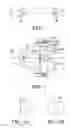
FIG. 1 is a schematic view illustrating an example of the vibration transfer rate reducing device disclosed herein;
FIG. 2 is a partial cross-sectional view including the central axial line and illustrating the details of the parts of the vibration transfer rate reducing device shown in FIG. 1;
FIGS. 3A and 3B are simplified schematic views illustrating other configurations of the parts of a vibration transfer rate reducing device;
FIGS. 4A and 4B are cross-sectional and perspective views, respectively, illustrating yet another example of the parts of a vibration transfer rate reducing device;
FIGS. 5A and 5B are cross-sectional and perspective views, respectively, illustrating yet another example of the parts of a vibration transfer rate reducing device;
FIGS. 6A and 6B are cross-sectional and perspective views, respectively, illustrating yet another example of the parts of a vibration transfer rate reducing device;
FIG. 7 is a graph illustrating the effect of the vibration transfer rate reducing device disclosed in FIG. 2; and
FIG. 8 is a graph illustrating the effect of the vibration transfer rate reducing device disclosed in FIGS. 6A and 6B.
DETAILED DESCRIPTIONThe damper disclosed in Japanese Kokai Patent Application No. 2003-247596 described above cannot restrain vibration of the universal joints because the joint of the primary flexural vibration of the propeller shaft is closer to the center in the axial direction than are the universal joints. Consequently, the damper is unable to restrain the vibration of the differential or the transmission connected to the propeller shaft. The vibration at the input shaft end of the differential and at the output shaft end of the transmission is transferred to the panel of the vehicle body to cause vibration of the panel. Therefore, noise in the vehicle body is increased, and the noise and vibration performance deteriorate.
According to examples of the device disclosed herein, the device can reduce the vibration transfer rate of the shaft that transfers the rotation driving force of the propeller shaft, etc., thereby improving the noise and vibration performance in the vehicle body.
The vibration transfer rate reducing device disclosed herein includes a weight arranged at the end portions of the shaft that transfers driving force. This weight is connected to the end portions of the shaft via a joint and is extended to the side of the rotary member that rotates along with the shaft.
When a weight extended to the side of the rotary member is arranged at the end portion of the shaft, if flexural vibration occurs in the shaft, the node of the flexural vibration can be moved from the central part in the axial direction of the shaft to the side of the end portion of the shaft. Consequently, the vibration at the end portion of the shaft can be reduced. The flexural vibration of the shaft transferred to the rotary member via the joint can also be reduced. That is, the vibration transfer rate of the shaft can be reduced. In this way, the noise caused by the flexural vibration of the shaft can be restrained, and the noise and vibration performance of the vehicle can be improved.
Details can be described with reference to the drawing figures. FIG. 1 is a schematic view illustrating an example of the vibration transfer rate reducing device disclosed in the present invention. In the vibration transfer rate reducing device disclosed herein, one end of propeller shaft 1 is connected to the output shaft 3 (i.e., a rotary member) of a transmission 2 via constant velocity joint(s) 4, which are used as universal joints. Also, the other end of propeller shaft 1 is connected to the input shaft 6 (i.e., a rotary member) of a differential 5 via constant velocity joint(s) 7. Weight 8a extends from the constant velocity joint 4 to the side of transmission 2 and is arranged at one end of the propeller shaft 1, while weight 8b extends from the constant velocity joint 7 to the side of the differential 5 and is arranged at the other end of the propeller shaft.
The transmission 2 is installed in the vehicle body (not shown). Since driving wheels (not shown) are installed on the vehicle body via a suspension (not shown), the driving wheels have displacements in various directions corresponding to the input from the road surface or the change in the load amount of the vehicle body corresponding to the vehicle body. Consequently, when connecting the output shaft 3 of the transmission 2 with the propeller shaft 1 and connecting propeller shaft 1 with the input shaft 6 of the differential 5, constant velocity joints 4, 7 as universal joints are used in order to absorb the displacements and the angle changes in the axial direction.
According to this example, when flexural vibration is applied to the propeller shaft 1, the node F of the flexural vibration positioned at the two ends along the axial direction can be moved from the center of propeller shaft 1 in the axial direction to the side of the constant velocity joints 4, 7. In this way, the vibration and amplitude of constant velocity joints 4, 7 can be reduced. The vibration and amplitude at the tip of the output shaft 3 of the transmission 2 and the vibration and amplitude at the tip of the input shaft 6 of differential 5 can be reduced. In this way, the vibration of the panel of the vehicle body caused by the vibration of the transmission 2 and the differential 5, especially the vibration in the vertical direction, can be restrained. Deterioration of the noise and vibration performance in the vehicle can also be alleviated.
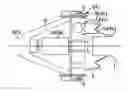
FIG. 2 is a cross-sectional view including the central axial line and illustrating the details of the parts of the vibration transfer rate reducing device shown in FIG. 1.
Since constant velocity joints 4, 7 are similarly constructed in this case, only one figure is needed to illustrate both. Constant velocity joint 7 (4) comprises an inner ring 7a (4a) connected to the propeller shaft 1, an outer ring 7b (4b) that encloses the inner ring 7a (4a), and a ball 7c (4c) arranged between the inner ring 7a (4a) and the outer ring 7b (4b). Weight 8b (8a) formed in a cylindrical shape is added to extend to the side of the differential 5 (or the transmission 2) in the axial direction of the propeller shaft 1 connected to the inner ring 7a (4a) of the constant velocity joint 7(4). FIG. 2 shows the configuration on the side of differential 5. (The reference numbers in parenthesis refer to the components on the side of the transmission 2.) As shown in FIG. 2, weight 8b (8a) is arranged to extend to the side of the differential 5 (transmission 2) on the end surface in the axial direction at the tip of the propeller shaft 1 pressed into the through hole (i.e., an opening part) formed on the inner ring 7a (4a) of the constant velocity joint 7(4). In this way, weight 8b (8a) is arranged closer to the side of differential 5 (transmission 2) than is the constant velocity joint 7(4).
For the constant velocity joints of birfield type, double offset type, fixed tripod type and level type, weight 8a, 8b can be added easily at the two ends of the propeller shaft 1 in the axial direction. Weight 8a is arranged to extend to the side of the transmission 2, and weight 8b is arranged to extend to the side of the differential 5. Therefore, the node F of the flexural vibration at the two end portions of propeller shaft 1 can be moved to the sides of constant velocity joints 4, 7, and the vibration and amplitude of constant velocity joints 4, 7 can be reduced. Hence, the vibration and amplitude at the tips of the differential 5 and the transmission 2 can be reduced. Consequently, the vibration of the panel of the vehicle body caused by the vibration of the transmission 2 and the differential 5, and especially the vibration in the vertical direction, can be restrained. Deterioration of the noise and vibration performance in the vehicle can also be alleviated.
Further, when performing grease sealing to the constant velocity joints 4, 7, the flange 10 connected to the input shaft 6 of the differential 5 (output shaft 3 of transmission 2) is used as the grease case.
In this case, one end of each flange 10 is respectively embedded in the output shaft 3 of transmission 2 and the input shaft 6 of differential 5. An opening for installing the constant velocity joint 7 (4) is formed at the other end of each flange 10. The flange 10 is formed in a hollow conical shape with diameter gradually increasing from one end (i.e., the shaft 6 (3) end) to the other end (i.e., the constant velocity joint 7 (4) end). As shown in FIG. 2, the constant velocity joint 7 (4) is installed in the opening formed at the tip end of the flange 10. The flange 10 is fixed to the end of the input shaft 6 by a bolt. In this way, the input shaft 6 of the differential 5 (and the output shaft 3 of the transmission 2) is connected to the propeller shaft
As also shown in FIG. 2, when performing grease sealing to the constant velocity joint 7 (4), a grease case 9 arranged on the constant velocity joint 7 (4) on the side of the propeller shaft 1 is used as the grease case. For the constant velocity joint 7 (4), no grease case is used on the side of the differential 5 (transmission 2). Also, a rubber seal 11 is arranged between the inner peripheral surface of the opening part of flange 10 and the outer peripheral surface of outer ring 7b (4b) of the constant velocity joint 7 (4) to prevent grease from leaking.
Since the conventional grease case on the side of differential 5 (transmission 2) is not included, space is provided between the two ends in the axial direction of the propeller shaft 1 connected to the inner ring 7a (4a) of the constant velocity joint 7 (4) and the tip of the input shaft 6 (and the tip of the output shaft 3 of transmission 2). Since the two ends of propeller shaft 1 in the axial direction can be arranged in this space, it is easier to add weight 8b (8a).
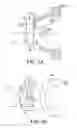
FIGS. 3A and 3B illustrate other configurations of the parts of a vibration transfer rate reducing device. Besides the configuration shown in FIG. 2, weight 8b (8a) can also be set inside the flange 10. As shown in FIG. 3A, the weight 8c is formed in a cylindrical shape. The weight 8c has a large outer diameter portion and two end surfaces. A diameter of the large outer diameter portion is larger than a diameter of one end surface fixed on the end surface of the propeller shaft 1. The large outer diameter portion can also be formed such that the outer diameter reduces or tapers from the propeller shaft 1 toward the other end surface of the weight 8c. That is, it is also possible to use weight 8c with its tip portion having a wedge-shaped cross section. Also, as shown in FIG. 3B, the weight is formed in a cylindrical shape with two end surfaces. A diameter of the large outer diameter portion is larger than a diameter of one end surface fixed on the end surface of the propeller shaft 1. The large outer diameter portion can also be formed such that the outer diameter is the same or constant from the side of the shaft 1 toward the other end surface of the weight 8d. That is, it is also possible to use weight 8d having an increased cross section at the tip portion. In the latter case shown in FIG. 3B, the center of gravity is farther from the end of the propeller shaft 1 compared with that of the former shown in FIG. 3A. Therefore, if the weight is formed in the same mass the shape of weight 8d is better than the shape of the weights shown in 8a, 8b or 8c in moving the node F of the flexural vibration of the propeller shaft 1 to the side of the constant velocity joints 7, 4.
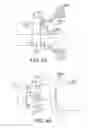
FIGS. 4A and 4B are views illustrating another embodiment of the parts of a vibration transfer rate reducing device disclosed herein. FIG. 4A shows a partial cross-sectional view including the central axial line of propeller shaft 1 and the input shaft 6 of the differential 5 (and output shaft 3 of the transmission 2). FIG. 4B is an oblique view viewed from the oblique direction on the side of the differential 5 (transmission 2).
In FIGS. 4A and 4B, instead of the constant velocity joints shown in FIG. 1, flexible joints 7′ (4′) are used. Weight 8f (8e) has a hollow cylindrical shape (i.e., a conical shape) with an increased diameter on the side of the differential 5 (transmission 2). Weight 8f (8e) is added to the flexible joint 7′ (4′) and is fastened by bolts 12 used as a fastening means to fasten the weight 8f (8e) to the flexible joint 7′ (4′) and to the propeller shaft 1.
In this way, for the flexible joints 4′, 7′, weights 8e, 8f can be added easily at the respective ends of propeller shaft 1 in the axial direction. As described above, the joint of the flexural vibration of the propeller shaft 1 can be moved to the side of flexible joints 4′, 7′. The vibration and amplitude of flexible joints 4′, 7′ can be reduced, and the vibration and amplitude at the tip of the transmission 2 and the differential 5 can be reduced. In this way, the vibration of the panel of the vehicle body caused by the vibration of the transmission 2 and the differential 5, especially the vibration in the vertical direction, can be restrained. Deterioration of the noise and vibration performance in the vehicle can also be alleviated.
Flexible joints 4′, 7′ are constituted with one or more discs 13 made of rubber, etc. Yoke 14 formed at the end portion of propeller shaft 1 contacts with one end surface of the disc 13. A first set of bolts 12 are screwed through apertures in the disc and on the weight 8f (8e) to fasten the weight 8f (8e). At the other end surface of disc 13, the yoke 15 connected to the output shaft 6 of the differential 5 (or output shaft 3 of transmission 2) is fastened by a screwing bolt (or bolts) 16 in a respective nut (not shown). The propeller shaft 1 and the input shaft 6 of the differential 5 (or output shaft 3 of the transmission 2) are connected, and the displacement in the axial direction between the shaft 1 and the input shaft 6 (or between the shaft 1 and the output shaft 3) as well as the angle variation can be absorbed.
As described above, the weight 8f (8e) is fastened by bolts 12 to the end surface of the flexible joint 7′ (4′) on the side of the differential 5 (transmission 2). In this way, weight 8f (8e) is formed to extend from the flexible joint 7′ (4′) to the side of the differential 5 (transmission 2). Consequently, compared to the case without the weight 8f (8e), the joint of the flexural vibration of the propeller shaft 1 is present on the side of flexible joint 7′ (4′), and the vibration and amplitude of the flexible joint 7′ (4′) can be reduced. Also, the weight 8f (8e) is thicker at the end portion that extends to the side of the differential 5 (transmission 2) than at the end portion fixed on the propeller shaft 1. In this way, the center of gravity of the weight 8f (8e) is close to the tip side of the weight compared with the case when the weight has uniform thickness. Consequently, if the weight is formed in the same mass, weight 8f (8e) has a better shape than the case when the weight has uniform thickness for moving the node F of the flexural vibration of the propeller shaft to the side of the constant velocity joint.
FIGS. 5A and 5B are views illustrating another example of the parts of a vibration transfer rate reducing device. FIG. 5A shows a partial cross-sectional view including the central axial line of propeller shaft 1 and the input shaft 6 of the differential 5 (output shaft 3 of the transmission 2). FIG. 5B is an oblique view viewed from the oblique direction on the side of the differential 5 (transmission 2).
Compared with the vibration transfer rate reducing device shown in FIGS. 4A and 4B, the cylindrical shaped weight 8h (8g) is closer to the input shaft 6 of the differential 5 (output shaft 3 of transmission 2) in the radial direction, and the outer diameter of the middle portion of weight 8h (8g) is reduced. In this way, interference with other parts can be avoided without reducing the mass of weight 8h (8g). The rest of the configuration is the same as that shown in FIG. 4 and will not be explained further.
FIGS. 6A and 6B show another example of the parts of a vibration transfer rate reducing device. FIG. 6A shows a partial cross-sectional view including the central axial line of propeller shaft 1 and the input shaft 6 of differential 5 (output shaft 3 of the transmission 2). FIG. 6B is an oblique view viewed from the oblique direction on the side of differential 5 (transmission 2).
Compared with the vibration transfer rate reducing device shown in FIGS. 4A and 4B, the cross-sectional shape of cylindrical weight 8j (8i) on the side of the differential 5 (the transmission 2) is increased. As a result, the center of gravity of vibration restraining mass weight 8j (8i) is further moved away from the end surface of the propeller shaft 1. This configuration is better for mass distribution of weight 8j (8i). In other words, with a smaller mass the weight can move the joint of the flexural vibration to the side of the flexible joint 7′ (4′). The rest of the configuration is the same as that shown in FIG. 4 and will not be explained again.
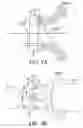
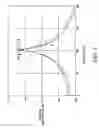
FIG. 7 is a graph illustrating the effect of the vibration transfer rate reducing device disclosed and shown in FIG. 2. In FIG. 7, the abscissa represents the frequency (Hz), while the ordinate represents the vibration acceleration in dB.
In order to evaluate the effect of the transfer vibration rate reducing device disclosed herein, vibration was applied to the central part of propeller shaft 1 in the axial direction, and the vibration acceleration at the tip of differential 5 was measured. In this case, a 1.1 kg weight 8 was used. For the purpose of comparison, evaluation was conducted in the same way for the case when a cubic weight with a mass of 1.1 kg and 51.8 mm on each side was directly added to the tip of the differential 5 and for the case when no weight was applied.
The line indicated by A in FIG. 7 shows the evaluation result when the vibration rate reducing device disclosed herein is used. The line indicated by B shows the evaluation result in the case when the vibration restraining mass weight is directly added to the tip of differential 5. The line indicated by C shows the evaluation result when no vibration restraining mass weight is added. In this case, the tip of differential 5 indicates the end part of a differential gear on the side of the constant velocity joint.
As shown in FIG. 7, by using the vibration transfer rate reducing device disclosed herein, the vibration acceleration can be reduced by about 2 dB compared with the case when no weight is added at the peak near 105 Hz. The vibration acceleration can be reduced by about 1 dB compared with the case when a vibration restraining mass weight is added directly to the tip of the differential.
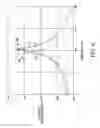
FIG. 8 is a diagram illustrating the effect of the vibration transfer rate reducing device disclosed and shown in FIGS. 6A and 6B. In FIG. 8, the abscissa represents the frequency (Hz), while the ordinate represents the vibration acceleration in dB.
In order evaluate the effect of the transfer vibration rate reducing device disclosed in the present invention, vibration was applied to the central part of the propeller shaft 1 in the axial direction, and the vibration acceleration at the tip of the differential 5 was measured. In this case, the weight 8 used was 1.84 kg and had 160 mm as the outer diameter on the side of differential 5 and 130 mm as the outer diameter on the side of the constant velocity joint 7. For the purpose of comparison, the evaluation was conducted in the same way for the case when a cubic weight with a mass of 1.84 kg and 61.6 mm on each side was directly added to the tip of differential 5 and for the case when no vibration restraining mass weight was applied.
The solid line indicated by D in FIG. 8 shows the evaluation result when the vibration rate reducing device disclosed herein is used. The line indicated by E shows the evaluation result in the case when the weight is directly added to the tip of differential 5. The line indicated by F shows the evaluation result when no weight is added.
As shown in FIG. 8, by using the vibration transfer rate reducing device disclosed herein, the vibration acceleration can be reduced by about 5 dB compared with the case when no weight is added at the peak. The vibration acceleration can be reduced by about 4 dB compared with the case when the weight is directly added to the tip of differential 5.
Various modifications or changes to the disclosed embodiments can be made. For example, these embodiments explain the noise caused by the flexural vibration of propeller shaft 1. The invention, however, can be used to reduce the vibration transfer rate of drive shaft or other parts that transfer rotation driving force instead of propeller shaft 1. Also, as explained in these embodiments, weight 8 is arranged at the two ends of propeller shaft 1. However, it is also possible to arranged weight 8 only at one end depending on the vibration state.
Hence, while the invention has been described in connection with what is presently considered to be the most practical and preferred embodiments, it is to be understood that the invention is not to be limited to the disclosed embodiments but, on the contrary, is intended to cover various modifications and equivalent arrangements included within the scope of the appended claims, which scope is to be accorded the broadest interpretation so as to encompass all such modifications and equivalent structures as is permitted under the law.
Claims
What is claimed is:1. A vibration transfer rate reducing device, comprising:
a shaft for transferring a rotation driving force;
a rotary member connected to an end portion of the shaft via a joint, the rotating member rotatable with the shaft; and
a weight arranged at the end portion and extending axially in a direction of the rotary member.
2. The vibration transfer rate reducing device according to claim 1 wherein the weight has a cylindrical configuration and two end surfaces, one of the end surfaces of the weight fixed to an end surface of the end portion.
3. The vibration transfer rate reducing device according to claim 2 wherein the weight has a large outer diameter portion whose outer diameter is larger than the one of the end surfaces of the weight.
4. The vibration transfer rate reducing device according to claim 3 wherein the large outer diameter portion has an outer diameter tapered from a side of the shaft toward the other of the end surfaces of the weight.
5. The vibration transfer rate reducing device according to claim 1 wherein the weight has a cylindrical shape and two end portions such that an outer diameter of the weight changes from one end portion of the weight to the other end portion of the weight; and wherein the one end portion of the weight is fixed at the end portion of the shaft, and the other end portion of the weight extends from the end portion of the shaft.
6. The vibration transfer rate reducing device according to claim 5 wherein the outer diameter of the one end portion of the weight is smaller than the outer diameter of the other end portion of the weight.
7. The vibration transfer rate reducing device according to claim 5 wherein the weight has a middle portion between the two end portions and the outer diameter of the middle portion is smaller than the outer diameter of the one end portion of the weight.
8. The vibration transfer rate reducing device according to claim 5, further comprising:
a through-hole located in the joint;
a first bolt fixing the one end portion of the weight to the end portion of the shaft through the through-hole wherein the joint is fixed between the one end portion of the weight and the end portion of the shaft; and
a second bolt fixing the rotary member to the joint.
9. The vibration transfer rate reducing device according to claim 1 wherein the rotary member is an output shaft of a transmission; and wherein the weight closer to the transmission than to the joint.
10. The vibration transfer rate reducing device according to claim 1 wherein the rotary member is an input shaft of a differential; and wherein the weight is closer to the differential than to the joint.
11. The vibration transfer rate reducing device according to claim 1 wherein the joint comprises an inner ring, an outer ring that encloses the inner ring and a ball between the inner ring and the outer ring; and wherein the end portion of the shaft is coupled to the inner ring.
12. The vibration transfer rate reducing device according to claim 11, further comprising:
a flange connecting the outer ring of the joint to the rotary member; and wherein the weight is located in an area between the flange and the joint.
13. The vibration transfer rate reducing device according to claim 12, further comprising:
a grease case in an area between the outer ring and the shaft.
14. The vibration transfer rate reducing device according to claim 13 wherein the joint has grease sealed by the grease case and the flange.
15. The vibration transfer rate reducing device according to claim 1, further comprising:
a second rotary member connected to an opposed end portion of the shaft via a second joint, the second rotating member rotatable with the shaft; and
a second weight arranged at the opposed end portion adjacent the second joint and extending axially in a direction of the second rotary member.
16. A vibration transfer rate reducing device for a vehicle, comprising:
means for transferring driving force to a rotary member;
means for connecting an end portion of the transferring means to the rotary member; and
weight means for reducing a vibration transfer rate of the transferring means, the weight means arranged at an end part of the transferring means and extending to the rotary member.
17. The vibration transfer reducing device according to claim 16 wherein the connecting means comprises a first joint between a first end portion of the transferring means and an output shaft and a second joint between a second, opposed end portion of the transferring means and an input shaft; and wherein the weight means comprises a first weight arranged at the first end portion and extending to the output shaft and a second weight arranged at the second, opposed end portion and extending to the input shaft.
18. A vibration transfer reducing method for a driving force transfer member that transfers driving force, the method comprising:
connecting a rotary member to an end portion of the driving force transfer member using a connecting member wherein the rotary member is rotatable with the driving force transfer member; and
arranging a weight at the end portion of the driving force transfer member, the weight extending from the connecting member in a direction of the rotary member.
19. The method according to claim 18 further comprising:
connecting a second rotary member to an opposed end portion of the driving force transfer member using a second connecting member wherein the second rotary member is rotatable with the driving force transfer member; and
arranging a second weight at the opposed end portion of the driving force transfer member, the second weight extending from the second connecting member in a direction of the second rotary member.
20. The method according to claim 18 wherein the connecting member is a joint having an inner ring and an outer ring and a ball enclosed therebetween; and wherein connecting a rotary member to an end portion of the driving force transfer member comprises connecting the rotary member to the outer ring of the joint, the end portion of the driving force member connected to the inner ring of the joint.
Images & Drawings included:
Sources:
- United States Patent and Trademark Office - verify current appl. status at the USPTO↗
Recent applications in this class:
- » 20230012162 2023-01-12
NOISE VIBRATION HARSHNESS REDUCTION ASSEMBLY AND METHODS, AN AXIAL RING CONFIGURED TO ATTENUATE SOUND INDUCING VIBRATIONS - » 20220154802 2022-05-19
Damper, assembly, and electronic controller - » 20190249747 2019-08-15
Friction shaft damper for axial vibration mode - » 20170058991 2017-03-02
Power transmission member for electric power steering system - » 20170058990 2017-03-02
Composite over wrap - » 20140315648 2014-10-23
Material compensation joint and radial vibration damper having same - » 20130209017 2013-08-15
ARMATURE SHAFT BEARING UNIT - » 20110212787 2011-09-01
Damper unit for a shaft - » 20070108006 2007-05-17
Torsional vibration damper for a hydrodynamic clutch arrangement
Recent applications for this Assignee:
- » 20250172116 2025-05-29
KNOCKING CONTROL METHOD FOR INTERNAL COMBUSTION ENGINE AND KNOCKING CONTROL DEVICE - » 20250171631 2025-05-29
RESIN COMPOSITION AND MOLDED BODY - » 20250170964 2025-05-29
VEHICLE ROOF RACK ASSEMBLY - » 20250162862 2025-05-22
HEAT-GENERATING MATERIAL, AND HEAT-GENERATING SYSTEM AND METHOD OF SUPPLYING HEAT USING THE SAME - » 20250108865 2025-04-03
VEHICLE BODY STRUCTURE - » 20250091257 2025-03-20
METHOD OF RECOVERING CARBON FIBERS - » 20250065952 2025-02-27
METHOD OF JUDGING ZERO POINT ABNORMALITY OF STEERING ANGLE SENSOR AND JUDGING DEVICE - » 20250034798 2025-01-30
MODIFIED CARBON FIBER, CARBON FIBER REINFORCED PLASTICS, AND METHOD FOR PRODUCING THE MODIFIED CARBON FIBER - » 20240426254 2024-12-26
Startup control method for in-cylinder direct injection spark ignition internal combustion engine, and internal combustion engine system - » 20240399343 2024-12-05
EXHAUST GAS PURIFICATION CATALYST, AND EXHAUST GAS PURIFICATION CATALYST APPARATUS FOR VEHICLES, USING SAME