Bar code scanner and method of manufacturing a bar code scanner
US20070108289A1
2007-05-17
10/581,379
2004-11-22
Abstract:
A bar code scanner uses a narrow slit instead of focusing optics. The slit may be formed by chemically etching a thin metal plate and, in use, may be protected by a transparent cover.
Interested in similar patents?
Get notified when new applications in this technology area are published.
Classification:
G06K7/10712 » CPC main
Methods or arrangements for sensing record carriers, e.g. for reading patterns by electromagnetic radiation, e.g. optical sensing; by corpuscular radiation by scanning of the records by radiation in the optical part of the electromagnetic spectrum Fixed beam scanning
G06K7/10 IPC
Methods or arrangements for sensing record carriers, e.g. for reading patterns by electromagnetic radiation, e.g. optical sensing; by corpuscular radiation
Description
FIELD OF THE INVENTIONThe present invention relates to a method of manufacturing a bar code scanner.
BACKGROUND TO THE INVENTIONBar code scanners generally have a light source which shines a beam of light onto a bar code being read. The light reflected from the bar code is then sensed with photodetector. The light source may be a laser or a light emitting diode and a lens is conventionally used for focusing the beam on the bar code. Similarly, a lens is also commonly used to focus the reflected light onto the photodetector.
SUMMARY OF THE INVENTIONIt is an aim of the present invention to provide a bar code scanner that does not employ lenses.
According to the present invention, there is provided a bar code scanner comprising a light transmissive slit, light source means for directing a beam through said slit and light detector means for detecting light from said beam reflected back through the slit, wherein the slit is arranged for being brought into proximity to a bar code for scanning thereof. The slit need not have a particularly high aspect ration. However, it should be narrow where the major part of the light from the light source passes through it. The slit need not be parallel-sided and may be, for example, dumbbell-shaped. The slit need not comprise an aperture. The important characteristic is its light transmissivity.
The light source means may be configured for directing said beam through the slit such that the beam path through the slit lies in a plane substantially aligned with the slit. The light source means may be configured to direct light obliquely through the slit.
The light detector means may be configured for sensing reflections of said beam following a path through the slit that lies in a plane substantially aligned with the slit. The light detector means may be directional and arranged such that it is directed along a line substantially normal to the slit.
The combination of oblique illumination and the sensing of light reflected normal to the slit provides protection against false reading of glossy bar codes.
The slit is formed in a metallic element, for example a stainless steel. However, other materials that can be finely worked, such as brass, can be used.
The scanner may be handheld so that the scanning action is performed manually by moving the scanner. Alternatively, the scanner may be mounted in a fixed position so that bar codes can be manually or mechanically propelled past the scanner to provide the scanning action. The scanner could also itself be mechanically moved past bar codes for scanning.
The scanner may include a panel by which a sheet can be passed, the panel having an aperture through which the slit is exposed. The panel need not be flat. There may also be a member, having a dished portion received in the aperture, with the slit formed in an opaque element that is accommodated in the dished portion.
The width of the slit may be in the range 0.2 mm to 0.4 mm and is preferably 0.3 mm.
The separation of the openings of the slit is in the range 0.05 to 0.1 mm and is preferably 0.075 mm.
According to the present invention, there is provided a sheet validator including a sheet path along which a sheet to be validated is passed and a bar code scanner, according to the present invention, located for scanning a bar code on a sheet passing along the sheet path.
According to the present invention, there is also provided a method of method of manufacturing a bar code scanner comprising forming a light transmissive a slit and mounting the slit with respect to a light source means and a light detector means, such light from the light source can pass through the slit and light from the light source that is reflected back through the slit can be detected by the light detector means.
Preferably, the slit is formed by chemically etching a thin metallic element.
According to the present invention, there is further provided a method of manufacturing a sheet validator including a bar code scanner, the method including a bar code scanner manufacturing method according to the present invention for manufacturing said bat code scanner.
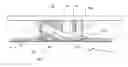
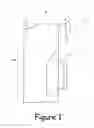
BRIEF DESCRIPTION OF THE DRAWINGSFIG. 1 is a schematic side view of a sheet validator unit;
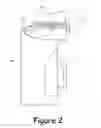
FIG. 2 is a partially cut away side view of the sheet validation and storage unit of FIG. 1;
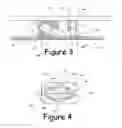
FIG. 3 is a section view of the bar code scanning station of the unit of FIG. 1 viewed from the entry slot of the validator of FIG. 1;
FIG. 4 is a bottom view of the bar code scanning station shown in FIG. 3;
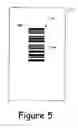
FIG. 5 shows a sheet with a bar code printed on it; and
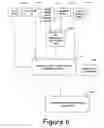
FIG. 6 illustrates a manufacturing process of manufacturing sheet validators.
DETAILED DESCRIPTION OF EXEMPLARY EMBODIMENTAn embodiment of the present invention will now be described, by way of example, with reference to the accompanying drawings, in which:
Referring to FIGS. 1 and 2, a sheet validator 1 comprises a main body 2 and a removable storage box 3. The unit 1 is substantially the same as the WACS 5 note validator available from Money Controls plc.
The main body 2 has a vertical portion 2a and a horizontal portion 2b projecting from the bottom of the vertical portion 2a. A sheet entry slot 4 opens through a bezel 5 at the distal end of the horizontal portion 2b. A sheet transport path 6 extends through the horizontal portion 2a and down the vertical portion 2a. Sheets are transported through the horizontal portion 2a by driven wheels 7 (only one shown by way of illustration) and belts (not shown), driven by a motor (not shown).
Sheets are transported down the vertical portion and, if determined to be valid, are driven transversely into the storage box 3. Sheets determined to be invalid are reversed back out of the entry slot 4.
A bar code scanning station 12 mounted to a PCB 13 located above and parallel to the sheet path in the horizontal portion 2b. There may be addition optical and/or magnetic sensors for conventional validity determination and sheet transport control.
The PCB 13 includes circuitry for processing sensor signals, including signals from the bar code scanning station for input to a processor (not shown) for note validation and sheet transport control.
Referring to FIGS. 3 and 4, the bar code reading 12 station comprises a opaque locating block 14, a infrared LED 15, a phototransistor 16, a cover 17 and a thin metal plate 18. The phototransistor 16 sits on the PCB 13 and its leads are soldered to tracks on the other side of the PCB 13. The leads of the LED 15 are soldered on the same side of the PCD 13 as those of the phototransistor 16. However, the LED 15 does not sit on the PCB 13 and is supported within the locating block 14.
The PCB 13 is fixed by screws (not shown) to the upper wall 21 of the sheet path bar code scanning station 12 is clamped between the upper wall 21 of the sheet path and the PCB 13.
The cover 17 is moulded from a transparent plastics material and comprises a rectangular plate 17a that has a rounded rhombic dished portion 17b. A pair of legs 17c project from diagonally opposite corners of the plate 17a and the free ends of the legs 17c bear against the under side of the PCB 13. The dished portion 17b is received snugly in a rhombic aperture in the upper wall 21 of the sheet path.
The locating block 14 is located between the cover 17 and the PCB 13 and comprises a main portion 14a and a press-fitted cover portion 14b. The cover portion 14b has a pair of small lugs (not show) that are received by apertures (not shown) in the side walls of the main portion 14a to retain the cover portion 14b in position.
A pair of ridges 14c project from the bottom of the main portion 14a and are received in the dished portion 17b of the cover 17. The ends of the ridges 14c are chamfered for locating the locating block 14 relative to the cover 17. The ridges 14c extend from one end of the locating block 14 to a position somewhat short of the other end of the location block 14, which overhangs the planar part of the cover 17.
A channel extends transversely across the underside, in the orientation shown in FIG. 3, of the main portion 14a of the locating block 14. The floor of the right hand part of the channel, in the orientation shown in FIG. 3, is flat while the floor of the left hand part has a semi-circular cross-section and slopes towards the PCB 13. When the cover portion 14b is fitted in place, the upper side of the cover portion 14b and the left hand part of the channel define a sloping circular-section passageway in which the LED 15 is received.
The phototransistor 16 is received in a circular-section passageway the extends through the main portion 14a from its upper face to the floor of the channel in the right hand part thereof. The passageway holding the phototransistor 16 is arranged to extend normal to the PCB 13 and the sheet path 6.
A thin metal plate 18 is rhombic and conforms to the dished portion 17b of the cover 17 in which it is located. The plate 18 has a thin transverse slit 19 extending across the plate 18 between positions close to the sharper corners of the plate 18. The plate 18 is 0.075±0.025 mm thick and the slit is 0.3±0.1 mm wide.
In use, a sheet 31 bearing a longitudinal bar code 32, as shown in FIG. 5, is driven past the bar code scanning station 12. The LED 15 shines light onto the bar code 32 as it passes under the slit 19. The light from the LED 15 is reflected from the sheet 31. However, the level of reflected light from dark bar code elements 32a is negligible compared to the level of reflected light from light bar code elements 32b. The reflected light is sensed by the phototransistor 16 which produces an electrical output dependent on the incident light level. Thus, the output of the phototransistor 16 varies with the reflectivity of the bar code portion aligned with the slit 19. The output of the phototransistor 16 is processed in a conventional manner.
It should be noted that the LED 15 shines light through the slit 19 obliquely whereas the phototransistor 16 is arranged to sense light reflected normal to the sheet 31 bearing the bar code being read. Consequently, glossy dark bar code elements 32a are not erroneously determined to be light elements 32b.
A method of manufacturing a sheet validating apparatus will now be described with reference to FIG. 6.
The portions 14a, 14b of the locating block 14 are moulded using a conventional technique in a locating block moulding operation 101 and the PCB 13 is assembled in a PCB assembly operation 102. The PCB assembly operation 102 comprises soldering electronic components, including the LED 15 and the phototransistor 16, to the PCB 13 itself.
The locating block 14 is then added to the PCB assembly in a locating block mounting operation 103. In the locating block mounting operation, the main portion 14a is pushed over the phototransistor 16 so that the phototransistor 16 is lodged in the circular-section passageway though the main portion 14a and the main portion 14a tests against the PCB 13.
The LED 15 is introduced into the sloping part of the channel and the cover portion 14b is then pressed into place to retain the LED 15 in position.
The cover 18 is moulded in a covert moulding operation 104 using a conventional technique.
The plate 18 is formed in an etching operation 105 by etching a sheet of stainless steel using a photochemical etching process.
The upper wall 21 of the sheet path is moulded in an injection moulding operation 106.
The components produced in operations 101 to 106 are assembled together in an assembly operation 107. In the assembly operation 107, the cover 18 is positioned on the upper wall 21 with its dished portion 18a projecting into the rhombic aperture in the upper wall 21. The PCB assembly is then offered up to the upper wall 21 and fixed using screws. This locates the locating block 14 correctly with respect to the cover 18.
The other components of the validator, including control and validation electronics and sheet handling mechanical and electromechanical components, are formed in a set of operations 108.
Finally, the validator is assembled from the components and sub-assemblies available after operations 107 and 108 in an final assembly operation 109.
It will be appreciated that many modifications may be made to the embodiment described above. For example, the plate may be formed by laser cutting or punching instead of etching. The plate and the cover need not be rhombic and the bar code scanning station could be positioned under the sheet path.
Claims
1. A bar code scanner comprising light source means (15), light detector means (16) and an elongate light transmissive opening (19) arranged for being brought into proximity with a bar code (32) for scanning thereof, the light source means (15) being configured for directing a beam through said opening (19) and the light detector means (16) being configured for detecting light from said beam reflected back through the opening (19), characterised in that said opening (19) comprises a slit (19) formed in a metallic element (18).
2. A bar code scanner according to claim 1, wherein the light source means (15) is configured for directing said beam through the slit (19) such that the beam path through the slit (19) lies in a plane substantially aligned with the slit (19).
3. A bar code scanner according to claim 2, where in the light source means (15) is configured to direct light obliquely through the slit (19).
4. A bar code scanner according to claim 1, 2 or 3, wherein the light detector means (16) is configured for sensing reflections of said beam following a path through the slit (19) that lies in a plane substantially aligned with the slit (19).
5. A bar code scanner according to claim 4, wherein the light detector means (16) is directional and arranged such that it is directed along a line substantially normal to the slit (19).
6. A bar code scanner according to any preceding claim, wherein the light source is an infrared LED (15).
7. A bar code scanner according to any preceding claim, wherein the metallic element (18) is formed from a stainless steel.
8. A bar code scanner according to any preceding claim, including a panel (21) by which a sheet (31) can be passed, the panel (21) having an aperture through which the slit (19) is exposed.
9. A bar code scanner according to claim 8, including a member (17) having a dished portion, wherein the slit (19) is formed in an opaque element (18) which is accommodated in said dished portion and the dished portion is received in said aperture.
10. A bar code scanner according to any preceding claim, wherein the width of the slit (19) is in the range 0.2 mm to 0.4 mm.
11. A bar code scanner according to claim 10, wherein the width of the slit (19) is 0.3 mm.
12. A bar code scanner according to any preceding claim, wherein the separation of the openings of the slit (19) is in the range 0.05 to 0.1 mm.
13. A bar code scanner according to claim 12, wherein the separation of the openings of the slit (19) is 0.075 mm.
14. A sheet validator including a sheet path (6) along which a sheet (31) to be validated is passed and a bar code scanner (12), according to any preceding claim, located for scanning a bar code (32) on a sheet (31) passing along the sheet path (6).
15. A method of manufacturing a bar code scanner comprising forming a light transmissive slit (19) in a metallic element (18) and mounting the element (18) with respect to a light source means (15) and a light detector means (16), such light from the light source means (15) can pass through the slit (19) and light from the light source means (15) that is reflected back through the slit (19) can be detected by the light detector means (16).
16. A method according to claim 15, wherein the slit (19) is formed by chemically etching a thin metallic element (18).
17. A method of manufacturing a sheet validator including a bar code scanner (12), the method including a method according to claim 15 or 16 for manufacturing said bar code scanner (12).
18. A bar code scanner comprising:
a metallic element having a light transmissive slit therein,
light source means for directing a beam through said slit, and
light detector means for detecting light from said beam reflected back through the slit,
wherein the slit is arranged for being brought into proximity to a bat code for scanning thereof.
19. A bar code scanner according to claim 18, wherein the light source means is configured for directing said beam through the slit such that the beam path through the slit lies in a plane substantially aligned with the slit.
20. A bar code scanner according to claim 19, where in the light source means is configured to direct light obliquely through the slit.
21. A bar code scanner according to claim 18, wherein the light detector means is configured for sensing reflections of said beam following a path through the slit that lies in a plane substantially aligned with the slit.
22. A bar code scanner according to claim 21, wherein the light detector means is directional and arranged such that it is directed along a line substantially normal to the slit.
23. A bar code scanner according to claim 18, wherein the light source is an infrared LED.
24. A bar code scanner according to claim 18, wherein the metallic element is formed from a stainless steel.
25. A bar code scanner according claim 18, including a panel by which a sheet can be passed, the panel having an aperture through which the slit is exposed.
26. A bar code scanner according to claim 25, including a member having a dished portion, wherein the slit is formed in an opaque element which is accommodated in said dished portion and the dished portion is received in said aperture.
27. A bat code scanner according to claim 18, wherein the width of the slit is in the range 0.2 mm to 0.4 mm.
28. A bat code scanner according to claim 27, wherein the width of the slit is 0.3 mm.
29. A bar code scanner according to claim 18, wherein the separation of the openings of the slit is in the range 0.05 to 0.1 mm.
30. A bar code scanner according to claim 29, wherein the separation of the openings of the slit is 0.075 mm.
31. A bat code scanner comprising:
a metallic element having a slit therein,
a light source means for directing light obliquely through said slit in a plane normal to and aligned with said slit, and
a light detector means for receiving light passing through the slit along a path normal thereto,
wherein the light source means and the light detector means are on the same side of said element.
32. A sheet validator including a sheet path along which a sheet to be validated is passed and a bar code scanner comprising:
a metallic element having a light transmissive slit therein,
light source means for directing a beam through said slit, and
light detector means for detecting light from said beam reflected back through the slit,
wherein the slit is arranged for being brought into proximity to a bar code for scanning thereof.
33. A sheet validator according to claim 32, wherein the light source means is configured for directing said beam through the slit such that the beam path through the slit lies in a plane substantially aligned with the slit.
34. A sheet validator according to claim 33, where in the light source means is configured to direct light obliquely through the slit.
35. A sheet validator according to claim 32, wherein the light detector means is configured for sensing reflections of said beam following a path through the slit that lies in a plane substantially aligned with the slit.
36. A sheet validator according to claim 35, wherein the light detector means is directional and arranged such that it is directed along a line substantially normal to the slit.
37. A sheet validator according to claim 32, wherein the light source is an infrared LED.
38. A sheet validator according to claim 32, wherein the metallic element is formed from a stainless steel.
39. A sheet validator according claim 32, including a panel by which a sheet can be passed, the panel having an aperture through which the slit is exposed.
40. A sheet validator according to claim 39, including a member having a dished portion, wherein the slit is formed in an opaque element which is accommodated in said dished portion and the dished portion is received in said aperture.
41. A sheet validator according to claim 32, wherein the width of the slit is in the range 0.2 mm to 0.4 mm.
42. A sheet validator according to claim 41, wherein the width of the slit is 0.3 mm.
43. A sheet validator according to claim 32, wherein the separation of the openings of the slit is in the range 0.05 to 0.1 mm.
44. A sheet validator according to claim 43, wherein the separation of the openings of the slit is 0.075 mm.
45. A sheet validator including a sheet path along which a sheet to be validated is passed and a bar code scanner comprising:
a metallic element having a slit therein,
a light source means for directing light obliquely through said slit in a plane normal to and aligned with said slit, and
a light detector means for receiving light passing through the slit along a path normal thereto,
wherein the light source means and the light detector means are on the same side of said member.
46. A method of manufacturing a bar code scanner comprising forming a light transmissive slit in a metallic element and mounting the metallic element with respect to a light source means and a light detector means, such light from the light source can pass through the slit and light from the light source that is reflected back through the slit can be detected by the light detector means.
47. A method according to claim 46, wherein the slit is formed by chemically etching a thin metallic element.
48. A method of manufacturing a sheet validator including a bar code scanner, the method including a method according to claim 46 for manufacturing said bar code scanner.
49. A method of manufacturing a sheet validator including a bar code scanner, the method including a method according to claim 47 for manufacturing said bar code scanner.
Images & Drawings included:
Sources:
- United States Patent and Trademark Office - verify current appl. status at the USPTO↗
Recent applications in this class:
- » 20240028847 2024-01-25
READING AN OPTICAL CODE - » 20230409852 2023-12-21
Product verification in a messaging system - » 20230059129 2023-02-23
Apparatus for marking a component by applying readable identifying information - » 20220398392 2022-12-15
Product verification in a messaging system - » 20210294995 2021-09-23
Systems and methods to determine a machine-readable optical code based on screen-captured video - » 20210256231 2021-08-19
Light emitting apparatus and non-transitory computer readable medium - » 20210097245 2021-04-01
Product verification in a messaging system - » 20200293731 2020-09-17
Local tone mapping for symbol reading - » 20190278959 2019-09-12
Data transmission from autonomous vehicle to external HMI devices - » 20190171853 2019-06-06
Local tone mapping for symbol reading