Method for producing luminous ceramic article
US20070110904A1
2007-05-17
11/280,304
2005-11-17
Abstract:
The present invention relates to a method for producing a luminous ceramic article, in which luminous glaze and a solvent are first mixed and applied on a clay base; and then the clay base is burned in a kiln at a determined temperature and duration. The article can be achieved after the clay is cooled at room temperature. Optionally, a minor component and/or an additive may be added into the luminous glaze. In the present invention, the clay base can be a white glazed brick or a china article and the glaze can be manually coated or sprayed on the base through a screen or a mesh. The article itself will emit light after absorbing and storing photo energy, and thus is a safe and reliable light source with a long lighting duration and no pollution.
Interested in similar patents?
Get notified when new applications in this technology area are published.
Classification:
C03C4/12 » CPC further
Compositions for glass with special properties for luminescent glass; for fluorescent glass
C03C8/02 » CPC further
Enamels; Glazes; Fusion seal compositions being frit compositions having non-frit additions Frit compositions, i.e. in a powdered or comminuted form
C03C8/16 » CPC further
Enamels; Glazes; Fusion seal compositions being frit compositions having non-frit additions; Glass frit mixtures having non-frit additions, e.g. opacifiers, colorants, mill-additions with vehicle or suspending agents, e.g. slip
C04B41/86 » CPC further
After-treatment of mortars, concrete, artificial stone or ceramics; Treatment of natural stone of only ceramics; Coating or impregnation with inorganic materials Glazes; Cold glazes
C09K11/7792 » CPC further
Luminescent, e.g. electroluminescent, chemiluminescent materials containing inorganic luminescent materials containing rare earth metals containing two or more rare earth metals one of which being europium Aluminates
C04B2111/807 » CPC further
Mortars, concrete or artificial stone or mixtures to prepare them, characterised by specific function, property or use; Optical properties, e.g. transparency or reflexibility Luminescent or fluorescent materials
C04B41/5022 » CPC further
After-treatment of mortars, concrete, artificial stone or ceramics; Treatment of natural stone; Coating or impregnating e.g. injection in masonry, partial coating of green or fired ceramics, organic coating compositions for adhering together two concrete elements, with inorganic materials with vitreous materials
C04B41/4539 » CPC further
After-treatment of mortars, concrete, artificial stone or ceramics; Treatment of natural stone; Coating or impregnating e.g. injection in masonry, partial coating of green or fired ceramics, organic coating compositions for adhering together two concrete elements, characterised by the method of application applied as a solution, emulsion, dispersion or suspension as a emulsion, dispersion or suspension
C04B41/009 » CPC further
After-treatment of mortars, concrete, artificial stone or ceramics; Treatment of natural stone characterised by the material treated
C04B33/00 » CPC further
Ceramics
C04B33/00 » CPC further
Clay-wares
C09K11/02 » CPC main
Luminescent, e.g. electroluminescent, chemiluminescent materials Use of particular materials as binders, particle coatings or suspension media therefor
B05D1/32 IPC
Processes for applying liquids or other fluent materials using means for protecting parts of a surface not to be coated, e.g. using stencils, resists
B05B5/00 IPC
Electrostatic spraying apparatus; Spraying apparatus with means for charging the spray electrically; Apparatus for spraying liquids or other fluent materials by other electric means
B05D3/02 IPC
Pretreatment of surfaces to which liquids or other fluent materials are to be applied; After-treatment of applied coatings, e.g. intermediate treating of an applied coating preparatory to subsequent applications of liquids or other fluent materials by baking
Description
BACKGROUND OF THE INVENTION1. Field of the Invention
The present invention relates to a method for producing a luminous ceramic article, which can emit light for a long time, contains no lead, and is achieved after burning. The luminous ceramic article needs no electric power but is able to absorb and store photo energy. When the environment is dark or not bright enough, the energy stored in the article will be transformed into light and emitted.
2. Related Prior Arts
Electric power is always necessary for conventional lamps/bulbs and modern LED lamps but could result in energy crisis and environmental pollutions. Therefore, new light sources with higher reliability but no contamination are constantly developed. Solar energy and hydraulic energy may be the solutions, but high expense and geographic conditions are another problem.
Currently, self-lighting articles such as zinc sulfide illumination and luminous stone are developed. However, zinc sulfide can be lit only for a short time, and pollutants will be generated during the process as lead is used. The luminous stone is usually achieved by adding luminous material into plastic material or resins which are then shaped as particles for being inlaid to stones, or blended with a solvent for being applied on objects. Nevertheless, these conventional luminous materials can not store enough energy to emit light for long time. Moreover, once the coating layer is scratched or destroyed, the light-emitting effect will be severely influenced.
Therefore, it's desired to find a novel lighting source without the above demerits.
SUMMARY OF THE INVENTIONThe object of the present invention is to provide a method for producing a luminous ceramic article, so that chips or fragments of the broken article can be still emit light and recycled.
To achieve the above object, the method of the present invention comprises steps of:
(1) mixing luminous glaze in a solvent and then applied on a clay base; and
(2) burning the clay base in a kiln at a predetermined temperature for a duration and then cooling the base.
The luminous glaze aforementioned can be previously mixed with a minor component and an additive the form a slurry of the luminous glaze and then applied on the base. The clay base can be a white glaze brick or china article burned once. The glaze is usually manually coated or sprayed on the base through a screen. After absorbing and storing photo energy therein, the finished luminous ceramic article will emit light in a dark for a long duration as a reliable light source without pollution.
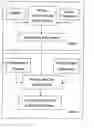
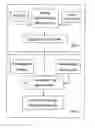
BRIEF DESCRIPTION OF THE DRAWINGThe FIGURE shows the process according to the method of the present invention.
DETAILED DESCRIPTION OF THE PREFERRED EMBODIMENTSIn the preferred embodiments of the present invention, luminous ceramic articles are achieved by burning twice. First, clay after burned once, such as white glazed brick, china article or other suitable object, is used as a base. As shown in the FIGURE luminous glaze and a solvent are mixed well and applied on the clay base which is then burned in a kiln at a controlled temperature for a period of time. The article will be achieved after cooling the burned clay.
The luminous glaze used in the present invention can be SrO, Al2O3, EU2O3, Dy2O3 or other rare-earth elements, or a mixture thereof. The luminous glaze also can be previously blended with a minor component and/or an additive to form a slurry of the luminous glaze. The minor component can be one or more of SiO2, Al2O3, Fe2O3, CaO, MgO, K2O, Na2O, SrO, B2O3, ZnO, Li2O, or other proper material. The additive can be kaolin, cellulose or other proper material.
To explain the formula and procedure of the present invention, six examples are illustrated as follows.
EXAMPLE 1The luminous glaze and screen-printing ink are mixed in a ratio of 1:0.5˜1:0.6 by ball milling for 5˜10 minutes to form a slurry of the luminous. Through a screen of 100˜120 meshes, the slurry is applied on the clay base according to designed patterns with a thickness about 0.4˜0.5 mm. Then another layer of transparent glaze powders is applied. After dried at room temperature, the clay is burned in a fast kiln at 850˜1180° C. for 40˜90 minutes. Finally, the luminous ceramic article can be achieved after cooling at room temperature.
EXAMPLE 2The luminous glaze and transparent crystal meltage are first mixed in a ratio of 1:1. Through a screen of 100˜120 meshes, the slurry is applied on the clay base according to designed patterns with a thickness about 1.0 mm. Then the clay is burned in a fast kiln at 850˜1180° C. for 40˜90 minutes. Finally, the luminous ceramic article can be achieved after cooling at room temperature.
EXAMPLE 3The luminous glaze and screen-printing ink are blended in a ratio of 1:0.4 to form a thick slurry. Through a screen of 40˜60 meshes, the thick slurry is applied on the clay base with a thickness about 0.4˜0.5 mm. After dried at room temperature, a layer of general glaze and a layer of transparent glaze powders are sequentially applied. Then the clay is burned in a fast kiln at 850˜1180° C. for 40˜90 minutes. Finally, the luminous ceramic article can be achieved after cooling at room temperature.
EXAMPLE 4The luminous glaze and water are mixed in a ratio of 1:0.5˜1:0.6 and sprayed on the clay base. Then a layer of transparent glaze powders is applied. After dried at room temperature, the clay is burned in a fast kiln at 850˜1180° C. for 40˜90 minutes. Finally, the luminous ceramic article can be achieved after cooling at room temperature.
EXAMPLE 5The luminous glaze and water are mixed in a ratio of 1:0.5 and manually applied on the clay base according to designed patterns. After dried at room temperature, the clay is burned in a fast kiln at 850˜1180° C. for 40˜90 minutes. Finally, the luminous ceramic article can be achieved after cooling at room temperature.
EXAMPLE 6The luminous glaze is produced as a luminous sticker and capable of being transferred to clay base by attaching thereon. The clay attached with the sticker is then burned in a fast kiln at 850˜1180° C. for 40˜90 minutes. Finally, the luminous ceramic article can be achieved after cooling at room temperature.
By means of the present invention, the luminous ceramic article can absorb photo energy without electricity. The external light sources can be solar light, UV lamps, fluorescent lamps, tungsten lamps, LED lamps, candles, etc. The luminous article of the present invention can absorb energy from these external light sources and store therein. When the external light source is moved, turned off or becomes darker, the stored energy will be transferred into light and emitted. Therefore, the luminous article of the present invention can be simply installed at a proper location without a power connector. According to practical tests, the luminous article of the present invention can continuously emit light for 12 hours or more even if absorbing photo energy for 10˜20 minutes. That is, the luminous article of the present invention performs better than any used currently.
Furthermore, the materials used in the present invention comply with the standard of heavy metal in EN-71, and thus will not cause environmental pollution. The luminous ceramic article of the present invention can be applied to architecture, decoration, emergency/security, public facilities, martial installation, channels, china articles, etc. The luminous article is particularly suitable for an emergency director or sign, so that people can easily find it even though electricity is shut off.
Another important merit of the present invention is that the article can still emit light and be recycled after broken as chips or fragments which is suitable for interior/exterior decoration or other applications.
While the present invention is exemplified with the above examples, any modifications in formula such as additives and solvents or weight/volume ratios thereof can be made by one skilled in this art but still belonged to the scope of the present invention.
Claims
What is claimed is:1. A method for producing a luminous ceramic article, comprising steps of:
(1) mixing luminous glaze in a solvent and then applying on a clay base; and
(2) burning the clay base in a kiln at a predetermined temperature for a period of time, and then cooling the clay base at room temperature.
2. The method as claimed in claim 1, wherein the luminous glaze is Sr2Al2O4:Eu.Dy.
3. The method as claimed in claim 1, wherein the luminous glaze is selected from the group consisting of SrO, Al2O3, Eu2O3, Dy2O3 and other rare-earth elements or a mixture thereof.
4. The method as claimed in claim 1, wherein the solvent is printing ink.
5. The method as claimed in claim 4, wherein the printing ink is screen-printing ink, and the luminous glaze and the screen-printing ink are mixed in a ratio 1:0.5˜1:0.6 by ball milling for 5˜10 minutes to form an slurry of the luminous glaze ceramic, which is then meshed through a screen of 100˜120 meshes and applied on a surface of the clay base in a thickness about 0.4˜0.5 mm, and then the clay base is applied with a layer of transparent glaze powders, dried at room temperature, burned at 850˜1180° C. for 40˜90 minutes and finally cooled at room temperature.
6. The method as claimed in claim 4, wherein the printing ink is screen-printing ink, and the luminous glaze and the screen-printing ink are blended in a ratio about 1:0.4 to form a thick slurry, which is then meshed with a screen of 40˜60 meshes and applied on a surface of the clay base in a thickness about 0.4˜0.5 mm, and the clay base is dried at room temperature, overprinted with general glaze, applied with a layer of transparent glaze powders, dried at room temperature, and burned at 850˜1180° C. for 40˜90 minutes and finally cooled at room temperature.
7. The method as claimed in claim 1, wherein the solvent is transparent crystal meltage, and the luminous glaze and the transparent crystal meltage are mixed in a ratio 1:1, which is then meshed with a screen on 100˜120 meshes and applied on a surface of the clay base in a thickness of 1 mm, and the clay base is burned at 850˜1180° C. for 40˜90 minutes and finally cooled at room temperature.
8. The method as claimed in claim 1, wherein the luminous glaze is further mixed with a minor component and an additive to form an slurry of the luminous glaze.
9. The method as claimed in claim 8, wherein the minor component is selected from the group consisting of SiO2, Al2O3, Fe2O3, CaO, MgO, K2O, Na2O, SrO, B2O3, ZnO and Li2O, or a mixture thereof.
10. The method as claimed in claim 8, wherein the additive is selected from the group consisting of kaolin and cellulose, or a mixture thereof.
11. The method as claimed in claim 8, wherein the luminous glaze is mixed with water in a predetermined ratio, and then sprayed on the clay base, the clay base is then applied with a layer of transparent glaze powders, dried at room temperature, burned at 850˜1180° C. for 40˜90 minutes and finally cooled at room temperature.
12. The method as claimed in claim 11, wherein the luminous glaze is mixed with water in a ratio 1:0.5˜1:0.6.
13. The method as claimed in claim 8, wherein the luminous glaze and the solvent are mixed in a predetermined ratio, and then manually coated on the clay base, dried at room temperature, burned at 850˜1180° C. for 40˜90 minutes and finally cooled at room temperature.
14. The method as claimed in claim 13, wherein the solvent is a ceramic printing oil.
15. The method as claimed in claim 13, wherein the solvent is water.
16. The method as claimed in claim 13, wherein the ratio of the luminous glaze to the solvent is 0.1:0.5.
17. The method as claimed in claim 8, wherein the luminous glaze is produced as a luminous ceramic sticker, then attached onto the clay base for applying the glaze thereon, burned at 850˜1180° C. for 40˜90 minutes and finally cooled at room temperature.
18. The method as claimed in claim 1, wherein the clay base is a white glazed brick after burned once.
19. The method as claimed in claim 1, wherein the clay base is a white china clay after burned once.
Images & Drawings included:
Sources:
- United States Patent and Trademark Office - verify current appl. status at the USPTO↗
Recent applications in this class:
- » 20250154402 2025-05-15
QUANTUM DOT MATERIAL, LIGHT-EMITTING DEVICE AND MANUFACTURING METHOD THEREFOR, AND DISPLAY APPARATUS - » 20250051637 2025-02-13
SEMICONDUCTOR NANOPARTICLE COMPLEX COMPOSITION, DILUTION COMPOSITION, SEMICONDUCTOR NANOPARTICLE COMPLEX CURED MEMBRANE, SEMICONDUCTOR NANOPARTICLE COMPLEX PATTERNING MEMBRANE, DISPLAY ELEMENT, AND SEMICONDUCTOR NANOPARTICLE COMPLEX DISPERSION LIQUID - » 20250051636 2025-02-13
HOST MATERIAL, COMPOSITION, AND ORGANIC ELECTROLUMINESCENT ELEMENT - » 20250019588 2025-01-16
CURABLE COMPOSITION, CURED LAYER PREPARED USING THE COMPOSITION, COLOR FILTER INCLUDING THE CURED LAYER, AND DISPLAY DEVICE INCLUDING THE COLOR FILTER - » 20240409806 2024-12-12
ORGANIC SOLID UP-CONVERSION MATERIAL - » 20240392182 2024-11-28
REUSABLE PHOTOLUMINESCENT APPARATUS, METHODS, AND SYSTEMS - » 20240376374 2024-11-14
DUAL LIGHT EMITTING MATERIAL, AND SECURITY METHOD USING THE SAME - » 20240309267 2024-09-19
PHOSPHOR, WAVELENGTH CONVERSION DEVICE, ILLUMINATION DEVICE, AND PROJECTOR - » 20240279538 2024-08-22
QUANTUM DOT-CONTAINING COMPLEX, QUANTUM DOT COMPOSITION INCLUDING THE SAME, AND ELECTRONIC APPARATUS INCLUDING THE SAME - » 20240271036 2024-08-15
TRACER INCLUDING ZINC OXIDE QUANTUM DOTS EMBEDDED IN SILICA