Sintered body of titanium compound
US20070112436A1
2007-05-17
10/581,741
2004-12-10
Abstract:
The present invention provides a sintered body of titanium compound obtained by sintering the titanium compound and a method for producing the same. A titanium compound represented by the formula (1) or (2) below is sintered.
[Ca10(PO4)6]TiO3.nH2O (1)
[Ca10(PO4)6]TiO2(OH)2 (2)
(In the formulae, n is an integer of from 0 to 3). The obtained sintered body substantially consists of perovskite and whitlokite.
Inventors:
- Tatsushi FUJITA 2 🇯🇵 Fukushima, Japan
- Kenichi TAMURA 3 🇯🇵 Fukushima, Japan
- Yuriko MORISAKI 2 🇯🇵 Hokkaido, Japan
Assignee:
- IMMUNO-SCIENCE CO., INC. 1 🇯🇵 SAPPORO-SHI HOKKAIDO, Japan
Interested in similar patents?
Get notified when new applications in this technology area are published.
Classification:
C04B35/447 » CPC main
Shaped ceramic products characterised by their composition ; Ceramics compositions ; Processing powders of inorganic compounds preparatory to the manufacturing of ceramic products based on oxide ceramics based on phosphates, e.g. hydroxyapatite
C04B2235/02 » CPC further
Aspects relating to ceramic starting mixtures or sintered ceramic products Composition of constituents of the starting material or of secondary phases of the final product
C04B2235/3208 » CPC further
Aspects relating to ceramic starting mixtures or sintered ceramic products; Composition of constituents of the starting material or of secondary phases of the final product; Constituents and secondary phases not being of a fibrous nature; Metal oxides, mixed metal oxides, or oxide-forming salts thereof, e.g. carbonates, nitrates, (oxy)hydroxides, chlorides; Alkaline earth oxides or oxide forming salts thereof, e.g. beryllium oxide Calcium oxide or oxide-forming salts thereof, e.g. lime
C04B2235/3212 » CPC further
Aspects relating to ceramic starting mixtures or sintered ceramic products; Composition of constituents of the starting material or of secondary phases of the final product; Constituents and secondary phases not being of a fibrous nature; Metal oxides, mixed metal oxides, or oxide-forming salts thereof, e.g. carbonates, nitrates, (oxy)hydroxides, chlorides; Alkaline earth oxides or oxide forming salts thereof, e.g. beryllium oxide; Calcium oxide or oxide-forming salts thereof, e.g. lime Calcium phosphates, e.g. hydroxyapatite
C04B2235/3232 » CPC further
Aspects relating to ceramic starting mixtures or sintered ceramic products; Composition of constituents of the starting material or of secondary phases of the final product; Constituents and secondary phases not being of a fibrous nature; Metal oxides, mixed metal oxides, or oxide-forming salts thereof, e.g. carbonates, nitrates, (oxy)hydroxides, chlorides; Refractory metal oxides, their mixed metal oxides, or oxide-forming salts thereof Titanium oxides or titanates, e.g. rutile or anatase
C04B2235/447 » CPC further
Aspects relating to ceramic starting mixtures or sintered ceramic products; Composition of constituents of the starting material or of secondary phases of the final product; Constituents and secondary phases not being of a fibrous nature; Metal salt constituents or additives chosen for the nature of the anions, e.g. hydrides or acetylacetonate Phosphates or phosphites , e.g. orthophosphate, hypophosphite
C04B2235/656 » CPC further
Aspects relating to ceramic starting mixtures or sintered ceramic products; Aspects relating to heat treatments of ceramic bodies such as green ceramics or pre-sintered ceramics, e.g. burning, sintering or melting processes characterised by specific heating conditions during heat treatment
C04B2235/658 » CPC further
Aspects relating to ceramic starting mixtures or sintered ceramic products; Aspects relating to heat treatments of ceramic bodies such as green ceramics or pre-sintered ceramics, e.g. burning, sintering or melting processes Atmosphere during thermal treatment
C04B2235/6581 » CPC further
Aspects relating to ceramic starting mixtures or sintered ceramic products; Aspects relating to heat treatments of ceramic bodies such as green ceramics or pre-sintered ceramics, e.g. burning, sintering or melting processes; Atmosphere during thermal treatment Total pressure below 1 atmosphere, e.g. vacuum
C04B2235/768 » CPC further
Aspects relating to ceramic starting mixtures or sintered ceramic products; Aspects relating to sintered or melt-casted ceramic products; Physical characteristics; Crystal structural characteristics, e.g. symmetry Perovskite structure ABO
C04B2235/80 » CPC further
Aspects relating to ceramic starting mixtures or sintered ceramic products; Aspects relating to sintered or melt-casted ceramic products Phases present in the sintered or melt-cast ceramic products other than the main phase
C04B2235/96 » CPC further
Aspects relating to ceramic starting mixtures or sintered ceramic products; Aspects relating to sintered or melt-casted ceramic products Properties of ceramic products, e.g. mechanical properties such as strength, toughness, wear resistance
A61F2/28 IPC
Filters implantable into blood vessels; Prostheses, i.e. artificial substitutes or replacements for parts of the body; Appliances for connecting them with the body; Devices providing patency to, or preventing collapsing of, tubular structures of the body, e.g. stents; Prostheses implantable into the body Bones
C04B35/00 IPC
Shaped ceramic products characterised by their composition ; Ceramics compositions ; Processing powders of inorganic compounds preparatory to the manufacturing of ceramic products
C09K3/00 IPC
Materials not provided for elsewhere
C04B35/465 IPC
Shaped ceramic products characterised by their composition ; Ceramics compositions ; Processing powders of inorganic compounds preparatory to the manufacturing of ceramic products based on oxide ceramics based on titanium oxides or titanates based on titanates based on alkaline earth metal titanates
Description
TECHNICAL FIELDThe present invention relates to a novel titanium compound. Further, the present invention relates to a sintered body of a titanium compound obtained by sintering the titanium compound, and a method for producing the same. Further, the present invention relates to an artificial bone material, an artificial joint material, an artificial tooth material or an artificial dental root (implant) material, constituted of those sintered bodies of the titanium compound. Further, the present invention relates to an artificial bone, an artificial joint, an artificial tooth or an artificial dental root, comprising those sintered bodies of the titanium compound.
BACKGROUND ARTApatite has excellent bioaffinity and can directly be bonded to a bone tissue. Therefore, the apatite is widely used as a material for an artificial bone or an artificial dental root. Above all, calcium hydroxyapatite is a main component of a living hard tissue such as a bone or a tooth, and therefore is one of materials most well utilized. Further, it is known that β-tricalcium phosphate (hereinafter referred to as “β-TCP”) is easily absorbed in a bone, and is easily substituted with a new bone after being embedded in a living body.
On the other hand, it is known that titanium has excellent strength and has low reactivity to a living body, and for this reason, is widely used as a material for an artificial joint or an artificial dental root (JP-A-63-143057).
It is desirable that after once being embedded in the body, the material for an artificial joint, an artificial dental root, and the like is strongly bonded to a bone tissue, and is united with the bone tissue.
However, titanium has low reactivity to a living body as described above, but on the other hand, has low affinity with a living tissue. Therefore, it was difficult to unite titanium with a bone tissue.
For this reason, it has been conducted to cover a surface of titanium with apatite for the purpose of increasing adaptability of titanium to a bone tissue (for example, JP-A-3-186272).
In this case, however, it has been a current situation that a satisfactory bioadaptability is not obtained.
On the other hand, as other composite material using apatite and titanium, a titanium compound produced by a coprecipitation method is reported (JP-A-2000-327315 and JP-A-2001-302229). The titanium compound is in a form of powder, and a product obtained by sintering this has not been known.
Further, it is known that of inorganic substances, there are some substances to be difficult to sinter the same alone as in β-TCP or the like. It is not known that the inorganic substance is mixed with the titanium compound above, and then sintered.
DISCLOSURE OF THE INVENTIONThe objects of the present invention are to provide a sintered body of a titanium compound obtained by sintering the titanium compound, and a method for producing the same. Further, the objects of the present invention are to provide a sintered body obtained by sintering a mixture of a titanium compound and an inorganic substance, and a method for producing the same.
The present inventors have found that a sintered body of a titanium compound can be obtained by sintering the titanium compound under specific conditions, and such a sintered body is suitable as a material for an artificial bone and the like, and have completed the present invention. Further, the present inventors have found that a sintered body can be obtained by sintering a mixture containing a titanium compound and an inorganic substance under specific conditions, and such a sintered body is suitable as a material for an artificial bone and the like, and have completed the present invention.
That is, the present invention is a titanium compound represented by the following formula (1) or (2):
[Ca10(P4)6]TiO3.nH2O (1)
[Ca10(PO4)6]TiO2(OH)2 (2)
(In the formulae, n is an integer of from 0 to 3).
Further, the present invention is a sintered body obtained by sintering a titanium compound.
Further, the present invention is the above-described sintered body, wherein the titanium compound is represented by the formula (1) or (2).
Further, the present invention is the above-described sintered body, wherein the titanium compound is produced by adding an alkali to a solution containing a calcium ion, a titanium ion and phosphoric ion, thereby coprecipitating.
Further, the present invention is a sintered body comprising perovskite and whitlockite.
Further, the present invention is a sintered body substantially consisting of perovskite and whitlockite.
Further, the present invention is the above-described sintered body, wherein the perovskite and whitlockite are obtained by sintering a titanium compound.
Further, the present invention is the above-described sintered body, wherein the titanium compound is represented by the formula (1) or (2).
Further, the present invention is the above-described sintered body, wherein the titanium compound is produced by adding an alkali to a solution containing a calcium ion, a titanium ion and phosphoric ion, thereby coprecipitating.
Further, the present invention is a method for producing a sintered body, comprising sintering a titanium compound.
Further, the present invention is the above-described production method, wherein the titanium compound is represented by the formula (1) or (2).
Further, the present invention is the above-described production method, wherein the titanium compound is produced by adding an alkali to a solution containing a calcium ion, a titanium ion and phosphoric ion, thereby coprecipitating.
Further, the present invention is the above-described production method, wherein the sintering is conducted at a temperature exceeding 800° C.
Further, the present invention is the above-described production method, wherein the sintering is conducted under an inert gas atmosphere and/or under reduced pressure.
Further, the present invention is the above-described production method, wherein the inert gas is xenon and/or argon.
Further, the present invention is the above-described production method, wherein the sintering is conducted under a pressure of 10−4 Pa or lower.
Further, the present invention is a sintered body obtained by sintering a mixture containing a titanium compound and an inorganic substance.
Further, the present invention is the above-described sintered body, wherein the titanium compound is represented by the formula (1) or (2).
Further, the present invention is the above-described sintered body, wherein the titanium compound is produced by adding an alkali to a solution containing a calcium ion, a titanium ion and phosphoric ion, thereby coprecipitating.
Further, the present invention is the above-described sintered body, wherein the inorganic substance is at least one selected from the group consisting of calcium hydroxyapatite, calcium fluoroapatite, β-tricalcium phosphate, α-tricalcium phosphate, tetracalcium phosphate, metallic titanium, titanium oxide and platinum.
Further, the present invention is a method for producing a sintered body, comprising sintering a mixture containing a titanium compound and an inorganic substance.
Further, the present invention is the above-described production method, wherein the titanium compound is represented by the formula (1) or (2).
Further, the present invention is the above-described production method, wherein the titanium compound is produced by adding an alkali to a solution containing a calcium ion, a titanium ion and phosphoric ion, thereby coprecipitating.
Further, the present invention is the above-described production method, wherein the inorganic substance is at least one selected from the group consisting of calcium hydroxyapatite, calcium fluoroapatite, β-tricalcium phosphate, α-tricalcium phosphate, tetracalcium phosphate, metallic titanium, titanium oxide and platinum.
Further, the present invention is the above-described production method, wherein the sintering is conducted at a temperature exceeding 800° C.
Further, the present invention is the above-described production method, wherein the sintering is conducted under an inert gas atmosphere and/or under reduced pressure.
Further, the present invention is the above-described production method, wherein the inert gas is xenon and/or argon.
Further, the present invention is the above-described production method, wherein the sintering is conducted under a pressure of 10−4 Pa or lower.
Further, the present invention is an artificial bone material, an artificial joint material, an artificial tooth material or an artificial dental root material, constituted of the above-described sintered body.
Further, the present invention is an artificial bone, an artificial joint, an artificial tooth or an artificial dental root, comprising the above-described sintered body.
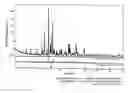
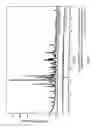
BRIEF DESCRIPTION OF THE DRAWINGSThe upper column of FIG. 1 is a view showing X ray diffraction result of the sintered body of a titanium compound of the present invention; the middle column is a view showing X ray diffraction pattern of whitlockite; and the lower column is a view showing X ray diffraction pattern of perovskite.
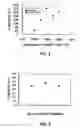
FIG. 2 is a view showing the relationship between a sintering temperature of the sintered body of a titanium compound and microvickers hardness.
FIG. 3 is a view showing microvickers hardness of the sintered body of a mixture of the titanium compound and β-TCP.
BEST MODE FOR CARRYING OUT THE INVENTION The titanium compound of the present invention is represented by the following formula (1) or (2), and has a structure of titanic acid apatite:
[Ca10(PO4)6]TiO3.nH2O (1)
[Ca10(PO4)6]TiO2(OH)2 (2)
(In the formulae, n is an integer of from 0 to 3).
In the formula (1), n is from 0 to 3, and is preferably 1 or 2.
The titanium compound of the present invention can be produced by, for example, a coprecipitation method of adding an alkali to a solution containing a calcium ion, a titanium ion and phosphoric ion, thereby coprecipitating. Specifically, for example, phosphoric acid is added to an aqueous solution containing calcium nitrate, titanium sulfate and a small amount of an alkali component dissolved therein, followed by aqueous ammonia is added to adjust pH to the vicinity of 9, and the suspension obtained is stirred at 80 to 100° C. for 4 to 8 hours, thereby a dispersion of the titanium compound can be obtained. This solution is filtered, and the material filtered off is washed and dried, thereby a powder of the titanium compound of the present invention can be produced. In dissolving calcium nitrate and titanium sulfate, formation of calcium sulfate can be suppressed by adding a small amount of an alkali component.
As a reaction formula in this case, the following is considered.
Next, the method for producing the sintered body of the titanium compound of the present invention is described.
The sintered body of the titanium compound of the present invention can be produced by sintering a powder of the titanium compound at a temperature exceeding 800° C. Where the temperature is 800° C. or lower, there is the possibility that the titanium compound cannot be sintered, or a sintered material easily disintegrates.
The upper limit of the sintering temperature is not particularly limited so long as the titanium compound can be sintered, but it is preferable to sinter at 1,500° C. or lower.
Further, the sintered body of the titanium compound of the present invention is preferable to sinter the titanium compound under an inert gas atmosphere and/or under reduced pressure. The inert gas used here is preferably xenon and/or argon. Further, pressure when sintering is preferably atmospheric pressure ( 105 Pa) or lower, more preferably 10 Pa or lower, further preferably 10−2 Pa or lower, and most preferably 10−4 Pa or lower. In this case, the sintering may be conducted only under an inert gas atmosphere, or only under reduced pressure. However, it is more preferable that the sintering is conducted under an inert gas atmosphere and also under reduced pressure.
The sintering time is not particularly limited so long as the sintered body of the titanium compound is obtained. However, for example, the sintering time can be 15 minutes or more, preferably 12 hours or more, more preferably 24 hours or more, and further preferably 48 hours or more. There is the tendency that longer sintering time provides a sintered body having higher hardness. Further, the upper limit of the sintering time is not particularly limited, and can appropriately be determined according the hardness of the sintered body, and the like. However, for example, the upper limit can be 72 hours or less, and preferably 36 hours or less.
For example, when sintering for 30 minutes under an atmospheric pressure, it is preferable to sinter at 1,250 to 1,450° C., and when sintering for 30 minutes at 10−4 Pa, it is preferable to sinter at 850 to 1,350° C.
The sintered body of the titanium compound of the present invention comprises perovskite (CaTiO3) and whitlockite (Ca3(PO4)2). In this case, it is preferable from the standpoint of hardness that α-tricalcium phosphate (hereinafter referred to as “α-TCP”), anatase titanium dioxide or hydroxylapatite is not substantially contained in the sintered body of the titanium compound.
As a reaction formula in this case, the following is considered.
Next, the sintered body obtained by sintering a mixture of the titanium compound and the inorganic substance is described.
The inorganic substance used in the present invention is not particularly limited so long as a sintered body can be obtained by mixing with the titanium compound. For example, calcium hydroxyapatite, calcium fluoroapatite, β-TCP, α-TCP, tetracalcium phosphate, metallic titanium, titanium oxide, platinum, and the like can be mentioned. Of those, β-TCP is preferable from the point that it can easily be substituted with a bone tissue in a living tissue. Further, those inorganic substances may be used alone or as mixtures of two or more thereof.
The sintered body of the mixture of the titanium compound and the inorganic substance of the present invention can be produced by sintering the mixture of the titanium compound and the inorganic substance at a temperature exceeding 800° C.
The mixing ratio of the titanium compound and the inorganic substance is not particularly limited so long as a sintered body of the mixture is obtained. Weight ratio of titanium compound: inorganic substance can be 99:1 to 1:99, preferably 95:5 to 30:70, and more preferably 90:10 to 50:50.
Inert gas, pressure, temperature range, time, and the like used when sintering are appropriately determined depending on properties of the inorganic substance or its mixing ratio, but can be nearly the same as the conditions when producing the sintered body of the titanium compound as described above.
EXAMPLE 1Production of Titanium Compound:
0.1 mol of calcium nitrate (Ca(NO3)2) and 0.1 mol of titanium suflate (TiSO4) were dissolved in about 500 ml of water, followed by neutralizing with an alkali. After adding 0.06 mol of phosphoric acid (H3PO4), aqueous ammonia was added to adjust pH to 9.0, followed by stirring at 100° C. for 6 hours. The precipitates obtained was filtered off, and dried, thereby obtaining about 10 g of a powder of the titanium compound represented by the formula (1) or (2).
EXAMPLE 2Sintering of Titanium Compound:
About 3 g of the powder of the titanium compound obtained in Example 1 was kneaded with purified water, and placed in a mold, molded, and then air-dried. The air-dried product was dried in a drying oven at 100° C. for 24 hours. The dried sample was placed in a vacuum heat-treating machine, and held at various temperatures under an atmospheric pressure or in vacuum (10−4 Pa) for 30 minutes to sinter the same. After stopping the heating, the sample was allowed to stand to room temperature. Regarding the sample sintered in vacuum, it was allowed to stand to room temperature, and after introducing argon gas, and was taken out. Regarding the sintered body of the titanium compound obtained, crystal analysis by X ray diffraction was conducted. FIG. 1 shows the result of X ray diffraction in the case of sintering at 1,300° C. in vacuum. Further, FIG. 1 also shows X ray diffraction patterns of perovskite and whitlockite. Further, the results are summarized in Table 1.
It is seen from Table 1 that in the case of sintering at 1,300° C. and 1,400° C. under atmospheric pressure, a sintered body substantially consisting of perovskite and whitlockite is obtained, and at from 900° C. to 1,300° C. under vacuum, a sintered body substantially consisting of perovskite and whitlockite is obtained.
Further, due to that those sintered bodies of the titanium compounds substantially consist of perovskite and whitlockite, it was proven that the titanium compound represented by the formula (1) or (2) changed perovskite and whitlockite by the above reaction formulae.
| TABLE 1 | ||
| Sintering | Under atmospheric | |
| Temperature (° C.) | Pressure | Under vacuum |
| Before sintering | Hydroxyapatite |
| (Ti compound was slightly confirmed) |
| 600 | — | Hydroxyapatite |
| 800 | Whitlockite | Whitlockite |
| Anatase TiO2 | Perovskite | |
| Hydroxyapatite | Hydroxyapatite | |
| 900 | — | Whitlockite |
| Perovskite | ||
| 950 | — | Whitlockite |
| Perovskite | ||
| 1000 | Whitlockite | Whitlockite |
| Anatase TiO2 | Perovskite | |
| Hydroxyapatite | ||
| 1100 | Whitlockite | Whitlockite |
| Perovskite | Perovskite | |
| Hydroxyapatite | ||
| 1200 | Whitlockite | Whitlockite |
| Perovskite | Perovskite | |
| Hydroxyapatite | ||
| 1300 | Whitlockite | Whitlockite |
| Perovskite | Perovskite | |
| 1400 | Whitlockite | Whitlockite |
| Perovskite | Perovskite | |
| α-TCP | ||
| 1500 | Whitlockite | Whitlockite |
| Perovskite | Perovskite | |
| α-TCP | α-TCP | |
About 3 g of a powder of a titanium compound produced by a coprecipitation method was kneaded with purified water, placed in a mold, molded, and then air-dried. The air-dried product was dried in a drying oven at 100° C. for 24 hours. The dried sample was placed in a vacuum heat-treating machine, and held at various temperatures under an atmospheric pressure or in vacuum (10−4 Pa) for 15 minutes to sinter the same. After stopping the heating, the sample was allowed to stand to room temperature. Regarding the sample sintered in vacuum, it was allowed to stand to room temperature, and after introducing argon gas, and was taken out. Regarding the obtained sintered body of the titanium compound, microvickers hardness was measured. The results are shown in FIG. 2.
It is seen from FIG. 2 that a sintered body of a titanium compound, having high hardness is obtained. Further, it is seen that a sintered body having higher hardness can be obtained in the case of sintering in vacuum, as compared with the case of sintering under atmospheric pressure.
EXAMPLE 4About 3 g of a mixture obtained by mixing a powder of a titanium compound produced by a coprecipitation method and a powder of β-TCP as an inorganic substance was kneaded with purified water, molded and dried in the same manner as in Example 3. The dried sample was held at 1,350° C. under a pressure of 10−4 Pa for 15 minutes to sinter the same. The content of β-TCP to the whole amount of the mixture was 25 wt %. After stopping the heating, the sample was allowed to stand to room temperature, and after introducing argon gas, was taken out. Regarding the obtained sintered body of a mixture of the titanium compound and β-TCP, microvickers hardness was measured at three portions. The results are shown in FIG. 3.
It is seen from FIG. 3 that β-TCP, which is difficult to sinter alone, can be sintered by mixing with a titanium compound. Further, it is seen that the obtained sintered body of a mixture of the titanium compound and β-TCP has hardness equal to or higher than the case of the titanium compound alone.
INDUSTRIAL APPLICABILITYThe sintered body of the titanium compound of the present invention has high hardness, and can be used as an artificial bone material, an artificial joint material, an artificial tooth material or an artificial dental root (implant) material. Further, the sintered body of the titanium compound of the present invention can be processed to form an artificial bone, an artificial joint, an artificial tooth or an artificial dental root. Further, an artificial bone, an artificial joint, an artificial tooth or an artificial dental root can be obtained by sintering the sintered body of the titanium compound of the present invention into the desired shape of an artificial bone, an artificial joint, an artificial tooth or an artificial dental root.
Claims
1. A titanium compound represented by the following formula (1) or (2):
[Ca10(PO4)6]TiO3.nH2O (1)
[Ca10(PO4)6]TiO2(OH)2 (2)
(In the formulae, n is an integer of from 0 to 3).
2. A sintered body obtained by sintering a titanium compound.
3. The sintered body as claimed in claim 2, wherein the titanium compound is represented by the following formula (1) or (2):
[Ca10(PO4)6]TiO3.nH2O (1)
[Ca10(PO4)6]TiO2(OH)2 (2)
(In the formulae, n is an integer of from 0 to 3).
4. The sintered body as claimed in claim 2, wherein the titanium compound is produced by adding an alkali to a solution containing a calcium ion, a titanium ion and phosphoric ion, thereby coprecipitating.
5. A sintered body comprising perovskite and whitlockite.
6. A sintered body substantially consisting of perovskite and whitlockite.
7. The sintered body as claimed in claim 5, wherein the perovskite and whitlockite are obtained by sintering a titanium compound.
8. The sintered body as claimed in claim 7, wherein the titanium compound is represented by the formula (1) or (2):
[Ca10(PO4)6]TiO3.nH2O (1)
[Ca10(PO4)6]TiO2(OH)2 (2)
(In the formulae, n is an integer of from 0 to 3).
9. The sintered body as claimed in claim 7, wherein the titanium compound is produced by adding an alkali to a solution containing a calcium ion, a titanium ion and phosphoric ion, thereby coprecipitating.
10. A method for producing a sintered body, sintering a titanium compound.
11. The production method as claimed in claim 10, wherein the titanium compound is represented by the formula (1) or (2):
[Ca10(PO4)6]TiO3.nH2O (1)
[Ca10(PO4)6]TiO2(OH)2 (2)
(In the formulae, n is an integer of from 0 to 3).
12. The production method as claimed in claim 10, wherein the titanium compound is produced by adding an alkali to a solution containing a calcium ion, a titanium ion and phosphoric ion, thereby coprecipitating.
13. The production method as claimed in claim 10, wherein the sintering is conducted at a temperature exceeding 800° C.
14. The production method as claimed in claim 10, wherein the sintering is conducted under an inert gas atmosphere and/or under reduced pressure.
15. The production method as claimed in claim 14, wherein the inert gas is xenon and/or argon.
16. The production method as claimed in claim 14, wherein the sintering is conducted under a pressure of 10−4 Pa or lower.
17. A sintered body obtained by sintering a mixture containing a titanium compound and an inorganic substance.
18. The sintered body as claimed in claim 17, wherein the titanium compound is represented by the formula (1) or (2):
[Ca10(PO4)6]TiO3.nH2O (1)
[Ca10(PO4)6]TiO2(OH)2 (2)
(In the formulae, n is an integer of from 0 to 3).
19. The sintered body as claimed in claim 17, wherein the titanium compound is produced by adding an alkali to a solution containing a calcium ion, a titanium ion and phosphoric ion, thereby coprecipitating.
20. The sintered body as claimed in claim 17, wherein the inorganic substance is at least one selected from the group consisting of calcium hydroxyapatite, calcium fluoroapatite, β-tricalcium phosphate, α-tricalcium phosphate, tetracalcium phosphate, metallic titanium, titanium oxide and platinum.
21. A method for producing a sintered body, sintering a mixture containing a titanium compound and an inorganic substance.
22. The production method as claimed in claim 21, wherein the titanium compound is represented by the formula (1) or (2):
[Ca10(PO4)6]TiO3.nH2O (1)
[Ca10(PO4)6]TiO2(OH)2 (2)
(In the formulae, n is an integer of from 0 to 3).
23. The production method as claimed in claim 21, wherein the titanium compound is produced by adding an alkali to a solution containing a calcium ion, a titanium ion and phosphoric ion, thereby coprecipitating.
24. The production method as claimed in claim 21, wherein the inorganic substance is at least one selected from the group consisting of calcium hydroxyapatite, calcium fluoroapatite, β-tricalcium phosphate, α-tricalcium phosphate, tetracalcium phosphate, metallic titanium, titanium oxide and platinum.
25. The production method as claimed in claim 21, wherein the sintering is conducted at a temperature exceeding 800° C.
26. The production method as claimed in claim 21, wherein the sintering is conducted under an inert gas atmosphere and/or under reduced pressure.
27. The production method as claimed in claim 26, wherein the inert gas is xenon and/or argon.
28. The production method as claimed in claim 26, wherein the sintering is conducted under a pressure of 10−4 Pa or lower.
29. An artificial bone material, an artificial joint material, an artificial tooth material or an artificial dental root material, constituted of the sintered body as claimed in claim 1.
30. An artificial bone material, an artificial joint material, an artificial tooth material or an artificial dental root material, constituted of the sintered body as claimed in claim 17.
31. An artificial bone, an artificial joint, an artificial tooth or an artificial dental root, comprising the sintered body as claimed in claim 1.
32. An artificial bone, an artificial joint, an artificial tooth or an artificial dental root, comprising the sintered body as claimed in claim 17.
Images & Drawings included:
Sources:
- United States Patent and Trademark Office - verify current appl. status at the USPTO↗
Similar patent applications:
- » 20090098038
Sintered body of titanium compound - » 20160185670
Titanium compound-containing sintered body
Recent applications in this class:
- » 20250042818 2025-02-06
METHOD OF MANUFACTURING CERAMIC COMPOSITE WITH CONDUCTIVE OR SUPERCONDUCTING OVER ROOM TEMPERATURE AT ATMOSPHERIC (AMBIENT) PRESSURE AND THE CERAMIC COMPOSITE - » 20240409469 2024-12-12
PREPARATION METHOD FOR HIGH-PERFORMANCE LITHIUM IRON PHOSPHATE AND USE THEREOF - » 20230062742 2023-03-02
TWO-STAGE SINTERING METHOD FOR PREPARING POROUS BIPHASIC CALCIUM PHOSPHATE CERAMIC FROM CALCIUM-CONTAINING BIOLOGICAL WASTE - » 20220356117 2022-11-10
INORGANIC-ORGANIC PHOSPHATE CERAMICS AND COATINGS - » 20220169572 2022-06-02
INVESTMENT POWDER - » 20210246073 2021-08-12
Negative thermal expansion material, manufacturing method and composite material thereof - » 20210107835 2021-04-15
Facile synthesis of solid sodium ion-conductive electrolytes - » 20200369572 2020-11-26
APATITE BODY AND PREPARING METHOD THEREOF - » 20200354277 2020-11-12
Inorganic-organic phosphate ceramics and coatings - » 20200181026 2020-06-11
CALCIUM PHOSPHATE SINTERED BODY PARTICLES AND METHOD FOR PRODUCING SAME