Dedicated memory module for device
US20070113026A1
2007-05-17
11/542,487
2006-10-03
Abstract:
A memory module is provided for an electrical device such as a switching device or circuit interrupter wherein the memory module is arranged to be mounted with the device and arranged to store data including device characteristics, operating configuration and operational history.
Inventors:
- Joseph P. Moninski 11 🇺🇸 Arlington Heights, IL, United States
- David J. Beseda 1 🇺🇸 Sugar Grove, IL, United States
- Todd W. Klippel 5 🇺🇸 Oak Park, IL, United States
Interested in similar patents?
Get notified when new applications in this technology area are published.
Classification:
E05B37/025 » CPC main
Permutation or combination locks ; Puzzle locks with tumbler discs or rings arranged on a single axis, each disc being adjustable independently of the others in padlocks
A45C13/20 » CPC further
Details; Accessories; Devices to prevent theft or loss of luggage or bags Chains or bands
E05B17/10 » CPC further
Accessories in connection with locks Illuminating devices on or for locks or keys; Transparent or translucent lock parts; Indicator lights
H02J13/0075 » CPC further
Circuit arrangements for providing remote indication of network conditions, e.g. an instantaneous record of the open or closed condition of each circuitbreaker in the network; Circuit arrangements for providing remote control of switching means in a power distribution network, e.g. switching in and out of current consumers by using a pulse code signal carried by the network for single frequency AC networks characterised by transmission structure between the control or monitoring unit and the controlled or monitored unit with direct transmission between the control or monitoring unit and the controlled or monitored unit using radio means
A45C15/00 » CPC further
Purses, bags, luggage or other receptacles covered by groups - , combined with other objects or articles
E05B67/003 » CPC further
Padlocks ; Details thereof Chain, wire or cable locks
Y02B70/30 » CPC further
Technologies for an efficient end-user side electric power management and consumption Systems integrating technologies related to power network operation and communication or information technologies for improving the carbon footprint of the management of residential or tertiary loads, i.e. smart grids as climate change mitigation technology in the buildings sector, including also the last stages of power distribution and the control, monitoring or operating management systems at local level
Y02B70/30 » CPC further
Technologies for an efficient end-user side electric power management and consumption Systems integrating technologies related to power network operation and communication or information technologies for improving the carbon footprint of the management of residential or tertiary loads, i.e. smart grids as climate change mitigation technology in the buildings sector, including also the last stages of power distribution and the control, monitoring or operating management systems at local level
Y02B90/20 » CPC further
Enabling technologies or technologies with a potential or indirect contribution to GHG emissions mitigation Smart grids as enabling technology in buildings sector
Y02B90/20 » CPC further
Enabling technologies or technologies with a potential or indirect contribution to GHG emissions mitigation Smart grids as enabling technology in buildings sector
Y04S20/242 » CPC further
Management or operation of end-user stationary applications or the last stages of power distribution; Controlling, monitoring or operating thereof; End-user application control systems Home appliances
Y04S40/126 » CPC further
Systems for electrical power generation, transmission, distribution or end-user application management characterised by the use of communication or information technologies, or communication or information technology specific aspects supporting them characterised by data transport means between the monitoring, controlling or managing units and monitored, controlled or operated electrical equipment using wireless data transmission
Y10T70/10 » CPC further
Locks Miscellaneous
Y10T70/417 » CPC further
Locks; Portable; Padlocks Combination-controlled
Y10T70/435 » CPC further
Locks; Portable; Padlocks; Combination-controlled Flexible shackle
Y10T70/489 » CPC further
Locks; Portable; Padlocks; Parts, accessories, attachments and adjuncts Housings
Y10T70/5018 » CPC further
Locks; Special application; For portable articles Robes
Y10T70/5093 » CPC further
Locks; Special application For closures
G06F13/00 IPC
Interconnection of, or transfer of information or other signals between, memories, input/output devices or central processing units
Description
This application claims the benefit of U.S. Provisional Application No. 60/730,526 filed Oct. 26, 2005.
BACKGROUND OF THE INVENTION1. Field of the Invention
The present invention relates generally to the field of electrical power systems and, more particularly, to a dedicated memory module for an electrical device such as a switching device or circuit interrupter wherein the memory module is arranged to be mounted with the device and arranged to store data including device characteristics, operating configuration and operational history.
2. Description of the Related Art
Various computer controlled devices include system memory that retains error codes and operational history. For example, Micro-AT control available from S&C Electric Co., Chicago, Ill. 60626, stores such data as do vehicle computers.
While the prior art arrangements may be generally useful, they do not provide for a dedicated memory module for a device that is independent of the control resources of the device.
BRIEF DESCRIPTION OF THE DRAWINGThe invention, both as to its organization and method of operation, together with further objects and advantages thereof, will best be understood by reference to the specification taken in conjunction with the accompanying drawing in which:
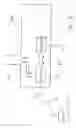
FIG. 1 is a diagrammatic representation of a dedicated memory module in accordance with the present invention and illustrated in conjunction with an illustrative device.
DETAILED DESCRIPTIONReferring now to FIG. 1, a memory module 20 of the present invention is provided for use with an electrical device 30, e.g. an illustrative switch or circuit interrupter as shown that includes that includes an automatic testing and closing feature in a specific implementation. A control 40 is provided to control the functions of the device 30. In the illustrative illustration, the control 40 communicates with a remote transmitter 50 via a communications channel referred to generally at 60 such that the functions and operational modes of the device 30 may be controlled remotely.
In a specific illustration, the device 30 is mounted with respect to a mounting arrangement 70 that houses the control 40 and the memory module 20. Preferably, the control 40 is removable from the mounting arrangement 70 as illustrated at 41 for service and replacement or the like. In accordance with important aspects of the present invention, the memory module 20 retains device data independent of the control 40 including device characteristics, operating configuration and operational history. The data stored in the memory module 20 is then available to the control 40 upon installation of a control 40 into the base 70. In this manner, when a new control 40 is installed, the control 40 can reestablish operational parameters and have the complete system information available to it immediately upon installation including device characteristics, operating configuration and operational history.
Considering now the memory module 20 in more detail, the memory module 20 communicates with the control 40 over a communications bus 80 for the bidirectional interchange of data therebetween. For example, the memory module 20 stores permanent or static data that includes characteristics of the device 30, i.e. data that does not change such as device catalog/serial number, device system address, options, etc. Such data is preferably stored in a non-volatile memory of the memory module 20. Additionally, the memory module 20 receives and stores dynamic data from the control 40 during operation of the device 30 such as operational parameters, e.g. device operation count, wear indicators, operational timing parameters etc. For example, the control communicates with and receives data from the device 30 over bidirectional data bus 90. Further, user-defined settings are also stored in the memory module 20 such as current device and system configuration, assigned location or asset numbers, etc. In an illustrative embodiment, the user-defined settings are communicated from the remote transmitter 50 to the control 40. Accordingly, if the control 40 is replaced, the various categories of data stored in the memory module 20 are available for downloading into the new control 40. Thus, the identity and history of the device 30 are maintained even if the control 40 needs to be replaced. It should be understood that the memory module 20 must retain its stored data independent of the control 40 such that long term memory retention and integrity are important factors for he memory module 20.
While the present disclosure is susceptible to various modifications and alternative forms, certain embodiments are shown by way of example in the drawings and the herein described embodiments. It will be understood, however, that this disclosure is not intended to limit the invention to the particular forms described, but to the contrary, the invention is intended to cover all modifications, alternatives, and equivalents defined by the appended claims.
It should also be understood that, unless a term is expressly defined in this patent using the sentence “As used herein, the term ‘______’ is hereby defined to mean . . . ” or a similar sentence, there is no intent to limit the meaning of that term, either expressly or by implication, beyond its plain or ordinary meaning, and such term should not be interpreted to be limited in scope based on any statement made in any section of this patent (other than the language of the claims). To the extent that any term recited in the claims at the end of this patent is referred to in this patent in a manner consistent with a single meaning, that is done for sake of clarity only so as to not confuse the reader, and it is not intended that such claim term by limited, by implication or otherwise, to that single meaning. Unless a claim element is defined by reciting the word “means” and a function without the recital of any structure, it is not intended that the scope of any claim element be interpreted based on the application of 35 U.S.C. §112, sixth paragraph.
Claims
1. A memory module arrangement for an electrical device that has functions controllable by a control and that provides operational data to the control, the, arrangement comprising:
a control that sends control information to and receives operational information from a controlled device;
a memory module having stored therein information about the device and having writeable memory storage facilities; and
bidirectional data communication means for communicating information between the memory and the control so as to receive the stored information from the memory module and write information to the memory module during operation of the device.
2. The memory module arrangement of claim 1 wherein the memory module includes facilities for retaining information independent of the presence of the control.
3. The memory module arrangement of claim 1 wherein the device includes a mounting arrangement that also houses the control and the memory module, the control being removable from the mounting arrangement.
4. An electrical device comprising:
a switching device;
a mounting arrangement for supporting the switching device;
a control housed within the mounting arrangement and including facilities for controlling the switching device;
a memory module housed within the mounting arrangement having stored therein first information about the switching device and retaining said first information independent of the control;
the control further including facilities for communicating information to and receiving information from the memory module, the memory module further having stored therein second information received from the control.
Images & Drawings included:

Sources:
- United States Patent and Trademark Office - verify current appl. status at the USPTO↗
Similar patent applications:
- » 20150248327
Memory module with dedicated repair devices - » 20180293130
Memory module with dedicated repair devices - » 20210133061
MEMORY MODULE WITH DEDICATED REPAIR DEVICES - » 20220004472
Memory module with dedicated repair devices - » 20220342783
Memory module with dedicated repair devices - » 20240095134
Memory module with dedicated repair devices
Recent applications in this class:
- » 20240418005 2024-12-19
LOCK AND LOCKING METHOD - » 20240360696 2024-10-31
PORTABLE LOCK APPARATUS - » 20240044172 2024-02-08
CABLE LOCK - » 20230212880 2023-07-06
LOCK - » 20230212879 2023-07-06
Flippable cable lock - » 20230175288 2023-06-08
Portable lock apparatus - » 20210301556 2021-09-30
Laminated padlock - » 20210062542 2021-03-04
High security combination padlock with ease of use reset mechanism - » 20200347642 2020-11-05
LOCK WITH KEY STORAGE ROOM - » 20200217103 2020-07-09
Retractable cable lock with improved reset mechanism