Using Wheelchair Side Guards to form a usable tray
US20070120398A1
2007-05-31
11/164,570
2005-11-29
Abstract:
A combined wheelchair and tray assembly that utilizes removable specially designed side guards that easily disconnect from their side guard position, then connect together to form a tray that mounts into the end of the arm rests. This design that adds little if any weight to the wheelchair and quickly provides the user with a tray whenever and wherever needed.
Interested in similar patents?
Get notified when new applications in this technology area are published.
Classification:
A61G5/10 » CPC main
Chairs or personal conveyances specially adapted for patients or disabled persons, e.g. wheelchairs Parts, details or accessories
A61G5/1054 » CPC further
Chairs or personal conveyances specially adapted for patients or disabled persons, e.g. wheelchairs; Parts, details or accessories Large wheels, e.g. higher than the seat portion
A61G5/1094 » CPC further
Chairs or personal conveyances specially adapted for patients or disabled persons, e.g. wheelchairs; Parts, details or accessories Tables, working plates or trays
A61G5/125 » CPC further
Chairs or personal conveyances specially adapted for patients or disabled persons, e.g. wheelchairs; Parts, details or accessories; Rests specially adapted therefor, e.g. for the head or the feet for arms
A47B83/02 IPC
Combinations comprising two or more pieces of furniture of different kinds Tables combined with seats
Description
BACKGROUND OF THE INVENTIONUsers of self propelled wheelchairs have difficulty carrying objects from place to place. This is because it takes both hands to navigate the wheelchair, leaving no hand free to hold an object during transport. Trays or tables that attach to the wheelchair are useful for this task under certain circumstances. The problem with some trays or tables is that they are not integral to the wheelchair and may not be at the originating transport location when needed. Trays and tables integral to the wheelchair either add weight, make the wheelchair have a wider operating width or interfere with the user's manual locomotion of the wheelchair.
SUMMARY OF THE INVENTIONUtilizing the side guards (the part of a wheelchair that separates the seating area from the wheels) and interlocking them together in such a way that the two side guards become one rigid component (tray) that can span most or all of the distance between the arm rests. Both side guards have an attached protrusion, bracket or tang that can be inserted into a slot in the arm rests. The arm rests provide vertical, lateral and rotational stability for the tray. This design is quickly assembled and disassembled by the wheelchair user as needed
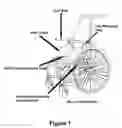
BRIEF DESCRIPTION OF THE DRAWINGSFIG. 1 Is a view showing all typical wheelchair parts. The wheelchair shows removable side guards and mounting slots in the arm rests.
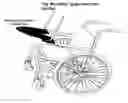
FIG. 2 Shows the side guard/tray assembly and how they are connected together utilizing built-in opposing tangs and slots.
FIG. 3 Shows the side guards assembled to form a tray and shows how the tray mounting tangs insert into the arm rests.
DESCRIPTION OF THE PREFERRED EMBODIMENTAs the wheelchair user is seated in the wheelchair shown in FIG. 1, he/she can reach down with both hands, each hand grasping one of the side guards. The user lifts the side guards up and away from the chair. The user now connects the two side guards by pushing them together so that the tangs and tang slots engage.
The user now takes the two connected side guards that now form one rigid tray and inserts the tray mounting tangs into the tang slots in the end of the arm rests. The tray is now ready to use.
The user moves about with two hands free to provide locomotion and steering to the wheelchair while carrying an object(s) on the tray from place to place.
To disassemble the tray assembly, the user grasps both sides of the tray and pushes forward, disengaging the tray mounting tangs from the arm rests. The user now pulls the two side guards apart and re-inserts them into their original position.
Claims
What is claimed is:1. Utilizing two easily removable side guards which interlock together to form a usable tray.
2. Utilizing two easily removable components mounted next to and parallel to the side guards which interlock together to form a usable tray.
3. The tray as assembled above from the two side guards attaches to the two arm rests which provide vertical, lateral and rotational stability.
Images & Drawings included:


Sources:
- United States Patent and Trademark Office - verify current appl. status at the USPTO↗
Recent applications in this class:
- » 20250049619 2025-02-13
EXERCISE APPARATUS FOR USE WITH A WHEELCHAIR FOR EXERCISING LOWER LIMB - » 20240350335 2024-10-24
FLUID COLLECTION HANGER AND METHOD OF HANGING A FLUID COLLECTION BAG ON A WHEELCHAIR - » 20240285453 2024-08-29
WHEELCHAIR - » 20240238137 2024-07-18
WHEELCHAIR CUSTOMIZATION SYSTEM, METHODS AND COMPONENTS - » 20230414421 2023-12-28
WHEELCHAIR SUSPENSION - » 20230240919 2023-08-03
SYSTEMS AND METHODS FOR CONTROLLING MOBILITY DEVICES - » 20230233387 2023-07-27
WHEELCHAIR - » 20230190551 2023-06-22
WHEELCHAIR BARRIER ATTACHMENT DEVICE - » 20230190550 2023-06-22
Wheelchair Cover - » 20230165742 2023-06-01
Telehealth movable vehicle