Positive active material for a lithium secondary battery with higher performance and preparation method of the same
US20070122713A1
2007-05-31
11/643,674
2006-12-22
Abstract:
Disclosed is a positive active material for a lithium secondary battery and a preparation method of the same that can improve cycle-life characteristics and storage characteristics at a high temperature by improving structural safety characteristics and electrochemical characteristics, by forming an overlayer comprising an oxide glass phase on the surface of the positive active material, and a lithium secondary battery comprising the positive active material.
Inventors:
- Yong-Hoon KWON 3 🇰🇷 Yongin-City, South Korea
- Hong-Kyu Park 3 🇰🇷 Taejeon-city, South Korea
- Seong-Yong Park 2 🇰🇷 Taejeon-city, South Korea
- Joon-Sung Bae 2 🇰🇷 Taejeon-city, South Korea
- Jin-On Kim 2 🇰🇷 Taejeon-city, South Korea
- Mi-Seon Kwak 1 🇰🇷 Taejeon-city, South Korea
- Jong-Moon Yoon 1 🇰🇷 Taejeon-city, South Korea
Interested in similar patents?
Get notified when new applications in this technology area are published.
Classification:
H01M4/485 » CPC main
Electrodes; Electrodes composed of, or comprising, active material; Selection of substances as active materials, active masses, active liquids of inorganic oxides or hydroxides of mixed oxides or hydroxides for inserting or intercalating light metals, e.g. LiTiO or LiTiOxFy
C01G45/1228 » CPC further
Compounds of manganese; Manganates manganites or permanganates; Manganates or manganites with a manganese oxidation state of Mn(III), Mn(IV) or mixtures thereof of the type [MnO2]n- , e.g. LiMnO2, Li[MxMn1-x]O2
C01G51/42 » CPC further
Compounds of cobalt; Cobaltates containing alkali metals, e.g. LiCoO
C01G51/50 » CPC further
Compounds of cobalt; Cobaltates containing alkali metals, e.g. LiCoO containing manganese of the type [MnO2]n- , e.g. Li(CoxMn1-x)O2, Li(MyCoxMn1-x-y)O2
C01G53/42 » CPC further
Compounds of nickel; Nickelates containing alkali metals, e.g. LiNiO
C01G53/50 » CPC further
Compounds of nickel; Nickelates containing alkali metals, e.g. LiNiO containing manganese of the type [MnO2]n- , e.g. Li(NixMn1-x)O2, Li(MyNixMn1-x-y)O2
H01M4/1391 » CPC further
Electrodes; Electrodes composed of, or comprising, active material; Electrodes for accumulators with non-aqueous electrolyte, e.g. for lithium-accumulators; Processes of manufacture thereof; Processes of manufacture of electrodes based on mixed oxides or hydroxides, or on mixtures of oxides or hydroxides, e.g. LiCoOx
H01M4/366 » CPC further
Electrodes; Electrodes composed of, or comprising, active material; Selection of substances as active materials, active masses, active liquids; Composites as layered products
H01M4/525 » CPC further
Electrodes; Electrodes composed of, or comprising, active material; Selection of substances as active materials, active masses, active liquids of inorganic oxides or hydroxides of nickel, cobalt or iron of mixed oxides or hydroxides containing iron, cobalt or nickel for inserting or intercalating light metals, e.g. LiNiO, LiCoO or LiCoOxFy
H01M10/0525 » CPC further
Secondary cells; Manufacture thereof; Accumulators with non-aqueous electrolyte; Li-accumulators Rocking-chair batteries, i.e. batteries with lithium insertion or intercalation in both electrodes; Lithium-ion batteries
C01P2002/52 » CPC further
Crystal-structural characteristics; Solid solutions containing elements as dopants
C01P2002/54 » CPC further
Crystal-structural characteristics; Solid solutions containing elements as dopants one element only
C01P2002/88 » CPC further
Crystal-structural characteristics defined by measured data other than those specified in group by thermal analysis data, e.g. TGA, DTA, DSC
C01P2004/84 » CPC further
Particle morphology; Particles consisting of a mixture of two or more inorganic phases two phases having the same anion, e.g. both oxidic phases one phase coated with the other
C01P2006/40 » CPC further
Physical properties of inorganic compounds Electric properties
H01M2004/028 » CPC further
Electrodes; Electrodes composed of, or comprising, active material characterised by the polarity Positive electrodes
Y02E60/10 » CPC further
Enabling technologies; Technologies with a potential or indirect contribution to GHG emissions mitigation Energy storage using batteries
Y02E60/10 » CPC further
Enabling technologies; Technologies with a potential or indirect contribution to GHG emissions mitigation Energy storage using batteries
H01M4/62 IPC
Electrodes; Electrodes composed of, or comprising, active material Selection of inactive substances as ingredients for active masses, e.g. binders, fillers
H01M4/48 IPC
Electrodes; Electrodes composed of, or comprising, active material; Selection of substances as active materials, active masses, active liquids of inorganic oxides or hydroxides
B05D5/12 IPC
Processes for applying liquids or other fluent materials to surfaces to obtain special surface effects, finishes or structures to obtain a coating with specific electrical properties
C01D1/02 IPC
Oxides or hydroxides of sodium, potassium or alkali metals in general Oxides
Description
CROSS REFERENCE TO RELATED APPLICATIONThis application is a Continuation Application of U.S. application Ser. No. 10/240,536, filed Oct. 2, 2002, which was the U.S. National Stage of International Application No. PCT/KR02/00110, filed Jan. 24, 2002, and which claims priority to Korean Patent Application No. 2001-0006791 filed in Korea on Feb. 12, 2001. The entire contents of all are herein incorporated by reference.
BACKGROUND OF THE INVENTION(a) Field of the Invention
The present invention relates to a positive active material for a lithium secondary battery and a preparation method of the same, and more particularly, to a positive active material for a lithium secondary battery and a lithium secondary battery having improved storage characteristics and cycle-life characteristics at a high temperature, and improved safety characteristics, and a method of preparing the same.
(b) Description of the Related Art
A lithium secondary battery is required to have good cycle-life characteristics, safety characteristics, and storage characteristics at a high temperature. An important factor in cycle-life characteristics of a battery is the characteristics of positive and negative active materials. Recently, colossal improvements have been made in the field of negative active material, but there are still a lot of problems in the field of positive active material. Research on positive active material is particularly required, because safety and storage characteristics of a battery at a high temperature are dependant on the characteristics of the positive active material.
Representative positive active materials of a lithium secondary battery include LiCoO2, LiNiO2 and LiMn2O4. Among them, LiNiO2 has the largest capacity but it cannot be easily utilized because of safety problem, LiMn2O4 has the smallest specific capacity and is thus not suitable for a positive active material, and LiCoO2 has poor storage characteristics at a high temperature.
A lot of research is underway to overcome the above-mentioned problems. There are three representative research approaches. One of them is improving storage characteristics at a high temperature by coating LiMn2O4 with metal carbonate; another is improving cycle-life and safety characteristics by coating LiCoO2 with metal oxide; the third is improving the safety of the battery by enhancing structural and thermal characteristics by the use of various dopants.
Although the above-mentioned methods improve cycle-life characteristics at room temperature, they don't improve storage characteristics and cycle-life characteristics at a high temperature.
SUMMARY OF THE INVENTIONIt is an object of the present invention to provide a positive active material for a lithium secondary battery and a preparation method of the same having improved cycle-life characteristics at room temperature and at high temperature, and improved safety characteristics.
In order to achieve these objects and others, the present invention provides a positive active material for a lithium secondary battery comprising
-
- a) a lithium metal complex oxide described by the following Formula 1; and
- b) a glass phase overlayer of a non-crystalline oxide described by the Following formula 2 coated on the a) lithium metal complex oxide:
LiA1-xBxO2 [Formula 1] - wherein,
- A is Co or Ni,
- B is selected from the group consisting of Al, B, Ni, Co, Ti, Sn, Mn, and Zr; and,
- x is a real number of 0˜0.5,
CsOt.yDzOw [Formula 2] - wherein,
- C is selected from the group consisting of Na, K, Mg, Ba, Sr, Y, Sn, Ga, In, Th, Pb, Li, Zn, Ca, Cd, Rb, Sc, Ti, Zn, Al, Be, and Zr.
- D is selected from the group consisting of Al, B, Si, Ge, P, V, As, Sb, Zr, Nb, Ti, Zn, Zr, and Pb;
- y is a real number of 0.5˜3; and
- s and t, and z and w, are respectively variable to the oxidation number of C and D.
In addition, the present invention provides a preparation method of positive active material for a lithium secondary battery comprising the steps of:
-
- a) preparing lithium metal complex oxide as core particles described by Formula 1;
- b) providing an overlayer material compound described by the Formula 2;
- c) coating the lithium metal complex oxide of the a) step with the overlayer material compound of the b) step; and
- c) sintering the coated lithium metal complex oxide of c) step.
The present invention also provides a lithium secondary battery comprising the positive active material.
BRIEF DESCRIPTION OF THE DRAWINGSA more complete appreciation of the invention, and many of the attendant advantages thereof, will be readily apparent as the same becomes better understood by reference to the following detailed description when considered in conjunction with the accompanying drawings, wherein:
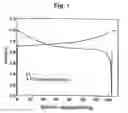
FIG. 1 is a graph showing the charge-discharge characteristics of lithium cobalt complex oxide of the core particles of Example 1 coated with an overlayer of LiO2.SiO2;
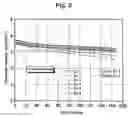
FIG. 2 is a graph showing cycle-life characteristics of Examples 1 to 6 and Comparative Examples 1 and 2;
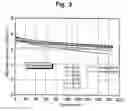
FIG. 3 is a graph showing cycle-life characteristics of Examples 7 to 12 and Comparative Examples 3 and 4;
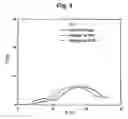
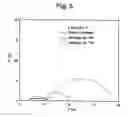
FIG. 4 is a graph showing the variation of impedance of the surface resistance of the positive active material according to storage time at 55° C. of Example 1;
FIG. 5 is a graph showing the variation of impedance of the surface resistance of the positive active material according to storage time at 55° C. of Comparative Example 1; and
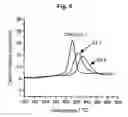
FIG. 6 is a graph showing the heat flow rate according to the temperature of the lithium cobalt complex oxide under oxygen decomposition of the batteries of Examples 1 and 6 and Comparative Example 1 after being charged to 4.2V, as analyzed by a Themo Gravimetry/Differential Thermal Analyzer (TG/DTA).
DETAILED DESCRIPTION OF THE INVENTIONIn the following detailed description, only the preferred embodiment of the invention has been shown and described, simply by way of illustration of the best mode contemplated by the inventors of carrying out the invention. As will be realized, the invention is capable of modification in various obvious respects, all without departing from the invention. Accordingly, the drawings and description are to be regarded as illustrative in nature, and not restrictive.
The positive active material of the present invention comprises a) lithium metal complex compound intercalating and deintercalating lithium ions and b) an overlayer comprising an oxide glass phase having low electronic conductivity and low reactivity with electrolyte.
The lithium metal complex compound of a), in the form of core particles, are described by Formula 1.
LiA1-xBxO2 [Formula 1]
-
- wherein,
- A is Co or Ni,
- B is selected from the group consisting of Al, B, Ni, Co, Ti, Sn, Mn, and Zr; and,
- x is a real number of 0˜0.5.
The overlayer of b) comprises a metal oxide, and is described by Formula 2.
CsOt.yDzOw [Formula 2]
-
- wherein,
- C is selected from the group consisting of Na, K, Mg, Ba, Sr, Y, Sn, Ga, In, Th, Pb, Li, Zn, Ca, Cd, Rb, Sc, Ti, Zn, Al, Be, and Zr.
- D is selected from the group consisting of Al, B, Si, Ge, P, V, As, Sb, Zr, Nb, Ti, Zn, Zr, and Pb;
- y is a real number of 0.5˜3; and
- s and t, and z and w, are respectively variable to the oxidation number of C and D.
The CsOt in Formula 2 is network structure modifier oxide that makes the glass phase weak, and the DzOw is network structure maker oxide that makes the glass phase strong. Characteristics of the overlayer oxide glass can be variable, by adjusting the ratio of network structure modifier and network structure maker. The y in Formula 2 is the ratio of CsOt and DzOw, and the y value is preferably such that the condition of forming the glass phase occurs.
In addition, the subscripts s, and t, and z and w, are variables of the oxidation numbers of C and D, respectively. For, example if C is an element with an oxidation number of 1, CsOt is C2O; if C is an element with an oxidation number of 2, CsOt is CO; if C is an element with an oxidation number of 4, CsOt is CO2.
Although the composition and ingredients of the glass phase of the layer can vary somewhat, it is structured to be electrochemically safe with low electronic conductivity. Therefore, the glass phase of the layer not only improves cycle-life characteristics of the battery by decreasing the electrochemical decomposition reaction of the electrolyte, but it also improves storage characteristics at a high temperature by decreasing the increase of resistance attributable to electrolyte decomposition by-products at the surface of the positive active material. In addition, the glass phase of the layer has no deformation or cleavage attributable to stress arising from crystalline anisotropy of the core particles, because the glass phase of the layer coats the core particles solidly. Therefore, the safety characteristics of the battery improve by removing defects of the surface and improving structural characteristics.
The present invention also provides a preparation method of a positive active material for a lithium secondary battery comprising the steps of a) preparing lithium metal complex oxide core particles, b) providing an overlayer material compound, c) coating the lithium metal complex oxide with the overlayer material compound of a); and d) sintering the coated lithium metal complex oxide of c).
The lithium metal complex oxide described by Formula 1 is prepared in the a) step. In particular, it is preferable that the lithium compound is selected from the group consisting of LiOH, LiOH.H2O, LiCH3COO, Li2CO3, Li2SO4 and LiNO3; and a material that can be used as a metal in Formula 1 apart from lithium is selected from the group consisting of carbonate salt, nitrate salt, hydrate salt, acetate salt, citric acid salt, chloride and oxides of metals A and B.
The core particles of the present invention are prepared by heat treatment of the compound of lithium compound and metal compound for 1 to 20 hours, at 400 to 900° C. in air or complex air comprising over 10 vol % of oxygen.
In the b) step, a homogeneous complex solution is prepared by mixing adequate proportions of material compounds to form an oxide glass phase compound as an overlayer. It is preferable that the materials of the overlayer are selected from the group consisting of carbonate salt, nitrate salt, hydrate salt, acetate salt, citric acid salt, chloride and an oxide of metals C and D shown in Formula 2, and that the solution is prepared by agitating the materials after they are dissolved in water or alcohol.
The material of the overlayer is preferably 0.01 to 10 mol % of the core particles on the assumption that the compound forming the overlayer becomes a glass phase metal oxide after heat treatment.
The core particles of the a) step are coated with the overlayer material prepared in the b) step in the c) step, and there are two methods to do so. One is that the lithium metal complex oxide powder of the a) step is added to an aqueous solution or an organic sol solution of the material compound of the b) step, a slurry is prepared and sufficiently agitated using an agitator, and the solvent is then evaporated by heating. The complex oxide glass is coated on the lithium metal complex oxide powder after heat treatment.
The other more simple method is that the aqueous solution or organic sol solution is sprayed on the surface of the lithium metal complex oxide, and is dried. In more detail, the complex sol solution is sprayed to coat the core particles while the core particles are fluidized in the air, and coating and drying are done at the same time while controlling the temperature.
The lithium metal complex oxide powder is dried in an oven at 50 to 150° C., and it is heat treated in air or a complex gas comprising over 10 vol % of oxygen. In the above procedure the gas flow rate is 0.05 to 2.0 l/gH, and the heat treatment time is 1 to 30 hours, and preferably 5 to 15 hours.
The heat treatment time and temperature are controllable according to the purpose within the above-mentioned coverage. The surface layer can be partially hardened according to the heat treatment temperature, and some elements of the compound can be doped on the surface of the core particles during the heat treatment procedure.
The following Examples are presented to better illustrate the invention, but are not to be construed as limiting the invention to the specific embodiments disclosed.
EXAMPLE 1 Fabrication of Core ParticlesLi2CO3 as a lithium material and Co3O4 as a cobalt material were mixed in ethanol at a mol ratio of Li to Co of be 1.02:1. they were homogeneously pulverized and mixed for 10 hours, then dried in a drier for 12 hour. The compound was then sintered at 400° C. for 10 hours, it was repeatedly pulverized and mixed, and then heat treated at 900° C. for 10 hours in the air, resulting in the fabricated LiCoO2 as the core particles.
Fabrication of Material of the OverlayerLiOH.H2O was used as a material to provide lithium as network structure modifier, and Si(OC2H5)4 was used as a material to provide Si as network structure maker. After the quantities of network structure modifier and network structure maker were adjusted such that the equivalence ratio of Li:Si became 2.0:1.0, the compounds of LiOH.H2O and Si(OC2H5)4 were dissolved in the an organic solvent and agitated for over 30 minutes, resulting in the homogeneous metal compound complex solution. The quantity of the compound that would form the overlayer was 1 mol % of the core particles on the assumption that the material of the compound would be converted to oxide glass after heat treatment.
CoatingAfter the overlayer compound and the lithium cobalt complex oxide were mixed, the core particles were coated as the mixture was as agitated, and then it was heat treated and the solvent was evaporated.
SinteringThe coated lithium cobalt complex oxide powder was heat treated at 600° C. for 5 hours in a tube-type furnace. In air, and the flow rate of the air was 0.1 l/gH.
Fabrication of Test CellA slurry was produced by dispersing the coated lithium cobalt complex oxide powder, 10 wt % of graphite and 5 wt % of PVDF (polyvinylidine fluoride) in an NMP (n-methyl pyrrolidone) solvent. After the slurry was coated on the Al-foil and heated, it was dried to evaporate the NMP solvent.
MCMB (Mesocarbon Microbead) was used as a negative electrode, and an electrolyte in which 1 mol of LiPF6 dissolved in an EC (ethylene carbonate):EMC (ethylmethyl carbonate) compound at a volume ratio of 1:2 was used.
Test of Properties of Test CellA half-cell was prepared using the fabricated electrode as a positive electrode and lithium metal as a negative electrode for a test of storage characteristics at a high temperature. The charge-discharge characteristics at a charge-discharge voltage of between 3 and 4.2V are shown in FIG. 1, and the capacity variations according to cycles are shown in FIG. 2. Impedance was tested after the cell was charged and discharged for 2 cycles between 3 and 4.2V and the cell was again charged to 4.2V. Variation results of the impedance test at 0.1 to 100 KHz at 55° C. are shown in FIG. 4 and Table 1.
The impedance of a full cell was tested after the 2 charge-discharge cycles between 3 and 4.2V, and the cell was again charged to 4.2V. The impedance while the cell was charged to 4.2V at 15, 75 and 175 cycles was also tested.
After the cell was charged to 4.2V and dismantled, and the electrode washed, the structural safety characteristics of the cell were tested with TG/DTA, and the results are shown in FIG. 6. The above procedure was executed in a glove box so the cell did not have to contact with the air.
EXAMPLE 2Li2CO3 as a material of Lithium material, Co(OH)3 as a cobalt material, and Al(OH)3 for doping Al were dissolved in ethanol at a mol ratio of Li to Co to Al of 1.02:0.95:0.05. After the materials were dissolved, they were homogeneously pulverized with a ball mill and mixed for 12 hours, then dried in a drier for 12 hours. The compound was then, sintered at 400° C. for 10 hours, it was repeatedly pulverized and mixed, and then heat treated at 900° C. for 10 hours in the air, resulting in the fabricated LiCo0.95Al0.05O2 as the core particles.
The positive electrode and test cell were prepared and tested by the same method as in Example 1, except that the core particles were fabricated by the above method.
EXAMPLE 3Li2CO3 as a Lithium material, Co(OH)3 as cobalt material, and B(OH)3 and SnCl4 for doping B and Sn were dissolved in ethanol at a mol ratio of Li to Co to B to Sn of 1.02:0.88:0.07:0.05. After the materials were dissolved, they were homogeneously pulverized with a ball mill and mixed for 12 hours, then dried in a drier for 12 hours. The compound was then sintered at 400° C. for 10 hours, it was repeatedly pulverized and mixed, and then heat treated at 900° C. for 10 hours in the air, resulting in the fabricated LiCo0.88B0.07Sn0.05O2 as the core particles.
The positive electrode and test cell were prepared and tested by the same method as in Example 1, except that the core particles were fabricated by the above method.
EXAMPLE 4The positive electrode and test cell were prepared and tested by the same method as in Example 1, except that the lithium cobalt complex oxide as the core particles prepared in Example 2 were used, and LiOH.H2O was used as a material to provide lithium as network structure modifier, and B(OH)3 was used as a material to provide B as network structure maker. The quantities of network structure modifier and network structure maker were adjusted to the equivalence ratio of 1.0:1.0.
EXAMPLE 5The positive electrode and test cell were prepared and tested by the same method as in Example 1, except that the lithium cobalt complex oxide as the core particles prepared in Example 2 was used, LiOH.H2O and NaOH were used as a material to provide lithium and sodium as network structure modifier, and Si(OC2H5)4 was used as a material to provide Si as network structure maker. The quantities of network structure modifier and network structure maker were adjusted to the equivalence ratio of 2.0:1.0.
EXAMPLE 6The positive electrode and test cell were prepared and tested by the same method as in Example 1, except that the lithium cobalt complex oxide as the core particles prepared in Example 3 were used, LiOH.H2O was used as a material to provide lithium as network structure modifier, and Al(OH)3 was used as a material to provide Al as network structure maker. The quantities of network structure modifier and network structure maker were adjusted to the equivalence ratio of 1.0:1.0.
EXAMPLE 7The positive electrode and test cell were prepared by the same method as in Example 1, except that a conventional lithium cobalt complex oxide (LiCoO2; Nippon Chem. Inc.; C-10) was used as the core particles.
EXAMPLE 8The positive electrode and test cell were prepared by the same method as in Example 2, except that a conventional lithium cobalt complex oxide (LiCoO2; Nippon Chem. Inc.; C-10) was used as the core particles.
EXAMPLE 9The positive electrode and test cell were prepared by the same method as in Example 3, except that a conventional lithium cobalt complex oxide (LiCoO2; Nippon Chem. Inc.; c-10) was used as the core particles.
EXAMPLE 10The positive electrode and test cell were prepared by the same method as in Example 1, except that the quantity of overlayer was 3 mol % of the core particles.
EXAMPLE 11The positive electrode and test cell were prepared by the same method as in Example 1, except that a conventional lithium cobalt complex oxide (LiCoO2; Nippon Chem. Inc.; C-10) was used as the core particles, and the coated particles with the same composition of the overlayer of Example 1 were heat treated at 100° C. for 10 hours in the air.
EXAMPLE 12The positive electrode and test cell were prepared by the same method as in Example 9, except that the heat treatment was done in a complex air of CO2 at 90 vol % and O2 of 10 vol %.
COMPARATIVE EXAMPLE 1The positive electrode and test cell were prepared by the same method as in Example 1, except that the core particle were not coated.
COMPARATIVE EXAMPLE 2The positive electrode and test cell were prepared by the same method as in Example 2, except that the core particles were not coated.
COMPARATIVE EXAMPLE 3The positive electrode and test cell were prepared by the same method as in Example 3, except that the core particles were not coated.
COMPARATIVE EXAMPLE 4The positive electrode and test cell were prepared by the same method as in Comparative Example 1, except that a conventional lithium cobalt complex oxide (LiCoO2; Nippon Chem. Inc.; C-10) was used as the core particles.
FIG. 1 is a graph showing the charge-discharge characteristics of the lithium cobalt complex oxide of the core particles of Example 1 coated with the overlayer of LiO2.SiO2.
FIG. 2 and FIG. 3 are graphs showing cycle-life characteristics of Examples and comparative Examples. The Examples having the coated core particles of the present invention shows better cycle-life characteristics than the Comparative Examples not having the core particle coated.
FIG. 4 and FIG. 5 are graphs showing the variation of impedance of the surface resistance of the positive active material according to storage time at 55° C. In FIG. 4 and FIG. 5, the shapes of the second half of the curves are attributable to the impedance characteristics of the surface. As shown in the graphs, the initial surface impedance was a little high in the case of Example 1, but there was no substantial variation according to the storage time. But in the case of Comparative Example 1, the initial surface impedance was a little low, but there was a great variation according to the storage time. The initial surface impedance must be high for good safety characteristics of the battery, and the variation of impedance according to the storage time must be low for good cycle-life characteristics of the battery. Therefore, the battery having a coated overlayer manifests better safety characteristics and cycle-life characteristics than the battery with no coated overlayer.
FIG. 6 is a graph showing the heat flow rates according to 5 temperature of the lithium cobalt complex oxide determined by oxygen decomposition of the batteries of Examples 1 and 6 and Comparative Example 1 after being charged to 4.2V, as analyzed with a TG/DTA. The batteries having a coated overlayer of the present invention show higher starting temperatures of heat flow and lower heat flow rates than a conventional battery not having a coated overlayer.
| TABLE 1 | |
| Impedance according to storage time | |
| At a high temperature(Ω) |
| Before storage | After 21 hours | After 91 hours | |
| Example 1 | 13 | 15 | 17 |
| Example 2 | 15 | 17 | 20 |
| Example 3 | 13 | 18 | 25 |
| Example 4 | 15 | 20 | 28 |
| Example 5 | 14 | 21 | 29 |
| Example 6 | 13 | 19 | 32 |
| Example 7 | 12 | 17 | 22 |
| Example 8 | 12 | 18 | 24 |
| Example 9 | 12 | 17 | 24 |
| Example 10 | 20 | 22 | 25 |
| Example 11 | 13 | 21 | 33 |
| Example 12 | 12 | 16 | 26 |
| Comparative | 5 | 28 | 80 |
| Example 1 | |||
| Comparative | 7 | 19 | 36 |
| Example 2 | |||
| Comparative | 5 | 20 | 45 |
| Example 3 | |||
| Comparative | 5 | 30 | 84 |
| Example 4 | |||
The present invention has the effect of providing a positive active material for a lithium secondary battery and a method of preparing the same having improved storage and cycle-life characteristics at a high temperature and improved safety characteristics, by forming a glass phase overlayer on the surface of the positive active material.
While the present invention has been described in detail with reference to the preferred embodiments, those skilled in the art will appreciate that various modifications and substitutions can be made thereto without departing from the spirit and scope of the present invention as set forth in the appended claims.
Claims
What is claimed is:1. A positive active material for a lithium secondary battery comprising:
a) a lithium metal complex oxide described by the following Formula 1; and
b) a glass phase overlayer of a non-crystalline oxide described by the following Formula 2 coated on the a) lithium metal complex oxide, which glass phase overlayer comprises CsOt as a network structure modifier and DzOw as a network structure maker;
LiA1-xBxO2 Formula 1
wherein,
A is Co or Ni;
B is selected from the group consisting of Al, B, Ni, Co, Ti, Sn, Mn, and Zr; and
x is a real number of 0-0.5;
CsOt.yDzOw Formula 2
wherein,
C is selected from the group consisting of Na, K, Mg, Sr, Y, Ga, In, Pb, Li and Rb;
D is selected from the group consisting of Al, B, Si, Ge, Ti and Pb;
y is a real number of 0.5˜3; and
s and t, and z and w, are respectively variable to an oxidation number of C and D.
2. The positive active material of claim 1, wherein b) the glass phase overlayer of non-crystalline oxide is 0.01 to 10% based on the mole of a) the lithium metal complex oxide.
3. A preparation method of positive active material for a lithium secondary battery comprising the steps of:
a) preparing lithium metal complex oxide as core particles described by Formula 1;
b) preparing a homogeneous complex solution by mixing:
i) a compound selected from the group consisting of carbonate salt of C, nitrate salt of C, hydrate salt of C, acetate salt of C, citric acid salt of C, chloride of C, and an oxide of C, wherein C is selected from the group consisting of Na, K, Mg, Sr, Y, Ga, In, Pb, Li and Rb, and
ii) a compound selected from the group consisting of carbonate salt of D, nitrate salt of D, hydrate salt of D, acetate salt of D, citric acid salt of D, chloride of D, and oxide of D, wherein D is selected from the group consisting of Al, B, Si, Ge, Ti and Pb,
with water or alcohol;
c) adding the lithium metal complex oxide prepared by a) step into the homogeneous complex solution prepared by b) step to prepare a slurry, and evaporating the water or alcohol from the slurry to prepare a coated lithium metal complex oxide;
d) sintering the coated lithium metal complex oxide of the c) step at 300 to 900° C. for 10 minute to 30 hours in the air at a flow rate of 0.05 to 2.0 l/gH or complex air having over 10 vol % of oxygen to prepare a positive active material comprising a lithium metal complex oxide described by the following Formula 1, and a glass phase overlayer of a non-crystalline oxide described by the following Formula 2 coated on the lithium metal complex oxide of the following Formula 1:
LiA1-xBxO2 Formula 1
wherein,
A is Co or Ni;
B is selected from the group consisting of Al, B, Ni, Co, Ti, Sn, Mn, and Zr; and
x is a real number of 0-0.5;
CsOt.yDzOw Formula 2
wherein,
C is selected from the group consisting of Na, K, Mg, Sr, Y, Ga, In, Pb, Li and Rb;
D is selected from the group consisting of Al, B, Si, Ge, Ti and Pb;
y is a real number of 0.5-3; and
s and t, and z and w, are respectively variable to an oxidation number of C and D.
4. The preparation method of claim 3, wherein the core particles of a) is prepared by heat treating a mixture of:
i) a lithium compound;
ii) a compound selected from the group consisting of carbonate salt of A, nitrate salt of A, hydrate salt of A, acetate salt of A, citric acid salt of A, chloride of A, and an oxide of A, wherein A is Co or Ni; and
iii) a compound comprising metal B, wherein B is selected from the group consisting of Al, B, Ni, Co, Ti, Sn, Mn and Zr,
wherein the heat treating is proceeded at 400 to 900° C. for 1 to 20 hours in air or complex air comprising over 10 vol % of oxygen.
5. The preparation method of claim 4, wherein the lithium compound is selected from the group consisting of LiOH, LiOH.H2O, LiCH3COO, Li2CO3, Li2SO4 and LiNO3.
6. The preparation method of claim 3, wherein the coated glass phase overlayer of non-crystalline oxide is 0.01 to 10% based on the core particles of lithium metal complex oxide.
7. A lithium secondary battery comprising the positive active material of claim 1.
Images & Drawings included:
Sources:
- United States Patent and Trademark Office - verify current appl. status at the USPTO↗
Recent applications in this class:
- » 20250174643 2025-05-29
NON-AQUEOUS ELECTROLYTE SECONDARY BATTERY AND METHOD FOR MANUFACTURING NEGATIVE ELECTRODE BINDER FOR NON-AQUEOUS ELECTROLYTE SECONDARY BATTERY - » 20250167224 2025-05-22
ELECTRODE COMPOSITE MATERIAL SLURRY FOR SOLID-STATE BATTERY AND PRODUCTION METHOD FOR ELECTRODE COMPOSITE MATERIAL SLURRY - » 20250149570 2025-05-08
ELECTROCHEMICAL CELL - » 20250140823 2025-05-01
POSITIVE ELECTRODE ACTIVE MATERIAL AND METHOD OF MANUFACTURING POSITIVE ELECTRODE ACTIVE MATERIAL - » 20250132323 2025-04-24
METHODS OF ADJUSTING CARBON AND SILICA CONTENT IN RICE HULL ASH (RHA) BYPRODUCTS TO CONTROL CARBOTHERMAL REDUCTION FORMING NANOSTRUCTURED SILICON CARBIDE, SILICON NITRIDE, SILICON OXYNITRIDE NANOCOMPOSITES - » 20250096253 2025-03-20
VANADIUM OXIDE AND BATTERY USING SAME - » 20250087681 2025-03-13
ACTIVE ELECTRODE MATERIAL - » 20250087680 2025-03-13
NEGATIVE ELECTRODE ACTIVE MATERIAL AND ALL SOLID BATTERY - » 20250062331 2025-02-20
ACTIVE ELECTRODE MATERIAL - » 20250062330 2025-02-20
TRANSITION-METAL-OXIDE-BASED ELECTRODES FOR AQUEOUS ELECTROCHEMICAL CELLS