Method of taking a picture when a memory of a digital camera is already full
US20070126888A1
2007-06-07
11/598,656
2006-11-14
Abstract:
A method of taking a picture when the memory of a digital camera is already full, includes: judging whether the memory of the digital camera is full; if yes, allowing the digital camera to continue to take a picture; next, storing the picture in an SDRAM or a DDR SDRAM of the digital camera; next, determining whether to retain the picture by using a preview function of the digital camera; if yes, selectively deleting a part of data that is stored in the memory, via a browsing function of the digital camera, for sparing the memory a predetermined space; and, storing the picture in the predetermined space. Hence, the method solves the problem that when the memory is full and the user wants to take another picture, old pictures must firstly be deleted. Hence, the user often loses the chance to take a picture that he/she wants.
Interested in similar patents?
Get notified when new applications in this technology area are published.
Classification:
H04N1/2112 » CPC main
Scanning, transmission or reproduction of documents or the like, e.g. facsimile transmission; Details thereof; Intermediate information storage for one or a few pictures using still video cameras
H04N1/0044 » CPC further
Scanning, transmission or reproduction of documents or the like, e.g. facsimile transmission; Details thereof; User-machine interface; Control console; Output means; Display of information to the user, e.g. menus for image preview or review, e.g. to help the user position a sheet
H04N1/2125 » CPC further
Scanning, transmission or reproduction of documents or the like, e.g. facsimile transmission; Details thereof; Intermediate information storage for one or a few pictures using still video cameras Display of information relating to the still picture recording
H04N1/2137 » CPC further
Scanning, transmission or reproduction of documents or the like, e.g. facsimile transmission; Details thereof; Intermediate information storage for one or a few pictures using still video cameras with temporary storage before final recording, e.g. in a frame buffer
H04N1/2158 » CPC further
Scanning, transmission or reproduction of documents or the like, e.g. facsimile transmission; Details thereof; Intermediate information storage for one or a few pictures using a detachable storage unit
H04N2101/00 » CPC further
Still video cameras
H04N2201/0084 » CPC further
Indexing scheme relating to scanning, transmission or reproduction of documents or the like, and to details thereof; Types of the still picture apparatus Digital still camera
H04N2201/3287 » CPC further
Indexing scheme relating to scanning, transmission or reproduction of documents or the like, and to details thereof; Circuits or arrangements for control or supervision between transmitter and receiver or between image input and image output device, e.g. between a still-image camera and its memory or between a still-image camera and a printer device using picture signal storage, e.g. at transmitter Storage of at least one complete document page or image frame
H04N2201/3295 » CPC further
Indexing scheme relating to scanning, transmission or reproduction of documents or the like, and to details thereof; Circuits or arrangements for control or supervision between transmitter and receiver or between image input and image output device, e.g. between a still-image camera and its memory or between a still-image camera and a printer device using picture signal storage, e.g. at transmitter Deletion of stored data; Preventing such deletion
H04N2201/3298 » CPC further
Indexing scheme relating to scanning, transmission or reproduction of documents or the like, and to details thereof; Circuits or arrangements for control or supervision between transmitter and receiver or between image input and image output device, e.g. between a still-image camera and its memory or between a still-image camera and a printer device using picture signal storage, e.g. at transmitter Checking or indicating the storage space
H04N5/76 IPC
Details of television systems Television signal recording
Description
BACKGROUND OF THE INVENTION1. Field of the Invention
The present invention relates to a method of taking a picture when the memory of a digital camera is already full, and particularly relates to a method of allowing the digital camera to continue to take a picture and allowing the picture to be stored in a built-in or external memory of the digital camera, when the built-in or external memory is already full.
2. Description of the Related Art
There are many methods for people to commemorate an occasion. One common way is by taking pictures, because any occasion such as travel, a celebration, an event or any good time that deserves to be commemorated can be recorded via a camera. Moreover, it is convenient for users to transmit image data from the camera to an electronic device such as a computer for modifying the image data. In addition, the price of a camera has become increasingly cheaper, so the number of people using digital cameras increases day by day.
When a built-in or external memory of a digital camera is full, all picture data that is stored in the memory is very important and if the user wants to take another picture, a least one of the already stored pictures must be deleted first. Hence, the user often loses the chance to take a picture that he/she wants.
SUMMARY OF THE INVENTIONThe present invention provides a method of taking a picture when the memory of a digital camera is already full. The method allows the digital camera to continue to take a picture and allows the picture to be stored in a built-in or external memory of the digital camera, when the built-in or external memory is already full. Hence, when the user wants to take a picture, he/she does not need to firstly delete another picture. Hence, the user does not lose the chance to take a picture that he/she wants.
One aspect of the present invention is a method of taking a picture when a memory of a digital camera is already full, comprising: judging whether the memory of the digital camera is full; if the memory of the digital camera is full, allowing the digital camera to continue to take a picture; storing the picture in a DRAM (Dynamic Random Access Memory) of the digital camera; determining whether to retain the picture by using a preview function of the digital camera; if retaining the picture is determined, selectively deleting a part of data that is stored in the memory, via a browsing function of the digital camera, for sparing the memory a predetermined space; and storing the picture in the predetermined space.
It is to be understood that both the foregoing general description and the following detailed description are exemplary, and are intended to provide further explanation of the invention as claimed. Other advantages and features of the invention will be apparent from the following description, drawings and claims.
BRIEF DESCRIPTION OF THE DRAWINGSThe various objects and advantages of the present invention will be more readily understood from the following detailed description when read in conjunction with the appended drawings, in which:
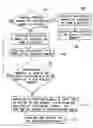
The FIGURE is a flow chart of a method of taking a picture when the memory of a digital camera is already full according to the present invention.
DETAILED DESCRIPTION OF PREFERRED BEST MOLDSReferring to the FIGURE, the present invention provides a method of taking a picture when a memory of a digital camera is already full, comprising: judging whether the memory of the digital camera is full (S100). If the result of S100 is yes, allowing the digital camera to continue to take a picture (S102); If the result of S100 is no, allowing the digital camera to continue to take a picture (S104) and allowing the picture to be stored in the memory (S106). In addition, the memory can be a built-in memory or an external memory.
The method of the present invention further comprises: storing the picture in a DRAM (Dynamic Random Access Memory) of the digital camera (S108). In addition, the DRAM can be an SDRAM (Synchronous Dynamic Random Access Memory) or a DDR (Double Data Rate) SDRAM.
The method of the present invention further comprises: determining whether to retain the picture by using a preview function of the digital camera (S110). If the result of S110 is yes, selectively deleting a part of data that is stored in the memory, via a browsing function of the digital camera, for sparing the memory a predetermined space (S 112). If the result of S110 is no, returning to S102 for allowing the digital camera to continue to take a picture. Finally, the method comprises storing the picture in the predetermined space (S114).
In conclusion, the method of the present invention allows the digital camera to continue to take a picture and allows the picture to be stored in a built-in or external memory of the digital camera, when the built-in or external memory is already full. Hence, when the user wants to take a picture, he/she does not need to firstly delete present picture. Hence, the user does not lose the chance to take a picture that he/she wants.
Although the present invention has been described with reference to the preferred best molds thereof, it will be understood that the invention is not limited to the details thereof. Various substitutions and modifications have been suggested in the foregoing description, and others will occur to those of ordinary skill in the art. Therefore, all such substitutions and modifications are intended to be embraced within the scope of the invention as defined in the appended claims.
Claims
What is claimed is:1. A method of taking a picture when a memory of a digital camera is already full, comprising:
judging whether the memory of the digital camera is full;
if the memory of the digital camera is full, allowing the digital camera continues to take a picture; and
storing the picture in a DRAM (Dynamic Random Access Memory) of the digital camera.
2. The method as claimed in claim 1, wherein after the step of storing the picture in the DRAM, the method further comprises:
determining whether to retain the picture by using a preview function of the digital camera;
if retaining the picture is determined, selectively deleting a part of data that is stored in the memory, via a browsing function of the digital camera, for sparing the memory a predetermined space; and
storing the picture in the predetermined space.
3. The method as claimed in claim 2, wherein if the step of determining whether to retain the picture is no, allowing the digital camera to continue to take a picture.
4. The method as claimed in claim 1, wherein the memory is a built-in memory or an external memory.
5. The method as claimed in claim 1, wherein the DRAM is an SDRAM (Synchronous Dynamic Random Access Memory) or a DDR (Double Data Rate) SDRAM.
6. The method as claimed in claim 1, wherein if the memory of the digital camera is not full, allowing the digital camera to continue to take a picture and allowing the picture to be stored in the memory.
Images & Drawings included:

Sources:
- United States Patent and Trademark Office - verify current appl. status at the USPTO↗
Recent applications in this class:
- » 20210136246 2021-05-06
Automated definition of system behavior or user experience by recording, sharing, and processing information associated with wide-angle image - » 20200099816 2020-03-26
Automated identification of panoramic imagers for appropriate and efficient panoramic image distortion processing system - » 20180139347 2018-05-17
TIMED IMAGE DELETION FROM A PERSONAL ELECTRONIC DEVICE - » 20170318182 2017-11-02
Communication apparatus, control method thereof, storage medium, and communication system - » 20170187910 2017-06-29
METHOD, APPARATUS, AND COMPUTER-READABLE MEDIUM FOR EMBEDDING OPTIONS IN AN IMAGE PRIOR TO STORAGE - » 20170180588 2017-06-22
Positional camera and GPS data interchange device - » 20160277625 2016-09-22
IMAGE CAPTURE DEVICE CAPABLE OF UPLOADING CLEAR IMAGES VIA WIRELESS TRANSMISSION - » 20160219182 2016-07-28
Electronic device and method for taking image of face - » 20160191742 2016-06-30
Image file management method, image capturing device, image storage device, and computer readable medium thereof - » 20160173720 2016-06-16
Picture displaying method and apparatus, and terminal device