Sliding Second Screen
US20070127196A1
2007-06-07
11/164,850
2005-12-07
Abstract:
The invention was imagined as a response to the problems associated with limited screen space of portable computing devices (i.e. laptops, PDAs, etc.). Because of issues of portability, size and weight these devices have been limited to a single, undersized screen in which relatively small amounts of information can be displayed at the same time. Though there exists some means of attaching secondary displays to the devices, there exists no practical way of taking these secondary devices with the user (i.e. allowing for complete portability of all aspects of the devices). The invention rests on the premise of creating a new system that allows for the portability of secondary display devices to solve the issues described in the background section. By placing a secondary screen behind the primary screen of the device, while still maintaining the portability of the original portable computing device, we solve the above problem.
Assignee:
- Bobbie Lee King 2 🇺🇸 Princeton, NJ, United States
Interested in similar patents?
Get notified when new applications in this technology area are published.
Classification:
G06F1/1624 » CPC main
Details not covered by groups - and; Constructional details or arrangements for portable computers with several enclosures having relative motions, each enclosure supporting at least one I/O or computing function with sliding enclosures, e.g. sliding keyboard or display
G06F1/1616 » CPC further
Details not covered by groups - and; Constructional details or arrangements for portable computers with several enclosures having relative motions, each enclosure supporting at least one I/O or computing function with folding flat displays, e.g. laptop computers or notebooks having a clamshell configuration, with body parts pivoting to an open position around an axis parallel to the plane they define in closed position
G06F1/1647 » CPC further
Details not covered by groups - and; Constructional details or arrangements for portable computers; Constructional details or arrangements of portable computers not specific to the type of enclosures covered by groups - ; Details related to the display arrangement, including those related to the mounting of the display in the housing including at least an additional display
G06F1/16 IPC
Details not covered by groups - and Constructional details or arrangements
Description
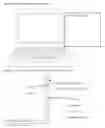
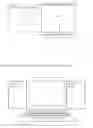
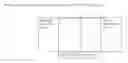
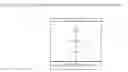
The screen is encased in a lightweight metal and/or durable plastic and loaded in a thin but recognizable docking bay behind the primary screen. It is connected to the central processing unit by cables within the docking bay which are not visible to the user or wirelessly. The device, when docked, is loaded such that the release of a switch or button or other apparatus will release the screen from the docking bay and allow the user to expose the screen so that it may act as a secondary screen to the primary screen.
The screen may activate manually or automatically depending on the preferences of the users and the software available to them. Once the user has completed using the secondary device, he may slide the secondary screen back into the docking bay and the docking bay may either latch itself automatically or be latched manually by the user. The screen may either shut down automatically, or manually, depending on the preference of the user.
The screen casing and loading mechanisms may operate on a slide attached to the back of the primary screen casing; or, on a sliding mechanism located within the docking bay.
The best mode seems to be the docking apparatus which is attached to the screen casing. This is because the screen weight is better supported in this way. The invention only requires an added thickness screen casing and a docking bay which might not be much different that the docking bays of the standard laptop CD ROM drives. An added external or internal connection for the secondary screen may be added so that the user loses no utility from his standard portable computing device.
Claims
What is claimed is:1. My claim is to the invention of any device or modification that extends the standard screen of the laptop using a secondary sliding screen. The idea to “dock” a secondary screen behind the primary screen to be used on the portable computing device at the user's discretion is strictly my own.
Images & Drawings included:

Sources:
- United States Patent and Trademark Office - verify current appl. status at the USPTO↗
Recent applications in this class:
- » 20250110528 2025-04-03
ELECTRONIC DEVICE - » 20250076922 2025-03-06
SLIDABLE DISPLAY DEVICE - » 20250044831 2025-02-06
ELECTRONIC DEVICE INCLUDING DISPLAY PANEL - » 20250044830 2025-02-06
ELECTRONIC DEVICE COMPRISING FLEXIBLE DISPLAY, AND METHOD FOR ADJUSTING SIZE OF DISPLAY IN ELECTRONIC DEVICE - » 20250028354 2025-01-23
ELECTRONIC DEVICE COMPRISING FLEXIBLE DISPLAY - » 20240419212 2024-12-19
BLOCKING MEMBER AND ELECTRONIC DEVICE INCLUDING THE SAME - » 20240264630 2024-08-08
DISPLAY DEVICE AND METHOD FOR MANUFACTURING THE SAME - » 20240219959 2024-07-04
DISPLAY DEVICE - » 20240176390 2024-05-30
DISPLAY APPARATUS - » 20240176389 2024-05-30
DISPLAY DEVICE
Recent applications for this Assignee:
- » 20070127195 2007-06-07
The Laptop Doorway