Melanocortin receptor agonists
US20070129346A1
2007-06-07
10/579,042
2004-11-12
✅ Patent granted
US 7,989,634 B2
2011-08-02
WO; PCT/KR2004/002929; 20041112
WO; WO2005/047251; 20050526
Jeffrey S Lundgren | Sean Basquill
2028-03-16
Abstract:
The present invention relates a compound of formula 1, and pharmaceutically acceptable salt, hydrate, solvate, or isomer thereof effective as agonist of melanocortin receptor, and an agonistic composition of melanocortin receptor comprising the same as active ingredient.
Inventors:
- Heui Sul PARK 16 🇰🇷 Daejeon, South Korea
- Sang-Kyun Lee 36 🇰🇷 Daejeon, South Korea
- Koo Lee 8 🇰🇷 Daejeon, South Korea
- In Ae Ahn 6 🇰🇷 Daejeon, South Korea
- Dong Sup Shim 6 🇰🇷 Daejeon, South Korea
- Hyeon Joo Yim 4 🇰🇷 Daejeon, South Korea
- Deog Young Choi 2 🇰🇷 Daejeon, South Korea
- Hyun-Ju Yoo 1 🇰🇷 Daejeon, South Korea
- Jong-Yup Kim 2 🇰🇷 Daejeon, South Korea
- Kyung-Ha Chung 2 🇰🇷 Daejeon, South Korea
- Yutaka Kondoh 1 🇰🇷 Daejeon, South Korea
- Ryoji Hirabayashi 1 🇰🇷 Daejeon, South Korea
- Shugo Honda 1 🇰🇷 Daejeon, South Korea
- Hidetaka Kaku 1 🇰🇷 Daejeon, South Korea
- Jun-ichi Shishikura 1 🇰🇷 Daejeon, South Korea
- Hiroyuki Ito 1 🇰🇷 Daejeon, South Korea
- Takeshi Kurama 1 🇰🇷 Daejeon, South Korea
Assignee:
- LG LIFE SCIENCES LTD. 71 🇰🇷 Seoul, South Korea
- Yamanouchi Pharmaceutical Co., Ltd. 25 🇯🇵 Tokyo, Japan
Interested in similar patents?
Get notified when new applications in this technology area are published.
Classification:
C04B35/632 » CPC main
Shaped ceramic products characterised by their composition ; Ceramics compositions ; Processing powders of inorganic compounds preparatory to the manufacturing of ceramic products; Forming processes; Processing powders of inorganic compounds preparatory to the manufacturing of ceramic products; Preparing or treating the powders individually or as batches ; preparing or treating macroscopic reinforcing agents for ceramic products, e.g. fibres; mechanical aspects section using additives specially adapted for forming the products, e.g.. binder binders Organic additives
A61P3/00 » CPC further
Drugs for disorders of the metabolism
A61P3/04 » CPC further
Drugs for disorders of the metabolism Anorexiants; Antiobesity agents
A61P3/10 » CPC further
Drugs for disorders of the metabolism for glucose homeostasis for hyperglycaemia, e.g. antidiabetics
A61P15/10 » CPC further
Drugs for genital or sexual disorders ; Contraceptives for impotence
A61P43/00 » CPC further
Drugs for specific purposes, not provided for in groups -
C07D205/04 » CPC further
Heterocyclic compounds containing four-membered rings with one nitrogen atom as the only ring hetero atom not condensed with other rings having no double bonds between ring members or between ring members and non-ring members
C07D207/14 » CPC further
Heterocyclic compounds containing five-membered rings not condensed with other rings, with one nitrogen atom as the only ring hetero atom with only hydrogen or carbon atoms directly attached to the ring nitrogen atom having no double bonds between ring members or between ring members and non-ring members with hetero atoms or with carbon atoms having three bonds to hetero atoms with at the most one bond to halogen, e.g. ester or nitrile radicals, directly attached to ring carbon atoms Nitrogen atoms not forming part of a nitro radical
C07D211/58 » CPC further
Heterocyclic compounds containing hydrogenated pyridine rings, not condensed with other rings with only hydrogen or carbon atoms directly attached to the ring nitrogen atom having no double bonds between ring members or between ring members and non-ring members with hetero atoms or with carbon atoms having three bonds to hetero atoms with at the most one bond to halogen, e.g. ester or nitrile radicals, directly attached to ring carbon atoms; Nitrogen atoms attached in position 4
C07D401/12 » CPC further
Heterocyclic compounds containing two or more hetero rings, having nitrogen atoms as the only ring hetero atoms, at least one ring being a six-membered ring with only one nitrogen atom containing two hetero rings linked by a chain containing hetero atoms as chain links
C07D403/12 » CPC further
Heterocyclic compounds containing two or more hetero rings, having nitrogen atoms as the only ring hetero atoms, not provided for by group containing two hetero rings linked by a chain containing hetero atoms as chain links
C07D405/12 » CPC further
Heterocyclic compounds containing both one or more hetero rings having oxygen atoms as the only ring hetero atoms, and one or more rings having nitrogen as the only ring hetero atom containing two hetero rings linked by a chain containing hetero atoms as chain links
A61K31/397 IPC
Medicinal preparations containing organic active ingredients; Heterocyclic compounds having nitrogen as a ring hetero atom, e.g. guanethidine or rifamycins having four-membered rings, e.g. azetidine
A61K31/401 IPC
Medicinal preparations containing organic active ingredients; Heterocyclic compounds having nitrogen as a ring hetero atom, e.g. guanethidine or rifamycins having five-membered rings with one nitrogen as the only ring hetero atom, e.g. sulpiride, succinimide, tolmetin, buflomedil Proline; Derivatives thereof, e.g. captopril
A61K31/445 IPC
Medicinal preparations containing organic active ingredients; Heterocyclic compounds having nitrogen as a ring hetero atom, e.g. guanethidine or rifamycins having six-membered rings with one nitrogen as the only ring hetero atom; Non condensed pyridines; Hydrogenated derivatives thereof Non condensed piperidines, e.g. piperocaine
C07D211/06 IPC
Heterocyclic compounds containing hydrogenated pyridine rings, not condensed with other rings with only hydrogen or carbon atoms directly attached to the ring nitrogen atom having no double bonds between ring members or between ring members and non-ring members
C07D213/46 IPC
Heterocyclic compounds containing six-membered rings, not condensed with other rings, with one nitrogen atom as the only ring hetero atom and three or more double bonds between ring members or between ring members and non-ring members having three double bonds between ring members or between ring members and non-ring members having no bond between the ring nitrogen atom and a non-ring member or having only hydrogen or carbon atoms directly attached to the ring nitrogen atom with substituted hydrocarbon radicals attached to ring carbon atoms; Radicals substituted by doubly-bound oxygen, sulfur, or nitrogen atoms, or by two such atoms singly-bound to the same carbon atom Oxygen atoms
C07D211/70 IPC
Heterocyclic compounds containing hydrogenated pyridine rings, not condensed with other rings with only hydrogen or carbon atoms directly attached to the ring nitrogen atom having one double bond between ring members or between a ring member and a non-ring member with only hydrogen atoms, hydrocarbon or substituted hydrocarbon radicals, directly attached to ring carbon atoms
C07D401/00 IPC
Heterocyclic compounds containing two or more hetero rings
C07D401/00 IPC
Heterocyclic compounds containing two or more hetero rings, having nitrogen atoms as the only ring hetero atoms, at least one ring being a six-membered ring with only one nitrogen atom
Description
TECHNICAL FIELDThe present invention relates to a compound of the following formula 1, pharmaceutically acceptable salt, hydrate, solvate, and isomer thereof effective as an agonist for melanocortin receptor.
in which
R1, R2, R3, R4, R5, n and m are defined as described below.
BACKGROUND ARTFive subtypes of receptors have been cloned and characterized in the melanocortin family. These G-protein coupled receptors (GPCR) stimulate the cAMP signal transduction pathway in many different tissues, mediating a wide range of physiological functions. Melanocortin 1 receptor (MC1R) is mainly expressed in melanocytes, monocytes, and mast cells, to mediate pigmentation of the hair and skin and to block inflammation. MC2R is expressed in adipocytes and adrenal cells, to mediate steroidogenesis in the adrenal gland. MC3R is present in the brain, hyphothalamus, heart, gut, and placenta, and has been associated with energy homeostasis and inflammation. MC4R is uniquely expressed in the brain, and controls feeding behavior, energy homeostasis, and erectile function. MC4R knock-out mice revealed the phenotype of hyperphasia and obesity. MC5R is found in a wide range of tissues and is considered to play a role for the exocrine gland system.
With a plethora of physiological functions of melanocortin receptors, a large number of compounds have been designed and synthesized in search for potent agonists and antagonists.
Early examples are synthetic peptides and peptide analogues that have been identified on the basis of endogenous agonist such as αMSH. These peptide agonists have been used to characterize the function of these receptors. NDP-αMSH is a highly potent and nonselective agonist of MC1R, 3R, 4R and 5R, and has been reported to attenuate food intake and body weight gain in rat models. A cyclic heptapeptide MT-II is an agonist with a similar non-selective profile, and its therapeutic use has been proven in clinical trials for the treatment of erectile dysfunction. HP-228, a peptide analogue with similar affinity for all four receptors, was in clinical trials for the treatment of pain and inflammation associated with surgery.
Several small molecule agonists for the melanocortin receptors have been discovered to have significant activity in drug trials to search MC4R agonists for the treatment of obesity, sexual dysfunction or inflamation. For example, the Merck research group has discovered a series of potent and selective MC4R agonists, one of which demonstrated significant effect for augmenting erectile response in mice (J. Med. Chem. 2002, 45, 4849). The Chiron research group has discovered a series of guanidine compounds as agonists that have hyphophasic activity and thus anti-obesity effect in the ob/ob mouse model (WO 02/18327). On the other hand, the Bristol-Myers Squibb group has discovered a highly potent selective MC 1R agonist, which showed efficacy in an acute mouse model of inflammation (J. Med. Chem. 2003, 46, 1123).
In view of the unresolved deficiencies of the various pharmaceutical compounds as discussed above, there is continuing need in the art for small molecule MCR agonists and pharmacological compositions that have improved pharmacological profiles. It is, therefore, an object of the present invention to provide novel compounds that are useful for the treatment of obesity, diabetes, sexual dysfunction, and inflammation.
Specifically, the present invention provides a compound of formula 1 having agonistic effect against MCRs, in particular selective agonistic effect against MCR4, and pharmaceutically acceptable salt, hydrate, solvate, and isomer thereof.
Another object of the present invention is to provide a melanocortin receptor agonistic composition comprising the compound of formula 1, and pharmaceutically acceptable salt, hydrate, solvate, and isomer thereof, as active ingredients, together with pharmaceutically acceptable carrier.
In particular, the composition according to the present invention has potent effect for the prevention and treatment of diabetes, erectile dysfunction, obesity, and inflammation.
DISCLOSURE OF THE INVENTION The present invention relates to a compound of the following formula 1, and pharmaceutically acceptable salt, hydrate, solvate, and isomer thereof.
in which
- m and n each independently represents 1 or 2,
- R1 reperesents
hydrogen,
—(CH2)p—R6,
—(CH2)p—CO—(CH2)p—R6,
—(CH2)p—CO—(CH2)p—CH(R6)(R10), or
—(CH2)p—SO2—(CH2)p—R6,
wherein
p independently represent 0, 1, 2, or 3,
R6 represents C1-C10-alkyl, C1-C8-alkoxy, C3-C8-cycloalkyl, heterocycle, aryl, heteroaryl, amino, or hydroxy, in each of which is unsubstituted or mono- or poly-substituted by one or more substituents selected from the group consisting of C1-C10-alkyl, C1-C10-dialkyl, C3-C13-cycloalkyl, C3-C13-dicycloalkyl, C3-C13-tricycloalkyl, perhalo-C1-C8-alkyl, aryl, heteroaryl, heterocycle, hydroxy, C1-C8-alkoxy, C1-C8-alkoxy-C1-C8-alkoxy, trifluoromethoxy, aryl-C1-C8-alkyloxy, aryloxy, oxo, mercapto, C1-C8-alkylcarbonyl, C1-C8-alkoxycarbonyl, C1-C8-alkylsulfonyl, arylsulfonyl, C1-C8-alkylthio, arylthio, cyano, formyl, halogen, carbonyl, thiocarbonyl, C3-C8-cycloalkylcarbonyl, arylcarbonyl, ar-C1-C8-alkyl, ar-C1-C8-alkylcarbonyl, ar-C1-C8-alkylsulfonyl, O-carbamoyl, N-carbamoyl, O-thiocarbamoyl, N-thiocarbamoyl, carbamoyl, C1-C8-alkylcarbamoyl, di(C1-C8-alkyl)carbamoyl, 0-sulfoneamido, N-sulfonamido, carboxy, isocyanato, thiocyanato, isothiocyanato, nitro, trihalomethanesulfonyl, amino, C1-C6-alkylamino, di(C1-C6-alkyl)amino, and protective derivatives thereof,
R10 represents heterocycle, or represents amino or hydroxy, in each of which is unsubstituted or mono- or poly-substituted by the substituents selected from the group consisting of R7,
wherein,
R7 represents halogen, amino, C1-C6-alkylamino, di(C1-C6-alkyl)amino, hydroxy, C1-C8-alkoxy, trifluoromethoxy, C1-C6-alkylcarbonyl, carboxy, C1-C8-alkyl, mercapto, C1-C10-alkylthio, phenoxy, C1-C8-alkoxycarbonyl, arylcarbonyl, carbamoyl, C1-C6-alkylsulfonyl, arylsulfonyl, cyano or oxo,
R6 and R10 may form 5- or 6-membered single ring together with the atoms to which they attached,
hydrogen atom in —(CH2)p— group can be replaced by R6,
R1 represents
hydrogen,
C1-C8-alkyl which is unsubstituted or mono- or poly-substituted by the substituents selected from the group consisting of R7,
C3-C7-cycloalkyl, or
—CO—(CH2)p—R6,
R1 and R2 together with the atoms to which they attached, may form 4- or 8-membered single ring or two ring which can contain heteroatom selected from the group consisting of O, S and N—(C1-C4-alkyl),
R3 and R4 each independently represents
hydrogen,
C1-C8-alkyl,
—(CH2)p—C3-C8-cycloalkyl,
—(CH2)p—C6-C10-aryl,
—(CH2)p-heteroaryl, or
—(CH2)p-heterocycle,
wherein, alkyl, cycloalkyl, heterocycle, aryl, or heteroaryl, in each of which is unsubstituted or mono- or poly-substituted by the substituents selected from the group consisting of R7,
R5 represents
hydrogen,
C1-C6-alkyl,
—(CH2)p—CO—R8,
—(CH2)p—C(O)N(R8)(R9),
—(CH2)p—C(S)N(R8)(R9),
—(CH2)p—SO2—N(R8)(R9), or
—(CH2)p—SO2—R8,
wherein,
R8 and R9 each independently represents
hydrogen,
C1-C8-alkyl,
C1-C6-alkoxy,
C1-C6-alkylthio,
C3-C7-cycloalkyl,
C3-C7-cycloalkenyl,
heterocycle,
aryl, or
heteroaryl,
wherein
alkyl, cycloalkyl, or aryl is unsubstituted or mono- or poly-substituted by the substituents selected from the group consisting of R7, C3-C8-cycloalkyl, heterocycle, hydroxy-C1-C8-alkyl, halogen-C1-C8-alkyl, C1-C8-alkoxy-C1-C8-alkyl, amino-C1-C8-alkyl, C3-C8-cycloalkyloxy, ar-C1-C8-alkyloxy, aryloxy, arylthio, formyl, C1-C8-alkylcarbamoyl, di(C1-C8-alkyl)carbamoyl, C1-C8-alkylcarbonyloxy, C1-C8-alkoxy-C1-C8-alkoxy, C3-C8-cycloalkylcarbonyl, ar-C1-C8-alkylcarbonyl, C2-C8-alkanoyloxy, C3-C8-cycloalkylcarbonyloxy, arylcarbonyloxy which is unsubstituted or substituted by halogen, ar-C1-C8-alkylcarbonyloxy, C1-C8-alkoxyimino, ar-C1-C8-alkylsulfonyl, and C1-C8-alkylsulfonyloxy,
heterocycle, cycloalkenyl, or heteroaryl is unsubstituted or mono- or poly-substituted by the substituents selected from the group consisting of R7, and hydroxy-C1-C8-alkyl,
R4 and R5 together with the atoms to which they attached, may form 4- or 8-membered single ring or two ring which can contain heteroatom selected from the group consisting of O, S and N—(C1-C4-alkyl).
In the radical definitions of the compound of formula (1) according to the present invention, the term “alkyl” means straight-chain or branched hydrocarbon radical when used alone or in combination with hetroatoms such “alkyloxy.”
The term “cycloalkyl” represents unsaturated aliphatic ring including cyclohexyl.
The term “aryl” represents 6- to 10-membered aromatic group including phenyl, naphthyl, etc.
The term “heteroaryl” includes 1 to 2 heteroatom(s) from the group consisting of nitrogen atom, oxygen atom, and sulfur atom, and represents aromatic 3- to 6-membered ring which can be fused with benzo or C3-C8-cycloalkyl. Examples of monocyclic heteroaryl are, but are not limited to, thiazole, oxazole, thiophene, furane, pyrrole, imidazole, isoxazole, pyrazole, triazole, thiadiazole, tetrazole, oxadiazole, pyridine, pyridazine, pyrimnidine, pyrazine, and similar group to them. Examples of acyclic heteroaryl are, but are not limited to, indole, benzothiophene, benzofuran, benzimidazole, benzoxazole, benzisoxazole, benzthiazole, benzthiadiazole, benztriazole, quinoline, isoquinoline, purine, furopyridine, and similar group to them.
The term “heterocycle” includes 1 to 2 heteroatom(s) from the group consisting of nitrogen atom, oxygen atom, and sulfur atom, and represents 4- to 8-membered ring which can be fused with benzo or C3-C8-cycloalkyl, and which is saturated or has 1 or 2 of double bond. Its examples are, but are not limited to, piperidine, morpholine, thiamorpholine, pyrrolidine, imidazolidine, tetrahydrofuran, piperazine, and similar group to them.
Preferred compounds among the compounds of formula 1 above are those wherein
i) R1 represents hydrogen, —(CH2)p—R6, —(CH2)p—CO—R6, —CO—(CH2)p—R6, —(CH2)p—CO—(CH2)p—CH(R6)(R10), or —SO2—(CH2)p—R6,
R6 represents C1-C10-alkyl, C1-C8-cycloalkyl, heterocycle, aryl, or heteroaryl, or represent amino or hydroxy,
hydrogen atom in —(CH2)p— group can be replaced by R6,
wherein
C1-C10-alkyl, C1-C8-cycloalkyl, heterocycle, aryl, or heteroaryl is unsubstituted or mono- or poly-substituted by the substituents selected from the group consisting of R7,
amino or hydroxy is unsubstituted or-mono- or di-substituted by the substituents selected from the group consisting of C1-C10-alkyl, ar-C1-C8-alkyl, C3-C8-cycloalkyl, C2-C8-alkylcarbonyl, C3-C8-cycloalkylcarbonyl, arylcarbonyl, ar-C1-C8-alkylcarbonyl, C1-C8-alkoxycarbonyl, carbamoyl, di(C1-C8-alkylcarbamoyl, C1-C8-alkylsulfonyl, arylsulfonyl, and ar-C1-C8-alkylsulfonyl,
R10 is defined as the above desecription,
R6 and R10 may form 5- or 6-membered single ring together with the atoms to which they attached,
preferably, R1 represents hydrogen, —(CH2)p—R6, —(CH2)p—CO—R6, —CO—(CH2)p—R6 or —(CH2)p—CO—(CH2)p—CH(R6)(R10 ),
more preferably, R1 represents hydrogen, —R6 or —CO—CH(R6)(R10),
R10 represents heterocycle, or represents amino or hydroxy, in each of which is unsubstituted or mono- or poly-substituted by the substituents selected from the group consisting of R7,
R6 and R10 may form 5- or 6-membered single ring together with the atoms to which they attached,
ii) R2 represents hydrogen or C1-C6-alkyl,
iii) R3 represents C1-C8-alkyl, —(CH2)p—C3-C7-cycloalkyl, —(CH2)p-phenyl, or -(CH2)p-heteroaryl, in each of which is unsubstituted or mono- to tri-substituted by substituents from the group consisting of R7,
preferably, R3 represents —CH2-cyclohexyl or —CH2-phenyl, in each of which is unsubstituted or mono- to tri-substituted by substituents from the group consisting of halogen, cyano, hydroxy, C1-C8-alkoxy, trifluoromethoxy and C1-C4-alkyl,
more preferably, R3 represents —CH2-phenyl, in which is unsubstituted or mono- to tri-substituted by substituents from the group consisting of chloro, bromo, cyano, hydroxy, methoxy and metyhl,
iv) R4represents C1-C8-alkyl, or represent C3-C8-cycloalkyl, phenyl, heteroaryl, or heterocycle, in each of which is unsubstituted or mono- to tri-substituted by substituents from the group consisting of R7,
preferably, R4 represents C3-C8-cycloalkyl or phenyl,
more preferably, R4 represents cyclohexyl, cylcoheptyl or cylcopentyl, in each of which is unsubstituted or mono- to tri-substituted by substituents from the group consisting of methyl, ethyl, t-butyl, hydroxy and oxo, or represent phenyl unsubstituted or mono- to tri-substituted by substituents from the group consisting of fluoro, chloro, methoxy and methyl,
v) R5 represents hydrogen, C1-C6-alkyl, —(CH2)p—CO-R8, —(CH2)p—C(O)N(R5)9), or —(CH2)p—SO2—R8,
preferably, R5 represents —CO—R8 or —C(O)N(R8)(R9),
more preferably, R8 and R9 each independently represents hydrogen, methoxy, amino, C1-C8-alkyl, C3-C6-cycloalkyl, C5-C6-cycloalkenyl, heterocycle, or phenyl,
wherein, C1-C8-alkyl or C3-C6-cycloalkyl is unsubstituted or mono-substituted by the substituents selected from the group consisting of methyl, hydroxy, amino, C1-C4-alkoxy, phenoxy, benzyloxy, fluoro, phenylsulfoxy, acetyl, methoxymethylalkoxy, carboxy, formyl, methoxycarbonyl, dimethylcarbamoyl, carboxy, phenylcarbonyloxy, methoxycarbonyl, difluorophenylcarbonyloxy, dimethylphenylcarbonyloxy, cyclohexylcarbonyloxy, arylcarbonyloxy, and oxo,
C5-C6-cycloalkenyl represents cyclopentyl or cyclohexyl substituted by hydroxy or amino,
heterocycle or phenyl is unsubstituted or mono- or poly-substituted by the substituents selected from the group consisting of hydroxy, methyl, amino, nitrobenzenesulfonyl, and oxo.
vi) R1 represents hydrogen, —R6 or —CO—CH(R6)(R10),
R10 represents heterocycle, or represents-amino or hydroxy, in each of which is unsubstituted or mono- or poly-substituted by the substituents selected from the group consisting of R7,
R6 and R10 may form 5- or 6-membered single ring together with the atoms to which they attached,
R3 represents —CH2-phenyl, in which is unsubstituted or mono- to tri-substituted by substituents from the group consisting of chloro, bromo, cyano, hydroxy, methoxy and metyhl,
R4 represents cyclohexyl, cylcoheptyl or cylcopentyl, in each of which is unsubstituted or mono- to tri-substituted by substituents from the group consisting of methyl, ethyl, t-butyl, hydroxy and oxo, or represent phenyl unsubstituted or mono- to tri-substituted by substituents from the group consisting of fluoro, chloro, methoxy and methyl,
R5 represents —CO—R8 or —C(O)N(R6)(R9),
R8 and R9 each independently represents hydrogen, methoxy, amino, C1-C8-alkyl, C3-C6-cycloalkyl, C5-C6-cycloalkenyl, heterocycle, or phenyl,
wherein, C1-C8-alkyl or C3-C6-cycloalkyl is unsubstituted or mono-substituted by the substituents selected from the group consisting of methyl, hydroxy, amino, C1-C4-alkoxy, phenoxy, benzyloxy, fluoro, phenylsulfoxy, acetyl, methoxymethylalkoxy, carboxy, formyl, methoxycarbonyl, dimethylcarbamoyl, carboxy, phenylcarbonyloxy, methoxycarbonyl, difluorophenylcarbonyloxy, dimethylphenylcarbonyloxy, cyclohexylcarbonyloxy, arylcarbonyloxy, and oxo,
C5-C6-cycloalkenyl represents cyclopentyl or cyclohexyl substituted by hydroxy or amino,
heterocycle or phenyl is unsubstituted or mono- or poly-substituted by the substituents selected from the group consisting of hydroxy, methyl, amino, nitrobenzenesulfonyl, and oxo.
Representative compounds of formula 1 according to the present invention include the compounds listed in the following Table 1.
| TABLE 1 | ||||||||
| R1 | R2 | R3 | *1 | n | m | R4 | *2 | R5 |
| H | H | 4-Cl-Bn | R | 2 | 1 | c-Hex | S | C(O)CH(Me)2 |
| H | H | 4-Cl-Bn | R | 2 | 1 | c-Hex | S | C(O)C(Me)3 |
| H | H | 4-Cl-Bn | R | 2 | 1 | c-Hex | S | C(O)OMe |
| H | H | 4-Cl-Bn | R | 2 | 1 | c-Hex | S | C(O)N(Me)2 |
| H | H | 4-Cl-Bn | R | 2 | 1 | c-Hex | S | SO2Me |
| H | H | 4-Cl-Bn | R | 2 | 1 | c-Hex | S | CH2C(O)OMe |
| H | H | 4-CI-Bn | R | 2 | 1 | c-Hex | S | SO2NH2 |
| H | H | 4-Cl-Bn | R | 2 | 1 | c-Hex | S | Gly |
| H | H | 4-Cl-Bn | R | 2 | 1 | c-Hex | S | CH2C(O)N(Me)2 |
| H | H | 4-Cl-Bn | R | 2 | 1 | c-Hex | S | CH2SO2Me |
| H | H | 4-Cl-Bn | R | 2 | 1 | c-Hex | R | C(O)CH(Me)2 |
| H | H | 4-Cl-Bn | R | 2 | 1 | c-Hex | R | C(O)C(Me)3 |
| H | H | 4-Cl-Bn | R | 2 | 1 | c-Hex | S | C(O)[(R)—CH(Me)CH2OH] |
| H | H | 4-Cl-Bn | R | 2 | 1 | c-Hex | S | C(O)C(Me)2CH2OH |
| H | H | 4-Cl-Bn | R | 2 | 1 | c-Hex | S | C(O)C(Me)2OH |
| H | H | 4-Cl-Bn | R | 2 | 1 | c-Hex | S | C(O)C(Me)2(CH2)2—OH |
| H | H | 4-Cl-Bn | R | 2 | 1 | c-Hex | S | C(O)C(Me)—(CH2OH)2 |
| H | H | 4-Cl-Bn | R | 2 | 1 | c-Hex | R | C(O)C(Me)2CH2OH |
| H | H | 4-Cl-Bn | R | 2 | 1 | c-Hex | S | C(O)C(Me)2CH2OMe |
| H | H | 4-Cl-Bn | R | 2 | 1 | c-Hex | S | C(O)C(Me)2CH2OBn |
| H | H | 4-Cl-Bn | R | 2 | 1 | c-Hex | S | C(O)C(—(CH2)4—)CH2OH |
| H | H | 4-Cl-Bn | R | 2 | 1 | c-Hex | S | C(O)C(Me)2(CH2)3O-(2,4-diMe—Ph) |
| H | H | 4-Cl-Bn | R | 2 | 1 | c-Hex | S | C(O)CH(Me)CH2OAc |
| H | H | 4-Cl-Bn | R | 2 | 1 | c-Hex | S | C(O)C[—(CH2)2—]CH2OH |
| H | H | 4-Cl-Bn | R | 2 | 1 | c-Hex | S | C(O)NH(Pr) |
| H | H | 4-Cl-Bn | R | 2 | 1 | c-Hex | S | C(O)NHEt |
| H | H | 4-Cl-Bn | R | 2 | 1 | c-Hex | S | C(O)NH(Bu) |
| H | H | 4-Cl-Bn | R | 2 | 1 | c-Hex | S | C(O)(3-HO—Ph) |
| H | H | 4-Cl-Bn | R | 2 | 1 | c-Hex | S | C(O)(4-HO—Ph) |
| H | H | 4-Cl-Bn | R | 2 | 1 | c-Hex | S | C(O)[2-(CH2OH)-1-(c-penten)-1-yl] |
| H | H | 4-Cl-Bn | R | 2 | 1 | c-Hex | S | C(O)[2-(CH2OH)-1-(c-hexen)-1-yl] |
| H | H | 4-Cl-Bn | R | 2 | 1 | c-Hex | S | C(O)[1-Nos-Pid-4-yl] |
| H | H | 4-Cl-Bn | R | 2 | 1 | c-Hex | S | C(O)[Pid-4-yl] |
| H | H | 4-Cl-Bn | R | 2 | 1 | c-Pen | S | C(O)CH(Me)2 |
| H | H | 4-Cl-Bn | R | 2 | 1 | c-Hep | S | C(O)CH(Me)2 |
| H | H | 4-Cl-Bn | R | 2 | 1 | i-Pr | S | C(O)CH(Me)2 |
| H | H | 4-Cl-Bn | R | 2 | 1 | c-Hex-CH2 | S | C(O)CH(Me)2 |
| H | H | 4-Cl-Bn | R | 2 | 1 | 4,4-diMe-c-Hex | S | C(O)CH(Me)2 |
| H | H | 4-Cl-Bn | R | 2 | 1 | c-Pen | R | C(O)CH(Me)2 |
| H | H | 4-Cl-Bn | S | 2 | 1 | c-Hex | S | C(O)CH(Me)2 |
| H | H | Bn | R | 2 | 1 | c-Hex | S | C(O)CH(Me)2 |
| H | H | Bn | R | 2 | 1 | c-Hex | S | C(O)C(Me)2CH2OH |
| H | H | 4-Br-Bn | R | 2 | 1 | c-Hex | S | C(O)CH(Me)2 |
| H | H | 4-Br-Bn | R | 2 | 1 | c-Hex | S | C(O)C(Me)2CH2OH |
| H | H | 4-MeO-Bn | R | 2 | 1 | c-Hex | S | C(O)CH(Me)2 |
| H | H | 4-MeO-Bn | R | 2 | 1 | c-Hex | S | C(O)C(Me)2CH2OH |
| H | H | 3,4-diCl-Bn | R | 2 | 1 | c-Hex | S | C(O)CH(Me)2 |
| H | H | 4-F-Bn | R | 2 | 1 | c-Hex | S | C(O)CH(Me)2 |
| H | H | 4-F-Bn | R | 2 | 1 | c-Hex | S | C(O)C(Me)2CH2OH |
| H | H | 4-Me-Bn | R | 2 | 1 | c-Hex | S | C(O)C(Me)2CH2OH |
| H | H | 4-HO-Bn | R | 2 | 1 | c-Hex | S | C(O)CH(Me)2 |
| H | H | (c-Hex)-CH2 | R | 2 | 1 | c-Hex | S | C(O)CH(Me)2 |
| H | H | (indol-2-yl)-CH2 | R | 2 | 1 | c-Hex | S | C(O)CH(Me)2 |
| H | H | i-Bu | R | 2 | 1 | c-Hex | S | C(O)CH(Me)2 |
| H | H | NH2C(O)CH2— | R | 2 | 1 | c-Hex | S | C(O)CH(Me)2 |
| H | H | 4-Cl-Bn | R | 2 | 1 | 2,3-diF—Ph | S | C(O)CH(Me)2 |
| H | H | 4-Cl-Bn | R | 2 | 1 | 2,4-diF—Ph | S | C(O)CH(Me)2 |
| H | H | 4-Cl-Bn | R | 2 | 1 | 2,3-diF—Ph | R | C(O)CH(Me)2 |
| H | H | 4-Cl-Bn | R | 2 | 1 | 2,4-diF—Ph | R | C(O)CH(Me)2 |
| H | H | 4-Cl-Bn | R | 2 | 1 | c-Hex | S | C(O)NH(CH2)4NH2 |
| H | H | 4-Cl-Bn | R | 2 | 1 | c-Hex | S | C(O)NH(CH2)3NH2 |
| H | H | 4-Cl-Bn | R | 2 | 1 | c-Hex | S | C(O)NH(CH2)2NH2 |
| H | H | 4-Cl-Bn | R | 2 | 1 | c-Hex | S | C(O)NH(CH2)2OH |
| H | H | 4-Cl-Bn | R | 2 | 1 | c-Hex | S | C(O)NH(CH2)2OMe |
| H | H | 4-Cl-Bn | R | 2 | 1 | c-Hex | S | C(O)[(3S)-3-(OH)-Pyd-1-yl] |
| H | H | 4-Cl-Bn | R | 2 | 1 | c-Hex | S | C(O)[(2S)-2-(HOCH2)-Pyd-1-yl] |
| H | H | 4-Cl-Bn | R | 2 | 1 | c-Hex | R | C(O)C(Me)2CH2OH |
| H | H | 4-Cl-Bn | R | 2 | 1 | c-Hex | R | C(O)C(Me)CH2OH |
| H | H | 4-Cl-Bn | R | 2 | 1 | 2,3-diF—Ph | S | C(O)C(Me)2CH2OH |
| H | H | 4-Cl-Bn | R | 2 | 1 | 3,5-diMe—Ph | R,S | C(O)C(Me)2CH2OH |
| H | H | 4-Cl-Bn | R | 2 | 1 | 2,3-diF-ph | R,S | C(O)C(Me)2CH2OH |
| H | H | 4-Cl-Bn | R | 2 | 1 | 4-Me—Ph | R,S | C(O)C(Me)2CH2OH |
| H | H | 4-Cl-Bn | R | 2 | 1 | 4-trans-Me-c-Hex | S | C(Q)C(Me)2CH2OH |
| H | H | 4-Cl-Bn | R | 2 | 1 | 4-cis-Me-c-Hex | S | C(O)C(Me)2CH2OH |
| H | H | 4-Cl-Bn | R | 2 | 1 | 4,4-diMe-c-Hex | S | C(O)C(Me)2CH2OH |
| H | H | 4-Cl-Bn | R | 2 | 1 | 4-t-Bu-c-Hex | S | C(O)C(Me)2CH2OH |
| H | H | 4-Cl-Bn | R | 2 | 1 | 4,4-diF-c-Hex | S | C(O)C(Me)2CH2OH |
| H | H | 4-Cl-Bn | R | 2 | 1 | 4-F-c-Hex | S | C(O)C(Me)2CH2OH |
| H | H | 4-Cl-Bn | R | 2 | 1 | 4-trans-Et-c-Hex | S | C(O)C(Me)2CH2OH |
| H | H | 4-Cl-Bn | R | 2 | 1 | 4-cis-Et-c-Hex | S | C(O)C(Me)2CH2OH |
| H | H | 4-Cl-Bn | R | 2 | 1 | 4-oxo-c-Hex | S | C(O)C(Me)2CH2OH |
| H | H | 4-Cl-Bn | R | 2 | 1 | 4-OH-c-Hex | S | C(O)C(Me)2CH2OH |
| H | H | 4-Cl-Bn | R | 2 | 1 | Spiro[2.5]octane | S | C(O)C(Me)2CH2OH |
| H | H | 4-Cl-Bn | R | 2 | 1 | 4-Pid-1-yl | S | C(O)C(Me)2CH2OH |
| H | H | 4-Cl-Bn | R | 2 | 1 | 4-Ph-c-Hex | S | C(O)C(Me)2CH2OH |
| H | H | 4-Cl-Bn | R | 2 | 1 | Ph | R,S | C(O)C(Me)2CH2OH |
| H | H | 4-Cl-Bn | R | 2 | 1 | 2-adamantyl | S | C(O)C(Me)2CH2OH |
| H | H | 4-F-Bn | R | 2 | 1 | c-Hex | S | C(O)[(R)—CH(Me)CH2OH] |
| H | H | 4-Cl-Bn | R | 2 | 1 | 4-trans-Me-c-Hex | S | C(O)[C(Me)(CH2—OH)2] |
| H | H | 4-Cl-Bn | R | 2 | 1 | 4-cis-Me-c-Hex | S | C(O)[C(Me)(CH2—OH)2] |
| H | H | 4-Cl-Bn | R | 2 | 1 | 4,4-diMe-c-Hex | S | C(O)[C(Me)(CH2—OH)2] |
| H | H | 4-Cl-Bn | R | 2 | 1 | c-Hex | S | C(O)[C(OH)(i-Pr)] |
| H | H | 4-Cl-Bn | R | 2 | 1 | c-Hex | S | C(O)[CH2C(Me)2—OH] |
| H | H | 4-Cl-Bn | R | 2 | 1 | c-Hex | S | C(O)(—(CH2)2—)C(O)OH |
| H | H | 4-Cl-Bn | R | 2 | 1 | c-Hex | S | C(O)(—(CH2)2—)C(O)OMe |
| H | H | 4-Cl-Bn | R | 2 | 1 | Pid-4-yl | S | C(O)C(Me)2CH2OH |
| H | H | 4-Cl-Bn | R | 2 | 1 | c-Hex | S | 2-(CH2OH)-1-(c-peten)1-yl |
| H | H | 4-Cl-Bn | R | 2 | 1 | c-Hex | S | 2-(CH2OH)-1-(c-hexen)1-yl |
| H | H | 4-Cl-Bn | R | 2 | 1 | c-Hex | S | C(O)N[(CH)2OH]2 |
| H | H | 4-Cl-Bn | R | 2 | 1 | c-Hex | S | C(O)N[(CH)3OH]2 |
| Me | H | 4-Cl-Bn | R | 2 | 1 | c-Hex | S | C(O)CH(Me)2 |
| Me | H | 4-Cl-Bn | R | 2 | 1 | c-Hex | S | C(O)C(Me)2CH2OH |
| Me | H | 4-Cl-Bn | R | 2 | 1 | c-Hex | R | C(O)C(Me)2CH2OH |
| Me | H | 4-Cl-Bn | R | 2 | 1 | 4-trans-Me-c-Hex | S | C(O)C(Me)2CH2OH |
| Me | H | 4-Cl-Bn | R | 2 | 1 | 4-cis-Me-c-Hex | S | C(O)C(Me)2CH2OH |
| Me | H | 4-Cl-Bn | R | 2 | 1 | 4,4-diMe-c-Hex | S | C(O)C(Me)2CH2OH |
| Me | H | 4-Cl-Bn | R | 2 | 1 | 4-t-Bu-c-Hex | S | C(O)C(Me)2CH2OH |
| Me | H | 4-Cl-Bn | R | 2 | 1 | 4,4-diF-c-Hex | S | C(O)C(Me)2CH2OH |
| Me | H | 4-Cl-Bn | R | 2 | 1 | Spiro[2.5]octane | S | C(O)C(Me)2CH2OH |
| Me | H | 4-Cl-Bn | R | 2 | 1 | 4-F-c-Hex | S | C(O)C(Me)2CH2OH |
| Me | H | 4-Cl-Bn | R | 2 | 1 | 4-trans-Et-c-Hex | S | C(O)C(Me)2CH2OH |
| Me | H | 4-Cl-Bn | R | 2 | 1 | 4-cis-Et-c-Hex | S | C(O)C(Me)2CH2OH |
| Me | H | 4-Cl-Bn | R | 2 | 1 | 4-trans-Me-c-Hex | S | C(O)[C(Me)(CH2—OH)2] |
| Me | H | 4-Cl-Bn | R | 2 | 1 | 4-cis-Me-c-Hex | S | C(O)[C(Me)(CH2—OH)2] |
| Me | H | 4-Cl-Bn | R | 2 | 1 | 4,4-diMe-c-Hex | S | C(O)[C(Me)(CH2—OH)2] |
| Me | H | 4-Cl-Bn | R | 2 | 1 | 4,4-diMe-c-Hex | S | C(—CH2CH2)CH2OH |
| Me | H | Bn | R | 2 | 1 | c-Hex | S | C(O)C(Me)2CH2OH |
| Me | H | 4-F-Bn | R | 2 | 1 | c-Hex | S | C(O)C(Me)2CH2OH |
| Me | H | 4-Me-Bn | R | 2 | 1 | c-Hex | S | C(O)C(Me)2CH2OH |
| Me | H | 4-MeO-Bn | R | 2 | 1 | c-Hex | S | C(O)C(Me)2CH2OH |
| i-Pr | H | 4-Cl-Bn | R | 2 | 1 | 4-trans-Me-c-Hex | S | C(O)[C(Me)(CH2—OH)2] |
| i-Pr | H | 4-Cl-Bn | R | 2 | 1 | 4-cis-Me-c-Hex | S | C(O)[C(Me)(CH2—OH)2] |
| i-Pr | H | 4-Cl-Bn | R | 2 | 1 | 4,4-diMe-c-Hex | S | C(O)[C(Me)(CH2—OH)2] |
| i-Pen | H | 4-Cl-Bn | R | 2 | 1 | c-Hex | S | C(O)C(Me)2CH2OH |
| Me | Me | 4-Cl-Bn | R | 2 | 1 | c-Hex | S | C(O)CH(Me)2 |
| Me | Me | 4-Cl-Bn | R | 2 | 1 | c-Hex | S | C(O)C(Me)3 |
| Me | Me | 4-Cl-Bn | R | 2 | 1 | c-Hex | S | C(O)C(Me)2CH2OH |
| Me | Me | 4-Cl-Bn | R | 2 | 1 | 4-trans-Me-c-Hex | S | C(O)C(Me)2CH2OH |
| Me | Me | 4-Cl-Bn | R | 2 | 1 | 4-cis-Me-c-Hex | S | C(O)C(Me)2CH2OH |
| Me | Me | 4-Cl-Bn | R | 2 | 1 | 4,4-diMe-c-Hex | S | C(O)C(Me)2CH2OH |
| Me | Me | 4-Cl-Bn | R | 2 | 1 | 4-trans-Et-c-Hex | S | C(O)C(Me)2CH2OH |
| Me | Me | 4-Cl-Bn | R | 2 | 1 | 4-cis-Et-c-Hex | S | C(O)C(Me)2CH2OH |
| Me | H | 4-Cl-Bn | R | 2 | 1 | c-Hex | S | C(O)C(Me)(CH2—OH)2 |
| Me | H | 4-Cl-Bn | R | 2 | 1 | c-Hex | S | C(O)C(Me)2(CH2—OMe) |
| Me | H | 4-Cl-Bn | R | 2 | 1 | c-Hex | S | C(O)C(Me)2(CH2—OMOM) |
| i-Pr | Me | 4-Cl-Bn | R | 2 | 1 | c-Hex | S | C(O)[(R)—CH(Me)CH2OH] |
| Me | Me | 4-Cl-Bn | R | 2 | 1 | c-Hex | S | C(O)[(R)—CH(Me)CH2OH] |
| Me | Me | 4-Cl-Bn | R | 2 | 1 | c-Hex | S | C(O)[C(Me)(CH2—OH)2] |
| Me | Me | 4-Cl-Bn | R | 2 | 1 | c-Hex | S | C(O)C(Me)(—CH2OC(O)OCH2—) |
| Me | Me | 4-Cl-Bn | R | 2 | 1 | 4-trans-Me-c-Hex | S | C(O)[C(Me)(CH2—OH)2] |
| Me | Me | 4-Cl-Bn | R | 2 | 1 | 4-cis-Me-c-Hex | S | C(O)[C(Me)(CH2—OH)2] |
| Me | Me | 4-Cl-Bn | R | 2 | 1 | 4,4-diMe-c-Hex | S | C(O)[C(Me)(CH2—OH)2] |
| Me | Me | Bn | R | 2 | 1 | c-Hex | S | C(O)C(Me)2(CH2—OH) |
| Me | Me | 4-F-Bn | R | 2 | 1 | c-Hex | S | C(O)C(Me)2(CH2—OH) |
| Me | Me | 4-Me-Bn | R | 2 | 1 | c-Hex | S | C(O)C(Me)2(CH2—OH) |
| Me | Me | 4-MeO-Bn | R | 2 | 1 | c-Hex | S | C(O)C(Me)2(CH2—OH) |
| Me | Me | 4-MeO-Bn | R | 2 | 1 | 4-t-Bu-c-Hex | S | C(O)C(Me)2(CH2—OH) |
| Et | Et | 4-Cl-Bn | R | 2 | 1 | c-Hex | S | C(O)C(Me)2CH2OH |
| i-Pr | H | 4-Cl-Bn | R | 2 | 1 | c-Hex | S | C(O)C(Me)2CH2OH |
| —(CH2)5— | 4-MeO-Bn | R | 2 | 1 | c-Hex | S | C(O)C(Me)2CH2OH |
| MeO—(CH2)2— | H | 4-Cl-Bn | R | 2 | 1 | c-Hex | S | C(O)C(Me)2CH2OH |
| HO(CH2)2 | H | 4-Cl-Bn | R | 2 | 1 | c-Hex | S | C(O)C(Me)2CH2OH |
| Ac | H | 4-Cl-Bn | R | 2 | 1 | c-Hex | S | C(O)CH(Me)2 |
| MeSO2 | H | 4-Cl-Bn | R | 2 | 1 | c-Hex | S | C(O)CH(Me)2 |
| (iPr)C(O) | H | 4-Cl-Bn | R | 2 | 1 | c-Hex | S | C(O)C(Me)2CH2OH |
| EtC(O) | H | 4-Cl-Bn | R | 2 | 1 | c-Hex | S | C(O)C(Me)2CH2OH |
| Gly | H | 4-Cl-Bn | R | 2 | 1 | c-Hex | S | C(O)[(R)—CH(Me)CH2OH] |
| Gly | H | 4-Cl-Bn | R | 2 | 1 | c-Hex | S | C(O)C(Me)2CH2OH |
| HO(CH2)3C(O) | H | 4-Cl-Bn | R | 2 | 1 | c-Hex | S | C(O)C(Me)2CH2OH |
| (Me)2N-Gly | H | 4-Cl-Bn | R | 2 | 1 | c-Hex | S | C(O)C(Me)2CH2OH |
| i-Bu | H | 4-Cl-Bn | R | 2 | 1 | c-Hex | S | C(O)C(Me)2CH2OH |
| —(CH2)4— | 4-Cl-Bn | R | 2 | 1 | c-Hex | S | C(O)C(Me)2CH2OH |
| —(CH2)5— | 4-Cl-Bn | R | 2 | 1 | c-Hex | S | C(O)C(Me)2CH2OH |
| NH2—(CH2)4 | H | 4-Cl-Bn | R | 2 | 1 | c-Hex | S | C(O)C(Me)2CH2OH |
| HOCH2C(Me)2C(O) | H | 4-Cl-Bn | R | 2 | 1 | c-Hex | S | C(O)C(Me)2CH2OH |
| imidazol-2-yl | H | 4-Cl-Bn | R | 2 | 1 | c-Hex | S | C(O)C(Me)2CH2OH |
| imidazol-4-yl | H | 4-Cl-Bn | R | 2 | 1 | c-Hex | S | C(O)C(Me)2CH2OH |
| HO(CH2)4 | H | 4-Cl-Bn | R | 2 | 1 | c-Hex | S | C(O)C(Me)2CH2OH |
| PrC(O) | H | 4-Cl-Bn | R | 2 | 1 | c-Hex | S | C(O)C(Me)2CH2OH |
| Pyd-3-yl | H | 4-Cl-Bn | R | 2 | 1 | c-Hex | S | C(O)C(Me)2CH2OH |
| (S)Pyd-2-CH2— | H | 4-Cl-Bn | R | 2 | 1 | c-Hex | S | C(O)C(Me)2CH2OH |
| MeOC(O)CH2 | H | 4-Cl-Bn | R | 2 | 1 | c-Hex | S | C(O)C(Me)2CH2OH |
| DTic | H | 4-Cl-Bn | R | 2 | 1 | c-Hex | S | C(O)C(Me)2CH2OH |
| NH2—(CH2)2 | H | 4-Cl-Bn | R | 2 | 1 | c-Hex | S | C(O)C(Me)2CH2OH |
| (Me)HN—(CH2)2 | H | 4-Cl-Bn | R | 2 | 1 | c-Hex | S | C(O)C(Me)2CH2OH |
| (S)Pyd-2-CH2 | Me | 4-Cl-Bn | R | 2 | 1 | c-Hex | S | C(O)CH(Me)2 |
| (R)Pyd-2-CH2 | H | 4-Cl-Bn | R | 2 | 1 | c-Hex | S | C(O)[2-(CH2OH)-1-(c-penten)-1-yl] |
| (Me)2NC(O)—CH2 | H | 4-Cl-Bn | R | 2 | 1 | c-Hex | S | C(O)CH(Me)2 |
| NH2C(O)—CH2 | H | 4-Cl-Bn | R | 2 | 1 | c-Hex | S | C(O)CH(Me)2 |
| MeO2C—CH2 | H | 4-Cl-Bn | R | 2 | 1 | c-Hex | S | C(O)CH(Me)2 |
| HO2C—CH2 | H | 4-Cl-Bn | R | 2 | 1 | c-Hex | S | C(O)CH(Me)2 |
| Gly | H | 4-Cl-Bn | R | 2 | 1 | c-Hex | S | C(O)CH(Me)2 |
| N—Me-Gly | H | 4-Cl-Bn | R | 2 | 1 | c-Hex | S | C(O)CH(Me)2 |
| N-diMe-Gly | H | 4-Cl-Bn | R | 2 | 1 | c-Hex | S | C(O)CH(Me)2 |
| N—Ac-Gly | H | 4-Cl-Bn | R | 2 | 1 | c-Hex | S | C(O)CH(Me)2 |
| N-Ms-Gly | H | 4-Cl-Bn | R | 2 | 1 | c-Hex | S | C(O)CH(Me)2 |
| (R)Ala | H | 4-Cl-Bn | R | 2 | 1 | c-Hex | S | C(O)CH(Me)2 |
| β-Ala | H | 4-Cl-Bn | R | 2 | 1 | c-Hex | S | C(O)CH(Me)2 |
| β-Ala | H | 4-Cl-Bn | R | 2 | 1 | c-Hex | S | C(O)C(Me)3 |
| N—Me-β-Ala | H | 4-Cl-Bn | R | 2 | 1 | c-Hex | S | C(O)CH(Me)2 |
| N-diMe-β-Ala | H | 4-Cl-Bn | R | 2 | 1 | c-Hex | S | C(O)CH(Me)2 |
| NH2(CH2)4 | H | 4-Cl-Bn | R | 2 | 1 | c-Hex | S | C(O)CH(Me)2 |
| (S)Ala | H | 4-Cl-Bn | R | 2 | 1 | c-Hex | S | C(O)CH(Me)2 |
| (S)His | H | 4-Cl-Bn | R | 2 | 1 | c-Hex | S | C(O)CH(Me)2 |
| (S)His | H | 4-Cl-Bn | R | 2 | 1 | c-Hex | S | C(O)C(Me)3 |
| N-Me-(S)His | H | 4-Cl-Bn | R | 2 | 1 | c-Hex | S | C(O)CH(Me)2 |
| N-Ac-(S)His | H | 4-Cl-Bn | R | 2 | 1 | c-Hex | S | C(O)CH(Me)2 |
| N-Ac-(S)His | H | 4-Cl-Bn | R | 2 | 1 | c-Hex | S | C(O)C(Me)3 |
| N-Ms-(S)His | H | 4-Cl-Bn | R | 2 | 1 | c-Hex | S | C(O)CH(Me)2 |
| (R)His | H | 4-Cl-Bn | R | 2 | 1 | c-Hex | S | C(O)CH(Me)2 |
| (S)Phe | H | 4-Cl-Bn | R | 2 | 1 | c-Hex | S | C(O)CH(Me)2 |
| (R)Phe | H | 4-Cl-Bn | R | 2 | 1 | c-Hex | S | C(O)CH(Me)2 |
| (R)Pro | H | 4-Cl-Bn | R | 2 | 1 | c-Hex | S | C(O)CH(Me)2 |
| (R)Pro | H | 4-Cl-Bn | R | 2 | 1 | c-Hex | S | C(O)C(Me)3 |
| N—Me-(R)Pro | H | 4-Cl-Bn | R | 2 | 1 | c-Hex | S | C(O)C(Me)3 |
| (S)Pro | H | 4-Cl-Bn | R | 2 | 1 | c-Hex | S | C(O)CH(Me)2 |
| (R)Pid-2-CO | H | 4-Cl-Bn | R | 2 | 1 | c-Hex | S | C(O)CH(Me)2 |
| (R)Pid-2-CO | H | 4-Cl-Bn | R | 2 | 1 | c-Hex | S | C(O)C(Me)3 |
| N—Me-(R)Pid-2-CO | H | 4-Cl-Bn | R | 2 | 1 | c-Hex | S | C(O)CH(Me)2 |
| N—Ac-(R)Pid-2-CO | H | 4-Cl-Bn | R | 2 | 1 | c-Hex | S | C(O)CH(Me)2 |
| (S)Pid-2-CO | H | 4-Cl-Bn | R | 2 | 1 | c-Hex | S | C(O)CH(Me)2 |
| (R)Tic | H | 4-Cl-Bn | R | 2 | 1 | c-Hex | S | C(O)CH(Me)2 |
| (R)Tic | H | Bn | R | 2 | 1 | c-Hex | S | C(O)CH(Me)2 |
| (S)Tic | H | 4-Cl-Bn | R | 2 | 1 | c-Hex | R | C(O)CH(Me)2 |
| cis-Dic | H | 4-Cl-Bn | R | 2 | 1 | c-Hex | S | C(O)CH(Me)2 |
| H | 4-Cl-Bn | R | 2 | 1 | c-Hex | S | C(O)CH(Me)2 | |
| H | 4-Cl-Bn | R | 2 | 1 | c-Hex | S | C(O)CH(Me)2 | |
| H | 4-Cl-Bn | R | 2 | 1 | c-Hex | S | C(O)CH(Me)2 | |
| H | 4-Cl-Bn | R | 2 | 1 | c-Hex | S | C(O)CH(Me)2 | |
| H | 4-Cl-Bn | R | 2 | 1 | c-Hex | S | C(O)CH(Me)2 | |
| H | 4-Cl-Bn | R | 2 | 1 | c-Hex | S | C(O)CH(Me)2 | |
| H | 4-Cl-Bn | R | 2 | 1 | c-Hex | S | C(O)CH(Me)2 | |
| H | 4-Cl-Bn | R | 2 | 1 | c-Hex | S | C(O)CH(Me)2 | |
| HO—CH2—C(O) | H | 4-Cl-Bn | R | 2 | 1 | c-Hex | S | C(O)CH(Me)2 |
| H | 4-Cl-Bn | R | 2 | 1 | c-Hex | S | C(O)CH(Me)2 | |
| HO—C(O)CH2 | H | 4-Cl-Bn | R | 2 | 1 | c-Hex | S | C(O)C(Me)2CH2OH |
| HO—C(O)CH2 | HO—C(O)CH2 | 4-Cl-Bn | R | 2 | 1 | c-Hex | S | C(O)C(Me)2CH2OH |
| MeOC(O)CH2 | H | 4-Cl-Bn | R | 2 | 1 | c-Hex | S | C(O)C(Me)2 |
| (R)Pyd-2-CH2 | H | 4-Cl-Bn | R | 2 | 1 | c-Hex | S | C(O)CH(Me)2 |
| (R)Pyd-2-CH2 | H | 4-Cl-Bn | R | 2 | 1 | c-Hex | S | C(O)C(Me)3 |
| (R)Pyd-2-CH2 | H | 4-Cl-Bn | R | 2 | 1 | c-Hex | R | C(O)CH(Me)2 |
| (R)Pyd-2-CH2 | H | 4-Cl-Bn | R | 2 | 1 | 2,3-diF—Ph | R | C(O)CH(Me)2 |
| (R)Pyd-2-CH2 | H | 4-Cl-Bn | R | 2 | 1 | 2,4-diF—Ph | R | C(O)CH(Me)2 |
| (R)Pyd-2-CH2 | H | 4-Cl-Bn | R | 2 | 1 | c-Pen | S | C(O)CH(Me)2 |
| (R)Pyd-2-CH2 | H | Bn | R | 2 | 1 | c-Hex | S | C(O)CH(Me)2 |
| (R)Pyd-2-CH2 | H | (c-Hex)-CH2— | R | 2 | 1 | c-Hex | S | C(O)CH(Me)2 |
| (R)Pyd-2-CH2 | Me | 4-Cl-Bn | R | 2 | 1 | c-Hex | S | C(O)CH(Me)2 |
| (R)-1-Me-Pyd-2-CH2 | H | 4-Cl-Bn | R | 2 | 1 | c-Hex | S | C(O)CH(Me)2 |
| (R)-1-Me-Pyd-2-CH2 | Me | 4-Cl-Bn | R | 2 | 1 | c-Hex | S | C(O)CH(Me)2 |
| (R)-1-Ac-Pyd-2-CH2 | H | 4-Cl-Bn | R | 2 | 1 | c-Hex | S | C(O)CH(Me)2 |
| (S)Pyd-2-CH2 | H | 4-Cl-Bn | R | 2 | 1 | c-Hex | S | C(O)CH(Me)2 |
| (S)-1-Me-Pyd-2-CH2 | H | 4-Cl-Bn | R | 2 | 1 | c-Hex | S | C(O)CH(Me)2 |
| (R)Pid-2-CH2 | H | 4-Cl-Bn | R | 2 | 1 | c-Hex | S | C(O)CH(Me)2 |
| (R)-1-Me-Pid-2-CH2 | H | 4-Cl-Bn | R | 2 | 1 | c-Hex | S | C(O)CH(Me)2 |
| (R)-1-Me-Pid-2-CH2 | Me | 4-Cl-Bn | R | 2 | 1 | c-Hex | S | C(O)CH(Me)2 |
| (S)Pid-2-CH2 | H | 4-Cl-Bn | R | 2 | 1 | c-Hex | S | C(O)CH(Me)2 |
| (S)-1-Me-Pid-2-CH2 | H | 4-Cl-Bn | R | 2 | 1 | c-Hex | S | C(O)CH(Me)2 |
| NH2—(CH2)2 | H | 4-Cl-Bn | R | 2 | 1 | c-Hex | S | C(O)CH(Me)2 |
| NH2—(CH2)2 | Me | 4-Cl-Bn | R | 2 | 1 | c-Hex | S | C(O)CH(Me)2 |
| (Me)N—(CH2)2 | H | 4-Cl-Bn | R | 2 | 1 | c-Hex | S | C(O)CH(Me)2 |
| (Me)N—(CH2)2 | Me | 4-Cl-Bn | R | 2 | 1 | c-Hex | S | C(O)CH(Me)2 |
| (Me)N—(CH2)2 | H | 4-Cl-Bn | R | 2 | 1 | c-Hex | R | C(O)CH(Me)2 |
| (Me)N—(CH2)2 | H | 4-Cl-Bn | R | 2 | 1 | c-Hex | R | C(O)C(Me)3 |
| (Me)2N—(CH2)2 | H | 4-Cl-Bn | R | 2 | 1 | c-Hex | S | C(O)CH(Me)2 |
| (Me)2N—(CH2)2 | H | 4-Cl-Bn | R | 2 | 1 | c-Hex | S | C(O)C(Me)3 |
| (Me)2N—(CH2)2 | H | Bn | R | 2 | 1 | c-Hex | S | C(O)CH(Me)2 |
| (Me)2N—(CH2)2 | H | (c-Hex)-CH2— | R | 2 | 1 | c-Hex | S | C(O)CH(Me)2 |
| (Me)2N—(CH2)2 | Me | 4-Cl-Bn | R | 2 | 1 | c-Hex | S | C(O)CH(Me)2 |
| (Me)N—(CH2)2— | H | 4-Cl-Bn | R | 2 | 1 | c-Hex | S | C(O)C(Me)2CH2OH |
| (Me)2N—(CH2)2— | H | 4-Cl-Bn | R | 2 | 1 | c-Hex | S | C(O)CH(Me)CH2OH |
| (Me)2N—(CH2)2— | H | 4-Cl-Bn | R | 2 | 1 | c-Hex | S | C(O)C(Me)2CH2OH |
| (Me)2N—(CH2)2— | H | 4-Cl-Bn | R | 2 | 1 | c-Hex | S | C(O)C(Me)(CH2—OH)2 |
| (Me)2N—(CH2)2— | H | 4-Cl-Bn | R | 2 | 1 | c-Hex | S | C(O)C(Me)2[CH2—N(Me)2] |
| (Me)2N—(CH2)2— | H | 4-Cl-Bn | R | 2 | 1 | c-Hex | S | C(O)C(Me)2CH2—OMe |
| (Me)2N—(CH2)2— | H | 4-Cl-Bn | R | 2 | 1 | c-Hex | S | C(O)C(Me)2(CH2—OMOM) |
| (Me)2N—(CH2)2— | H | 4-Cl-Bn | R | 2 | 1 | c-Hex | S | C(O)C(Me)2CH2—OBn |
| (Me)2N—(CH2)2— | H | 4-Cl-Bn | R | 2 | 1 | c-Hex | S | C(O)C(Me)2[CH2—O(i-Bu)] |
| (Me)2N—(CH2)2— | H | 4-Cl-Bn | R | 2 | 1 | c-Hex | S | C(O)C(Me)2CH2—OPh |
| (Me)2N—(CH2)2— | H | 4-Cl-Bn | R | 2 | 1 | c-Hex | S | C(O)C(Me)2CH2—SPh |
| (Me)2N—(CH2)2— | H | 4-Cl-Bn | R | 2 | 1 | c-Hex | S | C(O)C(Me)2CH2—OCOPh |
| (Me)2N—(CH2)2— | H | 4-Cl-Bn | R | 2 | 1 | c-Hex | S | C(O)C(Me)2[CH2—OCO(c-Hex)] |
| (Me)2N—(CH2)2— | H | 4-Cl-Bn | R | 2 | 1 | c-Hex | S | C(O)C(Me)2CH2—OCOBn |
| (Me)2N—(CH2)2— | H | 4-Cl-Bn | R | 2 | 1 | c-Hex | S | C(O)C(Me)2CH2—OCOBu |
| (Me)2N—(CH2)2— | H | 4-Cl-Bn | R | 2 | 1 | c-Hex | S | C(O)C(Me)2[CH2—OCO(i-Pr)] |
| (Me)2N—(CH2)2— | H | 4-Cl-Bn | R | 2 | 1 | c-Hex | S | C(O)C(Me)2[CH2—OCO(2,5diF—Ph)] |
| (Me)2N—(CH2)2— | H | 4-Cl-Bn | R | 2 | 1 | c-Hex | S | C(O)C(Me)2OAc |
| (Me)2N—(CH2)2— | H | 4-Cl-Bn | R | 2 | 1 | c-Hex | S | C(O)[2-(HOCH2)-1-(c-penten)-1-yl] |
| (Me)2N—(CH2)2— | H | 4-Cl-Bn | R | 2 | 1 | c-Hex | S | C(O)[(3S)-3-(OH)-Pyd-1-yl] |
| (Me)2N—(CH2)2— | H | 4-Cl-Bn | R | 2 | 1 | c-Hex | S | C(O)C(Me)2(CHO) |
| (Me)2N—(CH2)2— | H | 4-Cl-Bn | R | 2 | 1 | c-Hex | S | C(O)C(Me)2(CH═N—OMe) |
| (Me)2N—(CH2)2— | H | 4-Cl-Bn | R | 2 | 1 | 2,3-diF—Ph | S | C(O)C(Me)2(CH2—OH) |
| (Me)2N—(CH2)2— | H | 4-Cl-Bn | R | 2 | 1 | 2,3-diF—Ph | S | C(O)N(Me)2 |
| (Me)2N—(CH2)2— | H | 4-Cl-Bn | R | 2 | 1 | 4-cis-Mec-Hex | S | C(O)C(Me)2CH2OH |
| (Me)2N—(CH2)2— | H | 4-Cl-Bn | R | 2 | 1 | 4,4-diMe-c-Hex | S | C(O)C(Me)2CH2OH |
| AcNH—(CH2)2 | H | 4-Cl-Bn | R | 2 | 1 | c-Hex | S | C(O)CH(Me)2 |
| (Et)2N—(CH2)2 | H | 4-Cl-Bn | R | 2 | 1 | c-Hex | S | C(O)CH(Me)2 |
| [Me(Et)]N—(CH2)2 | H | 4-Cl-Bn | R | 2 | 1 | c-Hex | S | C(O)CH(Me)2 |
| H | 4-Cl-Bn | R | 2 | 1 | c-Hex | S | C(O)CH(Me)2 | |
| H | 4-Cl-Bn | R | 2 | 1 | c-Hex | S | C(O)CH(Me)2 | |
| H | 4-Cl-Bn | R | 2 | 1 | c-Hex | S | C(O)CH(Me)2 | |
| H | 4-Cl-Bn | R | 2 | 1 | c-Hex | S | C(O)CH(Me)2 | |
| (R)Pyd-3-yl | H | 4-Cl-Bn | R | 2 | 1 | c-Hex | S | C(O)CH(Me)2 |
| H | 4-Cl-Bn | R | 2 | 1 | c-Hex | S | C(O)CH(Me)2 | |
| Pid-4-yl | H | 4-Cl-Bn | R | 2 | 1 | c-Hex | S | C(O)CH(Me)2 |
| Pid-4-yl | Me | 4-Cl-Bn | R | 2 | 1 | c-Hex | S | C(O)CH(Me)2 |
| 1-Me-Pid-4-yl | Me | 4-Cl-Bn | R | 2 | 1 | c-Hex | S | C(O)CH(Me)2 |
| (Me)2N—CH═ | H | 4-Cl-Bn | R | 2 | 1 | c-Hex | S | C(O)CH(Me)2 |
| Pyd-1-(CH2)2 | H | 4-Cl-Bn | R | 2 | 1 | c-Hex | S | C(O)CH(Me)2 |
| H | H | 4-Cl-Bn | R | 2 | 2 | c-Hex | C(O)CH(Me)2 | |
| H | H | 4-Cl-Bn | R | 2 | 2 | c-Hex | C(O)C(Me)3 | |
| H | H | 4-Cl-Bn | R | 2 | 2 | c-Hex | C(O)OMe | |
| H | H | 4-Cl-Bn | R | 2 | 2 | c-Hex | CH2C(O)OMe | |
| H | H | 4-Cl-Bn | R | 2 | 2 | c-Hex | CH2C(O)N(Me)2 | |
| H | H | 4-Cl-Bn | R | 2 | 2 | c-Hex | C(O)N(Me)2 | |
| H | H | 4-Cl-Bn | R | 2 | 2 | c-Hex | Gly | |
| H | H | 4-Cl-Bn | R | 2 | 2 | c-Hex | C(O)N(Me)2 | |
| H | H | 4-Cl-Bn | R | 2 | 2 | c-Hex | C(O)NH(i-Pr) | |
| H | H | 4-Cl-Bn | R | 2 | 2 | c-Hex | C(O)N(Me)(i-Pr) | |
| H | H | 4-Cl-Bn | R | 2 | 2 | c-Hex | C(O)NH(Bu) | |
| H | H | 4-Cl-Bn | R | 2 | 2 | c-Hex | C(O)N(Me)(Bu) | |
| H | H | 4-Cl-Bn | R | 2 | 2 | c-Hex | C(O)NH(c-Hex) | |
| H | H | 4-Cl-Bn | R | 2 | 2 | c-Hex | C(O)NHPh | |
| H | H | 4-Cl-Bn | R | 2 | 2 | c-Hex | C(S)NH(Et) | |
| H | H | 4-Cl-Bn | R | 2 | 2 | c-Hex | C(S)N(Me)(Et) | |
| H | H | 4-Cl-Bn | R | 2 | 2 | c-Hex | SO2Me | |
| H | H | 4-Cl-Bn | R | 2 | 2 | c-Pen | C(O)CH(Me)2 | |
| H | H | 4-Cl-Bn | R | 2 | 2 | c-Hep | C(O)CH(Me)2 | |
| H | H | 4-Cl-Bn | R | 2 | 2 | Ph | C(O)CH(Me)2 | |
| H | H | 4-Cl-Bn | R | 2 | 2 | 2-MeO-Ph | C(O)CH(Me)2 | |
| H | H | 4-Cl-Bn | R | 2 | 2 | 3-MeO-Ph | C(O)CH(Me)2 | |
| H | H | 4-Cl-Bn | R | 2 | 2 | 2-Cl-Ph | C(O)CH(Me)2 | |
| H | H | 4-Cl-Bn | R | 2 | 2 | 2-F-Ph | C(O)CH(Me)2 | |
| H | H | 4-Cl-Bn | R | 2 | 2 | 3-F-Ph | C(O)CH(Me)2 | |
| H | H | 4-Cl-Bn | R | 2 | 2 | 4-F-Ph | C(O)CH(Me)2 | |
| H | H | 4-Cl-Bn | R | 2 | 2 | 2,3-diF—Ph | C(O)CH(Me)2 | |
| H | H | 4-Cl-Bn | R | 2 | 2 | 2,4-diF—Ph | C(O)CH(Me)2 | |
| H | H | 4-Cl-Bn | R | 2 | 2 | 2,5-diF—Ph | C(O)CH(Me)2 | |
| H | H | 4-Cl-Bn | R | 2 | 2 | 2,6-diF—Ph | C(O)CH(Me)2 | |
| H | H | 4-Cl-Bn | R | 2 | 2 | 3,4-diF—Ph | C(O)CH(Me)2 | |
| H | H | 4-Cl-Bn | R | 2 | 2 | 2-F-4-MeO-Ph | C(O)CH(Me)2 | |
| H | H | 4-Cl-Bn | S | 2 | 2 | c-Hex | C(O)CH(Me)2 | |
| H | H | 4-Br-Bn | R | 2 | 2 | c-Hex | C(O)CH(Me)2 | |
| H | H | 3,4-diCl-Bn | R | 2 | 2 | c-Hex | C(O)CH(Me)2 | |
| H | H | 4-F-Bn | R | 2 | 2 | 2,3-diF—Ph | C(O)CH(Me)2 | |
| H | H | 4-HO-Bn | R | 2 | 2 | c-Hex | C(O)CH(Me)2 | |
| H | H | 4-MeO-Bn | R | 2 | 2 | 2,3-diF—Ph | C(O)CH(Me)2 | |
| H | H | (c-Hex)-CH2 | R | 2 | 2 | c-Hex | C(O)CH(Me)2 | |
| H | H | 3,4-diCl-Bn | R | 2 | 2 | c-Hex | C(O)CH(Me)2 | |
| H | H | 4-F-Bn | R | 2 | 2 | 2,3-diF—Ph | C(O)CH(Me)2 | |
| H | H | 4-HO-Bn | R | 2 | 2 | c-Hex | C(O)CH(Me)2 | |
| H | H | 4-MeO-Bn | R | 2 | 2 | 2,3-diF—Ph | C(O)CH(Me)2 | |
| H | H | (c-Hex)-CH2 | R | 2 | 2 | c-Hex | C(O)CH(Me)2 | |
| H | H | 4-Cl-Bn | R | 2 | 2 | 2,3-diF—Ph | C(O)N(Me)(CH2)2OH | |
| H | H | 4-Cl-Bn | R | 2 | 2 | 2,3-diF—Ph | C(O)N(Me)(CH2)2OMe | |
| H | H | 4-Cl-Bn | R | 2 | 2 | c-Hex | C(O)CH(Me)CH2OH | |
| H | H | 4-Cl-Bn | R | 2 | 2 | c-Hex | C(O)C(Me)2CH2OH | |
| H | H | 4-Cl-Bn | R | 2 | 2 | c-Hex | C(O)[2-(CH2OH)-1-(c-penten)-1-yl] | |
| H | H | 4-Cl-Bn | R | 2 | 2 | c-Hex | C(O)[2-(CH2OH)-1-(c-hexen)-1-yl] | |
| H | H | 4-Cl-Bn | R | 2 | 2 | 2,3-diF—Ph | C(O)C(Me)2CH2OH | |
| H | H | 4-Cl-Bn | R | 2 | 2 | c-Hex | C(O)N(Me)(CH2)2OH | |
| H | H | 4-Cl-Bn | R | 2 | 2 | c-Hex | C(O)N(Et)(CH2)2OH | |
| H | H | 4-Cl-Bn | R | 2 | 2 | c-Hex | C(O)N(n-Pr)(CH2)2OH | |
| H | H | 4-Cl-Bn | R | 2 | 2 | c-Hex | C(O)N(c-Pr)(CH2)2OH | |
| H | H | 4-Cl-Bn | R | 2 | 2 | c-Hex | C(O)N(i-Pr)(CH2)2OH | |
| H | H | 4-Cl-Bn | R | 2 | 2 | c-Hex | C(O)N[(CH2)2OMe](CH2)2OH | |
| H | H | 4-Cl-Bn | R | 2 | 2 | c-Hex | C(O)N(Me)(CH2)2OMe | |
| H | H | 4-Cl-Bn | R | 2 | 2 | c-Hex | C(O)NH(CH2)2OMe | |
| H | H | 4-Cl-Bn | R | 2 | 2 | c-Hex | C(O)N(Et)(CH2)2OMe | |
| H | H | 4-Cl-Bn | R | 2 | 2 | c-Hex | C(O)N[(CH2)2OMe]2 | |
| H | H | 4-Cl-Bn | R | 2 | 2 | c-Hex | C(O)N[(CH2)2OH]2 | |
| H | H | 4-Cl-Bn | R | 2 | 2 | c-Hex | C(O)N(Me)2 | |
| H | H | 4-Cl-Bn | R | 2 | 2 | c-Hex | C(O)N(Et)2 | |
| H | H | 4-Cl-Bn | R | 2 | 2 | c-Hex | C(O)N(Me)OMe | |
| H | H | 4-Cl-Bn | R | 2 | 2 | c-Hex | C(O)N(Me)[C(Me)2CH2NH2] | |
| H | H | 4-Cl-Bn | R | 2 | 2 | c-Hex | C(O)N[(CH2)2OMe](CH2)2F | |
| H | H | 4-Cl-Bn | R | 2 | 2 | c-Hex | C(O)N(Me)(CH2)2F | |
| H | H | 4-Cl-Bn | R | 2 | 2 | c-Hex | C(O)N(Et)(CH2)3OH | |
| H | H | 4-Cl-Bn | R | 2 | 2 | c-Hex | C(O)N[(CH2)3OH]2 | |
| H | H | 4-Cl-Bn | R | 2 | 2 | c-Hex | C(O)N[(CH2)2OMe](CH2)3OH | |
| H | H | 4-Cl-Bn | R | 2 | 2 | c-Hex | C(O)N[(CH2)2F](CH2)3OH | |
| H | H | 4-Cl-Bn | R | 2 | 2 | c-Hex | C(O)N[(CH2)2F](CH2)2OH | |
| H | H | 4-Cl-Bn | R | 2 | 2 | c-Hex | C(O)N[(CH2)2F]2 | |
| H | H | 4-F-Bn | R | 2 | 2 | c-Hex | C(O)N(Me)(CH2)2OMe | |
| H | H | 4-F-Bn | R | 2 | 2 | c-Hex | C(O)N(Me)(CH2)2OH | |
| H | H | 4-F-Bn | R | 2 | 2 | c-Hex | C(O)N(Et)(CH2)2OH | |
| H | H | 4-F-Bn | R | 2 | 2 | c-Hex | C(O)N(Et)(CH2)2F | |
| H | H | 4-F-Bn | R | 2 | 2 | c-Hex | C(O)N(Et)(CH2)3F | |
| H | H | 4-F-Bn | R | 2 | 2 | c-Hex | C(O)N(n-Pr)(CH2)2OH | |
| H | H | 4-F-Bn | R | 2 | 2 | c-Hex | C(O)N(c-Pr)(CH2)2OH | |
| H | H | 4-F-Bn | R | 2 | 2 | c-Hex | C(O)N[(CH2)2OMe](CH2)2OH | |
| H | H | 4-F-Bn | R | 2 | 2 | c-Hex | C(O)N(Me)(CH2)2OMe | |
| H | H | 4-F-Bn | R | 2 | 2 | c-Hex | C(O)N[(CH2)2OMe](CH2)2F | |
| H | H | 4-F-Bn | R | 2 | 2 | c-Hex | C(O)N(Me)(CH2)2F | |
| H | H | 4-F-Bn | R | 2 | 2 | c-Hex | C(O)N(Et)(CH2)3OH | |
| H | H | 4-F-Bn | R | 2 | 2 | c-Hex | C(O)N[(CH2)2F](CH2)3OH | |
| H | H | 4-F-Bn | R | 2 | 2 | c-Hex | C(O)N[(CH2)2F]2 | |
| H | H | 4-Cl-Bn | R | 2 | 2 | c-Hex | C(O)[(3S)-3-(OH)-Pyd-1-yl] | |
| H | H | 4-Cl-Bn | R | 2 | 2 | c-Hex | C(O)[(3R)-3-(OH)-Pyd-1-yl] | |
| H | H | 4-Cl-Bn | R | 2 | 2 | c-Hex | C(O)[(2R)-2-(HOCH2)-Pyd-1-yl] | |
| H | H | 4-Cl-Bn | R | 2 | 2 | c-Hex | C(O)[(2S)-2-(HOCH2)-Pyd-1-yl] | |
| H | H | 4-Cl-Bn | R | 2 | 2 | c-Hex | C(O)[(3R)-3-amino-Pyd-1-yl] | |
| H | H | 4-Cl-Bn | R | 2 | 2 | c-Hex | C(O)[(3S)-3-amino-Pyd-1-yl] | |
| H | H | 4-Cl-Bn | R | 2 | 2 | c-Hex | C(O)[(3R)-3-(OH)-Pid-1-yl] | |
| H | H | 4-Cl-Bn | R | 2 | 2 | c-Hex | C(O)[(3S)-3-(OH)-Pid-1-yl] | |
| H | H | 4-Cl-Bn | R | 2 | 2 | c-Hex | C(O)[4-(OH)-Pid-1-yl] | |
| H | H | 4-Cl-Bn | R | 2 | 2 | c-Hex | C(O)[4-amino-Pid-1-yl] | |
| H | H | 4-Cl-Bn | R | 2 | 2 | c-Hex | C(O)(—(CH2)2—)C(O)OH | |
| H | H | 4-Cl-Bn | R | 2 | 2 | c-Hex | C(O)(—(CH2)2—)C(O)OMe | |
| H | H | 4-Cl-Bn | R | 2 | 2 | 4-cis-Me-c-Hex | C(O)C(Me)2CH2OH | |
| H | H | 4-Cl-Bn | R | 2 | 2 | 4-trans-Me-c-Hex | C(O)C(Me)2CH2OH | |
| H | H | 4-Cl-Bn | R | 2 | 2 | 4-diMe-c-Hex | C(O)(—(CH2)2—)C(O)OMe | |
| H | H | 4-Cl-Bn | R | 2 | 2 | c-Hex | C(O)N(Et)(CH2)2F | |
| H | H | 4-Cl-Bn | R | 2 | 2 | c-Hex | C(O)N(Et)(CH2)3F | |
| H | H | 4-Cl-Bn | R | 2 | 2 | c-Hex | C(O)N(i-Pr)(CH2)2OH | |
| H | H | 4-Cl-Bn | R | 2 | 2 | c-Hex | C(O)N(Et)2 | |
| H | H | 4-Cl-Bn | R | 2 | 2 | c-Hex | C(O)N(Me)[C(O)(Me)2CH2OH] | |
| Me | H | 4-Cl-Bn | R | 2 | 2 | c-Hex | C(O)CH(Me)2 | |
| Me | H | 4-Cl-Bn | R | 2 | 2 | c-Hex | C(O)C(Me)3 | |
| Me | Me | 4-Cl-Bn | R | 2 | 2 | c-Hex | C(O)N(Et)2 | |
| Me | Me | 4-Cl-Bn | R | 2 | 2 | c-Hex | C(O)N(Et)(CH2)2OH | |
| Me | Me | 4-Cl-Bn | R | 2 | 2 | c-Hex | C(O)N(c-Pr)(CH2)2OH | |
| Me | Me | 4-Cl-Bn | R | 2 | 2 | c-Hex | C(O)N(i-Pr)(CH2)2OH | |
| Me | Me | 4-Cl-Bn | R | 2 | 2 | c-Hex | C(O)N[(CH2)2OMe](CH2)2OH | |
| Me | Me | 4-Cl-Bn | R | 2 | 2 | c-Hex | C(O)N[(CH2)2OH]2 | |
| Me | Me | 4-Cl-Bn | R | 2 | 2 | c-Hex | C(O)N[(CH2)2F](CH2)2OH | |
| Me | Me | 4-Cl-Bn | R | 2 | 2 | c-Hex | C(O)N(Me)(CH2)2OMe | |
| Me | Me | 4-Cl-Bn | R | 2 | 2 | c-Hex | C(O)N[(CH2)2F](CH2)2OMe | |
| Me | Me | 4-Cl-Bn | R | 2 | 2 | c-Hex | C(O)N(Et)(CH2)2F | |
| Me | Me | 4-Cl-Bn | R | 2 | 2 | c-Hex | C(O)N(Et)(CH2)3F | |
| Me | Me | 4-Cl-Bn | R | 2 | 2 | c-Hex | C(O)N(Et)(CH2)3OH | |
| Me | Me | 4-Cl-Bn | R | 2 | 2 | c-Hex | C(O)N[(CH2)2OMe](CH2)3OH | |
| Me | Me | 4-F-Bn | R | 2 | 2 | c-Hex | C(O)N(Et)2 | |
| Me | Me | 4-F-Bn | R | 2 | 2 | c-Hex | C(O)N(Et)(CH2)2OH | |
| Me | Me | 4-F-Bn | R | 2 | 2 | c-Hex | C(O)N(i-Pr)(CH2)2OH | |
| Me | Me | 4-F-Bn | R | 2 | 2 | c-Hex | C(O)N[(CH2)2OH]2 | |
| Me | Me | 4-F-Bn | R | 2 | 2 | c-Hex | C(O)N[(CH2)2F](CH2)2OMe | |
| Me | Me | 4-F-Bn | R | 2 | 2 | c-Hex | C(O)N(Et)(CH2)3OH | |
| MeO2C—CH2 | H | 4-Cl-Bn | R | 2 | 2 | c-Hex | C(O)CH(Me)2 | |
| HO2C—CH2 | H | 4-Cl-Bn | R | 2 | 2 | c-Hex | C(O)CH(Me)2 | |
| N-diMe-Gly | H | 4-Cl-Bn | R | 2 | 2 | c-Hex | C(O)CH(Me)2 | |
| (R)Ala | H | 4-Cl-Bn | R | 2 | 2 | c-Hex | C(O)CH(Me)2 | |
| β-Ala | H | 4-Cl-Bn | R | 2 | 2 | c-Hex | C(O)CH(Me)2 | |
| N-diMe-β-Ala | H | 4-Cl-Bn | R | 2 | 2 | c-Hex | C(O)CH(Me)2 | |
| (S)His | H | 4-Cl-Bn | R | 2 | 2 | c-Hex | C(O)CH(Me)2 | |
| (R)Pro | H | 4-Cl-Bn | R | 2 | 2 | c-Hex | C(O)CH(Me)2 | |
| N-Me-(R)Pro | H | 4-Cl-Bn | R | 2 | 2 | c-Hex | C(O)CH(Me)2 | |
| (R)Tic | H | 4-Cl-Bn | R | 2 | 2 | c-Hex | C(O)CH(Me)2 | |
| MeO2C—CH2 | H | 4-Cl-Bn | R | 2 | 2 | c-Hex | C(O)CH(Me)2 | |
| HO2C—CH2 | H | 4-Cl-Bn | R | 2 | 2 | c-Hex | C(O)CH(Me)2 | |
| N-diMe-Gly | H | 4-Cl-Bn | R | 2 | 2 | c-Hex | C(O)CH(Me)2 | |
| (R)Ala | H | 4-Cl-Bn | R | 2 | 2 | c-Hex | C(O)CH(Me)2 | |
| β-Ala | H | 4-Cl-Bn | R | 2 | 2 | c-Hex | C(O)CH(Me)2 | |
| N-diMe-β-Ala | H | 4-Cl-Bn | R | 2 | 2 | c-Hex | C(O)CH(Me)2 | |
| (S)His | H | 4-Cl-Bn | R | 2 | 2 | c-Hex | C(O)CH(Me)2 | |
| (R)Pro | H | 4-Cl-Bn | R | 2 | 2 | c-Hex | C(O)CH(Me)2 | |
| N-Me-(R)Pro | H | 4-Cl-Bn | R | 2 | 2 | c-Hex | C(O)CH(Me)2 | |
| (R)Tic | H | 4-Cl-Bn | R | 2 | 2 | c-Hex | C(O)CH(Me)2 | |
| (R)Pyd-2-CH2 | H | 4-Cl-Bn | R | 2 | 2 | c-Hex | C(O)CH(Me)2 | |
| (R)Pyd-2-CH2 | H | 4-Cl-Bn | R | 2 | 2 | c-Hex | C(O)C(Me)3 | |
| (R)Pyd-2-CH2 | H | 4-Cl-Bn | R | 2 | 2 | 2,3-diF—Ph | C(O)CH(Me)2 | |
| (R)Pyd-2-CH2 | H | 4-Cl-Bn | R | 2 | 2 | 2,4-diF—Ph | C(O)CH(Me)2 | |
| (S)Pyd-2-CH2 | H | 4-F-Bn | R | 2 | 2 | 2,3-diF—Ph | C(O)CH(Me)2 | |
| (2R,4S)-4F-Pyd-2-CH2 | H | 4-Cl-Bn | R | 2 | 2 | 2,3-diF—Ph | C(O)CH(Me)2 | |
| (S)Pyd-2-CH2 | H | 4-Cl-Bn | R | 2 | 2 | c-Hex | C(O)CH(Me)2 | |
| (S)Pyd-2-CH2 | H | 4-Cl-Bn | R | 2 | 2 | 2,3-diF—Ph | C(O)CH(Me)2 | |
| (R)Pyd-2-CH2— | H | 4-Cl-Bn | R | 2 | 2 | 2,3-diF—Ph | C(O)C(Me)2CH2OH | |
| (R)Pyd-2-CH2— | H | 4-Cl-Bn | R | 2 | 2 | c-Hex | C(O)C(Me)2CH2OH | |
| (R)Pyd-2-CH2 | H | 4-Cl-Bn | R | 2 | 2 | c-Hex | C(O)N(Et)2 | |
| (R)Pyd-2-CH2 | H | 4-Cl-Bn | R | 2 | 2 | c-Hex | C(O)N(i-Pr)(CH2)2OH | |
| (R)Pyd-2-CH2 | H | 4-Cl-Bn | R | 2 | 2 | c-Hex | C(O)N[(CH2)2OMe](CH2)2OH | |
| (R)Pyd-2-CH2 | H | 4-Cl-Bn | R | 2 | 2 | c-Hex | C(O)N[(CH2)2F](CH2)2OH | |
| (R)Pyd-2-CH2 | H | 4-Cl-Bn | R | 2 | 2 | c-Hex | C(O)N(Et)(CH2)2F | |
| (R)Pyd-2-CH2 | H | 4-Cl-Bn | R | 2 | 2 | c-Hex | C(O)N(Et)(CH2)3OH | |
| (R)Pyd-2-CH2 | H | 4-Cl-Bn | R | 2 | 2 | c-Hex | C(O)N(n-Pr)(CH2)2OH | |
| (R)Pyd-2-CH2 | H | 4-Cl-Bn | R | 2 | 2 | c-Hex | C(O)N[(CH2)2OH]2 | |
| (R)Pyd-2-CH2 | H | 4-Cl-Bn | R | 2 | 2 | c-Hex | C(O)N(Me)OMe | |
| (R)Pyd-2-CH2 | H | 4-Cl-Bn | R | 2 | 2 | c-Hex | C(O)N(Me)[C(Me)2CH2NH2] | |
| (R)Pyd-2-CH2 | H | 4-Cl-Bn | R | 2 | 2 | c-Hex | C(O)N(Et)(CH2)2OH | |
| (R)Pyd-2-CH2 | H | 4-Cl-Bn | R | 2 | 2 | c-Hex | C(O)N[(CH2)2OMe]2 | |
| (R)Pyd-2-CH2 | H | 4-Cl-Bn | R | 2 | 2 | c-Hex | C(O)N(c-Pr)(CH2)2OH | |
| (R)Pyd-2-CH2 | H | 4-Cl-Bn | R | 2 | 2 | c-Hex | C(O)[(3S)-3-(OH)-Pyd-1-yl] | |
| (R)Pyd-2-CH2 | H | 4-Cl-Bn | R | 2 | 2 | c-Hex | C(O)[(2R)-2-(HOCH2)-Pyd-1-yl] | |
| (R)Pyd-2-CH2 | H | 4-Cl-Bn | R | 2 | 2 | c-Hex | C(O)[4-(OH)-Pid-1-yl] | |
| (R)Pyd-2-CH2 | H | 4-Cl-Bn | R | 2 | 2 | c-Hex | C(O)[(3R)-3-(OH)-Pid-1-yl] | |
| (R)Pyd-2-CH2 | H | 4-F-Bn | R | 2 | 2 | c-Hex | C(O)N(Et)2 | |
| (R)Pyd-2-CH2 | H | 4-F-Bn | R | 2 | 2 | c-Hex | C(O)N(i-Pr)(CH2)2OH | |
| (R)Pyd-2-CH2 | H | 4-F-Bn | R | 2 | 2 | c-Hex | C(O)N[(CH2)2OH]2 | |
| (R)Pyd-2-CH2 | H | 4-F-Bn | R | 2 | 2 | c-Hex | C(O)N[(CH2)2F](CH2)2OMe | |
| (R)Pyd-2-CH2 | H | 4-F-Bn | R | 2 | 2 | c-Hex | C(O)N(Et)(CH2)2F | |
| (R)Pyd-2-CH2 | H | 4-F-Bn | R | 2 | 2 | c-Hex | C(O)N[(CH2)2OMe](CH2)2OH | |
| (R)Pyd-2-CH2 | H | 4-F-Bn | R | 2 | 2 | c-Hex | C(O)[(3S)-3-(OH)-Pyd-1-yl] | |
| (R)Pyd-2-CH2 | H | 4-F-Bn | R | 2 | 2 | c-Hex | C(O)[(2R)-2-(HOCH2)-Pyd-1-yl] | |
| (R)Pyd-2-CH2 | H | 4-Cl-Bn | R | 2 | 2 | c-Hex | N(Me)[C(Me)2CH2OH] | |
| 1-Pyd-(CH2)2— | H | 4-Cl-Bn | R | 2 | 2 | c-Hex | C(O)N(Et)2 | |
| 1-Pyd-(CH2)2— | H | 4-Cl-Bn | R | 2 | 2 | c-Hex | C(O)N(Et)(CH2)2OH | |
| 1-Pyd-(CH2)2— | H | 4-Cl-Bn | R | 2 | 2 | c-Hex | C(O)N(c-Pr)(CH2)2OH | |
| 1-Pyd-(CH2)2— | H | 4-Cl-Bn | R | 2 | 2 | c-Hex | C(O)N(i-Pr)(CH2)2OH | |
| 1-Pyd-(CH2)2— | H | 4-Cl-Bn | R | 2 | 2 | c-Hex | C(O)N[(CH2)2OMe](CH2)2OH | |
| 1-Pyd-(CH2)2— | H | 4-Cl-Bn | R | 2 | 2 | c-Hex | C(O)N[(CH2)2OH]2 | |
| 1-Pyd-(CH2)2— | H | 4-Cl-Bn | R | 2 | 2 | c-Hex | C(O)N[(CH2)2F](CH2)2OH | |
| 1-Pyd-(CH2)2— | H | 4-Cl-Bn | R | 2 | 2 | c-Hex | C(O)N(Me)(CH2)2OMe | |
| 1-Pyd-(CH2)2— | H | 4-Cl-Bn | R | 2 | 2 | c-Hex | C(O)N[(CH2)2F](CH2)2OMe | |
| 1-Pyd-(CH2)2— | H | 4-Cl-Bn | R | 2 | 2 | c-Hex | C(O)N(Et)(CH2)2F | |
| 1-Pyd-(CH2)2— | H | 4-Cl-Bn | R | 2 | 2 | c-Hex | C(O)N(Et)(CH2)3OH | |
| 1-Pyd-(CH2)2— | H | 4-Cl-Bn | R | 2 | 2 | c-Hex | C(O)N[(CH2)2OMe](CH2)3OH | |
| 1-Pyd-(CH2)2— | H | 4-F-Bn | R | 2 | 2 | c-Hex | C(O)N(Et)2 | |
| 1-Pyd-(CH2)2— | H | 4-F-Bn | R | 2 | 2 | c-Hex | C(O)N(Et)(CH2)2OH | |
| 1-Pyd-(CH2)2— | H | 4-F-Bn | R | 2 | 2 | c-Hex | C(O)N(i-Pr)(CH2)2OH | |
| 1-Pyd-(CH2)2— | H | 4-F-Bn | R | 2 | 2 | c-Hex | C(O)N[(CH2)2OH]2 | |
| 1-Pyd-(CH2)2— | H | 4-F-Bn | R | 2 | 2 | c-Hex | C(O)N[(CH2)2F](CH2)2OMe | |
| 1-Pyd-(CH2)2— | H | 4-F-Bn | R | 2 | 2 | c-Hex | C(O)N(Et)(CH2)3OH | |
| 1-Pyd-(CH2)2— | H | 4-Cl-Bn | R | 2 | 2 | c-Hex | C(O)N(Et)(CH2)3F | |
| (R)-3-BnO-1-pyd-(CH2)2 | H | 4-Cl-Bn | R | 2 | 2 | c-Hex | C(O)N(Et)(CH2)3F | |
| (S)-3-BnO-1-pyd-(CH2)2 | H | 4-Cl-Bn | R | 2 | 2 | c-Hex | C(O)N(Et)(CH2)3OH | |
| (i-Pr)(Me)N—(CH2)2 | H | 4-F-Bn | R | 2 | 2 | c-Hex | C(O)N(Et)(CH2)3F | |
| NH2—(CH2)2— | H | 4-Cl-Bn | R | 2 | 2 | c-Hex | C(O)N[(CH2)2OH]2 | |
| (Me)NH—(CH2)2— | H | 4-Cl-Bn | R | 2 | 2 | c-Hex | C(O)N[(CH2)2OH]2 | |
| (R)Pyd-2-CH2 | H | 4-Cl-Bn | R | 2 | 2 | c-Hex | C(O)CH(Me)2 | |
| (R)Pyd-2-CH2 | H | 4-Cl-Bn | R | 2 | 2 | c-Hex | C(O)C(Me)3 | |
| (R)Pyd-2-CH2 | H | 4-Cl-Bn | R | 2 | 2 | 2,3-diF—Ph | C(O)CH(Me)2 | |
| (R)Pyd-2-CH2 | H | 4-Cl-Bn | R | 2 | 2 | 2,4-diF—Ph | C(O)CH(Me)2 | |
| (S)Pyd-2-CH2 | H | 4-F-Bn | R | 2 | 2 | 2,3-diF—Ph | C(O)CH(Me)2 | |
| (2R,4S)-4F-Pyd-2-CH2 | H | 4-Cl-Bn | R | 2 | 2 | 2,3-diF—Ph | C(O)CH(Me)2 | |
| (S)Pyd-2-CH2 | H | 4-Cl-Bn | R | 2 | 2 | c-Hex | C(O)CH(Me)2 | |
| (S)Pyd-2-CH2 | H | 4-Cl-Bn | R | 2 | 2 | 2,3-diF—Ph | C(O)CH(Me)2 | |
| (S)Pyd-2-CH2 | H | 4-Cl-Bn | R | 2 | 2 | 2,4-diF—Ph | C(O)CH(Me)2 | |
| (R)Pyd-2-CH2 | H | 4-Cl-Bn | R | 2 | 2 | 2,3-diF—Ph | C(O)N(Me)(CH2)2OH | |
| (R)Pyd-2-CH2 | H | 4-Cl-Bn | R | 2 | 2 | 2,3-diF—Ph | C(O)N(Me)(CH2)2OMe | |
| (R)-1-Me-Pid-2-CH2 | H | 4-Cl-Bn | R | 2 | 2 | c-Hex | C(O)CH(Me)2 | |
| (S)-1-Me-Pid-3-CH2 | H | 4-Cl-Bn | R | 2 | 2 | c-Hex | C(O)CH(Me)2 | |
| (R)-1-Me-Pid-3-CH2 | H | 4-Cl-Bn | R | 2 | 2 | c-Hex | C(O)CH(Me)2 | |
| (R)Pyd-3-yl | H | 4-Cl-Bn | R | 2 | 2 | c-Hex | C(O)CH(Me)2 | |
| (R)Pyd-3-yl | H | Bn | R | 2 | 2 | c-Hex | C(O)CH(Me)2 | |
| (S)Pyd-3-yl | H | 4-Cl-Bn | R | 2 | 2 | c-Hex | C(O)N(Et)2 | |
| (S)Pyd-3-yl | H | 4-Cl-Bn | R | 2 | 2 | c-Hex | C(O)N(Me)(CH2)2OH | |
| (S)Pyd-3-yl | H | 4-Cl-Bn | R | 2 | 2 | c-Hex | C(O)N(Et)(CH2)2OH | |
| 2-oxo-1-Pyd-(CH2)2— | H | 4-Cl-Bn | R | 2 | 2 | c-Hex | C(O)N(Et)(CH2)2OH | |
| 2-oxo-1-Pyd-(CH2)2— | H | 4-Cl-Bn | R | 2 | 2 | c-Hex | C(O)N(Et)(CH2)3OH | |
| 3-OH-1-Pyd-(CH2)2— | H | 4-Cl-Bn | R | 2 | 2 | c-Hex | C(O)N(Et)(CH2)3F | |
| 3-OH-1-Pyd-(CH2)2— | H | 4-Cl-Bn | R | 2 | 2 | c-Hex | C(O)N(Et)(CH2)3OH | |
| (i-Pr)HN—(CH2)2— | H | 4-Cl-Bn | R | 2 | 2 | c-Hex | C(O)N(Et)(CH2)2OH | |
| (i-Pr)HN—(CH2)2— | H | 4-Cl-Bn | R | 2 | 2 | c-Hex | C(O)N(Et)2 | |
| (i-Pr)HN—(CH2)2— | H | 4-Cl-Bn | R | 2 | 2 | c-Hex | C(O)N(c-Pr)(CH2)2OH | |
| (i-Pr)HN—(CH2)2— | H | 4-Cl-Bn | R | 2 | 2 | c-Hex | C(O)N(i-Pr)(CH2)2OH | |
| (i-Pr)HN—(CH2)2— | H | 4-Cl-Bn | R | 2 | 2 | c-Hex | C(O)N[(CH2)2OMe](CH2)2OH | |
| (i-Pr)HN—(CH2)2— | H | 4-Cl-Bn | R | 2 | 2 | c-Hex | C(O)N[(CH2)2OH]2 | |
| (i-Pr)HN—(CH2)2— | H | 4-Cl-Bn | R | 2 | 2 | c-Hex | C(O)N[(CH2)2F](CH2)2OH | |
| (i-Pr)HN—(CH2)2— | H | 4-Cl-Bn | R | 2 | 2 | c-Hex | C(O)N(Me)(CH2)2OMe | |
| (i-Pr)HN—(CH2)2— | H | 4-Cl-Bn | R | 2 | 2 | c-Hex | C(O)N[(CH2)2F](CH2)2OMe | |
| (i-Pr)HN—(CH2)2— | H | 4-Cl-Bn | R | 2 | 2 | c-Hex | C(O)N(Et)(CH2)2F | |
| (i-Pr)HN—(CH2)2— | H | 4-Cl-Bn | R | 2 | 2 | c-Hex | C(O)N(Et)(CH2)3OH | |
| (i-Pr)HN—(CH2)2— | H | 4-Cl-Bn | R | 2 | 2 | c-Hex | C(O)N[(CH2)2OMe](CH2)3OH | |
| (i-Pr)HN—(CH2)2— | H | 4-F-Bn | R | 2 | 2 | c-Hex | C(O)N(Et)2 | |
| (i-Pr)HN—(CH2)2— | H | 4-F-Bn | R | 2 | 2 | c-Hex | C(O)N(Et)(CH2)2OH | |
| (i-Pr)HN—(CH2)2— | H | 4-F-Bn | R | 2 | 2 | c-Hex | C(O)N(i-Pr)(CH2)2OH | |
| (i-Pr)HN—(CH2)2— | H | 4-F-Bn | R | 2 | 2 | c-Hex | C(O)N[(CH2)2OH]2 | |
| (i-Pr)HN—(CH2)2— | H | 4-F-Bn | R | 2 | 2 | c-Hex | C(O)N[(CH2)2F](CH2)2OMe | |
| (i-Pr)HN—(CH2)2— | H | 4-Cl-Bn | R | 2 | 2 | c-Hex | C(O)N(Et)(CH2)3OH | |
| (S)-3-OH-Pyd-1-(CH2)2 | H | 4-Cl-Bn | R | 2 | 2 | c-Hex | N(Et)2 | |
| (S)-3-OH-Pyd-1-(CH2)2 | H | 4-Cl-Bn | R | 2 | 2 | c-Hex | N(Et)(CH2)2OH | |
| (S)-3-OH-Pyd-1-(CH2)2 | H | 4-Cl-Bn | R | 2 | 2 | c-Hex | N(c-Pr)(CH2)2OH | |
| (S)-3-OH-Pyd-1-(CH2)2 | H | 4-Cl-Bn | R | 2 | 2 | c-Hex | N(i-Pr)(CH2)2OH | |
| (S)-3-OH-Pyd-1-(CH2)2 | H | 4-Cl-Bn | R | 2 | 2 | c-Hex | N[(CH2)2OMe](CH2)2OH | |
| (S)-3-OH-Pyd-1-(CH2)2 | H | 4-Cl-Bn | R | 2 | 2 | c-Hex | N[(CH2)2OH]2 | |
| (S)-3-OH-Pyd-1-(CH2)2 | H | 4-Cl-Bn | R | 2 | 2 | c-Hex | N[(CH2)2F](CH2)2OH | |
| (S)-3-OH-Pyd-1-(CH2)2 | H | 4-Cl-Bn | R | 2 | 2 | c-Hex | N(Me)(CH2)2OMe | |
| (S)-3-OH-Pyd-1-(CH2)2 | H | 4-Cl-Bn | R | 2 | 2 | c-Hex | N[(CH2)2F](CH2)2OMe | |
| (S)-3-OH-Pyd-1-(CH2)2 | H | 4-Cl-Bn | R | 2 | 2 | c-Hex | N(Et)(CH2)3F | |
| (S)-3-OH-Pyd-1-(CH2)2 | H | 4-Cl-Bn | R | 2 | 2 | c-Hex | N(Et)(CH2)2F | |
| (S)-3-OH-Pyd-1-(CH2)2 | H | 4-Cl-Bn | R | 2 | 2 | c-Hex | N(Et)(CH2)3OH | |
| (S)-3-OH-Pyd-1-(CH2)2 | H | 4-Cl-Bn | R | 2 | 2 | c-Hex | N[(CH2)2OMe](CH2)3OH | |
| (S)-3-OH-Pyd-1-(CH2)2 | H | 4-F-Bn | R | 2 | 2 | c-Hex | N(Et)2 | |
| (S)-3-OH-Pyd-1-(CH2)2 | H | 4-F-Bn | R | 2 | 2 | c-Hex | N(Et)(CH2)2OH | |
| (S)-3-OH-Pyd-1-(CH2)2 | H | 4-F-Bn | R | 2 | 2 | c-Hex | N(i-Pr)(CH2)2OH | |
| (S)-3-OH-Pyd-1-(CH2)2 | H | 4-F-Bn | R | 2 | 2 | c-Hex | N[(CH2)2OH]2 | |
| (S)-3-OH-Pyd-1-(CH2)2 | H | 4-F-Bn | R | 2 | 2 | c-Hex | N[(CH2)2F](CH2)2OMe | |
| (S)-3-OH-Pyd-1-(CH2)2 | H | 4-F-Bn | R | 2 | 2 | c-Hex | N(Et)(CH2)3OH | |
| (R)-3-OH-Pyd-1-(CH2)2 | H | 4-Cl-Bn | R | 2 | 2 | c-Hex | N(Et)2 | |
| (R)-3-OH-Pyd-1-(CH2)2 | H | 4-Cl-Bn | R | 2 | 2 | c-Hex | N(Et)(CH2)2OH | |
| (R)-3-OH-Pyd-1-(CH2)2 | H | 4-Cl-Bn | R | 2 | 2 | c-Hex | N(c-Pr)(CH2)2OH | |
| (R)-3-OH-Pyd-1-(CH2)2 | H | 4-Cl-Bn | R | 2 | 2 | c-Hex | N(i-Pr)(CH2)2OH | |
| (R)-3-OH-Pyd-1-(CH2)2 | H | 4-Cl-Bn | R | 2 | 2 | c-Hex | N[(CH2)2OMe](CH2)2OH | |
| (R)-3-OH-Pyd-1-(CH2)2 | H | 4-Cl-Bn | R | 2 | 2 | c-Hex | N[(CH2)2OH]2 | |
| (R)-3-OH-Pyd-1-(CH2)2 | H | 4-Cl-Bn | R | 2 | 2 | c-Hex | N[(CH2)2F](CH2)2OH | |
| (R)-3-OH-Pyd-1-(CH2)2 | H | 4-Cl-Bn | R | 2 | 2 | c-Hex | N(Me)(CH2)2OMe | |
| (R)-3-OH-Pyd-1-(CH2)2 | H | 4-Cl-Bn | R | 2 | 2 | c-Hex | N[(CH2)2F](CH2)2OMe | |
| (R)-3-OH-Pyd-1-(CH2)2 | H | 4-Cl-Bn | R | 2 | 2 | c-Hex | N(Et)(CH2)3F | |
| (R)-3-OH-Pyd-1-(CH2)2 | H | 4-Cl-Bn | R | 2 | 2 | c-Hex | N(Et)(CH2)2F | |
| (R)-3-OH-Pyd-1-(CH2)2 | H | 4-Cl-Bn | R | 2 | 2 | c-Hex | N(Et)(CH2)3OH | |
| (R)-3-OH-Pyd-1-(CH2)2 | H | 4-Cl-Bn | R | 2 | 2 | c-Hex | N[(CH2)2OMe](CH2)3OH | |
| (R)-3-OH-Pyd-1-(CH2)2 | H | 4-F-Bn | R | 2 | 2 | c-Hex | N(Et)2 | |
| (R)-3-OH-Pyd-1-(CH2)2 | H | 4-F-Bn | R | 2 | 2 | c-Hex | N(Et)(CH2)2OH | |
| (R)-3-OH-Pyd-1-(CH2)2 | H | 4-F-Bn | R | 2 | 2 | c-Hex | N(i-Pr)(CH2)2OH | |
| (R)-3-OH-Pyd-1-(CH2)2 | H | 4-F-Bn | R | 2 | 2 | c-Hex | N[(CH2)2OH]2 | |
| (R)-3-OH-Pyd-1-(CH2)2 | H | 4-F-Bn | R | 2 | 2 | c-Hex | N[(CH2)2F](CH2)2OMe | |
| (R)-3-OH-Pyd-1-(CH2)2 | H | 4-F-Bn | R | 2 | 2 | c-Hex | N(Et)(CH2)3OH | |
| 2-oxo-1-pyd--(CH2)2— | H | 4-Cl-Bn | R | 2 | 2 | c-Hex | N(Et)2 | |
| 2-oxo-1-pyd--(CH2)2— | H | 4-Cl-Bn | R | 2 | 2 | c-Hex | N(Et)(CH2)2OH | |
| 2-oxo-1-pyd--(CH2)2— | H | 4-Cl-Bn | R | 2 | 2 | c-Hex | N(c-Pr)(CH2)2OH | |
| 2-oxo-1-pyd--(CH2)2— | H | 4-Cl-Bn | R | 2 | 2 | c-Hex | N(i-Pr)(CH2)2OH | |
| 2-oxo-1-pyd--(CH2)2— | H | 4-Cl-Bn | R | 2 | 2 | c-Hex | N[(CH2)2OMe](CH2)2OH | |
| 2-oxo-1-pyd--(CH2)2— | H | 4-Cl-Bn | R | 2 | 2 | c-Hex | N[(CH2)2OH]2 | |
| 2-oxo-1-pyd--(CH2)2— | H | 4-Cl-Bn | R | 2 | 2 | c-Hex | N[(CH2)2F](CH2)2OH | |
| 2-oxo-1-pyd--(CH2)2— | H | 4-Cl-Bn | R | 2 | 2 | c-Hex | N(Me)(CH2)2OMe | |
| 2-oxo-1-pyd--(CH2)2— | H | 4-Cl-Bn | R | 2 | 2 | c-Hex | N[(CH2)2F](CH2)2OMe | |
| 2-oxo-1-pyd--(CH2)2— | H | 4-Cl-Bn | R | 2 | 2 | c-Hex | N(Et)(CH2)3F | |
| 2-oxo-1-pyd--(CH2)2— | H | 4-Cl-Bn | R | 2 | 2 | c-Hex | N(Et)(CH2)2F | |
| 2-oxo-1-pyd--(CH2)2— | H | 4-Cl-Bn | R | 2 | 2 | c-Hex | N(Et)(CH2)2OH | |
| 2-oxo-1-pyd--(CH2)2— | H | 4-Cl-Bn | R | 2 | 2 | c-Hex | N(Et)(CH2)3OH | |
| 2-oxo-1-pyd--(CH2)2— | H | 4-Cl-Bn | R | 2 | 2 | c-Hex | N[(CH2)2OMe](CH2)3OH | |
| 2-oxo-1-pyd--(CH2)2— | H | 4-F-Bn | R | 2 | 2 | c-Hex | N(Et)2 | |
| 2-oxo-1-pyd--(CH2)2— | H | 4-F-Bn | R | 2 | 2 | c-Hex | N(Et)(CH2)2OH | |
| 2-oxo-1-pyd--(CH2)2— | H | 4-F-Bn | R | 2 | 2 | c-Hex | N(i-Pr)(CH2)2OH | |
| 2-oxo-1-pyd--(CH2)2— | H | 4-F-Bn | R | 2 | 2 | c-Hex | N[(CH2)2OH]2 | |
| 2-oxo-1-pyd--(CH2)2— | H | 4-F-Bn | R | 2 | 2 | c-Hex | N[(CH2)2F](CH2)2OMe | |
| 2-oxo-1-pyd--(CH2)2— | H | 4-F-Bn | R | 2 | 2 | c-Hex | N(Et)(CH2)3OH | |
| Mor-(CH2)2— | H | 4-Cl-Bn | R | 2 | 2 | c-Hex | C(O)N(c-Pr)(CH2)2OH | |
| Mor-(CH2)2— | H | 4-Cl-Bn | R | 2 | 2 | c-Hex | C(O)N(Et)(CH2)2OH | |
| Mor-(CH2)2— | H | 4-Cl-Bn | R | 2 | 2 | c-Hex | C O)N[(CH2)2OMe]2 | |
| Mor-(CH2)2— | H | 4-Cl-Bn | R | 2 | 2 | c-Hex | C(O)N[(CH2)2OH]2 | |
| Mor-(CH2)2— | H | 4-Cl-Bn | R | 2 | 2 | c-Hex | C(O)N[(CH2)2F](CH2)2OH | |
| Mor-(CH2)2— | H | 4-Cl-Bn | R | 2 | 2 | c-Hex | C(O)N(Me)(CH2)2OMe | |
| Mor-(CH2)2— | H | 4-Cl-Bn | R | 2 | 2 | c-Hex | C(O)N[(CH2)2F](CH2)2OMe | |
| Mor-(CH2)2— | H | 4-Cl-Bn | R | 2 | 2 | c-Hex | C(O)N(Et)(CH2)2F | |
| Mor-(CH2)2— | H | 4-F-Bn | R | 2 | 2 | c-Hex | C(O)N(Et)(CH2)2OH | |
| Mor-(CH2)2— | H | 4-F-Bn | R | 2 | 2 | c-Hex | C(O)N(i-Pr)(CH2)2OH | |
| Mor-(CH2)2— | H | 4-F-Bn | R | 2 | 2 | c-Hex | C(O)N[(CH2)2OH]2 | |
| NH2—(CH2)2 | H | 4-Cl-Bn | R | 2 | 2 | c-Hex | C(O)CH(Me)2 | |
| (Me)2N—(CH2)2— | H | 4-Cl-Bn | R | 2 | 2 | c-Hex | C(O)CH(Me)2 | |
| (Me)2N—(CH2)2— | H | 4-Cl-Bn | R | 2 | 2 | c-Hex | C(O)N(Me)OMe | |
| (Me)2N—(CH2)2— | H | 4-Cl-Bn | R | 2 | 2 | c-Hex | C(O)N(Et)(CH2)2—OH | |
| (Me)2N—(CH2)2— | H | 4-Cl-Bn | R | 2 | 2 | c-Hex | C(O)N(n-Pr)(CH2)2—OH | |
| (Me)2N—(CH2)2— | H | 4-Cl-Bn | R | 2 | 2 | c-Hex | C(O)N[(CH2)2—OH]2 | |
| (Me)2N—(CH2)2— | H | 4-Cl-Bn | R | 2 | 2 | c-Hex | C(O)N[(CH2)2—OMe]2 | |
| (Me)2N—(CH2)2— | H | 4-Cl-Bn | R | 2 | 2 | c-Hex | C(O)[(2R)-2-(HOCH2)-Pyd-1-yl] | |
| (Me)2N—(CH2)2— | H | 4-Cl-Bn | R | 2 | 2 | c-Hex | C(O)(4-amino-Pid-1-yl) | |
| (Me)2N—(CH2)2— | H | 4-Cl-Bn | R | 2 | 2 | c-Hex | C(O)N(Me)(CH2)2—OH | |
| (Me)2N—(CH2)2— | H | 4-Cl-Bn | R | 2 | 2 | c-Hex | C(O)N(Me)(CH2)2—OMe | |
| (Me)2N—(CH2)2— | H | 4-Cl-Bn | R | 2 | 2 | c-Hex | C(O)N(Et)2 | |
| (Me)2N—(CH2)2— | H | 4-Cl-Bn | R | 2 | 2 | c-Hex | C(O)N(i-Pr)(CH2)2OH | |
| (Me)2N—(CH2)2— | H | 4-Cl-Bn | R | 2 | 2 | c-Hex | C(O)N[(CH2)2OMe](CH2)2OH | |
| (Me)2N—(CH2)2— | H | 4-Cl-Bn | R | 2 | 2 | c-Hex | C(O)N[(CH2)2F](CH2)2OH | |
| (Me)2N—(CH2)2— | H | 4-Cl-Bn | R | 2 | 2 | c-Hex | C(O)N(Et)(CH2)2F | |
| (Me)2N—(CH2)2— | H | 4-Cl-Bn | R | 2 | 2 | c-Hex | C(O)N(Et)(CH2)3OH | |
| (Me)2N—(CH2)2— | H | 4-F-Bn | R | 2 | 2 | c-Hex | C(O)N(Me)OMe | |
| (Me)2N—(CH2)2— | H | 4-F-Bn | R | 2 | 2 | c-Hex | C(O)N(Et)(CH2)2—OH | |
| (Me)2N—(CH2)2— | H | 4-F-Bn | R | 2 | 2 | c-Hex | C(O)N(n-Pr)(CH2)2—OH | |
| (Me)2N—(CH2)2— | H | 4-F-Bn | R | 2 | 2 | c-Hex | C(O)N[(CH2)2—OH]2 | |
| (Me)2N—(CH2)2— | H | 4-F-Bn | R | 2 | 2 | c-Hex | C(O)N[(CH2)2—OMe]2 | |
| (Me)2N—(CH2)2— | H | 4-F-Bn | R | 2 | 2 | c-Hex | C(O)N(i-Pr)(CH2)2OH | |
| (Me)2N—(CH2)2— | H | 4-F-Bn | R | 2 | 2 | c-Hex | C(O)N[(CH2)2OMe](CH2)2OH | |
| (Me)2N—(CH2)2— | H | 4-F-Bn | R | 2 | 2 | c-Hex | C(O)N[(CH2)2F](CH2)2OH | |
| (Me)2N—(CH2)2— | H | 4-F-Bn | R | 2 | 2 | c-Hex | C(O)N(Et)(CH2)2F | |
| (Me)2N—(CH2)2— | H | 4-F-Bn | R | 2 | 2 | c-Hex | C(O)N(Et)(CH2)3OH | |
| (Et)2N—(CH2)2— | H | 4-Cl-Bn | R | 2 | 2 | c-Hex | C(O)N(Et)(CH2)3OH | |
| (Et)2N—(CH2)2— | H | 4-Cl-Bn | R | 2 | 2 | c-Hex | C(O)N(Et)(CH2)2—OH | |
| (Et)2N—(CH2)2— | H | 4-Cl-Bn | R | 2 | 2 | c-Hex | C(O)N(n-Pr)(CH2)2—OH | |
| (Et)2N—(CH2)2— | H | 4-Cl-Bn | R | 2 | 2 | c-Hex | C(O)N[(CH2)2—OH]2 | |
| (Et)2N—(CH2)2— | H | 4-Cl-Bn | R | 2 | 2 | c-Hex | C(O)N[(CH2)2—OMe]2 | |
| (Et)2N—(CH2)2— | H | 4-Cl-Bn | R | 2 | 2 | c-Hex | C(O)N(i-Pr)(CH2)2OH | |
| (Et)2N—(CH2)2— | H | 4-Cl-Bn | R | 2 | 2 | c-Hex | C(O)N[(CH2)2OMe](CH2)2OH | |
| (Et)2N—(CH2)2— | H | 4-Cl-Bn | R | 2 | 2 | c-Hex | C(O)N[(CH2)2F](CH2)2OH | |
| (Et)2N—(CH2)2— | H | 4-Cl-Bn | R | 2 | 2 | c-Hex | C(O)N(Et)(CH2)2F | |
| (Et)2N—(CH2)2— | H | 4-F-Bn | R | 2 | 2 | c-Hex | C(O)N(Et)(CH2)3OH | |
| (Et)2N—(CH2)2— | H | 4-F-Bn | R | 2 | 2 | c-Hex | C(O)N(Et)(CH2)2—OH | |
| (Et)2N—(CH2)2— | H | 4-F-Bn | R | 2 | 2 | c-Hex | C(O)N(n-Pr)(CH2)2—OH | |
| (Et)2N—(CH2)2— | H | 4-F-Bn | R | 2 | 2 | c-Hex | C(O)N[(CH2)2—OH]2 | |
| (Et)2N—(CH2)2— | H | 4-F-Bn | R | 2 | 2 | c-Hex | C(O)N[(CH2)2—OMe]2 | |
| (Et)2N—(CH2)2— | H | 4-F-Bn | R | 2 | 2 | c-Hex | C(O)N(i-Pr)(CH2)2OH | |
| (Et)2N—(CH2)2— | H | 4-F-Bn | R | 2 | 2 | c-Hex | C(O)N[(CH2)2OMe](CH2)2OH | |
| H | H | 4-Cl-Bn | R | 1 | 1 | c-Hex | C(O)CH(Me)2 | |
| H | H | 4-Cl-Bn | R | 1 | 1 | c-Hex | C(O)C(Me)3 | |
| H | H | 4-Cl-Bn | R | 1 | 1 | c-Hex | C(O)OMe | |
| H | H | 4-Cl-Bn | R | 1 | 1 | c-Hex | C(O)N(Me)2 | |
| H | H | 4-Cl-Bn | R | 1 | 1 | c-Hex | S(O)2Me | |
| H | H | 4-Cl-Bn | R | 1 | 1 | c-Pen | C(O)CH(Me)2 | |
| H | H | 4-Cl-Bn | R | 1 | 1 | c-Hep | C(O)CH(Me)2 | |
| H | H | 4-Cl-Bn | R | 1 | 1 | i-Pr | C(O)CH(Me)2 | |
| H | H | 4-Cl-Bn | R | 1 | 1 | (c-Hex)Me | C(O)CH(Me)2 | |
| H | H | 4-Cl-Bn | R | 1 | 1 | 2-Me-(c-Hex) | C(O)CH(Me)2 | |
| H | H | 4-Cl-Bn | R | 1 | 1 | i-Bu | C(O)CH(Me)2 | |
| MeO2C—CH2 | H | 4-Cl-Bn | R | 1 | 1 | c-Hex | C(O)CH(Me)2 | |
| HO2C—CH2 | H | 4-Cl-Bn | R | 1 | 1 | c-Hex | C(O)CH(Me)2 | |
| Gly | H | 4-Cl-Bn | R | 1 | 1 | c-Hex | C(O)CH(Me)2 | |
| N-diMe-Gly | H | 4-Cl-Bn | R | 1 | 1 | c-Hex | C(O)CH(Me)2 | |
| (S)His | H | 4-Cl-Bn | R | 1 | 1 | c-Hex | C(O)CH(Me)2 | |
| N-BOC-(S)His | H | 4-Cl-Bn | R | 1 | 1 | c-Hex | C(O)CH(Me)2 | |
| (R)Pro | H | 4-Cl-Bn | R | 1 | 1 | c-Hex | C(O)CH(Me)2 | |
| N-Me-(R)Pro | H | 4-Cl-Bn | R | 1 | 1 | c-Hex | C(O)CH(Me)2 | |
| (S)Pro | H | 4-Cl-Bn | R | 1 | 1 | c-Hex | C(O)CH(Me)2 | |
| (R)Pid-2-CO | H | 4-Cl-Bn | R | 1 | 1 | c-Hex | C(O)CH(Me)2 | |
| N—Me-(R)Pid-2-CO | H | 4-Cl-Bn | R | 1 | 1 | c-Hex | C(O)CH(Me)2 | |
| (R)Tic | H | 4-Cl-Bn | R | 1 | 1 | c-Hex | C(O)CH(Me)2 | |
| (R)Pyd-2-CH2 | H | 4-Cl-Bn | R | 1 | 1 | c-Hex | C(O)CH(Me)2 | |
| Pyd-1-(CH2)2 | H | 4-Cl-Bn | R | 1 | 1 | c-Hex | C(O)CH(Me)2 | |
| (R)-1-Me-Pid-2-CH2 | H | 4-Cl-Bn | R | 1 | 1 | c-Hex | C(O)CH(Me)2 | |
| (Me)2N—(CH2)2 | H | 4-Cl-Bn | R | 1 | 1 | c-Hex | C(O)CH(Me)2 | |
| (R)-Pid-2-CH2 | H | 4-Cl-Bn | R | 1 | 1 | c-Hex | C(O)CH(Me)2 | |
| (Me)2N—(CH2)2 | H | 4-Cl-Bn | R | 1 | 1 | c-Hex | C(O)C(Me)3 | |
| H | 4-Cl-Bn | R | 1 | 1 | c-Hex | C(O)CH(Me)2 | ||
The compounds according to the present invention also can form pharmaceutically acceptable salts. These pharmaceutically acceptable salts include acid forming non-toxic acid addition salt containing pharmaceutically acceptable anion, for example, inorganic acids such as hydrochloric acid, sulfuric acid, nitric acid, phosphoric acid, hydrobromic acid, hydroiodic acid, and the like; organic carboxylic acid such as tartaric, formic, citric, acetic, trichloroacetic, trifluoroacetic, gluconic, benzoic, lactic, fumaric, maleic, and the like; acid-addition salts formed by sulfonic acid such as methanesulfonic acid, benzenesulfonic acid, p-toluenesulfonic acid or naphthalenesulfonic acid, and the like; preferably, acid-addition salts formed by sulfuric acid, methansulfonic acid or hydrohalic acid, and the like. The compounds of formula 1 according to the present invention can be converted to its salts by customary method.
Also, the compounds according to the present invention can have asymmetric carbon center, and so can be present as R or S isomeric forms, racemates, diastereomeric mixtures, and individual diasteromers. The present invention encompasses all these isomeric forms and mixtures.
The compounds according to the present invention can be prepared according to the procedures explained in the following Schemes 1-9. In the following Schemes, compounds of general formula (3), (6), (11), (12), (13), (14), (17), (18), (22), (24), (40) and (43) represent representative compounds of formula 1.
Compounds of formula (3) can be prepared by coupling protected amino acids (1) (P represents protecting groups, such as BOC, Cbz, Fmoc, etc.) with substituted amino-cyclic amine derivatives (2) (cyclic amine represent pyrrolidine, piperidine, or azetidine) under standard peptide coupling conditions, as illustrated in Scheme 1. The protected amino acids (1), starting materials, are either commercially available or may be prepared by known methods (Williams, R. M., Synthesis of Optically Active a-Amino Acids, Pergamon Press: Oxford, 1989). Similarly, the amino-cyclic amine derivatives (2) can be prepared following literature methods described for analogous compounds.
Compounds of formula (6) may be prepared by coupling N-substituted amino acid derivatives (5) with amino-cyclic amine derivatives (2), as illustrated in Scheme 2. Alkyl, acyl, or sulfonyl substituted amino acid derivatives (5) can be converted to amino acid derivatives (6) by hydrolysis in the presence of base.
Compounds of formula (10), (11), (12), and (14) may be prepared by coupling protected amino acid derivatives (7), (8), (9), and (10) with the compounds of formula (3) as shown in Scheme 3 [Cy in compound (8) represents pyrrolidine, azetidine, aziridine, piperidine, etc.]. Protected amino acid derivatives (7), (8) and (9) are either commercially available or can be prepared by general protection reaction from various amino acids.
In the above Reaction Scheme 3, R6′ is same as defined above in R6, and R represents alkyl or protected aminoalkyl.
Alkylated amine compounds of formula (17) or (18) can be prepared through reductive amination of protected amino aldehydes of formula (15) with compounds of formula (3) prepared in Scheme 1, as shown in Scheme 4. As a reducing agent in the reductive amination, NaHB(OAc)3 or NaBH3CN may be used, and DCE, DMF, methanol, DCM, etc. may be used as a solvent, but the reaction reagents and solvents are not limited to these. The protected amino aldehydes (15) is either commercially available or can be prepared by known methods such as reduction of thioesters or oxidation of amino alcohols. Compounds of formula (16) are general alkyl aldehydes, amino aldehydes or hydroxy aldehydes whose amino or alcohol group is either substituted or protected. These compounds are either commercially available or can be prepared by protection reaction. Mono- or di-substituted compounds (18) can be prepared by reductive amination and deprotection.
Compounds of formula (22), (23) and (24) can be prepared as shown in the following Scheme 5. Nitrobenzenesulfonyl protected intermediates of formula (19) can be converted to the compounds of formula (21) by alkylation or reductive amination (Tetrahedron Lett., 1995, 36, 6373-6374). In compounds of formula (20) such as dimethylaminoethylchloride or N-BOC-2-aminoethyl-chloride, Q represents aminoalkyl or alkylated aminoalkyl, and X represents halogen. Compounds of formula (23) can be prepared through reductive amination of compounds of formula (21) and then converted into the compounds of formula (24) by alkylation.
3-Disubstituted amino pyrrolidine derivatives (30) can be prepared as illustrated in Scheme 6. Compound (26) prepared from the commercially available compound (25) can be converted to compounds of formula (28) by reductive amination. Compounds of formula (30) can be prepared by acylation, amide coupling, or alkylation of compounds formula (28), and removing cbz group. Compounds of formula (30) can also be prepared from compound (31) using the similar method illustrated in Scheme 7.
In the above reaction scheme, compound (29) represents alkylhalide, substituted alkylhalide, carboxylic acid, or acid chloride; and R6 is the same as defined above; and X represents OH, Br, Cl, etc.
4-Disubstituted piperidine derivatives (35) can be prepared as illustrated in Scheme 7. Compounds of formula (34) can be prepared by introducing various amine groups into compound (32) by reductive amination. Amino piperidine derivatives (35) can be prepared by acylation, amide coupling reaction, or akylation of compounds of formula (34), and deprotection.
Azetidine derivatives can be prepared by the method illustrated in Scheme 8. Coupling of protected amino acid derivatives (1) with 3-azetidinol gives compounds of formula (37) which can then be converted into carbonyl compounds of formula (38). Compounds of formula (40) can be prepared from compounds of formula (38) via reductive amination, acylation, amide coupling, and alkylation.
Urea derivatives can be prepared by the method illustrated in Scheme 9. Coupling of protected amino acid derivatives (1) with cyclic amine derivatives (41) produces compounds of formula (42). Compounds of formula (42) can be converted to urea derivatives (43) by phosgene-mediated amide coupling.
In the above reaction scheme, NRR′ represents substituted or unsubstituted amino group among the definition of R7, R8, or R9.
It is preferable to carry out each step of the above methods in conventional solvents which do not have significant deleterious effect to the reaction, and particularly preferable to use one or more kinds selected from the group consisting of, but not limited to, dimethylformamide, dimethylacetamide, tetrahydrofuran, methylene chloride, and chloroform.
Deprotection reaction can be carried out in the presence of strong acid such as hydrochloric acid, trifluoroacetic acid, etc., in the presence of amine base such as triethylamine, diisopropylethylamine, etc., or by hydrogenation. Specific reaction conditions are described in T. W. Green & G. M. Wuts Protective Groups in Organic Synthesis, Chapter 7, pp 309-405.
Known coupling agents usable in coupling reaction are, but are not limited to, carbodiimides such as dicyclohexylcarbodiimide (DCC), 1-(3-dimethylaminopropyl)-3-ethylcarbodiimide (EDC), 1,1′-dicarbonyldiimidazole (CDI), etc. which are used in a mixture with 1-hydroxybenzotriazole (HOBT) or 1-hydroxy-7-azabenzotriazole (HOAT); bis-(2-oxo-3-oxazolidinyl)-phosphinic acid chloride (BOP—Cl), diphenylphosphorylazide (DPPA), O-(7-Azabenzotriazol-1-yl)-N,N,N′,N′-tetramethyluronium hexafluorophosphate (HATU), O-Benzotriazol-1-yl-N,N,N′,N′-tetramethyluronium hexafluorophosphate (HBTU), etc.
General separation of mixtures is conducted by column chromatography, and in case of final compound, separation can be done by recrystallization or normal or reverse HPLC (Waters, Delta Pack, 300×50 mm I.D., C18 5 82 m, 100 A). When recrystallization or HPLC is used for purification, the compound can be obtained in the form of trifluoroacetic acid salt. Hydrochloric acid salt can be obtained by using ion exchange resin.
After the above reactions according to the present invention are completed, products can be separated and purified by customary work-up methods, for example, chromatography, recrystallization, etc.
The compounds of the present invention have potent agonistic effect against melanocortin receptors, and so the present invention provides a melanocortin receptor agonistic composition comprising the compound of formula 1 as active ingredients together with pharmaceutically acceptable carrier. In particular, the composition according to the present invention has potent effect for the prevention and treatment of, but not limited to, diabetes, erectile dysfunction, obesity, and inflammation.
When the compounds according to the present invention are administered for clinical purpose, a preferable daily dose would be within the range of 0.01˜10 mg/kg body weight as unitary dosage or separated dosage. However, a dosage level specific to individual patients can be varied, depending upon specific compound to be used, weight, sex, health condition, diet, administration time and method of drug, excretion rate, drug mixing, and severity of disease condition.
Any route depending on purpose can administer the compounds according to the present invention. Injection, and oral and nasal administration are preferred, but administration may be made through dermal, intraperitoneal, retroperitoneal, and rectal route.
Injectable preparation, for example, aqueous or oily suspension for sterile injection, can be prepared according to known method by using proper dispersants, wetting agents, or suspending agents. Solvents usable for this purpose are water, ringer's solution, and isotonic NaCl solution, and sterilized fixed oil is conventionally used as solvent or suspending media, too. Any non-irritable fixed oil including mono-, di-glyceride can be used for this purpose, and aliphatic acid such as oleic acid can be used for injectable preparation.
Solid dosage forms for oral administrations are capsules, tablets, pills, powders and granules, and in particular, capsules and tablets are useful. Capsules and tablets are preferable to be prepared as enteric coating. Solid dosage forms can be prepared by mixing compound (1) according to the present invention with one or more inert diluents such as sucrose, lactose, starch, etc., and carriers, for example, lubricants like magnesium stearate, disintegrants, binding agents, etc.
Abbreviations used in the above Description, and the following Preparations and Examples are as follows:
- Ac acetyl
- Bn benzyl
- Bu butyl
- CBZ(Cbz) benzyloxycarbonyl
- BOC(Boc) tert-butoxycarbonyl
- Fmoc 9-fluorenylmethoxycarbonyl
- c-Hep cycloheptyl
- c-Hex cyclohexyl
- c-Pr: cyclopropyl
- c-Pen cyclopentyl
- DAST Diethylaminosulfur trifluoride
- DCC dicyclohexylcarbodiimide
- DCE dichloroethane
- DCM dichloromethane
- DEAD diethylazodicarboxylate
- Dic decahydroisoquioline-3-carboxylic acid
- DIPEA diisopropylethylamine
- DMAP 4-dimethylaminopyridine
- DMF N,N-dinethylformamide
- DMSO Dimethylsulfoxide
- DTic (D)-1,2,3,4-tetrahydriosoquinoline-3-carboxylic
- EDC 1-(3-dimethylaminopropyl)-3-ethylcarbodiimide HCl
- Gly Glycine
- Hex hexane
- HOBt 1-hydroxybenzotriazole
- HBTU O-Benzotriazol-1-yl-N,N,N′,N′-tetramethyluronium
- hexafluorophosphate
- i-Bu isobutyl
- i-Pr isopropyl
- Mor Morpholine
- MOM Methoxymethyl
- Nos 2-Nitrobenzene sulfonyl
- Ph phenyl
- Phe phenylalanine
- Pid piperidine
- Pro proline
- Pyd pyrrolidine
- TEA triethylamine
- TFA trifluoroacetic acid
- TH:F Tetrahydrofuran
- Tic 1,2,3,4-tetrahydroisoquinoline-3-carboxylic acid
The following Intermediates further illustrate preparation of intermediates needed for synthesis of the compounds according to the present invention.
Interediate 1: (3S)-1-Cbz-3-aminopyrrolidine Step A: (3S)-1-Cbz-3-(N-BOC-amino)pyrrolidineTo a solution of (3S)-1-Cbz-3-(N-BOC-amino)pyrrolidine (5.00 g, 26.9 mmol) and TEA (7.54 mL, 53.8.mmol) in DCM (6 mL) was added CbzCl (5.50 g, 29.6 mmol) at rt. After 4 h, a saturated aqueous NH4Cl solution was added and the reaction mixture was extracted with DCM followed by EtOAc. The organic extracts were washed with brine, dried over magnesium sulfate, filtered, and concentrated in vacuo. The crude residue was purified by flash chromatography (EtOAc/Hex=1/2) to give the title compound (9.06 g, 96.1%).
MS [M+H]=321 (M+1)
Step B: (3S)-1-Cbz-3-amino-pyrrolidineThe product of Step A, (3S)-1-Cbz-3-(N-BOC-amino)pyrrolidine, (5.26 g, 16.4 mmol) was dissolved in EtOAc (50 mL) and treated with a saturated HCl in EtOAc (15 mL). After the reaction mixture was stirred at rt for 30min., the volatiles were removed to provide the title compound (4.11 g, 98.1%) as a colorless solid. The crude product was used without further purification.
MS [M+1]=221 (M+1)
Intermediate 2: (3S)-1-Cbz-3-(cyclohexylamino)pyrrolidineTo a solution of (3S)-1-Cbz-3-aminopyrrolidine (4.11 g, 16.0 mmol) and cyclohexanone (2.36 g, 24.0 mmol) in DCE (50 mL) was slowly added NaBH(OAc)3 (6.78 g, 32.0 mmol) at rt. The reaction mixture was quenched after 4h using a saturated aqueous NaHCO3 solution and extracted with DCM followed by EtOAc. The combined organic extracts were washed with brine, dried over MgSO4, filtered and concentrated in vacuo. The crude residue was purified by flash chromatography (EtOAc/Hex=2/1) to give the title compound (4.79 g, 98.1%).
MS [M+1]=303 (M+1)
Intermediate 3: 4,4-Dimethyl-cyclohexan-1-one4,4-Dimethyl-cyclohexene-1-one (5 g, 52 mmol) and n-pentane (50 mL) were placed in a hydrogen reaction vessel and Pd/C (300 mg) was added. The hydrogen reaction vessel was purged three times with hydrogen and subsequently pressurized with hydrogen (25 psi). After shaking in a Parr hydrogenator for 30 min., the reaction mixture was filtered though Celite and the filtrate concentrated in vacuo to give the title compound.
MS[M+H]=127 (M+1)
Intermediate 4: 1-BOC-4-piperidoneTo a solution of 4-piperidone (10 g, 100 mmol) and TEA (28.0 mL, 20 mmol) in DCM (2.00 l) was added di-t-butyldicarbonate (30 g, 150 mmol) at rt. After 4 h, the reaction mixture was concentrated in vacuo and the residue was diluted with 1N HCl (500 mL). The reaction mixture was extracted with EtOAc, dried over MgSO4, filtered and concentrated in vacuo. The residue was purified by column chomatography (EtOAc/Hex=1/15) to give the title compound (19.1 g, 96.5%).
MS[M+H]=200 (M+1)
Intermediate 5: Spiro[2,5]octanone Step A: 4,4-Methylene-1,1-ethyleneketal-4-spiro[2,5]octaneTo a solution of DMSO (80 mL), filled with nitrogen, was added NaH (2.3 g, 58 mmol), and the reaction mixture was heated at 50-60° C. When the reaction solution turned light green, MeP (Ph)3Br (21.2 g, 60 mmol) was added, and the reaction solution was cooled to rt and stirred for 1 h. Cyclohexanedione monoethyleneketal (5.64 g, 36 mmol) was slowly added, and then the reaction mixture was heated to 40° C. and stirred for additional 2 h. The reaction solution was cooled to rt and a solution of diethyl ether/ice-water was added. The organic solution extracted with Et2O was dried over MgSO4 , filtered and concentrated in vacuo. The residue was purified by column chomatography (EtOAc/Hex=1/5) to give the title compound (4.51 g, 82%).
MS[M+H]=155 (M+1)
Step B: spiro[2,5]octanoneTo a solution of 4,4-methylene-1,1-ethyleneketal-4-spiro[2,5]octane (4.5 g, 30 mmol), prepared by Step A, in Et2O was added CH2I2 (12.0 mL, 150 mmol) and Zn—Cu (12.3 g, 48 mmol). The mixture was stirred at rt for 12 h, filtered, and diluted with 1N HCl solution. The organic material was extracted with diethyl ether, dried over MgSO4 and then concentrated in vacuo to give the title compound. The crude product was used without further purification.
Intermediates 6˜35The compounds below were prepared following the procedure described in Intermediate 2 using commercially available amines, carbonyl compounds, amine compound prepared in Intermediate 1, and carbonyl compounds prepared in Intermediates 4, and 5.
| Intermediate | P | n | R4 | * | MS (M + 1) |
| 6 | BOC | 1 | c-Hex | S | 303 |
| 7 | Cbz | 1 | c-Hex | R | 303 |
| 8 | Cbz | 1 | c-Pen | S | 289 |
| 9 | Cbz | 1 | c-Hep | S | 317 |
| 10 | Cbz | 1 | i-Pr | S | 263 |
| 11 | Cbz | 1 | (c-Hex)-CH2— | S | 317 |
| 12 | Cbz | 1 | Ph | R,S | 297 |
| 13 | Cbz | 1 | 4-Me—Ph | R,S | 311 |
| 14 | Cbz | 1 | 3,5-diMe—Ph | R,S | 325 |
| 15 | Cbz | 1 | 2-Adamantyl | S | 355 |
| 16 | Cbz | 1 | 4-cis-Me-(c-Hex) | S | 317 |
| 17 | Cbz | 1 | 4-trans-Me-(c-Hex) | S | 317 |
| 18 | Cbz | 1 | 4,4-di-Me-(c-Hex) | S | 331 |
| 19 | Cbz | 1 | 4-t-Bu-(c-Hex) | S | 359 |
| 20 | Cbz | 1 | 4-cis-Et-(c-Hex) | S | 331 |
| 21 | Cbz | 1 | 4-trans-Et-(c-Hex) | S | 331 |
| 22 | Cbz | 1 | N—BOC-Pip-4-yl | S | 404 |
| 23 | Cbz | 1 | 4,4-ethyleneketal-(c-Hex) | S | 361 |
| 24 | Cbz | 1 | Spiro[2,5]octan-1-yl | S | 329 |
| 25 | Cbz | 1 | 4-Ph-c-Hex | S | 379 |
| 26 | BOC | 2 | c-Hex | 283 | |
| 27 | BOC | 2 | c-Pen | 269 | |
| 28 | BOC | 2 | c-Hep | 297 | |
| 29 | BOC | 2 | i-Pr | 243 | |
| 30 | BOC | 2 | (c-Hex)-CH2— | 297 | |
| 31 | BOC | 2 | i-Bu | 257 | |
| 32 | BOC | 2 | 2-Me-c-Hex | 297 | |
| 33 | BOC | 2 | 4,4-diMe-c-Hex | 311 | |
| 34 | BOC | 2 | 4-trans-Me-c-Hex | 297 | |
| 35 | BOC | 2 | 4-cis-Me-c-Hex | 297 | |
To a solution of (3S)-1-Cbz-3-(cyclohexylamino)pyrolidine (4.75 g, 15.1 mmol) and TEA (4.26 mL, 30.2 mmol) in DCM (50 mL) was added dropwise isobutyryl chloride (1.15 mL, 60.3 mmol). The reaction mixture was stirred at rt for 12 h and quenched with 1N HCl solution. The organic material was extracted with DCM (50 mL×2) followed by EtOAc (50 mL×2), and the extracts were washed with a saline, dried over MgSO4, and concentrated in vacuo. The residue was purified by column chomatography (EtOAc/Hex=1/3) to give the title compound (5.40 g, 96.7%).
MS[M+H]=372 (M+1)
Step B; (3)-3-[cyclohexyl (isobutyryl)amino]pyrrolidineTo a solution of (3S)-1-cbz-3-[cyclohexyl(isobutyryl)amino]pyrrolidine (5.00 g, 13.4 mmol), prepared in Step A, in Dioxane (40 mL) was added dropwise Pd/C (250 mg) at rt. After 12 h, the reaction mixture was filtered though Celite and the filtrate concentrated in vacuo to give the title compound as an oil (3.14 g, 98.5%).
MS[M+H]=239 (M+1)
Intermediates 37-61The compounds below were prepared following the procedure described in Intermediate 36 or a step B—of Intermediate 1 using acylchlorides or carbonyl compounds.
| Intermediates | * | n | R4 | R5 | MS (M + 1) |
| 37 | S | 1 | C(O)C(Me)3 | c-Hex | 253 |
| 38 | S | 1 | C(O)Me | c-Hex | 227 |
| 39 | S | 1 | S(O)2Me | c-Hex | 247 |
| 40 | S | 1 | C(O)N(Me)2 | c-Hex | 240 |
| 41 | S | 1 | C(O)CH(Me)2 | c-Pen | 225 |
| 42 | S | 1 | C(O)CH(Me)2 | c-Hep | 253 |
| 43 | S | 1 | C(O)CH(Me)2 | i-Pr | 199 |
| 44 | S | 1 | C(O)CH(Me)2 | (c-Hex)-CH2— | 253 |
| 45 | R | 1 | C(O)CH(Me)2 | c-Hex | 238 |
| 46 | R | 1 | C(O)C(Me)3 | c-Hex | 253 |
| 47 | R | 1 | C(O)N(Me)2 | c-Hex | 240 |
| 48 | R | 1 | C(O)CH(Me)2 | c-Pen | 225 |
| 49 | 2 | C(O)CH(Me)2 | c-Hex | 253 | |
| 50 | 2 | C(O)C(Me)3 | c-Hex | 267 | |
| 51 | 2 | C(O)OMe | c-Hex | 241 | |
| 52 | 2 | S(O)2Me | c-Hex | 261 | |
| 53 | 2 | C(O)N(Me)2 | c-Hex | 254 | |
| 54 | 2 | Et | c-Hex | 210 | |
| 55 | 2 | i-Bu | c-Hex | 238 | |
| 56 | 2 | C(O)CH(Me)2 | c-Pen | 239 | |
| 57 | 2 | C(O)CH(Me)2 | c-Hep | 267 | |
| 58 | 2 | C(O)CH(Me)2 | i-Pr | 212 | |
| 59 | 2 | C(O)CH(Me)2 | (c-Hex)-CH2— | 267 | |
| 60 | 2 | C(O)CH(Me)2 | i-Bu | 226 | |
| 61 | 2 | C(O)N(Me)2 | 2-Me-c-Hex | 267 | |
To a solution of (3S)-1-benzyl-3-aminopyrrolidine (0.20 g, 1.1 mmol), tris—(2,4-difluorophenyl)bismuth (0.64 g, 1.2 mmol), and TEA (0.280 mL, 2 mmol) in DCM (5 mL) was added Cu(OAc)2 (0.21 g, 1.2 mmol). After being stirred at rt for 24 h, the reaction solution was concentrated in vacuo, and the residue was purified by column chomatography (MeOH/CHCl3=1/25) to give the title compound (150 mg, 46.0%).
MS[M+H]=289 (M+1)
Intermediate 63: (3S)-1-benzyl-3-[isobutyryl(2,4-difluorophenyl)amino]pyrrolidineTo a solution of (3S)-1-benzyl-3-[(2,4-difluorophenyl)amino]pyrrolidine (150 mg, 0.52 mmol) and DMAP (6 mg, 0.05 mmol) in pyridine (7 mL) was added isobutyryl chloride (0.16 mL, 1.5 mmol) at 0C. After being stirred at 60° C. for 18 h, the reaction mixture was quenched with an aqueous NaH(CO)3 solution and extracted with EtOAc. The extracts were concentrated in vacuo, the reside was purified by column chomatography (MeOH/CHCl3=1/25) to give the title compound (160 mg, 86.0%).
MS[M+H]=359 (M+1)
Intermediate 64: (3S)-3-[(isobutyryl(2,4-difluorophenyl)amino)pyrrolidineTo a solution of (3S)-1-benzyl-3-[isobutyryl(2,4-difluorophenyl)amino]pyrrolidine in 1N HCl and an aqueous EtOH solution was added Pd/C, and the reaction mixture was stirred at rt for 3 days under hydrogen. The reaction mixture was filtered though Celite, and the filtrate concentrated in vacuo. The crude product was recrystalized from EtOAc to give the title compound (99 mg, 73%) as a colorless prism.
MS[M+H]=269 (M+1)
Intermediate 65: (3S)-3-[(isobutyryl(2,5-difluorophenyl)amino)pyrrolidineThe title compound was prepared following the procedure described in Intermediates 63 and 64 using (3S)-1-benzyl-3-[(2,5-difluorophenyl)amino]pyrrolidine.
MS[M+H]=269 (M+1)
Intermediate 66: (3S)-3-[(isobutyryl(3,4-difluorophenyl)amino)pyrrolidineThe title compound was prepared following the procedure described in Intermediates 63 and 64 using (3S)-1-benzyl-3-[(3,4-difluorophenyl)amino]pyrrolidine.
MS[M+H]=269 (M+1)
Intermediate 67: 1-hydroxymethyl-1-cyclopentanecarboxylic acidCyclopentanecarboxylic acid (1.10 g, 10.0 mmol) was placed in a round-bottomed bottomed flask, filled with nitrogen, and 30 mL of THF (30 mL) was added. The solution was cooled to −78° C., and LDA (8.8 mL, 2.5 m in hexane) was added dropwise. After being stirred for 30 min., the solution was bubbled by nitrogen stream containing formaldehyde gas (formaldehyde gas was in situ generated by thermal degradation of anhydrouse paraformaldehyde at 160° C.). When the reaction solution turned light yellow, the reaction mixture was quenched with a saturated aqueous NH4Cl solution at −78° C., and the organic material was extracted with EtOAc. The organic extracts were dried over MgSO4, filtered, and concentrated in vacuo to give the title compound.
MS[M+H]=145 (M+1)
Intermediate 68: 2,2-dimethyl-3-methoxypropionic acid Step A: 2,2-dimethyl-3-methoxypropionic acid ethyl esterTo a solution of 2,2-dimethyl-3-hydroxypropionic acid ethyl ester (1.3 g, 10.0 mmol) in CH3CN (30 mL) was added Ag2O (11.5 g, 50.0 mmol) and methyl iodide (0.56 mL, 11 mmol). The reaction mixture was stirred at rt for 12 h and quenched with a saturated aqueous NH4Cl. The mixture was filtered though Celite, the filtrate concentrated in vacuo, and the residue was purified by column chromatography (EtOAc/Hex=1/10) to give the title compound (1.34 g, 91.2%).
MS[M+H]=147 (M+1)
Step B: 2,2-dimethyl-3-methoxypropionic acidTo a solution of 2,2-dimethyl-3-methoxypropionic acid ethyl ester (1.17 g, 8.00 mmol) in an aqueous MeOH solution (MeOH/H2O=1/1, 24 mL) was added LiOH (560 mg, 16.0 mmol) at rt. After the rection mixture was stirred for 30 min., the solvent was removed in vacuo, and the residue was diluted with 1N HCl and EtOAc. The organic layer extracted with EtOAc, and the organic extracts were dried over MgSO4, filtered, and concentrated in vacuo. The crude product was used without further purification.
MS[M+H]=133 (M+1)
Intermediate 69: 2,2-dimethyl-3-benzyloxypropionic acidThe title compound was prepared following the procedure described in Intermediate 68 using 2,2-dimethyl-3-hydroxypropionic acid ethyl ester and benzyl chloride.
MS[M+H]=209 (M+1)
Intermediate 70: 1-BOC-piperidine-4-carboxylic acidTo a solution of piperidine-4-carboxylic acid (1.29 g, 10.0 mmol) in water was added NaOH (800 mg, 20.0 mmol). When the reaction solution was clear, (BOC)2O (2,5 g, 11.0 mmol) was added, and the reaction mixture was stirred at rt for 12 h. The solvent was removed in vacuo, and the residue was diluted with 1N HCl and EtOAc. The organic layer was extracted with EtOAc, and the organic extracts were dried over MgSO4, filtered, and concentrated in vacuo. The product was used without further purification.
MS[M+]=230 (+1)
Intermediate 71: (2R)-2-methyl-3-acetyloxypropionic acidTo a solution of (2R)-2-methyl-3-hydroxypropionic acid (10.0 g, 100 mmol) in pyridine (30 mL) as added acetyl chloride(11.8 g, 15.0 mmol) at 0° C., and the reaction mixture was warmed to rt. After being stirried for 3 h, the reaction mixture was quenched with 1N HCl (30 mL), and the pH of the solution was adjusted to 3-4. The organic material was extracted with EtOAc, and the extracts were washed with 1N HCl at 4-5 times, dried over MgSO4, filtered, and concentrated to give the title compound (11.4 g, 95.0%).
MS[M+H]=147 (M+1)
Intermediates 72-80The compounds below were prepared following the procedure described in Intermediate 71 using various hydroxy carboxylic acid compounds.
| Intermediate | R | R′ | R″ | MS (M + 1) |
| 72 | Me | Me | OAc | 147 |
| 73 | Me | Me | CH2OAc | 161 |
| 74 | Me | Me | (CH2)2OAc | 175 |
| 75 | Me | Me | (CH2)3OAc | 189 |
| 76 | Me | CH2—OAc | CH2OAc | 218 |
| 77 | —(CH2)3— | CH2OAc | 187 |
| 78 | —(CH2)2— | CH2OAc | 159 |
| 79 | 2-(AcOCH2)-1-cyclopenten-1-yl | 185 |
| 80 | 2-(AcOCH2)-1-cyclohexen-1-yl | 199 |
Intermediate 73, 2,2-dimethyl-3-acetyloxypropionic acid (11.76 g, 80 mmol) was dissolved in benzene (100 mL), and the reaction solution was cooled to 0° C. Oxalyl chloride (15.0 g, 120 mmol) was added dropwise. After being stirred for 3 h, the solvent was removed in vacuo, and the residue was distilled in vacuo to give the title compound.
MS[M+H]=179 (M+1)
Step B: (3S)-1-Cbz-3-[cyclohexyl(acetyloxypivaloyl)amino]pyrrolidineTo the mixture of (3S)-1-Cbz-3-(cyclohexylamino)pyrrolidine (3.0 g, 10 mmol), TEA (15 mL), and DMAP (1.25 g, 10 mmol) in THF (15 mL) was added 2,2-dimethyl-3-acetyloxypropionyl chloride (3.58 g, 20 mmol) prepared in Step A. After the reaction mixture was refluxed for 48h (90-110° C.), the solvent was removed, and the residue was diluted with an aqueous NaHCO3 solution was added to the residue. The organic material was extracted with EtOAc, and the extracts were washed by 1N HCl, dried over MgSO4, and concentrated in vacuo. The crude product was purified by column chomatography (EtOAc/Hex=1/2) to give the title compound (2.80 g, 62.9%).
MS[M+H]=445 (M+1)
Step C: (3S)-3-[cyclohexyl(acetyloxypivaloyl)amino]pyrrolidineTo a solution of (3S)-1-Cbz-3-[cyclohexyl (acetyloxypivaloyl)amino]pyrrolidine (1.00 g, 2.25 mmol), prepared in Step B, in dioxane (10 mL) was added portionwise Pd/C (200 mg), and the mixture was stirred for 12 h under hydrogen. The reaction solution was filtered though Celite and the filtratae concentrated to give the title compound (657 mg, 84%).
MS[M+H]=311 (M+1)
Intermediates 82-125The compounds below were prepared following the procedure described in Intermediate 81 or Step B of Intermediate 1 using commercially available carboxylic acid or carboxylic acid prepared in Intermediates 67-80, and amine compounds prepared in Intermediates 2, 6 and 6˜35.
| Intermediate | n | * | R | R′ | R″ | R4 | MS (M + 1) |
| 82 | 1 | S | H | OH | i-Pr | c-Hex | 311 |
| 83 | 1 | S | H | H | C(Me)2OH | c-Hex | 269 |
| 84 | 1 | S | H | Me | CH2—OAc | c-Hex | 297 |
| 85 | 1 | S | Me | Me | OAc | c-Hex | 297 |
| 86 | 1 | S | Me | Me | (CH2)2—OAc | c-Hex | 325 |
| 87 | 1 | S | Me | Me | (CH2)3—OAc | c-Hex | 339 |
| 88 | 1 | S | Me | Me | CH2—OAc | 4-cis-Me-c-Hex | 325 |
| 89 | 1 | S | Me | Me | CH2—OAc | 4-trans-Me-(c-Hex) | 325 |
| 90 | 1 | S | Me | Me | CH2—OAc | 4,4-di-Me-(c-Hex) | 339 |
| 91 | 1 | S | Me | Me | CH2—OAc | 4-t-Bu-(c-Hex) | 367 |
| 92 | 1 | S | Me | Me | CH2—OAc | 4-cis-Et-(c-Hex) | 339 |
| 93 | 1 | S | Me | Me | CH2—OAc | 4-trans-Et-(c-Hex) | 339 |
| 94 | 1 | S | Me | Me | CH2—OAc | Spiro[2.5]octan-1-yl | 337 |
| 95 | 1 | S | Me | Me | CH2—OAc | 4-Ph-c-Hex | 387 |
| 96 | 1 | S | Me | Me | CH2—OAc | 369 | |
| 97 | 1 | S | Me | CH2—OAc | CH2—OAc | 4-cis-Me-(c-Hex) | 383 |
| 98 | 1 | S | Me | CH2—OAc | CH2—OAc | 4-trans-Me-(c-Hex) | 383 |
| 99 | 1 | S | Me | CH2—OAc | CH2—OAc | 4,4-di-Me-(c-Hex) | 397 |
| 100 | 1 | S | Me | CH2—OAc | CH2—OAc | c-Hex | 369 |
| 101 | 1 | S | Me | Me | CH2—OMe | c-Hex | 283 |
| 102 | S | Me | Me | CH2—OBn | c-Hex | 359 | |
| 103 | 1 | S | Me | Me | (CH2)3—O-(2,4-diMe)Ph | c-Hex | 401 |
| 104 | 1 | S | —(CH2)4— | CH2—OAc | c-Hex | 337 |
| 105 | 1 | S | —(CH2)2— | CH2—OAc | c-Hex | 309 |
| 106 | 1 | S | —(CH2)2— | CO2Et | c-Hex | 309 |
| 107 | 1 | S | H | 1-BOC-Pid-4-yl | c-Hex | 380 |
| 108 | 1 | S | H | 1-(Nos)-Pid-4-yl | c-Hex | 465 |
| 109 | 1 | S | 3-OH—Ph | c-Hex | 289 |
| 110 | 1 | S | 2-(AcOCH2)-1-cyclopenten-1-yl | c-Hex | 335 |
| 111 | 1 | S | 2-(AcOCH2)-1-cyclohexen-1-yl | c-Hex | 349 |
| 112 | 1 | R | Me | Me | CH2—OAc | c-Hex | 311 |
| 113 | 1 | R,S | Me | Me | CH2—OAc | c-Hex | 311 |
| 114 | 1 | S | Me | Me | CH2—OAc | 2,3-diF—Ph | 341 |
| 115 | 1 | R,S | Me | Me | CH2—OAc | 2,3-diF—Ph | 341 |
| 116 | 1 | R,S | Me | Me | CH2—OAc | 3,5-diMe-ph | 333 |
| 117 | 1 | R,S | Me | Me | CH2—OAc | 4-Me—Ph | 319 |
| 118 | 1 | R,S | Me | Me | CH2—OAc | Ph | 305 |
| 119 | 1 | S | Me | Me | CH2—OAc | 2-Adamantyl | 363 |
| 120 | 2 | S | Me | CH2—OAc | CH2—OAc | 4-cis-Me-(c-Hex) | 397 |
| 121 | 2 | S | Me | CH2—OAc | CH2—OAc | 4-trans-Me-(c-Hex) | 397 |
| 122 | 2 | S | Me | CH2—OAc | CH2—OAc | 4,4-di-Me-(c-Hex) | 411 |
| 123 | 2 | S | Me | Me | CH2—OAc | c-Hex | 325 |
| 124 | 2 | S | 2-(AcOCH2)-1-cyclopenten-1-yl | c-Hex | 349 |
| 125 | 2 | S | 2-(AcOCH2)-1-cyclohexen-1-y1 | c-Hex | 363 |
Intermediate 96, (3S)-1-cbz-3-[acetyloxypivaloyl(4,4-ethyleneketal-cyclohexyl)amino]pyrrolidine (1.86 g, 5.16mmol) was dissolved in THF (5 mL), and 3N HCl (5 mL) was added. The reaction solution was stirred at 50° C. for 12 h and neutralized by addition of a saturated aqueous 1N NaOH solution. The organic material was extracted with EtOAc and the extracts were dried over MgSO4, concentrated in vacuo, and purified by column chomatography (EtOAc/Hex=1/1) to give the title compound (1.40 g, 85.7%).
MS[M+H]=459 (M+1)
Step B: (3)-1-cbz-3-[acetyloxypivaloyl(4,4-difluoro-cyclohexyl)amino]pyrrolidineThe product of Step A, (3S)-1-cbz-3-[acetyloxypivaloyl(4-oxo-cyclohexyl)amino]pyrrolidine (1.40 g, 4.42 mmol) was dissolved in DCM (15 mL), and DAST (1.42 g, 8.84 mmol) was added at -78° C., and the reaction mixture was warmed to rt. After being stirred for 24 h, the reaction mixture was quenched with a saturated aquenous NaHCO3 solution w and extracted with DCM. The extracts were dried over MgSO4 and concentrated in vacuo, and the residue purified by column chomatography (EtOAc/Hex=2/1) to give the title compound (500 mg, 33.5%).
MS[M+H]=481 (N+1)
Step C: 3-[acetyloxypivaloyl(4,4-diF-cyclohexyl)amino]pyrrolidineThe title compound was prepared following the procedure described in Intermediate 64 using the product of Step B, (3S)-1-cbz-3-[acetyloxypivaloyl (4,4-diF-cyclohexyl)amino]pyrrolidine.
MS[M+1]=347 (M+1)
Intermediate 127: (3S)-3-[acetyloxypivaloyl(4-F-cyclohexyl)amino]pyrrolidine Step A: (3S)-1-cbz-3-[acetyloxypivaloyl(4-hydroxycyclohexyl)amino]pyrrolidineThe product of Step A of Intermediate 126, (3S)-1-cbz-3-[acetyloxypivaloyl (4-oxo-cyclohexyl)amino]pyrrolidine (1.60 g, 3.49 mmol) was dissolved in TMF (15 mL), and NaBH4 (172 mg, 4.19 mmol) was added at rt. After being stirred for 12 h, the reaction mixture was quenched with water, and the organic material was extracted with EtOAc. The extracts were dried over MgSO4 and concentrated in vacuo, and the residue was purified by column chomatography (EtOAc/Hex=1/1) to give the title compound (1.481 mg, 92.1%).
MS[M+H]=461 (M+1)
Step B: (3S)-1-cbz-3-[acetyloxypivaloyl(4-fluorocyclohexyl)amino]pyrrolidineThe title compound was prepared following the procedure described in Step B of Intermediate 126 using the product of Step A, (3S)-1-cbz-3-[acetyloxypivaloyl(4-hydroxy-cyclohexyl)amino]pyrrolidine.
MS[M+H]=463 (+1)
Step C: (3S)-3-[acetyloxypivaloyl(4-fluorocyclohexyl)amino]pyrrolidineThe title compound was prepared following the procedure described in Intermediate 64 using the product of Step B, (3S)-1-cbz-3-[acetyloxypivaloyl(4-fluoro-cyclohexyl)amino]pyrrolidine.
MS[M+1]=329 (M+1)
Intermediate 128: methyl 2-[(3S)-3-pyrrolidinyl(cyclohexyl)amino]acetate Step A: methyl 2-[(3S)-1-Cbz-3-pyrolidinyl(cyclohexyl)amino]acetateNaH (60% in mineral oil, 52.0 mg, 1.30 mmol) was placed in a round-bottom flask, filled with nitrogen, and then THF (10 mL) was added. A solution of (3S)-1-Cbz-3-(cyclohexylamino)pyrrolidine (302 mg, 1.00 mmol) prepared in Intermediate 2 in THF was added dropwise at 0° C., and the reaction mixture was stirred for 30 min until no further gas evolution occurred, followed by slow addition of methyl bromoacetate. After 4h, the reaction, mixture was quenched with water and extracted with EtOAc. The extracts were dried over MgSO4 and concentrated in vacuo, and the residue was purified by column chomatography (EtOAc/Hex=1/2) to give the title compound (227 mg, 90.0%).
MS[M+H]=375 (M+1)
Step B: methyl 2-[(3S)-3-pyrrolidinyl(cyclohexyl)amino]acetateThe title compound was prepared following the procedure described in Step B of Intermediate 3 using the product of Step A, methyl 2-[(3S)-1-Cbz-pyrrolidin-3-yl (cyclohexyl) amino]acetate.
MS[M+H]=241 (M+1)
Intermediate 129: (3S)-3-{cyclohexyl[(N-BOC)aminoacetyl]amino}pyrrolidine Step A: A: (3S)-1-Cbz-3-{cyclohexyl[(N-BOC)aminoacetyl]amino}pyrrolidineTo a solution of (3S)-1-Cbz-3-{cyclohexylamino}pyrrolidine (3.0 g, 10.0 mmol), prepared in Intermediate 2, in DMF (30 mL) were added DIPEA (3.50 mL, 20.0 mmol), HBTU (4.88 g, 13 mmol), BOC-Gly (1.92 g, 11 mmol). After the mixture was stirred at rt for 4 h, the solvent was removed in vacuo, and the residue was diluted with an aqueous NaHCO3. The organic material was extracted with EtOAc, and the organic extracts were washed with 1N HCl, dried over MgSO4, concentrated in vacuo. The residue was purified by column chomatography (EtOAc/Hex=1/3) to give the title compound (4.63 g, 92.0%).
MS[M+H]=474 (M+1)
Step B: (3S)-3-{cyclohexyl[(N-BOC)aminoacetyl]amino}pyrrolidineThe title compound was prepared following the procedure described in Step B of Intermediate 3 using the product of Step A, (3S)-1-Cbz-3-{cyclohexyl[(N-BOC)aminoacetyl]amino}pyrrolidine.
MS[M+H]=340 (M+1)
Intermediates 130˜134The compounds below were prepared following the procedure described in Intermediate 36 or 129 using commercially available carboxylic acid and amine compounds prepared in Intermediates 6˜35.
| Intermediate | R | MS (M + 1) |
| 130 | CH2NH(BOC) | 354 |
| 131 | CH2CH2NH(BOC) | 368 |
| 132 | CH2C(O)OMe | 297 |
| 133 | CH2OH | 255 |
| 134 | (CH2)2—OC(O)—CF3 | 365 |
To a solution of (2R)-4-chlorophenylalanine methylester (213 mg, 1.00 mmol) in DCM (5 mL) was added dropwise TEA (280 μl, 2.00 mmol) and then methanesulfonylchloride (100 μl, 1.3 mmol) at 0° C. After 30 min, the reaction mixture was quenched with water and extracted with DCM and EtOAc. The organic solution was washed with 1N HCl, dried over MgSO4 and concentrated in vacuo, and the residue was purified by column chomatography (MeOH/CHCl3=1/25) to give the title compound (280 mg, 96.1%).
MS[M+H]=292 (M+1)
Step B: (2R)-N-methanesulfonyl-(4-chlorophenyl)alanineTo a solution of (2R)-N-methanesulfonyl-(4-chlorophenyl)alanine methylester, prepared in Step A, in water/methanol (5 mL, 1/1) was added portionwise LiOH (70.0 mg, 2.00 mmol). After being stirred at rt for 3 h, the reaction mixture was concentrated, and the residue was diluted with 1N HCl solution. The organic material was extracted with EtOAc, the extracts were concentrated in vacuo to give the title compound (179 mg, 94.3%).
MS[M+H]=277 (M+1)
Intermediate 136: (2R)-N-acetyl-(4-chlorobenzyl)alanineThe title compound was prepared following the procedure described in Intermediate 135 using anhydrous (2R)-4-chlorophenylalanine methylester.
MS[M+H]=278 (M+1)
Intermediate 137: (2R)-N-[(N,N-dimethyl)carbamoyl]-(4-chlorobenzyl)alanineThe title compound was prepared following the procedure described in Intermediate 135 using (2R)-4-chlorophenylalanine methylester and chlorodimethyl carbamate.
MS[M+H]=278 (M+1)
Intermediate 138: (2R)-N-BOC-prolinal Step A: (2R)-N-BOC-proline ethylthioesterTo a solution of DCC (2.55 g, 12.4 mmol), DMAP (100 mg), and EtSH (0.71 g, 11.1 mmol) in DCM was added dropwise a solution of (2R)-N-BOC-proline (3.00 g, 9.52 mmol) in DCM (30 mL). The reaction mixture was stirred at rt for 30 min, and filtered though Celite. The filtrate was dried over MgSO4 and concentrated in vacuo, and the residue was purified by column chomatography (EtOAc/Hex=1/4) to give the title compound (2.34 g, 95.2%).
MS[M+H]=260 (M+1)
Step B: (2R)-N-BOC-prolinalTo a solution of (2R)-N-BOC-proline ethylthioester, prepared in Step A, in acetone were added dropwise triethylsilane (5.39 g, 46.3 mmol) and Pd/C (100 mg) at 0° C. When no further gas evolution occurred, the reaction mixture was warmed to rt and then stirred for additional 30 min. The reaction solution was filtered though Celite, the filtrate concentrated in vacuo. The residue was purified by column chomatography (EtOAc/Hex=1/2) to give the title compound (1.43 g, 93.2%).
MS[M+H]=200 (M+1)
Intermediate 138: (2R)-N-methylprolinal Step A: (2R)-N-methylproline methyl ester(2R)-proline methylester (1.20 g, 10.0 mmol) was dissolve in DMF (30 mL), and formalin (37% in water, 1.12 mL, 15.0 mmol) and NaBH (OAc)3 (4.20 g, 20.0 mmol) were added portionwise. After 12h, the reaction material was concentrated in vacuo, and the residue was diluted with NaHCO3 (30 mL). The organic material was extracted with EtOAc, and the organic extracts were dried over MgSO4 and concentrated in vacuo. The residue was purified by column chomatography (EtOAc/Hex=4/1) to give the title compound (1.33 g, 93.0%).
MS[M+H]=144 (M+1)
Step B: (2R)-N-methylprolinalThe title compound was prepared following the procedure described in Step of Intermediate 135 using methyl (2R)-N-methyl-proline methylester prepared in Step A.
MS[M+H]=114 (M+1)
Intermediates 140˜148.The compounds below were prepared following the procedure described in Intermediates 138 and 139 using various amino acid derivatives.
| Intermediate | X | n | * | MS (M + 1) |
| 140 | Me | 1 | S | 114 |
| 141 | Ac | 1 | R | 142 |
| 142 | S(O)2Me | 1 | R | 178 |
| 143 | C(O)N(Me)2 | 1 | R | 171 |
| 144 | n-Bu | 1 | R | 156 |
| 145 | Me | 2 | S | 128 |
| 146 | Me | 2 | R | 128 |
| 147 | Ac | 2 | R | 156 |
| 148 | S(O)2Me | 2 | R | 192 |
To a solution of methyl 2,3-dibromopropionate (92.50 g, 10.0 mmol) and K2CO3(4.10 g 30.0 mmol) in acetonitrile (30 mL) was added dropwise benzylamine (1.20 mL, 11mmol). After being stirred at rt for 4 h, and the reaction mixture was quenched with a saturated aqueous NH4Cl solution. The organic material was extracted with EtOAc, the extracts dried over MgSO4, concentrated in vacuo. The residue was purified by column chomatography (EtOAc/Hex 2/1) to give the title compound (1.62 g, 85%).
MS[M+H]=192 (M+1)
Step b: Methyl 1-BOC-2-aziridine carboxylateTo a solution of methyl 1-benzyl-2-aziridinecarboxylate (1.00 g, 5.23 mmol) and di-t-butyl-dicarbonate (1.34 g, 5.75 mmol), prepared in Step A, in methanol (20 mL) was added portionwise Pd/C (300 mg). The mixture was stirred at rt under hydrogen for 24 h and filtered though Celite. The filtrate was concentrated in vacuo, and the residue was purified by column chomatography (EtOAc/Hex=2/1) to give the title compound (985 mg, 91.0%).
MS[M+H]=202 (+1)
Step C: 1-BOC-aziridine-2-carboxylic acidThe title compound was prepared following the procedure described in Step B of Intermediate 135 using methyl 1-BOC-2-aziridinecarboxylate prepared in Step B.
MS[+H]=188 (M+1)
Intermediate 150: 1-BOC-aziridine-2-carboxaldehydeThe title compound was prepared following the procedure described in Intermediate 138 using 1-BOC-aziridine-2-carboxylic acid.
MS[M+H]=172(M+1)
Intermediate 151: 2-ethylamino-1-acetyloxyethane Step A: 2-(BOC)amino-1-acetyloxyethaneTo a solution of 2-(BOC)aminoethanol (3.2 g, 20.0 mmol) in DCM (60 mL) were added TEA (5.6 mL, 40.0 mL) and acetyl chloride (3.36 mL, 30 mmol) at 0° C. After the reaction solution was stirred for 2 h, the solvent was removed, and the residue dissolved in water. The organic material was extracted with EtOAc, and the extracts were washed with 1N HCl, dried over MgSO4, concentrated in vacuo. The residue was purified by column chomatography (eluent: EtOAc/Hex=1/10) to give the title compound (3.2 g, 80%).
MS[M+H]=204(M+1)
Step B: 2-amino-1-acetyloxyethane2-(BOC)amino-1-acetyloxyethane (3.00 g, 15.0 mmol), prepared in Step A, was dissolved in DCM (15.0 mL), and TFA (15.0 mL) was added. After being stirred 30 min, the reaction mixture was concentrated in vacuo to give the title compound. The product was used without further purification.
MS[M+H]=104(M+1)
Step C: 2-[(2-nitrobenzene)sulfonyl]amino-1-acetyloxyethaneTo a solution of 2-amino-1-acetyloxyethane (1.00 g, 10.0 mmol), prepared in Step B (1.00 g, 10.0 mmol) and Et3N (2.80 mL, 20 mmol) in DCM (30 mL) was added dropwise (2-nitrobenzene)sulfonyl chloride (2.43 g, 22 mmol). After being stirred at rt for 4 h, the reaction mixture was quenched with water and extracted with EtOAc. The extracts were washed with 1N HCl, dried over MgSO4, concentrated in vacuo. The residue was purified by column chomatography (eluent: EtOAc/Hex=1/3) to give the title compound (2.72 g, 94.0%).
MS[M+1]=289(M+1)
Step D: 2-{ethyl[(2-nitrobenzene)sulfonyl]}amino-1-acetyloxyethaneTo a solution of 2-[(2-nitrobenzene)sulfonyl]amino-1-acetyloxyethane prepared in Step C (1.45 g, 5.00 mmol) and P(Ph)3 (1.3 g, 5 mmol) in THF (15 mL) were added ethanol (0.40 mL, 15 mmol) and DEAD (0.32 mL, 10.0 mmol). After being stirred for 12 h, the solvent was removed and the residue was purified by column chromatography (eluent: EtOAc/Hex=1/5) to give the title compound (1.40 g, 80%).
MS[M+1]=317(M+1)
Step E: 2-ethylyamino-1-acetyloxyethaneTo a solution of 2-{ethyl[(2-nitrobenzene)sulfonyl]}amino-1-acetyloxyethane (634 mg, 2.00 mmol) prepared in Step D in DMF (10 mL) were added K2CO3 (540 mg, 4 mmol) and mercaptobenzene (330 mg, 1.5 mmol). The reaction mixture was stirred at rt for 1 h, concentrated in vacuo, and diluted with water. The organic material was extracted with EtOAc, and the extracts were washed with 1N HCl, dried over MgSO4, concentrated in vacuo. The residue was purified by column chomatography (eluent: EtOAc/Hex=1/3) to give the title compound.
MS[M+H]=132(N+1)
Intermediate 152-157:The compounds below were prepared following the procedure described in Intermediates 151 using commercially available aminoalcohol or (N-BOC)aminoethanol.
| Intermediate | R | R′ | R″ | R′′′ | MS (M + 1) |
| 152 | Pr | Ac | H | H | 146 |
| 153 | Et | Me | H | H | 104 |
| 154 | c-Pr | Ac | H | H | 144 |
| 155 | CH2CH2OMe | Ac | H | H | 162 |
| 156 | Me | Ac | Me | Me | 146 |
| 157 | CH2CH2OMe | Me | H | H | 134 |
The title compound was prepared following the procedure described in Step A of Intermediate 1 using 1-BOC-4-[(cyclohexyl)amino]piperidine prepared in Intermediate 26.
MS[M+H]=183(+1)
Step B; (2R)-2-(BOC)amino-N-[4-(cyclohexylamino)piperidine-1-yl]-3-(4-chlorophenyl)propionamideThe title compound was prepared following the procedure described in Intermediate 129 using (2R)-2-(BOC)amino-3-(4-chlorophenyl)propionic acid and 4-(cyclohexyl)amino]piperidine.
MS[M+H]=464(M+1)
Step C: N-cyclohexyl[(2R)-2-(BOC)amino-3-(4-chlorophenyl)-1-oxo]piperidine-4-yl}carbamoyl chloride.To a solution of (2R)-2-(BOC)amino-N-[4-(cyclohexylamino)poperidine-1-yl]-3-(4-chlorophenyl)propionamide prepared in Step B (4.63g, 10 mmol) in DCM (30 mL) was added phosgene (25% in toluene, 12.6 mL, 30 mmol). After the reaction solution was stirred at rt for 4 h, the solvent was removed, and the residue was purified by column chomatography (eluent: EtOAc/Hex=1/3) to give the title compound (4.58 g, 87%).
MS[M+H]=526(M+1)
Step D: (2R)-2-(BOC)amino-N-{(4-]cyclohexyl(hydroxyethylcarbamoyl)amino]piperidine-1-yl)-3-(4-chlorophenyl)propionamideThe title compound was prepared following the procedure described in Step B of Intermediate 81 using N-cyclohexyl[(2R)-2-(BOC)amino-3-(4-chlorophenyl)-1-oxo]piperidine-4-yl}carbamoyl chloride.
MS[M+H]=551(M+1)
Intermediate 59-190:The compounds below were prepared following the procedure described in Intermediates 158 using commercially available aminoalcohols or amine compounds prepared in Intermediate 6-35.
| Intermediate | R | R′ | R4 | n | * | MS (M+ 1 |
| 159 | H | CH2(CH2)3NH(BOC) | c-Hex | 1 | S | 664 |
| 160 | H | CH2(CH2)2NH(BOC) | c-Hex | 1 | S | 650 |
| 161 | H | CH2CH2NH(BOC) | c-Hex | 1 | S | 636 |
| 162 | H | CH2CH2OH | c-Hex | 1 | S | 537 |
| 163 | CH2CH2OH | CH2CH2OH | c-Hex | 1 | S | 581 |
| 164 | H | CH2CH2OMe | c-Hex | 1 | S | 551 |
| 165 | 3(S)-hydroxy-Pyd-1-yl | c-Hex | 1 | S | 563 |
| 166 | 2(S)-hydroxymethyl-Pyd-1-yl | c-Hex | 1 | S | 577 |
| 167 | Me | CH2CH2OH | c-Hex | 2 | 565 | |
| 168 | Et | CH2CH2OH | c-Hex | 2 | 579 | |
| 169 | Pr | CH2CH2OH | c-Hex | 2 | 593 | |
| 170 | c-Pr | CH2CH2OH | c-Hex | 2 | 591 | |
| 171 | CH2CH2OMe | CH2CH2OH | c-Hex | 2 | 609 | |
| 172 | Me | CH2CH2OMe | c-Hex | 2 | 579 | |
| 173 | Et | CH2CH2OMe | c-Hex | 2 | 593 | |
| 174 | CH2CH2OMe | CH2CH2OMe | c-Hex | 2 | 623 | |
| 175 | Me | Et | c-Hex | 2 | 563 | |
| 176 | Me | OMe | c-Hex | 2 | 551 | |
| 177 | Me | C(Me)2CH2OH | c-Hex | 2 | 593 | |
| 178 | Me | CH2CH2OH | 2,3-diF—Ph | 2 | 593 | |
| 179 | Me | CH2CH2OMe | 2,3-diF—Ph | 2 | 609 | |
| 180 | CH2CH2F | CH2CH2OMe | c-Hex | 2 | 611 |
| 181 | 3(R)-hydroxy-Pyd-1-yl | c-Hex | 2 | 577 | |
| 182 | 3(S)-hydroxy-Pyd-1-yl | c-Hex | 2 | 577 | |
| 183 | (2R)-hydroxymethyl-Pyd-1-yl | c-Hex | 2 | 591 | |
| 184 | (2S)-hydroxymethyl-Pyd-1-yl | c-Hex | 2 | 591 | |
| 185 | (3S)-N-BOC-amino-Pyd-1-yl | c-Hex | 2 | 576 | |
| 186 | (3R)-N-BOC-amino-Pyd-1-yl | c-Hex | 2 | 576 | |
| 187 | (3R)-hydroxy-Pid-1-yl | c-Hex | 2 | 591 | |
| 188 | (3S)-hydroxy-Pid-1-yl | c-Hex | 2 | 591 | |
| 189 | 4-hydroxy-Pid-1-yl | c-Hex | 2 | 591 | |
| 190 | 4-N-BOC-amino-Pid-1-yl | c-Hex | 2 | 590 | |
To a solution of 1-BOC44cyclohexylamino)piperidine (282 mg, 1.00 mmol) in DCM(3mL) was added isopropyl isocyanate (108 μl, 1.10 mmol). After being stirred at rt for 30 min, the reaction solution was concentrated in vacuo, and the residue was purified by column chomatography (eluent: EtOAc/Hex=1/5) to give the title compound (354 mg, 94.0%).
MS[M+H]=368(M+1)
Step B: 4-[cyclohexyl(N-isopropylcarbamoyl)amino]piperidineThe title compound was prepared following the procedure described in Step B of Intermediate 1 using 1-BOC-4-[cyclohexyl(N-isopropylcarbamoyl)amino]piperidine.
MS[M+H]=268(M+1)
Intermediate 192: 4-{cyclohexyl[methyl(isopropyl)carbamoyl]amino}piperidine Step A: 1-BOC-4-{cyclohexyl[methyl(isopropyl)carbamoyl]amino}piperidineThe title compound was prepared following the procedure described in Step A of Intermediate 128 using 1-BOC-4-[cyclohexyl(isopropylcarbamoyl)amino]piperidine.
MS[M+H]=382(M+1)
Step B: 4-{cyclohexyl[methyl(isopropyl)carbamoyl]amino}piperidineThe title compound was prepared following the procedure described in Step B of Intermediate 1 using 1-BOC-4-{cyclohexyl[methyl(isopropyl)carbamoyl]amino}piperidine.
MS[M+H]=282(M+1)
Intermediate 193-198:The compounds below were prepared following the procedure described in Intermediates 128 or Step A of Intermediate 191 using 1-BOC-4-(cyclohexylamino)piperidine and isocyanates or isothiocyanates.
| Intermediate | X | R9 | R10 | MS (M + 1) |
| 193 | O | H | n-Bu | 281 |
| 194 | O | H | c-Hex | 307 |
| 195 | O | H | Ph | 301 |
| 196 | O | Me | n-Bu | 295 |
| 197 | S | H | Et | 275 |
| 198 | S | Me | Et | 289 |
The title compound was prepared following the procedure described in Step A of Intermediate 128 using 1-BOC-4-(cyclohexylamino)poperidine.
MS[M+H]=355(M+1)
Step B: methyl[cyclohexyl(piperidin-4-yl)amino]acetateThe title compound was prepared following the procedure described in Step B of Intermediate 1 using methyl{cyclohexyl[1-(BOC)piperidin-4-yl]amino}acetate prepared in Step A.
MS[M+H]=255(M+1)
Intermediate 200: (2R)-2-(BOC)amino-N-(3-hydroxyazetidine-1-yl)-3-(4-chlorophenyl)propionamideThe title compound was prepared following the procedure described in Step A of Intermediate 129 using (2R)-1-BOC-(4-chlorophenyl)alanine and 3-hydroxyazetidine (Syn. Lett., 1991, 783.).
MS[M+H]=355(M+1)
Intermediate 201: (2R)-2-(BOC)amino-N-(3-oxo-azetidine-1-yl)-3-(4-chlorophenyl)propionamide(2R)-2-(BOC)Amino-N-(3-hydroxyazetidine-1-yl)-3-(4-chlorophenyl)propionamide (3.54 g, 10 mmol) was placed in a round-bottomed flask, filled with nitrogen, and DCM (30 mL) and oxalyl chloride (872 μl, 10 mmol) were added. The mixture was cooled to -78-C, and DMSO (709 μl, 10 mmol) was added. The reaction solution was stirred for 3 h keeping the temperature below −50° C. The reaction mixture was quenched by addition of TEA and warmed to rt. The reaction solution was diluted with a saturated aqueous NH4Cl solution, and the organic material was extracted with EtOAc. The extracts was dried over MgSO4 and concentrated in vacuo, and the residue was purified by column chomatography (eluent: EtOAc/Hex=1/3) to give the title compound (2.88 g, 84%).
MS[M+H]=353(M+1)
Intermediate 202: (2R)-2-(BOC)amino-N-[3-(cyclohexylamino)azetidine-1-yl]-3-(4-chlorophenyl)propionamideThe title compound was prepared following the procedure described in Intermediate 2 using (2R)-2-(BOC-amino)-N-(3-oxo-azetidine-1-yl)-3-(4-chlorophenyl)propionamide prepared in Intermediate 201 and cyclohexylamines.
MS[M+H]=437(M+1)
Intermediate 203: (2R)-2-(BOC)amino-N-{3-[cyclohexyl(isobutyryl)amino]azetidine-1-yl}-3-(4-chlorophenyl)propionamideThe title compound was prepared following the procedure described in Step A of Intermediate 36 using (2R)-2-(BOC)amino-N-[3-(cyclohexylamino)azetidine-1-yl]-3-(4-chlorophenyl)propionamide prepared in Intermediate 202 and isobutyrylchloride.
MS[M+H]=507(M+1)
Intermediate 204-217:The compounds below were prepared following the procedure described in Intermediates 201 and 203 using (2R)-2-(BOC)amino-N-(3-hydroxyazetidine-1-yl)-3-(4-chlorophenyl)propionamide prepared in Intermediate 200.
| Intermediate | R3 | * | R4 | R5 | MS (M + 1) |
| 204 | 4-Cl-Bn | R | C(O)C(Me)3 | c-Hex | 520 |
| 205 | 4-Cl-Bn | R | C(O)OMe | c-Hex | 494 |
| 206 | 4-Cl-Bn | R | S(O)2Me | c-Hex | 515 |
| 207 | 4-Cl-Bn | R | C(O)N(Me)2 | c-Hex | 507 |
| 208 | 4-Cl-Bn | R | C(O)CH(Me)2 | c-Pen | 492 |
| 209 | 4-Cl-Bn | R | C(O)CH(Me)2 | c-Hep | 520 |
| 210 | 4-Cl-Bn | R | C(O)CH(Me)2 | i-Pr | 466 |
| 211 | 4-Cl-Bn | R | C(O)CH(Me)2 | i-Bu | 480 |
| 212 | 4-Cl-Bn | R | C(O)CH(Me)2 | (c-Hex)-CH2— | 520 |
| 213 | 4-Cl-Bn | R | C(O)CH(Me)2 | 2-Me-c-Hex | 520 |
| 214 | Bn | R | C(O)CH(Me)2 | c-Hex | 472 |
| 215 | Bn | R | C(O)CH(Me)2 | c-Hex | 486 |
| 216 | Bn | R | C(O)C(Me)3 | c-Hex | 500 |
| 217 | (c-Hex)-CH2— | R | C(O)CH(Me)2 | c-Hex | 478 |
The title compound was prepared following the procedure described in Step A of Intermediate 135 using (2R)-2-(BOC)amino-N-[3-(cyclohexylamino)azetidine-1-yl]-3-(4-chlorophenyl)propionamide prepared in Intermediate 202 and methyl bromoacetate.
MS[M+H]=508(M+1)
The present invention is illustrated by the following examples. However, the scopes of the invention are not limited to these examples.
EXAMPLES Example 1 (2R)-2-amino-N-{(3S)-3-[cyclohexyl(isobutyryl)amino]pyrrolidine-1-yl}-3-(4-chlorophenyl)propionamide•TFA Step A: (2R)-2-(BOC-amino)-N-{(3S)-3-[cyclohexyl(isobutyryl)amino]pyrrolidine-1-yl}-3-(4-chlorophenyl)propionamideTo a solution of (3S)-3-[cyclohexyl(isobutyryl)amino]pyrrolidine (HCl salt, 917 mg, 3.30 mmol) in DMF (30 mL) were added DIPEA (1.15 mL, 6.70 mmol), (2R)-N-BOC-(4-chlorophenyl)alanine (1.00 mg, 3.30 mmol), HOBT (668 mg, 5.00 mmol), and EDC (845 mg, 4.30 mmol). After being stirred at rt for 12 h, the reaction solution was concentrated in vacuo, and the residue was diluted with a saturated NaHCO3 solution and EtOAc. The organic layer was extracted with EtOAc and subsequently washed with a saturated aqueous NaHCO3 solution, water and an aqueous 1N HCl solution. The organic solution was dried over MgSO4 and concentrated in vacuo. The residue was purified by column chomatography (eluent: EtOAc/Hex=1/2) to give the title compound (1.58 g, 93.9%).
MS[M+H]=520(M+1)
Step B: (2R)-2-amino-N-{(3R)-3-[cyclohexyl(isobutyryl)amino]pyrrolidine-1-yl}-3-(4-chlorophenyl)propionamide•TFA(2R)-2-(BOC-amino)-N-{(3R)-3-[cyclohexyl(isobutyryl)amino]pyrrolidine-1-yl}-3-(4-chlorophenyl)propionamide, prepared in Step A, (1.00 g, 1.93 mmol) was dissolved in DCM (7 mL), and TFA (7 mL) was added dropwise. After the solution was stirred at rt for 1 h, the solvent was removed in vacuo, and the residue was purified by HPLC to give the title compound (TFA salt, 979 mg, 95.1%).
MS [M+H]=420 (M+1)
Example 2 (2R)-2-{[(2R)-pyrrolidine-2-yl]carbonyl}amino-N-{(3S)-3-[cyclohexyl(isobutyryl)amino]pyrrolidine-1-yl}-3-(4-chlorophenyl)propionamide.2TFA Step A: (2R)-2-{[(2R)-1-(BOC)pyrrolidine-2-yl]carbonyl}amino-N-{(3S)-3-[cyclohexyl(isobutyryl)amino]pyrrolidine-1-yl}-3-(4-chlorophenyl)propionamideTo a solution of (2R)-2-amino-N-{(3S)-3-[cyclohexyl(isobutyryl)amino]pyrrolidine-1-yl}-3-(4-chlorophenyl)propionamide TFA, prepared in Example 1, (100 mg, 0.188 mmol) in DMF (3 mL) were added DIPEA (66.1 mL, 0.381 mmol), EDC (48.7 mg, 0.252 mmol), HOBT (43.6 mg, 0.322 mmol), and (2R)-N-BOC-proline (40.9 mg, 0.190 mmol). After the reaction mixture was stirred at rt for 12 h, DMF was removed in vacuo, and the residue was diluted with a saturated aqueous NaHCO3 solution and EtOAc. The organic layer was extracted with EtOAc and subsequently washed with a saturated aqueous NaHCO3 solution, water and an aqueous 1N HCl solution. The organic solution was dried over MgSO4 and concentrated in vacuo. The residue was purified by column chomatography (eluent: EtOAc/Hex=2/1) to give the title compound (107 g, 90.8%).
MS [M+H]=617 (+1)
Step B: (2R)-2-{[(2R)-pyrrolidine-2-yl]carbonyl}amino-N-{(3S)-3-[cyclohexyl(isobutyryl)amino]pyrrolidine-1-yl}-3-(4-chlorophenyl)propionamide 2TFATo a solution of (2R)-2-{[(2R)-1-(BOC)pyrrolidine-2-yl]carbonyl}amino-N-{(3 S)-3-[cyclohexyl(isobutyryl)amino]pyrrolidine-1-yl}-3-(4-chlorophenyl)propionamide, prepared in Step A, (50.0 mg, 0.081 mmol) in DCM (2 mL) was added TFA (2 mL). After the reaction solution was stirred at rt for 30 min. the solvent was removed in vacuo, and the residue was purified by HPLC to give the title compound (50.0 mg, 98.2%).
MS[M+H]=517(M+1)
Example 3 (2R)-2-{[(2R)-pyrrolidine-2-yl]methyl}amino-N-{(3S)-3-[cyclohexyl(isobutyryl)amino]pyrrolidine-1-yl}-3-(4-chlorophenyl)propionamide 2TFA Step A: (2R)-2-{[(2R)-1-(BOC)pyrrolidine-2-yl]methyl}amino-N-{(3S)-3-[cyclohexyl(isobutyryl)amino]pyrrolidine-1-yl}-3-(4-chlorophenyl)propionamideTo a solution of (2R)-2-amino-N-{(3S)-3-[cyclohexyl(isobutyryl)amino]pyrrolidine-1-yl}-3-(4-chlorophenyl)propionamide, prepared in Example 1, (TFA salt, 100 mg, 0.191 mmol) and (2R)-N-BOC-proline carboxyaldehyde (39.6 mg, 0.2 mmol) in DCE (3 mL) was added and NaBH(OAc)3 (96 mg, 4 mmol) at rt. After being stirred 4 h, the reaction mixture was quenched with a saturated aqueous NaHCO3 solution, and the organic material was extracted with with DCM followed by EtOAc. The extracts were dried over MgSO4, filtered, and concentrated in vacuo. The residue was purified by column chomatography (eluent: DCM/MeOH =9/1) to give the title compound (107 mg, 90.80%).
MS [M+H]=603 (M+1)
Step B: (2R)-2-{[(2R)-pyrrolidine-2-yl]methyl}amino-N-{(3S)-3-[cyclohexyl(isobutyryl)amino]pyrrolidine-1-yl}-3-(4-chlorophenyl)propionamide 2TFATo a solution of (2R)-2-{[(2R)-1-(BOC)pyrrolidine-2-yl]methyl}amino-N-{(3S)-3-[cyclohexyl(isobutyryl)amino]pyrrolidine-1-yl}-3-(4-chlorophenyl)propionamide(50 mg, 0.0831 mmol), prepared in Step A, in DCM (2 mL) was added TFA (2 mL). After being stirred at rt for 1 h, the reaction solution was concentrated in vacuo, and the residue was purified by HPLC to give the title compound (58.8 mg, 97.1%).
MS[M+H]=517(M+1)
Example 4 (2R)-2-{methyl[((2R)-pyrrolidine2-yl)methyl]}amino-N-{(3S)-3-[cyclohexyl(isobutyryl)amino]pyrrolidine-1-yl}-3-(4-chlorophenyl)propionamide 2TFAThe title compound was prepared following the procedure described in Example 3 using (2R)-2-{[(2R)-1-(BOC)pyrrolidine-2-yl]methyl}amino-N-{(3S)-3-[cyclohexyl(isobutyryl)amino]pyrrolidine-1-yl}-3-(4-chlorophenyl)propionamide prepared in Step B of Example 3 and formaline.
MS[M+H]=531(M+1)
Example 5 (2R)-(dimethyl)amino-N-{(3S)-3-[cyclohexyl(isobutyryl)amino]pyrrolidine-1-yl}-3-(4-chlorophenyl)propionamide 2TFAThe title compound was prepared following the procedure described in Example 3 using (2R)-2-amino-N-{(3S)-3-[cyclohexyl(isobutyryl)amino]pyrrolidine-1-yl}-3-(4-chlorophenyl)propionamide TEA prepared in Example 1 and formaline.
MS[M+H]=449(M+1)
Example 6 (2R)-2-[1-(methyl)azetidine-3-yl]amino-N-{(3S)-3-[cyclohexyl(isobutyryl)amino]pyrrolidine-1-yl}-3-(4-chlorophenyl)propionamide 2TFA Step A: (2R)-2-[1-(BOC)azetidine-3-yl]amino-N-{(3S)-3-[cyclohexyl(isobutyryl)amino]pyrrolidine-1-yl}-3-(4-chlorophenyl)propionamideThe title compound was prepared following the procedure described in Step A of Example 3 using (2R)-2-amino-N-{(3S)-3-[cyclohexyl(isobutyryl)amino]pyrrolidine-1-yl}-3-(4-chlorophenyl)propionamide TFA prepared in Example 1 and BOC-3-oxo-azetidine.
MS[M+H]=575(N+1)
Step B: (2R)-2-{Fmoc[1-(BOC)azetidine-3-yl]}amino-N-f{(3S)-3-[cyclohexyl(isobutyryl)amino]pyrrolidine-1-yl}-3-(4-chlorophenyl)propionamideThe title compound was prepared following the procedure described in Step A of Intermediate 1 using (2R)-2-[1-(BOC)azetidine-3-yl]amino-N-{(3S)-3-[cyclohexyl(isobutyryl)amino]pyrrolidine-1-yl}-3-(4-chlorophenyl)propionamide prepared Step A.
MS[M+H]=797(M+1)
Step C: (2R)-2-[Fmoc(azetidine-3-yl)]amino-N-{(3S)-3-[cyclohexyl(isobutyryl)amino]pyrrolidine-1-yl}-3-(4-chlorophenyl)propionamide TFAThe title compound was prepared following the procedure described in Step B of Example 1 using (2R)-2-{Fmoc[1-(BOC)azetidine-3-yl]}amino-N-{(3S)-3-[cyclohexyl(isobutyryl)amino]pyrrolidine-1-yl}-3-(4-chlorophenyl)propionamide prepared in Step B
MS[M+H]=697(M+1)
Step D: (2R)-2-{Fmoc[1-(methyl)azetidine-3-yl]}amino-N-{(3S)-3-[cyclohexyl(isobutyryl)amino]pyrrolidine-1-yl}-3-(4-chlorophenyl)propionamideThe title compound was prepared following the procedure described in Step A of Example 3 using (2R)-2-[Fmoc(azetidine-3-yl)]amino-N-{(3S)-3-[cyclohexyl(isobutyryl)amino]pyrrolidine-1-yl}-3-(4-chlorophenyl)propionamide TFA prepared Step C.
MS[M+H]=711(M+1)
Step E: (2R)-2-[1-(methyl)azetidine-3-yl]amino-N-{(3S)-3-[cyclohexyl(isobutyryl)amino]pyrrolidine-1-yl}-3-(4-chlorophenyl)propionamide 2TFA(2R)-2-{Fmoc[1-(methyl)azetidine-3-yl]}amino-N-{(3 S)-3-[cyclohexyl(isobutyryl)amino]pyrrolidine-1-yl}-3-(4-chlorophenyl)propionamide prepared in Step D(71.1 mg, 1 mmol) was dissolved in 50% of piperidine-DMF (2 mL). After being stirred 30 min., the reaction mixture was concentrated in vacuo, and the residue was purified by HPLC to give the title compound (52 mg, 73.5%).
MS[M+H]=489(M+1)
Example 7-186The compounds below were prepared following the procedure described in Example 1-6 using pyrrolidine, piperidine, or azetidine derivatives prepared in the above Intermediates.
| Exm. | R1 | R2 | R3 | *1 | R4 | *2 | R5 | n | MS (M + 1) |
| 7 | H | H | 4-Cl-Bn | R | c-Hex | S | C(O)C(Me)3 | 1 | 434 |
| 8 | H | H | 4-Cl-Bn | R | c-Hex | S | C(O)OMe | 1 | 408 |
| 9 | H | H | 4-Cl-Bn | R | c-Hex | S | C(O)N(Me)2 | 1 | 421 |
| 10 | H | H | 4-Cl-Bn | R | c-Hex | S | SO2Me | 1 | 428 |
| 11 | H | H | 4-Cl-Bn | R | c-Hex | S | CH2C(O)OMe | 1 | 422 |
| 12 | H | H | 4-Cl-Bn | R | c-Hex | S | SO2NH2 | 1 | 429 |
| 13 | H | H | 4-Cl-Bn | R | c-Hex | S | Gly | 2 | 409 |
| 14 | H | H | 4-Cl-Bn | R | c-Hex | S | CH2C(O)N(Me)2 | 2 | 435 |
| 15 | H | H | 4-Cl-Bn | R | c-Hex | S | CH2SO2Me | 1 | 442 |
| 16 | H | H | 4-Cl-Bn | R | c-Hex | R | C(O)CH(Me)2 | 1 | 420 |
| 17 | H | H | 4-Cl-Bn | R | c-Hex | R | C(O)C(Me)3 | 1 | 434 |
| 18 | H | H | 4-Cl-Bn | R | c-Pen | S | C(O)CH(Me)2 | 1 | 406 |
| 19 | H | H | 4-Cl-Bn | R | c-Hep | S | C(O)CH(Me)2 | 1 | 434 |
| 20 | H | H | 4-Cl-Bn | R | i-Pr | S | C(O)CH(Me)2 | 1 | 480 |
| 21 | H | H | 4-Cl-Bn | R | (c-Hex)-CH2 | S | C(O)CH(Me)2 | 1 | 434 |
| 22 | H | H | 4-Cl-Bn | R | 4,4-diMe-c-Hex | S | C(O)CH(Me)2 | 1 | 448 |
| 23 | H | H | 4-Cl-Bn | R | c-Pen | R | C(O)CH(Me)2 | 1 | 406 |
| 24 | H | H | 4-Cl-Bn | S | c-Hex | S | C(O)CH(Me)2 | 1 | 420 |
| 25 | H | H | Bn | R | c-Hex | S | C(O)CH(Me)2 | 1 | 386 |
| 26 | H | H | 4-Br-Bn | R | c-Hex | S | C(O)CH(Me)2 | 1 | 465 |
| 27 | H | H | 4-MeO-Bn | R | c-Hex | S | C(O)CH(Me)2 | 1 | 416 |
| 28 | H | H | 3,4-diCl-Bn | R | c-Hex | S | C(O)CH(Me)2 | 1 | 454 |
| 29 | H | H | 4-F-Bn | R | c-Hex | S | C(O)CH(Me)2 | 1 | 404 |
| 30 | H | H | 4-HO-Bn | R | c-Hex | S | C(O)CH(Me)2 | 1 | 402 |
| 31 | H | H | (c-Hex)-CH2 | R | c-Hex | S | C(O)CH(Me)2 | 1 | 392 |
| 32 | H | H | (indol-2-yl)-CH2 | R | c-Hex | S | C(O)CH(Me)2 | 2 | 425 |
| 33 | H | H | i-Bu | R | c-Hex | S | C(O)CH(Me)2 | 1 | 352 |
| 34 | H | H | NH2C(O)CH2 | R | c-Hex | S | C(O)CH(Me)2 | 1 | 353 |
| 35 | H | H | 4-Cl-Bn | R | 2,3-diF—Ph | S | C(O)CH(Me)2 | 1 | 450 |
| 36 | H | H | 4-Cl-Bn | R | 2,4-diF—Ph | S | C(O)CH(Me)2 | 1 | 450 |
| 37 | H | H | 4-Cl-Bn | R | 2,3-diF—Ph | R | C(O)CH(Me)2 | 1 | 450 |
| 38 | H | H | 4-Cl-Bn | R | 2,4-diF—Ph | R | C(O)CH(Me)2 | 1 | 450 |
| 39 | Me | Me | 4-Cl-Bn | R | c-Hex | S | C(O)C(Me)3 | 1 | 465 |
| 40 | Ac | H | 4-Cl-Bn | R | c-Hex | S | C(O)CH(Me)2 | 0 | 462 |
| 41 | MeSO2 | H | 4-Cl-Bn | R | c-Hex | S | C(O)CH(Me)2 | 0 | 498 |
| 42 | (Me)2NC(O)—CH2 | H | 4-Cl-Bn | R | c-Hex | S | C(O)CH(Me)2 | 1 | 505 |
| 43 | Gly | H | 4-Cl-Bn | R | c-Hex | S | C(O)CH(Me)2 | 1 | 477 |
| 44 | H2NC(O)—CH2 | H | 4-Cl-Bn | R | c-Hex | S | C(O)CH(Me)2 | 1 | 477 |
| 45 | N-diMe-Gly | H | 4-Cl-Bn | R | c-Hex | S | C(O)CH(Me)2 | 1 | 505 |
| 46 | N-Ac-Gly | H | 4-Cl-Bn | R | c-Hex | S | C(O)CH(Me)2 | 0 | 519 |
| 47 | N-Ms-Gly | H | 4-Cl-Bn | R | c-Hex | S | C(O)CH(Me)2 | 0 | 555 |
| 48 | (R)Ala | H | 4-Cl-Bn | R | c-Hex | S | C(O)CH(Me)2 | 1 | 491 |
| 49 | β-Ala | H | 4-Cl-Bn | R | c-Hex | S | C(O)CH(Me)2 | 1 | 491 |
| 50 | β-Ala | H | 4-Cl-Bn | R | c-Hex | S | C(O)C(Me)3 | 1 | 505 |
| 51 | N-diMe-β-Ala | H | 4-Cl-Bn | R | c-Hex | S | C(O)CH(Me)2 | 1 | 533 |
| 52 | 4-amino-Bu | H | 4-Cl-Bn | R | c-Hex | S | C(O)CH(Me)2 | 0 | 505 |
| 53 | (S)Ala | H | 4-Cl-Bn | R | c-Hex | S | C(O)CH(Me)2 | 1 | 491 |
| 54 | (S)His | H | 4-Cl-Bn | R | c-Hex | S | C(O)CH(Me)2 | 2 | 606 |
| 55 | N—Me-(S)His | H | 4-Cl-Bn | R | c-Hex | S | C(O)CH(Me)2 | 2 | 620 |
| 56 | N—Ac-(S)His | H | 4-Cl-Bn | R | c-Hex | S | C(O)CH(Me)2 | 1 | 648 |
| 57 | N—Ac-(S)His | H | 4-Cl-Bn | R | c-Hex | S | C(O)C(Me)3 | 1 | 662 |
| 58 | N—Ms-(S)His | H | 4-Cl-Bn | R | c-Hex | S | C(O)CH(Me)2 | 1 | 684 |
| 59 | (R)His | H | 4-Cl-Bn | R | c-Hex | S | C(O)CH(Me)2 | 2 | 606 |
| 60 | (S)Phe | H | 4-Cl-Bn | R | c-Hex | S | C(O)CH(Me)2 | 1 | 567 |
| 61 | (R)Phe | H | 4-Cl-Bn | R | c-Hex | S | C(O)CH(Me)2 | 1 | 567 |
| 62 | (R)Pro | H | 4-Cl-Bn | R | c-Hex | S | C(O)C(Me)3 | 1 | 531 |
| 63 | N—Me-(R)Pro | H | 4-Cl-Bn | R | c-Hex | S | C(O)C(Me)3 | 1 | 545 |
| 64 | (S)Pro | H | 4-Cl-Bn | R | c-Hex | S | C(O)CH(Me)2 | 1 | 517 |
| 65 | (R)Pid-2-CO | H | 4-Cl-Bn | R | c-Hex | S | C(O)CH(Me)2 | 1 | 531 |
| 66 | (R)Pid-2-CO | H | 4-Cl-Bn | R | c-Hex | S | C(O)C(Me)3 | 1 | 545 |
| 67 | 1-Me-(R)Pid-2-CO | H | 4-Cl-Bn | R | c-Hex | S | C(O)CH(Me)2 | 1 | 545 |
| 68 | 1-Ac-(R)Pid-2-CO | H | 4-Cl-Bn | R | c-Hex | S | C(O)CH(Me)2 | 0 | 573 |
| 69 | (S)Pid-2-CO | H | 4-Cl-Bn | R | c-Hex | S | C(O)CH(Me)2 | 1 | 531 |
| 70 | (R)Tic | H | 4-Cl-Bn | R | c-Hex | S | C(O)CH(Me)2 | 1 | 579 |
| 71 | (R)Tic | H | Bn | R | c-Hex | S | C(O)CH(Me)2 | 1 | 545 |
| 72 | (S)Tic | H | 4-Cl-Bn | R | c-Hex | R | C(O)CH(Me)2 | 1 | 579 |
| 73 | cis-Dic | H | 4-Cl-Bn | R | c-Hex | S | C(O)CH(Me)2 | 1 | 583 |
| 74 | H | 4-Cl-Bn | R | c-Hex | S | C(O)CH(Me)2 | 1 | 503 | |
| 75 | H | 4-Cl-Bn | R | c-Hex | S | C(O)CH(Me)2 | 1 | 545 | |
| 76 | H | 4-Cl-Bn | R | c-Hex | S | C(O)CH(Me)2 | 2 | 570 | |
| 77 | H | 4-Cl-Bn | R | c-Hex | S | C(O)CH(Me)2 | 2 | 574 | |
| 78 | H | 4-Cl-Bn | R | c-Hex | S | C(O)CH(Me)2 | 2 | 546 | |
| 79 | H | 4-Cl-Bn | R | c-Hex | S | C(O)CH(Me)2 | 2 | 560 | |
| 80 | H | 4-Cl-Bn | R | c-Hex | S | C(O)CH(Me)2 | 1 | 504 | |
| 81 | H | 4-Cl-Bn | R | c-Hex | S | C(O)CH(Me)2 | 1 | 532 | |
| 82 | HO—CH2—C(O) | H | 4-Cl-Bn | R | c-Hex | S | C(O)CH(Me)2 | 0 | 478 |
| 83 | H | 4-Cl-Bn | R | c-Hex | S | C(O)CH(Me)2 | 1 | 489 | |
| 84 | (R)Pyd-2-CH2 | H | 4-Cl-Bn | R | c-Hex | S | C(O)C(Me)3 | 2 | 517 |
| 85 | (R)Pyd-2-CH2 | H | 4-Cl-Bn | R | c-Hex | R | C(O)CH(Me)2 | 2 | 503 |
| 86 | (R)Pyd-2-CH2 | H | 4-Cl-Bn | R | 2,3-diF—Ph | R | C(O)CH(Me)2 | 2 | 533 |
| 87 | (R)Pyd-2-CH2 | H | 4-Cl-Bn | R | 2,4-DiF—Ph | R | C(O)CH(Me)2 | 2 | 533 |
| 88 | (R)Pyd-2-CH2 | H | 4-Cl-Bn | R | c-Pen | S | C(O)CH(Me)2 | 2 | 589 |
| 89 | (R)Pyd-2-CH2 | H | Bn | R | c-Hex | S | C(O)CH(Me)2 | 2 | 569 |
| 90 | (R)Pyd-2-CH2 | H | (c-Hex)-CH2— | R | c-Hex | S | C(O)CH(Me)2 | 2 | 475 |
| 91 | (R)-1-Ac-Pyd-2-CH2 | H | 4-Cl-Bn | R | c-Hex | S | C(O)CH(Me)2 | 1 | 545 |
| 92 | (S)Pyd-2-CH2 | H | 4-Cl-Bn | R | c-Hex | S | C(O)CH(Me)2 | 2 | 503 |
| 93 | (S)Pyd-2-CH2 | Me | 4-Cl-Bn | R | c-Hex | S | C(O)CH(Me)2 | 2 | 517 |
| 94 | (S)-1-Me-Pyd-2-CH2 | H | 4-Cl-Bn | R | c-Hex | S | C(O)CH(Me)2 | 2 | 517 |
| 95 | (R)Pid-2-CH2 | H | 4-Cl-Bn | R | c-Hex | S | C(O)CH(Me)2 | 2 | 517 |
| 96 | (R)-1-Me-Pid-2-CH2 | H | 4-Cl-Bn | R | c-Hex | S | C(O)CH(Me)2 | 2 | 531 |
| 97 | (R)-1-Me-Pid-2-CH2 | Me | 4-Cl-Bn | R | c-Hex | S | C(O)CH(Me)2 | 2 | 559 |
| 98 | (S)Pid-2-CH2 | H | 4-Cl-Bn | R | c-Hex | S | C(O)CH(Me)2 | 2 | 517 |
| 99 | (S)-1-Me-Pid-2-CH2 | H | 4-Cl-Bn | R | c-Hex | S | C(O)CH(Me)2 | 2 | 531 |
| 100 | H | 4-Cl-Bn | R | c-Hex | S | C(O)CH(Me)2 | 2 | 475 | |
| 101 | H | 4-Cl-Bn | R | c-Hex | S | C(O)CH(Me)2 | 2 | 475 | |
| 102 | 1-Me-Pid-4-yl | H | 4-Cl-Bn | R | c-Hex | S | C(O)CH(Me)2 | 2 | 503 |
| 103 | Pid-4-yl | H | 4-Cl-Bn | R | c-Hex | S | C(O)CH(Me)2 | 2 | 503 |
| 104 | Pid-4-yl | Me | 4-Cl-Bn | R | c-Hex | S | C(O)C(Me)2 | 2 | 517 |
| MS | ||||||||
| Exm. | R1 | R2 | R3 | * | R4 | R5 | n | (M + 1) |
| 105 | H | H | 4-Cl-Bn | R | c-Hex | C(O)CH(Me)2 | 1 | 434 |
| 106 | H | H | 4-Cl-Bn | R | c-Hex | C(O)C(Me)3 | 1 | 448 |
| 107 | H | H | 4-Cl-Bn | R | c-Hex | C(O)OMe | 1 | 422 |
| 108 | H | H | 4-Cl-Bn | R | c-Hex | C(O)N(Me)2 | 1 | 435 |
| 109 | H | H | 4-Cl-Bn | R | c-Hex | CH2C(O)OMe | 2 | 436 |
| 110 | H | H | 4-Cl-Bn | R | c-Hex | Gly | 1 | 423 |
| 111 | H | H | 4-Cl-Bn | R | c-Hex | CH2C(O)N(Me)2 | 2 | 449 |
| 112 | H | H | 4-Cl-Bn | R | c-Hex | C(O)NH(i-Pr) | 1 | 449 |
| 113 | H | H | 4-Cl-Bn | R | c-Hex | C(O)N(i-Pr)(Me) | 1 | 463 |
| 114 | H | H | 4-Cl-Bn | R | c-Hex | C(O)N(Bu) | 1 | 463 |
| 115 | H | H | 4-Cl-Bn | R | c-Hex | C(O)N(Bu)(Me) | 1 | 477 |
| 116 | H | H | 4-Cl-Bn | R | c-Hex | C(O)N(c-Hex) | 1 | 489 |
| 117 | H | H | 4-Cl-Bn | R | c-Hex | C(O)N(Ph) | 1 | 485 |
| 118 | H | H | 4-Cl-Bn | R | c-Hex | C(S)N(Et) | 1 | 451 |
| 119 | H | H | 4-Cl-Bn | R | c-Hex | C(S)N(Et)(Me) | 1 | 465 |
| 120 | H | H | 4-Cl-Bn | R | c-Hex | S(O)2Me | 1 | 456 |
| 121 | H | H | 4-Cl-Bn | R | c-Pen | C(O)CH(Me)2 | 1 | 420 |
| 122 | H | H | 4-Cl-Bn | R | c-Hep | C(O)CH(Me)2 | 1 | 448 |
| 123 | H | H | 4-Cl-Bn | R | ph | C(O)CH(Me)2 | 1 | 428 |
| 124 | H | H | 4-Cl-Bn | R | 2-MeO—Ph | C(O)CH(Me)2 | 1 | 458 |
| 125 | H | H | 4-Cl-Bn | R | 3-MeO—Ph | C(O)CH(Me)2 | 1 | 458 |
| 126 | H | H | 4-Cl-Bn | R | 2-Cl—Ph | C(O)CH(Me)2 | 1 | 462 |
| 127 | H | H | 4-Cl-Bn | R | 2-F—Ph | C(O)CH(Me)2 | 1 | 446 |
| 128 | H | H | 4-Cl-Bn | R | 3-F—Ph | C(O)CH(Me)2 | 1 | 446 |
| 129 | H | H | 4-Cl-Bn | R | 4-F—Ph | C(O)CH(Me)2 | 1 | 446 |
| 130 | H | H | 4-Cl-Bn | R | 2,3-diF—Ph | C(O)CH(Me)2 | 1 | 464 |
| 131 | H | H | 4-Cl-Bn | R | 2,4-diF—Ph | C(O)CH(Me)2 | 1 | 464 |
| 132 | H | H | 4-Cl-Bn | R | 2,5-diF—Ph | C(O)CH(Me)2 | 1 | 464 |
| 133 | H | H | 4-Cl-Bn | R | 2,6-diF—Ph | C(O)CH(Me)2 | 1 | 464 |
| 134 | H | H | 4-Cl-Bn | R | 3,4-diF—Ph | C(O)CH(Me)2 | 1 | 464 |
| 135 | H | H | 4-Cl-Bn | R | 2-F-4-MeO—Ph | C(O)CH(Me)2 | 1 | 476 |
| 136 | H | H | 4-Cl-Bn | S | c-Hex | C(O)CH(Me)2 | 1 | 434 |
| 137 | H | H | 4-Br-Bn | R | c-Hex | C(O)CH(Me)2 | 1 | 479 |
| 138 | H | H | 3,4-di-F-Bn | R | c-Hex | C(O)CH(Me)2 | 1 | 468 |
| 139 | H | H | 4-F-Bn | R | 2,3-diF—Ph | C(O)CH(Me)2 | 1 | 448 |
| 140 | H | H | 4-HO-Bn | R | c-Hex | C(O)CH(Me)2 | 1 | 416 |
| 141 | H | H | 4-MeO-Bn | R | 2,3-diF—Ph | C(O)CH(Me)2 | 1 | 448 |
| 142 | H | H | (c-Hex)-CH2 | R | c-Hex | C(O)CH(Me)2 | 1 | 406 |
| 143 | N-diMe-Gly | H | 4-Cl-Bn | R | c-Hex | C(O)CH(Me)2 | 1 | 519 |
| 144 | (R)Ala | H | 4-Cl-Bn | R | c-Hex | C(O)CH(Me)2 | 1 | 505 |
| 145 | β-Ala | H | 4-Cl-Bn | R | c-Hex | C(O)CH(Me)2 | 1 | 519 |
| 146 | N-diMe-β-Ala | H | 4-Cl-Bn | R | c-Hex | C(O)CH(Me)2 | 1 | 547 |
| 147 | (S)His | H | 4-Cl-Bn | R | c-Hex | C(O)CH(Me)2 | 2 | 620 |
| 148 | (R)Pro | H | 4-Cl-Bn | R | c-Hex | C(O)CH(Me)2 | 1 | 531 |
| 149 | N—Me-(R)Pro | H | 4-Cl-Bn | R | c-Hex | C(O)CH(Me)2 | 1 | 617 |
| 150 | (R)Tic | H | 4-Cl-Bn | R | c-Hex | C(O)CH(Me)2 | 1 | 591 |
| 151 | (R)Pyd-2-CH2 | H | 4-Cl-Bn | R | c-Hex | C(O)CH(Me)2 | 2 | 517 |
| 152 | (R)Pyd-2-CH2 | H | 4-Cl-Bn | R | c-Hex | C(O)C(Me)3 | 2 | 531 |
| 153 | (R)Pyd-2-CH2 | H | 4-Cl-Bn | R | 2,3-diF—Ph | C(O)CH(Me)2 | 2 | 547 |
| 154 | (R)Pyd-2-CH2 | H | 4-Cl-Bn | R | 2,4-diF—Ph | C(O)CH(Me)2 | 2 | 547 |
| 155 | (S)Pyd-2-CH2 | H | 4-F-Bn | R | 2,3-diF—Ph | C(O)CH(Me)2 | 2 | 547 |
| 156 | (2R, 4S)-4F-Pyd-2-CH2 | H | 4-Cl-Bn | R | 2,3-diF—Ph | C(O)CH(Me)2 | 2 | 554 |
| 157 | (S)Pyd-2-CH2 | H | 4-Cl-Bn | R | c-Hex | C(O)CH(Me)2 | 2 | 517 |
| 158 | (S)Pyd-2-CH2 | H | 4-Cl-Bn | R | 2,3-diF—Ph | C(O)CH(Me)2 | 2 | 547 |
| 159 | (S)Pyd-2-CH2 | H | 4-Cl-Bn | R | 2,4-diF—Ph | C(O)CH(Me)2 | 2 | 547 |
| 160 | (R)-1-Me-Pid-2-CH2 | H | 4-Cl-Bn | R | c-Hex | C(O)CH(Me)2 | 2 | 545 |
| 161 | (R)-1-Me-Pid-3-CH2 | H | 4-Cl-Bn | R | c-Hex | C(O)CH(Me)2 | 2 | 545 |
| Example | R1 | R2 | R3 | * | R4 | R5 | n | MS (M + 1) |
| 162 | H | H | 4-Cl-Bn | c-Hex | C(O)CH(Me)2 | 1 | 406 | |
| 163 | H | H | 4-Cl-Bn | R | c-Hex | C(O)C(Me)3 | 1 | 420 |
| 164 | H | H | 4-Cl-Bn | R | c-Hex | C(O)OMe | 1 | 394 |
| 165 | H | H | 4-Cl-Bn | R | c-Hex | C(O)N(Me)2 | 1 | 407 |
| 166 | H | H | 4-Cl-Bn | R | c-Hex | S(O)2Me | 1 | 414 |
| 167 | H | H | 4-Cl-Bn | R | c-Pen | C(O)CH(Me)2 | 1 | 392 |
| 168 | H | H | 4-Cl-Bn | R | c-Hep | C(O)CH(Me)2 | 1 | 420 |
| 169 | H | H | 4-Cl-Bn | R | i-Pr | C(O)CH(Me)2 | 1 | 466 |
| 170 | H | H | 4-Cl-Bn | R | (c-Hex)-CH2 | C(O)CH(Me)2 | 1 | 420 |
| 171 | H | H | 4-Cl-Bn | R | 2-Me-(c-Hex) | C(O)CH(Me)2 | 1 | 420 |
| 172 | H | H | 4-Cl-Bn | R | i-Bu | C(O)CH(Me)2 | 1 | 480 |
| 173 | Gly | H | 4-Cl-Bn | R | c-Hex | C(O)CH(Me)2 | 1 | 463 |
| 174 | N-diMe-Gly | H | 4-Cl-Bn | R | c-Hex | C(O)CH(Me)2 | 1 | 505 |
| 175 | (S)His | H | 4-Cl-Bn | R | c-Hex | C(O)CH(Me)2 | 2 | 592 |
| 176 | N—BOC-(S)His | H | 4-Cl-Bn | R | c-Hex | C(O)CH(Me)2 | 1 | 692 |
| 177 | (R)Pro | H | 4-Cl-Bn | R | c-Hex | C(O)CH(Me)2 | 1 | 503 |
| 178 | N—Me-(R)Pro | H | 4-Cl-Bn | R | c-Hex | C(O)CH(Me)2 | 1 | 517 |
| 179 | (S)Pro | H | 4-Cl-Bn | R | c-Hex | C(O)CH(Me)2 | 1 | 503 |
| 180 | (R)Pid-2-CO | H | 4-Cl-Bn | R | c-Hex | C(O)CH(Me)2 | 1 | 517 |
| 181 | N—Me-(R)Pid-2-CO | H | 4-Cl-Bn | R | c-Hex | C(O)CH(Me)2 | 1 | 531 |
| 182 | (R)Tic | H | 4-Cl-Bn | R | c-Hex | C(O)CH(Me)2 | 1 | 565 |
| 183 | H | 4-Cl-Bn | R | c-Hex | C(O)CH(Me)2 | 2 | 489 | |
| 184 | (R)Pyd-2-CH2 | H | 4-Cl-Bn | R | c-Hex | C(O)CH(Me)2 | 2 | 589 |
| 185 | (R)-1-Me-Pid-2-CH2 | H | 4-Cl-Bn | R | c-Hex | C(O)CH(Me)2 | 2 | 631 |
| 186 | (R)Pid-2-CH2 | H | 4-Cl-Bn | R | c-Hex | C(O)CH(Me)2 | 2 | 617 |
The title compound was prepared following the procedure described in Step A of Example 1 using 3(S)-3-{cyclohexyl[(2R)-2-methyl-3-acetyloxypropionyl]amino}pyrrolidine.
MS[M+H]=520(M+1)
Step B: (2R)-2-amino-N-{(3S)-3-[cyclohexyl((2R)-2-methyl-3-acetyloxypropionyl)amino]pyrrolidine-1-yl}-3-(4-chlorophenyl)propionamide TFATo a solution of (2R)-2-(BOC)amino-N-{(3S)-3-[cyclohexyl((2R)-2-methyl-3-acetyloxypropionyl)amino]pyrrolidine-1-yl}-3-(4-chlorophenyl)propionamide, prepared in Step A, in DCM (7 mL) was added TFA (7 mL). After being stirred at rt for 1 h, the reaction mixture was concentrated iii vacuo to give the title compound. The product was used without further purification.
MS[M+1]=420(M+1)
Step C: (2R)-2-amino-N-{(3S)-3-[cyclohexyl((2R)-2-methyl-3-propionyl)amino]pyrrolidine-1-yl}-3-(4-chlorophenyl)propionamide TFATo a solution of (2R)-2-amino-N-{(3S)-3-[cyclohexyl((2R)-2-methyl-3-acetyloxypropionyl)amino]pyrrolidine-1-yl}-3-(4-chlorophenyl)propionamide TFA, prepared in Step B, (592 mg, 1.00 mmol) in MeOH/H2O =1/1, 10 mL) was added LiOH (70 mg, 2.00 mmol) portionwise. After the reaction mixture was stirred at rt for 30 min., the solvent was removed in vacuo, and the residue was dilute with a saturatd aqueous NaHCO3 solution. The organic material was extracted with EtOAc, and the extracts were dried over MgSO4 and concentrated in vacu. The residue was purified by HPLC to give the title compound (495 mg, 90.0%).
MS[M+1]=420(M+1)
Step D: (2R)-2-amino-N-{(3S)-3-[cyclohexyl((2R)-2-methyl-3-hydroxypropionyl)amino]pyrrolidine-1-yl}-3-(4-chlorophenyl)propionamide HCl(2R)-2-amino-N-{(3 S)-3-[cyclohexyl((2R)-2-methyl-3-hydroxypropionyl)amino]pyrrolidine-1-yl}-3-(4-chlorophenyl)propionamide TFA prepared in the above Step C was dissolved in methanol, and passed though HCl-substituted ion exchange resin to give the title compound.
MS[M+1]=420(M+1)
Example 188 (2R)-2-(aminoacetyl)amino-N-{(3S)-3-[cyclohexyl((2R)-2-methyl-3-hydroxypropionyl)amino]pyrrolidine-1-yl}-3-(4-chlorophenyl)propionamide HCl Step A: (2R)-2-[(BOC)aminoacetyl]amino-N-{(3S)-3-[cyclohexyl((2R)-2-methyl-3-acetyloxypropionyl)amino]pyrrolidine-1-yl}-3-(4-chlorophenyl)propionamideThe title compound was prepared following the procedure described in Step A of Example 1 using (2R)-2-amino-N-{(3S)-3-[cyclohexyl((2R)-2-methyl-3-acetyloxypropionyl)amino]pyrrolidine-1-yl}-3-(4-chlorophenyl)propionamide prepared in Step B of Example 187 and N-BOC-Gly.
MS[M+H]=635(M+1)
Step B: (2R)-2-(aminoacetyl)amino-N-{(3S)-3-[cyclohexyl((2R)-2-methyl-3-acetyloxypropionyl)amino]pyrrolidine-1-yl}-3-(4-chlorophenyl)propionamide TFAThe title compound was prepared following the procedure described in Step B of Example 187 using (2R)-2-[(BOC)aminoacetyl]amino-N-{(3S)-3-[cyclohexyl((2R)-2-methyl-3-acetyloxypropionyl)amino]pyrrolidine-1-yl}-3-(4-chlorophenyl)propionamide prepared in Step A.
MS[M+H]=535(M+1)
Step C: (2R)-2-(aminoacetyl)amino-N-{(3S)-3-[cyclohexyl((2R)-2-methyl-3-hydroxypropionyl)amino]pyrrolidine-1-yl}-3-(4-chlorophenyl)propionamide TFAThe title compound was prepared following the procedure described in Step C of Example 187 using (2R)-2-(aminoacetyl)amino-N-{(3S)-3-[cyclohexyl((2R)-2-methyl-3-acetyloxypropionyl)amino]pyrrolidine-1-yl}-3-(4-chlorophenyl)propionamide prepared in Step B.
MS[M+H]=493(M+1)
Step D: (2R)-2-(aminoacetyl)amino-N-{(3S)-3-[cyclohexyl((2R)-2-methyl-3-hydroxypropionyl)amino]pyrrolidine-1-yl}-3-(4-chlorophenyl)propionamide HClThe title compound was prepared following the procedure described in Step D of Example 187 using (2R)-2-(aminoacetyl)amino-N-{(3S)-3-[cyclohexyl((2R)-2-methyl-3-hydroxypropionyl)amino]pyrrolidine-1-yl}-3-(4-chlorophenyl)propionamide TFA prepared in Step C.
MS[M+H]=493(M+1)
Example 189 (2R)-2-(dimethyl)amino-N-{(3S)-3-[cyclohexyl((2R)-2-methyl-3-hydroxypropionyl)amino]pyrrolidine-1-yl}-3-(4-chlorophenyl)propionamide HCl Step A: (2R)-2-(dimethyl)amino-N-{(3S)-3-[cyclohexyl((2R)-2-methyl-3-acetyloxypropionyl)amino]pyrrolidine-1-yl}-3-(4-chlorophenyl)propionamideTo a solution of (2R)-2-amino-N-{(3S)-3-[cyclohexyl((2R)-2-methyl-3-acetyloxypropionyl)amino]pyrrolidine-1-yl}-3-(4-chlorophenyl)propionamide TFA, prepared in Step B of Example 187, (592 mg, 1.00 mmol) and formaline(0.72 mL, 10.0 mmol) in DCE(3 mL) was added NaBH(OAc)3(460 mg, 2.00 mmol). After the being stirred at rt for 4 h, the reaction mixture was quenched with an aqueous NaHCO3 solution and extracted with DCM followed by EtOAc. The extracts were dried over MgSO4 and concentrated in vacuo, and the residue was purified by column chomatography (eluent: DCM/MeOH =9/1) to give the title compound (512 mg, 90.0%).
MS[M+H]=563(M+1)
Step B: (2R)-2-(dimethyl)amino-N-{(3S)-3-[cyclohexyl((2R)-2-methyl-3-hydroxypropionyl)amino]pyrrolidine-1-yl}-3-(4-chlorophenyl)propionamide TFAThe title compound was prepared following the procedure described in Step C of Example 187 using (2R)-2-(dimethyl)amino-N-{(3S)-3-[cyclohexyl((2R)-2-methyl-3-acetyloxypropionyl)amino]pyrrolidine-1-yl}-3-(4-chlorophenyl)propionamide prepared in the above Step A.
MS[M+H]=521(M+1)
Step C: (2R)-2-(dimethyl)amino-N-{(3S)-3-[cyclohexyl((2R)-2-methyl-3-hydroxypropionyl)amino]pyrrolidine-1-yl}-3-(4-chlorophenyl)propionamide HClThe title compound was prepared following the procedure described in Step D of Example 187 using (2R)-2-(dimethyl)amino-N-{(3S)-3-[cyclohexyl((2R)-2-methyl-3-hydroxypropionyl)amino]pyrrolidine-1-yl}-3-(4-chlorophenyl)propionamide TFA prepared in the above Step B.
MS[M+H]=521(M+1)
Example 190-293The compounds below were prepared following the procedure described in Example 187-189 using pyrrolidine and piperidine derivatives prepared in the above Intermediates.
| MS | |||||||||
| Exm. | R1 | R2 | Y | R4 | R5′ | * | n | x | [M + 1] |
| 190 | H | H | Cl | c-Hex | C(Me)2CH2OH | S | 1 | 1 | 464 |
| 191 | H | H | Cl | c-Hex | C(Me)2OH | S | 1 | 1 | 436 |
| 192 | H | H | Cl | c-Hex | C(Me)2(CH2)2OH | S | 1 | 1 | 478 |
| 193 | H | H | Cl | c-Hex | C(Me)(CH2OH)2 | S | 1 | 1 | 466 |
| 194 | H | H | Cl | c-Hex | C(Me)2CH2OH | R | 1 | 1 | 464 |
| 195 | H | H | Cl | c-Hex | C(Me)2CH2OMe | S | 1 | 1 | 464 |
| 196 | H | H | Cl | c-Hex | C(Me)2CH2OBn | S | 1 | 1 | 540 |
| 197 | H | H | Cl | c-Hex | C(—(CH2)4—)CH2OH | S | 1 | 1 | 464 |
| 198 | H | H | Cl | c-Hex | C(Me)2(CH2)3O-(2,4-diMe—Ph) | S | 1 | 1 | 582 |
| 199 | H | H | Cl | c-Hex | C(Me)CH2OAc | S | 1 | 1 | 478 |
| 200 | H | H | Cl | c-Hex | C(—(CH2)2—)C(O)OH | S | 1 | 1 | 461 |
| 201 | H | H | Cl | c-Hex | N(n-Pr) | S | 1 | 2 | 450 |
| 202 | H | H | Cl | c-Hex | N(Et) | S | 1 | 2 | 436 |
| 203 | H | H | Cl | c-Hex | N(n-Bu) | S | 1 | 2 | 464 |
| 204 | H | H | Cl | c-Hex | 3-OH—Ph | S | 1 | 1 | 470 |
| 205 | H | H | Cl | c-Hex | 4-OH—Ph | S | 1 | 1 | 470 |
| 206 | H | H | Cl | c-Hex | 2-(CH2OH)-1-(c-penten)-1-yl | S | 1 | 1 | 474 |
| 207 | H | H | Cl | c-Hex | 2-(CH2OH)-1-(c-Hexen)-1-yl | S | 1 | 1 | 488 |
| 208 | H | H | Cl | c-Hex | 1-Nos-Pid-4-yl | S | 1 | 1 | 646 |
| 209 | H | H | Cl | c-Hex | Pid-4-yl | S | 1 | 2 | 461 |
| 210 | H | H | Cl | c-Hex | C(OH)(i-Pr) | S | 1 | 1 | 449 |
| 211 | H | H | Cl | c-Hex | CH2C(Me)2OH | S | 1 | 1 | 449 |
| 212 | H | H | Cl | c-Hex | S | 1 | 1 | 475 | |
| 213 | H | H | Cl | c-Hex | S | 1 | 1 | 447 | |
| 214 | H | H | H | c-Hex | C(Me)2CH2OH | S | 1 | 1 | 415 |
| 215 | H | H | F | c-Hex | C(Me)2CH2OH | S | 1 | 1 | 433 |
| 216 | H | H | Me | c-Hex | C(Me)2CH2OH | S | 1 | 1 | 429 |
| 217 | H | H | MeO | c-Hex | C(Me)2CH2OH | S | 1 | 1 | 445 |
| 218 | Me | Me | Cl | c-Hex | C(Me)2CH2OH | S | 1 | 1 | 478 |
| 219 | Me | Me | Cl | c-Hex | C(Me)(CH2OH)2 | S | 1 | 1 | 494 |
| 220 | Me | Me | Cl | c-Hex | S | 1 | 1 | 520 | |
| 221 | Me | Me | H | c-Hex | C(Me)2CH2OH | S | 1 | 1 | 443 |
| 222 | Me | Me | F | c-Hex | C(Me)2CH2OH | S | 1 | 1 | 461 |
| 223 | Me | Me | Me | c-Hex | C(Me)2CH2OH | S | 1 | 1 | 457 |
| 224 | Me | Me | MeO | c-Hex | C(Me)2CH2OH | S | 1 | 1 | 473 |
| 225 | Et | Et | Cl | c-Hex | C(Me)2CH2OH | S | 1 | 1 | 506 |
| 226 | iPr | H | Cl | c-Hex | C(Me)2CH2OH | S | 1 | 1 | 492 |
| 227 | —(CH2)5— | Cl | c-Hex | C(Me)2CH2OH | S | 1 | 1 | 518 |
| 228 | HOCH2C(Me)2C(O) | H | Cl | c-Hex | C(Me)2CH2OH | S | 1 | 0 | 550 |
| 229 | Imidazol-2-yl | H | Cl | c-Hex | C(Me)2CH2OH | S | 1 | 2 | 530 |
| 230 | Imidazol-4-yl | H | Cl | c-Hex | C(Me)2CH2OH | S | 1 | 2 | 530 |
| 231 | (i-Pr)C(O) | H | Cl | c-Hex | C(Me)2CH2OH | S | 1 | 0 | 520 |
| 232 | Gly | H | Cl | c-Hex | C(Me)CH2OH | S | 1 | 1 | 507 |
| 233 | NH2—(CH2)4 | H | Cl | c-Hex | C(Me)2CH2OH | S | 1 | 1 | 535 |
| 234 | N-diMe-Gly | H | Cl | c-Hex | C(Me)2CH2OH | S | 1 | 1 | 535 |
| 235 | HO—(CH2)3—C(O) | H | Cl | c-Hex | C(Me)2CH2OH | S | 1 | 0 | 536 |
| 236 | EtC(O) | H | Cl | c-Hex | C(Me)2CH2OH | S | 1 | 0 | 506 |
| 237 | Pyd-3-yl | H | Cl | c-Hex | C(Me)2CH2OH | S | 1 | 2 | 519 |
| 238 | (S)Pyd-2-CH2— | H | Cl | c-Hex | C(Me)2CH2OH | S | 1 | 2 | 533 |
| 239 | MeOC(O)CH2 | H | Cl | c-Hex | C(Me)2CH2OH | S | 1 | 0 | 522 |
| 240 | DTic | H | Cl | c-Hex | C(Me)2CH2OH | S | 1 | 1 | 609 |
| 241 | NH2—(CH2)2 | H | Cl | c-Hex | C(Me)2CH2OH | S | 1 | 2 | 493 |
| 242 | (Me)NH—(CH2)2 | H | Cl | c-Hex | C(Me)2CH2OH | S | 1 | 2 | 507 |
| 243 | Pyd-2-CH2— | H | Cl | c-Hex | 2-(CH2OH)-1-(c-Penen)-1-yl | S | 1 | 2 | 557 |
| 244 | H | H | Cl | 4-cis-Me-c-Hex | C(Me)2CH2OH | S | 1 | 1 | 464 |
| 245 | H | H | Cl | 4-trans-Me-c-Hex | C(Me)2CH2OH | S | 1 | 1 | 464 |
| 246 | H | H | Cl | 4-t-Bu-c-Hex | C(Me)2CH2OH | S | 1 | 1 | 506 |
| 247 | H | H | Cl | 4-Ph-c-Hex | C(Me)2CH2OH | S | 1 | 1 | 526 |
| 248 | H | H | Cl | 4,4-diMe-c-Hex | C(Me)2CH2OH | S | 1 | 1 | 478 |
| 249 | H | H | Cl | Pid-4-yl | C(Me)2CH2OH | S | 1 | 2 | 451 |
| 250 | H | H | Cl | 4-oxo-c-Hex | C(Me)2CH2OH | S | 1 | 1 | 464 |
| 251 | H | H | Cl | 4,4-diF-c-Hex | C(Me)2CH2OH | S | 1 | 1 | 486 |
| 252 | H | H | Cl | 4-OH-c-Hex | C(Me)2CH2OH | S | 1 | 1 | 466 |
| 253 | H | H | Cl | 4-F-c-Hex | C(Me)2CH2OH | S | 1 | 1 | 468 |
| 254 | H | H | Cl | Spiro[2,5]octane | C(Me)2CH2OH | S | 1 | 1 | 476 |
| 255 | H | H | Cl | 4-cis-Et-c-Hex | C(Me)2CH2OH | S | 1 | 1 | 478 |
| 256 | H | H | Cl | 4-trans-Et-c-Hex | C(Me)2CH2OH | S | 1 | 1 | 478 |
| 257 | H | H | Cl | 4-cis-Me-c-Hex | C(Me)(CH2OH)2 | S | 1 | 1 | 480 |
| 258 | H | H | Cl | 4-trans-Me-c-Hex | C(Me)(CH2OH)2 | S | 1 | 1 | 480 |
| 259 | H | H | Cl | 4,4-diMe-c-Hex | C(Me)(CH2OH)2 | S | 1 | 1 | 494 |
| 270 | Me | Me | Cl | 4-cis-Me-c-Hex | C(Me)2CH2OH | S | 1 | 1 | 492 |
| 271 | Me | Me | Cl | 4-trans-Me-c-Hex | C(Me)2CH2OH | S | 1 | 1 | 492 |
| 272 | Me | Me | Cl | 4-t-Bu-c-Hex | C(Me)2CH2OH | S | 1 | 1 | 534 |
| 273 | Me | Me | Cl | 4,4-diMe-c-Hex | C(Me)2CH2OH | S | 1 | 1 | 514 |
| 274 | Me | Me | Cl | 4-cis-Et-c-Hex | C(Me)2CH2OH | S | 1 | 1 | 506 |
| 275 | Me | Me | Cl | 4-trans-Et-c-Hex | C(Me)2CH2OH | S | 1 | 1 | 506 |
| 276 | Me | Me | Cl | 4-cis-Me-c-Hex | C(Me)(CH2OH)2 | S | 1 | 1 | 508 |
| 277 | Me | Me | Cl | 4-trans-Me-c-Hex | C(Me)(CH2OH)2 | S | 1 | 1 | 508 |
| 278 | Me | Me | Cl | 4,4-diMe-c-Hex | C(Me)(CH2OH)2 | S | 1 | 1 | 522 |
| 279 | H | H | Cl | 2,3-diF—Ph | C(Me)2CH2OH | S | 1 | 1 | 480 |
| 280 | H | H | Cl | 3,5-DiMe—Ph | C(Me)2CH2OH | R,S | 1 | 1 | 472 |
| 281 | H | H | Cl | 2,5-diF—Ph | C(Me)2CH2OH | R,S | 1 | 1 | 480 |
| 282 | H | H | Cl | 4-Me—Ph | C(Me)2CH2OH | R,S | 1 | 1 | 458 |
| 283 | H | H | Cl | Ph | C(Me)2CH2OH | R,S | 1 | 1 | 444 |
| 284 | H | H | Cl | 2-Adamantyl | C(Me)2CH2OH | S | 1 | 1 | 472 |
| 285 | H | H | Cl | c-Hex | C(Me)2CH2OH | R | 2 | 1 | 464 |
| 286 | H | H | Cl | c-Hex | C(Me)(CH2OH)2 | R | 2 | 1 | 479 |
| 287 | H | H | Cl | c-Hex | 2-(CH2OH)-1-(c-penten)-1-yl | S | 2 | 1 | 488 |
| 288 | H | H | Cl | c-Hex | 2-(CH2OH)-1-(c-hexen)-1-yl | S | 2 | 1 | 502 |
| 289 | H | H | Cl | 4-cis-Me-c-Hex | C(Me)2CH2OH | S | 2 | 2 | 477 |
| 290 | H | H | Cl | 4,4-diMe-c-Hex | C(Me)2CH2OH | S | 2 | 2 | 591 |
| 291 | H | H | Cl | 4-trans-Me-c-Hex | C(Me)2CH2OH | S | 2 | 2 | 493 |
| 292 | (R)Pyd-2-CH2— | H | Cl | 2,3-diF—Ph | C(Me)2CH2OH | S | 2 | 2 | 576 |
| 293 | (R)Pyd-2-CH2— | H | Cl | c-Hex | C(Me)2CH2OH | S | 2 | 2 | 546 |
The title compound was prepared following the procedure described in Step A of Example 189 using (2R)-2-(isopropyl)amino-N-{(3S)-3-[cyclohexyl(hydroxypivaloyl)amino]pyrroridine-1-yl}-3-(4-chlorophenyl)propionamide TFA prepared in Example 226 (purified by HPLC).
MS[M+H]=492(M+1)
Step B: (2R)-2-[isopropyl(methyl)]amino-N-{(3S)-3-[cyclohexyl(hydroxypivaloyl)amino]pyrrolidine-1-yl}-3-(4-chlorophenyl)propionamide HClThe title compound was prepared following the procedure described in Step D of Example 187 using (2R)-2-[isopropyl(methyl)]amino-N-{(3S)-3-[cyclohexyl(hydroxypivaloyl)amino]pyrrolidine 1-yl}-3-(4-chlorophenyl)propionamide TFA prepared in Step A.
MS[M+H]=492(M+1)
Example 295 (2R)-2-[(2-hydroxy-2-oxo)ethyl]amino-N-{(3S)-3-[cyclohexyl(hydroxypivaloyl)amino]pyrrolidine-1yl}-3-(4-chlorophenyl)propionamide HCl Step A: (2R)-2-[(2-hydroxy-2-oxo)ethyl]amino-N-{(3S)-3-[cyclohexyl(acetyloxypivaloyl)amino]pyrrolidine-1-yl}-3-(4-chlorophenyl)propionamide TFATo a solution of (2R)-2-amino-N-{(3S)-3-[cyclohexyl(acetyloxypivaloyl)amino]pyrrolidine-1-yl}-3-(4-chlorophenyl)propionamide, prepared in Example 190, (492 mg, 1.00 mmol) in acetonitrile (5 mL) were added DIEA (0.435 mL, 2.50 mmol) was added dropwise and methylbromoacetate (0.085 mL, 1.00 mmol). After the reaction mixture was stirred at 60° C. for 4 h, the solvent was removed in vacuo, and the residue was diluted with an aqueous NaHCO3 solution. The organic material was extracted with EtOAc, and the extracts were washed with 1N HCl, dried over MgSO4, and concentrated in vacuo to give the title compound. The product was used without further purification.
MS[M+H]=564(M+1)
Step B: (2R)-2-[(2-hydroxy-2-oxo)ethyl]amino-N-{(3S)-3-[cyclohexyl(hydroxypivaloyl)amino]pyrrolidine-1-yl}-3-(4-chlorophenyl)propionamide TFAThe title compound was prepared following the procedure described in Step C of Example 187 using (2R)-2-[(2-hydroxy-2-oxo)ethyl]amino-N-{(3S)-3-[cyclohexyl(acetyloxypivaloyl)amino]pyrrolidine-1-yl}-3-(4-chlorophenyl)propionamide TFA prepared in Step A.
MS[M+H]=508(M+1)
Step C: (2R)-2-[(2-hydroxy-2-oxo)ethyl]amino-N-{(3S)-3-[cyclohexyl(hydroxypivaloyl)amino]pyrrolidine-1-yl}-3-(4-chlorophenyl)propionamide HClThe title compound was prepared following the procedure described in Step D of Example 187 using (2R)-2-[(2-hydroxy-2-oxo)ethyl]amino-N-{(3S)-3-[cyclohexyl(hydroxypivaloyl)amino]pyrrolidine-1-yl}-3-(4-chlorophenyl)propionamide TFA prepared in Step B.
MS[M+H]=508(M+1)
Example 296 (2R)-2-[di(hydroxyacetyl)]amino-N-{(3S)-3-[cyclohexyl(hydroxypivaloyl)amino]pyrrolidine-1-yl}-3-(4-chlorophenyl)propionamide HClThe title compound was prepared following the procedure described in Example 295 using (2R)-2-amino-N-{(3 S)-3-[cyclohexyl(acetyloxypivaloyl)amino]pyrrolidine-1-yl}-3-(4-chlorophenyl)propionamide. MS[M+H]=566(M+1)
Example 297 (2R)-2-amino-N-{(3S)-3-[cyclohexyl(4-aminobutylcarbamoyl)amino]pyrrolidine-1-yl}-3-(4-chlorophenyl)propionamide 2HCl Step A: (2R)-2-amino-N-{(3S)-3-[cyclohexyl(4-aminobutylcarbamoyl)amino]pyrrolidine-1-yl}-3-(4-chlorophenyl)propionamide 2TFAThe title compound was prepared following the procedure described in Step B of Example 187 using (3S)-3-[cyclohexyl[4-(BOC)aminobutylcarbamoyl]amino]pyrrolidine prepared in Intermediate 159.
MS[M+H]=549(+1)
Step B: (2R)-2-amino-N-{(3S)-3-[cyclohexyl(4-aminobutylcarbamoyl)amino]pyrrolidine-1-yl}-3-(4-chlorophenyl)propionamide 2HClThe title compound was prepared following the procedure described in Step D of Example 187 using (2R)-2-amino-N-{(3S)-3-[cyclohexyl(4-aminobutylcarbamoyl)amino]pyrrolidine-1-yl}-3-(4-chlorophenyl)propionamide 2TFA prepared in Step A.
MS[M+H]=549(M+1)
Example 298-357The compounds below were prepared following the procedure described in Example 189 and 297 using pyrrolidine and piperidine derivatives prepared in the above Intermediates.
| MS | |||||||
| Exm. | R1 | R4 | R5′ | * | n | x | [M + 1] |
| 298 | H | c-Hex | N—(CH2)3—NH2 | S | 1 | 2 | 450 |
| 299 | H | c-Hex | N—(CH2)2—NH2 | S | 1 | 2 | 436 |
| 300 | H | c-Hex | N—(CH2)2—OH | S | 1 | 1 | 437 |
| 301 | H | c-Hex | N—(CH2)2—OMe | S | 1 | 1 | 451 |
| 302 | H | c-Hex | (3S)-3-(OH)-Pyd-1-yl | S | 1 | 1 | 463 |
| 303 | H | c-Hex | (2S)-2-(HOCH2)-Pyd-1-yl | S | 1 | 1 | 477 |
| 304 | H | c-Hex | N[(CH2)2OH]2 | S | 1 | 1 | 495 |
| 305 | H | c-Hex | N[(CH2)3OH]2 | S | 1 | 1 | 523 |
| 306 | H | c-Hex | N(Me)(CH2)2OH | 2 | 1 | 465 | |
| 307 | H | c-Hex | N(Et)(CH2)2OH | 2 | 1 | 479 | |
| 308 | H | c-Hex | N(Et)(CH2)3OH | 2 | 1 | 493 | |
| 309 | H | c-Hex | N(Et)(CH2)2F | 2 | 1 | 481 | |
| 310 | H | c-Hex | N(Et)(CH2)3F | 2 | 1 | 495 | |
| 311 | H | c-Hex | N(n-Pr)(CH2)2OH | 2 | 1 | 493 | |
| 312 | H | c-Hex | N(c-Pr)(CH2)2OH | 2 | 1 | 491 | |
| 313 | H | c-Hex | N(i-Pr)(CH2)2OH | 2 | 1 | 493 | |
| 314 | H | c-Hex | N[(CH2)2OMe](CH2)2OH | 2 | 1 | 509 | |
| 315 | H | c-Hex | N[(CH2)2F](CH2)2OH | 2 | 1 | 497 | |
| 316 | H | c-Hex | N(Me)(CH2)2OMe | 2 | 1 | 479 | |
| 317 | H | c-Hex | N(H)(CH2)2OMe | 2 | 1 | 465 | |
| 318 | H | c-Hex | N(Et)(CH2)2OMe | 2 | 1 | 493 | |
| 319 | H | c-Hex | N[(CH2)2OMe]2 | 2 | 1 | 523 | |
| 320 | H | c-Hex | N(c-Pen)[(CH2)2OMe] | 2 | 1 | 533 | |
| 321 | H | c-Hex | N(Et)2 | 2 | 1 | 463 | |
| 322 | H | c-Hex | N(Me)OMe | 2 | 1 | 451 | |
| 323 | H | c-Hex | N(Me)[C(O)(Me)2CH2OH] | 2 | 1 | 493 | |
| 324 | H | c-Hex | N[(CH2)2OMe][(CH2)2F] | 2 | 1 | 511 | |
| 325 | H | c-Hex | (3S)-3-(OH)-Pyd-1-yl | 2 | 1 | 477 | |
| 326 | H | c-Hex | (3R)-3-(OH)-Pyd-1-yl | 2 | 1 | 477 | |
| 327 | H | c-Hex | (2R)-2-(HOCH2)-Pyd-1-yl | 2 | 1 | 491 | |
| 328 | H | c-Hex | (2S)-2-(HOCH2)-Pyd-1-yl | 2 | 1 | 491 | |
| 329 | H | c-Hex | (3R)-3-amino-Pyd-1-yl | 2 | 1 | 476 | |
| 330 | H | c-Hex | (3S)-3-amino-Pyd-1-yl | 2 | 1 | 476 | |
| 331 | H | c-Hex | (3R)-3-(OH)-Pid-1-yl | 2 | 1 | 491 | |
| 332 | H | c-Hex | (3S)-3-(OH)-Pid-1-yl | 2 | 1 | 491 | |
| 333 | H | c-Hex | 4-(OH)-Pid-1-yl | 2 | 1 | 491 | |
| 334 | H | c-Hex | 4-amino-Pid-1-yl | 2 | 1 | 490 | |
| 335 | (R)Pyd-2-CH2 | c-Hex | N(n-Pr)(CH2)2OH | 2 | 2 | 576 | |
| 336 | (R)Pyd-2-CH2 | c-Hex | N[(CH2)2OH]2 | 2 | 2 | 578 | |
| 337 | (R)Pyd-2-CH2 | c-Hex | N(Me)OMe | 2 | 2 | 534 | |
| 338 | (R)Pyd-2-CH2 | c-Hex | N(Me)[C(Me)2CH2OH] | 2 | 2 | 562 | |
| 339 | (R)Pyd-2-CH2 | c-Hex | N(Et)(CH2)2OH | 2 | 2 | 576 | |
| 340 | (R)Pyd-2-CH2 | c-Hex | N[(CH2)2OMe]2 | 2 | 2 | 620 | |
| 341 | (R)Pyd-2-CH2 | c-Hex | N(c-Pr)(CH2)2OH | 2 | 2 | 588 | |
| 342 | (R)Pyd-2-CH2 | c-Hex | (3S)-3-(OH)-Pyd-1-yl | 2 | 2 | 560 | |
| 343 | (R)Pyd-2-CH2 | c-Hex | (2R)-2-(HOCH2)-Pyd-1-yl | 2 | 2 | 574 | |
| 344 | (R)Pyd-2-CH2 | c-Hex | 4-(OH)-Pid-1-yl | 2 | 2 | 574 | |
| 345 | (R)Pyd-2-CH2 | c-Hex | (3R)-3-(OH)-Pid-1-yl | 2 | 2 | 574 | |
| 346 | (S)Pyd-3-yl | c-Hex | N[Et]2 | 2 | 2 | 532 | |
| 347 | (S)Pyd-3-yl | c-Hex | N(Me)(CH2)2OH | 2 | 2 | 548 | |
| 348 | NH2—(CH2)2— | c-Hex | N[(CH2)2OH]2 | 2 | 2 | 552 | |
| 349 | (Me)NH—(CH2)2 | c-Hex | N[(CH2)2OH]2 | 2 | 2 | 566 | |
| 350 | (i-Pr)NH—(CH2)2— | c-Hex | N(Et)(CH2)2OH | 2 | 2 | 564 | |
| 351 | Mor-(CH2)2 | c-Hex | N(c-Pr)(CH2)2OH | 2 | 2 | 604 | |
| 352 | Mor-(CH2)2 | c-Hex | N(Et)(CH2)2OH | 2 | 2 | 592 | |
| 353 | Mor-(CH2)2 | c-Hex | N[(CH2)2OMe]2 | 2 | 2 | 636 | |
| 354 | H | 2,3-diF—Ph | N(Me)(CH2)2OH | 2 | 1 | 495 | |
| 355 | H | 2,3-diF—Ph | N(Me)(CH2)2OMe | 2 | 1 | 495 | |
| 356 | (R)Pyd-2-CH2 | 2,3-diF—Ph | N(Me)(CH2)2OH | 2 | 2 | 578 | |
| 357 | (R)Pyd-2-CH2 | 2,3-diF—Ph | N(Me)(CH2)2OMe | 2 | 2 | 592 | |
To a solution of (2R)-2-amino-N-{(3S)-3-[cyclohexyl(isobutyryl)amino]pyrrolidine-1-yl}-3-(4-chlorophenyl)propionamide TFA, prepared in Example 1 (420 mg, 1 mmol), in DM F(10 mL) were added TEA (280 μl, 2 mmol) and (2-nitrobenzene)sulfonylchloride (222 mg, 1.00 mmol). After the being stirred at rt for 4 h, the reaction mixture was quenched with a saturated aqueous NH4Cl solution and was extracted with DCM followed by EtOAc. The extracts were dried over MgSO4, filtered, and concentrated in vacuo. The residue was purified by column chomatography (eluent: EtOAc/Hex=1/3) to give the title compound (568 mg, 94.0%).
MS[M+H]=585(M+1)
Step B: (2R)-2-{(2-nitrobenzene)sulfonyl[2-(dimethylamino)ethyl]}amino-N-{(3S)-3-[cyclohexyl(isobutyryl)amino]pyrrolidine-1-yl}-3-(4-chlorophenyl)propionamideTo a solution of (2R)-2-[(2-nitrobenzene)sulfonyl]amino-N-{(3S)-3-[cyclohexyl(isobutyryl)amino]pyrrolidine-1-yl}-3-(4-chlorophenyl)propionamide(200 mg. 0.331 mmol), prepared in Step A, in DMF (3 mL) were added K2CO3 and 2-(dimethylamino)ethyl chloride (HCl salts, 73.9 mg, 0.533 mmol). After being stirred at rt for 24 h, the reaction mixture was concentrated in vacuo, and the residue was diluted a saturated aqueous NH4Cl solution. The organic material was extracted with EtOAc, and the extracts were dried over MgSO4, filtered and concentrated in vacuo. The residue was purified by column chromatography (eluent: EtOAc/Hex=1/1) to give the title compound (205 mg, 92.0%).
MS[M+H]=585(M+1)
Step C: (2R)-2-[2-(dimethylamino)ethyl]amino-N-{(3S)-3-[cyclohexyl(isobutyryl)amino]pyrrolidine-1-yl}-3-(4-chlorophenyl)propionamide 2TFATo a solution of (2R)-2-{(2-nitrobenzene)sulfonyl[2-(dimethylamino)ethyl]}amino-N-{(3 S)-3-[cyclohexyl(isobutyryl)amino]pyrrolidine-1-yl}-3-(4-chlorophenyl)propionamide (100 mg, 0.148 mmol), prepared in Step B, in DMF (3 mL) were added K2CO3 (61.3 mg, 0.429 mmol) and thiobenzene (45.6 μl, 0.429 mmol). After being stirred at rt for 2 h, the reaction mixture was concentrated in vacuo to remove DMF, and the residue was diluted with water. The organic material was extracted with EtOAc, and the extracts were dried over MgSO4, filtered and concentrated in vacuo. The residue was purified by HPLC to give the title compound (89 mg, 84.0%).
MS[M+H]=470(N+1)
Example 359 (2R)-2-[2-(methylamino)ethyl]amino-N-{(3S)-3-[cyclohexyl(isobutyryl)amino]pyrrolidine-1-yl}-3-(4-chlorophenyl)propionamide 2TFA Step A: (2R)-2-{(2-nitrobenzene)sulfonyl[2-(BOC)aminoethyl]}amino-N-{(3S)-3-[cyclohexyl(isobutyryl)amino]pyrrolidine-1-yl}-3-(4-chlorophenyl)propionamideThe title compound was prepared following the procedure described in Step B of Example 358 using (2R)-2-[(2-nitrobenzene)sulfonyl]amino-N-{(3S)-3-[cyclohexyl(isobutyryl)amino]pyrrolidine-1-yl}-3-(4-chlorophenyl)propionamide prepared in Step A of Example 358 and N-BOC-aminoethylbromide.
MS[M+H]=642(M+1)
Step B: ((2R)-2-{(2-nitroenzene)sulfonyl[2-(methyl(BOC)amino)ethyl]}amino-N-{(3S)-3-[(cyclohexyl(isobutyryl)amino)pyrrolidine-1-yl]-3-(4-chlorophenyl)propionamideThe title compound was prepared following the procedure described in Step A of Example 128 using (2R)-2-{(2-nitrobenzene)sulfonyl[2-(BOC)aminoethyl]}amino-N-{(3S)-3-[cyclohexyl(isobutyryl)amino]pyrrolidine-1-yl}-3-(4-chlorophenyl)propionamide prepared in the-above Step A and methyliodide.
MS[M+H]=657(M+1)
Step C: (2R)-2-{2-[methyl(BOC)amino]ethyl}amino-N-{(3S)-3-[cyclohexyl(isobutyryl)amino]pyrrolidine-1-yl}-3-(4-chlorophenyl)propionamideThe title compound was prepared following the procedure described in Step C of Example 358 using (2R)-2-{[2-BOC(methyl)amino]ethyl(2-nitrobenzenesulfonyl)}amino-N-{(3S)-3-[(cyclohexyl(isobutyryl)amino)pyrrolidine-1-yl]-3-(4-chlorophenyl)propionamide prepared in Step B.
MS[M+H]=657(M+1)
Step D: (2R)-2-[2-(methylamino)ethyl]amino-N-{(3S)-3-[cyclohexyl(isobutyryl)amino]pyrrolidine-1-yl}-3-(4-chlorophenyl)propionamide 2TFAThe title compound was prepared following the procedure described in Step B of Example 1 using (2R)-2-{2-[methyl(BOC)amino]ethyl}amino-N-{(3S)-3-[cyclohexyl(isobutyryl)amino]pyrrolidine-1-yl}-3-(4-chlorophenyl)propionamide prepared in Step C.
MS[M+H]=657(M+1)
Example 360 (2R)-2-(2-aminoethyl)amino-N-{(3S)-3-[cyclohexyl(isobutyryl)amino]pyrrolidine-1-yl}-3-(4-chlorophenyl)propionamide 2TFA Step A: (2R)-2-[2-(BOC)aminoethyl]amino-N-{(3S)-3-[cyclohexyl(isobutyryl)amino]pyrrolidine-1-yl}-3-(4-chlorophenyl)propionamideThe title compound was prepared following the procedure described in Step C of Example 358 using (2R)-2-{(2-nitrobenzene)sulfonyl[2-(BOC)aminoethyl]}amino-N-{(3S)-3-[cyclohexyl(isobutyryl)amino]pyrrolidine-1-yl}-3-(4-chlorophenyl)propionamide prepared in Step A of Example 359.
MS[M+H]=563(M+1)
Step B: (2R)-2-(2-aminoethyl)amino-N-{(3S)-3-[cyclohexyl(isobutyryl)amino]pyrrolidine-1-yl}-3-(4-chlorophenyl)propionamide 2TFAThe title compound was prepared following the procedure described in Step B of Example 1 using (2R)-2-[2-(BOC)aminoethyl]amino-N-{(3S)-3-[cyclohexyl(isobutyryl)amino]pyrrolidine-1-yl}-3-(4-chlorophenyl)propionamide prepared in Step A.
MS[M+H]=463(M+1)
Example 361 (2R)-2-[2-(acetylamino)ethyl]amino-N-{(3S)-3-[cyclohexyl(isobutyryl)amino]pyrrolidine-l1-yl}-3-(4-chlorophenyl)propionamide TFAThe title compound was prepared following the procedure described in Example 358 using acetylaminoethyl bromide.
MS[M+H]=505(+1)
Example 362 (2R)-2-{methyl[2-(methylamino)ethyl]}amino-N-{(3S)-3-[cyclohexyl(isobutyryl)amino]pyrrolidine-1-yl}-3-(4-chlorophenyl)propionamide 2TFA Step A: (2R)-2-{methyl[2-(BOC)aminoethyl]}amino-N-{(3S)-3-[cyclohexyl(isobutyryl)amino]pyrrolidine-1-yl}-3-(4-chlorophenyl)propionamideThe title compound was prepared following the procedure described in Step A of Example 3 using (2R)-2-[2-(BOC)aminoethyl]amino-N-{(3S)-3-[cyclohexyl(isobutyryl)amino]pyrrolidine-1-yl}-3-(4-chlorophenyl)propionamide prepared in Step A of Example 360 and formaline.
MS[M+H]=577(+1)
Step B: (2R)-2-{methyl[2-(methyl(BOC)amino)ethyl]}amino-N-{(3S)-3-[cyclohexyl(isobutyryl)amino]pyrrolidine-1-yl}-3-(4-chlorophenyl)propionamideThe title compound was prepared following the procedure described in Step A of Example 128 using (2R)-2-{methyl[2-(BOC)aminoethyl]}amino-N-{(3S)-3-[cyclohexyl(isobutyryl)amino]pyrrolidine-1-yl}-3-(4-chlorophenyl)propionamide prepared in the above Step A and methyliodide.
MS[M+H]=591(M+1)
Step C: (2R)-2-{methyl[2-(methylamino)ethyl]}amino-N-{(3S)-3-[cyclohexyl(isobutyryl)amino]pyrrolidine-1-yl}-3-(4-chlorophenyl)propionamide 2TFAThe title compound was prepared following the procedure described in Step B of Example 1 using (2R)-2-{methyl[2-[methyl(BOC)amino]ethyl]}amino-N-{(3S)-3-[cyclohexyl(isobutyryl)amino]pyrrolidine-1-yl}-3-(4-chlorophenyl)propionamide prepared in Step B.
MS[M+H]=491(M+1)
Example 363 (2R)-2-{methyl[2-(amino)ethyl]}amino-N-{(3S)-3-[cyclohexyl(isobutyryl)amino]pyrrolidine-1-yl}-3-(4-chlorophenyl)propionamide 2TFAThe title compound was prepared following the procedure described in Step B of Example 1 using (2R)-2-{methyl[2-(BOC)aminoethyl]}amino-N-{(3S)-3-[cyclohexyl(isobutyryl)amino]pyrrolidine-1-yl}-3-(4-chlorophenyl)propionamide prepared in Step A of Example 362.
MS[M+H]=477(M+1)
Example 364 (2R)-2-(methyl)amino-N-{(3S)-3-[cyclohexyl(isobutyryl)amino]pyrrolidine-1-yl}-3-(4-chlorophenyl)propionamide 2TFA Step A: (2R)-2-{methyl[(2-nitrobenzene)sulfonyl]}amino-N-{(3S)-3-[cyclohexyl(isobutyryl)amino]pyrrolidine-1-yl}-3-(4-chlorophenyl)propionamideThe title compound was prepared following the procedure described in Step B of Example 358 using (2R)-2-[(2-nitrobenzene)sulfonyl]amino-N-{(3S)-3-[cyclohexyl(isopropyl)amino]pyrrolidine-1-yl}-3-(4-chlorophenyl)propionamide prepared in Step A of Example 358 and methyliodide.
MS[M+H]=619(M+1)
Step B: (2R)-(methyl)amino-N-{(3S)-3-[cyclohexyl(isobutyryl)amino]pyrrolidine-1-yl}-3-(4-chlorophenyl)propionamide TFAThe title compound was prepared following the procedure described in Step Cof Example 358 using (2R)-2-{methyl[(2-nitrobenzene)sulfonyl]}amino-N-{(3S)-3-[cyclohexyl(isobutyryl)amino]pyrrolidine-1-yl}-3-(4-chlorophenyl)propionamide prepared in Step A.
MS[M+H]=434(M+1)
Example 365-388The compounds below were prepared following the procedure described in Example 358 and 364 using piperidine derivatives prepared in the above Intermediates.
| MS | ||||||||
| Example | R1 | R2 | R3 | *1 | *2 | R4 | n | (M + 1) |
| 365 | MeO2C—CH2 | H | 4-Cl-Bn | R | S | C(O)CH(Me)2 | 2 | 492 |
| 366 | N-Me-Gly | H | 4-Cl-Bn | R | S | C(O)CH(Me)2 | 1 | 491 |
| 367 | N-Me-β-Ala | H | 4-Cl-Bn | R | S | C(O)CH(Me)2 | 1 | 505 |
| 368 | (Me)NH—(CH2)2 | H | 4-Cl-Bn | R | R | C(O)CH(Me)2 | 2 | 477 |
| 369 | (Me)2N—(CH2)2 | H | 4-Cl-Bn | R | S | C(O)C(Me)3 | 2 | 505 |
| 370 | (Me)2N—(CH2)2 | H | Bn | R | S | C(O)CH(Me)2 | 2 | 457 |
| 371 | (Me)2N—(CH2)2 | H | (c-Hex)-CH2— | R | S | C(O)CH(Me)2 | 2 | 463 |
| 372 | (Me)2N—(CH2)2 | Me | 4-Cl-Bn | R | S | C(O)CH(Me)2 | 2 | 484 |
| 373 | (Et)2N—(CH2)2 | H | 4-Cl-Bn | R | S | C(O)CH(Me)2 | 2 | 519 |
| 374 | [Me(Et)]N—(CH2)2 | H | 4-Cl-Bn | R | S | C(O)CH(Me)2 | 2 | 505 |
| 375 | (aziridine-1-yl)-(CH2)2 | H | 4-Cl-Bn | R | S | C(O)CH(Me)2 | 2 | 489 |
| 376 | (3R)Pyd-3-yl | H | 4-Cl-Bn | R | S | C(O)CH(Me)2 | 2 | 489 |
| 377 | (azetidine-2-yl)-CO | H | 4-Cl-Bn | R | S | C(O)CH(Me)2 | 2 | 503 |
| 378 | Pyd-1-(CH2)2 | H | 4-Cl-Bn | R | S | C(O)CH(Me)2 | 2 | 517 |
| Example | R1 | R2 | R3 | * | R4 | n | MS (M + 1) |
| 379 | Me | H | 4-Cl-Bn | R | C(O)CH(Me)2 | 1 | 448 |
| 380 | MeO2C—CH2 | H | 4-Cl-Bn | R | C(O)CH(Me)2 | 1 | 506 |
| 381 | NH2—(CH2)2 | H | 4-Cl-Bn | R | C(O)CH(Me)2 | 2 | 477 |
| 382 | (Me)2N—(CH2)2 | H | 4-Cl-Bn | R | C(O)CH(Me)2 | 2 | 505 |
| 383 | (3R)Pyd-3-yl | H | 4-Cl-Bn | R | C(O)CH(Me)2 | 2 | 503 |
| 384 | (3R)Pyd-3-yl | H | Bn | R | C(O)CH(Me)2 | 2 | 489 |
| Example | R1 | R2 | R3 | * | R4 | n | MS (M + 1) |
| 385 | MeO2C—CH2 | H | 4-Cl-Bn | R | C(O)CH(Me)2 | 1 | 478 |
| 386 | (Me)2N—(CH2)2 | H | 4-Cl-Bn | R | C(O)CH(Me)2 | 2 | 505 |
| 387 | (Me)2N—(CH2)2 | H | 4-Cl-Bn | R | C(O)C(Me)3 | 2 | 519 |
| 388 | Pyd-1-(CH2)2 | H | 4-Cl-Bn | R | C(O)CH(Me)2 | 2 | 503 |
(2R)-2-amino-N-{(3S)-3-[cyclohexyl(isobutyryl)amino]pyrrolidine-1-yl}-3-(4-chlorophenyl)propionamide TFA (51. 4 mg, 0.1 mmol) and dimethylformamide dimethoxyformat (0.24 mg, 0.2 mmol) were dissolved in methanol (5 mL). After the reaction mixture was stirred at rt for 1 h, the solvent was distilled out in vacuo to remove, the residue was purified by HPLC to give the title compound (46 mg, 99%).
MS[M+H]=477 (M+1)
Example 390 (2R)-2-(carboxymethyl)amino-N-{(3S)-3-{[cyclohexyl(isobutyryl)amino]pyrrolidine-1-yl}-3-(4-chlorophenyl)propionamide TFAThe title compound was prepared following the procedure described in Step B of Example 135 using Example 365.
MS[M+H]=478 (M+1)
Example 391 (2R)-2-(carboxymethyl)amino-N-{4-[cyclohexyl(isobutyryl)amino]piperidine-1-yl1-3-(4-chlorophenyl)propionamide TFAThe title compound was prepared following the procedure described in Step B of Example 135 using Example 380.
MS[M+H]=492 (M+1)
Example 392 (2R)-2-(carboxymethyl)amino-N-{(3S)-3-[cyclohexyl(isobutyryl)amino]azetidine-1-yl}-3-(4-chlorophenyl)propionamide TFAThe title compound was prepared following the procedure described in Step B of Example 135 using Example 385.
MS[M+H]=464 (M+1)
Example 393 (2R)-2-(methyl)amino-N-{(3S)-3-[cyclohexyl(hydroxypivaloyl)amino]pyrrolidine-yl}-3-(4-chlorophenyl)propionamide 2HCl Step A: (2R)-2-[(2-nitrobenzene)sulfonyl]amino-3-(4-chlorophenyl)propionic acid methylesterThe title compound was prepared following the procedure described in Step C of Example 151 using p-chlorophenylalanine methylester.
MS[M+H]=399(M+1)
Step B: (2R)-2-{[(2-nitrobenzene)sulfonyl]methyl}amino-3-(4-chlorophenyl)propionic acid methylesterTo a solution of (2R)-2-[(2-nitrobenzene)sulfonyl]amino-3-(4-chlorophenyl)propionic acid methylester(l g, 2.51 mmol), prepared in Step A, in DMF (10 mL)were added K2CO3 (678 mg, 5.00 mmol) and methyliodide (427 mg, 3.01 mmol). After the reaction solution was stirred at rt for 12 h, the solvent was concentrated in vacuo, and the residue was diluted with aqueous 1n HCl solution. The organic material was extracted with EtOAc, and the extracts were washed with 1N HCl, dried over MgSO4, and concentrated in vacuo. The residue was purified by column chromatography (eluent: EtOAc:Hex=1/2) to give the title compound (932 mg, 90.0%).
MS[M+H]=413(M+1)
Step C: (2R)-2-{[(2-nitrobenzene)sulfonyl]methyl}amino-3-(4-chlorophenyl)propionic acidThe title compound was prepared following the procedure described in Step C of Example 187 using (2R)-2-{[(2-nitrobenzene)sulfonyl]methyl}amino-3-(4-chlorophenyl)propionic acid methyl ester prepared in Step B.
MS[M+H]=399(M+1)
Step D: (2R)-2-{[(2-nitrobenzene)sulfonyl]methyl}amino-N-{(3S)-3-[cyclohexyl(acetyloxypivaloyl)amino]pyrrolidine-1-yl}-3-(4-chlorophenyl)propionamideThe title compound was prepared following the procedure described in Step A of Example 188 using (2R)-2-{[(2-nitrobenzene)sulfonyl]methyl}amino-3-(4-chlorophenyl)propionic acid prepared in Step B and (3S)-3-N-[cyclohexyl(acetyloxypivaloyl)amino]pyrrolidine prepared in Intermediate 81.
MS[M+H]=521(M+1)
Step E: (2R)-2-(methyl)amino-N-{(3S)-3-[cyclohexyl(acetyloxypivaloyl)amino]pyrrolidine-1-yl}-3-(4-chlorophenyl)propionamideTo a solution of (2R)-2-{[(2-nitrobenzene)sulfonyl]methyl}amino-N-{(3S)-3-[cyclohexyl(acetyloxypivaloyl)amino]pyrrolidine-1-yl}-3-(4-chlorophenyl)propionamide, prepared in Step D, (691 mg, 1.00 mmol) in DMF (5 mL) were added K2CO3 (270 mg, 2.00 mmol) and mercaptobenzene (0.154 mL, 1.5 mmol), and the mixture was stirred at rt for 2 h. The reaction mixture was concentrated in vacuo and the residue was diluted with aqueous 1N HCl solution. The organic material was extracted with EtOAc, and the extracts were washed with 1N HCl, dried over MgSO4, and concentrated in vacuo to give the title compound. This product was used without further purification.
MS[M+H]=506(+1)
Step F: (2R)-2-(methyl)amino-N-{(3S)-3-[cyclohexyl(hydroxypivaloyl)amino]pyrrolidine-1-yl}-3-(4-chlorophenyl)propionamide 2TFAThe title compound was prepared following the procedure described in Step C of Example 187 using (2R)-2-(methyl)amino-N-{(3S)-3-[cyclohexyl(acetyloxypivaloyl)amino]pyrrolidine-1-yl}-3-(4-chlorophenyl)propionamide prepared in Step E.
MS[M+H]=464(M+1)
Step G: (2R)-2-(methyl)amino-N-{(3S)-3-[cyclohexyl(hydroxypivaloyl)amino]pyrrolidine-1-yl}-3-(4-chlorophenyl)propionamide 2HClThe title compound was prepared following the procedure described in Step D of Example 187 using (2R)-2-(methyl)amino-N-{(3S)-3-[cyclohexyl(hydroxypivaloyl)amino]pyrrolidine-1-yl}-3-(4-chlorophenyl)propionamide 2TFA prepared in Step F.
MS[M+H]=464(M+1)
Example 394 (2R)-2-[2-(dimethylamino)ethyl]amino-N-{(3S)-3-[cyclohexyl(hydroxypivaloyl)amino]pyrrolidine-1-yl}-3-(4-chlorophenyl)propionamide 2HCl Step A: (2R)-2-[(2-nitrobenzene)sulfonyl]amino-N-{(3S)-3-[cyclohexyl(acetyloxypivaloyl)amino]pyrrolidine-1-yl}-3-(4-chlorophenyl)propionamideThe title compound was prepared following the procedure described in Step A of Example 358 using (2R)-2-amino-N-{(3S)-3-[cyclohexyl(acetyloxypivaloyl)amino]pyrrolidine-1-yl}-3-(4-chlorophenyl)propionamide prepared in Example 190 and 2-nitrobenzenesulfonylchloride.
MS[M+H]=677(M+1)
Step B: (2R)-2-{(2-nitrobenzene)sulfonyl[2-(dimethylamino)ethyl]}amino-N-{(3S)-3-[cyclohexyl(acetyloxypivaloyl)amino]pyrrolidine-1-yl}-3-(4-chlorophenyl) propionamide.The title compound was prepared following the procedure described in Step B of Example 358 using (2R)-2-[(2-nitrobenzene)sulfonyl]amino-N-{(3S)-3-[cyclohexyl(acetyloxypivaloyl)amino]pyrrolidine-1-yl}-3-(4-chlorophenyl) propionamide prepared in Step A and dimethylaminoethylchloride.
MS[M+H]=748(M+1)
Step C: (2R)-2-[2-(dimethylamino)ethyl]amino-N-{(3S)-3-[cyclohexyl(acetyloxypivaloyl)amino]pyrrolidine-1-yl}-3-(4-chlorophenyl)propionamideThe title compound was prepared following the procedure described in Step C of Example 358 using (2R)-2-{(2-nitrobenzene)sulfonyl[2-(dimethylamino)ethyl]}amino-N-{(3 S)-3-[cyclohexyl(acetyloxypivaloyl)amino]pyrrolidine-1-yl}-3-(4-chlorophenyl) propionamide prepared in Step B.
MS[M+H]=565(M+1)
Step D: (2R)-2-[2-(dimethylamino)ethyl]amino-N-{(3S)-3-[cyclohexyl(hydroxypivaloyl)amino]pyrrolidine-1-yl}-3-(4-chlorophenyl)propionamide 2TFAThe title compound was prepared following the procedure described in Step B of Example 187 using (2R)-2-[2-(dimethylamino)ethyl]amino-N-{(3S)-3-[cyclohexyl(acetyloxypivaloyl)amino]pyrrolidine-1-yl}-3-(4-chlorophenyl) propionamide prepared in Step C.
MS[M+H]=521(M+1)
Step E: (2R)-2-[2-(dimethylamino)ethyl]amino-N-{(3S)-3-[cyclohexyl(hydroxypivaloyl)amino]pyrrolidine-1-yl}-3-(4-chlorophenyl)propionamide 2HClThe title compound was prepared following the procedure described in Step D of Example 187 using (2R)-2-[2-(dimethylamino)ethyl]amino-N-{(3S)-3-[cyclohexyl(hydroxypivaloyl)amino]pyrrolidine-1-yl}-3-(4-chlorophenyl)propionamide 2TFA prepared in Step D.
MS[M+H]=521(M+1)
Example 395-463The compounds below were prepared following the procedure described in Example 394 using pyrrolidine or piperidine derivatives prepared in the above Intermediates.
| MS | |||||||||
| Exm. | R1 | R2 | X | R4 | R5′ | * | n | x | [M + 1] |
| 395 | Me | H | Cl | c-Hex | C(Me)(CH2OH)2 | S | 1 | 1 | 480 |
| 396 | Me | H | Cl | c-Hex | C(Me)2CH2OMe | S | 1 | 1 | 478 |
| 397 | Me | H | Cl | c-Hex | C(Me)2CH2OMOM | S | 1 | 1 | 508 |
| 398 | Me | H | Cl | c-Hex | S | 1 | 1 | 462 | |
| 399 | Me | H | Cl | 4-cis-Me-c-Hex | C(Me)2CH2OH | S | 1 | 1 | 478 |
| 400 | Me | H | Cl | 4-trans-Me-c-Hex | C(Me)2CH2OH | S | 1 | 1 | 478 |
| 401 | Me | H | Cl | 4-diMe-c-Hex | C(Me)2CH2OH | S | 1 | 1 | 492 |
| 402 | Me | H | Cl | 4-t-Bu-c-Hex | C(Me)2CH2OH | S | 1 | 1 | 520 |
| 403 | Me | H | Cl | 4,4-diF-c-Hex | C(Me)2CH2OH | S | 1 | 1 | 500 |
| 404 | Me | H | Cl | Spiro[2.5]octane | C(Me)2CH2OH | S | 1 | 1 | 490 |
| 405 | Me | H | Cl | 4-F-c-Hex | C(Me)2CH2OH | S | 1 | 1 | 482 |
| 406 | Me | H | Cl | 4-cis-Et-c-Hex | C(Me)2CH2OH | S | 1 | 1 | 492 |
| 407 | Me | H | Cl | 4-trans-Et-c-Hex | C(Me)2CH2OH | S | 1 | 1 | 492 |
| 408 | Me | H | Cl | 4-cis-Me-c-Hex | C(Me)(CH2OH)2 | S | 1 | 1 | 494 |
| 409 | Me | H | Cl | 4-trans-Me-c-Hex | C(Me)(CH2OH)2 | S | 1 | 1 | 494 |
| 410 | Me | H | Cl | 4-diMe-c-Hex | C(Me)(CH2OH)2 | S | 1 | 1 | 508 |
| 411 | Me | H | H | c-Hex | C(Me)2CH2OH | S | 1 | 1 | 430 |
| 412 | Me | H | F | c-Hex | C(Me)2CH2OH | S | 1 | 1 | 448 |
| 413 | Me | H | Me | c-Hex | C(Me)2CH2OH | S | 1 | 1 | 444 |
| 414 | Me | H | OMe | c-Hex | C(Me)2CH2OH | S | 1 | 1 | 460 |
| 415 | i-Pr | H | Cl | 4-cis-Me-c-Hex | C(Me)2CH2OH | S | 1 | 1 | 506 |
| 416 | i-Pr | H | Cl | 4,4-diMe-c-Hex | C(Me)2CH2OH | S | 1 | 1 | 520 |
| 417 | i-Pr | H | Cl | 4,4-diF-c-Hex | C(Me)2CH2OH | S | 1 | 1 | 528 |
| 418 | —(CH2)4— | Cl | c-Hex | C(Me)2CH2OH | S | 1 | 1 | 520 |
| 419 | —(CH2)5— | Cl | c-Hex | C(Me)2CH2OH | S | 1 | 1 | 534 |
| 420 | i-Pen | H | Cl | c-Hex | C(Me)2CH2OH | S | 1 | 1 | 520 |
| 421 | MeO—(CH2)2— | H | Cl | c-Hex | C(Me)2CH2OH | S | 1 | 1 | 508 |
| 422 | HO—(CH2)2— | H | Cl | c-Hex | C(Me)2CH2OH | S | 1 | 1 | 494 |
| 423 | (Me)2N—(CH2)2— | H | Cl | 4-cis-Me-c-Hex | C(Me)2CH2OH | S | 1 | 2 | 535 |
| 424 | (Me)2N—(CH2)2— | H | Cl | 4,4-diMe-c-Hex | C(Me)2CH2OH | S | 1 | 2 | 549 |
| 425 | (Me)2N—(CH2)2— | H | Cl | c-Hex | C(Me)(CH2OH)2 | S | 1 | 2 | 537 |
| 426 | (Me)2N—(CH2)2— | H | Cl | c-Hex | C(Me)2CH2N(Me) | S | 1 | 3 | 548 |
| 427 | (Me)2N—(CH2)2— | H | Cl | c-Hex | C(Me)2CH2OMe | S | 1 | 2 | 535 |
| 428 | (Me)2N—(CH2)2— | H | Cl | c-Hex | C(Me)2CH2OMOM | S | 1 | 2 | 565 |
| 429 | (Me)2N—(CH2)2— | H | Cl | c-Hex | C(Me)2CH2OBn | S | 1 | 2 | 611 |
| 430 | (Me)2N—(CH2)2— | H | Cl | c-Hex | C(Me)2CH2O(i-Bu) | S | 1 | 2 | 577 |
| 431 | (Me)2N—(CH2)2— | H | Cl | c-Hex | C(Me)2CH2OPh | S | 1 | 2 | 597 |
| 432 | (Me)2N—(CH2)2— | H | Cl | c-Hex | C(Me)2CH2SPh | S | 1 | 2 | 613 |
| 433 | (Me)2N—(CH2)2— | H | Cl | c-Hex | C(Me)2CH2OCOPh | S | 1 | 2 | 625 |
| 434 | (Me)2N—(CH2)2— | H | Cl | c-Hex | C(Me)2CH2OCO(c-Hex) | S | 1 | 2 | 631 |
| 435 | (Me)2N—(CH2)2— | H | Cl | c-Hex | C(Me)2CH2OCOBn | S | 1 | 2 | 639 |
| 436 | (Me)2N—(CH2)2— | H | Cl | c-Hex | C(Me)2CH2OCOBu | S | 1 | 2 | 605 |
| 437 | (Me)2N—(CH2)2— | H | Cl | c-Hex | C(Me)2CH2OCO(i-Pr) | S | 1 | 2 | 591 |
| 438 | (Me)2N—(CH2)2— | H | Cl | c-Hex | C(Me)2CH2OCO(2,5- diF—Ph) | S | 1 | 2 | 661 |
| 439 | (Me)2N—(CH2)2— | H | Cl | c-Hex | C(Me)2OAc | S | 1 | 2 | 563 |
| 440 | (Me)2N—(CH2)2— | H | Cl | c-Hex | 2-(HOCH2)-1-(c-penten)-1-yl | S | 1 | 2 | 545 |
| 441 | (Me)2N—(CH2)2— | H | Cl | c-Hex | (3S)-3-(OH)-Pyd-1-yl | S | 1 | 2 | 534 |
| 442 | (Me)2N—(CH2)2— | H | Cl | 2,3-diF—Ph | C(Me)2CH2OH | S | 1 | 2 | 566 |
| 443 | (Me)2N—(CH2)2— | H | Cl | 2,3-diF—Ph | N(Me)2 | S | 1 | 2 | 580 |
| 444 | (Me)2N—(CH2)2— | H | Cl | c-Hex | N(Me)OMe | 2 | 2 | 522 | |
| 445 | (Me)2N—(CH2)2— | H | Cl | c-Hex | N(Et)(CH2)2F | 2 | 2 | 552 | |
| 446 | (Me)2N—(CH2)2— | H | Cl | c-Hex | N(Et)(CH2)3F | 2 | 2 | 566 | |
| 447 | (Me)2N—(CH2)2— | H | Cl | c-Hex | N(Et)(CH2)3OH | 2 | 2 | 564 | |
| 448 | (Me)2N—(CH2)2— | H | Cl | c-Hex | N(Et)(CH2)2OH | 2 | 2 | 550 | |
| 449 | (Me)2N—(CH2)2— | H | Cl | c-Hex | N(n-Pr)(CH2)2OH | 2 | 2 | 564 | |
| 450 | (Me)2N—(CH2)2— | H | Cl | c-Hex | N(i-Pr)(CH2)2OH | 2 | 2 | 564 | |
| 451 | (Me)2N—(CH2)2— | H | Cl | c-Hex | N[(CH2)2OH]2 | 2 | 2 | 566 | |
| 452 | (Me)2N—(CH2)2— | H | Cl | c-Hex | N[(CH2)2OMe]2 | 2 | 2 | 594 | |
| 453 | (Me)2N—(CH2)2— | H | Cl | c-Hex | (2R)-2-(HOCH2)-Pyd-1-yl | 2 | 2 | 562 | |
| 454 | (Me)2N—(CH2)2— | H | Cl | c-Hex | 4-amino-Pid-1-yl | 2 | 2 | 561 | |
| 455 | (Me)2N—(CH2)2— | H | Cl | c-Hex | N(Me)(CH2)2OH | 2 | 2 | 536 | |
| 456 | (Me)2N—(CH2)2— | H | Cl | c-Hex | N(Me)(CH2)2OMe | 2 | 2 | 550 | |
| 457 | (Et)2N—(CH2)2— | H | Cl | c-Hex | N(i-Pr)(CH2)2OH | 2 | 2 | 592 | |
| 458 | (Et)2N—(CH2)2— | H | Cl | c-Hex | N(Et)(CH2)2OH | 2 | 2 | 578 | |
| 459 | 1-pyd-(CH2)2— | H | Cl | c-Hex | N(Et)(CH2)2F | 2 | 2 | 578 | |
| 460 | 1-pyd-(CH2)2— | H | Cl | c-Hex | N(Et)(CH2)3F | 2 | 2 | 592 | |
| 461 | (R)-3-OBn-1-Pyd-(CH2)2— | H | Cl | c-Hex | N(Et)(CH2)3F | 2 | 1 | 698 | |
| 462 | (R)-3-OBn-1-Pyd-(CH2)2— | H | Cl | c-Hex | N(Et)(CH2)2OH | 2 | 1 | 682 | |
| 463 | [Me(i-Pr)]N—(CH2)2— | H | Cl | c-Hex | N(Et)(CH2)3F | 2 | 2 | 594 | |
To a solution of (2R)-2-[2-(dimethylamino)ethyl]amino-N-{(3S)-3-[cyclohexyl(hydroxypivaloyl)amino]pyrrolidine-1-yl}-3-(4-chlorophenyl)propionamide 2HCl, prepared in Example 394, (521 mg, 1 mmol) in DCM (5 mL) was added Dess-Martin reagent (4M in THF, 0.5 mL). After the reaction mixture was stirred at rt for 12 h, an aqueous Na2S2O3 solution was added portionwise, and the aqueous NaHCO3 solution was added when the reaction solution is clear. The organic layer was extracted with EtOAc, dried over MgSO4, and concentrated in vacuo. The residue was purified by prep HPLC to give the title compound (610 mg, 85.1%).
MS[M+H]=519(M+1)
Step B: (2R)-2-[2-(dimethylamino)ethyl]amino-N-{(3S)-3-[cyclohexyl((2-formyl)isobutyryl)amino]pyrrolidine-1-yl}-3-(4-chlorophenyl)propionamide 2HClThe title compound was prepared following the procedure described in Step D of Example 187 using (2R)-2-[2-(dimethylamino)ethyl]amino-N-{(3S)-3-[cyclohexyl((2-formyl)isobutyryl)amino]pyrrolidine-1-yl}-3-(4-chlorophenyl)propionamide 2TFA prepared in Step A.
MS[M+H]=519(M+1)
Example 465 (2R)-2-[2-(dimethylamino)ethyl]amino-N-{(3S)-3-[cyclohexyl((methoxyimino)isobutyryl)amino]pyrrolidine-1-yl}-3-(4-chlorophenyl)propionamide HCl Step A: (2R)-2-[2-(dimethylamino)ethyl]amino-N-{(3S)-3-[cyclohexyl((1-methoxyimino)isobutyryl)amino]pyrrolidine-1-yl}-3-(4-chlorophenyl)propionamide TFATo a solution of (2R)-2-[2-(dimethylamino)ethyl]amino-N-{(3S)-3-[cyclohexyl((2-formyl)isobutyryl)amino]pyrrolidine-1-yl}-3-(4-chlorophenyl)propionamide 2HCl, prepared in Example 464, (704 mg, 1.00 mmol) in pyridine (5 mL) was methoxyamine (HCl salts, 167 mg, 2.00 mmol). After the reaction mixture was stirred at rt for 12 h, the solvent was removed in vacuo, and the residue was diluted with a saturated aqueous NaHCO3 solution. The organic material was extracted with EtOAc, and the extracts were dried over MgSO4 and concentrated in vacuo. The residue was purified by prep HPLC to give the title compound (500 mg, 91.2%).
MS[M+H]=617(M+1)
Step B: (2R)-2-[2-(dimethylamino)ethyl]amino-N-{(3S)-3-[cyclohexyl((1-methoxyimino)isobutyryl)amino]pyrrolidine-1-yl}-3-(4-chlorophenyl)propionamide HClThe title compound was prepared following the procedure described in Step D of Example 187 using (2R)-2-[2-(dimethylamino)ethyl]amino-N-{(3S)-3-[cyclohexyl((1-methoxyimino)isobutyryl)amino]pyrrolidine-1-yl}-3-(4-chlorophenyl)propionamide TFA prepared in Step A.
MS[M+H]=617(M+1)
Biological Assays
A. Binding Assay
The membrane fraction binding assay was used to identify competitive inhibitors of 125I-NDP- -MSH binding to cloned human MCRs expressed in HEK cells.
Cell lines expressing human melanocortin receptor 4 (MC4R) were grown in Φ150 mm culture dishes in DMEM (GIBCO-BRL) supplemented with 10% FBS, 200 ug/ml Geneticin (GIBCO-BRL), and antibiotics (penicillin and streptomycin) (GIBCO-BRL) in an atmosphere of 6% CO2 at 37° C. When the cells were fully grown, the cells were washed once with 10 ml of Ca++, Mg++ free DPBS. The cells were incubated with 8 ml of Ca++, Mg++ free DPBS for 15-30 min at 37° C. until the cells were easily detached by triturating with pipette. The cells were harvested into 50 ml of conical tubes, and spun at 1500 rpm for 5 min. The supernatant was discarded, and the cells were resuspended in 8 ml of Ca++, Mg++ free DPBS, and spun at 1500 rpm for 5 min. The supernatant was discarded, and pellets were resuspended in 3 ml of membrane preparation buffer (50 mM Tris, pH 7.2˜7.4, 4 ug/ml Leupeptin; 10 uM Phosphoramidon; 40 ug/ml Bacitracin; 5 ug/ml Aprotinin; 10 mM Pefabloc). The pellets were homogenized with dounce homogenizer (Bellco with type “B” glass pestle) using 10-12 strokes. The homogenate was centrifuged (Beckman XL-100K Ultracentrifuge, Rotor 45 Ti, 50 ml centrifuge tube) at 40,000 rpm (100,000×g) for 30 min at 4° C. The pellets were resuspended in 20 ml of membrane preparation buffer, and protein was determined by BCA assay kit (PIERCE). Aliquots were placed in tubes and stored at −80° C.
Membrane fraction was diluted with membrane binding buffer to make final 600 ug/ml, and 50 ul of membrane fraction containing 30 ug of membrane protein was added onto each well of 96-well assay plate. 25 ul of test compounds or 20 uM unlabelled NDP- -MSH (to make the final concentration at 5 uM) diluted with membrane binding buffer was added onto each well of 96-well assay plate. 25 ul of 0.4 nM 125I-NDP- -MSH [NEN, Cat. # NEX352 (50 uCi), t1/2=60 days] diluted with membrane binding buffer was added onto each well to make the final concentration of 0.1 nM. The resulting mixture was incubated for 2 h at rt. The reaction mixture was filtered with 96 well GF/C filter plate (Unifilter GF/C™, Packard) presoaked with 0.1% polyethleneimine for 30 min. The filter plate was washed 3 times with 200 ul of washing buffer (50 mM Tris pH 7.2; 20 mM NaCl) under vacuo at 8 “Hg. The filter was dried for 15 min at rt, and the bottom was sealed. 40 ul of Packard Microscint™-20 was added to each well. The top was sealed, and the radioactivity was quantitated in a Packard Topcount Microplate Scintillation Counter. The IC50 was defined as the concentration of test compound that results in the half maximal inhibition of 125I-NDP- -MSH binding to cloned human MCRs. The IC50 values obtained in the competition assay were converted to affinity constants (Ki values).
B. Functional Assay
1. Luciferase Assay.
Cell lines expressing human melanocortin receptor 4 (MC4R) were dissociated from tissue culture dishes by rinsing with Ca++, Mg++ free DPBS, treated with 1× Trypsin/EDTA solution for 1 min at 37° C., and resuspended with DMEM (GIBCO-BRL) supplemented with 10% FBS. The cells were counted and diluted with DMEM supplemented with 10% FBS and 200 ug/ml of Geneticin to 5×10⁵ cells/ml. 90 ul of cell suspension was plated onto each well of 96-well black and clear bottom culture plates (Costar). After the incubation for 24 h in the atmosphere of 6% CO2 at 37° C., 10 ul of NDP- -MSH and test compounds diluted in DMSO were added to each well. The final DMSO concentration was 1%. After 4 h of incubation in the atmosphere of 6% CO2 at 37° C., 50 ul of Bright-Glo (Promega) was added to each well. Luciferase activity was measured by using L-Max luminometer (Molecular Device). The amount of luciferase activity induced by treatment with NDP- -MSH was defined as 100% to obtain the relative efficacy of test compounds. The EC0.5 MSH was defined as the concentration of test compounds that results in half maximal activity of NDP- -MSH. The EC50 was defined as the concentration of test compound that results in half maximal activity of its own.
2. cAMP Accumulation Assay.
The membrane fraction cAMP assay was used to identify MC4R agonist compounds.
Cell lines expressing -human melanocortin receptor 4 (MC4R) were grown in Φ150 mm culture dishes in DMEM (GIBCO-BRL) supplemented with 10% FBS, 200 ug/ml Geneticin (GIBCO-BRL), and antibiotics (penicillin and streptomycin) (GIBCO-BRL) in an atmosphere of 6% CO2 at 37° C. When the cells were fully grown, the cells were washed once with 10 ml of Ca++, Mg++ free DPBS. The cells were incubated with 8 ml of Ca++, Mg++ free DPBS for 15-30 min at 37° C. until the cells were easily detached by triturating with pipette. The cells were harvested into 50 ml of conical tubes, and spun at 1500 rpm for 5 min. The supernatant was discarded, and the cells were resuspended in 8 ml of Ca++, Mg++ free DPBS, and spun at 1500 rpm for 5 min. The supernatant was discarded, and the pellets were resuspended in 3 ml of membrane preparation buffer (10 mM Tris pH 7.4; 0.32M sucrose; 4 ug/ml leupeptin; 10 uM phosphoramidon; 40 ug/ml bacitracin; 5 ug/ml aprotinin). The pellets were homogenized with dounce homogenizer (Bellco with type “B” glass pestle) using 20 strokes. The homogenate was centrifuged at 1300×g at 4° C. for 10 min. The supernatants were collected, and the pellets were resuspended in membrane preparation buffer, and homogenization and centrifugation were repeated. All of the supernatants were collected and centrifuged at 40,000 rpm (Beckman XL-100K Ultracentrifuge, Rotor 45 Ti, 50 ml centrifuge tube) at 4° C. for 15 min. The pellets were resuspended in membrane preparation buffer, and protein was determined by BCA assay kit (PIERCE). Aliquots were placed in tubes and stored at −80° C.
20 ul of NDP- -MSH or test compounds diluted in DMSO were added onto each well of 96well V-plate. 20 ul of 750ug/ml membrane fraction in MP buffer was added onto each well. After the reaction was performed at rt for 15 min, cAMP was measured using cAMP (3H) assay Kit (Amersham, cat. No. TRK 432). The amount of cAMP produced by the treatment with test compound was compared to that produced in the response to NDP- -MSH which was defined as 100% agonist. The EC50 was defined as the concentration of test compound that results in half maximal activity of its own.
As can be seen from the above results, the compounds according to the present invention showed agonistic efficacy and binding affinity to each MCR. In particular, the compounds according to the present invention showed excellent agonistic efficacy and binding affinity to the MCR4. i.e., 0.005 μM-10 μM of EC50 value and 0.01 μM-50 μM of IC50 value. For example, the compounds of examples 1, 2 and 3 showed 0.005 μM-0.5 μM of EC50 value, and 0.1 μM-0.5 μM of IC50 value, against MCR4.
C. In Vivo Food Intake Models
1. Hypophasic Effects in Fasted Mice
Hypophasic effects of melanocortinergic ligands are determined by using the food-deprived mouse model (male ddY mice). The animals are individually housed. One day before treatment, the animals are grouped (7-10 animals/group), based on their basal daily food intakes, and then their food is removed for 20 h fasting before treatment. In the morning of the test day, each animal receives the administration of vehicle or test substance via oral gavage, and 1 h after, food is re-supplied. Food intakes after the food-supply are measured for the first 1 h period.
2. Effects on Nocturnal Food Intake
Effects on nocturnal food intake are determined in male ICR mice. The animals are housed individually, and are grouped (7-10 animals/group) based on their basal daily food intakes. Each animal receives the administration of vehicle or test substance via oral gavage 1 h before starting the dark phase, and food is removed. Food is resupplied 1 h after the administration, and food intakes are measured at 1, 2, 4, 8, 24 h after the food is supplied.
3. Effects on Food Intake and Body Weight Change in ob/ob Mice
Effects on food intake and body weight change are determined in male 8 wks old ob/ob mice. The animals are housed individually, and are grouped (7-10 animals/group) based on their basal body weights. Each animal receives the administration of vehicle or test substance via oral gavage once a day for 14 days. Food intakes and body weigh changes are measured daily.
4. Effects on Food Intake and Body Weight Change in Diet-Induced Obese (DIO) Mice
Effects on food intake and body weight change are determined in male DIO mice. The DIO mice are prepared by feeding C57BL/6 mice on high fat diet for more than 8 weeks. The DIO animals are housed individually, and are grouped (7-10 animals/group) based on their basal body weights. Each animal receives the administration of vehicle or test substance via oral gavage once a day for 14 days. Food intakes and body weigh changes are measured daily.
D. Anti-Inflammatory Effects in an Acute Inflammation Model
Anti-inflammatory effects are determined as the effects on crystal-induced Polymorphonuclear Neutrophil (PMN) rec met. Each Balb/c mouse receives the administration of vehicle or test substance via oral gavage. One hour after the vehicle or drug treatment, the animals receive 3 mg of mono-sodium urea crystals in 0.5 ml of PBS (H 7.4) buffer (time=0) by the intraperitoneal injection. At 6 hs after the crystal injection, the animals are euthanized by CO2 exposure, and then their peritoneal cavities are washed with 3 ml of PBS buffer. Aliquots of the lavage fluids are stained with Turk's solution (0.01% crystal violet in 3% acetic acid), and the number of cells are counted by using a hemacytometer and a light microscope. PMNs are counted as many as (1˜10)×106 per mouse. Data are presented as 106 PMN per mouse.
E. Erectile Effects
The erectile effect of the test substance is determined by counting the number of erection of male Sprague Dawley rats. Each animal receives the administration of vehicle or test substance via oral gavage 30 min before the test session, and then is placed in a 2-liter glass beaker. The beakers are located on an observation box designed for the ventral view of the animals. The number of erection is counted by observing the posture of the animals (hip constriction, hip thust, tiptoe posture) for 1 h.
Claims
1. A compound of the following formula (1):
in which
m and n each independently represents 1 or 2,
R1 reperesents
hydrogen,
—(CH2)p—R6,
—(CH2)p—CO—(CH2)p—R6,
—(CH2)p—CO—(CH2)p—CH(R6)(R10), or
—(CH2)p—SO2—(CH2)p—R6,
wherein
p independently represent 0, 1, 2, or 3,
R6 represents C1-C10-alkyl, C1-C8-alkoxy, C3-C8-cycloalkyl, heterocycle, aryl, heteroaryl, amino, or hydroxy, in each of which is unsubstituted or mono- or poly-substituted by one or more substituents selected from the group consisting of C1-C10-alkyl, C1-C10-dialkyl, C3-C13-cycloalkyl, C3-C13-dicycloalkyl, C3-C13-tricycloalkyl, perhalo-C1-C8-alkyl, aryl, heteroaryl, heterocycle, hydroxy, C1-C8-alkoxy, C1-C8-alkoxy-C1-C8-alkoxy, trifluoromethoxy, aryl-C1-C8-alkyloxy, aryloxy, oxo, mercapto, C1-C8-alkylcarbonyl, C1-C8-alkoxycarbonyl, C1-C8-alkylsulfonyl, arylsulfonyl, C1-C8-alkylthio, arylthio, cyano, formyl, halogen, carbonyl, thiocarbonyl, C3-C8-cycloalkylcarbonyl, arylcarbonyl, ar-C1-C8-alkyl, ar-C1-C8-alkylcarbonyl, ar-C1-C8-alkylsulfonyl, O-carbamoyl, N-carbamoyl, O-thiocarbamoyl, N-thiocarbamoyl, carbamoyl, C1-C8-alkylcarbamoyl, di(C1-C8-alkyl)carbamoyl, O-sulfoneamido, N-sulfonamido, carboxy, isocyanato, thiocyanato, isothiocyanato, nitro, trihalomethanesulfonyl, amino, C1-C6-alkylamino, di(C1-C6-alkyl)amino, and protective derivatives thereof,
R10 represents heterocycle, or represents amino or hydroxy, in each of which is unsubstituted or mono- or poly-substituted by the substituents selected from the group consisting of R7,
wherein,
R7 represents halogen, amino, C1-C6-alkylamino, di(C1-C6-alkyl)amino, hydroxy, C1-C8-alkoxy, trifluoromethoxy, C1-C6-alkylcarbonyl, carboxy, C1-C8-alkyl, mercapto, C1-C10-alkylthio, phenoxy, C1-C8-alkoxycarbonyl, arylcarbonyl, carbamoyl, C1-C6-alkylsulfonyl, arylsulfonyl, cyano or oxo,
R6 and R10 may form 5- or 6-membered single ring together with the atoms to which they attached,
hydrogen atom in —(CH2)p— group can be replaced by R6,
R1 represents
hydrogen,
C1-C8-alkyl which is unsubstituted or mono- or poly-substituted by the substituents selected from the group consisting of R7,
C3-C7-cycloalkyl, or
—CO—(CH2)p—R6,
R1 and R2 together with the atoms to which they attached, may form 4- or 8-membered single ring or two ring which can contain heteroatom selected from the group consisting of O, S and N—(C1-C4-alkyl),
R3 and R4 each independently represents
hydrogen,
C1-C8-alkyl,
—(CH2)p—C3-C8-cycloalkyl,
—(CH2)p—C6-C10-aryl,
—(CH2)p-heteroaryl, or
—(CH2)p-heterocycle,
wherein, alkyl, cycloalkyl, heterocycle, aryl, or heteroaryl, in each of which is unsubstituted or mono- or poly-substituted by the substituents selected from the group consisting of R7,
R5 represents
hydrogen,
C1-C6-alkyl, —(CH2)p—CO—R8,
—(CH2)p—C(O)N(R6)(R9),
—(CH2)p—C(S)N(R8)(R9),
—(CH2)p—SO2—N(R8)(R9), or
—(CH2)p—SO2—R8,
wherein,
R8 and R9 each independently represents
hydrogen,
C1-C8-alkyl,
C1-C6-alkoxy,
C1-C6-alkylthio,
C3-C7-cycloalkyl,
C3-C7-cycloalkenyl,
heterocycle,
aryl, or
heteroaryl,
wherein
alkyl, cycloalkyl, or aryl is unsubstituted or mono- or poly-substituted by the substituents selected from the group consisting of R7, C3-C8-cycloalkyl, heterocycle, hydroxy-C1-C8-alkyl, halogen-C1-C8-alkyl, C1-C8-alkoxy-C1-C8-alkyl, amino-Ca-C8-alkyl, C3-C8-cycloalkyloxy, ar-C1-C8-alkyloxy, aryloxy, arylthio, formyl, C1-C8-alkylcarbamoyl, di(C1-C8-alkyl)carbamoyl, C1-C8-alkylcarbonyloxy, C1-C8-alkoxy-C1-C8-alkoxy, C3-C8-cycloalkylcarbonyl ar-C1-C8-alkylcarbonyl, C2-C8-alkanoyloxy, C3-C8-cycloalkylcarbonyloxy, arylcarbonyloxy which is unsubstituted or substituted by halogen, ar-C1-C8-alkylcarbonyloxy, C1-C8-alkoxyimino, ar-C1-C8-alkylsulfonyl, and C1-C8-alkylsulfonyloxy,
heterocycle, cycloalkenyl, or heteroaryl is unsubstituted or mono- or poly-substituted by the substituents selected from the group consisting of R7, and hydroxy-C1-C8-alkyl,
R4 and R5 together with the atoms to which they attached, may form 4- or 8-membered single ring or two ring which can contain heteroatom selected from the group consisting of O, S and N-(C1-C4-alkyl).
2. The compound according to claim 1 wherein
R1 represents hydrogen, —(CH2)p—R6, —(CH2)p—CO—R6, —CO—(CH2)p—R6, —(CH2)p—CO—(CH2)p—CH(R6)(R10), or —SO2—(CH2)p—R6,
R6 represents C1-C10-alkyl, C1-C8-cycloalkyl, heterocycle, aryl, or heteroaryl, or represent amino or hydroxy,
hydrogen atom in —(CH2)p— group can be replaced by R6,
wherein
C1-C10-alkyl, C1-C8-cycloalkyl, heterocycle, aryl, or heteroaryl is unsubstituted or mono- or poly-substituted by the substituents selected from the group consisting of R7,
amino or hydroxy is unsubstituted or mono- or di-substituted by the substituents selected from the group consisting of C1-C10-alkyl, ar-C1-C8-alkyl, C3-C8-cycloalkyl, C2-C8-alkylcarbonyl, C3-C8-cycloalkylcarbonyl, arylcarbonyl, ar-C1-C8-alkylcarbonyl, C1-C8-alkoxycarbonyl, carbamoyl, C1-C8-alkylcarbamoyl, di(C1-C8-alkyl)carbamoyl, Cl-C8-alkylsulfonyl, arylsulfonyl, and ar-C1-C8-alkylsulfonyl,
R10 is defined as claim 1,
R6 and R10 may form 5- or 6-membered single ring together with the atoms to which they attached, and
pharmaceutically acceptable salt, hydrate, solvate, or isomer thereof.
3. The compound according to claim 2 wherein
R1 represents hydrogen, —(CH2)p—R6, —(CH2)p—CO—R6, —CO—(CH2)p—R6, or —(CH2)p—CO—(CH2)p—CH(R6)(R10), and
pharmaceutically acceptable salt, hydrate, solvate, or isomer thereof.
4. The compound according to claim 3 wherein
R1 represents hydrogen, —R6 or —CO—CH(R6)(R10),
R10 represents heterocycle, or represents amino or hydroxy, in each of which is unsubstituted or mono- or poly-substituted by the substituents selected from the group consisting of R7,
R6 and R10 may form 5- or 6-membered single ring together with the atoms to which they attached, and
pharmaceutically acceptable salt, hydrate, solvate, or isomer thereof.
5. The compound according to claim 1 wherein
R2 represents hydrogen or C1-C6-alkyl, and
pharmaceutically acceptable salt, hydrate, solvate or isomer thereof.
6. The compound according to claim 1 wherein
R3 represents C1-C8-alkyl, —(CH2)p—C3-C7-cycloalkyl, —(CH2)p-phenyl, or —(CH2)p-heteroaryl, in each of which is unsubstituted or mono- to tri-substituted by substituents from the group consisting of R7, and
pharmaceutically acceptable salt, hydrate, solvate, or isomer thereof.
7. The compound according to claim 6 wherein
R3 represents —CH2-cyclohexyl or —CH2-phenyl, in each of which is unsubstituted or mono- to tri-substituted by substituents from the group consisting of halogen, cyano, hydroxy, C1-C8-alkoxy, trifluoromethoxy and C1-C4-alkyl, and
pharmaceutically acceptable salt, hydrate, solvate, or isomer thereof.
8. The compound according to claim 7 wherein
R3 represents —CH2-phenyl, in which is unsubstituted or mono- to tri-substituted by substituents from the group consisting of chloro, bromo, cyano, hydroxy, methoxy and metyhl, and
pharmaceutically acceptable salt, hydrate, solvate, or isomer thereof.
9. The compound according to claim 1 wherein
R4 represents C1-C8-alkyl, or represent C3-C8-cycloalkyl, phenyl, heteroaryl, or heterocycle, in each of which is unsubstituted or mono- to tri-substituted by substituents from the group consisting of R7, and
pharmaceutically acceptable salt, hydrate, solvate, or isomer thereof.
10. The compound according to claim 9 wherein
R4 represents C3-C8-cycloalkyl or phenyl, and
pharmaceutically acceptable salt, hydrate, solvate, or isomer thereof.
11. The compound according to claim 10 wherein
R4 represents cyclohexyl, cylcoheptyl or cylcopentyl, in each of which is unsubstituted or mono- to tri-substituted by substituents from the group consisting of methyl, ethyl, t-butyl, hydroxy and oxo, or represent phenyl unsubstituted or mono- to tri-substituted by substituents from the group consisting of fluoro, chloro, methoxy and methyl, and
pharmaceutically acceptable salt, hydrate, solvate, or isomer thereof.
12. The compound according to claim 1 wherein
R5 represents hydrogen, C1-C6-alkyl, —(CH2)p—CO—R5, —(CH2)p—C(O)N(R8)(R9), or —(CH2)p—SO2—R8, and
pharmaceutically acceptable salt, hydrate, solvate, or isomer thereof.
13. The compound according to claim 12 wherein
R5 represents —CO—R8 or —C(O)N(R8)(R9), and
pharmaceutically acceptable salt, hydrate, solvate, or isomer thereof.
14. The compound according to claim 13 wherein
R8 and R9 each independently represents hydrogen, methoxy, amino, C1-C8-allyl, C3-C6-cycloalkyl, C5-C6-cycloalkenyl, heterocycle, or phenyl,
wherein, C1-C8-alkyl or C3-C6-cycloalkyl is unsubstituted or mono-substituted by the substituents selected from the group consisting of methyl, hydroxy, amino, C1-C4-alkoxy, phenoxy, benzyloxy, fluoro, phenylsulfoxy, acetyl, methoxymethylalkoxy, carboxy, formyl, methoxycarbonyl, dimethylcarbamoyl, carboxy, phenylcarbonyloxy, methoxycarbonyl, difluorophenylcarbonyloxy, dimethylphenylcarbonyloxy, cyclohexylcarbonyloxy, arylcarbonyloxy, and oxo,
C5-C6-cycloalkenyl represents cyclopentyl or cyclohexyl substituted by hydroxy or amino,
heterocycle or phenyl is unsubstituted or mono- or poly-substituted by the substituents selected from the group consisting of hydroxy, methyl, amino, nitrobenzenesulfonyl, and oxo, and
pharmaceutically acceptable salt, hydrate, solvate, or isomer thereof.
15. The compound according to any one of claims 4, 8, 11, 13, and 14 wherein
R1 represents hydrogen, —R6 or —CO—CH(R6)(R10),
R10 represents heterocycle, or represents amino or hydroxy, in each of which is unsubstituted or mono- or poly-substituted by the substituents selected from the group consisting of R7,
R6 and R10 may form 5- or 6-membered single ring together with the atoms to which they attached,
R3 represents —CH2-phenyl, in which is unsubstituted or mono- to tri-substituted by substituents from the group consisting of chloro, bromo, cyano, hydroxy, methoxy and metyhl,
R4 represents cyclohexyl, cylcoheptyl or cylcopentyl, in each of which is unsubstituted or mono- to tri-substituted by substituents from the group consisting of methyl, ethyl, t-butyl, hydroxy and oxo, or represent phenyl unsubstituted or mono- to tri-substituted by substituents from the group consisting of fluoro, chloro, methoxy and methyl,
R5 represents —CO—R8 or —C(O)N(R8)(R9),
R8 and R9 each independently represents hydrogen, methoxy, amino, C1-C8-alkyl, C3-C6-cycloalkyl, C5-C6-cycloalkenyl, heterocycle, or phenyl,
wherein, C1-C8-alkyl or C3-C6-cycloalkyl is unsubstituted or mono-substituted by the substituents selected from the group consisting of methyl, hydroxy, amino, C1-C4-alkoxy, phenoxy, benzyloxy, fluoro, phenylsulfoxy, acetyl, methoxymethylalkoxy, carboxy, formyl, methoxycarbonyl, dimethylcarbamoyl, carboxy, phenylcarbonyloxy, methoxycarbonyl, difluorophenylcarbonyloxy, dimethylphenylcarbonyloxy, cyclohexylcarbonyloxy, arylcarbonyloxy, and oxo,
C5-C6-cycloalkenyl represents cyclopentyl or cyclohexyl substituted by hydroxy or amino,
heterocycle or phenyl is unsubstituted or mono- or poly-substituted by the substituents selected from the group consisting of hydroxy, methyl, amino, nitrobenzenesulfonyl, and oxo, and
pharmaceutically acceptable salt, hydrate, solvate, or isomer thereof.
16. An agonistic composition of melanocortin receptor comprising the compound of formula 1, and pharmaceutically acceptable salt, hydrate, solvate, or isomer thereof as defined in claim 1 as active ingredients together with pharmaceutically acceptable carrier.
17. The composition according to claim 16 for the prevention and treatment of obesity.
18. The composition according to claim 16 for the prevention and treatment of diabetes.
19. The composition according to claim 16 for the prevention and treatment of inflammation.
20. The composition according to claim 16 for the prevention and treatment of erectile dysfunction.
Images & Drawings included:
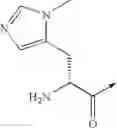
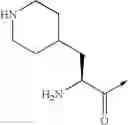
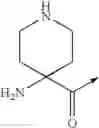
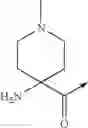
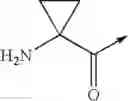
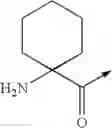
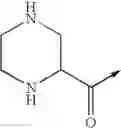
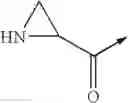
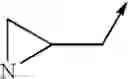
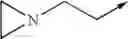
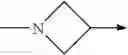
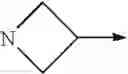
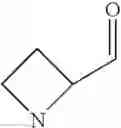
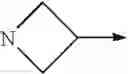
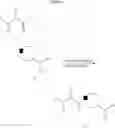
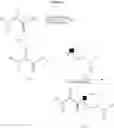

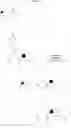
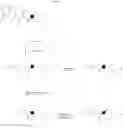

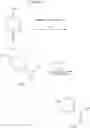

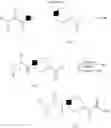
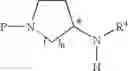
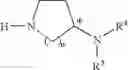
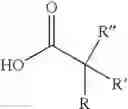
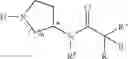
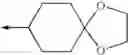
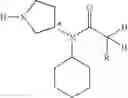
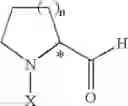
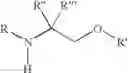

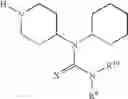


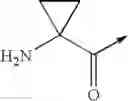
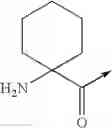
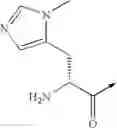
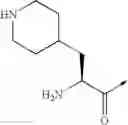
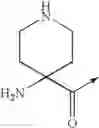
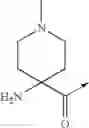
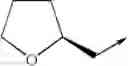
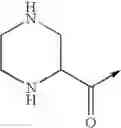
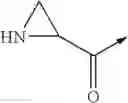
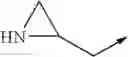
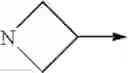

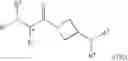
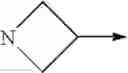

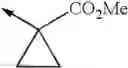
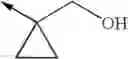
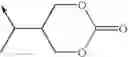
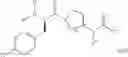
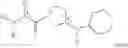
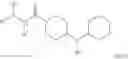
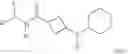
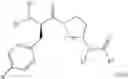
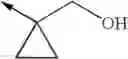
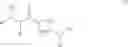
Sources:
- United States Patent and Trademark Office - verify current appl. status at the USPTO↗
Similar patent applications:
- » 20070027091
Melanocortin receptor agonists - » 20100120783
Melanocortin receptor agonists - » 10466121
Melanocortin receptor agonists - » 20050075344
Melanocortin receptor agonists - » 10466248
Piperazine- and piperidine-derivatives as melanocortin receptor agonists - » 20090298829
Melanocortin receptor agonists - » 10466249
Substituted piperidines/piperazines as melanocortin receptor agonists - » 10483913
Bridged piperidine derivatives as melanocortin receptor agonists - » 10466250
Melanocortin receptor agonists - » 20110224219
Melanocortin receptor agonists
Recent applications in this class:
- » 20180155251 2018-06-07
PRE-FORM BONDING AGENT FOR MAKING VITRIFIED PRODUCTS - » 20130207055 2013-08-15
Additive for molding of ceramic material - » 20120329795 2012-12-27
QUINAZOLINE DERIVATIVES - » 20120288501 2012-11-15
SUBSTITUTED BENZAZOLES AND METHODS OF THEIR USE AS INHIBITORS OF RAF KINASE - » 20120127628 2012-05-24
CERAMIC COMPOSITION FOR MULTILAYER CERAMIC CAPACITOR, MULTILAYER CERAMIC CAPACITOR COMPRISING THE SAME AND METHOD OF MANUFACTURING MULTILAYER CERAMIC CAPACITOR - » 20110230491 2011-09-22
6-SUBSTITUTED 2-QUINOLINONES AND 2-QUINOXALINONES AS POLY(ADP-RIBOSE) POLYMERASE INHIBITORS - » 20110212920 2011-09-01
N-Substituted Benzene Sulfonamides - » 20110172270 2011-07-14
2-'4(PHENYLAMINO)-PIPERIDIN-1-YL!-N-PHENYL-ACETAMINE DERIVATIVES AND RELATED COMPOUNDS AS NEUROPEPTIDE Y5 (NPY5) LIGANDS FOR THE TREATMENT OF OBESITY - » 20110150663 2011-06-23
Process for producing a ceramic matrix composite article and article formed thereby - » 20110059979 2011-03-10
Piperidine/Cyclohexane Carboxamide Derivatives For Use as Vanilloid Receptor Modulators
Recent applications for this Assignee:
- » 20170253588 2017-09-07
SALT OF NAPHTHYRIDINE CARBOXYLIC ACID DERIVATIVE - » 20170165272 2017-06-15
Pharmaceutical composition comprising indole compound - » 20170035776 2017-02-09
Composition for preventing or treating fatty liver diseases - » 20160264569 2016-09-15
SALT OF NAPHTHYRIDINE CARBOXYLIC ACID DERIVATIVE - » 20160243242 2016-08-25
HFSH AQUEOUS FORMULATION - » 20160200709 2016-07-14
Indole compound as inhibitor of necrosis - » 20160194313 2016-07-07
Indole amide compound as inhibitor of necrosis - » 20160168096 2016-06-16
Biaryl derivatives as GPR120 agonists - » 20160045497 2016-02-18
COMPLEX PREPARATION INCLUDING VALSARTAN AND ROSUVASTATIN CALCIUM AND MANUFACTURING METHOD THEREFOR - » 20150376173 2015-12-31
Sphingosine-1-phosphate receptor agonists, methods of preparing the same, and pharmaceutical compositions containing the same as an active agent