Remote data viewer
US20070130459A1
2007-06-07
11/625,072
2007-01-19
✅ Patent granted
US 7,685,417 B2
2010-03-23
-
-
Brandon S Hoffman
2028-08-14
Abstract:
A medical image and data application service provider system provides a way of remotely viewing and manipulating medical images and data for diagnostic and visualization purposes by users unconstrained by geography. Medical images and data are stored on one or more servers running application service provider software along with meta-data such as access control information, origin of information and references to related data. A set of medical data consisting related information is sent as an encrypted stream to a viewing station running client software in a secure execution environment that is logically independent of the viewing station's operating system.
Inventors:
- Meredith Shaebanyan 5 🇺🇸 Anaheim, CA, United States
- Kelly Wise 1 🇺🇸 Anaheim, CA, United States
Interested in similar patents?
Get notified when new applications in this technology area are published.
Classification:
G06F21/6245 » CPC main
Security arrangements for protecting computers, components thereof, programs or data against unauthorised activity; Protecting data; Protecting access to data via a platform, e.g. using keys or access control rules to a system of files or objects, e.g. local or distributed file system or database Protecting personal data, e.g. for financial or medical purposes
G06F21/53 » CPC further
Security arrangements for protecting computers, components thereof, programs or data against unauthorised activity; Monitoring users, programs or devices to maintain the integrity of platforms, e.g. of processors, firmware or operating systems during program execution, e.g. stack integrity ; Preventing unwanted data erasure; Buffer overflow by executing in a restricted environment, e.g. sandbox or secure virtual machine
G06F21/606 » CPC further
Security arrangements for protecting computers, components thereof, programs or data against unauthorised activity; Protecting data by securing the transmission between two devices or processes
G06T11/00 » CPC further
2D [Two Dimensional] image generation
G16H10/60 » CPC further
ICT specially adapted for the handling or processing of patient-related medical or healthcare data for patient-specific data, e.g. for electronic patient records
G16H30/20 » CPC further
ICT specially adapted for the handling or processing of medical images for handling medical images, e.g. DICOM, HL7 or PACS
G16H40/67 » CPC further
ICT specially adapted for the management or administration of healthcare resources or facilities; ICT specially adapted for the management or operation of medical equipment or devices for the operation of medical equipment or devices for remote operation
H04N1/00209 » CPC further
Scanning, transmission or reproduction of documents or the like, e.g. facsimile transmission; Details thereof; Connection or combination of a still picture apparatus with another apparatus, e.g. for storage, processing or transmission of still picture signals or of information associated with a still picture with a digital computer or a digital computer system, e.g. an internet server Transmitting or receiving image data, e.g. facsimile data, via a computer, e.g. using e-mail, a computer network, the internet, I-fax
H04N1/00244 » CPC further
Scanning, transmission or reproduction of documents or the like, e.g. facsimile transmission; Details thereof; Connection or combination of a still picture apparatus with another apparatus, e.g. for storage, processing or transmission of still picture signals or of information associated with a still picture with a digital computer or a digital computer system, e.g. an internet server with a server, e.g. an internet server
G06F2221/032 » CPC further
Indexing scheme relating to security arrangements for protecting computers, components thereof, programs or data against unauthorised activity; Indexing scheme relating to , monitoring users, programs or devices to maintain the integrity of platforms Protect output to user by software means
G06F2221/2149 » CPC further
Indexing scheme relating to security arrangements for protecting computers, components thereof, programs or data against unauthorised activity; Indexing scheme relating to and subgroups addressing additional information or applications relating to security arrangements for protecting computers, components thereof, programs or data against unauthorised activity Restricted operating environment
H04N2201/0079 » CPC further
Indexing scheme relating to scanning, transmission or reproduction of documents or the like, and to details thereof; Types of the still picture apparatus Medical imaging device
H04L9/00 IPC
arrangements for secret or secure communications Cryptographic mechanisms or cryptographic ; Network security protocols
Description
CROSS-REFERENCE TO RELATED APPLICATIONSThis invention relates to an improved method for interactive remote viewing of medical image data over prior invention: U.S. Pat. No. 5,432,714—Novick—Jul. 11, 1995.
STATEMENT REGARDING FEDERALLY SPONSORED RESEARCH OR DEVELOPMENT“Not Applicable”
REFERENCE TO A MICROFICHE APPENDIX“Not Applicable”
BACKGROUND OF THE INVENTIONIt is very desirable to obtain medical imaging data with CT, MRI, PET, or other diagnostic imaging systems or any type of image capture system and then to permit persons to view remotely all the medical images without having to transmit the actual image files or allow the image files to actually download into the receiving viewing computer. Physicians for example, or other imaging users have a need to quickly access and analyze large numbers of image files from remote image capture systems securely, without downloading or storing the image files onto their computer. Present methods for this all rely on transmitting a medical image file to the viewer which is prohibitively slow and uses too much transmission bandwidth.
A present embodiment of the invention for remote image viewing is U.S. Pat. No. 5,432,714 to Novik; (1995) which discloses a system of compressing and transmitting data to be decompressed and viewed by an experienced or trained viewer, however, for medical diagnostic imaging, this system is unacceptably slow and costly compared to our inventive method and system. Our invention, the Remote Virtual Medical Diagnostic Imaging Viewer, allows a patient or physician or any other user needing secure remote image viewing, to easily view and manipulate the images and files over a wide area network like the Internet, but in a secure execution environment, without downloading the actual image files onto the hard drive of the viewer which is the method of prior art systems.
U.S. Pat. No. 4,682,869 to Itoh et al.; U.S. Pat. Nos. 4,870,497 and 4,979,049 to Chamzas et al.; U.S. Pat. No. 4,999,715 to Porcellio et al.; U.S. Pat. No. 5,166,987 to Kageyama; U.S. Pat. No. 5,189,526 to Sasson; and U.S. Pat. No. 5,204,756 to Chevion et al. show prior art systems. However, the prior art methods of image data transmission and remote image viewing, particularly when applied to medical diagnostic imaging, do not make use of our novel method of using an image storing application provider server to enable a remote secure executable environment, independent of the operating system of a viewing computer to temporarily reconstruct medical image files, rather than compressing, transmitting and then and uncompressing the actual medical image files interactively.
In our study of image data transmission techniques we have identified a need for a system that significantly decreases the time and cost of viewing images remotely for medical diagnostic analysis. Since accurate reproduction of an entire medical image file with all of the rest of the captured frames of image data is very necessary for medical diagnostic purposes. Our inventive method is unique because by it's nature, it is secure, saves time, is loss-less, and provides all the medical images available on the server to be viewed interactively, not just a few of the images as with prior art systems. Instead of lossy compression and file transmission systems described in prior art, our inventive method preserves remotely viewed image data in a secure environment.
With our inventive method, the image files are never actually downloaded onto the remote viewer. The remote viewer only displays an exact representation of the actual file stored on the application server. Images can be viewed over a wide area network like the Internet by logging into our website and using our invention.
BRIEF SUMMARY OF THE INVENTIONIn the preferred embodiment of the invention, one or more servers with medical image files stored on them, run application service provider software and send streams of medical data and images, to temporarily reconstruct and manipulate the image files remotely in a secure execution environment on an authorized user's personal computer.
In the existing embodiment of the invention a computer or other capture device, captures a lossy image file then compresses and transmits the compressed image file which is then downloaded onto a computer hard drive and decompressed by the remote receiver for viewing. In contrast, the preferred embodiment of the invention does not require transmitting the actual medical image files to a receiver and is therefore a more efficient method of remote medical image viewing.
Besides the objectives and advantages of the preferred embodiment of the invention described above, there are objectives and advantages also which are:
-
- a) to lower the cost and provide high security or regulatory compliance with the need for remote viewing of medical images and data for medical diagnostics and any other field requiring secure remote viewing of image files and data.
- b) to provide a faster way to view digital images remotely
- c) To view and manipulate all image files without compressing, uncompressing, and downloading the files into a hard drive or opening the actual patient image file on the remote server.
- d) To be able to use a digital imaging viewer without having to buy and install medical imaging or any other viewing or compression/decompression software.
- e) To be able to see large numbers of images in sequence animated in rapid succession and manipulate them remotely faster than existing methods.
- f) To provide physicians a more efficient method of using diagnostic images to plan a surgery
- g) To create incentives for physicians to refer patients to radiologists or medical diagnostic imaging providers.
These objects described above and others are achieved in the preferred embodiment of the invention and allow for further advantages to become apparent from a consideration of the ensuing description and drawings.
BRIEF DESCRIPTION OF THE SEVERAL VIEWS OF THE DRAWINGThe drawings shown are two flowcharts, which are
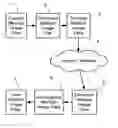
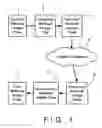
FIG. 1, representing the present invention and showing the steps of image data acquisition, compression and transmission of the image files for remote viewing. The second drawing,
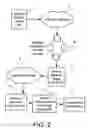
FIG. 2 represents the preferred embodiment of the present invention showing the steps of sending streams of encoded data to a be reconstructed for viewing in a remote secure executing environment.
REFERENCE NUMERALS IN DRAWINGS: FIGS. 1-2
- 1. capture device or server
- 2. compression of medical image files
- 3. transmitting compressed medical image files
- 4. the Internet or a network
- 5. downloading medical image files to a hard drive
- 6. uncompressing medical image files
- 7. view medical image files
- 8. image storing medical application service provider servers
- 9. streaming an encrypted medical image file in a Boolean code
- 10. the streamed medical image data is accessed and unencrypted in the secure execution environment running on the remote viewing computer
- 11. matrix transformation is applied to the reconstructed image files to allow for remote manipulation of the reconstructed medical images
The present invention describes an apparatus for capturing and transmitting the image file for remote viewing interactively. The invention will be described in FIG.1, which is a block diagram schematic of one preferred embodiment of the present invention. Medical image files are captured (1) and then compressed (2) transmitted (3) over a network or the Internet (4) which are downloaded on a users computer (5) and uncompressed (6) and viewed remotely (7).
FIG. 2 is a flowchart of the preferred operation of the present invention, and will be explained with reference to the apparatus of FIG. 1, although other appropriate apparatus may be substituted in performing the inventive method. In this method for viewing a file remotely, the medical image files are first captured (1) transmitted (3) over a network or the Internet (4) to one or more servers running application service provider software (8) which are stored with meta data including access control information, origin of the data, and references to related data. This data is encrypted and streamed (9) out on a network or the Internet (4). The encrypted medical image data streams are decrypted by software running in a secure execution environment (10), and can be remotely manipulated by real time matrix transformation of the reconstructed medical image files (11) viewed and analyzed remotely (7).
This preferred embodiment of the present invention as shown in FIG. 2 is thusly shown to be an improved method over the present invention offering a simpler and less costly secure method for remote viewing and analysis of large medical imaging files.
Claims
1. A method of providing data to a recipient while safeguarding the recipient from maintaining a copy of the data, comprising:
accessing a remote receiving computer that runs a remote virtual machine portion under control of an external device, and independently from an operating system of the remote receiving computer;
streaming the data to the remote virtual machine portion of the receiving computer;
using the remote virtual machine to display and interact with the data, such that a user of the remote receiving computer can interact with the data, but cannot use the remote receiving computer to store the data on a persistent memory device.
2. The method of claim 1 wherein the step of providing producing the image reconstructs an image from which the stream was created.
3. The method of claim 1 wherein the step of providing producing the image further comprises producing the image inside a buffer of the remote receiving computer.
4. The method of claim 1 further comprising a user utilizing a matrix transformation to modify the image.
5. The method of claim 1 further comprising using a matrix transformation to manipulate the image.
6. The method of claim 5 wherein the matrix transformation is applied interactively.
7. The method of claim 1 wherein the stream comprises only the single image.
8. The method of claim 1 wherein the image comprises a medical diagnostic image.
9. The method of claim 8 wherein the image is selected from the list consisting of an MRI image, a Cat Scan image, a PET image, and an X-Ray.
10. The method of claim 1, further comprising encrypting the data, streaming the encrypted image to the remote virtual machine portion of the receiving computer, and using the remote virtual machine to decrypt the encrypted image, using the remote virtual machine to display and interact with the decrypted data.
11. The method of claim 1, wherein the data comprises a video.
12. The method of claim 1, wherein the data comprises a file.
Images & Drawings included:
Sources:
- United States Patent and Trademark Office - verify current appl. status at the USPTO↗
Similar patent applications:
- » 20220100845
Remote Data Viewer - » 20160314317
Remote data viewer - » 20190325158
Remote data viewer - » 20120224754
Remote data viewer - » 20120227113
Remote data viewer - » 20150199539
Remote data viewer - » 20090094627
Providing Remote Access to Media, and Reaction and Survey Data From Viewers of the Media - » 20090094286
System for remote access to media, and reaction and survey data from viewers of the media
Recent applications in this class:
- » 20250291952 2025-09-18
TRAINING A CUSTOMER-SPECIFIC DEEP LEARNING CLASSIFIER THAT DETECTS ON-PREMISE ORGANIZATION-SENSITIVE DATA - » 20250291951 2025-09-18
System, Method, and Computer Program Product for Consent Management - » 20250291950 2025-09-18
COMPUTING FRAMEWORK FOR ENFORCEMENT OF DATA PRIVACY CONSENT THROUGH DEVICE FINGERPRINTS - » 20250291949 2025-09-18
SYSTEM AND METHOD FOR GENERATION AND USE OF COPY-PROTECTED FILES IN SECURE TRANSACTIONS - » 20250291948 2025-09-18
METHOD TO PROVIDE ON DEMAND VERIFIABILITY OF A MEDICAL METRIC FOR A PATIENT USING A DISTRIBUTED LEDGER - » 20250284844 2025-09-11
ELECTRONIC SYSTEM AND METHOD FOR MANAGING ELECTRONIC SYSTEM - » 20250284843 2025-09-11
DATA PRIVACY ARCHITECTURE, SYSTEMS, AND METHODS - » 20250284842 2025-09-11
CONSENT DATA PIPELINE ARCHITECTURE AND OPERATION - » 20250284841 2025-09-11
SYSTEMS AND METHODS FOR DETECTING RISK EVENTS IN A COMPUTING ENVIRONMENT USING INFRASTRUCTURE GRAPHS AND EVEN LOG SCANNERS - » 20250284840 2025-09-11
TRANSPARENT AND FAST DATA REMEDIATION