Twisting device for climbing exercisers
US20070142182A1
2007-06-21
11/281,810
2005-11-16
✅ Patent granted
US 7,462,137 B2
2008-12-09
-
-
Steve R Crow
2027-03-15
Abstract:
A twisting device for a climbing exerciser includes a rotatable member rotatably mounted on a cylindrical tube on the base and the rotatable member includes two flanges so that two connection plates connected with two pedals are respectively connected between the two flanges. The rotatable member is connected with a handlebar stem so that when the user operates the pedals alternatively, the two connection plates rotate the rotatable member reciprocally to drive the handlebar stem to twist about an axis of the handlebar stem.
Inventors:
- Hua-Lu HSIANG 6 🇹🇼 Taoyuan City, Taiwan
- Zhong-Jin Yang 1 🇹🇼 Taoyuan City, Taiwan
- Zhong-Jin Yang 1 🇹🇼 Taoyuan County 330, Taiwan
- Hua-Lu Hsiang 1 🇹🇼 Taoyuan County 330, Taiwan
Interested in similar patents?
Get notified when new applications in this technology area are published.
Classification:
A63B23/0429 » CPC main
Exercising apparatus specially adapted for particular parts of the body for limbs, i.e. upper or lower limbs, e.g. simultaneously for lower limbs involving a bending of the knee and hip joints simultaneously with guided foot supports moving parallel to the body-symmetrical-plane by being cantilevered about a horizontal axis
A63B22/001 » CPC further
Exercising apparatus specially adapted for conditioning the cardio-vascular system, for training agility or co-ordination of movements involving an exercising of arms by simultaneously exercising arms and legs, e.g. diagonally in anti-phase
A63B22/0069 » CPC further
Exercising apparatus specially adapted for conditioning the cardio-vascular system, for training agility or co-ordination of movements with cantilevered support elements pivoting about an axis the pivoting movement being in a plane inclined with respect to the horizontal plane, e.g. a step and twist movement about an axis inclined with respect to the horizontal plane, e.g. steppers with an inclined axis
A63B23/0211 » CPC further
Exercising apparatus specially adapted for particular parts of the body for the abdomen, the spinal column or the torso muscles related to shoulders (e.g. chest muscles); Abdomen moving torso with immobilized lower limbs
A63B2022/0043 » CPC further
Exercising apparatus specially adapted for conditioning the cardio-vascular system, for training agility or co-ordination of movements; Particular aspects relating to the orientation of movement paths of the limbs relative to the body; Relative relationship between the movements of the limbs the movements of the limbs of one body half being synchronised, e.g. the left arm moving in the same direction as the left leg
A63B2023/003 » CPC further
Exercising apparatus specially adapted for particular parts of the body by torsion of the body part around its longitudinal axis
Y10T74/2078 » CPC further
Machine element or mechanism; Control lever and linkage systems; Elements; Handles Handle bars
A63B22/04 IPC
Exercising apparatus specially adapted for conditioning the cardio-vascular system, for training agility or co-ordination of movements with movable steps
Description
FIELD OF THE INVENTIONThe present invention relates to a twisting device for a climbing exerciser and the twisting device operates smoothly while pivoting the two pedals alternatively.
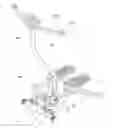
BACKGROUND OF THE INVENTIONA conventional climbing exerciser with a twisting device is shown in FIGS. 7 and 8 and generally includes a base The present invention intends to provide an I-shaped base 7 and a post 72 extends from a center bar of the base 7. Two pedals are pivotably connected to two sides thereof and the two pedals 8 are connected with two respective cylinders so that they can be operated alternatively to overcome the resistance of the cylinders. A cylindrical tube is connected on the center bar and located bedside the post 72, a disk 71 is rotatably connected on the cylindrical tube and a handlebar stem 711 is fixed on the disk 71. A cable 9 has two ends thereof connected to the two pedals 8 respectively and the cable 9 reeves through the groove of the disk 71 so that when the two pedals 8 are pivoted alternatively, the cable 9 drives the disk 71 to rotate reciprocally. The user holds the handle on the handle stem 711 and twists with the rotation of the disk 71. However, the it is noted that the cable 9 will be broken after a period of time of use and once the cable 9 is broken, the twisting device is useless. Besides, the cable 9 might disengage from the groove of the disk 71 during operation, or the cable 9 can be loosened after a period of time of use.
SUMMARY OF THE INVENTIONThe present invention relates to a climbing exerciser which comprises a base having a post and a cylindrical tube extending therefrom. A rotatable member is rotatably mounted to the cylindrical tube and a handlebar stem is fixed to the rotatable member. The rotatable member has two flanges with a gap defined therebetween. Two pedal assemblies are pivotably connected to two sides of the post and cooperated with two cylinders. Each pedal assembly has a pedal and a connection plate which is connected between the two flanges of the rotatable member. The handlebar stem is located between the two connection plates so that when the two pedal assemblies are alternatively operated, the two connection plates drive the rotatable member to let the handlebar stem twist.
The present invention will become more obvious from the following description when taken in connection with the accompanying drawings which show, for purposes of illustration only, a preferred embodiment in accordance with the present invention.
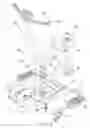
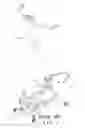
BRIEF DESCRIPTION OF THE DRAWINGSFIG. 1 is an exploded view to show the climbing exerciser of the present invention;
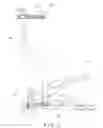
FIG. 2 is a cross sectional view of the twisting device of the present invention;
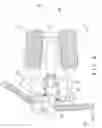
FIG. 3 is an exploded view to show the twisting device of the present invention;
FIG. 4 is a perspective view to show the climbing exerciser of the present invention;
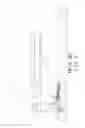
FIG. 5 is a side view to show the climbing exerciser of the present invention;
FIG. 6 is a top view to show the handlebar stem twists when the pedals are operated;
FIG. 7 is an exploded view to show a conventional climbing exerciser, and FIG. 8 is a side view to show the conventional climbing exerciser.
DETAILED DESCRIPTION OF THE PREFERRED EMBODIMENTReferring to FIGS. 1 to 4, the climbing exerciser of the present invention comprises an I-shaped base 10 which includes a center bar 12 and two transverse bars 11 connected to two ends of the center bar 12. A post 13 and a cylindrical tube 21 extend from a top of the center bar 12, the cylindrical tube 21 is located beside the post 13. Two rods 130 extend from two opposite sides of the post 13 at an angle so as to be connected with two pedal assemblies. Two cylinders 33 each have a first end thereof pivotably connected to the base 10. A first sleeve 22 is mounted to the cylindrical tube 21.
A rotatable assembly 20 includes a rotatable member 23 which is rotatably mounted to the cylindrical tube 21 by a bolt 231 and a second sleeve 26 is received in a tubular portion of the rotatable member 23. The rotatable member 23 has two flanges 24 with a gap defined therebetween. A connection tube 27 is mounted onto the tubular portion of the rotatable member 23 and is fixed to one of the flanges 24 by two bolts 242.
A handlebar assembly 40 includes a handlebar stem 41 which is fixedly mounted to an outer periphery of the connection tube 27 and a plurality of positioning bolts 42 extend through the handlebar stem 41 and the connection tube 27 to position the handlebar stem 41 to the connection tube 27. A handlebar 411 is connected to the handlebar stem 41 and two protrusions 4112 are rotatably connected on a top of the handlebar 411.
The two pedal assemblies each include a mounting tube 32 which is rotatably mounted to the rod 130 corresponding thereto. A pedal 30 and an extension tube respectively extend from the mounting tube 32 in different directions. A connection bolt 31 is connected to a distal end of the extension tube and a first end of a connection plate 25 is fixed to the connection bolt 31 by a bolt and nut assembly 311. A second end of the connection plate 25 has a hole, and the two bolts 241 extend through the two flanges 24 and the two holes in the two respective connection plates 25. The handlebar stem 41 is located between the two connection plates 25. The two pedal assemblies respectively connected to two respective second ends of the two cylinders 33.
A case 50 is mounted onto the base 10 and hides the post 13 and the cylindrical tube 21 therein.
Referring to FIGS. 5 and 6, when the user pivoting the two pedals 30 alternatively, the movement of the pedals 30 pushes the two connection plates 25 which rotate the rotatable member 23. The connection tube 27 is fixed to the rotatable member 23 so that the handlebar stem 41 is rotated with the connection tube 27. By this way, the user twists his or her body when operating the climbing exerciser. Because the connection tube 27 is driven by two connection plates 25 which are solid and strong parts so that the twisting movement of the connection tube 27 is precise and smooth.
While we have shown and described the embodiment in accordance with the present invention, it should be clear to those skilled in the art that further embodiments may be made without departing from the scope of the present invention.
Claims
What is claimed is:1. A climbing exerciser comprising:
a base having a post extending therefrom and a cylindrical tube located beside the post, two cylinders each having a first end thereof pivotably connected to the base;
a rotatable member rotatably mounted to the cylindrical tube and a handlebar stem fixed to the rotatable member, the rotatable member having two flanges with a gap defined therebetween;
two pedal assemblies pivotably connected to two sides of the post and each pedal assembly having a pedal and a connection plate which is connected between the two flanges of the rotatable member, the handlebar stem located between the two connection plates, the two pedal assemblies respectively connected to two respective second ends of the two cylinders.
2. The exerciser as claimed in claim 1, wherein a first sleeve is mounted to the cylindrical tube and the rotatable member is rotatably mounted onto the cylindrical tube, a second sleeve received in a tubular portion of the rotatable member, a connection tube is mounted onto the tubular portion of the rotatable member and is fixed to one of the flanges, the handlebar stem is fixedly mounted to an outer periphery of the connection tube.
3. The exerciser as claimed in claim 2, wherein a plurality of positioning bolts extend through the handlebar stem and the connection tube to position the handlebar stem to the connection tube.
4. The exerciser as claimed in claim 1, wherein two rods extend from two opposite sides of the post at an angle and each pedal assembly includes a mounting tube which is rotatably mounted to the rod corresponding thereto, the pedal and an extension tube respectively extend from the mounting tube, a connection bolt connected to a distal end of the extension tube and a first end of the connection plate is fixed to the connection bolt and a second end of the connection plate has a hole, two bolts extend through the two flanges and the two holes in the two respective connection plates.
5. The exerciser as claimed in claim 1, wherein the base includes a center bar and two transverse bars are connected to two ends of the center bar, the post and the cylindrical tube extend from a top of the center bar.
6. The exerciser as claimed in claim 1, wherein a handlebar is connected to the handlebar stem and two protrusions are rotatably connected on a top of the handlebar.
7. The exerciser as claimed in claim 1, wherein a case is mounted onto the base and hide the post and the cylindrical tube therein.
Images & Drawings included:



Sources:
- United States Patent and Trademark Office - verify current appl. status at the USPTO↗
Recent applications in this class:
- » 20210187350 2021-06-24
KINOPED LOWER EXTREMITY PERFORMANCE IMPROVEMENT, INJURY PREVENTION, AND REHABILITATION SYSTEM - » 20210187349 2021-06-24
Kinoped lower extremity performance improvement, injury prevention, and rehabilitation system - » 20210069546 2021-03-11
Kinoped lower extremity performance improvement, injury prevention, and rehabilitation system - » 20200179750 2020-06-11
Glute machine - » 20110111927 2011-05-12
EXERCISEING DEVICE FOR LOWER-BODY - » 20100029449 2010-02-04
EXERCISE MACHINE - » 20100009823 2010-01-14
Single step resistance training device - » 20090291808 2009-11-26
Stepper - » 20080051258 2008-02-28
Elliptical exercise device and methods of use - » 20080020904 2008-01-24
Stepper