EMBEDDED ADVERTISEMENTS AND METHOD OF ADVERTISING
US20070143786A1
2007-06-21
11/552,700
2006-10-25
Abstract:
A technique is provided for advertising. The technique includes a combining of two or more video streams to form a unified video stream and broadcasting the unified video stream. At least one of the two or more video streams is a program content stream comprising program content that is filmed by a camera and at least one of the two or more video streams is an advertisement material stream comprising advertisement material. The placement of the advertisement material stream relative to the program content stream is independent of any information derived from the camera.
Inventors:
- Andrew Isaac Deitsch 3 🇺🇸 Lake In The Hills, IL, United States
- Stephen John Angelovich 2 🇺🇸 Yonkers, NY, United States
- David Bret Rabinowitz 2 🇺🇸 Huntington, NY, United States
- John Patrick Wallace 1 🇺🇸 Hamburg, NJ, United States
Assignee:
- GENERAL ELECTRIC COMPANY 27,313 🇺🇸 Schenectady, NY, United States
Interested in similar patents?
Get notified when new applications in this technology area are published.
Classification:
H04N21/812 » CPC main
Selective content distribution, e.g. interactive television or video on demand [VOD]; Generation or processing of content or additional data by content creator independently of the distribution process; Content; Monomedia components thereof involving advertisement data
G06Q30/02 » CPC further
Commerce, e.g. shopping or e-commerce Marketing, e.g. market research and analysis, surveying, promotions, advertising, buyer profiling, customer management or rewards; Price estimation or determination
H04H20/14 » CPC further
Arrangements for broadcast or for distribution combined with broadcast; Arrangements for observation, testing or troubleshooting for monitoring programmes
H04H60/06 » CPC further
Arrangements for broadcast applications with a direct linking to broadcast information or broadcast space-time; Broadcast-related systems; Arrangements for generating broadcast information; Arrangements for generating broadcast-related information with a direct linking to broadcast information or to broadcast space-time; Arrangements for simultaneous generation of broadcast information and broadcast-related information Arrangements for scheduling broadcast services or broadcast-related services
H04N21/23424 » CPC further
Selective content distribution, e.g. interactive television or video on demand [VOD]; Servers specifically adapted for the distribution of content, e.g. VOD servers; Operations thereof; Processing of content or additional data; Elementary server operations; Server middleware; Processing of video elementary streams, e.g. splicing of video streams, manipulating MPEG-4 scene graphs involving splicing one content stream with another content stream, e.g. for inserting or substituting an advertisement
H04N21/2547 » CPC further
Selective content distribution, e.g. interactive television or video on demand [VOD]; Servers specifically adapted for the distribution of content, e.g. VOD servers; Operations thereof; Management operations performed by the server for facilitating the content distribution or administrating data related to end-users or client devices, e.g. end-user or client device authentication, learning user preferences for recommending movies; Management at additional data server, e.g. shopping server, rights management server; Billing, e.g. for subscription services Third Party Billing, e.g. billing of advertiser
H04N21/266 » CPC further
Selective content distribution, e.g. interactive television or video on demand [VOD]; Servers specifically adapted for the distribution of content, e.g. VOD servers; Operations thereof; Management operations performed by the server for facilitating the content distribution or administrating data related to end-users or client devices, e.g. end-user or client device authentication, learning user preferences for recommending movies Channel or content management, e.g. generation and management of keys and entitlement messages in a conditional access system, merging a VOD unicast channel into a multicast channel
H04N21/44016 » CPC further
Selective content distribution, e.g. interactive television or video on demand [VOD]; Client devices specifically adapted for the reception of or interaction with content, e.g. set-top-box [STB]; Operations thereof; Processing of content or additional data, e.g. demultiplexing additional data from a digital video stream; Elementary client operations, e.g. monitoring of home network or synchronising decoder's clock; Client middleware; Processing of video elementary streams, e.g. splicing a video clip retrieved from local storage with an incoming video stream, rendering scenes according to MPEG-4 scene graphs involving splicing one content stream with another content stream, e.g. for substituting a video clip
H04N21/44222 » CPC further
Selective content distribution, e.g. interactive television or video on demand [VOD]; Client devices specifically adapted for the reception of or interaction with content, e.g. set-top-box [STB]; Operations thereof; Processing of content or additional data, e.g. demultiplexing additional data from a digital video stream; Elementary client operations, e.g. monitoring of home network or synchronising decoder's clock; Client middleware; Monitoring of processes or resources, e.g. detecting the failure of a recording device, monitoring the downstream bandwidth, the number of times a movie has been viewed, the storage space available from the internal hard disk; Monitoring of end-user related data Analytics of user selections, e.g. selection of programs or purchase activity
H04N21/6582 » CPC further
Selective content distribution, e.g. interactive television or video on demand [VOD]; Network structure or processes for video distribution between server and client or between remote clients; Control signalling between clients, server and network components; Transmission of management data between server and client, e.g. sending from server to client commands for recording incoming content stream ; Communication details between server and client ; Transmission of management data between client and server; Transmission by the client directed to the server Data stored in the client, e.g. viewing habits, hardware capabilities, credit card number
H04N7/173 IPC
Television systems; Analogue secrecy systems; Analogue subscription systems with two-way working, e.g. subscriber sending a programme selection signal
H04N5/445 IPC
Details of television systems; Receiver circuitry for the reception of television signals according to analogue transmission standards for displaying additional information
H04N7/025 IPC
Television systems Systems for the transmission of digital non-picture data, e.g. of text during the active part of a television frame
G06F13/00 IPC
Interconnection of, or transfer of information or other signals between, memories, input/output devices or central processing units
H04N7/10 IPC
Television systems Adaptations for transmission by electrical cable
G06F3/00 IPC
Input arrangements for transferring data to be processed into a form capable of being handled by the computer; Output arrangements for transferring data from processing unit to output unit, e.g. interface arrangements
Description
CROSS REFERENCE TO RELATED APPLICATIONS
This application claims the benefit of U.S. Provisional Application No. 60/751,317 filed on Dec. 16, 2005, which is incorporated herein in its entirety by reference.
BACKGROUND
The invention relates generally to advertising and more particularly to embedded advertisements and techniques for advertising the same.
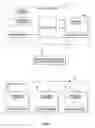
In the field of television broadcasting, a key source of revenue is billable content, referred to as advertising, in which a broadcaster delivers a certain number of eyeballs (viewers) to advertisers. Currently advertising or commercial spots include discrete video clips interleaved in time with programming content that are sold to the advertisers and subsequently shown during the program broadcast. For example, as shown in FIG. 1, advertising time slots (such as 10, 15, 30, 60, 120 second time slots) are listed in the sales system. The sales team sells the available time slots from the sales system. The sold time slots are sent to the traffic system. The traffic system scheduler automatically places the sold time slots on a Log (logic built-in). The copy process begins once the Log is created and the traffic system, in collaboration with the advertising agency, assigns an industry standard commercial identification (ISCI) number to the time slots. The traffic system finalizes the Log and publishes to master control. The master control reviews the Log and verifies ISCI number in-house using an automated routine. The program is finally aired and the traffic system reconciles the original Log and the actual on-air Log. An invoice is then generated by the traffic system at the month end. However, the discrete advertising time can be ignored, skipped, or otherwise not viewed during the broadcasting of the program. For example, by use of techniques, such as those employed by TiVo, advertisements may be skipped or may be fast forwarded while viewing or recording the program.
The use of independent video images, embedded in the program stream is currently being used for news alerts and other non-revenue related programming. However, this approach has not been used for advertising and other revenue purposes. Further, sales departments currently are incapable of performing direct advertisement in program content other than through product placement within the content. In other words, the sales departments cannot directly sell advertisement during the presentation of content. Additionally, current techniques for embedding advertisement into the program content require some information from the camera to enable the placement of the advertisement relative to the program content.
It is therefore desirable to provide advertisement techniques that cannot be ignored or skipped while viewing the program. It is also desirable to provide a technique to facilitate the process of selling and broadcasting such advertisements during the program.
SUMMARY
Briefly in accordance with one aspect of the invention, a method is provided for advertising. The method provides for a combining of two or more video streams to form a unified video stream and broadcasting the unified video stream. At least one of the two or more video streams is a program content stream comprising program content that is filmed by a camera and at least one of the two or more video streams is an advertisement material stream comprising advertisement material. The placement of the advertisement material stream relative to the program content stream is independent of any information derived from the camera. Systems and computer programs that afford functionality of the type defined by this method may be provided by the present technique.
In accordance with another aspect of the invention, a method is provided for advertising. The method provides for integrating traffic, sales, marketing and production teams to generate an advertisement video stream, combining a program content video stream comprising a program content and the advertisement video stream to generate a unified video stream, and broadcasting the unified video stream. Systems and computer programs that afford functionality of the type defined by this method may be provided by the present technique.
In accordance with a further aspect of the invention, a method is provided for advertising. The method provides for listing one or more advertising opportunities in a sales system, tracking and selling the listed advertising opportunities from the sales system, creating traffic log for the sold advertising opportunities, generating an advertisement video stream for the sold advertising opportunities, integrating, via a traffic system, the advertisement video stream and a program content video stream to generate a unified video stream, and broadcasting the unified video stream.
In accordance with an additional aspect of the invention, a method is provided for advertising. The method provides for listing one or more advertising opportunities in a sales system, tracking and selling the listed advertising opportunities from the sales system, creating traffic log for the sold advertising opportunities, integrating traffic, sales, marketing and production teams to generate an advertisement video stream for the sold advertising opportunities, storing the advertisement video stream in a system with an identification number, sending notification of the advertisement video stream to the traffic, the sales, the marketing and the production teams, taking the advertisement video stream from the system and integrating it into a program content video stream via a traffic system to generate a unified video stream, finalizing a Log and publishing to a master control via the traffic system, reviewing the Log and verifying the advertisement video stream via the master control, broadcasting the unified video stream to a plurality of viewers over a network, reconciling original Log and actual on-air Log via the traffic system, and generating an invoice via the traffic system based on the number of viewers watching the unified video stream.
These and other features, aspects, and advantages of the invention will become better understood when the following detailed description is read with reference to the accompanying drawings.
BRIEF DESCRIPTION OF THE DRAWINGS
FIG. 1 is a block diagram of a traditional advertising process.
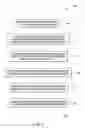
FIG. 2 is a diagrammatical representation of embedding advertisement in program content and broadcasting the program content with the embedded advertisement to viewer in accordance with aspects of the invention.
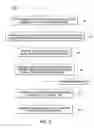
FIG. 3 is a block diagram of an exemplary advertising process in accordance with aspects of the invention.
DETAILED DESCRIPTION OF EXEMPLARY EMBODIMENTS
The present techniques are generally directed to embedded advertisements and a method of advertising to facilitate the process of selling and broadcasting such advertisements during programming. Such advertisement techniques may be useful in a variety of broadcasting contexts, such as television network, Internet, cable network, and others. Though the present discussion provides examples in a television network context, one of ordinary skill in the art will readily apprehend the application of these techniques in other contexts, such as for cable network or Internet, is well within the scope of the invention.
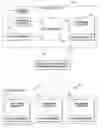
Referring now to FIG. 2, a diagrammatical representation of embedding advertisement in program content and broadcasting the program content with the embedded advertisement to viewer is illustrated in accordance with aspects of the invention. At a production station 10, two separate video streams are simultaneously generated, one containing program content 12 that is filmed by a camera 13, and the other the advertising material 14. The advertising video stream 14 is inserted into or embedded over the program content video stream 12 using a multiplexing device 16. The resulting unified video stream 18 contains both advertising and program content. The inserted or embedded advertising video stream 14 is delivered in the unified video stream 18 as an advertisement portion 20 of the program screen, referred to as “Snipes”, dedicated to the display of an advertising message (embedded advertisement). It should be noted that the placement of the advertisement material stream 14 relative to the program content stream 12 is independent of any information derived from the camera 13. Further, it should be noted that the Snipes may be a static or a dynamic image. The unified video stream 18 is then sent to a distribution network or a broadcasting station 22 for transmission to one or more viewers 24 at different viewer locations 26. The one or more viewers 24 may receive the unified video stream 18 containing the embedded advertisement portion 20 from the broadcasting station 22 via cable, satellite or other transmission medium.
The embedded advertisements as well as traditional advertisements may be sold, broadcasted and/or billed via a variety of techniques. In one embodiment, a technique is provided to facilitate the process of selling and broadcasting such advertisements during the program. For example, FIG. 3 illustrates an exemplary advertising process 28 in accordance with aspects of the present technique. The process begins by listing advertising opportunities, such as placement of embedded advertisements in a certain program or placement of the advertising time slots between programs, in the sales system at block 30. The sales team tracks and sells the listed advertisement opportunities from either the sales system or spreadsheets at block 32. The sold advertisement opportunities are then sent to the traffic Log or may be processed manually on spreadsheet at block 34. Further, the traffic team, sales team, marketing team and editorial team may reach an agreement on the advertising element at block 36. Once the advertising element is approved, the different teams work to create the advertising element at block 38. It should be noted that the advertising element may be created at a production house or may be created by an outside vendor. The completed advertising element is then stored in a system with an identification number at block 40. The process 28 further continues be sending notification of the completed advertising element to various teams via email or other communication medium at block 42. The traffic system then takes the advertising element from the system and integrates it into the show format at block 44. As will be appreciated by one skilled in the art, in certain embodiments, integrating the advertisement video stream into the program content video stream may be achieved by combining the advertisement video stream and the program content video stream using a multiplexing device. Additionally, it should be noted that, in certain embodiments, the placement of the advertisement material stream relative to the program content stream may be independent of any information derived from a camera that is employed to film the program content. Further, the traffic system finalizes the Log and publishes to a master control at block 46. The master control reviews the Log and verifies advertising element in-house using emails or spreadsheets at block 48. The program is finally aired and the traffic system reconciles the original Log and the actual on-air Log at block 50. An invoice is then generated by the traffic system at the month end at block 52. As will be appreciated by one skilled in the art, the placement of the advertisements within the various programs may be done manually or may be automated via suitable routines.
The techniques described in the embodiments discussed above outline the use of embedded, visible and invisible encoded signals, including video and audio, to convey advertising information in a video and/or electronic digital image and the application of this video technology and architecture applied to the delivery of advertising and commercial information. As will be appreciated by one skilled in the art, the advertising techniques described in the various embodiments discussed above provides transparent, indelible integration of advertising content and program content. This insures that the advertising content is delivered and viewed, along with the program content without disruption, or avoidance. The advertising content cannot be skipped or otherwise removed from the program content.
Further, as will be appreciated by one skilled in the art, the techniques described in the various embodiments discussed above empower the salesperson to sell either time slots or embedded advertisements. The techniques combine selling all the way through the production process, thereby providing an integrated environment for sales and production process.
While the invention has been described in detail in connection with only a limited number of embodiments, it should be readily understood that the invention is not limited to such disclosed embodiments. Rather, the invention can be modified to incorporate any number of variations, alterations, substitutions or equivalent arrangements not heretofore described, but which are commensurate with the spirit and scope of the invention. Additionally, while various embodiments of the invention have been described, it is to be understood that aspects of the invention may include only some of the described embodiments. Accordingly, the invention is not to be seen as limited by the foregoing description, but is only limited by the scope of the appended claims.
Claims
What is claimed as new and desired to be protected by Letters Patent of the United States is:1. A method of advertising, comprising:
combining two or more video streams to form a unified video stream, wherein at least one of the two or more video streams is a program content stream comprising program content that is filmed by a camera and at least one of the two or more video streams is an advertisement material stream comprising advertisement material, and wherein the placement of the advertisement material stream relative to the program content stream is independent of any information derived from the camera; and
broadcasting the unified video stream.
2. The method of claim 1, wherein combining the two or more video streams comprises combining two or more video streams using a multiplexing device.
3. The method of claim 1, wherein broadcasting comprises broadcasting the unified video stream to a plurality of viewers over a network.
4. The method of claim 1, further comprising integrating traffic, sales, marketing and production teams to generate the advertisement material stream.
5. The method of claim 1, further comprising generating an invoice based on the number of viewers watching the unified video stream.
6. A method of advertising, comprising:
integrating traffic, sales, marketing and production teams to generate an advertisement video stream comprising an advertisement;
combining a program content video stream comprising a program content and the advertisement video stream to generate a unified video stream; and
broadcasting the unified video stream.
7. The method of claim 6, wherein combining comprises combining the advertisement video stream and the program content video stream using a multiplexing device.
8. The method of claim 7, wherein the placement of the advertisement material stream relative to the program content stream is independent of any information derived from a camera that is employed to film the program content.
9. The method of claim 6, wherein broadcasting comprises broadcasting the unified video stream to a plurality of viewers over a network.
10. The method of claim 6, further comprising generating an invoice based on the number of viewers watching the unified video stream.
11. A method of advertising, comprising:
listing one or more advertising opportunities in a sales system;
tracking and selling the listed advertising opportunities from the sales system;
creating traffic log for the sold advertising opportunities;
generating an advertisement video stream for the sold advertising opportunities;
integrating, via a traffic system, the advertisement video stream and a program content video stream to generate a unified video stream; and
broadcasting the unified video stream.
12. The method of claim 11, wherein generating the advertisement video stream for the sold advertising opportunities comprises integrating traffic, sales, marketing and production teams to generate the advertisement.
13. The method of claim 12, wherein the traffic, the sales, the marketing and the production teams plan an advertising element, approve the advertising element and work together to create the advertising element.
14. The method of claim 13, further comprising storing the generated advertisement element in a system with an identification number.
15. The method of claim 14, further comprising sending notification of the generated advertisement element to the traffic, the sales, the marketing and the production teams.
16. The method of claim 15, wherein integrating the advertisement video stream and the program content video stream comprises taking the generated advertisement element from the system and integrating it into show format via the traffic system.
17. The method of claim 11, wherein integrating comprises combining the advertisement video stream and the program content video stream using a multiplexing device.
18. The method of claim 17, wherein the placement of the advertisement material stream relative to the program content stream is independent of any information derived from a camera that is employed to film the program content.
19. The method of claim 11, wherein the traffic system finalizes a Log and publishes to a master control.
20. The method of claim 19, wherein the master control reviews the Log and verifies the advertisement video stream.
21. The method of claim 11, wherein broadcasting the unified video stream comprises reconciling original Log and actual on-air Log via the traffic system.
22. The method of claim 11, further comprising generating an invoice via the traffic system based on the number of viewers watching the unified video stream.
23. A method of advertising, comprising:
listing one or more advertising opportunities in a sales system;
tracking and selling the listed advertising opportunities from the sales system;
creating traffic log for the sold advertising opportunities;
integrating traffic, sales, marketing and production teams to generate an advertisement video stream for the sold advertising opportunities;
storing the advertisement video stream in a system with an identification number;
sending notification of the advertisement video stream to the traffic, the sales, the marketing and the production teams;
taking the advertisement video stream from the system and integrating it into a program content video stream via a traffic system to generate a unified video stream;
finalizing a Log and publishing to a master control via the traffic system;
reviewing the Log and verifying the advertisement video stream via the master control;
broadcasting the unified video stream to a plurality of viewers over a network;
reconciling original Log and actual on-air Log via the traffic system; and
generating an invoice via the traffic system based on the number of viewers watching the unified video stream.
24. The method of claim 23, wherein integrating the advertisement video stream into the program content video stream comprises combining the advertisement video stream and the program content video stream using a multiplexing device, wherein the placement of the advertisement material stream relative to the program content stream is independent of any information derived from a camera that is employed to film the program content.
Images & Drawings included:

Sources:
- United States Patent and Trademark Office - verify current appl. status at the USPTO↗
Similar patent applications:
- » 20140068658
ADVERTISEMENT EMBEDDED SYSTEM, ADVERTISEMENT EMBEDDED METHOD, AND RECORDING MEDIUM THEREOF - » 20120095815
METHOD OF EMBEDDING ADVERTISEMENTS IN COMMUNICATION - » 20200374600
Method for embedding advertisement in video and computer device - » 20100154007
EMBEDDED VIDEO ADVERTISING METHOD AND SYSTEM - » 20060150212
Video-on-demand embedded advertising system and method - » 20130254042
METHOD AND APPARATUS FOR EMBEDDING ADVERTISEMENTS IN AUDIO FILES FOR INTERNET AND NETWORK DISTRIBUTION - » 20130041763
METHOD AND APPARATUS FOR EMBEDDING ADVERTISEMENTS IN AUDIO FILES FOR INTERNET AND NETWORK DISTRIBUTION - » 20070276673
Method and apparatus for embedding advertisements in audio files for internet and network distribution - » 20130132198
ADVERTISING SYSTEMS AND METHODS USING EMBEDDED MAP - » 20160300270
Method and Apparatus for Embedding Advertisement into File, System and Terminal
Recent applications in this class:
- » 20250150686 2025-05-08
SYSTEMS AND METHODS FOR AUTOMATICALLY DETECTING USERS WITHIN DETECTION REGIONS OF MEDIA DEVICES - » 20250142180 2025-05-01
SEQUENTIAL DELIVERY OF ADVERTISING CONTENT ACROSS MEDIA DEVICES - » 20250142179 2025-05-01
SYSTEMS AND METHODS FOR GENERATING MEDIA CONTENT USING MICROTRENDS - » 20250133271 2025-04-24
CROSS-SCREEN OPTIMIZATION OF ADVERTISING PLACEMENT - » 20250097544 2025-03-20
GENERATING EXPANDED CONTENT IN A VIDEO STREAM BASED ON PREDICTING VIEWER BEHAVIOR - » 20250088717 2025-03-13
SYSTEMS AND METHODS FOR CUSTOMIZING DELIVERY OF ADVERTISEMENTS - » 20250071391 2025-02-27
NATIONAL INSERTION OF TARGETED ADVERTISMENT - » 20250063234 2025-02-20
CUSTOMIZED CONTENT DELIVERY - » 20250047956 2025-02-06
Content Aggregation - » 20250039517 2025-01-30
INFORMATION PROCESSING METHOD AND APPARATUS, ELECTRONIC DEVICE, COMPUTER-READABLE STORAGE MEDIUM, AND COMPUTER PROGRAM PRODUCT
Recent applications for this Assignee:
- » 20250122849 2025-04-17
GAS TURBINE ENGINE WITH THIRD STREAM - » 20250059921 2025-02-20
System and method for reducing a clearance gap in an engine - » 20250052163 2025-02-13
Turbofan engine including integrated pylon and fan outlet guide vane with noise reduction features - » 20250045485 2025-02-06
SYSTEMS AND METHODS FOR OPTIMIZING METAMATERIAL LATTICES TO REDUCE DISTORTIONS AND STRESS - » 20250042572 2025-02-06
AIRCRAFT HEALTH STATUS PARAMETER DISPLAY - » 20250035039 2025-01-30
SYSTEM FOR COOLING OIL IN AN AIRCRAFT TURBINE ENGINE - » 20250020600 2025-01-16
APPARATUSES, SYSTEMS, AND METHODS FOR THREE-DIMENSIONAL, IN-SITU INSPECTION OF AN ADDITIVELY MANUFACTURED COMPONENT - » 20240427904 2024-12-26
Systems and Methods for Node Selection and Ranking in Cyber-Physical Systems - » 20240426222 2024-12-26
FACE SEAL ROBUST TO CASING VIBRATION - » 20240418092 2024-12-19
Methods and apparatuses for blade locking