Robot system and method for reposition and/or removal of base plates from cathode stripping machines in electrometallurgical processes
US20070144005A1
2007-06-28
11/595,953
2006-11-13
✅ Patent granted
US 7,746,018 B2
2010-06-29
-
-
Bentsu Ro
2027-02-12
Abstract:
At present, the reposition of base plates in the electrochemical process, as a result of the rejection which takes place in the cathode stripping machine system, is carried out manually or using mechanical equipment, which implies a loss in the efficiency of the stripping system, high exposure to risk associated to the removal of plates and additional labor force being used to replace these plates to the productive processes. Due to the above, a robot system and a robotic method have been developed for the reposition and/or removal of base plates from cathode stripping machines. The robot system and robotic method is composed mainly of an anthropomorphous robotic manipulator of at least 5 degrees of freedom and a gripping mechanism which allows to take the base plates from a mobile drawer rack, located at one of its sides and moves it through a defined path to the transfer station in which in a synchronized way with the control system of the cathode stripping machine, it replaces the base plates as they are rejected. In this regard, most of the major problems associated to the safety of the personnel and to the productivity of the current manual and/or mechanical process are eliminated.
Assignee:
- MI Robotic Solutions 1 🇨🇱 Santiago, Chile
Interested in similar patents?
Get notified when new applications in this technology area are published.
Classification:
B25J11/00 » CPC further
Manipulators not otherwise provided for
B21D43/105 » CPC main
Feeding, positioning or storing devices combined with, or arranged in, or specially adapted for use in connection with, apparatus for working or processing sheet metal, metal tubes or metal profiles; Associations therewith of cutting devices; Advancing work in relation to the stroke of the die or tool by means in mechanical engagement with the work by grippers Manipulators, i.e. mechanical arms carrying a gripper element having several degrees of freedom
Y10T29/49412 » CPC further
Metal working; Method of mechanical manufacture; Valve or choke making with assembly, disassembly or composite article making
B21D51/16 IPC
Making hollow objects characterised by the use of the objects
Description
CROSS-REFERENCE TO RELATED APPLICATIONSThis application claims the benefit of provisional patent application Ser. No. 60/734,973 filed 2005 Nov. 10 by the present inventor
FEDERAL SPONSORED RESEARCHNot Applicable
SEQUENCE LISTING OR PROGRAMNot Applicable
BACKGROUND1. Field of Invention
This invention relates to the use of robotic technology in mining industry to improve the system and method for the reposition and/or removal of base plates in cathode stripping machines, specifically in the electro-winning area.
2. Prior Art
The electrodeposition process is one of the current and simplest methods to recover, in a pure and selective way, the metals in a solution. This process mainly uses the permanent cathode technology, which consists in depositing the metal directly on the same mother blanks through an electrochemical process. This process is carried out in electrolytic cells until reaching the adequate weight for them to be removed and sent to the cathode stripping system. The most frequently used substrate in these cathodes if 316L stainless steel.
This technology uses different stripping machines. The most common are the following:
-
- ISA Process, which is characterized by using a wax in the lower edge of the cathode to control the lower deposit, generating two metal plates and the stripping system is linear and U shaped.
- Kidd Process (carousel), which is a variant machine very similar to the above, but it is a waxless technology which generates a blank joined with the two faces of the metal deposit and it uses a stripping system as a wheel with different work stations.
During cathode stripping process, some factors help certain plates to be rejected by the control system of the cathode stripping machine (plates with metal residues, plates with low weight or overweight, bent plates or plates requiring maintenance).
The base plates rejected and removed from the cathode stripping machine are not subjected to an automated reposition system to the return line, so the number of plates returning to the normal operation is lower than the number of plates fed to the stripping machine, with the resulting deficit of base plates in the seeding of cells.
The reposition of the missing base plates in the cells—as a result of the rejection being made by the control system of the stripping machine—is carried out manually and/or mechanically directly in the cells or by filling an additional rack parallel to the return line of the base plates. This rack provides the bridge crane with missing plates to complete the seeding process into the cells.
The removal and/or reposition of missing base plates manually and/or mechanically has some disadvantages, such as:
-
- A decrease in the productivity of the stripping machine and a high accident rate level to carry out the removal of the rejected base plates.
- Costs associated to the personnel involved in the manual and/or mechanical reposition.
- Less availability of the bridge crane, due to the fact it should move away from its original path to take the base plates from some other place.
- The manual reposition of the base plates in the cells is an activity which presents a high risk of accident rate.
The operators in charge of carrying out the manual reposition are subjected to a constant physical demand in harsh environmental conditions
SUMMARYA robotic system and a robotized method have been developed for reposition and/or removal of base plate in cathode stripping machines, which is able to carry out this task in an automated way.
DRAWINGS—FIGURESIn the drawings, closely related figures share the same numbers, with different alphabetic suffixes.
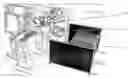
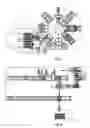
FIG. 1. General view of a robot system.
FIG. 2. General view of the mobile drawer.
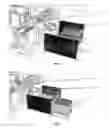
FIG. 3. View of a robotic manipulator taking a base plate from a mobile drawer rack locate at one side.
FIG. 4. View of a robotic manipulator placing the plate to the transfer station
FIG. 5. View of a robotic manipulator placing the plate to the transfer station
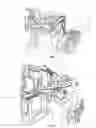
FIG. 6. View of the robotic manipulator for the reposition and/or removal of base plates integrated to the Kidd process.
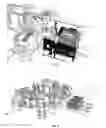
FIG. 7. View of the robotic manipulator for the reposition and/or removal of base plates integrated to the Kidd process.
FIG. 8. View of the robotic manipulator for the reposition and/or removal of base plates integrated to the ISA process
DRAWINGS—REFERENCE NUMERALS
-
- 1. Robotic manipulator
- 2. Gripping mechanism
- 3. Base plates
- 4. Mobile drawer rack
- 5. Transfer station
- 6. Control system of the cathode stripping machine
- 7. Second mobile drawer racks
- 8. The mobile drawer rack moves out
This invention relates to a new robot system as well as a robotic method for the reposition and/or removal of base plates from cathode stripping machines, which is carried out automatically through anthropomorphous robotic arms of at least 5 degrees of freedom, which are installed at one side of each stripping machine between the rejection station and the transfer station.
With reference to FIG. 1, FIG. 2, FIG. 3, FIG. 4, FIG. 5, FIG. 6, FIG. 7, and FIG. 8, the robot system is composed mainly of one anthropomorphous robotic manipulator of at least 5 degrees of freedom (1), provided with a communication, acquisition and control system, and a gripping mechanism (2) that allows to take the base plates (3) from a mobile drawer rack (4) located at one of its sides and moves it through a defined path to the transfer station (5), where synchronized with the control system of the cathode stripping machine (6) it repositions or removes the base plates as they are rejected.
Additionally, the system has two mobile drawer racks (7) from which the robotic manipulator (1) takes the base plates (3) in a sequential and programmed way, which allows to always keep base plates for reposition. The filling of base plates in the mobile drawer racks (7) is carried out automatically through the discharge of base plates transported. For this, the mobile drawer rack (8) moves out of the working area of the robot.
Claims
I claim:1. A robot system for the reposition and/or removal of base plates from cathode stripping machines, comprising an anthropomorphous robotic arm of at least 5 degrees of freedom, one control, communication and programming unit, one gripper adapter, one pneumatic gripper, its fingers, one pneumatic gripper driving system, one electric supply system and two mobile feeding drawer racks with rectangular base and driven system wherein the anthropomorphous robotic arm of at least 5 degrees of freedom is provided with a gripping mechanism, to take one base plate from one of the mobile drawer racks with rectangular base containing the base plates, and moves it through a defined path to the transfer station where, synchronized with the control system of the cathode stripping machine, it repositions or removes the base plates as they are rejected.
2. A robot system for the reposition and/or removal of base plates from cathode stripping machines, according to claim 1, wherein it has the capacity to move, manipulate and release the base plates and/or cathodes in different paths within the work volume of the robotic system.
3. A robot system for the reposition and/or removal of base plates from cathode stripping machines, according to claim 1, wherein the anthropomorphous robotic manipulator of at least 5 degrees of freedom is mounted in a fixed support located between the mobile drawer racks with rectangular base and the cathode stripping machine.
4. A robot system for the reposition and/or removal of base plates from cathode stripping machines according to claim 1, wherein the anthropomorphous robotic manipulator could communicate by itself or through a PLC interface with the control system both in the ISA process and the Kidd process.
5. A robot system for the reposition and/or removal of base plates from cathode stripping machines, according to claim 1, wherein the anthropomorphous robotic manipulator has the capacity to obtain and interpret the information from analogue and/or digital sensors installed both in the ISA process and the Kidd process.
6. A robot system for the reposition and/or removal of base plates from cathode stripping machines according to claim 1, wherein the anthropomorphous robotic manipulator has the capacity to generate analogue and/or digital signals to control analogue and/or digital input devices
7. A robot system for the reposition and/or removal of base plates from cathode stripping machines according to claim No1, wherein a pneumatic gripping mechanism is used to take, manipulate and release the base plates in a sequential and programmed way.
8. A robot system for the reposition and/or removal of base plates from cathode stripping machines according to claim No1, wherein a pneumatic gripping mechanism comprising 4 fingers to grasp and release the base plates is used.
9. A robot system for the reposition and/or removal of base plates from cathode stripping machines according to claim No1, wherein the anthropomorphous robotic manipulator has an electrical system driven by three-stage induction motors, with vectorial and/or scalar control.
10. A robot system for the reposition and/or removal of base plates from cathode stripping machines according to claim No1, wherein two mobile drawer racks are used which are located inside a rectangular based structure forming plane faces, so as the inside is hollow, and both racks move outside the work volume of the robot system to be filled with base plates by a forklift or any other machinery from the loading site.
11. A robot system for the reposition and/or removal of base plates from cathode stripping machines according to claim 1, wherein productivity and efficiency in the process of reposition and removal of base plates in electrometallurgical process of different metals increases.
12. A robot system for the reposition and/or removal of base plates from cathode stripping machines according to claim 1, wherein the system may operate automatically, or semiautomatically, and also allows solutions scalability.
13. A robot system for the reposition and/or removal of base plates from cathode stripping machines according to claim 1, wherein the system could be integrated electronically to the ISA process and the Kidd process.
14. A robot system for the reposition and/or removal of base plates from cathode stripping machines according to claim 1, wherein it prevents the plant personnel from being subjected to a high physical demand and harsh environmental conditions.
15. A robotic method for the reposition and/or removal of base plates from cathode stripping machines using the robot System of claim 1 to 14, wherein the anthropomorphous robotic arm of at least 5 degrees of freedom is provided with a pneumatic gripper, to take a base plate from a mobile drawer rack with rectangular base containing the base plates and moves it through a defined path, to the transfer station where, synchronized with the control system of the cathode stripping machine, repositions or removes the base plates as they are rejected.
16. A robotic method for the reposition and/or removal of base plates from cathode stripping machines using the robot System of claim 1 to 14, wherein the system has the capacity to move, manipulate and release the base plates and/or cathodes in different paths within the work volume of the robotic system.
17. A robotic method for the reposition and/or removal of base plates from cathode stripping machines using the robot System of claim 1 to 14, wherein the anthropomorphous robotic arm of at least 5 degrees of freedom is mounted on a fixed support located between the mobile drawer racks and the cathode stripping machine.
18. A robotic method for the reposition and/or removal of base plates from cathode stripping machines using the robot System of claim 1 to 14, wherein the system has the capacity to move, manipulate and release the base plates and/or cathodes in different paths within the work volume of the robotic system.
19. A robotic method for the reposition and/or removal of base plates from cathode stripping machines using the robot System of claim 1 to 14, wherein the anthropomorphous robotic arm of at least 5 degrees of freedom is mounted on a fixed support located between the mobile drawer racks and the cathode stripping machine.
20. A robotic method for the reposition and/or removal of base plates from cathode stripping machines using the robot System of claim 1 to 14, wherein the anthropomorphous robotic manipulator could communicate by itself or through a PLC interface with the control system of both the ISA process and the Kidd process.
21. A robotic method for the reposition and/or removal of base plates from cathode stripping machines using the robot System claim 1 to 14, wherein the anthropomorphous robotic manipulator has the capacity to obtain and interpret the information from analogue and/or digital sensors installed both in the ISA process and in the Kidd process.
22. A robotic method for the reposition and/or removal of base plates from cathode stripping machines using the robot System of claim 1 to 14, wherein the anthropomorphous robotic manipulator has the capacity to generate analogue and/or digital signals to control the analogue and/or digital inputs devices.
23. A robotic method for the reposition and/or removal of base plates from cathode stripping machines using the robot System of claim 1 to 14, wherein a pneumatic gripping mechanism is used to take, manipulate and release the base plates in a sequential and programmed way.
24. A robotic method for the reposition and/or removal of base plates from cathode stripping machines using the robot System of claim 1 to 14, wherein a pneumatic gripping mechanism comprising 4 fingers to grasp and release the base plates is used.
25. A robotic method for the reposition and/or removal of base plates from cathode stripping machines using the robot System of claim 1 to 14, wherein the anthropomorphous robotic manipulator has an electrical system driven by three-stage induction motors with vectorial and/or scalar control.
26. A robotic method for the reposition and/or removal of base plates from cathode stripping machines using the robot System of claim 1 to 14, wherein two mobile drawer racks with square base are used, which move outside the work volume of the robot to be filled with base plates by a forklift or any other machinery and which move the plates from the loading site.
27. A robotic method for the reposition and/or removal of base plates from cathode stripping machines using the robot System of claim 1 to 14, wherein productivity and efficiency of the reposition and removal of base plates in electrometallurgical processes of different metals increases.
28. A robotic method for the reposition and/or removal of base plates from cathode stripping machines using the robot System of claim 1 to 14, wherein the system may operate automatically or semi-automatically, and also allows solution scalability.
29. A robotic method for the reposition and/or removal of base plates from cathode stripping machines using the robot System of claim 1 to 14, wherein the system could be integrated electronically to both the ISA process and the Kidd process.
30. A robotic method for the reposition and/or removal of base plates from cathode stripping machines using the robot System of claim 1 to 14, wherein it prevents the plant personnel from being subjected to a high physical demand and harsh environmental conditions.
Images & Drawings included:
Sources:
- United States Patent and Trademark Office - verify current appl. status at the USPTO↗
Recent applications in this class:
- » 20240351089 2024-10-24
FLANGED AND TAPERED PIN FOR METHOD TO AUTOMATE PART LOADING AND UNLOADING - » 20240116099 2024-04-11
A ROBOTIC TUBE BENDING MACHINE - » 20240091843 2024-03-21
BENDING INSTALLATION AND MANIPULATOR WITH ROTATABLE GRIPPER ARRANGEMENT - » 20240051010 2024-02-15
METHOD FOR THE TRANSPORT AND/OR HANDLING OF COMPONENTS - » 20230356283 2023-11-09
METHOD OF MANUFACTURING PRESS-FORMED PRODUCT, APPARATUS FOR TRANSPORTING HEATED WORKPIECE, AND HOT-PRESS MANUFACTURING LINE - » 20220226878 2022-07-21
ROBOT GRIPPER, INDUSTRIAL ROBOT, HANDLING SYSTEM AND METHOD FOR REMOVING PLATE-SHAPED WORKPIECES FROM A STACK - » 20220152685 2022-05-19
Workpiece transport unit, hot pressing equipment, workpiece transport method, and hot pressing method - » 20210205873 2021-07-08
Transport system for transporting workpieces on a transport path between two production process stations - » 20210162484 2021-06-03
Bending device having workpiece guidance by a multi-articulated arm robot - » 20210107050 2021-04-15
Device and method for monitoring relative movements