Flame-hydrolytically produced titanium dioxide powder
US20070144076A1
2007-06-28
10/580,325
2004-11-24
✅ Patent granted
US 7,686,881 B2
2010-03-30
WO; PCT/EP2004/013317; 20041124
WO; WO2005/054136; 20050616
Patricia L Hailey
2025-12-17
Abstract:
Flame-hydrolytically produced titanium dioxide powder that is present in the form of aggregates of primary particles, and has a BET surface of 20 to 200 m²/g, a half width (HW) [nm] of the primary particle distribution of HW = a×BETf where a = 670x10−9 m³/g and −1.3 ≤ f ≤ −1.0 and the proportion of particles with a diameter of more than 45 &mgr;m lies in a range from 0.0001 to 0.05 wt. %. The powder is produced by a process in which a titanium halide is vapourised at temperatures of less than 200°C., the vapours are transferred to a mixing chamber by means of a carrier gas of defined moisture content and, separately from this, hydrogen, primary air, which may optionally be enriched with oxygen and/or preheated, and steam are added to the mixing chamber, following which the reaction mixture is combusted in a reaction chamber sealed from the ambient air, secondary air is in addition introduced into the reaction chamber, the solid is then separated from gaseous substances, and following this the solid is treated with steam. The titanium dioxide powder may be used for the heat stabilisation of polymers.
Inventors:
- Kai SCHUMACHER 59 🇩🇪 Hofheim, Germany
- Martin Moerters 11 🇩🇪 Rheinfelden, Germany
- Andreas Schild 1 🇩🇪 Grenzach-Wyhlen, Germany
Assignee:
- DEGUSSA AG 360 🇩🇪 Duesseldorf, Germany
Interested in similar patents?
Get notified when new applications in this technology area are published.
Classification:
A61Q17/04 » CPC further
Barrier preparations; Preparations brought into direct contact with the skin for affording protection against external influences, e.g. sunlight, X-rays or other harmful rays, corrosive materials, bacteria or insect stings Topical preparations for affording protection against sunlight or other radiation; Topical sun tanning preparations
C09C1/04 IPC
Treatment of specific inorganic materials other than fibrous fillers ; Preparation of carbon black Compounds of zinc
C01G23/07 » CPC main
Compounds of titanium; Oxides; Hydroxides; Titanium dioxide Producing by vapour phase processes, e.g. halide oxidation
A61K8/29 » CPC further
Cosmetics or similar toilet preparations characterised by the composition containing inorganic ingredients Titanium; Compounds thereof
B01J21/063 » CPC further
Catalysts comprising the elements, oxides, or hydroxides of magnesium, boron, aluminium, carbon, silicon, titanium, zirconium, or hafnium; Silicon, titanium, zirconium or hafnium; Oxides or hydroxides thereof Titanium; Oxides or hydroxides thereof
B01J35/004 » CPC further
Catalysts, in general, characterised by their form or physical properties; Catalysts characterised by their physical properties Photocatalysts
B01J37/0238 » CPC further
Processes, in general, for preparing catalysts; Processes, in general, for activation of catalysts; Impregnation, coating or precipitation via the gaseous phase-sublimation
B82Y30/00 » CPC further
Nanotechnology for materials or surface science, e.g. nanocomposites
C08K3/22 » CPC further
Use of inorganic substances as compounding ingredients; Oxygen-containing compounds, e.g. metal carbonyls; Oxides; Hydroxides of metals
C09K3/1409 » CPC further
Materials not provided for elsewhere; Anti-slip materials; Abrasives Abrasive particles
B01J35/1014 » CPC further
Catalysts, in general, characterised by their form or physical properties; Solids characterised by their surface properties or porosity; Surface area 10-100 m2/g
B01J35/1019 » CPC further
Catalysts, in general, characterised by their form or physical properties; Solids characterised by their surface properties or porosity; Surface area 100-500 m2/g
C01P2004/64 » CPC further
Particle morphology; Particles characterised by their size Nanometer sized, i.e. from 1-100 nanometer
C01P2006/10 » CPC further
Physical properties of inorganic compounds Solid density
C01P2006/12 » CPC further
Physical properties of inorganic compounds Surface area
A61K8/00 IPC
Cosmetics or similar toilet preparations
A61K8/18 IPC
Cosmetics or similar toilet preparations characterised by the composition
A61K9/14 IPC
Medicinal preparations characterised by special physical form Particulate form, e.g. powders, Processes for size reducing of pure drugs or the resulting products, Pure drug nanoparticles
C09K3/14 IPC
Materials not provided for elsewhere Anti-slip materials; Abrasives
B24D3/02 IPC
Physical features of abrasive bodies, or sheets, e.g. abrasive surfaces of special nature; Abrasive bodies or sheets characterised by their constituents the constituent being used as bonding agent
B01J23/00 IPC
Catalysts comprising metals or metal oxides or hydroxides, not provided for in group
C01G23/047 IPC
Compounds of titanium; Oxides; Hydroxides Titanium dioxide
C09D1/00 IPC
Coating compositions, e.g. paints, varnishes or lacquers, based on inorganic substances
C23C16/40 IPC
Chemical coating by decomposition of gaseous compounds, without leaving reaction products of surface material in the coating, i.e. chemical vapour deposition [CVD] processes characterised by the deposition of inorganic material, other than metallic material; Deposition of compounds, mixtures or solid solutions, e.g. borides, carbides, nitrides Oxides
C04B14/00 IPC
Use of materials as fillers
C04B14/00 IPC
Use of inorganic materials as fillers, e.g. pigments, for mortars, concrete or artificial stone; Treatment of inorganic materials specially adapted to enhance their filling properties in mortars, concrete or artificial stone
C09C1/36 IPC
Treatment of specific inorganic materials other than fibrous fillers ; Preparation of carbon black Compounds of titanium
Description
The invention relates to flame-hydrolytically produced titanium dioxide powder, and its production and use.
It is known that titanium dioxide can be produced by pyrogenic processes. Pyrogenic processes are understood to include flame oxidations or flame hydrolyses. In flame oxidation a titanium dioxide precursor, for example titanium tetrachloride, is oxidised with oxygen according to equation 1a. In flame hydrolysis the formation of titanium dioxide is effected by hydrolysis of the titanium dioxide precursor, the water necessary for the hydrolysis being derived from the combustion of a fuel gas, for example hydrogen, and oxygen (equation 1b).
TiCl4+O2->TiO2+2Cl2 (equation 1a)
TiCl4+2H2O->TiO2+4HCl (equation 1b)
EP-A-1231186 claims a titanium dioxide with a BET surface of between 3 and 200 m2/g with a weight-related D90 diameter of the particles of 2.2 μm or less. D90 diameters of between 0.8 and 2.1 μm are mentioned in the examples of implementation. In addition, a titanium dioxide is obtained with a BET surface of between 3 and 200 m2/g and a distribution constant n of 1.7 or more, calculated according to the formula R=100 exp(−bDn), where D denotes the particle diameter and b is a constant. The value n is obtained from the three values D10, D50 and D90, which are related to one another by an approximate straight line. The titanium dioxide is obtained by a flame oxidation of titanium tetrachloride and an oxidising gas, the starting materials being pre-heated to a temperature of at least 500° C. before the reaction. In preferred embodiments the velocity of the reaction mixture is 10 m/sec or more, and the residence time in the reaction space is 3 sec or less.
In EP-A-778812 a process for the production of titanium dioxide by a combination of flame oxidation and flame hydrolysis is described. In this connection titanium tetrachloride in the vapour state and oxygen are mixed in a reaction zone and the mixture is heated in a flame that is generated by combustion of a hydrocarbon as fuel gas. The titanium tetrachloride is fed into the central core of the reactor, the oxygen is fed into a tubular sleeve surrounding the central core, and the fuel gas is fed into a tubular sleeve that surrounds those tubes that convey the titanium tetrachloride and oxygen.
A laminar diffusion flame reactor is preferably employed. In this method it is possible to produce highly surface-active titanium dioxide powder containing a large proportion of the anatase modification. In EP-A-778812 no information is given regarding the structure and size of the primary particles and aggregates. However, it is these quantities in particular that are important for many applications, for example in cosmetics applications or as an abrasive in dispersions for the electronics industry. The mechanism of the formation of the titanium dioxide according to EP-A-778812 includes both a flame oxidation (equation 1a) as well as a flame hydrolysis (equation 1b). Although the different formation mechanisms enable the anatase fraction to be controlled, a specific distribution of the primary particles and aggregates cannot however be achieved. A further disadvantage of this method, as is mentioned in US-A-20002/0004029, is the incomplete conversion of titanium tetrachloride and fuel gas and the resultant grey colouration of the titanium dioxide.
These problems are eliminated according to US-A-20002/0004029, by now using five tubes instead of the three tubes as described in EP-A-778812. For this, titanium tetrachloride vapour, argon, oxygen, hydrogen and air are simultaneously metered into a flame reactor. The disadvantage of this method is the use of the expensive noble gas argon and a low yield of titanium dioxide due to low concentrations of titanium tetrachloride in the reaction gas.
A titanium dioxide powder produced by flame hydrolysis has for a long time been marketed by Degussa under the reference P 25.
This is a finely particulate titanium dioxide powder with a specific surface of 50±15 m2/g, a mean size of the primary particles of 21 nm, a compacted bulk density (approximate value) of 130 g/l, an HCl content of less than or equal to 0.300 wt. % and a screening residue according to Mocker (45 μm) of less than or equal to 0.050%. This powder has good properties for many applications.
The prior art demonstrates the wide interest in pyrogenically produced titanium dioxide. In this connection it is found that the common generic term “pyrogenic”, i.e. flame hydrolysis and flame oxidation, is not an adequate description of titanium dioxide. On account of the complexity of the pyrogenic processes only a few substance parameters can be specifically adjusted.
Titanium dioxide is employed in particular in catalysis, for example photocatalysis, in cosmetics, for example sunscreen agents, as an abrasive in the form of dispersions in the electronics industry, or for heat stabilisation of polymers. In these uses increasing demands are placed on the purity and structure of the titanium dioxide. Thus, it is for example important that, when using titanium dioxide as an abrasive in dispersions, the titanium dioxide has a good dispersibility and is as far as possible free from coarse particles that can scratch the surface to be polished.
The object of the present invention is to provide a titanium dioxide powder that has a high purity, is easy to disperse, and is as far as possible free of coarse fractions.
The object of the present invention is also to provide a process for the production of the titanium dioxide powder. In this connection the process should be able to be implemented on an industrial scale.
The present invention provides a flame-hydrolytically produced titanium dioxide powder that is present in aggregates of primary particles, characterised in that
-
- it has a BET surface of 20 to 200 m2/g and
- the half width HW, in nanometers, of the primary particle distribution has values between
HW [nm]=a×BETf where a=670×10−9 m3/g and −1.3≦f≦−1.0 and
-
- the proportion of particles with a diameter of more than 45 μm is in a range from 0.0001 to 0.05 wt. %.
The term primary particles in the context of the invention is understood to denote particles that are first of all formed in the reaction and that can coalesce to form aggregates during the further course of the reaction.
The term aggregate within the context of the invention is understood to denote primary particles of similar structure and size that have coalesced together, and whose surface is smaller than the sum of the individual, isolated primary particles. Several aggregates or also individual primary particles may combine together further to form agglomerates. Aggregates or primary particles accordingly lie adjacent to one another in the form of point objects. Depending on their degree of coalescence, agglomerates may be broken up by application of energy.
Aggregates on the other hand can be broken up only by a high input of energy or even cannot be broken up at all. Intermediate forms exist.
The mean half width HW of the primary particle distribution (in numerical terms) is obtained by image analysis of the TEM photographs. According to the invention the mean half width is a function of the BET surface with a constant f, where −1.3≦f≦−1.0. Preferably the half width may lie in the range −1.2≦f≦−1.1.
It is the high BET surface, the narrow distribution of the primary particle distribution and the low proportion of aggregates with a diameter of more than 45 μm, which lies in a range from 0.0001 to 0.05 wt. %, that are relevant for the positive properties of the powder according to the invention, for example when polishing surfaces. No flame-hydrolytically produced titanium dioxide powders are known in the prior art that simultaneously exhibit these features. It is of course possible for example to remove to a large extent powders according to the prior art mechanically from aggregates with a diameter of more than 45 μm, though the resultant powder would however not be able to achieve the ranges claimed by the present invention as regards BET surface and half width values of the primary particles.
The BET surface of the titanium dioxide powder according to the invention lies in a wide range from 20 to 200 m2/g. It has proved advantageous if the BET surface lies in a range from 40 to 60 m2/g. A range of 45 to 55 m2/g may be particularly advantageous.
For a titanium dioxide powder according to the invention with a BET surface between 40 and 60 m2/g, the 90% spread of the number distribution of the primary particle diameters may lie between 10 and 100 nm. As a rule the 90% spread of the number distribution of the primary particle diameters is between 10 and 40 nm.
Furthermore, the equivalent circular diameter of the aggregates (ECD) of such a titanium dioxide powder may be less than 80 nm.
The mean aggregate area of a titanium dioxide powder according to the invention with a BET surface of 40 to 60 m2/g may be less than 6500 nm2 and the mean aggregate circumference may be less than 450 nm.
In addition the BET surface of the titanium dioxide powder according to the invention may lie in a range from 80 to 120 m2/g. A range of 85 to 95 m2/g may be particularly preferred.
For a titanium dioxide powder according to the invention with a BET surface between 80 and 120 m2/g, a 90% spread of the number distribution of the primary particle diameters may have values between 4 and 25 nm. Furthermore, such a titanium dioxide powder may have an equivalent circular diameter of the aggregates (ECD) of less than 70 nm.
The mean aggregate area of a titanium dioxide powder according to the invention with a BET surface of 80 to 120 m2/g may be less than 6000 nm2 and the mean aggregate circumference may be less than 400 nm.
The proportion of aggregates and/or agglomerates of the titanium dioxide powder according to the invention with a diameter of more than 45 μm lies in a range from 0.0001 to 0.05 wt. %. A range from 0.001 to 0.01 wt. % may be preferred, and a range from 0.002 to 0.005 wt. % may be particularly preferred.
The titanium dioxide powder according to the invention comprises rutile and anatase as crystal modifications. In this connection the anatase/rutile proportion for a given surface may lie in a range from 2:98 to 98:2. The range from 80:20 to 95:5 may be particularly preferred.
The titanium dioxide powder according to the invention may contain residues of chloride. The chloride content is preferably less than 0.1 wt. %. A titanium dioxide powder according to the invention with a chloride content in the range from 0.01 to 0.05 wt. % may be particularly preferred.
The compacted bulk density of the titanium dioxide powder according to the invention is not limited. It has however proved advantageous if the compacted bulk density has values from 20 to 200 g/l. A compacted bulk density of 30 to 120 g/l may be particularly preferred.
The present invention also provides a process for the production of the titanium dioxide powder according to the invention, which is characterised in that
-
- a titanium halide, preferably titanium tetrachloride, is vapourised at temperatures of less than 200° C., the vapours are transferred to a mixing chamber by means of a carrier gas with a proportion of steam in a range from 1 to 25 μg/m3, and
- separately from this, hydrogen, primary air, which may optionally be enriched with oxygen and/or pre-heated, and steam are transferred to the mixing chamber,
- wherein the proportion of steam is in a range from 1 to 25 g/m3 primary air,
- the lambda value lies in the range from 1 to 9 and the gamma value lies in the range from 1 to 9,
- following which
- the mixture consisting of the titanium halide vapour, hydrogen, air and steam is ignited in a burner and the flame burns back into a reaction chamber sealed from the ambient air, wherein
- a vacuum of 1 to 200 mbar exists in the reaction chamber,
- the exit velocity of the reaction mixture from the mixing chamber to the reaction space lies in a range from 10 to 80 m/sec,
- in addition secondary air is introduced into the reaction chamber, wherein
- the ratio of primary air to secondary air is between 10 and 0.5,
- following which the solid is separated from gaseous substances, and
- the solid is then treated with steam.
An essential feature of the process according to the invention is that the titanium halide is vapourised at temperatures below 200° C. and the vapours are conveyed to the mixing chamber by means of a carrier gas, for example air or oxygen, which has a defined carrier gas moisture content. It has been found for example that the product quality decreases at higher vapourisation temperatures.
Moreover it has also been found that, within the claimed steam content of 1 to 25 g/m3 of gas, or primary air, there is no noticeable hydrolysis of the titanium halide in the form of caking, whereas on the other hand the steam content influences the subsequent primary particle and aggregate structure. Outside the claimed range, no powder according to the invention can be obtained. In a preferred embodiment the steam content is between 5 and 20 g/m3 of gas, or primary air.
As carrier gas, air may also be used. This permits a higher space-time yield in the reaction chamber than when using an inert gas.
Furthermore, the exit velocity of the reaction mixture from the mixing chamber into the reaction space lies in a range from 10 to 0.80 m/sec. In a preferred embodiment the exit velocity is between 15 and 60 m/sec, and in a particularly preferred embodiment is between 20 and 40 m/sec. At values below this a uniform powder is not obtained, but instead a powder is obtained that contains particles of diameter 45 μm or more in an amount of more than 0.05 wt. %.
In addition the reaction must be carried out so that the lambda value lies in the range from 1 to 9 and the gamma value lies in the range from 1 to 9.
Flame-hydrolytically produced oxides are normally obtained so that the gaseous starting substances are in a stoichiometric ratio with respect to one another such that the added hydrogen is at least sufficient to react with the halogen X present from the titanium halide TiX4 to form HX. The amount of hydrogen required for this purpose is termed the stoichiometric amount of hydrogen.
The ratio of the added hydrogen to the stoichiometrically necessary hydrogen defined above is termed gamma. Gamma is defined as:
- Gamma=added hydrogen/stoichiometrically required hydrogen
- or
- Gamma=H2 fed in (moles)/H2 stoichiometric (moles).
With flame-hydrolytically produced oxides in addition an amount of oxygen (for example from the air) is normally used that is at least sufficient to convert the titanium halide into titanium dioxide and to convert excess hydrogen that may still be present into water. This amount of oxygen is termed the stoichiometric amount of oxygen.
Similarly, the ratio of added oxygen to stoichiometrically required oxygen is termed lambda, and is defined as follows:
- Lambda=added oxygen/stoichiometrically required oxygen
- or
- Lambda=O2 fed in (moles)/O2 stoichiometric (moles).
Moreover, in the process according to the invention, in addition to the primary air in the mixing chamber air (secondary air) is directly introduced into the reaction chamber. It has been found that, without the addition of the additional air into the mixing chamber, no titanium dioxide powder according to the invention is obtained. In this connection it should be noted that the ratio of primary air to secondary air is between 10 and 0.5. The ratio is preferably in a range between 5 and 1.
In order to be able accurately to meter in the amount of secondary air, it is necessary to cause the flame to burn back into a reaction chamber sealed from the ambient air. This enables the process to be accurately controlled, which is essential in order to obtain the titanium dioxide powder according to the invention. The vacuum in the reaction chamber is preferably between 10 and 80 mbar.
An essential feature is also the fact that titanium dioxide powder after separation from gaseous substances should be treated with steam. This treatment is primarily intended to remove halide-containing groups from the surface. At the same time this treatment reduces the number of agglomerates. The process may be carried out continuously in such a way that the powder is treated, in counter-current or co-current, with steam, possibly together with air, in which connection the steam is always introduced from below into an upright, heatable column. The feed of the powder may take place from the top or the bottom of the column. The reaction conditions may be chosen so that a fluidised bed is formed. The temperature at which the treatment with steam is carried out is preferably between 250 and 750° C., values from 450 to 550° C. being preferred. In addition it is preferred to carry out the treatment in counter-current in such a way that a fluidised bed is not formed.
Moreover it may be advantageous to introduce the steam together with the air into the mixing chamber.
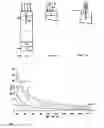
FIG. 1A shows diagrammatically an arrangement for carrying out the process according to the invention. In the figure: A=mixing chamber, B=flame, C=reaction chamber, D=solid/gaseous separation, E=post-treatment with steam. The substances used are identified as follows: a=mixture of titanium halide and carrier gas with defined moisture content, b=hydrogen, c=air, d=steam, e=secondary air, f=steam or steam/air. FIG. 1B shows a section of the arrangement of FIG. 1A. In this, the steam (d) together with the air (c) are introduced into the mixing chamber. FIG. 1C shows an open reaction chamber in which the secondary air e is aspirated from the surroundings. With the arrangement according to FIG. 1C no titanium dioxide powder according to the invention can be obtained.
The invention also provides for the use of the titanium dioxide powder according to the invention for the heat protection stabilisation of silicones.
The invention in addition provides for the use of the titanium dioxide powder according to the invention in sunscreen agents.
The invention furthermore provides for the use of the titanium dioxide powder according to the invention as a catalyst, as a catalyst carrier, as a photocatalyst, and as an abrasive for the production of dispersions.
EXAMPLESAnalysis
The BET surface is determined according to DIN 66131.
The compacted bulk density is determined on the basis of DIN ISO 787/XI K 5101/18 (not screened).
The bulk density is determined according to DIN-ISO 787/XI.
The pH value is determined on the basis of DIN ISO 787/IX, ASTM D 1280, JIS K 5101/24.
The proportion of particles larger than 45 μm is determined according to DIN ISO 787/XVIII, JIS K 5101/20.
Determination of the chloride content: ca. 0.3 g of the particles according to the invention is accurately weighed out, 20 ml of 20 percent sodium hydroxide solution (analysis purity) are added thereto, dissolved, and transferred while stirring to 15 ml of cooled HNO3. The chloride content in the solution is titrated with AgNO3 solution (0.1 mole/l or 0.01 mole/l).
The half width of the primary particle distribution and area, circumference and diameter of the aggregates are determined by means of image analysis. The image analyses are carried out using an H 7500 TEM instrument from Hitachi and a MegaView II CCD camera from SIS. The image magnification for the evaluation is 30000:1 at a pixel density of 3.2 nm. The number of evaluated particles is greater than 1000. The preparation is carried out according to ASTM3849-89. The lower threshold boundary as regards detection is 50 pixels.
Example A1 (According to the Invention)160 kg/hr of TiCl4 are vapourised in an evaporator at 140° C. The vapours are transferred to a mixing chamber by means of nitrogen (15 Nm3/hr) as carrier gas with a carrier gas moisture content of 15 g/m3 of carrier gas. Separately from this, 52 Nm3/hr of hydrogen and 525 Nm3/hr of primary air are introduced into the mixing chamber. In a central tube the reaction mixture is fed to a burner and ignited. The flame burns in a water-cooled flame tube. In addition 200 Nm3/hr of secondary air are added to the reaction space. The powder formed is separated in a downstream filter and then treated in countercurrent with air and steam at 520° C.
The Examples A2 to A9 according to the invention are carried out similarly to A1. The parameters altered in each case are listed in Table 1.
The physicochemical data of the powders from Examples A1 to A9 are shown in Table 2.
The comparison examples B1 to B3 and B5 to B8 are also carried out similarly to A1. The parameters altered in each case are listed in Table 1.
The comparison example B4 is carried out using an open burner. The amount of secondary air is not determined.
The physicochemical data of the powders from Examples B1 to B8 are shown in Table 2.
Table 3 shows the calculated half width of the primary particles depending on the BET surface area with f=−1.0, −1.05, −1.15 und −1.3. The factor 10−9 is the basis for the conversion of meter into nanometer. As factor f can only be negative, the unit of BETf is g/m2.
FIG. 2 shows the half width of the primary particles of the titanium dioxide powders produced in the examples. In this connection the titanium dioxide powders according to the invention (identified as ▪) lie within the claimed half width HW [nm]=a×BETf where a=670×10−9 m3/g and −1.3≦f≦−1.0, while the comparison examples (identified by +) lie outside.
| TABLE 1 |
| Process parameters in the production of the titanium dioxide powders |
| Carrier | Primary | Secon- | ||||||||||
| Carrier | Gas | Primary | Air | dary | ||||||||
| TiCl4 | Gas | Moisture | H2 | Air | Moisture | Air | v | TE | ||||
| Ex. | kg/h | Tv | Nm3/h | g/m3 | Nm3/h | Nm3/h | g/m3 | Nm3/h | Gamma | Lambda | m/s | ° C. |
| A1 | 160 | 140 | 15 | 15 | 52 | 525 | 15 | 200 | 1.38 | 3.55 | 27 | 520 |
| A2 | 160 | 140 | 15 | 15 | 52 | 525 | 10 | 200 | 1.38 | 3.55 | 27 | 650 |
| A3 | 160 | 140 | 3 | 10 | 52 | 635 | 15 | 200 | 1.38 | 5.15 | 31 | 450 |
| A4 | 160 | 140 | 15 | 10 | 82 | 415 | 15 | 200 | 2.17 | 2.25 | 23 | 520 |
| A5 | 200 | 140 | 40 | 8 | 52 | 500 | 10 | 200 | 1.1 | 4.3 | 26 | 520 |
| A6 | 40 | 140 | 15 | 15 | 67 | 535 | 10 | 200 | 7.08 | 3.44 | 27 | 520 |
| A7 | 40 | 140 | 15 | 6 | 67 | 550 | 10 | 200 | 7.08 | 3.54 | 27 | 520 |
| A8 | 40 | 140 | 15 | 22 | 60 | 780 | 10 | 200 | 6.34 | 5.55 | 38 | 520 |
| A9 | 160 | 140 | 15 | 2 | 52 | 225 | 10 | 200 | 1.38 | 1.93 | 14 | 520 |
| B1 | 160 | 250 | 15 | 10 | 52 | 525 | 10 | 200 | 1.38 | 3.55 | 27 | 520 |
| B2 | 160 | 140 | 15 | 40 | 52 | 525 | 10 | 200 | 1.38 | 3.55 | 27 | 520 |
| B3 | 160 | 140 | 15 | 10 | 52 | 1200 | 12 | 200 | 1.37 | 9.67 | 56 | 520 |
| B4 | 160 | 140 | 15 | 10 | 52 | 525 | 12 | ** | 1.38 | 3.55 | 27 | 520 |
| B5 | 40 | 140 | 15 | 10 | 70 | 560 | 12 | 10 | 7.4 | 3.35 | 26 | 650 |
| B6 | 160 | 140 | 15 | 10 | 52 | 525 | 12 | 200 | 1.38 | 3.55 | 27 | — |
| B7 | 160 | 140 | 15 | 10 | 52 | 525 | 15 | 0 | 1.38 | 3.55 | 27 | 520 |
| B8 | 160 | 220 | 15 | 10 | 52 | 525 | 15 | 50 | 1.38 | 3.55 | 27 | 520 |
Tv = temperature of evaporator; TE = deacidification temperature; B4: = open burner, no secondary air measurement; v = exit velocity of the reaction mixture from the mixing chamber into the reaction space |
| TABLE 2 |
| Physicochemical parameters of the titanium dioxide powders |
| Compac- | ||||||||
| Primary | Aggregates | ted | Chlor- |
| Particles | Avg. | Avg. | Particles | Bulk | Bulk | ine | |||||
| BET | Half Width | ECD | Area | Circmf. | >45 μm | Anatase | Density | Density | Content | pH- | |
| Ex. | m2/g | nm | nm | nm2 | nm | % | % | g/l | g/l | Wt. % | Value |
| A1 | 48 | 11.0 | 67.4 | 4976 | 366.3 | 0.001 | 89 | 84 | 114 | 0.02 | 3.8 |
| A2 | 47 | 10.4 | 66.4 | 5112 | 369.5 | 0.001 | 89 | 88 | 115 | 0.15 | 4.2 |
| A3 | 49 | 9.3 | 65.3 | 4827 | 371.9 | 0.002 | 85 | 87 | 108 | 0.1 | 3.8 |
| A4 | 24 | 19.8 | n.d. | n.d. | n.d. | 0.003 | 52 | 96 | 114 | 0.05 | 4.0 |
| A5 | 43 | 13.5 | 66.5 | 5140 | 380.75 | 0.002 | 92 | 88 | 110 | 0.11 | 3.8 |
| A6 | 85 | 5.4 | 63.1 | 5017 | 341.0 | 0.010 | 93 | 102 | 122 | 0.15 | 3.9 |
| A7 | 91 | 4.8 | 62.4 | 5314 | 331.5 | 0.008 | 90 | 99 | 125 | 0.13 | 3.8 |
| A8 | 172 | 2.2 | 60.1 | 5128 | 321.0 | 0.009 | 96 | 115 | 158 | 0.09 | 3.7 |
| A9 | 49 | 34.3 | n.d. | n.d. | n.d. | 0.002 | 71 | 112 | 143 | 0.04 | 4.0 |
| B1 | 48 | 17.2 | 75.8 | 6525 | 448.3 | 0.019 | 89 | 83 | 106 | 0.03 | 3.8 |
| B2 | 49 | 16.0 | 81.2 | 6713 | 481.0 | 0.025 | 91 | 84 | 108 | 0.11 | 3.9 |
| B3 | 188 | 5.9 | 77.9 | 6418 | 452.3 | 0.004 | 97 | 111 | 162 | 0.09 | 4.0 |
| B4 | 48 | 16.6 | 82.3 | 7214 | 474.8 | 0.010 | 87 | 89 | 111 | 0.04 | 3.9 |
| B5 | 94 | 10.0 | n.d. | n.d. | n.d. | n.d. | n.d. | n.d. | n.d. | n.d. | n.d. |
| B6 | 51 | n.d. | n.d. | n.d. | n.d. | n.d. | n.d. | n.d. | n.d. | 1.51 | 2.3 |
| B7 | 49 | 18.4 | n.d. | n.d. | n.d. | 0.06 | 85 | n.d. | n.d. | 0.08 | 3.9 |
| B8 | 49 | 19.8 | n.d. | n.d. | n.d. | 0.11 | 87 | n.d. | 116 | 0.1 | 4.0 |
n.d. = not determined |
| TABLE 3 |
| Calculated half width of primary particles |
| Half width of primary particles [nm] |
| BET | 670*10−9* | 670*10−9* | 670*10−9* | 670*10−9* |
| [m2/g] | BET−1.00 | BET−1.05 | BET−1.15 | BET−1.3 |
| 20 | 33.50 | 28.84 | 21.37 | 13.64 |
| 30 | 22.33 | 18.84 | 13.41 | 8.05 |
| 40 | 16.75 | 13.93 | 9.63 | 5.54 |
| 50 | 13.40 | 11.02 | 7.45 | 4.14 |
| 60 | 11.17 | 9.10 | 6.04 | 3.27 |
| 70 | 9.57 | 7.74 | 5.06 | 2.68 |
| 80 | 8.38 | 6.73 | 4.34 | 2.25 |
| 90 | 7.44 | 5.94 | 3.79 | 1.93 |
| 100 | 6.70 | 5.32 | 3.36 | 1.68 |
| 120 | 5.58 | 4.39 | 2.72 | 1.33 |
| 150 | 4.47 | 3.48 | 2.11 | 0.99 |
| 170 | 3.94 | 3.05 | 1.82 | 0.84 |
| 200 | 3.35 | 2.57 | 1.51 | 0.68 |
Heat Stabilisation of Polymers Example C1 Without Titanium Dioxide Powder (Comparison example)
A two-component silicone rubber from Bayer, trade name Silopren® LSR 2040, is used as base component (addition crosslinking). After homogeneously mixing the two components with a dissolver the vulcanisation takes place at 180° C. for 10 minutes. Sample plates (ca. 10×15 cm) 6 mm thick are produced. The sample plates are heated at 80° C. in a furnace to constant weight (ca. 1 day). To check the thermal stability to heat a hot storage test is carried out. For this, a sample strip of size 5×7 cm is kept in a circulating air oven at 275° C. The weight loss is measured.
Example C2 Addition of Titanium Dioxide Powder According to the Prior Art (Comparison Example)A two-component silicone rubber from Bayer, trade name Silopren® LSR 2040, is used as base component (addition crosslinking). 1.5 wt. %, referred to the total batch, of titanium dioxide powder P 25 S (Degussa AG) is incorporated for 5 minutes into one of the components, using a dissolver. Following this the vulcanisation and production of the sample plates take place as described in Example 1.
Sample strips of size 5×7 cm are stored at 275° C. The weight loss is measured.
The Examples C3-5 are carried out similarly to C1, but using the titanium dioxide powders A1 according to the invention in C3, A3 in C4 and A7 in C5, instead of P25 S.
Table 4 shows the changes in length of the samples stored at 275° C. after 1, 3 and 7 days.
The results demonstrate the effective heat protection stabilisation of polymers achieved by using the titanium dioxide powder according to the invention.
| TABLE 4 |
| Two-component silicone rubber |
| Length Change [%] after |
| Example | 1 Day | 3 Days | 7 Days | |
| C1 (comp.) | 98.6 | — | — | |
| C2 (comp.) | 46.3 | 58.9 | 70.0 | |
| C3 | 16.3 | 27.9 | 39.5 | |
| C4 | 18.7 | 41.8 | 52.7 | |
| C5 | 29.0 | 49.0 | 58.0 | |
Photocatalytic Activity Example D1 Titanium Dioxide Powder According to the Prior Art (Comparison Example)
To determine the photocatalytic activity the sample to be measured is suspended in 2-propanol and irradiated for one hour with UV light. The concentration of acetone formed is then measured.
Ca. 250 mg (accuracy 0.1 mg) of titanium dioxide powder P 25S (Degussa AG) are suspended using an Ultra-Turrax stirrer in 350 ml (275.1 g) of 2-propanol. This suspension is conveyed by means of a pump through a cooler thermostatically controlled to 24° C. to a glass photoreactor equipped with a radiation source and flushed beforehand with oxygen. An Hg medium-pressure immersion lamp of the type TQ718 (Heraeus) with an output of 500 Watts serves for example as radiation source. A protective tube of borosilicate glass restricts the emitted radiation to wavelengths >300 nm. The radiation source is surrounded externally by a cooling tube through which water flows. Oxygen is metered into the reactor via a flow meter. The reaction is started when the radiation source is switched on. At the end of the reaction a small amount of the suspension is immediately removed, filtered, and analysed by gas chromatography.
A photoactivity k of 0.68×10⁻³ mole kg−1min−1 is measured. This is taken as base value 1. The titanium dioxide powder according to the invention has a somewhat lower photocatalytic activity of 0.8 to 0.9.
Claims
1. A flame-hydrolytically produced titanium dioxide powder present in aggregates of primary particles, characterised in that
it has a BET surface of 20 to 200 m2/g and
the half width HW, in nanometers, of the primary particle distribution has values between
HW [nm]=a H BETf where a=670H10−9 m3/g and
−1.3#f#−1.0 and
the proportion of particles with a diameter of more than 45 μm is in a range from 0.0001 to 0.05 wt. %.
2. The flame-hydrolytically produced titanium dioxide powder according to claim 1, in that wherein the BET surface is in a range from 40 to 60 m2/g.
3. The flame-hydrolytically produced titanium dioxide powder according to claim 2, wherein the 90% spread of the number distribution of the primary particle diameters lies in a range from 5 to 100 nm.
4. The flame-hydrolytically produced titanium dioxide powder according to claim 2, wherein the equivalent circular diameter of the aggregates (ECD) is less than 80 nm.
5. The flame-hydrolytically produced titanium dioxide powder according to claim 2, wherein the mean aggregate area is less than 6500 nm2.
6. F The flame-hydrolytically produced titanium dioxide powder according to claim 2, wherein the mean aggregate circumference is less than 450 nm.
7. The flame-hydrolytically produced titanium dioxide powder according to claim 1, wherein the BET surface lies in a range from 80 to 120 m2/g.
8. The flame-hydrolytically produced titanium dioxide powder according to claim 7, wherein the 90% spread of the number distribution of the primary particles diameters has values from 4 to 25 nm.
9. The flame-hydrolytically produced titanium dioxide powder according to claim 7, wherein the equivalent circular diameter of the aggregates (ECD) is less than 70 nm.
10. The flame-hydrolytically produced titanium dioxide powder according to claim 7, wherein the mean aggregate area is less than 6000 nm2.
11. The flame-hydrolytically produced titanium dioxide powder according to claim 7, wherein the mean aggregate circumference is less than 400 nm.
12. The flame-hydrolytically produced titanium dioxide powder according to claim 1, wherein the proportion of aggregates and/or agglomerates with a diameter of more than 45 μm lies in a range from 0.001 to 0.01 wt. %.
13. Flame hydrolytically The flame-hydrolytically produced titanium dioxide powder according to claim 1, wherein for a given BET surface it has an anatase/rutile ratio of 2:98 to 98:2.
14. The flame-hydrolytically produced titanium dioxide powder according to claim 1, wherein it has a chloride content of less than 0.1 wt. %.
15. The flame-hydrolytically produced titanium dioxide powder according to claim 1, wherein the compacted bulk density has values of 20 to 200 g/l.
16. A process for the production of the flame-hydrolytically produced titanium dioxide powder according to claim 1, wherein
a titanium halide, preferably titanium tetrachloride, is vapourised at temperatures of less than 200° C., the vapours are transferred to a mixing chamber by means of a carrier gas with a proportion of steam in a range from 1 to 25 g/m3, and
separately from this, hydrogen, primary air, which may optionally be enriched with oxygen and/or pre-heated, and steam are transferred to the mixing chamber,
wherein the proportion of steam is in a range from 1 to 25 g/m3 primary air,
the lambda value lies in the range from 1 to 9 and the gamma value lies in the range from 1 to 9,
following which
the mixture consisting of the titanium halide vapour, hydrogen, air and steam is ignited in a burner and the flame burns back into a reaction chamber sealed from the ambient air, wherein
a vacuum of 1 to 200 mbar exists in the reaction chamber,
the exit velocity of the reaction mixture from the mixing chamber to the reaction space lies in a range from 10 to 80 m/sec,
in addition secondary air is introduced into the reaction chamber, wherein
the ratio of primary air to secondary air is between 10 and 0.5,
following which the solid is separated from the gaseous substances, and
the solid is then treated with steam.
17. The process according to claim 16, wherein the steam is introduced together with the air into the mixing chamber.
18. A flame-hydrolytically produced titanium dioxide powder according to claim 1 for the heat protection stabilisation of silicones.
19. Sunscreen agents comprising a flame-hydrolytically produced titanium dioxide powder according to claim 1.
20. A catalyst, a catalyst carrier, a photocatalyst, and an abrasive for the production of dispersions comprising a flame-hydrolytically produced titanium dioxide powder according to claim 1.
Images & Drawings included:
Sources:
- United States Patent and Trademark Office - verify current appl. status at the USPTO↗
Recent applications in this class:
- » 20250145487 2025-05-08
Chlorine Recycle Process for Titanium-Bearing Feedstocks with High Iron Contents for the Production of Titanium Tetrachloride Based on the Conversion of Anhydrous Ferrous Chloride to Ferrous Sulfate with concentrated Sulfuric Acid - » 20230286823 2023-09-14
TITANIUM DIOXIDE COLORING PARTICLES, METHOD FOR PRODUCING THE SAME, AND TITANIUM DIOXIDE PARTICLE MIXTURE - » 20210246045 2021-08-12
Synthesis of aerosol gels comprising macro-aggregates in a buoyancy-opposed flame reactor by a diffusion-limiting cluster aggregating process - » 20200180973 2020-06-11
Non-metal doped metal oxides formed using flame spray pyrolysis - » 20190210888 2019-07-11
Centrifugal aluminum chloride generator - » 20170283273 2017-10-05
Centrifugal aluminum chloride generator - » 20150329372 2015-11-19
TITANIUM DIOXIDE PRODUCTION, AND METHODS OF CONTROLLING PARTICLE SIZE THEREOF - » 20150175437 2015-06-25
TiObased scrubbing granules, and methods of making and using such TiObased scrubbing granules - » 20140227168 2014-08-14
Process for in-situ formation of chlorides in the preparation of titanium dioxide - » 20120288437 2012-11-15
Process for in-situ formation of chlorides of silicon and aluminum in the preparation of titanium dioxide
Recent applications for this Assignee:
- » 20110244209 2011-10-06
Transparent molding composition - » 20110206971 2011-08-25
Ceramic, flexible membrane providing improved adhesion to the support fleece - » 20110136400 2011-06-09
TEXTILE SUBSTRATES HAVING SELF-CLEANING PROPERTIES - » 20110130515 2011-06-02
POLYMER POWDER COMPRISING A COPOLYMER, USE IN A SHAPING METHOD WHICH USES A NON-FOCUSED APPLICATION OF ENERGY AND MOULDED BODY THAT IS PRODUCED FROM SAID POLYMER POWDER - » 20100324190 2010-12-23
Powdery composition of a polymer and a flameproofing agent containing ammonium polyphosphate, method for the production thereof, and moulded body produced from said powder - » 20100288164 2010-11-18
Efficient matting agents based on precipitated silicas - » 20100221544 2010-09-02
Nanoscale silicon particles - » 20100117021 2010-05-13
Use of a Cationic Silicon Dioxide Dispersion as a Textile Finishing Agent - » 20100071594 2010-03-25
Silicon dioxide dispersion - » 20100037800 2010-02-18
Silicon dioxide dispersion