Structure and method for packaging flash memory cards
US20070145153A1
2007-06-28
11/322,119
2005-12-28
Abstract:
A structure and method for packaging flash memory cards is provided, including the steps of (a) placing a circuit board of said flash memory card inside a bottom plate; (b) placing a top plate on top of said bottom plate to cover said circuit board with only electrical connection parts of said circuit board exposed; and (c) using an insert molding process to form a covering layer on the circumference of said bottom plate and said top plate to form the shape of said flash memory card. The covering layer seals the seam of the bottom plate and the top plate to provide water-proof effect and reduce the defect rate and the manufacture cost.
Interested in similar patents?
Get notified when new applications in this technology area are published.
Classification:
B29C45/14467 » CPC main
Injection moulding, i.e. forcing the required volume of moulding material through a nozzle into a closed mould; Apparatus therefor incorporating preformed parts or layers, e.g. injection moulding around inserts or for coating articles Joining articles or parts of a single article
B29C45/14647 » CPC further
Injection moulding, i.e. forcing the required volume of moulding material through a nozzle into a closed mould; Apparatus therefor incorporating preformed parts or layers, e.g. injection moulding around inserts or for coating articles for obtaining an insulating effect, e.g. for electrical components Making flat card-like articles with an incorporated IC or chip module, e.g. IC or chip cards
G06K19/07724 » CPC further
Record carriers for use with machines and with at least a part designed to carry digital markings characterised by the kind of the digital marking, e.g. shape, nature, code; Record carriers with conductive marks, printed circuits or semiconductor circuit elements, e.g. credit or identity cards also with resonating or responding marks without active components with integrated circuit chips; Constructional details, e.g. mounting of circuits in the carrier; Physical layout of the record carrier the record carrier being at least partially made by a molding process
G06K19/07732 » CPC further
Record carriers for use with machines and with at least a part designed to carry digital markings characterised by the kind of the digital marking, e.g. shape, nature, code; Record carriers with conductive marks, printed circuits or semiconductor circuit elements, e.g. credit or identity cards also with resonating or responding marks without active components with integrated circuit chips; Constructional details, e.g. mounting of circuits in the carrier; Physical layout of the record carrier the record carrier having a housing or construction similar to well-known portable memory devices, such as SD cards, USB or memory sticks
G06K19/07743 » CPC further
Record carriers for use with machines and with at least a part designed to carry digital markings characterised by the kind of the digital marking, e.g. shape, nature, code; Record carriers with conductive marks, printed circuits or semiconductor circuit elements, e.g. credit or identity cards also with resonating or responding marks without active components with integrated circuit chips; Constructional details, e.g. mounting of circuits in the carrier External electrical contacts
H05K5/026 » CPC further
Casings, cabinets or drawers for electric apparatus; Details of interchangeable modules or receptacles therefor, e.g. cartridge mechanisms having standardized interfaces
H05K5/026 » CPC further
Casings, cabinets or drawers for electric apparatus; Details of interchangeable modules or receptacles therefor, e.g. cartridge mechanisms having standardized interfaces
B29C45/0062 » CPC further
Injection moulding, i.e. forcing the required volume of moulding material through a nozzle into a closed mould; Apparatus therefor combined with a final operation, e.g. shaping; Joining parts moulded in separate cavities Joined by injection moulding
G06K19/06 IPC
Record carriers for use with machines and with at least a part designed to carry digital markings characterised by the kind of the digital marking, e.g. shape, nature, code
H05K1/14 IPC
Printed circuits; Details Structural association of two or more printed circuits
H05K1/14 IPC
Printed circuits; Details Structural association of two or more printed circuits
Description
FIELD OF THE INVENTIONThe present invention generally relates to a structure and a packaging method for flash memory cards, and more specifically to a structure and a packaging method for flash memory cards using insert molding.
BACKGROUND OF THE INVENTIONAs the digital products, such as digital camera, mobile phones, PDA, are becoming popular, the consumer demands on the flash memory cards increase. The current types of the flash memory cards include compact flash (CF), card, smart media card (SMC), multimedia card (MMC), secure digital (SD) card, memory stick (MS) card, and an even newer xD-picture card. As the capacity of the memory cards increases, the cost of the loss also increases if the memory card is broken or damaged and the precious data is lost. Therefore, the manufacturers aim to improve the structure of the memory cards so that not only the capacity of the memory cards is improved, but also the strength of the structure and the water-proof effect.
Conventional memory cards are packed in a two-piece structure. That is, two pieces of thin plates sandwich the circuit board, and a high-frequency melting technique is then used to glue the two plates together to form a memory card structure. The drawback of this structure is that it is prone to breakage at the glued seam or creating small leakage gaps for humidity damaging the enclosed circuit board after a large number of repetitive insertions and ejections of the memory cards from the electronic devices. A number of techniques, such as U.S. patent application Ser. No. 11/146,545, are proposed for enhancing the structure. For further improvement, the present invention provides a structure and a method for packaging memory cards.
SUMMARY OF THE INVENTIONThe present invention has been made to overcome the aforementioned drawback of conventional structure and packaging methods. The primary object of the present invention is to provide a packaging structure that is cost-effective and has high yield rate, and a method of forming the same. The structure includes a covering layer that is made of a material used in the final insert molding to uniformly form a thin layer encompassing the outer structure of the memory card. This covering layer avoids the impact of the material on the circuit board during the insert molding so that yield rate is high. In case of defect, the structure can be disassembled, and the circuit board can be re-used to reduce the cost.
Another object of the present invention is to provide a packaging structure that is water-proof, and a method of forming the same. As the covering layer of the structure is formed by insert molding, the sealing effect is good and the final structure is water-proof.
Yet another object of the present invention is to provide a structure that is applicable to a wide range of memory cards, and a method of forming the same. The structure of the present invention is applicable to any memory cards that include a two-plate structure sandwiching a circuit board.
To achieve the above object, the present invention provides a structure including a bottom plate, a circuit board, a top plate and a covering layer. The bottom plate includes a concave for housing the circuit board, and the top plate covers the bottom plate and the most of the circuit board so that only the electrical connection part of the circuit board is exposed. The covering layer is made of the material used in the insert molding process to form a thin layer to cover both the bottom plate and the top plate and the seam between the two plates. The covering layer gives the final structure a monolithic appearance so that the sealing is water-proof.
The foregoing and other objects, features, aspects and advantages of the present invention will become better understood from a careful reading of a detailed description provided herein below with appropriate reference to the accompanying drawings.
BRIEF DESCRIPTION OF THE DRAWINGSThe present invention can be understood in more detail by reading the subsequent detailed description in conjunction with the examples and references made to the accompanying drawings, wherein:
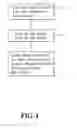
FIG. 1 shows a flowchart of a packaging method of the present invention;
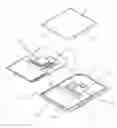
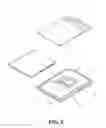
FIG. 2 shows a schematic view of an embodiment of packaging an SD memory card according to the present invention;
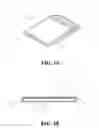
FIG. 3A shows a schematic view of the circuit board being sandwiched by the bottom plate and the top plate before the covering layer according to the present invention;
FIG. 3B shows a cross-sectional view of FIG. 3A;
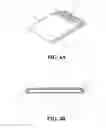
FIG. 4A shows a schematic view of the circuit board being sandwiched by the bottom plate and the top plate after the covering layer according to the present invention;
FIG. 4B shows a cross-sectional view of FIG. 4A;
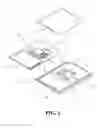
FIG. 5 shows a schematic view of another embodiment of the present invention;
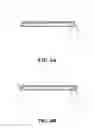
FIG. 6A shows a schematic view of the circuit board being sandwiched by the bottom plate and the top plate before the covering layer of FIG. 5;
FIG. 6B shows a schematic view of the circuit board being sandwiched by the bottom plate and the top plate after the covering layer of FIG. 5; and
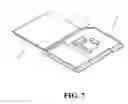
FIG. 7 shows a schematic view of yet another embodiment of the present invention.
DETAILED DESCRIPTION OF THE PREFERRED EMBODIMENTSFIG. 1 shows a flowchart of the present invention, including the following steps. Step 11 is to place a circuit board onto a bottom plate. The bottom plate includes a concave to house the circuit board. The electrical connection part of the circuit board is exposed for further electrical connection. Step 12 is to place a top plate on the circuit board to cover the circuit board except the exposed electrical connection part. Finally, step 13 is to use insert molding to form a covering layer to encompassing the seam where the bottom plate meets the top plate, the surrounding area of the electrical connection part of the circuit board while exposing the electrical connection part. The hardening of the molding material will slightly melt and glue the top and bottom plates tightly to form a water-proof seal and the final structure will have a monolithic appearance of a memory card with the electrical connection part exposed for electrical connection.
FIG. 2 shows an embodiment of packaging an SD card according to the present invention. However, the present invention is not limited to the application of SD cards. Any other equivalent types of memory cards are also within the scope of the present invention. As shown in FIG. 2, a bottom plate 2 and the top plate 3 are formed with an injection molding process in advance. The top surface of bottom plate 2 includes a concave 21. The shape of concave 21 matches the shape of a circuit board 4. Concave 21 further includes at least a deep housing cave 211 a plurality of shallow housing caves 212. Deep housing cave 211 is for housing a memory chip 41 on circuit board 4, and shallow housing caves 212 are for housing other smaller chips 42 and solder points 43, 44 of circuit board 4. The shape of each shallow housing cave 212 should accommodate the corresponding elements on circuit board 4. When circuit board 4 is placed onto bottom plate 2, the circuitry and the solder points on circuit board 4 are not interfered. The other side of circuit board 4 includes a plurality of electrical connection parts 45, so-called gold-fingers, as shown in FIG. 3A. The total thickness of bottom plate 2 and top plate 3 is equal to the standard thickness of an SD card. As a covering layer is formed with the material during the insert molding process to cover the seam of bottom plate 2 and top plate 3, the size of bottom plate 2 should be slightly smaller than the standard size of SD cards. Furthermore, the circumference of bottom plate 2 should include a slanted slope 22 on at least two sides, and the circumference of top plate 3 should include a slanted slope 31 on at least two sides to increase the attachment during the gluing process. Top plate 3 is shorter than bottom plate 2, so that when placed on bottom plate 2, electrical connection parts 45 of circuit board 4 are exposed.
FIGS. 3A and 3B show a schematic view of the circuit board being sandwiched by the bottom plate and the top plate before the covering layer according to the present invention, which corresponds to the view after step 12 of FIG. 1. As shown in FIGS. 3A and 3B, circuit board 4 has only the electrical connection parts exposed, and top plate 3 covers both circuit board 4 and bottom plate 2. The purpose of top plate 3 is to shoulder the pressure on circuit board 4 during the insert molding process to prevent the damage to circuit board 4.
FIGS. 4A and 4B show a schematic view of the circuit board being sandwiched by the bottom plate and the top plate after the covering layer according to the present invention, which correspond to the view after step 13 of FIG. 1. As shown in FIGS. 4A and 4B, a covering layer A is made of the same material used for bottom plate 2 and top plate 3. Therefore, after covering layer A is hardened, covering layer A will form a tight seal with bottom plate 2 and top plate 3. In addition, slanted slopes 22 on bottom plate 2 and slanted slopes 31 on top plate 3 also increase the strength of the bonding. As shown, covering layer A covers the circumferences of bottom plate 2 and top plate 3, and the surrounding of exposed electrical connection parts 45 of circuit board 4. The final appearance after forming covering layer A (step 13 of FIG. 1) is a complete seal memory card with electrical connection parts exposed. Because an insert molding process is used to form covering layer A, the seal at the seam of bottom plate 2 and top plate 3 is water-proof.
In summary of the aforementioned embodiment, the structure of the present invention includes a bottom plate, a circuit board, a top plate and a covering layer. The bottom plate includes a concave for housing the circuit board, and the top plate covers the bottom plate and the most of the circuit board so that only the electrical connection part of the circuit board is exposed. Both the bottom plate and the top plate have a slanted slope on at least two sides of their circumference. The covering layer is made of the material used in the insert molding process to form a thin layer to cover both the bottom plate and the top plate and the seam between the two plates. The covering layer covers the slanted slopes of both plates to enhance the water-proof seal. The covering layer gives the final structure a monolithic appearance so that the sealing is water-proof.
FIG. 5 shows a schematic view of another embodiment of the present invention. In this embodiment, the shape of top plate 3 includes a protruding block 32. The shape of protruding block 32 corresponds to the shape of concave 21 of bottom plate. As shown in FIG. 6A, protruding block 32 of top plate 3 is inside concave 21 of bottom plate 2 when top plate 3 is placed into bottom plate 2. The purpose of having protruding block 3 fitting inside concave 21 is to ensure that top plate will not shift due to the impact of material during the insert molding process. In addition, protruding block can also prevent the leakage of the molding material into the seam of bottom plate 2 and top plate 3. This will improve the yield rate. FIG. 6B shows a cross-sectional view of the final structure.
FIG. 7 shows a schematic view of yet another embodiment of the present invention. In this embodiment, one side of bottom plate 2 is attached to one side of top plate 3. The thickness of this attachment is very thin so that when top plate 3 covers bottom plate 2, an insert molding process can still be applied to form a covering layer on the attachment to form a memory card. The advantage of this embodiment is that bottom plate 2 and top plate 3 are monolithic and the subsequent packaging process is easier and less expensive.
Although the present invention has been described with reference to the preferred embodiments, it will be understood that the invention is not limited to the details described thereof. Various substitutions and modifications have been suggested in the foregoing description, and others will occur to those of ordinary skill in the art. Therefore, all such substitutions and modifications are intended to be embraced within the scope of the invention as defined in the appended claims.
Claims
What is claimed is:1. A method for packaging flash memory cards, comprising the steps of:
(a) placing a circuit board of said flash memory card inside a bottom plate;
(b) placing a top plate on top of said bottom plate to cover said circuit board with only electrical connection parts of said circuit board exposed; and
(c) using an insert molding process to form a covering layer on the circumference of said bottom plate and said top plate to form the shape of said flash memory card.
2. The method as claimed in claim 1, wherein said bottom plate of said step (a) further comprises a concave for housing said circuit board.
3. The method as claimed in claim 1, wherein said covering layer of said step (c) covers the circumference of said bottom plate and said top plate, the surrounding of said electrical connection part, and the seam between said circuit board and said bottom and said top plates.
4. A structure for flash memory cards, comprising:
a bottom plate, with a concave;
a circuit board, placed inside said concave of said bottom plate;
a top plate, for covering said bottom plate and the most of said circuit board with only electrical connection part of said circuit board exposed; and
a covering layer, made of the same material as said bottom plate and said top plate on the circumference of said bottom plate and said top plate, the surrounding of said electrical connection part, and the seam between said circuit board and said bottom and said top plates to form the shape of said memory card.
5. The structure as claimed in claim 4, wherein said covering layer is formed by an insert molding process.
6. The structure as claimed in claim 4, wherein said concave further comprises at least a large deep housing cave and a plurality of small shallow caves.
7. The structure as claimed in claim 4, wherein said bottom plate has a slanted slope on at least two sides of the circumference.
8. The structure as claimed in claim 4, wherein said top plate has a slanted slope on at least two sides of the circumference.
9. The structure as claimed in claim 4, wherein said top plate further comprises a protruding block to fit in said concave of said bottom plate.
10. The structure as claimed in claim 4, wherein one side of said bottom plate is attached to one side of said top plate, and said top plate covers said bottom plate when folded along the attached side.
Images & Drawings included:
Sources:
- United States Patent and Trademark Office - verify current appl. status at the USPTO↗
Similar patent applications:
Recent applications in this class:
- » 20250050557 2025-02-13
METHOD FOR COMBINING HETEROGENEOUS METAL PARTS - » 20240359376 2024-10-31
SELECTIVELY FILLED HOLLOW PROFILES AND METHODS OF PREPARING HOLLOW PROFILES FOR JOINING OPERATIONS - » 20240351253 2024-10-24
ALUMINUM PROFILE INJECTION BONDING METHOD - » 20240149507 2024-05-09
SYSTEM AND METHOD OF MOLDING A HOLLOW ARTICLE - » 20240123661 2024-04-18
METHOD OF MANUFACTURING COVER WINDOW AND METHOD OF MANUFACTURING DISPLAY DEVICE - » 20230191671 2023-06-22
TUBING COUPLER MOLDINGS AND SYSTEMS, AND ASSOCIATED METHODS - » 20230158722 2023-05-25
Manufacturing method and mold for artificial shuttlecock - » 20230075178 2023-03-09
Molded article, electrical product and method for producing molded article - » 20230043893 2023-02-09
Method for injection molding a light module for a lighting device of a motor vehicle - » 20230010708 2023-01-12
METHOD FOR PRODUCING A HOUSING OF AN AIR CONDITIONER