Multi-sensor system
US20070146195A1
2007-06-28
11/594,745
2006-11-09
Abstract:
An avionics system including a radar system being capable of automatically tracking a radar target, an optical image producing system, a radar monitor, an optical image monitor, a decision support unit having a connection to the radar system and to the optical image producing system, and an input/output unit for entering one or more decision parameters. The decision support unit is connected to the input/output unit. During a flight mission the decision support unit receives one or more automatic radar tracking parameters from the radar system, uses the decision parameters on the radar tracking parameters to decide upon which radar target(s) to be subjected to observation by the optical image producing system.
Inventors:
- Jan Wallenberg 2 🇸🇪 Linkoping, Sweden
- Leif Axelsson 4 🇸🇪 Linkoping, Sweden
- Johan Ivansson 4 🇸🇪 Linkoping, Sweden
Assignee:
- SAAB AB 372 🇸🇪 Linkoping, Sweden
Interested in similar patents?
Get notified when new applications in this technology area are published.
Classification:
G01S13/867 » CPC further
Systems using the reflection or reradiation of radio waves, e.g. radar systems; Analogous systems using reflection or reradiation of waves whose nature or wavelength is irrelevant or unspecified; Combinations of radar systems with non-radar systems, e.g. sonar, direction finder Combination of radar systems with cameras
G01S3/7864 » CPC further
Direction-finders for determining the direction from which infrasonic, sonic, ultrasonic, or electromagnetic waves, or particle emission, not having a directional significance, are being received using electromagnetic waves other than radio waves; Systems for determining direction or deviation from predetermined direction using adjustment of orientation of directivity characteristics of a detector or detector system to give a desired condition of signal derived from that detector or detector system the desired condition being maintained automatically T.V. type tracking systems
G01S13/72 IPC
Systems using the reflection or reradiation of radio waves, e.g. radar systems; Analogous systems using reflection or reradiation of waves whose nature or wavelength is irrelevant or unspecified; Radar-tracking systems; Analogous systems for two-dimensional tracking, e.g. combination of angle and range tracking, track-while-scan radar
G01S13/78 » CPC main
Systems using the reflection or reradiation of radio waves, e.g. radar systems; Analogous systems using reflection or reradiation of waves whose nature or wavelength is irrelevant or unspecified; Systems using reradiation of radio waves, e.g. secondary radar systems; Analogous systems wherein pulse-type signals are transmitted discriminating between different kinds of targets, e.g. IFF-radar, i.e. identification of friend or foe
Description
CROSS-REFERENCE TO RELATED APPLICATIONSThis application claims priority to European patent application 05110533.6 filed 9 Nov. 2005.
FIELD OF INVENTIONThe present invention refers to a multi-sensor system for use e.g. in reconnaissance or fighter aircraft. In particular it refers to such systems having both a radar sensor and a sensor providing an electro-optical image, such as IR or video.
BACKGROUNDA defence aircraft, or other aircraft for special missions, can be equipped with a number of different sensors, where each sensor has properties of its own. For example:
-
- A radar is good at searching for objects on the surface or in the air. When the radar finds an object, this is presented to the pilot as an echo or a track.
- An LDP (Laser Designator Pod) is capable of mediating a high definition image (IR or visual) to the pilot very well, but lacks the ability to search for objects in the image. In prior art systems this problem is solved by having the pilot to manually pointing out the object in the image that is to be followed by an internal LDP tracking function.
Therefore, it is an object of the present invention to provide a solution to the above mentioned problem, i.e. to alleviate the disadvantage of prior art of loading the pilot with the task of having to manually point out objects.
U.S. Pat. No. 6,249,589 B1 discloses a device for passive friend-or-foe discrimination of targets, in particular airborne targets, wherein a target to be identified is observed by a video camera. The video camera is mounted for rotation about two mutually orthogonal axes and is aligned with the target with the aid of a servo or follow-up device controlled by target radiation.
EP 0 528 077 A1 shows a camera that is directed towards detected targets with the aid of radar.
In U.S. Pat. No. 6,414,712 B1 a camera is directed towards detected targets with the aid of radar.
SUMMARY OF THE INVENTIONThe present invention concerns an avionics system comprising a radar system and an optical image producing system, a radar monitor and an optical image monitor, the radar system comprising one or more target tracking units, capable of automatic radar target tracking, and where the avionics system is provided with a decision support unit connected to the radar system and said optical image producing system, the decision support unit being connected to means for entering one or more decision parameters, such that, during a flight mission, said decision support unit can receive one or more automatic radar tracking parameters from the radar system, use said decision parameters on said radar tracking parameters to decide upon which radar target(s) to be subjected to observation by the optical image producing system.
Further, the decision support unit is connected to an IFF unit, and the decision support unit is provided with means for receiving IFF status for at least one radar target from said IFF unit, said decision support unit is provided with means for deciding that a radar target having IFF status “Friend” may not be subjected to observation by the optical image producing system, and said decision support system is also provided with means for deciding that a radar target having IFF status “Unknown” may be subject to observation by said optical image producing system.
The decision support unit is provided with means for communicating a value representative of a calculated direction of a radar target to the optical image producing system, said image producing system being provided with a camera being rotatable about two mutually orthogonal axes, and where said optical image producing system is provided with means to align the camera in the direction indicated by said value representative of said calculated direction.
The decision support unit may further be provided with means for deciding if a radar target is moving.
Still further, the decision support unit comprises means for predicting at least one target position with regard to target speed and target direction.
The decision support system comprises means for generating and sending a lock-command to the image producing system, such that said image producing system, which system is provided with means for contrast tracking, can start such tracking.
The present invention in particular concerns an avionics system where the image producing system is an LDP.
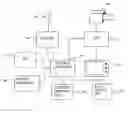
BRIEF DESCRIPTION OF THE DRAWINGSFIG. 1 shows an avionics multi-sensor system according to an embodiment of the present invention.
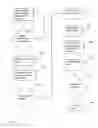
FIG. 2 shows a flowchart describing a method for target and sensor handling in the multi-sensor system of FIG. 1.
DETAILED DESCRIPTION OF PREFERRED EMBODIMENTSFor the purpose of the present application the following definitions are used
- Sensor: A unit capable of sensing radiations, reflections, or emissions from the environment, in particular from moving objects. Examples of sensors are radars, IR-cameras, TV-cameras.
- LDP: An LDP (Laser Designator Pod) is a unit comprising a laser range finder and an electro-optic sensor that can take images of the environment,
- EO-sensor: Electro-optic sensor, e.g. an IR- or TV-camera.
- LDP tracking function: A function within an LDP using contrast differences in a current image of the LDP electro-optic sensor to follow an object and continuously direct the camera such that the object appears in the middle of the image.
- Target tracking: The act of following an object and updating target direction and/or position data and/or motion data by associating new sensor readings to target data.
- Quick search program: A method within a radar system for searching a volume of air.
- Designate: The act of deciding that a sensor reading is an object of interest and give it a designation, e.g. an alphanumeric code. Object database space is usually also allocated and sensor data is stored.
- Direct a sensor: The act of ordering a sensor to take up sensor readings from a desired direction. The ordering can be effected by communicating a signal to the sensor representative of the desired direction.'
- Radar search mode: A mode within a radar system comprising that a volume of air is scanned for finding new objects.
- Object type: One of “friend” or “unknown”
- Target recognition: The act of determining the object type of a target.
- Prioritize: The act of deciding that one object is more important than others.
- Sensor data fusion: The act of deciding that readings from two different sensors originate from the same object. The term also to apply to statistical methods on said readings for improving data quality.
- Decision support system: A system or function within a (computerised) system for helping a person to make fast an correct decisions, or doing them for her or him, normally with the aim of reducing the cognitive load on that person.
- Identification: The act of determining the identity of an object.
- Identity: Usually the nationality and identification code of an object and/or name of pilot and/or purpose of mission.
- Jumping: A function within a radar system for decreasing the time between two consecutive scannings of a certain volume of air.
- Object database: A database containing data on one or more objects, e.g sensor readings.
In prior art systems, when delivering a laser-guided weapon, the LDP is usually directed towards a target point automatically by means of an estimated position entered in advance or manually. In this case, the pilot is able to identify the target. In all other cases, the pilot himself/herself, from an LDP image, has to find objects for identification, e.g. when performing robot attacks towards surface ships or in the air in case of rejection missions. Prior art LDPs are lacking a function corresponding to the radar search function, and the pilot himself/herself has to control the direction in which the LDP is looking. Also, prior art systems has not the ability to (automatically) determine which type of object it is following.
A solution to the problem according to the present invention comprises the introduction of a recognition mode in the avionics system for the LDP, preferably realised with the aid of one or more electronics or software units. The recognition mode is devised to be a special state of the avionics system in which, when activated, certain things will happen in a certain way as will be explained below. The recognition mode can be activated by the pilot, either via the mission or via data link. Subsequent to the recognition mode being activated, the LDP is arranged to be automatically directed towards a target which is already being tracked by the radar. The LDP can also be automatically directed towards a target position transferred via data link. The recognition mode is devised to comprise a number of submodes. Each submode is devised to take care of a certain kind of recognition function.
A number of cases are described below.
-
- Recognition in air target mode.
- In quick search programs the LDP is arranged to automatically look in a direction provided from the radar when tracking is started and automatic designation is ordered, i.e. the LDP is ordered to track the target. This mode can be used e.g. during rejection missions. An image of the object is presented to the pilot and may also be stored away.
- When the radar is in search mode, targets fulfilling the criteria for being subjected to recognition efforts (e.g. distance less than certain value, no IFF answer) will automatically be prioritized, and the LDP will automatically be ordered to track a target in the direction provided by the radar. Automatic directioning is also ordered. An image of the object is presented to the pilot and may also be stored. The image is presented on the LDP monitor.
- LDP being directed towards an object via data link.
- Because the number of LDPs is limited, co-operation between aircrafts may be an option. When a group of aircrafts discover an object a direction command is sent via data link to an aircraft in the group carrying an LDP. The LDP automatically performs recognition action on the object i.e. takes a surveillance image.
- Surveillance image via mission: The LDP is directed towards surveillance areas in advance.
- Recognition of surface targets: Most prior art radar systems do not start target tracking of surface targets automatically. Instead, the pilot prioritizes echoes, which entails radar target tracking of the object. In a system of a preferred embodiment, the radar will commence tracking automatically, which entails that the pilot does not have to prioritize the objects. Thus reducing the cognitive load. The embodiment comprises a function similar to the one described in item 1 above also for ground targets.
- Recognition in air target mode.
When the LDP is tracking an object, LDP target data are fused with target data from other sensors, which could entail better target data for the sensor system as a whole.
Recognition in Air Target Mode
Target Recognition with the Aid of the Quick Search Program of the Radar
There are a number of quick search programs. They all have in common that they search through a certain volume of air, having a start point in a certain direction. The radar looks on the first detected target, i.e. the radar commences continuous tracking (CT) on the first detected target. Below is a short description of the process.
-
- 1. The pilot selects the desired target recognition mode, in this case “Aided by quick search”.
- 2. The pilot orders the radar into quick search mode.
- 3. The radar locks on target and tracks said target continuously. Direction and distance to the target is sent continuously to a decision support unit of the multisensor system.
4. The decision support unit continuously predict the direction to a target with respect to estimated target speed and estimated target direction, and continuously directs the LDP towards the predicted target direction. From this moment on, an image will be presented to the pilot. If desirable, images can also be recorded.
5. The decision support unit sends a locking command to the LDP when the LDP is directed to the target, said locking command orders the LDP to lock on nearest marked contrast and to start tracking. The LDP starts such contrast tracking of the nearest marked contrast in an image taken in the ordered direction. When the LDP has started target tracking, a release command is sent to the radar which can do something else, e.g. search for another object.
Target Recognition when the Radar is in Search Mode
When the radar is in search mode, it looks for a target. When a target is detected, the radar automatically starts tracking of said target. Target tracking performance e.g. direction accuracy, may not be sufficiently good for directing the LDP. Below is a short description of an automatic identification/recognition function in this mode.
-
- 1. The pilot activates/selects the recognition mode for the LDP, in this case “Aided by radar search mode”.
- 2. The radar is already in, or is set into search mode and is or begins tracking one or more targets.
- 3. A situation analysis unit, SIA which is devised as being a subunit of the decision support unit, continuously monitors every target/threat. If any of the targets tracked by the radar fulfils a distance criterion, i.e. the distance at which identification/recognition is possible, and the target is not a friend as decoded by the IFF-system, the situation analysis unit automatically prioritizes the target.
- 4. When a target has been automatically prioritized by the situation analysis unit, priority information for said target is sent to the radar. This entails the radar switching to automatic tracking of this target, i.e. the radar will do continuous “jumps” (short KF max X sec) to improve the tracking quality (direction accuracy).
- 5. When the tracking/following quality is sufficiently good, as judged by the situation analysis unit by statistical analysis or other suitable method, the LDP is directed towards the target. Subsequently when the EO-sensor of the LDP is aligned in the ordered direction, a lock-command is sent to the LDP, upon which command the LDP subsequently commences contrast tracking. Target data from radar and LDP may in a further embodiment be fused, to achieve better target data quality.
- 6. The image from the LDP is presented to the pilot and/or is registered/recorded.
- 7. Subsequently to LDP start of target tracking, it is possible by the radar to automatically prioritize off the radar tracked target, under which circumstances the radar returns to ordinary tracking of the target. Target data from radar and LDP may in a further embodiment still be fused.
- 8. When the pilot is satisfied, he stops the LDP tracking and the procedure is started for a new target that complies with the predetermined conditions.
In an alternative embodiment the items 4 and 7 is instead:
-
- 4. When the target is automatically prioritized, the radar is ordered to make single separate “jumps” (short continuous tracking max X seconds) to improve tracking quality (position and velocity accuracy). As the radar in this case has not started the prioritized tracking, there is no need for item 7. This function will also work when the pilot himself/herself manually would like to prioritize the radar targets.
Applications
- 4. When the target is automatically prioritized, the radar is ordered to make single separate “jumps” (short continuous tracking max X seconds) to improve tracking quality (position and velocity accuracy). As the radar in this case has not started the prioritized tracking, there is no need for item 7. This function will also work when the pilot himself/herself manually would like to prioritize the radar targets.
It is worth mentioning the following applications:
-
- Target recognition of an object before weapon delivery and supply of improved position data to the weapon or weapon system. The recognition can be performed at a distance much larger than what is possible for prior art systems. The time required for detection, recognition and weapon delivery will be considerably shorter.
- Recognition of aircraft at rejection missions. In many prior art systems, the recognition takes place when the pilot is viewing the object. If automatic direction of the LDP is performed, the recognition can take place even when the target is several kilometres away.
- Recognition of warships among civil ships.
Description Of the System
A system according to a preferred embodiment of the invention comprises four sensors as stated below:
-
- An LDP, which is an electro-optic sensor taking images of the environment. The sensor has the ability to track an object with the aid of contrast in the image. The LDP supplies images to a presentation system and position data to a central computer or the like.
- A radar that ranges objects with good position and velocity accuracy and sometimes the radar also can identify an object.
- An IFF subsystem that transmit questions to objects in the environment by means of radio signals. Objects being friends and that possess a transponder reply with a certain signal. Therefore, the system is able to decide if an object is a friend or unknown. An object is considered unknown if no reply is given within a certain time or if a wrong reply is given.
- A radar warning receiver ranges the radars of other objects, and is also capable of identifying/recognising an object.
The system also comprises a decision support unit having a situation analysis subunit. Sensor data from all sensors are sent to the central computer. The decision support system, which system may be a part of, or a subsystem of, the central computer, collects, fuses, analyses and performs an action or recommends an action to the pilot. Data on all known objects are stored in an object database comprising identified and unidentified objects. When a person in command, e.g the pilot, want to take an action towards an object, e.g. weapon delivery, the object must be identified first, to avoid mistakenly bringing down innocent people.
The following takes place in the system when the system is in recognition mode:
-
- The decision support system looks in the object data storage if there are unidentified objects within the range of the EO-sensor of the LDP. The decision support system orders the radar to range on the object. When position and velocity data on the object are good enough the LDP is directed in the direction of the object.
- The decision support system orders the LDP to track the object and the image is shown on the presentation surface.
- When the pilot has identified the object from the presented image or otherwise, he orders stopping of the LDP tracking and the next unidentified object is treated.
The following takes place when the system is in reconnaissance mode:
-
- The decision support system directs the LDP towards all unidentified objects and an image is taken of each object.
- In this mode, it is also possible for other aircrafts to use the LDP by requesting a reconnaissance image to be taken of a desired object and by sending the position of the desired together with the request.
Advantages
In prior art systems, the pilot is required to direct the LDP which entails him to first manually find the object. A system according to an embodiment of the present invention may provide the following advantages:
-
- Automatic directing and recognition/identification of boats in crowded scenarios.
- Automatic directing and recognition/identification of aircrafts at rejection missions or before weapon delivery.
- Automatic reconnaissance images.
- Improved target position estimates during LDP tracking.
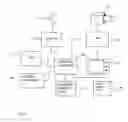
FIG. 1 is a schematic view of a multi-sensor system comprising a radar having a radar antenna 110 and a radar data processing unit 120. The radar data processing unit 120 is connected to a central computer 160. A Laser Designator Pod system 130, 140, 150 comprising an optical sensor 130, e.g. an infrared video camera 130, an LDP data processing unit 140 and a monitor 150 is also connected to said central computer 160. To the central computer 160 is further connected an IFF-unit 170 and a radar warning unit 180. Connected to the central computer is also a decision support unit 190. Said decision support unit is provided with a situation analysis unit (not shown).
FIG. 2 shows a flowchart describing a method for target and sensor handling in the multi-sensor system of FIG. 1. The method comprises the steps of
-
- Searching 210 in an object data storage of the central computer 160 to see if 215 there are unidentified objects within the range of the EO-sensor 130 of the LDP.
- Ordering 220 the radar to range on the object.
- Monitoring 225 position and velocity data on the object
- Decide 230 when said data are good enough, and then direct 235 the LDP in the direction of the object.
- Ordering 240 the LDP to track the object and show 245 the image of the tracked object on a presentation surface.
The method may also comprise the step of
-
- Upon pilot command, stop LDP tracking and continue 260 to treat the next unidentified object.
Claims
1. An avionics system, comprising:
a radar system being capable of automatically tracking a radar target;
an optical image producing system;
a radar monitor;
an optical image monitor;
a decision support unit having a connection to said radar system and to said optical image producing system, wherein during a flight mission said decision support unit receives one or more automatic radar tracking parameters from the radar system, uses said decision parameters on said radar tracking parameters to decide upon which radar target(s) to be subjected to observation by the optical image producing system; and
an input/output unit for entering one or more decision parameters, said decision support unit being connected to said input/output unit.
2. The avionics system according to claim 1, further comprising:
an IFF unit connected to the decision support unit, wherein said decision support unit comprises means for receiving IFF status for at least one radar target from said IFF unit, said decision support unit comprises means for deciding that a radar target having IFF status “Friend” should not be subjected to observation by the optical image producing system, and said decision support system comprises means for deciding that a radar target having IFF status “Unknown” should be subject to observation by said optical image producing system.
3. The avionics system of according to claim 1, wherein said decision support unit comprises means for communicating a value representative of a calculated direction of a radar target to the optical image producing system, said image producing system comprises a camera being rotatable about two mutually orthogonal axes, and said optical image producing system comprises means to align the camera in the direction indicated by said value representative of said calculated direction.
4. The avionics system according to claim 3, wherein said decision support unit comprises means for deciding if a radar target is moving.
5. The avionics system according to claim 4, wherein said decision support unit comprises means for predicting at least one target position with regard to target speed and target direction.
6. The avionics system according to claim 4, wherein said decision support system comprises means for generating and sending a lock-command to the image producing system.
7. The avionics system according to claim 1, wherein the image producing system is a laser designator pod.
8. A decision support unit suitable for use in an avionics system according to claim 1 wherein the decision support unit comprises means for controlling said electro-optic sensor to view in a direction provided from the radar system for a target already tracked by said radar system.
9. A method for controlling the viewing direction of an electro-optic sensor within an avionics system, the method comprising:
searching in an object data storage of a central computer to see if there are unidentified objects within a range of an electro optic-sensor of a laser designator pod;
ordering a radar to range on the object;
monitoring position and velocity data on the object;
deciding when said data are good enough;
directing the laser designator pod in the direction of the object, ordering the laser designator pod to track the object; and
showing the image of the tracked object on a presentation surface.
10. A computer software product, comprising:
a computer readable medium; and
computer program instructions recorded on the computer readable medium and executable by a processor for carry out the steps of
searching in an object data storage of a central computer to see if there are unidentified objects within a range of an electro optic-sensor of a laser designator pod,
ordering a radar to range on the object,
monitoring position and velocity data on the object,
deciding when said data are good enough,
directing the laser designator pod in the direction of the object,
ordering the laser designator pod to track the object; and
showing the image of the tracked object on a presentation surface.
11. A recognition mode within an avionics system having the features of the method of claim 9.
12. A situation analysis unit for the avionics system of claim 1 for carrying out the steps of
searching in an object data storage of a central computer to see if there are unidentified objects within a range of an electro optic-sensor of a laser designator pod,
ordering a radar to range on the object,
monitoring position and velocity data on the object,
deciding when said data are good enough,
directing the laser designator pod in the direction of the object,
ordering the laser designator pod to track the object; and
showing the image of the tracked object on a presentation surface.
Images & Drawings included:
Sources:
- United States Patent and Trademark Office - verify current appl. status at the USPTO↗
Similar patent applications:
- » 20230066441
Multi-sensor fusion SLAM system, multi-sensor fusion method, robot, and medium - » 20230045796
LOOP CLOSURE DETECTION METHOD AND SYSTEM, MULTI-SENSOR FUSION SLAM SYSTEM, ROBOT, AND MEDIUM - » 20110069148
SYSTEMS AND METHODS FOR CORRECTING IMAGES IN A MULTI-SENSOR SYSTEM - » 20050247114
Multi-sensor system for fluid monitoring with selective exposure of sensors - » 20060181412
Multi-sensor system for identification and data collection - » 20060277977
Multi-sensor system for fluid monitoring with selective exposure of sensors - » 20080183052
Multi-sensor system, device, and method for deriving human status information - » 20080171918
MULTI-SENSOR SYSTEM, DEVICE, AND METHOD FOR DERIVING HUMAN STATUS INFORMATION - » 20070184898
Multi-sensor system for counting and identifying objects in close proximity - » 20080036593
VOLUME SENSOR: DATA FUSION-BASED, MULTI-SENSOR SYSTEM FOR ADVANCED DAMAGE CONTROL
Recent applications in this class:
- » 20240319361 2024-09-26
Multi-element aperture for identification friend or foe (IFF) transponder systems - » 20220252714 2022-08-11
RADAR SIGNAL PROCESSING DEVICE, RADAR SENSOR SYSTEM, AND SIGNAL PROCESSING METHOD - » 20200124717 2020-04-23
LOCALIZING TARGETS IN A DISTRIBUTED RADAR ENVIRONMENT BASED ON CORRELATED BLOCKING LIKELIHOOD - » 20140240165 2014-08-28
Multimode device for locating and identifying items - » 20120050088 2012-03-01
Method for identifying a facility on the ground or at sea - » 20110309966 2011-12-22
Method and system for locating a target in an interrogation-response system (IFF) - » 20110285572 2011-11-24
Mode 5 detection process using phase and amplitude correlation - » 20110007938 2011-01-13
Thermal and short wavelength infrared identification systems - » 20090045909 2009-02-19
Water friend or foe system for global vessel identification and tracking - » 20070085725 2007-04-19
System and method for highly directional electronic identification and communication and combat identification system employing the same
Recent applications for this Assignee:
- » 20240332786 2024-10-03
Pivotable connection device and a vehicle - » 20240272261 2024-08-15
Multi-channel active array system and method for obtaining positional information of an object - » 20240266755 2024-08-08
Method for operating wide-band AESA - » 20240085186 2024-03-14
Method, software product, and system for determining a position and orientation in a 3D reconstruction of the earth's surface - » 20240085159 2024-03-14
Electronic countermeasure cartridge arranged to be loaded into countermeasure dispenser and arranged to irradiate dispensed electromagnetically reflective material - » 20240039208 2024-02-01
High voltage adapter - » 20240014566 2024-01-11
Antenna array - » 20230396310 2023-12-07
Receiver system configured to alternate between different beamforming types - » 20230391435 2023-12-07
Nose arrangement and method for deploying a nose arrangement of an underwater vehicle - » 20230275355 2023-08-31
Gradient structure for transmitting and/or reflecting an electromagnetic signal