Trim cover for seat
US20070148427A1
2007-06-28
11/318,461
2005-12-28
Abstract:
A trim cover comprising a first cover element and a second cover element. The first cover element comprises a leather top cover layer and a wadding layer adhered at one surface thereof to an entire reverse surface of the leather top cover layer, whereas the second cover element at least comprises a wadding layer. The first cover element is juxtaposed on the second cover element by firmly connecting a peripheral end region of another surface of the wadding layer of the first cover element to a peripheral end region of the wadding layer of the second cover element. Additional wadding cover layer may be interposed between such another surface of the wadding layer of the first cover element and the wadding layer of the second cover element. Further, another additional wadding cover layer be provided to the said wadding layer of the second cover element.
Inventors:
- Seiichiro MIYAZAKI 2 🇯🇵 Akishima-shi, Japan
- Tsuyoshi Yumoto 1 🇯🇵 Akishima-shi, Japan
- Ikuo Sakamoto 1 🇯🇵 Akishima-shi, Japan
Assignee:
- TACHI-S CO., LTD 35 🇯🇵 Akishima-shi, Japan
Interested in similar patents?
Get notified when new applications in this technology area are published.
Classification:
B32B5/00 » CPC main
Layered products characterised by the non- homogeneity or physical structure, i.e. comprising a fibrous, filamentary, particulate or foam layer; Layered products characterised by having a layer differing constitutionally or physically in different parts
B60N2/58 » CPC further
Seats specially adapted for vehicles; Arrangement or mounting of seats in vehicles Seat coverings
B60N2/5816 » CPC further
Seats specially adapted for vehicles; Arrangement or mounting of seats in vehicles; Seat coverings attachments thereof
B60N2/643 » CPC further
Seats specially adapted for vehicles; Arrangement or mounting of seats in vehicles; Back-rests or cushions shape of the back-rests
B60N2/646 » CPC further
Seats specially adapted for vehicles; Arrangement or mounting of seats in vehicles; Back-rests or cushions shape of the cushion
B32B3/02 » CPC further
Layered products comprising a layer with external or internal discontinuities or unevennesses, or a layer of non-planar form ; Layered products having particular features of form characterised by features of form at particular places, e.g. in edge regions
B32B5/022 » CPC further
Layered products characterised by the non- homogeneity or physical structure, i.e. comprising a fibrous, filamentary, particulate or foam layer; Layered products characterised by having a layer differing constitutionally or physically in different parts characterised by structural features of a layer Non-woven fabric
B32B5/06 » CPC further
Layered products characterised by the non- homogeneity or physical structure, i.e. comprising a fibrous, filamentary, particulate or foam layer; Layered products characterised by having a layer differing constitutionally or physically in different parts characterised by structural features of a layer characterised by a fibrous layer to another layer, e.g. of fibres, of paper
B32B5/26 » CPC further
Layered products characterised by the non- homogeneity or physical structure, i.e. comprising a fibrous, filamentary, particulate or foam layer; Layered products characterised by having a layer differing constitutionally or physically in different parts characterised by the presence of two or more layers which are next to each other and are fibrous, filamentary, formed of particles or foamed one layer being a fibrous or filamentary layer another layer also being fibrous or filamentary
B32B7/05 » CPC further
Layered products characterised by the relation between layers; Layered products characterised by the relative orientation of features between layers, or by the relative values of a measurable parameter between layers, i.e. products comprising layers having different physical, chemical or physicochemical properties; Layered products characterised by the interconnection of layers; Interconnection of layers the layers not being connected over the whole surface, e.g. discontinuous connection or patterned connection
B32B7/12 » CPC further
Layered products characterised by the relation between layers; Layered products characterised by the relative orientation of features between layers, or by the relative values of a measurable parameter between layers, i.e. products comprising layers having different physical, chemical or physicochemical properties; Layered products characterised by the interconnection of layers; Interconnection of layers using interposed adhesives or interposed materials with bonding properties
B32B7/14 » CPC further
Layered products characterised by the relation between layers; Layered products characterised by the relative orientation of features between layers, or by the relative values of a measurable parameter between layers, i.e. products comprising layers having different physical, chemical or physicochemical properties; Layered products characterised by the interconnection of layers; Interconnection of layers using interposed adhesives or interposed materials with bonding properties applied in spaced arrangements, e.g. in stripes
B32B9/025 » CPC further
Layered products comprising a layer of a particular substance not covered by groups - comprising animal or vegetable substances, e.g. cork, bamboo, starch comprising leather
B32B9/047 » CPC further
Layered products comprising a layer of a particular substance not covered by groups - comprising such substance as the main or only constituent of a layer, next to another layer of a made of fibres or filaments
B32B2262/0261 » CPC further
Composition or structural features of fibres which form a fibrous or filamentary layer or are present as additives; Synthetic macromolecular fibres Polyamide fibres
B32B2307/554 » CPC further
Properties of the layers or laminate having particular mechanical properties Wear resistance
B32B2307/581 » CPC further
Properties of the layers or laminate having particular mechanical properties; Cuttability Resistant to cut
B32B2601/00 » CPC further
Upholstery
B32B2605/00 » CPC further
Vehicles
B60N2/00 » CPC further
Seats specially adapted for vehicles; Arrangement or mounting of seats in vehicles
Y10T428/249924 » CPC further
Stock material or miscellaneous articles; Web or sheet containing structurally defined element or component Noninterengaged fiber-containing paper-free web or sheet which is not of specified porosity
D04H1/00 IPC
Non-woven fabrics formed wholly or mainly of staple fibres or like relatively short fibres
Description
BACKGROUND OF THE INVENTION1. Field of the Invention
The present invention relates to a leather trim cover adapted for covering the outer surface of vehicle seat.
2. Description of Prior Art
Various improvements have been made in order to attain a good and soft touch of trim cover adapted for covering an outer surface of vehicle seat. As known in the Japanese Laid-Open Patent Publication Nos. 8-30908 and 6-47853 for example, a trim cover having a leather layer on its outer surface is improved in its touch by adhering a thin layer of wadding, such as a slab foam wadding layer, to an entire reverse surface of the trim cover.
According to the foregoing conventional leather trim cover, the adhesive attachment of the thin wadding layer to an entire reverse surface of the leather trim cover is indeed effective in increasing the strength of a whole of the trim cover in uniform way. Further, due to the thin layer of wadding, an adhesive present between the trim cover and wadding will not be cured so hard.
However, in such prior-art trim cover, the thin thickness of wadding layer used has been found defective in providing an insufficient cushiony touch.
In order to solve such problem, one can consider adhering a thick wadding layer to the entire reverse surface of leather trim cover, but it will result in the trim cover itself being undesirably hard to the touch. Also, in that case, objectionable creases or wrinkles will be created on the outer surface of the leather trim cover. To avoid that drawback, one can still consider applying an adhesive only to peripheral local regions of such thick wadding layer and then adhering the peripheral regions of thick wadding layer to the reverse surface of leather trim cover. Indeed, such approach makes full use of the thick wadding layer to create a good touch of the trim cover, while keeping the entirety of trim cover away from a hard touch of cured adhesive which is deeply impregnated in this particular thick wadding layer.
However, the trim cover formed in that way is found inferior in strength to a trim cover having a thin wadding layer adhered to the entire reverse surface thereof.
SUMMARY OF THE INVENTIONIn view of the above-stated drawbacks, it is a purpose of the present invention to provide a trim cover having an improved cushiony touch without being influenced by hard curing of an adhesive applied therein.
In order to achieve such purpose, the trim cover in accordance with the present invention is basically comprised of:
a first cover element consisting essentially of: a leather top cover layer of a predetermined shape having a reverse surface; and a wadding layer which is adhered at one surface thereof to a whole of the reverse surface of the leather top cover layer, the wadding layer having another surface opposite to the one surface thereof;
and
a second cover element consisting essentially of a wadding layer having one surface and another surface opposite to the one surface;
wherein the first cover element is fixedly juxtaposed on the second cover element by firmly connecting a peripheral end region of the afore-said another surface of the wadding layer of the first cover element to a peripheral end region of the afore-said one surface of the wadding layer of the second cover element by a connecting means.
Preferably, the foregoing connecting means may comprise a adhesive or sewing by thread.
It is another purpose of the present invention to not only increase the strength of the foregoing trim cover, but also avoid a wear between the afore-said another surface of the wadding layer of the first cover element and the afore-said one surface of the wadding layer of the second cover element.
For that purpose, an additional wadding cover layer may be interposed between the above-stated another surface of the wadding layer of the first cover element and the above-stated one surface of the wadding layer of the second cover element. Further, another additional wadding cover layer be fixedly provided to that another surface of the wadding layer of the second cover element.
Other features and advantages of the present invention will become apparent from reading of the description hereinafter, with reference to the annexed drawings.
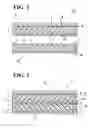
BRIEF DESCRIPTION OF THE DRAWINGSFIG. 1 is a partly broken exploded sectional view of a trim cover in accordance with one embodiment of the present invention;
FIG. 2 is a partly broken sectional view of a resulting trim cover in accordance with the afore-said one embodiment of the present invention;
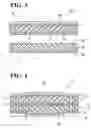
FIG. 3 is a partly broken exploded sectional view of a trim cover in accordance with another alternative embodiment of the present invention;
FIG. 4 is a partly broken sectional view of a resulting trim cover in accordance with the afore-said another alternative embodiment of the present invention;
DETAILED DESCRIPTION OF PREFERRED EMBODIMENT OF THE INVENTIONReferring to FIGS. 1 to 4, there are exemplary preferred embodiments of trim cover for vehicle seat, as generally designated by (TC), in accordance with the present invention.
As shown in FIG. 1, there are provided one cover material (A) and another cover material (B), as a basic constituent material for forming a resulting trim cover (TC). In this respect, as will be describe later, the resulting trim cover (TC) is fixedly juxtaposed on a body of seat, as designated by (S), which is indicated by one-dot chain line as in FIG. 2, and therefore, as readily understandable from the FIG. 2, the trim cover (TC) itself is to be disposed at an outward side (O) facing to a side outwardly of the seat body, whereas the seat body (S) itself is to be disposed at an inward side (I) opposite to the outward side (O). It thus follows that the afore-said one cover material (A) is to be disposed at the outward side (O), whereas the afore-said another cover material (B) is to be disposed at the inward side (I). Hence, hereinafter, such one cover material (A) shall be referred to as “outer cover material (A)”, and such another cover material (B) be referred to as “inner cover material (B)”.
Specifically, the outer cover material (A) is basically of a three-layer lamination structure comprising: a natural leather top cover layer (1); a wadding layer (2); and a wadding cover layer (5) (or a back cloth for example), in this order.
The foregoing natural leather top cover layer (1) is one unitary sheet of natural leather material having a predetermined shape, which is preformed by trimming a natural leather base material (e.g. bull or horse leather) in the predetermined shape.
The wadding layer (2) is one unitary sheet of slab foam wadding material, as found in conventional trim covers, which has a predetermined shape substantially equal to that of the natural leather top cover layer (1). In this regard, generally stated, a foam wadding layer in conventional trim cover is relatively large in thickness But, in the present invention, a thickness of the slab foam wadding layer (2) is approximately half of such relatively large thickness of conventional foam wadding layer. For instance, a preferred thickness of the slab foam wadding layer (2) may be as thin as 5 mm.
As shown in FIG. 1, this particular foam wadding layer (2) is uniformly adhered, at one entire surface thereof, to the entire reverse surface (1A) of the foregoing top cover layer (1) by means of adhesive (6).
The wadding cover layer (5) is firmly attached, at one surface (5A) thereof, to another surface of the foam wadding layer (2) by means of adhesive or frame laminating method. The wadding cover layer (5) may preferably be formed from a non-woven fabric material or a nylon material.
On the other hand, the inner cover material (B) is basically of a two-layer lamination structure comprising a wadding layer (3) and a wadding cover layer (4) (or a back cloth for example), in this order. It is noted that the wadding layer (3) has: a mere exposed surface (3A) which is not any adherend surface; and an adherent surface (3B) adapted to be adhered to the wadding cover layer (4), as will be understood later.
Specifically, the wadding layer (3) of this inner cover material (B), as similar to the foregoing wadding layer (2), is one unitary sheet of slab foam wadding material having a thin thickness which is approximately half of a relatively large thickness of conventional foam wadding layer, and preferably, the thickness may be as thin as 5 mm.
With regard to the wadding cover layer (4), it is, of course, of a predetermined shape substantially equal to that of the wadding layer (3) and may preferably be formed from a non-woven fabric material or a nylon material, as similar to the afore-said wadding cover layer (5).
As shown, in this particular inner cover material (B), the wadding cover layer (4) is firmly attached, at a reverse surface (4A) thereof, to the outer surface (3B) of the wadding layer (3) by means of adhesive or frame laminating method.
Based on the above-discussed technical reasons for naming the outer and inner cover materials (A) and (B), and in view of layer lamination order in the resulting trim cover (TC) with respect to the seat body (S), the wadding layer (2) and wadding cover layer (5) of the outer cover material (A) shall be referred to as “upper wadding layer (2)” and “upper wadding cover layer (5)”, respectively, whereas on the other hand, the wadding layer (3) and wadding cover layer (4) of the inner cover material (B) be referred to as “lower wadding layer (3)” and “lower wadding cover layer (4)”, respectively.
Now, reference is made to FIG. 1 and FIG. 2 in sequence. At first, as shown in FIG. 1, an adhesive (7) is applied to the peripheral end regions of the exposed surface (3A) of the lower wadding layer (3) associated with the inner cover material (B), and thereafter, as indicted by the downward arrow, an outer surface of the upper wadding cover layer (5) of the outer cover material (A) is pressingly contact on the exposed surface (3A) of the lower wadding layer (3), so that the outer cover material (A) is adhered to the inner cover material (B) along the peripheral end regions thereof.
Accordingly, as shown in FIG. 2, a resulting trim cover (TC) is formed, which has the outer and inner cover materials (A) (B) adhered together in this order, with a non-adhered region (N) given between the upper wadding cover layer (5) and the lower wadding layer (3), excepting the peripheral adhered end regions (at 7).
Alternatively, as shown in FIGS. 3 and 4, the upper cover material (A) may be placed upon the lower cover material (B), so that the outer surface of upper wadding cover layer (5) is merely contacted on the exposed surface (3A) of lower wadding layer (3), and thereafter, the peripheral end regions of the thus-juxtaposed two cover materials (A) (B) may be sewn together by threads (8), instead of using the adhesive (7). Accordingly, as shown in FIG. 4, a resulting trim cover (TC) is formed, which has the outer and inner cover materials (A) (B) sewn together, with a non-sewn region (N′) given between the upper wadding cover layer (5) and the lower wadding layer (3), excepting the peripheral sewn end portions (at 8).
In accordance with the above-described trim cover (TC) of the present invention, it is appreciated that the following effects and advantages are attained:
(i) The upper and lower wadding layers (2) (3) are provided independently of each other, which makes it possible to reduce a thickness of each of them to a desired small degree. Therefore, in particular, the upper wadding layer (2) of a considerably reduced thickness (as thin as 5 mm for instance) can be adhered to the entire reverse surface of the natural leather top cover layer (1), thereby effectively avoiding creation of bent and crease portions in the natural leather top cover layer (1).
(ii) Such considerably thin upper and lower wadding layers (2) (3) are respectively reinforced by the upper and lower wadding cover layers (5) (4), and therefore, each of the two wadding layers (2) (3) is provided with a greatly increased strength and assuredly prevented against breakage and cut due to a strong contact and friction applied thereto from a body portion of person or hard thing.
(iii) The juxtaposition of such thin upper and lower wadding layers (2) (3) effectively achieves the same cushiony touch as in one thick wadding layer.
(iv) Further, the upper wadding cover layer (5) is just interposed between the upper and lower wadding layers (2) (3), thereby completely preventing any wear therebetween.
(v) Since only the peripheral end regions of the outer and inner cover materials (A) (B) are adhered or sewn together, both of the upper and lower wadding layers (2) (3) maintain their own good cushiony touches, as opposed to the case where the two cover materials (A) (B) are entirely adhered to each other, which, as previously stated, will undesirably make them hard to the touch due to the impregnation and hard curing of adhesive therein. In this respect, due to such localized adhering or sewing, a certain hardness and stability is given to the peripheral end portions of both two cover materials (A) (B). Thus, if a plurality of the present trim covers (TC) so formed are subjected to sewing for creating a three-dimensional trim cover assembly, such hardened peripheral end regions of each trim cover (TC) can easily and stably be sewn with one another. Preferably, the thus-sewn connection portions should be corner portions of the resulting three-dimensional trim cover assembly which are to cover the corresponding corner portions of an article to be covered, such as a seat, with a view to positively attaining the above-stated cushiony touch of each of the trim covers (TC).
It is noted that the outer surface of the upper wadding cover layer (5) may be adhered to the exposed surface of the lower wadding layer (3), in which case, the adhesive (7) is applied to the peripheral end regions of exposed surface of the upper wadding cover layer (5), and thereafter, the afore-said another surface of the upper wadding layer (2) of the outer cover material (A) is pressingly contact on that exposed surface of the upper wadding cover layer (5), so that the outer cover material (A) is adhered to the inner cover material (B) along the peripheral end regions thereof.
Of course, the trim cover (TC) may be used for covering other articles, such as an armrest or a headrest.
While having described the present invention, it should be understood that the invention Si not limited to the illustrated embodiments, but any other modification, replacement and addition may be applied thereto without departing from the scopes of the appended claims.
Claims
What is claimed is:1. A trim cover comprising;
a first cover element consisting essentially of: a leather top cover layer of a predetermined shape having a reverse surface; and a wadding layer which is adhered at one surface thereof to a whole of said reverse surface of said leather top cover layer, said wadding layer having another surface opposite to said one surface thereof;
and
a second cover element consisting essentially of a wadding layer having one surface and another surface opposite to said one surface;
wherein said first cover element is fixedly juxtaposed on said second cover element by firmly connecting a peripheral end region of said another surface of said wadding layer of the first cover element to a peripheral end region of said one surface of said wadding layer of the second cover element by a connecting means.
2. The trim cover as claimed in claim 1, wherein said leather top cover layer is formed from a natural leather material.
3. The trim cover as claimed in claim 1, wherein said connecting means comprises an adhesive, and wherein said first cover element is fixedly juxtaposed on said second cover element by adhering said peripheral end region of said another surface of said wadding layer of the first cover element, by means of said adhesive, to said peripheral end region of said one surface of said wadding layer of said second cover element.
4. The trim cover as claimed in claim 1, wherein said connecting means comprises a thread, and wherein said first cover element is fixedly juxtaposed on said second cover element by sewing said peripheral end region of said another surface of said wadding layer of the first cover element, by means of said thread, to said peripheral end region of said one surface of said wadding layer of said second cover element.
5. The trim cover as claimed in claim 1, which further comprises a wadding cover layer interposed between said another surface of said wadding layer of said first cover element and said one surface of said wadding layer of said second cover element.
6. The trim cover as claimed in claim 1, which further comprises a wadding cover layer fixedly provided to said another surface of said wadding layer of said second cover element.
Images & Drawings included:
Sources:
- United States Patent and Trademark Office - verify current appl. status at the USPTO↗
Similar patent applications:
- » 20170210261
Structure of wadded-up seat trim cover and method of manufacturing wadded-up seat trim cover - » 20190232837
Structure of wadded-up seat trim cover and method of manufacturing wadded-up seat trim cover - » 20200017006
Vehicle seat trim covers including integrally-knit backing materials and methods of manufacturing vehicle seat trim covers - » 20240217410
METHOD FOR ATTACHING TRIM TO A SEAT CUSHION AND TRIM-COVERED SEAT CUSHION - » 20150336489
Vehicle seat trim cover fixing structure and vehicle seat - » 20170008476
Mistake proof brackets for installation of seat trim cover airbag strip to a seat frame - » 20050269855
Seat trim cover assembly aid - » 20070035165
SEAT TRIM COVER ATTACHMENT COMPONENT AND RELATED METHOD - » 20100025970
Automotive seat trim cover - » 20160311352
Securing seat trim covers to foam cushions
Recent applications in this class:
- » 20190126586 2019-05-02
Field expedient textile repair patch - » 20160009050 2016-01-14
Concrete Curing Blanket - » 20140186633 2014-07-03
Color Match Verification of Multi-Layer Coatings Utilizing Precoated Color Chips - » 20130209797 2013-08-15
Thin film for waste packing cassettes - » 20130122277 2013-05-16
COMPOSITE MATERIALS - » 20120282448 2012-11-08
METHODS FOR FABRICATING THREE-DIMENSIONAL OBJECTS - » 20120128947 2012-05-24
Textile material having increased mechanical strength, in particular having increased resistance to piercing or shooting - » 20120100332 2012-04-26
SELF BONDING FLOOR TILE AND MANUFACTURING METHOD THEREOF - » 20110189455 2011-08-04
METHOD FOR PRODUCING LIQUID CRYSTALLINE POLYESTER COMPOSITION, AND CONNECTOR - » 20110189454 2011-08-04
LIQUID CRYSTALLINE POLYESTER COMPOSITION, METHOD FOR PRODUCING THE SAME, AND CONNECTOR
Recent applications for this Assignee:
- » 20190232829 2019-08-01
Vehicle seat - » 20190070979 2019-03-07
Seat device - » 20180111529 2018-04-26
Vehicle seat - » 20160137112 2016-05-19
Seat cushion - » 20160059754 2016-03-03
Headrest with headrest stay - » 20150314714 2015-11-05
Headrest - » 20150158213 2015-06-11
Method of manufacture of seat pad - » 20100244514 2010-09-30
Arrangement of operation unit in seat back - » 20100244507 2010-09-30
Armrest with cup holder - » 20100243852 2010-09-30
Seat slide rail