Multi-functional yarns and fabrics having anti-microbial, anti-static and anti-odor characterisitics
US20070148449A1
2007-06-28
11/315,384
2005-12-23
✅ Patent granted
US 8,771,831 B2
2014-07-08
-
-
Elizabeth Cole
Roger C. Phillips
2027-05-27
Abstract:
The present invention is directed to yarns and fabrics that exhibit anti-static, anti-odor, and anti-microbial properties. The yarn is comprised of several groups of predetermined fibers. One of these groups of predetermined fibers comprises fibers that exhibit anti-microbial, anti-odor and anti-static characteristics. In one embodiment, the yarn comprises a first plurality of fibers, a second plurality of fibers that are different from the fibers of the first plurality, and a third plurality of fibers that are different from the fibers of the first and second pluralities. In one embodiment, the fibers which exhibit anti-microbial, anti-odor and anti-static properties are metallic coated fibers. Other fibers used to form different embodiments of the yarns include cotton, nylon, polyester, wool, Nomex, Kevlar, and stretch fibers.
Assignee:
- The United States of America as Represented by the Secretary of the Army 2,276 🇺🇸 Washington, DC, United States
Applicant:
Interested in similar patents?
Get notified when new applications in this technology area are published.
Classification:
D02G3/02 IPC
Yarns or threads, e.g. fancy yarns; Processes or apparatus for the production thereof, not otherwise provided for Yarns or threads characterised by the material or by the materials from which they are made
D02G3/449 » CPC main
Yarns or threads, e.g. fancy yarns; Processes or apparatus for the production thereof, not otherwise provided for; Yarns or threads characterised by the purpose for which they are designed Yarns or threads with antibacterial properties
D03D15/217 » CPC further
Woven fabrics characterised by the material, structure or properties of the fibres, filaments, yarns, threads or other warp or weft elements used characterised by the material of the fibres or filaments constituting the yarns or threads cellulose-based natural from plants, e.g. cotton
D03D15/233 » CPC further
Woven fabrics characterised by the material, structure or properties of the fibres, filaments, yarns, threads or other warp or weft elements used characterised by the material of the fibres or filaments constituting the yarns or threads protein-based, e.g. wool or silk
D03D15/283 » CPC further
Woven fabrics characterised by the material, structure or properties of the fibres, filaments, yarns, threads or other warp or weft elements used characterised by the material of the fibres or filaments constituting the yarns or threads synthetic polymer-based, e.g. polyamide or polyester fibres
D03D15/533 » CPC further
Woven fabrics characterised by the material, structure or properties of the fibres, filaments, yarns, threads or other warp or weft elements used characterised by the properties of the yarns or threads antistatic; electrically conductive
D03D15/56 » CPC further
Woven fabrics characterised by the material, structure or properties of the fibres, filaments, yarns, threads or other warp or weft elements used characterised by the properties of the yarns or threads elastic
D10B2101/20 » CPC further
Inorganic fibres Metallic fibres
D10B2201/02 » CPC further
Cellulose-based fibres, e.g. vegetable fibres; Natural vegetable fibres Cotton
D10B2211/02 » CPC further
Protein-based fibres, e.g. animal fibres; Natural animal fibres, e.g. keratin fibres Wool
D10B2211/04 » CPC further
Protein-based fibres, e.g. animal fibres; Natural animal fibres, e.g. keratin fibres Silk
D10B2331/02 » CPC further
Fibres made from polymers obtained otherwise than by reactions only involving carbon-to-carbon unsaturated bonds, e.g. polycondensation products polyamides
D10B2331/021 » CPC further
Fibres made from polymers obtained otherwise than by reactions only involving carbon-to-carbon unsaturated bonds, e.g. polycondensation products polyamides aromatic polyamides, e.g. aramides
D10B2331/04 » CPC further
Fibres made from polymers obtained otherwise than by reactions only involving carbon-to-carbon unsaturated bonds, e.g. polycondensation products polyesters, e.g. polyethylene terephthalate [PET]
D10B2401/061 » CPC further
Physical properties; Load-responsive characteristics elastic
D10B2401/13 » CPC further
Physical properties anti-allergenic or anti-bacterial
D10B2401/14 » CPC further
Physical properties Dyeability
D10B2401/16 » CPC further
Physical properties antistatic; conductive
D10B2401/22 » CPC further
Physical properties protective against sunlight or UV radiation
D10B2501/02 » CPC further
Wearing apparel Underwear
D10B2501/04 » CPC further
Wearing apparel Outerwear; Protective garments
D10B2501/043 » CPC further
Wearing apparel; Outerwear; Protective garments Footwear
Y10T428/29 » CPC further
Stock material or miscellaneous articles Coated or structually defined flake, particle, cell, strand, strand portion, rod, filament, macroscopic fiber or mass thereof
Y10T428/2909 » CPC further
Stock material or miscellaneous articles; Coated or structually defined flake, particle, cell, strand, strand portion, rod, filament, macroscopic fiber or mass thereof; Staple length fiber Nonlinear [e.g., crimped, coiled, etc.]
Y10T428/2913 » CPC further
Stock material or miscellaneous articles; Coated or structually defined flake, particle, cell, strand, strand portion, rod, filament, macroscopic fiber or mass thereof Rod, strand, filament or fiber
Y10T428/2936 » CPC further
Stock material or miscellaneous articles; Coated or structually defined flake, particle, cell, strand, strand portion, rod, filament, macroscopic fiber or mass thereof; Rod, strand, filament or fiber; Coated or with bond, impregnation or core Wound or wrapped core or coating [i.e., spiral or helical]
Y10T442/2008 » CPC further
Fabric [woven, knitted, or nonwoven textile or cloth, etc.]; Coated or impregnated woven, knit, or nonwoven fabric which is not [a] associated with another preformed layer or fiber layer or, [b] with respect to woven and knit, characterized, respectively, by a particular or differential weave or knit, wherein the coating or impregnation is neither a foamed material nor a free metal or alloy layer Fabric composed of a fiber or strand which is of specific structural definition
Y10T442/2418 » CPC further
Fabric [woven, knitted, or nonwoven textile or cloth, etc.]; Coated or impregnated woven, knit, or nonwoven fabric which is not [a] associated with another preformed layer or fiber layer or, [b] with respect to woven and knit, characterized, respectively, by a particular or differential weave or knit, wherein the coating or impregnation is neither a foamed material nor a free metal or alloy layer Coating or impregnation increases electrical conductivity or anti-static quality
Y10T442/2525 » CPC further
Fabric [woven, knitted, or nonwoven textile or cloth, etc.]; Coated or impregnated woven, knit, or nonwoven fabric which is not [a] associated with another preformed layer or fiber layer or, [b] with respect to woven and knit, characterized, respectively, by a particular or differential weave or knit, wherein the coating or impregnation is neither a foamed material nor a free metal or alloy layer Coating or impregnation functions biologically [e.g., insect repellent, antiseptic, insecticide, bactericide, etc.]
Y10T442/259 » CPC further
Fabric [woven, knitted, or nonwoven textile or cloth, etc.]; Coated or impregnated woven, knit, or nonwoven fabric which is not [a] associated with another preformed layer or fiber layer or, [b] with respect to woven and knit, characterized, respectively, by a particular or differential weave or knit, wherein the coating or impregnation is neither a foamed material nor a free metal or alloy layer Coating or impregnation provides protection from radiation [e.g., U.V., visible light, I.R., micscheme-change-itemave, high energy particle, etc.] or heat retention thru radiation absorption
Y10T442/3065 » CPC further
Fabric [woven, knitted, or nonwoven textile or cloth, etc.]; Woven fabric [i.e., woven strand or strip material] Including strand which is of specific structural definition
Y10T442/313 » CPC further
Fabric [woven, knitted, or nonwoven textile or cloth, etc.]; Woven fabric [i.e., woven strand or strip material]; Including strand which is of specific structural definition Strand material formed of individual filaments having different chemical compositions
Y10T442/3382 » CPC further
Fabric [woven, knitted, or nonwoven textile or cloth, etc.]; Woven fabric [i.e., woven strand or strip material] Including a free metal or alloy constituent
D02G3/36 IPC
Yarns or threads, e.g. fancy yarns; Processes or apparatus for the production thereof, not otherwise provided for; Yarns or threads characterised by constructional features, e.g. blending, filament/fibre Cored or coated yarns or threads
D03D15/00 » CPC further
Woven fabrics characterised by the material, structure or properties of the fibres, filaments, yarns, threads or other warp or weft elements used
Description
STATEMENT OF GOVERNMENT INTERESTThe invention described herein may be manufactured and used by the U.S. Government for Governmental purposes without the payment of any royalties thereon.
BACKGROUND OF THE INVENTION1. Field of the Invention
The present invention generally relates to yarns and fabrics.
2. Description of the Related Art
Prior art fabrics used to manufacture military combat uniforms are typically made from yarns that are comprised of a staple blend of cotton and nylon fibers. This blend of cotton and nylon fibers supports dyeing and printing techniques that use a combination of acid and vat dyes to impart a camouflage pattern. This camouflage pattern provides both visual and near infrared camouflage protection. The aforesaid yarns made from the blend of cotton and nylon fibers are combined with lightweight, thin fabric construction to produce fabrics that provide comfort, durability, and UV resistance. Other fabrics, such as flame-retardant fabrics, are made from blends of Nomex, Kevlar and P140, and also provide a level of visual and near infrared camouflage protection. However, these aforesaid prior art fabrics do not provide anti-odor, anti-microbial, or electrostatic dissipation performance in a single, complete fabric.
Prior art techniques have provided underwear or undergarments having anti-static and/or anti-odor and/or anti-microbial agents. These undergarments are worn under the military BDU (Battledress Uniform) or ACU (Advanced Combat Uniform). However, the practice of wearing undergarments under the outer military uniform increases heat stress on the wearer and creates great discomfort. In relatively hot environments, such as the tropics or desert, many soldiers do not wear underwear underneath their BDU or ACU. The underwear contributes to increased heat stress and discomfort. In addition, soldiers usually do not have access to clean underwear. Furthermore, soldiers lack the space to store clean underwear since in battlefield situations, clothing is typically a low-priority item compared with munitions, fuel, food and water. Thus, soldiers typically have only the clothes on their back. Furthermore, soldiers do not want to wear the same close-fitting, dirty underwear on a daily or weekly basis and therefore, choose not to wear underwear or undergarments.
Other prior art techniques include treating combat uniform fabrics with anti-microbial treatments. However, some of these prior art treatments are not durable and wear out after repeated laundering.
New yarns and fabrics are needed in order to address the deficiencies and problems associated with prior art protective clothing and related prior art techniques for making such clothing.
SUMMARY OF THE INVENTIONBearing in mind the problems and deficiencies of the prior art clothing and techniques, it is an object of the present invention to provide yarns and fabrics that exhibit anti-microbial or anti-bacterial properties.
It is another object of the present invention to provide yarns and fabrics that exhibit anti-odor properties which substantially prevent the production of body odor.
It is a further object of present invention to provide yarns and fabrics that exhibit anti-static properties.
Thus, the present invention is directed to multi-functional yarns and fabrics that (1) exhibit anti-static, anti-odor and anti-microbial (or anti-bacterial) properties, and (2) can be used to make a stand-alone garment that performs the functions of separate garments. A significant advantage of the yarns and fabrics of the present invention is that these yarns and fabrics eliminate the need for separate undergarments, underwear, or inner layers of clothing, while still providing anti-microbial, anti-odor and anti-static functions. The yarns and fabrics of the present invention can be used to fabricate a single, stand-alone garment that is suitable for hot-weather environments such as the tropics or desert, or a single, stand-alone garment that is suitable for cold weather environments.
Thus, in one aspect, the present invention is directed to a yarn that comprises a blend of a plurality of fibers that include a plurality of fibers which exhibit anti-microbial, anti-static and anti-odor characteristics. In one embodiment, the yarn comprises a blend of a plurality of nylon fibers, a plurality of cotton fibers, and the plurality of fibers having anti-microbial, anti-static and anti-odor properties. This blend may also contain a plurality of stretch fibers. In an alternate embodiment, this yarn comprises a blend of a plurality of polyester fibers, a plurality of cotton fibers, and a plurality of fibers having anti-microbial, anti-static and anti-odor properties. This blend may also contain a plurality of stretch fibers. In a further embodiment, this yarn comprises a blend of a plurality of Nomex fibers, a plurality of Kevlar fibers, and the plurality of fibers having anti-microbial, anti-static and anti-odor characteristics. This blend may also contain a plurality of stretch fibers.
In another aspect, the present invention is directed to a yarn comprising a blend of a plurality of Nomex fibers, a plurality of Kevlar fibers, a plurality of wool fibers, and a plurality of fibers having anti-microbial, anti-static and anti-odor characteristics. This blend may also contain a plurality of stretch fibers.
In all of the foregoing embodiments, it is preferred that the fibers which exhibit the anti-microbial, anti-odor and anti-static properties are configured as metallic-coated fibers. In one embodiment, this metallic coating is a silver coating.
The present invention also encompasses fabrics made at least in part from the yarns described in the foregoing description.
Other objects, features, benefits and advantages of the present invention will be apparent from the ensuing description.
BRIEF DESCRIPTION OF THE DRAWINGSThe foregoing features of the present invention will become more readily apparent and may be understood by referring to the following detailed description of illustrative embodiments of the present invention, taken in conjunction with the accompanying drawings, in which:
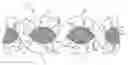
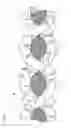
FIG. 1 is a partial, cross-sectional view of a woven fabric in accordance with one embodiment of the present invention; and
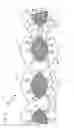
FIG. 2 is a partial, cross-sectional view of a woven fabric in accordance with another embodiment of the present invention.
DESCRIPTION OF THE PREFERRED EMBODIMENTSThe present invention is directed to yarns and fabrics that exhibit anti-static, anti-odor and anti-microbial characteristics. Although the ensuing description is in terms of the aforesaid yarns and fabrics being used to fabricate military clothing and garments, it is to be understood that these yarns and fabrics can be used to fabricate other types of protective clothing for personnel in other fields, e.g. medical, construction, petroleum, hazardous waste, chemical, etc. Furthermore, the yarns and fabrics of the present invention can also be used to fabricate protective recreational and sports clothing.
In accordance with the invention, predetermined types of fibers are blended together to form yarns which are used to fabricate clothing that exhibits anti-microbial, anti-static, and anti-odor characteristics. In a preferred embodiment, the fibers are military grade fibers. Several embodiments of the present invention are now discussed in detail.
Referring to FIG. 1, there is shown a cross-sectional view of the basic configuration of a woven fabric in accordance with one embodiment of the present invention. Woven fabric 10 generally comprises warp yarns 12 and filling yarns 14. Warp yarns 12 and filling yarns 14 are arranged in a generally criss-cross configuration. FIG. 1 is only a partial view and therefore, only portions of some of the warp yarns 12 and filling yarns 14 are shown. Each filling yarn 14 comprises a plurality of fibers 20, 30 and 40 that are blended together.
As will be shown by the ensuing description of several embodiments of the present invention, each fiber 20 and 30 can be any one of several preferred fibers, and each fiber 40 is a fiber that exhibits anti-microbial, anti-static and anti-odor properties. Thus, fibers 20, 30 and 40 are blended together to provide a fabric that has anti-microbial, anti-static, and anti-odor characteristics in accordance with the invention.
In accordance with one embodiment of the present invention, each fiber 20 is a nylon fiber, each fiber 30 is a cotton fiber, and each fiber 40 is a metal-coated fiber that exhibits anti-microbial, anti-odor and anti-static properties. In a preferred embodiment, each fiber 40 comprises a fiber having a metallic layer on the surface thereof. Preferably, fibers 40 are configured as Nobel Fiber X-Static® brand fibers. The aforesaid X-Static® g brand fiber is a fiber having a layer of silver coated over the surface thereof. Sauquoit Industries, of Scranton, Pennsylvania, manufactures X-Static® fibers and markets such fibers under the X-Static I® and X-Static II® trademarks. X-Static® brand fibers have excellent anti-bacterial, anti-odor, electromagnetic shielding and electrostatic dissipation properties. However, it is to be understood that other suitable fibers that exhibit anti-bacterial, anti-odor and anti-static properties may also be used. In another embodiment, fibers 40 are configured as copper coated fibers.
In one embodiment, each filling yarn 14 has the following percentages of fibers shown in Table I:
| TABLE I | ||
| Nylon | 49% | |
| Cotton | 46% | |
| X-Static ® | 5% | |
However, these percentages are just examples and can be varied. Preferably, there is at least 5% of X-Static® fibers. Fibers 20, 30 and 40 are blended together by any suitable method or technique, and then are woven, knitted, braided or fabricated by a non-woven process, to form a fabric or cloth. The fabric or cloth is then subsequently dyed and/or printed, or the fibers can be blended with dyed fibers prior to fabric formation. In the case of a military combat uniform, the finished fabric or cloth is usually printed with a camouflage design. It is to be understood that each warp yarn 12 also can be configured to have a blend of the same fibers used to form filling yarns 14.
In another embodiment, each fiber 20 is a Nomex fiber, each fiber 30 is a Kevlar fiber, and each fiber 40 is a fiber that exhibits anti-microbial, anti-odor and anti-static properties. In a preferred embodiment, each fiber 40 is configured as the aforementioned X-Static® brand fiber. In one embodiment, each filling yarn 14 has the percentages of fibers shown in Table II:
| TABLE II | ||
| Nomex | 90% | |
| Kevlar | 5% | |
| X-Static ® | 5% | |
However, these percentages are just examples and can be varied. These fibers can be blended together by any of the aforementioned methods or techniques to form a fabric. The fabric is then subsequently dyed and/or printed, or the fibers can be blended with dyed fibers prior to fabric formation. In the case of a military combat uniform, the finished fabric or cloth is usually printed with a camouflage design. Warp yarns 12 may be formed from the blend of the same fibers used to form filling yarns 14 in this embodiment.
In a further embodiment, each fiber 20 is a polyester fiber, each fiber 30 is a cotton fiber, and each fiber 40 is the preferred X-Static® brand fiber. In one embodiment, each filling yarn 14 has the percentages of fibers shown in Table III:
| TABLE III | ||
| Polyester | 50% | |
| Cotton | 45% | |
| X-Static | 5% | |
However, these percentages are just examples and can be varied. These fibers can be blended together by any of the aforementioned methods or techniques to form a fabric. The fabric can then be subsequently dyed and/or printed, or the fibers can be blended with dyed fibers prior to fabric formation. In the case of a military combat uniform, the finished fabric is usually printed with a camouflage design. Warp yarns 12 may also be formed from this particular blend of fibers.
Referring to FIG. 2, there is shown woven fabric 100 in accordance with another embodiment of the present invention. Fabric 100 generally comprises warp yarns 120 and filling yarns 130. Warp yarns 120 are arranged in a generally criss-cross relationship with filling yarns 130. Each filling yarn 130 comprises a plurality of fibers 140, 150, 160 and 170. Fibers 140, 150, 160 and 170 are blended together to provide a garment having anti-microbial, anti-static, and anti-odor properties. In one embodiment, fibers 140 are Nomex fibers, fibers 150 are Kevlar fibers, fibers 160 are wool fibers, and fibers 170 are fibers that exhibit antimicrobial, anti-static and anti-odor properties. In a preferred embodiment, fibers 170 are the aforementioned X-Static® brand fibers. In one embodiment, each filling yarn 130 comprises the percentages of fibers shown in Table IV:
| TABLE IV | ||
| Nomex | 40% | |
| Kevlar | 5% | |
| Wool | 50% | |
| X-Static ® | 5% | |
These percentages are just examples and may be varied. Fibers 140, 150, 160 and 170 are blended together, and any of the methods or techniques described above, e.g. weaving, knitting, etc., may be used to form a fabric. The fabric is then dyed and/or printed, or blended with dyed fibers prior to fabric formation. In the case of a military combat uniform, the finished fabric is usually printed with a camouflage design. Each warp yarn 120 can be formed from this same blend of fibers which is used to form filling yarns 130.
Preferably, a stretch fiber is preferably added to each of the blends described in the foregoing description. In one embodiment, the stretch fiber is Lycra. In another embodiment, the stretch fiber is XLA fiber manufactured by Dow Chemical. Other suitable stretch fibers may be used.
Although particular apparel-grade fibers have been described above, such as cotton, polyester, nylon, and wool, other suitable apparel-grade fibers can be used as well, e.g. Dacron, Rayon, etc. High-quality silk can also be used as one of the fibers.
With respect to all of the embodiments described in the foregoing description, Pure X-Static II (conductive grade) yarn optionally can be alternated or spaced between the fibers of the warp yarns and filling yarns to support electronic textile applications. In order to insulate the aforesaid fibers, prevent shorts and reduce fraying, the conductive yarns are coated or treated with a protective layer such as polyurethane and silicone. In another embodiment, the conductive yarn is buried within a plied or plated yarn structure. In a further embodiment, the conductive yarn is embedded within a fabric structure of all three yarns, i.e. coated, plated and embedded within a fabric structure. The finished fabric provides conductivity when the conductive yarns are integrated into a continuous fabric pathway.
The warp and filling yarns described in the foregoing description can be fabricated into any type of fabric for use in any type of garment such as, but not limited to, shirts, pants, shorts, jackets, underwear, socks, etc. These fabrics may be subsequently treated with permanent press and/or soil-release finishes for easy care and low maintenance. The fabric can also be subsequently treated with water and/or oil repellants and insect repellants.
In a preferred embodiment, the filling yarns are fabricated with any one of the fiber blends described in the foregoing description since in certain fabric constructions, it is the filling yarns that mostly contact the wearer's skin. However, as shown by the foregoing description, the warp yarns can also be fabricated with the same blend of fibers used to form the filling yarns. Thus, in one embodiment, only the filling yarns are fabricated with any one of the blends of fibers described in the foregoing description. In another embodiment, only the warp yarns are fabricated with any one of the blends of fibers described in the foregoing description. In a further embodiment, both the warp and filling yarns are fabricated with any one of the blends of the fibers described in the foregoing description. In yet a further embodiment, the warp yarn is formed from one of the blends of fibers described herein, and the filling yarn is formed from another, different blend of fibers described herein.
In a preferred embodiment, the denier of the fibers used to form the filling and warp yarns is in a range of between about 1.8 and 2.5 denier. Preferably, the denier of the filling yarn fibers is substantially equal to the denier of the warp yarn fibers. Such a configuration facilitates the transport of liquid moisture which collects on the filling yarns to the warp yarns. Thus, when the denier of the filling yarn fibers is equal to the denier of the warp yarn fibers, the inter-fiber space in the filling yarn is also equal to the inter-fiber space in the warp yarns. As a result, when moisture collects on the filling yarns, this moisture is quickly transferred from the filling yarns to the warp yarns due to capillary action.
Thus, fabrics fabricated with the warp and filling yarns of the present invention provide multi-functionality including visual and near infrared protection, comfort, durability, UV resistance, electrostatic dissipation, anti-odor performance, and anti-microbial performance.
The present invention provides many advantages and benefits over prior techniques and methods. For example, clothing made from fabrics fabricated with the warp and filling yarns of the present invention provide anti-static, anti-odor, and anti-microbial performance thereby eliminating the need for separate, additional undergarments or underwear. The yarns of the present invention can be used to fabricate clothing that can be used as (i) undergarments in a layered clothing system for cold weather environments, (ii) a single, stand-alone garment for use in cold weather environments, and (iii) a single, stand-alone garment for use in hot weather environments. Thus, rather than having multiple garments, each providing a specific function, the present invention provides clothing composed of a single fabric that provides multi-functional performance, the desired anti-microbial, anti-static and anti-odor characteristics, improved durability and relatively longer wear-life.
The principles, preferred embodiments and modes of operation of the present invention have been described in the foregoing specification. The invention which is intended to be protected herein should not, however, be construed as limited to the particular forms disclosed, as these are to be regarded as illustrative rather than restrictive. Variations and changes may be made by those skilled in the art without departing from the spirit of the invention. Accordingly, the foregoing detailed description should be considered as exemplary in nature and not limiting the scope and spirit of the invention as set forth in the attached claims.
Claims
What is claimed is:1. A yarn comprising:
a first plurality of fibers;
a second plurality of fibers that are different from the fibers of the first plurality; and
a third plurality of fibers that are different from the fibers of the first and second pluralities, the fibers of the third plurality having anti-microbial, anti-odor and anti-static properties.
2. The yarn according to claim 1 wherein the fibers of the third plurality are metal-coated fibers.
3. The yarn according to claim 2 wherein the metal-coated fibers are silver-coated fibers.
4. The yarn according to claim 1 wherein each fiber of the first plurality is a nylon fiber.
5. The yarn according to claim 4 wherein each fiber of the second plurality is a cotton fiber.
6. The yarn according to claim 5 further comprising a fourth plurality of fibers that are different from the first, second and third pluralities of fibers.
7. The yarn according to claim 6 wherein each fiber of the fourth plurality is a stretch fiber.
8. The yarn according to claim 1 wherein at least 5% of all fibers of which the yarn is comprised are the fibers of the third plurality.
9. The yarn according to claim 1 wherein each fiber of the first plurality is a cotton fiber.
10. The yarn according to claim 9 wherein each fiber of the second plurality comprises a polyester fiber.
11. The yarn according to claim 10 further comprising a fourth plurality of fibers that are different from the first, second and third pluralities of fibers.
12. The yarn according to claim 11 wherein each fiber of the fourth plurality is a stretch fiber.
13. The yarn according to claim 1 wherein each fiber of the first plurality is a Nomex fiber.
14. The yarn according to claim 13 wherein each fiber of the second plurality is a Kevlar fiber.
15. The yarn according to claim 14 further comprising a fourth plurality of fibers that are different from the first, second and third pluralities of fibers.
16. The yarn according to claim 15 wherein each fiber of the fourth plurality is a stretch fiber.
17. The yarn according to claim 14 further comprising a fourth plurality of fibers that are different from the fibers of the first, second and third pluralities.
18. The yarn according to claim 17 wherein each fiber of the fourth plurality is a wool fiber.
19. The yarn according to claim 18 further comprising a fifth plurality of fibers that are different from the fibers of the first, second, third and fourth pluralities.
20. The yarn according to claim 19 wherein each fiber of the fifth plurality is a stretch fiber.
21. A yarn comprising:
a plurality of nylon fibers;
a plurality of cotton fibers; and
a plurality of metal-coated fibers having anti-microbial, anti-static and anti-odor properties.
22. The yarn according to claim 21 further comprising a plurality of stretch fibers.
23. The yarn according to claim 21 wherein the metal-coated fibers are silver-coated fibers.
24. A fabric formed at least in part by the yarn defined by claim 21.
25. A fabric formed at least in part by the yarn defined by claim 22.
26. A yarn comprising:
a plurality of Nomex fibers;
a plurality of Kevlar fibers; and
a plurality of metal-coated fibers configured to exhibit anti-microbial, anti-static and anti-odor properties.
27. The yarn according to claim 26 further comprising a plurality of stretch fibers.
28. The yarn according to claim 26 further comprising a plurality of wool fibers.
29. The yarn according to claim 28 further comprising a plurality of stretch fibers.
30. A fabric formed at least in part by the yarn defined by claim 26.
31. A fabric formed at least in part by the yarn defined by claim 27.
32. A fabric formed at least in part by the yarn defined by claim 28.
33. A fabric formed at least in part by the yarn defined by claim 29.
34. A yarn comprising:
a plurality of polyester fibers;
a plurality of cotton fibers; and
a plurality of metal-coated fibers configured to exhibit anti-microbial, anti-static and anti-odor properties.
35. The yarn according to claim 34 further comprising a plurality of stretch fibers.
36. A fabric formed at least in part by the yarn defined by claim 34.
37. A fabric formed at least in part by the yarn defined by claim 35.
Images & Drawings included:
Sources:
- United States Patent and Trademark Office - verify current appl. status at the USPTO↗
Recent applications in this class:
- » 20240076811 2024-03-07
MULTIFUNCTIONAL TEMPERATURE-ADAPTABLE YARN, AND PREPARATION METHOD AND USE THEREOF - » 20220333278 2022-10-20
ANTIBACTERIAL TEXTILE AND PREPARATION METHOD THEREOF - » 20220127760 2022-04-28
TEXTILE YARN WITH ANTIVIRAL PROPERTIES, AND METHODS THEREOF - » 20220090303 2022-03-24
Copper ion-complexed poly gamma-glutamic acid/chitosan/cotton blended antibacterial knitted fabric and preparation method thereof - » 20210310159 2021-10-07
POLYMERIC YARN, COMPOSITION AND METHOD - » 20210269949 2021-09-02
PERSONAL PROTECTIVE EQUIPMENT - » 20200362485 2020-11-19
Antibacterial twisted yarn, and antibacterial yarn and antibacterial cloth including antibacterial twisted yarns - » 20200291550 2020-09-17
ANTIMICROBIAL FIBER BLENDS - » 20190330771 2019-10-31
Antibacterial yarn and antibacterial fabric - » 20170247818 2017-08-31
ANTISEPTIC 3D PRINTING FILAMENT
Recent applications for this Assignee:
- » 20250085073 2025-03-13
ADDITIVE MANUFACTURING ENHANCED SIDEARM - » 20250023247 2025-01-16
ULTRAWIDE-BAND DUAL POLARIZATION THREE-DIMENSIONAL TAPERED APERTURE VIVALDI ANTENNA - » 20250001398 2025-01-02
PROCESS FOR THE RAPID DEVELOPMENT OF HIGH CONTENT METAL-ORGANIC FRAMEWORK HOLLOW FIBERS FOR GAS SEPARATION AND TOXIC CHEMICAL REMOVAL - » 20240387882 2024-11-21
Acidic Surface Treatment for Multivalent Battery Metal Anode - » 20240385232 2024-11-21
SELF-LOCKED RYDBERG ATOM ELECTRIC FIELD SENSOR - » 20240248366 2024-07-25
Metasurface-based active retroreflector - » 20240200894 2024-06-20
FIREARM WITH REAL-TIME CARTRIDGE COUNTER - » 20240198417 2024-06-20
Nano-structured alloy material and method of synthesizing - » 20240191269 2024-06-13
Biofabrication of advanced functional materials using bacterial cellulose scaffolds - » 20240174937 2024-05-30
COATING COMPRISING A TRANSITION METAL DICHALCOGENIDE, AND COATED ARTICLES AND METHODS RELATING THERETO