Pin socket with a rib
US20070149039A1
2007-06-28
11/646,844
2006-12-27
✅ Patent granted
US 7,544,092 B2
2009-06-09
-
-
Michael C Zarroli
2027-01-16
Abstract:
An electrical connector comprises a housing (1), a cover (2) mounted on the housing (1), a plurality of terminals (3) received in the housing (1), a pair of screw members (5) mounted on two ends of the housing (1) for connecting the housing (1) to a printed circuit board. The housing (1) defines an upper surface (11) and a pair of recesses (12) on two ends thereof for receiving the screw members (5), each recess (12) at least defines one triangle rib (13) for engaging interferential with the screw members (5). The triangle rib (13) is clear from the upper surface (11) of the housing (1).
Assignee:
- Hon Hai Precision Ind. Co., Ltd. 1,929 🇹🇼 Taipei Hsien, Taiwan
Interested in similar patents?
Get notified when new applications in this technology area are published.
Classification:
H01R12/7047 » CPC main
Structural associations of a plurality of mutually-insulated electrical connecting elements, specially adapted for printed circuits, e.g. printed circuit boards [PCBs], flat or ribbon cables, or like generally planar structures, e.g. terminal strips, terminal blocks; Coupling devices specially adapted for printed circuits, flat or ribbon cables, or like generally planar structures; Terminals specially adapted for contact with, or insertion into, printed circuits, flat or ribbon cables, or like generally planar structures; Coupling devices; Guiding, mounting, polarizing or locking means; Extractors; Locking or fixing a connector to a PCB with a fastener through a screw hole in the coupling device
H01R13/6215 » CPC further
Details of coupling devices of the kinds covered by groups or -; Means for facilitating engagement or disengagement of coupling parts or for holding them in engagement; Bolt, set screw or screw clamp using one or more bolts
H01R13/58 IPC
Details of coupling devices of the kinds covered by groups or - Means for relieving strain on wire connection, e.g. cord grip, for avoiding loosening of connections between wires and terminals within a coupling device terminating a cable
H01R13/73 IPC
Details of coupling devices of the kinds covered by groups or - Means for mounting coupling parts to apparatus or structures, e.g. to a wall
Description
BACKGROUND OF THE INVENTION1. Field of the Invention
The present invention relates to an electrical connector, particularly to an electrical connector defined a screw member in two ends thereof.
2. Description of the Prior Art
A conventional electrical connector for connecting hard desk to a chip modules is disclosed in FIGS. 1-2. The electrical connector generally disposes a pair of screw members on two ends thereof for connecting with a printed circuit board. The electrical connector comprises an insulative housing. Due to the inferior intensity and anti-friction effect of the insulative material inherent, the housing always is inserted in a metal screw member for improving the using performance and the life span. The housing usually engages with the screw members by interfering ribs. Referring to the FIG. 1-2, the electrical connector comprises an insulative housing 1′, a cover 2′ mounted on the housing 1′, a plurality of terminals 3′ received in the housing 1′, a securing member 4′ and a screw member 5′ disposed on two ends of the housing 1′ for connecting the housing 1′ to the printed circuit board. The housing 1′ comprises an upper surface 11′, a recess 12′ indented in the upper surface 11′ comprising a first recess 121′, a second recess 122′ and a third recess 123′, a triangle rib 13′ extending from a sidewall of the second recess 122′. The screw member 5′ imbeds in the recess 12′ with engaging interferentially with the triangle rib 13′. However, the screw member 5′ engages interferentially with the recess 12′ and a top end of the triangle rib 13′ is coplanar with an upper surface 11′ of the housing 1′, which can make that the screw member 5′ is difficultly inserted into the recess 12′ of the housing 1′ and decrease the efficacy of the assembly of the electrical connector.
BRIEF SUMMARY OF THE INVENTIONAn object of the present invention is to provide an electrical connector able to simplify a process of imbedding screw members into the recesses.
An electrical connector in according with the prefer embodiment of the present invention comprises a housing, a cover mounted on the housing, a plurality of terminals received in the housing, a pair of screw members mounted on two ends of the housing for connecting the housing to a printed circuit board. The housing defines a upper surface and a pair of recesses on two ends thereof for receiving the screw members, each recess at least defines a pair of triangle ribs for engaging interferentially with the screw members, the triangle rib defines a top surface lower than the upper surface of the housing.
Relative to the present technology, the electrical connector in accordance with the prefer embodiment of the invention. The triangle rib with a inclined surface ensure the screw member accurately imbedded in the housing and provide a prepress effect, which can simplify the assembling process and decrease the assembling time.
Other objects, advantages and novel features of the invention will become more apparent from the following detailed description of a preferred embodiment when taken in conjunction with the accompanying drawings.
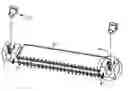
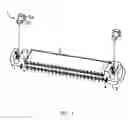
BRIEF DESCRIPTION OF THE DRAWINGSFIG. 1 is an isometric view of a conventional electrical connector wherein a screw member is not inserted into a housing;
FIG. 2 is a magnified view of a circle A of the electrical connector described in FIG. 1;
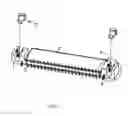
FIG. 3 is an isometric view of an electrical connector in accordance with the preferred embodiment of the invention, wherein a screw member is not inserted into a housing thereof;
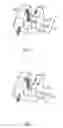
FIG. 4 a magnified view of a circle A of the electrical connector described in FIG. 3;
FIG. 5 is an assembled view of the electrical connector described in FIG. 4;
DETAILED DESCRIPTION OF THE PREFERRED EMBODIMENTSReferring to FIGS. 3-5, an electrical connector comprises a housing 1, a cover 2 mounted on the housing 1, a plurality of terminals 3 received in the housing 1 and a screw member 5 imbedded in the housing 1 for connecting the electrical connector to the printed circuit board. The housing 1 defines an upper surface 11, a recess 12 indented inwardly from the upper surface and a triangle rib 13 protruding on an inner wall of the recess 12. The recess 12 comprises a front section 121, a central section 122 and a distal section 123, wherein the front section 121 and the distal section 123 cooperatively from an U-shaped configuration and the central section 122 is indented deeper than the front section 121 and the distal section 123. In addition the central section 122 comprises a slant surface connecting with the upper surface 11 on each sidewall thereof, a rectangular-shaped bottom surface, a pair of triangle rib 13 extending from an inner wall of the central section 122 and defines a slant top surface on an end adjacent to the upper surface 11 and lower than the upper surface 11. One point of the top slant surface engaging with screw member 5 is lower than the other two point of the top slant surface in an inserting direction, and the two lower points can be coplanar with or lower than the upper surface 11 of the housing 1.
The screw member 5 for receiving a screw therein comprises a column section 51 and a four-side section 52, wherein the four-side section defines 51 a slant surface on each corner thereof for conveniently engaging with the triangle ribs 13.
Referring also to FIG. 5, each terminal 3 received in the housing 1 comprises a tail extending through a passageway of the cover for connecting the cover 2 to the housing 1. The metal screw member 5 imbedded in the recess 12 by engaging interferential with the triangle rib 13. During the mounting the screw member 5 on the housing 1, the column section 51 of the screw member 5 is inserted in the front recess 121 of the housing 1, the rectangular section 52 is inserted in the central recess 122, the triangle rib 13 can locate and prepress the screw member 5 inserting into the housing 1, hence a preferred force can make the screw member 5 mounted in the recess 12 for realizing a simplified engagement between the screw member 5 and the housing 1.
Referring to the FIG. 5, as a improvement of the invention, the housing 1 disposes a pair of elongate channel for receiving the locking member 4 on two ends thereof, which can enforce the engagement between the electrical connector and the printed circuit board.
It will be understood that the invention may be embodied in other specific forms without departing from the spirit or central characteristics thereof. The present examples and embodiments, therefore, are to be considered in all respects as illustrative and not restrictive, and the invention is not be limited to the details given herein.
Claims
What is claimed is:1. An electrical connector comprising:
a housing defining an upper surface and a pair of recesses on two ends thereof, wherein each recess at least defines one rib;
a plurality of terminals received in the housing;
a pair of screw members interferntially received in the recesses of the housing;
wherein each rib is clear from the upper surface of the housing.
2. The electrical connector as claimed in claim 1, further comprising at least a locking member connecting the housing to a printed circuit board.
3. The electrical connector as claimed in claim 1, wherein the housing defines at least one channel on a bottom surface for receiving the locking member therein.
4. The electrical connector as claimed in claim 1, wherein the rib defines an inclined upper surface on a top end and one point of the top slant surface engaging with the screw member is lower than the other two points of the top slant surface in an inserting direction.
5. The electrical connector as claimed in claim 4, wherein the two higher points can be coplanar with or lower than the upper surface of the housing.
6. The electrical connector as claimed in claim 4, wherein height of the point engaging with the screw member is lower than height of the screw member imbedded in the recess.
7. The electrical connector as claimed in claim 4, wherein height of the point engaging with the screw member is not lower than height of the screw member imbedded in the recess.
8. The electrical connector as claimed in claim 1, wherein the recess comprises a front section, a central section and a distal section.
9. The electrical connector as claimed in claim 8, wherein the front section and the distal section cooperatively define an U-shaped and the central section is indented deeper than the front section and the distal section.
10. The electrical connector as claimed in claim 9, wherein the rib is clear from the upper surface of the housing and defines a slant top surface on an end adjacent to the upper surface.
11. An electrical connector comprising:
a housing defining an upper surface and a pair of recesses on two ends thereof, wherein each recess at least defines one rib for;
a plurality of terminals received in the housing;
a pair of screw members interferentially received in the recesses of the housing;
at least a locking member for connecting the housing to a printed circuit board.
wherein each rib defines a slant surface lower than the upper surface of the housing.
12. An electrical connector comprising:
a housing defining an upper surface with a pair of exposed recesses on two ends thereof, wherein each of said recesses is equipped with at least one protrusion therein to reduce an inner dimension of said recess;
a plurality of terminals received in the housing; and
a pair of screw members dimensioned to essentially comply with the corresponding recesses and respectively interferentially, due to said protrusions, received in the recesses of the housing; wherein
the screw members are assembled into the corresponding recesses from the upper surface downwardly, and each protrusion is spaced away from the upper surface of the housing so as to allow the corresponding screw member to be inserted into the recess easily.
13. The electrical connector as claimed in claim 12, wherein the recess includes a middle rectangular section and two U-shaped sections located at two opposite sides of the middle rectangular section, and wherein the protrusion is located in the middle rectangular section.
Images & Drawings included:
Sources:
- United States Patent and Trademark Office - verify current appl. status at the USPTO↗
Recent applications in this class:
- » 20250210891 2025-06-26
SYSTEMS AND METHODS TO DIAGNOSE CONNECTIVITY OF A NON-SOLDERED COMPRESSION USB CONNECTOR - » 20250112384 2025-04-03
CONNECTOR ASSEMBLY AND STRUCTURE COMPRISING THE SAME - » 20250070490 2025-02-27
Forming Connections to Flexible Interconnect Circuits - » 20240388021 2024-11-21
SYSTEM AND METHOD FOR CABLED POWER USING STRAIN RELIEF CONNECTORS - » 20240356252 2024-10-24
BUS CONNECTING CABLE - » 20240347938 2024-10-17
ELECTRICAL CONNECTOR ASSEMBLY AND METHOD OF MAKING SAME - » 20240235073 2024-07-11
ELECTRONIC DEVICE AND CHIP ASSEMBLY - » 20240047905 2024-02-08
ELECTRICAL CONNECTOR AND CIRCUIT BOARD SEAT - » 20230402776 2023-12-14
Forming connections to flexible interconnect circuits - » 20230261398 2023-08-17
CHIP CONNECTOR WITH AN IMPROVED ROTATING PLATE
Recent applications for this Assignee:
- » 20110045702 2011-02-24
Electrical cable connector assembly with improved wire organizer - » 20110021088 2011-01-27
Electrical connector with improved contact footprints - » 20110021082 2011-01-27
High density backplane connector having improved terminal arrangement - » 20110008982 2011-01-13
N-in-1 card connector - » 20110005825 2011-01-13
Cable assembly with EMI protection - » 20110003508 2011-01-06
Electrical connector rotatably mounted to a portable device - » 20100330822 2010-12-30
Electrical connector having contact with upper terminal and lower terminal - » 20100317218 2010-12-16
Electrical connector assembly with latching mechanism - » 20100297861 2010-11-25
Socket connector having improved actuating mechanism for driving moving plate - » 20100291799 2010-11-18
Shielded connector with enlarged base supporting cantilevered brackets extending from the shielded connector