Fixing nail
US20070160443A1
2007-07-12
11/387,727
2006-03-24
Abstract:
A fixing nail includes a pair of legs and a bridge interconnecting the common ends of said legs; said legs have a plurality of annular ridges arranged thereon including a flat surface facing the bridge and an angled surface facing the tapered tip so as to ensure good resistance of extraction after the legs introduced into the materials.
Interested in similar patents?
Get notified when new applications in this technology area are published.
Classification:
F16B15/06 » CPC further
Nails; Staples with barbs, e.g. for metal parts; Drive screws
A61B17/0642 » CPC further
Surgical instruments, devices or methods, e.g. tourniquets; Surgical staples, i.e. penetrating the tissue for bones, e.g. for osteosynthesis or connecting tendon to bone
F16B15/0015 » CPC further
Nails; Staples Staples
F16B15/00 » CPC main
Fastening means without screw-thread
F16B15/00 » CPC main
Nails; Staples
Description
BACKGROUND OF THE INVENTION1. Field of the Invention
The present invention relates to a fixing nail, particularly to avoid the retreating when introducing into the materials.
2. Description of the Related Art
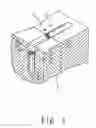
Referring to FIG. 1, a conventional fixing nail 1 generally includes a pair of spaced-apart longitudinally extending legs 12 and a bridge 11 interconnecting the common ends of two legs 12. Said bridge 11 and legs 12 are smooth-surfaced cylinders. When the fixing nail 1 is pushed in, each leg 12 respectively intrudes into the materials 2 so as to fix two materials 2 together.
In use, the conventional fixing nail 1 has several disadvantages.
1. Due to the fact that the bridge is a smooth-surfaced cylinder, the force is difficultly applied on when pushing the fixing nail into the materials whether by hammer or nail gun.
Further, the materials can be swung by external force such as vibration force, swing force or any other force that cause movement of two materials. In additional, because said bridge and legs are both smooth-surfaced cylinders, the fixing nail is unable to hold materials tightly through the movement that eventually causes breakaway of said materials.
2. Because said legs are smooth-surfaced cylinders, the friction between said legs and the materials is relatively small that causes the legs easily to extract from the materials after pushing in.
The present invention intends to provide an improved fixing nail with a plurality of annular ridges arranged on legs which enhance the tightness after clinching the materials.
SUMMARY OF THE INVENTIONThe present invention relates to a fixing nail that comprises a pair of spaced-apart longitudinally extending legs with a tapered tip defined at one common ends thereof, and a bridge interconnecting the other common ends of said legs; said legs have a plurality of annular ridges disposed thereon including a flat surface facing the bridge and an angled surface facing the tapered tip.
The present invention will become more obvious from the following description when taken in connection with the accompanying drawings which show, for purposes of illustration only, a preferred embodiment in accordance with the present invention.
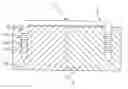
BRIEF DESCRIPTION OF THE DRAWINGSFIG. 1 is a perspective view to show the conventional fixing nail pushed in the materials;
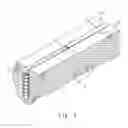
FIG. 2 is a perspective view to show the first preferred embodiment of the present invention;
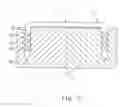
FIG. 3 is a sectional view to show the first preferred embodiment of the present invention used in the materials, and
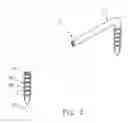
FIG. 4 shows another preferred embodiment of the fixing nail pushed in the materials.
DETAILED DESCRIPTION OF THE PREFERRED EMBODIMENTSReferring to FIG. 2, the fixing nail 3 of the present invention, generally U-shaped, comprises a pair of spaced-apart longitudinally extending legs 32 with a tapered tip 321 defined at one common ends thereof; and a bridge, with a cylindrical configuration, 31 interconnecting the other common ends of said legs 32. Said legs 32 have a plurality of annular ridges 322 disposed thereon including a flat surface 323 facing the bridge 31 and an angled surface 324 facing the tapered tip 321. As shown in FIG. 3, during the operation, the users apply a force on the bridge 31 to push the legs 32 into the materials 4. After the annular ridges 322 introduced into the materials, said flat surface 323 of annular ridges 322 are locked in the materials 4 which enable the legs 32 to be stably engaged with materials 4 so as to prevent the fixing nail 3 from retreating.
Referring to FIG. 4, another preferred embodiment of present invention of the fixing nail 3 is the same as the fixing nails 3 shown in FIG. 2, except that the bridge 31 further includes a sharp portion 311 defined toward the side that said legs 32 positioned and a flat portion 312 defined on the opposite side of said sharp portion 311 so as the bridge 31 forms a triangular cross-sectional configuration. In use, the users apply a force to the flat portion 312 of the bridge 31 to vertically push the legs 32 into the materials 4. At the same time the legs 32 are completely merged in the materials 4, one groove is defined on the surface of the materials 4 by the cut of sharp portion 311 so as to accommodate said bridge 31.
As indicated above, the invention has the following advantages:
-
- 1. By the means of the legs with annular ridges arranged, it ensures the good resistance of extraction from the materials.
- 2. Because the sharp portion is located toward the side the legs positioned, a groove is defined on the surface of the materials to accommodate the bridge so as to stabilize and immobilize two materials.
- 3. By the means of a flat portion on the bridge, it is convenient for users to apply a force to the bridge so as to push the legs into the materials rapidly and avoid the legs from bending.
While we have shown and described the embodiment in accordance with the present invention, it should be clear to those skilled in the art that further embodiments may be made without departing from the scope of the present invention.
Claims
What is claimed is:1. A fixing nail comprising:
A pair of spaced-apart longitudinally extending legs with a tapered tip defined at one common ends thereof and a bridge interconnecting the other common ends of said legs; a plurality of annular ridges is arranged on said legs; each of said annular ridges includes horizontally flat surface facing the bridge and an angled surface facing the tapered tip.
2. The fixing nail as claimed in claim 1, wherein said bridge has at least one sharp portion defined toward the side that said legs positioned and a flat portion defined on the opposite side of said sharp portion.
3. The fixing nail as claimed in claim 1, wherein said bridge has a triangular cross-sectional configuration.
Images & Drawings included:
Sources:
- United States Patent and Trademark Office - verify current appl. status at the USPTO↗
Similar patent applications:
- » 20210068515
ARTICLE FOR DECORATING A PERSON'S SKIN, LIPS OR NAIL, FIXING AGENT FOR SUCH AN ARTICLE AND METHOD OF DECORATING THE SKIN, LIPS OR NAIL - » 20070049940
Intramedullary nail assembly with fixed securement and associated method - » 20110218531
Endosteal nail plate for fixing bone segments - » 20140343551
Endosteal nail plate for fixing bone segments - » 20240247481
Novel metal nail sleeve for fixing thermal insulation layer - » 20190216474
Instrument for aligning fixing screws to be inserted in transverse holes of nails for long bones, in particular medullary nails
Recent applications in this class:
- » 20210180631 2021-06-17
Polymeric fastener - » 20190017530 2019-01-17
Polymeric fastener - » 20150071734 2015-03-12
self-wedging concrete nail - » 20140199134 2014-07-17
STA-PUT / HURRICANE NAIL - » 20140161561 2014-06-12
System and method for driving a fastener - » 20140037401 2014-02-06
Wall anchor - » 20120114446 2012-05-10
Fastening device - » 20110293388 2011-12-01
MAKING IT EASIER TO EXTRACT NAILS, AND OTHER BENEFITS - » 20100260579 2010-10-14
Corner-cut corrugated fastener - » 20100212244 2010-08-26
ASSEMBLAGE OF SEALING NAIL