Controlled compounding of thermoplastic polymer composition with barrier properties
US20070160802A1
2007-07-12
11/641,308
2006-12-19
Abstract:
The invention provides a method for compounding olefin resins with barrier resins to produce thermoplastic polymer blends that can be used to make molded or extruded articles having barrier properties to organic solvents.
Interested in similar patents?
Get notified when new applications in this technology area are published.
Classification:
C08L2666/20 » CPC further
Composition of polymers characterized by a further compound in the blend, being organic macromolecular compounds, natural resins, waxes or and bituminous materials, non-macromolecular organic substances, inorganic substances or characterized by their function in the composition; Organic macromolecular compounds, natural resins, waxes or and bituminous materials; Macromolecular compounds according to - ; Derivatives thereof Macromolecular compounds having nitrogen in the main chain according to - ; Derivatives thereof
C08L2666/02 » CPC further
Composition of polymers characterized by a further compound in the blend, being organic macromolecular compounds, natural resins, waxes or and bituminous materials, non-macromolecular organic substances, inorganic substances or characterized by their function in the composition Organic macromolecular compounds, natural resins, waxes or and bituminous materials
C08L2666/06 » CPC further
Composition of polymers characterized by a further compound in the blend, being organic macromolecular compounds, natural resins, waxes or and bituminous materials, non-macromolecular organic substances, inorganic substances or characterized by their function in the composition; Organic macromolecular compounds, natural resins, waxes or and bituminous materials; Macromolecular compounds according to groups - , or - ; Derivatives thereof Homopolymers or copolymers of unsaturated hydrocarbons; Derivatives thereof
C08L2666/04 » CPC further
Composition of polymers characterized by a further compound in the blend, being organic macromolecular compounds, natural resins, waxes or and bituminous materials, non-macromolecular organic substances, inorganic substances or characterized by their function in the composition; Organic macromolecular compounds, natural resins, waxes or and bituminous materials Macromolecular compounds according to groups - , or - ; Derivatives thereof
B29B7/007 » CPC further
Mixing; Kneading; Methods for continuous mixing
B29B7/823 » CPC further
Mixing; Kneading; Component parts, details or accessories; Auxiliary operations; Heating or cooling Temperature control
B29C48/022 » CPC further
Extrusion moulding, i.e. expressing the moulding material through a die or nozzle which imparts the desired form; Apparatus therefor characterised by the choice of material
B29C48/10 » CPC further
Extrusion moulding, i.e. expressing the moulding material through a die or nozzle which imparts the desired form; Apparatus therefor characterised by the shape of the extruded material at extrusion; Articles with cross-sections having partially or fully enclosed cavities, e.g. pipes or channels flexible, e.g. blown foils
B29C48/39 » CPC further
Extrusion moulding, i.e. expressing the moulding material through a die or nozzle which imparts the desired form; Apparatus therefor; Component parts, details or accessories; Auxiliary operations; Means for plasticising or homogenising the moulding material or forcing it through the nozzle or die; Plasticisers, homogenisers or feeders comprising two or more stages a first extruder feeding the melt into an intermediate location of a second extruder
B29C48/832 » CPC further
Extrusion moulding, i.e. expressing the moulding material through a die or nozzle which imparts the desired form; Apparatus therefor; Component parts, details or accessories; Auxiliary operations; Thermal treatment of the extrusion moulding material or of preformed parts or layers, e.g. by heating or cooling at the plasticising zone, e.g. by heating cylinders; Heating or cooling the cylinders Heating
B29C48/92 » CPC further
Extrusion moulding, i.e. expressing the moulding material through a die or nozzle which imparts the desired form; Apparatus therefor; Component parts, details or accessories; Auxiliary operations Measuring, controlling or regulating
B29C49/0005 » CPC further
Blow-moulding, i.e. blowing a preform or parison to a desired shape within a mould; Apparatus therefor characterised by the material
B29C49/04 » CPC further
Blow-moulding, i.e. blowing a preform or parison to a desired shape within a mould; Apparatus therefor; Combined blow-moulding and manufacture of the preform or the parison Extrusion blow-moulding
B29C49/06 » CPC further
Blow-moulding, i.e. blowing a preform or parison to a desired shape within a mould; Apparatus therefor; Combined blow-moulding and manufacture of the preform or the parison Injection blow-moulding
B29K2023/0633 » CPC further
Use of polyalkenes or derivatives thereof as moulding material; Polymers of ethylene; PE, i.e. polyethylene characterised by its density LDPE, i.e. low density polyethylene
B29K2023/065 » CPC further
Use of polyalkenes or derivatives thereof as moulding material; Polymers of ethylene; PE, i.e. polyethylene characterised by its density HDPE, i.e. high density polyethylene
B29K2023/086 » CPC further
Use of polyalkenes or derivatives thereof as moulding material; Polymers of ethylene; Copolymers of ethylene EVOH, i.e. ethylene vinyl alcohol copolymer
B29K2023/12 » CPC further
Use of polyalkenes or derivatives thereof as moulding material; Polymers of propylene PP, i.e. polypropylene
B29L2031/7172 » CPC further
Other particular articles; Containers; Packaging elements or accessories, Packages Fuel tanks, jerry cans
C08L23/0861 » CPC further
Compositions of homopolymers or copolymers of unsaturated aliphatic hydrocarbons having only one carbon-to-carbon double bond; Compositions of derivatives of such polymers not modified by chemical after-treatment; Homopolymers or copolymers of ethene; Copolymers of ethene; Copolymers of ethene with unsaturated hydrocarbons containing other atoms than carbon or hydrogen atoms; Vinylacetate Saponified vinylacetate
C08L29/04 » CPC further
Compositions of homopolymers or copolymers of compounds having one or more unsaturated aliphatic radicals, each having only one carbon-to-carbon double bond, and at least one being terminated by an alcohol, ether, aldehydo, ketonic, acetal or ketal radical; Compositions of hydrolysed polymers of esters of unsaturated alcohols with saturated carboxylic acids; Compositions of derivatives of such polymers; Homopolymers or copolymers of unsaturated alcohols Polyvinyl alcohol; Partially hydrolysed homopolymers or copolymers of esters of unsaturated alcohols with saturated carboxylic acids
C08L51/06 » CPC further
Compositions of graft polymers in which the grafted component is obtained by reactions only involving carbon-to-carbon unsaturated bonds ; Compositions of derivatives of such polymers grafted on to homopolymers or copolymers of aliphatic hydrocarbons containing only one carbon-to-carbon double bond
Y10T428/24 » CPC further
Stock material or miscellaneous articles Structurally defined web or sheet [e.g., overall dimension, etc.]
C08L23/06 » CPC main
Compositions of homopolymers or copolymers of unsaturated aliphatic hydrocarbons having only one carbon-to-carbon double bond; Compositions of derivatives of such polymers not modified by chemical after-treatment; Homopolymers or copolymers of ethene Polyethene
C08L23/10 » CPC further
Compositions of homopolymers or copolymers of unsaturated aliphatic hydrocarbons having only one carbon-to-carbon double bond; Compositions of derivatives of such polymers not modified by chemical after-treatment Homopolymers or copolymers of propene
C08L77/00 » CPC further
Compositions of polyamides obtained by reactions forming a carboxylic amide link in the main chain ; Compositions of derivatives of such polymers
B32B5/00 IPC
Layered products characterised by the non- homogeneity or physical structure, i.e. comprising a fibrous, filamentary, particulate or foam layer; Layered products characterised by having a layer differing constitutionally or physically in different parts
C08G63/91 IPC
Macromolecular compounds obtained by reactions forming a carboxylic ester link in the main chain of the macromolecule Polymers modified by chemical after-treatment
Description
This application claims the benefit of U.S. Provisional Application No. 60/751,812, filed Dec. 20, 2005.
FIELD OF THE INVENTIONThe invention relates to the field of thermoplastic polymers, particularly thermoplastic polymer blends having barrier properties to hydrocarbons.
BACKGROUND OF THE INVENTIONIt is known to add minor quantities (e.g. 4 wt % to 15 wt %) of barrier resins such as polyvinyl alcohol, copolymers of ethylene-vinyl alcohol or polyamides to polyolefin resins such as high density polyethylene (HDPE), low density polyethylene (LDPE), and polypropylene (PP) to improve the solvent and hydrocarbon barrier performance of the olefin in blow-molded applications. Examples of such barrier resins are sold under the tradename Selar® RB (DuPont).
The barrier resin is added to the polyolefin resin as a dry blend, which is then mixed in an extruder. Processing to make hollow articles is done on conventional extrusion blow-molding machines. The resulting blow-molded containers are economical, lightweight, impact resistant, and can be formed into a wide variety of complex shapes.
Uses of such olefin resins with enhanced barrier properties include automotive fuel tanks, small, permeation-resistant fuel tanks and other service fluid and solvent storage containers. Applications include lawn and garden equipment and lightweight vehicles such as personal watercraft, ATVs, motorcycles and golf carts, whose manufacturers need to reduce air emissions of hydrocarbons to meet environmental regulations.
Although such barrier-enhanced olefin resins have excellent properties, a need remains for olefin resins having improved barrier properties.
SUMMARY OF THE INVENTIONThe inventors have found that when a barrier resin and an olefin resin are compounded using a controlled temperature profile, molded and extruded products with enhanced barrier properties to hydrocarbons can be produced.
In a first aspect, the invention provides a method for producing a thermoplastic polymer blend having barrier properties to hydrocarbons, the method comprising the steps:
blending in an extruder thermoplastic polymer material comprising or consisting essentially of an olefin resin, and a barrier resin selected from polyvinyl alcohol, copolymers of ethylene-vinyl alcohol, polyamides, and mixtures of these, wherein the temperature of the thermoplastic polymer material in the extruder is controlled to be not higher than at or about 10° C. above the melting point of the barrier resin.
In a second aspect, the invention provides a molded or extruded article comprising or consisting essentially of a thermoplastic polymer blend comprising or consisting essentially of a polyolefin and a barrier resin selected from polyvinyl alcohol, copolymers of ethylene-vinyl alcohol, polyamides, and mixtures of these, wherein the molded or extruded article has a permeability to hydrocarbons at a wall thickness (t) of 1.4 mm, and an external area (A) of 645 cm2, of less that at or about 0.0787 g·mm/day·100 cm2, when a steady rate of mass transfer of hydrocarbon is reached, as measured according to ASTM D2684 [fuel type CE10; temperature 40° C.].
In a third aspect, the invention provides a molded or extruded article comprising or consisting essentially of a thermoplastic polymer blend comprising or consisting essentially of a polyolefin and a barrier resin selected from polyvinyl alcohol, copolymers of ethylene-vinyl alcohol, polyamides, and mixtures of these, wherein the molded or extruded article has a laminar microstructure exhibiting an aspect ratio of greater than at or about 10.
In a fourth aspect, the invention provides a molded or extruded article made by a method comprising a step of blending in an extruder thermoplastic polymer material comprising or consisting essentially of an olefin resin and a barrier resin selected from polyvinyl alcohol, copolymers of ethylene-vinyl alcohol and polyamides, and mixtures of these, wherein the temperature of the thermoplastic polymer material in the extruder is controlled to be not higher than at or about 10° C. above the melting point of the barrier resin.
In a fifth aspect, the invention provides a method for producing a molded or extruded article comprising a thermoplastic polymer blend having barrier properties to hydrocarbons, the method comprising the steps:
blending in an extruder thermoplastic polymer material comprising or consisting essentially of an olefin resin, and a barrier resin selected from polyvinyl alcohol, copolymers of ethylene-vinyl alcohol, polyamides, and mixtures of these; and
molding or extruding the thermoplastic polymer material;
wherein the temperature of the thermoplastic polymer material in the extruder is controlled to be not higher than at or about 10° C. above the melting point of the barrier resin.
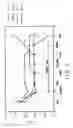
DETAILED DESCRIPTION OF PREFERRED EMBODIMENTS Description of the DrawingsFIG. 1 is a schematic depiction of an extruder for blow molding.
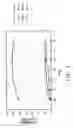
FIG. 2 shows the temperature profiles used for the compounding and blow-molding of test bottles with barrier resin consisting of an ethylene-vinyl alcohol copolymer (EVOH), with at or about 26 mol % of repeat units derived from ethylene and at or about 74 mol % derived from vinylalcohol, and the following compatibilizers: maleic anhydride grafted HDPE, or maleic anhydride grafted ethylene propylene diene (EPDM). This barrier resin has a melting point of approximately 195° C.
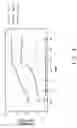
FIG. 3 shows the permeability results for blow-molded standard test bottles made in comparative run 20 and runs 9, 15 and 16, according to the invention.
FIG. 4 shows an enlargement of runs 9, 15 and 16, from FIG. 3. FIG. 5 shows schematically polymer blend microtomes having different aspect ratios.
ABBREVIATIONS
- HDPE: high-density polyethylene
- LDPE: low density polyethylene
- PP: polypropylene
- EVOH: ethylene-vinyl alcohol copolymer
- PA6: nylon 6, a polyamide made by polymerizing caprolactam
- PA66: nylon 6,6, a polyamide made by polymerizing adipic acid and hexamethylene diamine
- PVOH: polyvinyl alcohol
The method of the invention involves a step of blending in an extruder thermoplastic polymer material comprising or consisting essentially of an olefin resin and a barrier resin selected from polyvinyl alcohol, copolymers of ethylene-vinyl alcohol, polyamides, and mixtures of these, wherein the temperature of the thermoplastic polymer material in the extruder is controlled to be not higher than at or about 10° C. above the melting point of the barrier resin.
Preferred polyolefin resins are selected from high-density polyethylene (HDPE), low density polyethylene (LDPE) and polypropylene (PP), and mixtures of these. The method of the invention is particularly suited to HDPE.
The barrier resin is selected from polyvinyl alcohol, copolymers of ethylene-vinyl alcohol, polyamides, and mixtures of these. Preferred barrier resins are ethylene vinyl alcohol copolymers (EVOH), particularly with at or about 20 to 40 mol % of repeat units derived from ethylene, and at or about 60 to 80 mol % of repeat units derived from vinyl alcohol, more preferably at or about 24 to 36 mol % of repeat units derived from ethylene, and at or about 64 to 76 mol % of repeat units derived from vinyl alcohol. Also contemplated are mixtures of such polymers and copolymers.
The barrier resin may additionally comprise a compatibilizer at from at or about 15 to 50 wt %, preferably at or about 20 to 45 wt %, more preferably at or about 25 to 40 wt %, based on the weight of polymers in the barrier resin. Examples of compatibilizers include maleic anhydride grafted HDPE, or maleic anhydride grafted ethylene propylene diene (EPDM).
Also preferred as barrier resin is PA6, PA6,66, and mixtures of these. Also preferred are PA6 and/or PA6,66 in combination with PVOH, particularly PA6,66 in combination with PVOH, wherein the weight percent of PVOH is at or about 20 to 50 wt %, more preferably at or about 30 to 45 wt %, particularly preferably at or about 35 to 45 wt %, and wherein the weight percentage of PA6,66 is at or about 5 to 65 wt %, preferably at or about 10 to 50 wt %, more preferably at or about 15 to 40 wt %, wherein these weight percentages are based on the total weight of polymers in the barrier resin.
The barrier resin (particularly a vinyl alcohol containing polymer or copolymer), including any compatibilizers, is preferably present at or about 2 to 30 wt %, more preferably at or about 3 to 15 wt %, particularly preferably at or about 5 to 10 wt %, or 7 to 9 wt % based on the total weight of the barrier resin and polyolefin resin in the blend of the invention.
The polyolefin is preferably present in the composition at or about 55 to 97 wt %, more preferably at or about 85 to 96 wt %, particularly preferably at or about 83 to 94 wt %, based on the total weight of polymers in the blend of the invention.
In the method according to the invention, the temperature of the melt throughout the extruder is controlled to be not higher than at or about 10° C. above the melting point of the barrier resin. While not wishing to be limited by theory, the inventors believe that such a temperature profile results in just barely melting the barrier resin, allowing a laminar structure to be formed with the olefin resin. The melting point of the barrier resin may be determined according to ISO 11357-3:1999(E). The temperature of the melt should not be lower than the melting point of the barrier resin.
Particularly preferred are the following barrier resins: A barrier resin consisting of an ethylene-vinyl alcohol copolymer (EVOH), with at or about 26 mol % of repeat units derived from ethylene and at or about 74 mol % derived from vinylalcohol, and the following compatibilizers: maleic anhydride grafted HDPE, or maleic anhydride grafted ethylene propylene diene (EPDM). This barrier resin has a melting point of approximately 195° C.
A barrier consisting of polyvinyl alcohol (PVOH) (47.75 wt %) mixed with copolymer PA6,66 (18.6 wt %) and the following compatibilizers: maleic anhydride grafted HDPE, or maleic anhydride grafted ethylene propylene diene (EPDM). This barrier resin has a melting point of approximately 225° C.
The thermoplastic polymer blends made using the method of the invention can be injection- or blow-molded, or extruded. A preferred use for thermoplastic polymer blends made using the method of the invention is blow-molded articles, for example, bottles, canisters, reservoirs or tanks. In a particularly preferred embodiment, the thermoplastic polymer blend made with the method of the invention is used to make fuel or solvent reservoirs, such as a heating oil tank, an automotive fuel tank, an antifreeze reservoir, a motorcycle fuel tank, and a jerrycan.
In another preferred embodiment, the thermoplastic polymer blend may be extruded, particularly for making hollow articles, such as pipes.
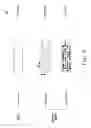
Thermoplastic polymer blends compounded by the method of the invention and molded, particularly blow-molded, or extruded, particularly into hollow articles, have a laminar structure that can be observed under an optical microscope. Using the method of the invention, thermoplastic polymer blends are produced wherein the laminar structure has an aspect ratio of greater than at or about 10, preferably between at or about 10 to 10,000, more preferably greater than at or about 20, particularly preferably greater than at or about 35, even more particularly preferably greater than at or about 50. The aspect ratio can be measured using microtoming procedure, followed by image analysis. In particular, the molded resin is sliced laterally across the direction of elongation during molding (e.g. a cross-section of the wall of a blow-molded article) into slices of 10 to 20 micrometer thickness. The slices may be stained with iodine to increase contrast, and they are then examined at a suitable magnification (e.g. 50 to 100×), and the aspect ratio determined by calculation from the lamellae thickness assuming that the initial volume of the pellet remains constant. A schematic of microtomes of polymer blends is shown in FIG. 5. “AR” in FIG. 5 lists the measured Aspect Ratio for more than 80% of the lamellae. AR is calculated as the length of a lamella (“L”) divided by its thickness (“T”), as indicated in FIG. 5. The top row of FIG. 5 shows schematically a microtome of HDPE without any barrier resin. There are no lamellae and barrier properties are very low. Moving downward, the middle row of FIG. 5 shows a schematic of a microtome when the mixing is according to the method of the invention. Lamellae are thin (50<AR<10,000), and barrier properties are excellent. The bottom row shows a schematic of a microtome in which the melt temperature was too high (“comparative”). Lamellae are poorly formed (1<AR<30), and barrier properties are poor. When the aspect ratio is lower than 10, the barrier properties of the thermoplastic polymer blend are poor.
Articles made from the thermoplastic polymer blends of the invention have enhanced barrier properties as compared with articles made with conventional thermoplastic polymer blends. The barrier properties extend to hydrocarbons, particularly straight-chain and branched hydrocarbons (e.g. C1-C18, particularly C5-C12), m- p- and o-xylene, ethanol, benzene, ethylbenzene, toluene, ethyl-benzene, methanol, and methyl-t-butyl ether (MTBE). Also included are halogenated hydrocarbons and oxygen containing hydrocarbons, such as alcohols, CE10 type fuel and mixtures of all of these. Barrier properties may be measured by determining permeability to various solvents, for example, according to ASTM D2684. When measured according to this standard, molded and extruded articles (particularly blow-molded articles) preferably have permeabilities to hydrocarbons or C-fuel type containing alcohol of less than at or about 0.0787 g·mm/day·100 cm2 when measured after 3, 4, 5 or 6 weeks soaking, at a steady-state of mass transfer of hydrocarbon, more preferably less than at or about 0.04 g·mm/day·100 cm2, particularly preferably less than at or about 0.02 g·mm/day·100 cm2.
A schematic of an extrusion blow-molding machine is shown in FIG. 1. Solid thermoplastic polymer material (both olefin resin and barrier resin) is fed into the hopper (1). It passes into the rear (2) of the barrel, past the middle (3) and front (4) of the barrel, before passing the adaptor and being extruded at the crosshead (9), through the die (7) of the crosshead. The temperature may be measured by a thermocouple probe at certain points along the extruder, including at the crosshead (8) [Tcoupling] and at the crosshead die (7) [Tmelt]. In a particularly preferred embodiment of the method of the invention, the thermoplastic polymer material (i.e. olefin resin and barrier resin) is heated to at or about 0-10° C. (more preferably 0-5° C.) above the melting point of the barrier resin at the rear of the screw, and rises as the thermoplastic polymer material passes down the barrel to at or about 10° C. above the melting point of the barrier resin when the thermoplastic polymer blend reaches the die. In a particularly preferred embodiment, the temperature of the thermoplastic polymer material (i.e. olefin resin and barrier resin) is heated to at or about the melting point of the barrier resin at the rear of the barrel of the extruder, and maintained relatively constant through the barrel until the front of the barrel. There is then a temperature gradient whereby the temperature is raised from at or about the melting point of the barrier resin at the front of the barrel to at or about 10° C. above the melting point of the barrier resin at the die. The expression “front” in respect to the barrel of an extruder is meant to include the volume within at or about the last 30% of the length of the barrel before the die. The expression “rear” in respect to the barrel of an extruder is meant to include the volume within at or about the first 30% of the length of the barrel after the hopper.
Alternatively, the temperature of the thermoplastic polymer material at the rear of the extruder may be maintained at or about 5-20° C. below, preferably 5-15° C. below, the melting point of the barrier resin. The temperature of the thermoplastic polymer material is then gradually raised as it passes through the extruder, until it is at or about 0-10° C. above the melting point of the barrier resin at the die.
The expression “rear” means at or about the first 30-40 cm after entry of polymer material into the barrel of the extruder. Similarly, the expression “front” means at or about the last 30-40 cm of the barrel, before entry of the polymer into the die.
EXAMPLE 1Thermoplastic polymer blends were made comprising HDPE as olefin resin with a barrier resin was incorporated at 7 wt %. The barrier resin was a copolymer of ethylene and vinylalcohol, with 26 mol % of repeat units derived from ethylene and about 74 mol % of repeat units derived from vinyl alcohol, and a melt flow rate measured at 210° C. under 2160 g of 3.2 g/10 minutes. The resin includes maleic anhydride grafted HDPE, or maleic anhydride grafted ethylene propylene diene (EPDM). The melting point of the barrier resin was 195° C.
The dry resins were mixed as granules in the hopper of an extruder, and then passed through the extruder with the temperature profiles shown in FIG. 2. The points where temperature of the extruder was set are indicated in FIG. 1 as rear (2), middle (3), front (4), coupling (8), head (9) and die (7). These points on FIG. 2 (rear, middle, front, coupling, head and die) are the values at which the temperature control of the extruder was set. The temperature of the thermoplastic polymer material was actually measured at coupling (8) and the die (7), and these measured values are the points indicated as Tcoupling and Tmelt, respectively.
For run 20, which is shown for comparative purposes, thermoplastic polymer blend at the rear of the extruder was heated to 15° C. above the melting point of the barrier resin. It was then allowed to cool to approximately the melting point of the barrier resin while passing through the extruder.
Runs 9, 15 and 16, are according to the method of the invention.
For run 9, the temperature at the rear of the extruder was maintained at approximately 175° C., i.e. approximately 20° C. below the melting point of the barrier resin (195° C.). It was then raised from the rear to the middle of the barrel to approximately 200° C. (i.e. approximately 5° C. above the melting point of the barrier resin), and maintained at 200° C. as it passed through the barrel.
For run 15, the temperature at the rear of the extruder was maintained at approximately 195° C., i.e. at the melting point of the barrier resin. It was allowed to cool somewhat as it passed down the barrel, to approximately 190° C.
For run 16, the temperature at the rear of the extruder was maintained at approximately 190° C., i.e. slightly below the melting point of the barrier resin. It was maintained at this temperature throughout the barrel.
The blends produced from comparative run 20 and invention runs 9, 15 and 16 were blow-molded to produce a standard test bottle of 1.5 litre, with an external area of 645 cm2 (100 inch2) and a wall thickness of 1.4 mm. The blow-molded bottles were tested for permeability to CE10 type fuel (i.e. a mixture of 45 vol % isooctane, 45 vol % toluene and 10 vol % ethanol), over time, according to ASTM D2684.
Permeability, P, is calculated according to the following equation:
P
=
(
R
·
t
)
A
wherein R is the rate of loss of hydrocarbon (in g/day), t is the wall thickness (in mm), and A is the external area (in cm2).
The results are shown in FIG. 3, and enlarged in FIG. 4. It can be seen that bottles made from thermoplastic polymers blended in runs 9, 16 and 16 (invention), have a permeability to CE10 type fuel after 48 hours (steady state of mass transfer) of 0.0354, 0.0157 and 0.00787 g·mm/day·100 cm2, respectively, whereas bottles made from thermoplastic polymer blended in run 20 (comparative) have a permeability to CE10 type fuel after 48 hours of over 0.393 g·mm/day·100 cm2 (i.e. a 10- to 50-fold decrease in permeability is obtained by using the method of the invention). Permeability results are further listed in Table 1.
| TABLE 1 |
| Permeability (g · mm/day · 100 cm2) as measured according |
| to ASTM D2684 for blow-molded standard test bottles made from |
| thermoplastic polymer material (HDPE and barrier resin, blended |
| according to comparative run 20 and runs 9, 15 and 16 |
| Time |
| 48 h | 1 week | 2 weeks | 3 weeks | 4 weeks | 6 weeks | |
| Comparative | 0.402 | 0.433 | 0.472 | 0.468 | 0.484 | 0.461 |
| run 20 | ||||||
| Run 9 | 0.015 | 0.019 | 0.022 | 0.028 | 0.051 | 0.048 |
| Run 15 | 0.036 | 0.044 | 0.054 | 0.059 | 0.067 | 0.067 |
| Run 16 | 0.0079 | 0.0028 | 0.0024 | 0.0028 | 0.0028 | 0.0024 |
Claims
What is claimed is:1. A method for producing a thermoplastic polymer blend having barrier properties to hydrocarbons, the method comprising the steps:
blending in an extruder thermoplastic polymer material comprising or consisting essentially of an olefin resin, and a barrier resin selected from polyvinyl alcohol, copolymers of ethylene-vinyl alcohol, polyamides, and mixtures of these, wherein the temperature of the thermoplastic polymer material in the extruder is not higher than at or about 10° C. above the melting point of the barrier resin.
2. The method of claim 1, wherein the olefin resin is selected from high-density polyethylene, low-density polyethylene and polypropylene.
3. The method of claim 1, wherein the barrier resin is an ethylene-vinyl alcohol copolymer.
4. The method of claim 1, wherein the barrier resin is PA6.
5. The method of claim 1, wherein the barrier resin is a copolymer of PA6,66.
6. The method of claim 1, wherein the barrier resin is a mixture of polyvinyl alcohol and PA6,66.
7. The method of claim 1, wherein the barrier resin is present at or about 5-15 wt % based on the total weight of polymers in the blend.
8. The method of claim 1, wherein the thermoplastic polymer material is heated to at or about 0-10° C. above the melting point of the barrier resin at the rear of the barrel of the extruder, and rises as the thermoplastic polymer material passes down the barrel of the extruder to at or about 10° C. above the melting point of the barrier resin when the thermoplastic polymer blend reaches the die of the extruder.
9. The method of claim 1, wherein the hydrocarbon is selected from straight-chain and branched hydrocarbons (e.g. C5-C18), xylene, ethanol, benzene, toluene, ethyl-benzene, methanol, and methyl-t-butyl ether (MTBE), CE10 type fuel, and mixtures of these.
10. A molded or extruded article comprising or consisting essentially of a thermoplastic polymer blend comprising or consisting essentially of a polyolefin and a barrier resin selected from polyvinyl alcohol, copolymers of ethylene-vinyl alcohol, polyamides, and mixtures of these, wherein the molded or extruded article has a permeability to hydrocarbons at a wall thickness (t) of 1.4 mm, and an external area (A) of 645 cm2, of less that at or about 0.0787 g·mm/day·100 cm2, when a steady rate of mass transfer of hydrocarbon is reached, as measured according to ASTM D2684 [fuel type CE10; temperature 40° C.].
11. The molded or extruded article of claim 10, wherein the olefin resin is selected from high-density polyethylene, low-density polyethylene and polypropylene.
12. The molded or extruded article of claim 10, wherein the barrier resin is an ethylene-vinyl alcohol copolymer.
13. The molded or extruded article of claim 10, wherein the barrier resin is PA6.
14. The molded or extruded article of claim 10, wherein the barrier resin is a copolymer of PA6,66.
15. The molded or extruded article of claim 10, wherein the barrier resin is a mixture of polyvinyl alcohol and PA6,66.
16. The molded or extruded article of claim 10, wherein the barrier resin is present at or about 7-9 wt %.
17. The molded or extruded article of claim 10, which is a blow-molded article.
18. The molded or extruded article of claim 10, which is an extruded article.
19. A molded or extruded article comprising or consisting essentially of a thermoplastic polymer blend comprising or consisting essentially of a polyolefin and a barrier resin selected from polyvinyl alcohol, copolymers of ethylene-vinyl alcohol, polyamides, and mixtures of these, wherein the molded or extruded article has a laminar microstructure exhibiting an aspect ratio of greater than at or about 10.
20. The molded or extruded article of claim 19, wherein the aspect ratio is greater than at or about 50.
21. A molded or extruded article obtained by a method comprising a step of blending in an extruder thermoplastic polymer material comprising or consisting essentially of an olefin resin and a barrier resin selected from polyvinyl alcohol, copolymers of ethylene-vinyl alcohol and polyamides, and mixtures of these, wherein the temperature of the thermoplastic polymer material in the extruder is controlled to be not higher than at or about 10° C. above the melting point of the barrier resin.
22. A method for producing a molded or extruded article comprising a thermoplastic polymer blend having barrier properties to hydrocarbons, the method comprising the steps:
blending in an extruder thermoplastic polymer material comprising or consisting essentially of an olefin resin, and a barrier resin selected from polyvinyl alcohol, copolymers of ethylene-vinyl alcohol, polyamides, and mixtures of these; and
molding or extruding the thermoplastic polymer material;
wherein the temperature of the thermoplastic polymer material in the extruder is controlled to be not higher than at or about 10° C. above the melting point of the barrier resin.
23. The method of claim 22, wherein the olefin resin is selected from high-density polyethylene, low-density polyethylene and polypropylene.
24. The method of claim 22, wherein the barrier resin is an ethylene vinylalcohol copolymer.
25. The method of claim 22, wherein the barrier resin is PA6.
26. The method of claim 22, wherein the barrier resin is a copolymer of PA6,66.
27. The method of claim 22, wherein the barrier resin is a mixture of polyvinyl alcohol and PA6,66.
28. The method of claim 22, wherein the barrier resin is present at or about 4-20 wt %.
29. The method of claim 22, which is for making a blow-molded article, comprising the step of blow-molding.
30. The method of claim 22, which is for making a hollow extruded article, comprising a step of extrusion.
Images & Drawings included:

Sources:
- United States Patent and Trademark Office - verify current appl. status at the USPTO↗
Similar patent applications:
Recent applications in this class:
- » 20250171624 2025-05-29
CONNECTION COMPONENT FOR AN ELECTRICAL CONDUCTOR - » 20250136797 2025-05-01
POLYOLEFIN BLEND CONTAINING RECYCLED ALUMINIUM - » 20250129240 2025-04-24
METHOD FOR CURING A CURABLE COMPOSITION - » 20250101209 2025-03-27
RESIN COMPOSITION, MOLDED BODY, LAMINATE AND LAMINATED TUBE - » 20250066592 2025-02-27
POLYETHYLENE COMPOSITION - » 20250034376 2025-01-30
POLYMER PROCESSING AIDS FOR LLDPE COMPOSITIONS - » 20250034375 2025-01-30
NOVEL RECYCLING PROCESS OF POLYETHYLENE - » 20250019531 2025-01-16
FILMS FROM RECYCLED POLYETHYLENE - » 20250019530 2025-01-16
MIXED RECYCLED POLYOLEFIN RESIN COMPOSITION COMPRISING RECYCLED POLYOLEFIN RESIN RECOVERED FROM WASTE SEPARATOR AND RECYCLED PRODUCT USING THE SAME - » 20250019529 2025-01-16
MULTI-LAYER MATERIAL INCORPORATING SUSTAINABLE RESINS AND HAVING IMPROVED MECHANICAL PROPERTIES