Fungicidal combinations of active substances
US20070161688A1
2007-07-12
11/714,497
2007-03-06
✅ Patent granted
US 7,956,009 B2
2011-06-07
-
-
Alton N Pryor
2028-11-14
Abstract:
The present invention relates to fungicidally active compound combinations of a fluorobenzothiazole derivative of the formula (I) and at least one of the compounds listed in the disclosure.
Inventors:
- Ulrike Wachendorff-Neumann 433 🇩🇪 Neuwied, Germany
- Thomas SEITZ 107 🇩🇪 Langenfeld, Germany
- Ulrich HEINEMANN 41 🇩🇪 Leichlingen, Germany
- Herbert GAYER 42 🇩🇪 Monheim, Germany
- Lutz Assmann 23 🇩🇪 Langenfeld, Germany
- Wolfgang Krämer 22 🇩🇪 Burscheid, Germany
- Bernd-Wieland Krüger 18 🇩🇪 Bergisch Gladbach, Germany
Assignee:
- Bayer CropScience AG 1,003 🇩🇪 Monheim, Germany
Interested in similar patents?
Get notified when new applications in this technology area are published.
Classification:
A01N43/36 IPC
Biocides, pest repellants or attractants, or plant growth regulators containing heterocyclic compounds having rings with one nitrogen atom as the only ring hetero atom five-membered rings
A01N47/12 » CPC main
Biocides, pest repellants or attractants, or plant growth regulators containing organic compounds containing a carbon atom not being member of a ring and having no bond to a carbon or hydrogen atom, e.g. derivatives of carbonic acid the carbon atom having one or more single bonds to nitrogen atoms; Carbamic acid derivatives, i.e. containing the group —O—CO—N<; Thio analogues thereof containing a —O—CO—N< group, or a thio analogue thereof, neither directly attached to a ring nor the nitrogen atom being a member of a heterocyclic ring
A01N61/00 » CPC further
Biocides, pest repellants or attractants, or plant growth regulators containing substances of unknown or undetermined composition, e.g. substances characterised only by the mode of action
A01N43/90 » CPC further
Biocides, pest repellants or attractants, or plant growth regulators containing heterocyclic compounds having two or more relevant hetero rings, condensed among themselves or with a common carbocyclic ring system
A01N43/40 » CPC further
Biocides, pest repellants or attractants, or plant growth regulators containing heterocyclic compounds having rings with one nitrogen atom as the only ring hetero atom six-membered rings
A01N37/24 » CPC further
Biocides, pest repellants or attractants, or plant growth regulators containing organic compounds containing a carbon atom having three bonds to hetero atoms with at the most two bonds to halogen, e.g. carboxylic acids containing the group —CO—N<, e.g. carboxylic acid amides or imides; Thio analogues thereof the nitrogen atom being directly attached to an aromatic ring system, e.g. anilides containing at least one oxygen or sulfur atom being directly attached to the same aromatic ring system
A01N2300/00 » CPC further
Combinations or mixtures of active ingredients covered by classes - with other active or formulation relevant ingredients, e.g. specific carrier materials or surfactants, covered by classes -
A01N37/34 » CPC further
Biocides, pest repellants or attractants, or plant growth regulators containing organic compounds containing a carbon atom having three bonds to hetero atoms with at the most two bonds to halogen, e.g. carboxylic acids Nitriles
A01N37/50 » CPC further
Biocides, pest repellants or attractants, or plant growth regulators containing organic compounds containing a carbon atom having three bonds to hetero atoms with at the most two bonds to halogen, e.g. carboxylic acids containing at least one carboxylic group or a thio analogue, or a derivative thereof, and a nitrogen atom attached to the same carbon skeleton by a single or double bond, this nitrogen atom not being a member of a derivative or of a thio analogue of a carboxylic group, e.g. amino-carboxylic acids the nitrogen atom being doubly bound to the carbon skeleton
A01N43/30 » CPC further
Biocides, pest repellants or attractants, or plant growth regulators containing heterocyclic compounds having rings with one or more oxygen or sulfur atoms as the only ring hetero atoms with two or more hetero atoms five-membered rings with two hetero atoms in positions 1,3 with two oxygen atoms in positions 1,3, condensed with a carbocyclic ring
A01N43/54 » CPC further
Biocides, pest repellants or attractants, or plant growth regulators containing heterocyclic compounds having rings with two nitrogen atoms as the only ring hetero atoms 1,3-Diazines; Hydrogenated 1,3-diazines
A01N43/653 » CPC further
Biocides, pest repellants or attractants, or plant growth regulators containing heterocyclic compounds having rings with three nitrogen atoms as the only ring hetero atoms; Triazoles; Hydrogenated triazoles 1,2,4-Triazoles; Hydrogenated 1,2,4-triazoles
A01N43/88 » CPC further
Biocides, pest repellants or attractants, or plant growth regulators containing heterocyclic compounds having rings with nitrogen atoms and oxygen or sulfur atoms as ring hetero atoms six-membered rings with three ring hetero atoms
A01N47/04 » CPC further
Biocides, pest repellants or attractants, or plant growth regulators containing organic compounds containing a carbon atom not being member of a ring and having no bond to a carbon or hydrogen atom, e.g. derivatives of carbonic acid the carbon atom having no bond to a nitrogen atom containing >N—S—C≡(Hal) groups
A01N47/14 » CPC further
Biocides, pest repellants or attractants, or plant growth regulators containing organic compounds containing a carbon atom not being member of a ring and having no bond to a carbon or hydrogen atom, e.g. derivatives of carbonic acid the carbon atom having one or more single bonds to nitrogen atoms; Carbamic acid derivatives, i.e. containing the group —O—CO—N<; Thio analogues thereof containing a —O—CO—N< group, or a thio analogue thereof, neither directly attached to a ring nor the nitrogen atom being a member of a heterocyclic ring Di-thio analogues thereof
A01N51/00 » CPC further
Biocides, pest repellants or attractants, or plant growth regulators containing organic compounds having the sequences of atoms O—N—S, X—O—S, N—N—S, O—N—N or O-halogen, regardless of the number of bonds each atom has and with no atom of these sequences forming part of a heterocyclic ring
A01N53/00 » CPC further
Biocides, pest repellants or attractants, or plant growth regulators containing cyclopropane carboxylic acids or derivatives thereof
A01N59/20 » CPC further
Biocides, pest repellants or attractants, or plant growth regulators containing elements or inorganic compounds; Heavy metals; Compounds thereof Copper
A01N43/80 » CPC further
Biocides, pest repellants or attractants, or plant growth regulators containing heterocyclic compounds having rings with nitrogen atoms and oxygen or sulfur atoms as ring hetero atoms five-membered rings with one nitrogen atom and either one oxygen atom or one sulfur atom in positions 1,2
A01N43/64 IPC
Biocides, pest repellants or attractants, or plant growth regulators containing heterocyclic compounds having rings with three nitrogen atoms as the only ring hetero atoms
A01N25/26 IPC
Biocides, pest repellants or attractants, or plant growth regulators, characterised by their forms, or by their non-active ingredients or by their methods of application, e.g. seed treatment or sequential application ; Substances for reducing the noxious effect of the active ingredients to organisms other than pests in coated particulate form
A61K31/425 IPC
Medicinal preparations containing organic active ingredients; Heterocyclic compounds having nitrogen as a ring hetero atom, e.g. guanethidine or rifamycins having five-membered rings with two or more ring hetero atoms, at least one of which being nitrogen, e.g. tetrazole Thiazoles
A61K31/426 IPC
Medicinal preparations containing organic active ingredients; Heterocyclic compounds having nitrogen as a ring hetero atom, e.g. guanethidine or rifamycins having five-membered rings with two or more ring hetero atoms, at least one of which being nitrogen, e.g. tetrazole; Thiazoles 1,3-Thiazoles
A01N43/78 IPC
Biocides, pest repellants or attractants, or plant growth regulators containing heterocyclic compounds having rings with nitrogen atoms and oxygen or sulfur atoms as ring hetero atoms five-membered rings with one nitrogen atom and either one oxygen atom or one sulfur atom in positions 1,3 1,3-Thiazoles; Hydrogenated 1,3-thiazoles
Description
The present invention relates to novel active compound combinations which consist of a known fluoro-benzothiazole derivative and further known fungicidally active compounds, and which are highly suitable for controlling phytopathogenic fungi.
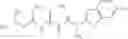
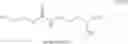
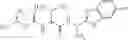
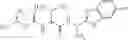
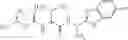
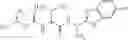
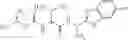
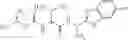
It is already known that isopropyl 1-({[1-(6-fluoro-1,3-benzothiazol-2-yl)ethyl]-amino}carbonyl)-2-methylpropylcarbamate has fungicidal properties (cf. EP-A1-775 696). The activity of this compound is good; however, at low application rates it is in some cases not satisfactory.
Furthermore, it is already known that a large number of triazole derivatives; aniline derivatives, dicarboximides and other heterocycles can be employed for controlling fungi (cf. EP-A 0 040 345, DE-A 22 01 063, DE-A 23 24 010, Pesticide Manual, 9th Edition (1991), pages 249 and 827, EP-A 0 382 375 and EP-A 0 515 901). Likewise, the activity of these compounds is not always satisfactory at low application rates.
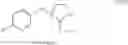
Finally, it is also known that 1-[(6-chloro-3-pyridinyl)-methyl]-N-nitro-2-imidazo-lidineimine can be used for controlling animal pests such as insects (cf. Pesticide Manual, 9th Edition (1991), page 491). However, fungicidal properties have hitherto not been described for this compound.
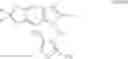
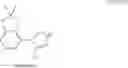
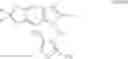
Furthermore, it is already known that 1-(3,5-dimethyl-isoxazol-4-sulphonyl)-2-chloro-6,6-difluoro-[1,3]-dioxolo-[4,5f]-benzimidazole has fungicidal properties (cf. WO 97-06171).
Furthermore, it is already known that substituted azodioxacycloalkenes have fungicidal properties (cf. EP-B-712 396).
Finally, it is also known that substituted halogenopyrimidines have fungicidal properties (cf. DE-A1-196 46 407, EP-B-712 396).
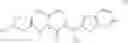
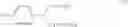
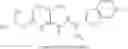
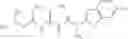
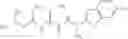
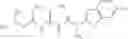
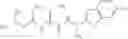
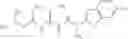
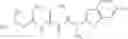
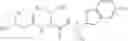
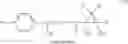
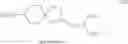
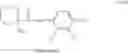
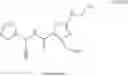
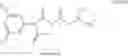
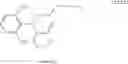
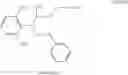
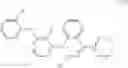
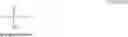
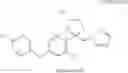
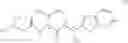
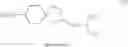
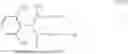
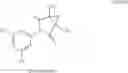
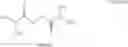
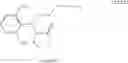
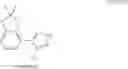
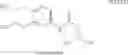
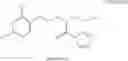
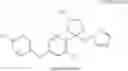
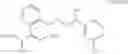
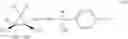
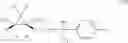
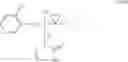
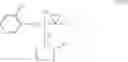
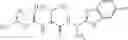
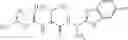
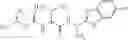
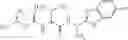
It has now been found that the novel active compound combinations comprising a fluorobenzothiazole derivative of the formula
and
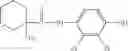
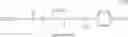
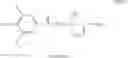
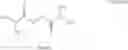
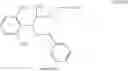
(1) a triazole derivative of the formula
-
- in which
- X represents chlorine or phenyl and
- Y represents
and/or
(2) the triazole derivative of the formula
and/or
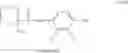
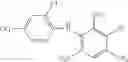
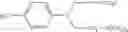
(3) an aniline derivative of the formula
-
- in which
- R1 represents hydrogen or methyl,
and/or
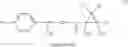
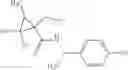
(4) N-[1-(4-chloro-phenyl)-ethyl]-2,2-dichloro-1-ethyl-3-methyl-cyclopropane-carboxamide of the formula
and/or
(5) the zinc propylene-1,2-bis-(dithiocarbamidate) of the formula
and/or
(6) at least one thiocarbamate of the formula
-
- Me=Zn or Mn or a mixture of Zn and Mn
and/or
- Me=Zn or Mn or a mixture of Zn and Mn
(7) the aniline derivative of the formula
and/or
(8) the compound of the formula
and/or
(9) the benzothiadiazole derivative of the formula
and/or
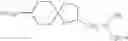
(10) the 8-t-butyl-2-(N-ethyl-N-n-propyl-amino)-methyl-1,4-dioxaspiro[5,4]-decane of the formula
and/or
(11) the compound of the formula
and/or
(12) the compound of the formula
and/or
(13) the compound of the formula
and/or
(14) the cyanoxime derivative of the formula
and/or
(15) a pyrimidine derivative of the formula
in which
-
- R2 represents methyl, —C≡C—CH3 (mepanipyrim) or cyclopropyl (cyprodinyl),
and/or
- R2 represents methyl, —C≡C—CH3 (mepanipyrim) or cyclopropyl (cyprodinyl),
(16) an aniline derivative of the formula
and/or
(17) the morpholine derivative of the formula
and/or
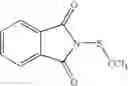
(18) the phthalimide derivative of the formula
and/or
(19) the phosphorus compound of the formula
and/or
(20) the hydroxyethyl-triazole derivative of the formula
and/or
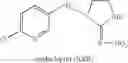
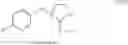
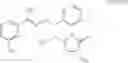
(21) the 1-[(6-chloro-3-pyridinyl)-methyl]-N-nitro-2-imidazolidinimine of the formula
and/or
(22) the oxazolidinedione of the formula
and/or
(23) the benzamide derivative of the formula
and/or
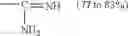
(24) a guanidine derivative of the formula
in which
-
- m represents integers from 0 to 5 and
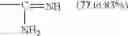
- R3 represents hydrogen (17 to 23%) or the radical of the formula
and/or
(25) the triazole derivative of the formula
and/or
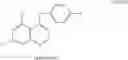
(26) the halogeno-benzimidazole of the formula
and/or
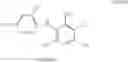
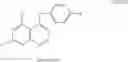
(27) the halogenopyrimidine of the formula
and/or
(28) the tetrachloro-isophthalo-dinitrile of the formula
and/or
(29) the compound of the formula
and/or
(30) the pyridineamine of the formula
and/or
(31) the thiazolecarboxamide of the formula
and/or
(32) the sulphonamide of the formula
and/or
(33) the compound of the formula
and/or
(34) the compound of the formula
and/or
(35) the compound of the formula
and/or
(36) the diamide of the formula
and/or
(37) the methoxyacrylate derivative of the formula
and/or
(38) the quinoline derivative of the formula
and/or
(39) the phenylamide derivative of the formula
and/or
(40) the phenylamide derivative of the formula
and/or
(41) the dicarboxime derivative of the formula
and/or
(42) the phosphonic acid of the formula
and/or
(43) the pyrrole derivative of the fornula
and/or
(44) the phenyl carbonate of the formula
and/or
(45) the copper compounds
| a) | copper oxychloride | (XXXXVIa) | |
| b) | copper hydroxid | (XXXXVIb) | |
and/or
(46) the imidazole derivative of the formula
and/or
(47) the triazole derivative of the formula
a)
and/or
b)
and/or
c)
and/or
d)
and/or
e)
and/or
f)
and/or
g)
and/or
h)
and/or
(48) a compound of the general formula
in which
-
- R1 represents unsubstituted or fluorine-, chlorine-, bromine-, methyl- or ethyl-substituted phenyl, 2-naphthyl, 1,2,3,4-tetrahydronaphthyl or indanyl,
and/or
- R1 represents unsubstituted or fluorine-, chlorine-, bromine-, methyl- or ethyl-substituted phenyl, 2-naphthyl, 1,2,3,4-tetrahydronaphthyl or indanyl,
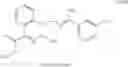
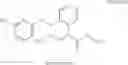
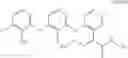
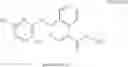
(49) N-methyl-2-(methoxyimino)-2-[2-([1-(3-tri-fluoro-methyl-phenyl)ethoxy]iminomethyl)phenyl]acetamide of the formula
and/or
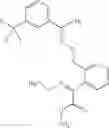
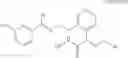
(50) 2,4-dihydro-5-methoxy-2-methyl-4-[2-([([1-(3-tri-fluoro-methylphenyl)ethylidene]amino)oxy]methyl)phenyl]-3H-1,2,4-triazol-3-one of the formula
and/or
(51) the compound of the formula
have very good fungicidal properties.
Surprisingly, the fungicidal activity of the active compound combinations according to the invention is considerably higher than the sum of the activities of the individual active compounds. Thus, an unforeseeable, true synergistic effect is present, and not just an addition of activities.
From the structural formula of the active compound of the formula (I), it can be seen that the compound has two asymmetrically substituted carbon atoms. Accordingly, the product can be present as a mixture of different isomers or else in the form of a single isomer.
Preferred compounds of the formula (I) are compounds in which the amino acid moiety is formed from i-propyloxycarbonyl-L-valine and the fluoro-benzothiazoleethylamine moiety is racemic, but has, in particular, the (R) configuration.
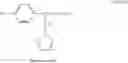
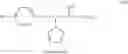
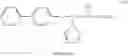
The formula (II) includes the compounds
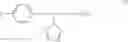
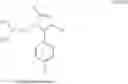
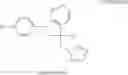
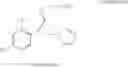
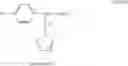
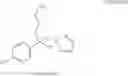
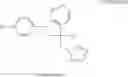
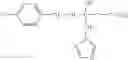
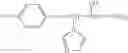
- 1-(4-chloro-phenoxy)-3,3-dimethyl-1-(1,2,4-triazol-1-yl)-butan-2-one of the formula
- 1-(4-chloro-phenoxy)-3,3-dimethyl-1-(1,2,4-triazol-1-yl)-butan-2-ol of the formula
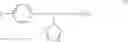
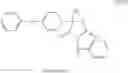
and - 1-(4-phenyl-phenoxy)-3,3-dimethyl-1-(1,2,4-triazol-1-yl)-butan-2-ol of the formula
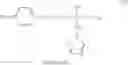
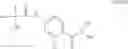
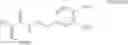
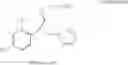
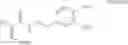
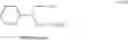
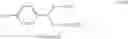
The formula (IV) includes the aniline derivatives of the formulae
and
It is evident from the structural forrnula for the active compound of the formula (V) that the compound has three asymmetrically substituted carbon atoms. The product may therefore be present as a mixture of different isomers, or else in the form of a single component. Particular preference is given to the compounds
N-(R)-[1-(4-chloro-phenyl)-ethyl]-(1S)-2,2-dichloro-1-ethyl-3t-methyl-1R-cyclopro-panecarboxamide of the formula
and
N-(R)-[1-(4-chloro-phenyl)-ethyl]-(1R)-2,2-dichloro-1-ethyl-3t-methyl-1R-cyclopro-panecarboxamide of the formula
The formula (VII) includes the compounds
(VIIa) Me=Zn (zineb),
(VIIb) Me=Mn (maneb) and
(VIIc) mixture of (VIIa) and (VIIb) (mancozeb).
The formula (XVI) includes the compounds
(XVIa) R2=CH3 (pyrimethanil) and
(XVIb) R2=(cyprodinyl)
(XVIc) R2=—C≡C—CH3 (mepanipyrim)
The compound of the formula (XVII) can be present as methyl N-(2,6-dimethylphenyl)-N-(methoxyacetyl)-DL-alaninate (metalaxyl, XVIIa) or as methyl N-(2,6-dimethylphenyl)-N-(methoxyacetyl)-D-alaninate (metalaxyl-M, XVIIIb).
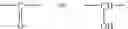
The hydroxyethyl-triazole derivative of the formula (XXI) can be present in the “thiono” form of the formula
or in the tautomeric “mercapto” form of the formula
For simplicity's sake, only the “thioino” form is given in each case.
The guanidine derivative of the formula (XXV) is a substance mixture with the common name guazatine.
From the structural formula for the active compouds of the formula (XXXXIX), it can be seen that the compounds can be present as E or Z isomers. Accordingly, the product can be present as a mixture of different isomers or else in the form of a single isomer. Preference is given to compounds of the formula (XXXXIX) in which the compounds of the formula (XXXXIX) are present as E isomer. Particular preference is given to the compounds of the formulae
and their isomers.
The following active compounds are particularly preferred mixing partners of the compounds of the formula (I):
(3) tolylfluanid (IVb),
(5) propineb (VI),
(6) mancozeb (VIIc),
(7) fenhexamid (VIII),
(8) iprovalicarb (VIII),
(11) azoxystrobin (XII),
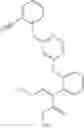
(12) trifloxystrobin (XIII),
(13) compound of the formula (XIV),
(18) folpet (XIX),
(20) compound of the formula (XXI),
(26) compound of the formula (XXVII),
(27) compound of the formula (XXVIII),
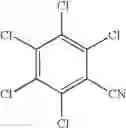
(28) chlorothalonil (XXIX),
(30) fluazinam (XXXI), and
(45) copper compounds
-
- a) copper oxychloride (XXXXVIa)
- b) copper hydroxide (XXXXVIb).
The components which are present in the active combinations according to the invention in addition to a halogeno-benzimidazole of the formula (XXVII) are also known.
Specifically, the active compounds are described in the following publications:
(1) compounds of the formula (II)
-
- DE-A 22 01 063
- DE-A 23 24 010
(2) compound of the formula (III)
-
- EP-A 0 040 345
(3) compounds of the formula (IV)
-
- Pesticide Manual, 9th Ed. (1991), pages 249 and 827
(4) compound of the formula (V) and individual derivatives thereof
-
- EP-A 0 341 475
(5) compound of the formula (VI)
-
- Pesticide Manual, 9th Ed. (1991), page 726
(6) compounds of the formula (VII)
-
- Pesticide Manual, 9th Ed. (1991), pages 529, 531 and 866
(7) compound of the formula (VII)
-
- EP-A 0 339 418
(8) compound of the formula (IX)
-
- EP-A 0 472 996
(9) compound of the formula (X)
-
- EP-A 0 313 512
(10) compound of the formula (XI)
-
- EP-A 0 281 842
(11) compound of the formula (XII)
-
- EP-A 0 382 375
(12) compound of the formula (XIII)
-
- EP-A-460 575
(13) compound of the formula (XIV)
-
- DE-A 196 02 095
(14) compound of the formula (XV)
-
- Pesticide Manual, 9th Ed. (1991), page 206
(15) compounds of the formula (XVI)
-
- EP-A 0 270 111
- EP-A 0 310 550
(16) compound of the formula (XVII)
-
- Pesticide Manual, 9th Ed. (1991), page 554
(17) compound of the formula (XVIII)
-
- EP-A 0 219 756
(18) compound of the formula (XIX)
-
- Pesticide Manual, 9th Ed. (1991), page 431
(19) compound of the formula (XX)
-
- Pesticide Manual, 9th Ed. (1991), page 443
(20) compound of the formula (XXI)
-
- WO 96-16048
(21) compound of the formula (XXII)
-
- Pesticide Manual, 9th Ed. (1991), page 491
(22) compound of the formula (XXIII)
-
- EP-A 0 393 911
(23) compound of the formula (XXIV)
-
- EP-A 0 600 629
(24) substance of the formula (XXV)
-
- Pesticide Manual, 9th Ed. (1991), page 461
(25) compound of the formula (XXVI)
-
- Pesticide Manual, 9th Ed. (1991), page 654
(26) compound of the formula (XXVII)
-
- WO 97-06171
(27) compound of the formula (XXVIII)
-
- DE-A1-196 46 407, EP-B-0 712 396
(28) compound of the formula (XXIX)
-
- U.S. Pat. No. 3,290,353
(29) compound of the formula (XXX)
-
- DE-A-156 7169
(30) compound of the formula (XXXI)
-
- EP-A-0 031 257
(31) compound of the formula (XXXII)
-
- EP-A-0 639 547
(32) compound of the formula (XXXIII)
-
- EP-A-0 298 196
(33) compound of the formula (XXXIV)
-
- EP-A-600 629
(34) compound of the fornula (XXXV)
-
- DE-A-2 149 923
(35) compound of the formula (XXXVI)
-
- DE-A-2 012 656
(36) compound of the formula (XXXVII)
-
- U.S. Pat. No. 1,972,961
(37) compound of the formula (XXXVIII)
-
- EP-A-326 330
(38) compound of the formula (XXXIX)
-
- EP-A 278 595
(39) compound of the formula (XXXX)
-
- DE-A-3 030 026
(40) compound of the formula (XXXXI)
-
- DE-A-2 903 612
(41) compound of the formula (XXXXII)
-
- U.S. Pat. No. 2,553,770
(42) compound of the formula (XXXXIII)
-
- known and commercially available
(43) compound of the formula (XXXXIV)
-
- EP-A-206 999
(44) compound of the formula (XXXXV)
-
- EP-A-78 663
(45) a) compound of the formula (XXXXVIa)
-
- known and commercially available
- b) compound of the formula (XXXXVIb) known and commercially available
(46) compound of the formula (XXXXVII)
-
- DE-A-2 429 523
(47) a) compound of the formula (XXXXVIIIa)
-
- EP-A-112 284
b) compound of the formula (XXXXVIIIb)
-
- DE-A-3 042 303
c) compound of the formula (XXXXVIIIc)
-
- DE-A-3 406 993
d) compound of the formula (XXXXVIIId)
-
- EP-A-68 813
e) compound of the formula (XXXXVIIIe)
-
- DE-A-2551560
f) compound of the formula (XXXXVIIIf)
-
- EP-A-145 294
g) compound of the formula (XXXXVIIIg)
-
- DE-A-3 721 786
h) compound of the formula (XXXXVIIIh)
-
- EP-A-234 242
(48) compound of the formula (XXXXIX)
-
- WO 96/23763
(49) compound of the formula (XXXXX)
-
- EP-A-596 254
(50) compound of the formula (XXXXXI)
-
- WO 98/23155
(50) compound of the formula (XXXXXII)
-
- EP-A-569 384.
In addition to an active compound of the formula (I), the active compound combinations according to the invention comprise at least one active compound of the compounds of groups (1) to (51). Additionally, they may comprise further fungicidally active additives.
The synergistic effect is particularly pronounced when the active compounds in the active compound combinations according to the invention are present in certain weight ratios. However, the weight ratios of the active compounds in the active compound combinations can be varied within a relatively wide range. In general,
- from 0.1 to 50 parts by weight, preferably from 0.2 to 20 parts by weight, of active compound of group (1),
- from 0.1 to 50 parts by weight, preferably from 0.2 to 20 parts by weight, of active compound of group (2),
- from 1 to 150 parts by weight, preferably from 1 to 100 parts by weight, of active compound of group (3),
- from 0.1 to 10 parts by weight, preferably from 0.2 to 5 parts by weight, of active compound of group (4),
- from 1 to 150 parts by weight, preferably from 5 to 100 parts by weight, of active compound of group (5),
- from 1 to 150 parts by weight, preferably from 5 to 100 parts by weight, of active compound of group (6),
- from 0.1 to 50 parts by weight, preferably from 1 to 20 parts by weight, of active compound of group (7),
- from 0.1 to 50 parts by weight, preferably from 0.2 to 20 parts by weight, of active compound of group (8),
- from 0.02 to 50 parts by weight, preferably from 0.1 to 10 parts by weight, of active compound of group (9),
- from 0.1 to 50 parts by weight, preferably from 0.2 to 20 parts by weight, of active compound of group (10),
- from 0.1 to 50 parts by weight, preferably from 0.2 to 20 parts by weight, of active compound of group (11),
- from 0.1 to 50 parts by weight, preferably from 0.2 to 20 parts by weight, of active compound of group (12),
- from 0.1 to 50 parts by weight, preferably from 0.2 to 20 parts by weight, of active compound of group (13), from 0.1 to 50 parts by weight, preferably from 0.2 to 20 parts by weight, of active compound of group (14),
- from 0.2 to 50 parts by weight, preferably from 1 to 20 parts by weight, of active compound of group (15),
- from 0.1 to 50 parts by weight, preferably from 0.2 to 20 parts by weight, of active compound of group (16),
- from 0.1 to 50 parts by weight, preferably from 0.2 to 20 parts by weight, of active compound of group (17),
- from 1 to 150 parts by weight, preferably from 5 to 100 parts by weight, of active compound of group (18),
- from 0.1 to 150 parts by weight, preferably from 1 to 100 parts by weight, of active compound of group (19),
- from 0.02 to 50 parts by weight, preferably from 0.2 to 10 parts by weight, of active compound of group (20),
- from 0.05 to 20 parts by weight, preferably from 0.1 to 10 parts by weight, of active compound of group (21),
- from 0.1 to 50 parts by weight, preferably from 0.2 to 20 parts by weight, of active compound of group (22),
- from 0.1 to 50 parts by weight, preferably from 0.2 to 20 parts by weight, of active compound of group (23),
- from 0.01 to 150 parts by weight, preferably from 1 to 100 parts by weight, of active compound of group (24),
- from 0.1 to 50 parts by weight, preferably from 0.2 to 20 parts by weight, of active compound of group (25),
- from 0.1 to 50 parts by weight, preferably from 0.2 to 20 parts by weight, of active compound of group (26),
- from 0.1 to 50 parts by weight, preferably from 0.2 to 20 parts by weight, of active compound of group (27),
- from 1 to 150 parts by weight, preferably from 5 to 100 parts by weight, of active compound of group (28),
- from 1 to 150 parts by weight, preferably from 5 to 100 parts by weight, of active compound of group (29),
- from 0.1 to 50 parts by weight, preferably from 0.2 to 20 parts by weight, of active compound of group (30),
- from 0.1 to 50 parts by weight, preferably from 0.2 to 20 parts by weight, of active compound of group (31),
- from 0.1 to 50 parts by weight, preferably from 0.2 to 20 parts by weight, of active compound of group (32),
- from 0.1 to 50 parts by weight, preferably from 0.2 to 20 parts by weight, of active compound of group (33),
- from 0.1 to 50 parts by weight, preferably 1 to 20 parts by weight, of active compound of group (34),
- from 0.1 to 50 parts by weight, preferably from 1 to 10 parts by weight, of active compound of group (35),
- from 1 to 150 parts by weight, preferably from 5 to 100 parts by weight, of active compound of group (36),
- from 0.1 to 50 parts by weight, preferably from 0,2 to 20 parts by weight, of active compound of group (37).
- from 0.1 to 50 parts by weight, preferably from 0.2 to 20 parts by weight, of active compound of group (38),
- from 0.1 to 50 parts by weight, preferably from 0.2 to 20 parts by weight, of active compound of group (39),
- from 0.1 to 50 parts by weight, preferably from 0.2 to 20 parts by weight, of active compound of group (40),
- from 1 to 150 parts by weight, preferably from 5 to 100 parts by weight, of active compound of group (41),
- from 1 to 150 parts by weight, preferably from 5 to 100 parts by weight, of active compound of group (42),
- from 0.1 to 50 parts by weight, preferably from 1 to 20 parts by weight, of active compound of group (43),
- from 0.1 to 50 parts by weight, preferably from 1 to 20 parts by weight, of active compound of group (44),
- from 1 to 150 parts by weight, preferably from 5 to 100 parts by weight, of active compound of group (45a),
- from 1 to 150 parts by weight, preferably from 5 to 100 parts by weight, of active compound of group (45b),
- from 0.1 to 50 parts by weight, preferably from 0,2 to 20 parts by weight, of active compound of group (46),
- from 0.1 to 50 parts by weight, preferably from 0.2 to 20 parts by weight, of active compound of group (47a),
- from 0.1 to 50 parts by weight, preferably from 0.2 to 20 parts by weight, of active compound of group (47b),
- from 0.1 to 50 parts by weight, preferably from 0.2 to 20 parts by weight, of active compound of group (47c),
- from 0.1 to 50 parts by weight, preferably from 0.2 to 20 parts by weight, of active compound of group (47d),
- from 0.1 to 50 parts by weight, preferably from 0.2 to 20 parts by weight, of active compound of group (47e),
- from 0.1 to 50 parts by weight, preferably from 0.2 to 20 parts by weight, of active compound of group (47f),
- from 0.1 to 50 parts by weight, preferably 0.2 to 20 parts by weight, of active compound of group (47g),
- from 0.1 to 50 parts by weight, preferably from 0.2 to 20 parts by weight, of active compound of group (47h),
- from 0.1 to 50 parts by weight, preferably 0.2 to 20 parts by weight, of active compound of group (48),
- from 0.1 to 50 parts by weight, preferably from 0.2 to 20 parts by weight, of active compound of group (49),
- from 0.1 to 50 parts by weight, preferably from 0.2 to 20 parts by weight, of active compound of group (50),
- from 0.1 to 50 parts by weight, preferably from 0.2 to 20 parts by weight, of active compound of group (51)
are present per part by weight of active compound of the formula (I).
The active compound combinations according to the invention have very good fungicidal properties and can be employed for controlling phytopathogenic fungi, such as Plasmodiophoromycetes, Oomycetes, Chytridiomycetes, Zygomycetes, Ascomycetes, Basidiomycetes, Deuteromycetes, etc.
The active compound combinations according to the invention are particularly suitable for controlling Phytophthora infestans and Plasmopara viticola.
The fact that the active compound combinations are well tolerated by plants at the concentrations required for controlling plant diseases permits the treatment of above-ground parts of plants, of propagation stock and seeds, and of the soil. The active compound combinations according to the invention can be employed for foliar application or else as seed dressings.
The active compound combinations according to the invention may also be employed to increase the yield of crops. However, they have reduced toxicity and are tolerated well by plants.
According to the invention, it is possible to treat all plants and parts of plants. Plants are to be understood here as meaning all plants and plant populations such as desired and undesired wild plants or crop plants (including naturally occurring crop plants). Crop plants can be plants which can be obtained by conventional breeding and optimization methods or by biotechnological and genetic engineering methods or combinations of these methods, including the transgenic plants and including plant cultivars which can or cannot be protected by plant breeders certificates. Parts of plants are to be understood as meaning all above-ground and below-ground parts and organs of plants, such as shoot, leaf, flower and root, examples which may be mentioned being leaves, needles, stems, trunks, flowers, fruit-bodies, fruits and seeds and also roots, tubers and rhizomes. Parts of plants also include harvested plants and vegetative and generative propagation material, for example seedlings, tubers, rhizomes, cuttings and seeds.
The treatment of the plants and parts of plants according to the invention with the active compounds is carried out directly or by action on their environment, habitat or storage area according to customary treatment methods, for example by dipping, spraying, evaporating, atomizing, broadcasting, brushing-on and, in the case of propagation material, in particular in the case of seeds, furthermore by one- or multi-layer coating.
The active compound combinations according to the invention can be converted to the customary formulations, such as solutions, emulsions, suspensions, powders, foams, pastes, granules, aerosols and microencapsulations in polymeric substances and in coating compositions for seeds, and ULV formulations.
These formulations are produced in a known manner, for example by mixing the active compounds or active compound combinations with extenders, that is liquid solvents, liquefied gases under pressure, and/or solid carriers, optionally with the use of surfactants, that is emulsifiers and/or dispersants, and/or foam formers. If the extender used is water, it is also possible to use, for example, organic solvents as auxiliary solvents. Essentially, suitable liquid solvents include: aromatics such as xylene, toluene or alkylnaphthalenes, chlorinated aromatics or chlorinated aliphatic hydrocarbons such as chlorobenzenes, chloroethylenes or methylene chloride, aliphatic hydrocarbons such as cyclohexane or paraffins, for example petroleum fractions, alcohols such as butanol or glycol and their ethers and esters, ketones such as acetone, methyl ethyl ketone, methyl isobutyl ketone or cyclohexanone, strongly polar solvents such as dimethylfornamide and dimethyl sulphoxide, or else water. Liquefied gaseous extenders or carriers are to be understood as meaning liquids which are gaseous at ambient temperature and under atmospheric pressure, for example aerosol propellants such as butane, propane, nitrogen and carbon dioxide. Suitable solid carriers are: for example ground natural minerals such as kaolins, clays, talc, chalk, quartz, attapulgite, montmorillonite or diatomaceous earth, and ground synthetic minerals such as finely divided silica, alumina and silicates. Suitable solid carriers for granules are: for example crushed and fractionated natural rocks such as calcite, marble, pumice, sepiolite and dolomite, or else synthetic granules of inorganic and organic meals, and granules of organic material such as sawdust, coconut shells, maize cobs and tobacco stalks. Suitable emulsifiers and/or foam formers are: for example nonionic and anionic emulsifiers, such as polyoxyethylene fatty acid esters, polyoxyethylene fatty alcohol ethers, for example alkylaryl polyglycol ethers, alkylsulphonates, alkyl sulphates, arylsulphonates, or else protein hydrolysates. Suitable dispersants are: for example lignin-sulphite waste liquors and methylcellulose.
Tackifiers such as carboxymethylcellulose and natural and synthetic polymers in the form of powders, granules or latices, such as gum arabic, polyvinyl alcohol and polyvinyl acetate, or else natural phospholipids such as cephalins and lecithins and synthetic phospholipids can be used in the formulations. Other additives can be mineral and vegetable oils.
It is possible to use colorants such as inorganic pigments, for example iron oxide, titanium oxide and Prussian Blue, and organic dyestuffs such as alizarin dyestuffs, azo dyestuffs and metal phthalocyanine dyestuffs, and trace nutrients such as salts of iron, manganese, boron, copper, cobalt, molybdenum and zinc.
The formulations generally comprise between 0.1 and 95% by weight of active compounds, preferably between 0.5 and 90%.
The active compound combinations according to the invention, as such or in their formulations, can also be applied in a mixture with known fungicides, bactericides, acaricides, nematicides or insecticides, to broaden the activity spectrum or to prevent the development of resistance, for example. In many cases, synergistic effects are obtained, i.e. the activity of the mixture is greater than the activity of the individual components.
A mixture with other known active compounds such as herbicides or with fertilizers and growth regulators is also possible.
The active compound combinations can be used as such, in the form of their formulations or as the use forms prepared therefrom, such as ready-to-use solutions, emulsifiable concentrates, emulsions, suspensions, wettable powders, soluble powders and granules. They are used in the customary manner, for example by watering, spraying, atomizing, scattering, spreading, and as a powder for dry seed treatment, a solution for seed treatment, a water-soluble powder for seed treatment, a water-soluble powder for slurry treatment, or by encrusting.
When using the active compound combinations according to the invention, the application rates can be varied within a relatively wide range, depending on the kind of application. In the treatment of parts of plants, the application rates of the active compound combination are generally between 0.1 and 10,000 g/ha, preferably between 10 and 1000 g/ha. In the treatment of seeds, the application rates of the active compound combination are generally between 0.001 and 50 g per kilogram of seed, preferably between 0.01 and 10 g per kilogram of seed. In the treatment of the soil, the application rates of the active compound combination are generally between 0.1 and 10,000 g/ha, preferably between 1 and 5000 g/ha.
The good fungicidal activity of the active compound combinations according to the invention is evident from the examples below. While the individual active compounds exhibit weaknesses with regard to the fungicidal activity, the combinations have an activity which exceeds the sum of individual activities.
A synergistic effect of fungicides is always present when the fungicidal activity of the active compound combinations exceeds the total of the activities of the active compounds when applied individually.
The expected activity for a given combination of two active compounds can be calculated as follows (cf. Colby, S. R., “Calculating Synergistic and Antagonistic Responses of Herbicide Combinations”, Weeds 15, (1967), 20-22):
- If
- X is the efficacy when applying active compound A at an application rate of m g/ha,
- Y is the efficacy when applying active compound B at an application rate of n g/ha and
- E is the efficacy when applying the active compounds A and B at an application rate of m and n g/ha,
- then E = X + Y - X · Y 100
The efficacy is calculated in %. 0% is an efficacy which corresponds to that of the control, whereas an efficacy of 100% means that no infection is observed.
If the actual fungicidal activity exceeds the calculated value, then the activity of the combination is superadditive, i.e. a synergistic effect exists. In this case, the efficacy which was actually observed must be greater than the value for the expected efficacy (E) calculated from the abovementioned formula.
The examples that follow illustrate the invention. However, the invention is not limited to the examples.
EXAMPLE 1 Phytophthora Test (Tomato)/Protective
- Solvent: 47 parts by weight of acetone
- Emulsifier: 3 parts by weight of alkylaryl polyglycol ether
To produce a suitable preparation of active compound, 1 part by weight of active compound or active compound combination is mixed with the stated amounts of solvent and emulsifier, and the concentrate is diluted with water to the desired concentration, or a commercial formulation of active compound or active compound combination is diluted with water to the desired concentration.
To test for protective activity, young plants are sprayed with the active compound preparation at the stated application rate. After the spray coating has dried on, the plants are inoculated with an aqueous spore suspension of Phytophthora infestans. The plants are then placed in an incubation cabin at about 20° C. and 100% relative atmospheric humidity.
Evaluation is carried out 3 days after the inoculation. 0% means an efficacy which corresponds to that of the control, whereas an efficacy of 100% means that no infection is observed.
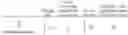
The activity found for the active compound combination according to the invention is greater than the calculated activity, i.e. there is a synergistic effect. At a mixing ratio of 1:1 and an application rate of 0.1 g/ha, the combination of the compound of the formula (I) and the halogeno-benzimidazole of the formula No. XXVII has an actual efficacy of 73%. At 63%, the expected value, calculated using Colby's formula, is considerably lower.
Active compounds, application rates and test results are shown in the tables below.
| TABLE 1 |
| Phytophthora test (tomato)/protective |
| Active | ||
| com- | ||
| pound | ||
| appli- | ||
| cation | ||
| Active compound | rate in | Efficacy |
| known: | g/ha | in % |
| compound of the formula (XXVII) | 0.1 | 30 |
| compound of the formula (I) | 0.1 | 47 |
| Mixture according to the invention: |
| TABLE 2 |
| Phytophthora test (tomato)/protective |
| Active | ||
| com- | ||
| pound | ||
| appli- | ||
| cation | ||
| Active compound | rate in | Efficacy |
| known: | g/ha | in % |
| compound of the formula (I) | 1 | 47 |
| propineb (VI) | 20 | 19 |
| Mixture according to the invention: |
| TABLE 3 |
| Phytophthora test (tomato)/protective |
| Active | ||
| com- | ||
| pound | ||
| appli- | ||
| cation | ||
| Active compound | rate in | Efficacy |
| known: | g/ha | in % |
| compound of the formula (I) | 1 | 47 |
| chlorothalonil (XXIX) | 20 | 12 |
| Mixture according to the invention: |
| TABLE 4 |
| Phytophthora test (tomato)/protective |
| Active | ||
| com- | ||
| pound | ||
| appli- | ||
| cation | ||
| Active compound | rate in | Efficacy |
| known: | g/ha | in % |
| compound of the formula (I) | 1 | 47 |
| dichlofluanid (IVa) | 20 | 5 |
| Mixture according to the invention: |
| TABLE 5 |
| Phytophthora test (tomato)/protective |
| Active | ||
| com- | ||
| pound | ||
| appli- | ||
| cation | ||
| Active compound | rate in | Efficacy |
| known: | g/ha | in % |
| compound of the formula (I) | 1 | 47 |
| tolylfluanid (IVb) | 20 | 21 |
| Mixture according to the invention: |
| TABLE 6 |
| Phytophthora test (tomato)/protective |
| Active | ||
| com- | ||
| pound | ||
| appli- | ||
| cation | ||
| Active compound | rate in | Efficacy |
| known: | g/ha | in % |
| compound of the formula (I) | 1 | 47 |
| folpet (XIX) | 20 | 0 |
| Mixture according to the invention: |
| TABLE 7 |
| Phytophthora test (tomato)/protective |
| Active | ||
| com- | ||
| pound | ||
| appli- | ||
| cation | ||
| Active compound | rate in | Efficacy |
| known: | g/ha | in % |
| compound of the formula (I) | 1 | 39 |
| mancozeb (VIIc) | 20 | 28 |
| Mixture according to the invention: |
| TABLE 8 |
| Phytophthora test (tomato)/protective |
| Active | ||
| com- | ||
| pound | ||
| appli- | ||
| cation | ||
| Active compound | rate in | Efficacy |
| known: | g/ha | in % |
| compound of the formula (I) | 1 | 47 |
| bitertanol (IIc) | 10 | 4 |
| Mixture according to the invention: |
| TABLE 9 |
| Phytophthora test (tomato)/protective |
| Active | ||
| com- | ||
| pound | ||
| appli- | ||
| cation | ||
| Active compound | rate in | Efficacy |
| known: | g/ha | in % |
| compound of the formula (I) | 1 | 47 |
| tebuconazole (III) | 10 | 5 |
| Mixture according to the invention: |
| TABLE 10 |
| Phytophthora test (tomato)/protective |
| Active | ||
| com- | ||
| pound | ||
| appli- | ||
| cation | ||
| Active compound | rate in | Efficacy |
| known: | g/ha | in % |
| compound of the formula (I) | 1 | 47 |
| triadimenol (IIb) | 10 | 0 |
| Mixture according to the invention: |
| TABLE 11 |
| Phytophthora test (tomato)/protective |
| Active compound | ||
| Active compound | application rate in | |
| known: | g/ha | Efficacy in % |
| 1 | 47 | |
| 10 | 0 | |
| TABLE 12 |
| Phytophthora test (tomato)/protective |
| Active | ||
| compound | ||
| application | ||
| rate | Efficacy | |
| Active compound known: | in g/ha | in % |
| compound of the formula (I) | 1 | 47 |
| compound of the formula (XXI)(20) | 10 | 2 |
| TABLE 13 |
| Phytophthora test (tomato)/protective |
| Active | ||
| compound | ||
| application | ||
| rate | Efficacy | |
| Active compound known: | in g/ha | in % |
| compound of the formula (I) | 1 | 47 |
| fenhexamid (VIII) | 10 | 13 |
| TABLE 14 |
| Phytophthora test (tomato)/protective |
| Active | ||
| compound | ||
| application | ||
| rate | Efficacy | |
| Active compound known: | in g/ha | in % |
| compound of the formula (I) | 1 | 47 |
| carpropamid (V) | 10 | 0 |
| TABLE 15 |
| Phytophthora test (tomato)/protective |
| Active | ||
| compound | ||
| application | ||
| rate | Efficacy | |
| Active compound known: | in g/ha | in % |
| compound of the formula (I) | 1 | 47 |
| spiroxamine (XI) | 10 | 0 |
| TABLE 16 |
| Phytophthora test (tomato)/protective |
| Active | ||
| compound | ||
| application | ||
| rate | Efficacy | |
| Active compound known: | in g/ha | in % |
| compound of the formula (I) | 1 | 39 |
| fluazinam (XXXI) | 10 | 56 |
| TABLE 17 |
| Phytophthora test (tomato)/protective |
| Active | ||
| compound | ||
| application | ||
| rate | Efficacy | |
| Active compound known: | in g/ha | in % |
| compound of the formula (I) | 1 | 47 |
| compound of the formula (XXVIII)(27) | 1 | 9 |
| TABLE 18 |
| Phytophthora test (tomato)/protective |
| Active | ||
| compound | ||
| application | ||
| rate | Efficacy | |
| Active compound known: | in g/ha | in % |
| compound of the formula (I) | 1 | 47 |
| compound of the formula (XIV)(13) | 1 | 8 |
| TABLE 19 |
| Phytophthora test (tomato)/protective |
| Active | ||
| compound | ||
| application | ||
| rate | Efficacy | |
| Active compound known: | in g/ha | in % |
| formula (I) | 1 | 56 |
| compound of the formula (XXXXVIa)(40) | 50 | 0 |
| copper oxychloride | ||
| TABLE 20 |
| Phytophthora test (tomato)/protective |
| Active | ||
| compound | ||
| application | ||
| rate | Efficacy | |
| Active compound known: | in g/ha | in % |
| formula (I) | 1 | 56 |
| compound of the formula (XII)(11) azoxystrobin | 1 | 55 |
| TABLE 21 |
| Phytophthora test (tomato)/protective |
| Active | ||
| compound | ||
| Active compound | application rate | |
| known: | in g/ha | Efficacy in % |
| formula (I) | 1 | 56 |
| compound of the formula (XIII) (12) | 1 | 0 |
| trifloxystrobin | ||
| Mixture according to the invention: |
| Active | ||||||
| compound | Expected value | |||||
| Mixing | application | Actual | calculated using | |||
| ratio | rate in g/ha | efficacy | Colby's formula | |||
| formel (I) | 1:1 | 1 | 68 | 56 | ||
| + | {close oversize brace} | + | {close oversize brace} | |||
| trifloxystrobin (XIII) | 1 | |||||
Claims
1-6. (canceled)
7. An active compound combination comprising at least one compound of formula (I)
and
(1) a triazole of formula (II)
in which
X represents chlorine or phenyl and
Y represents
and/or
(2) the triazole of formula (III)
and/or
(3) an aniline of formula (IV)
in which R1 represents hydrogen or methyl,
and/or
(4) N-[1-(4-chloro-phenyl)-ethyl]-2,2-dichloro-1-ethyl-3-methyl-cyclopropane-carboxamide of formula (V)
and/or
(5) the zinc propylene-1,2-bis-(dithiocarbamidate) of formula (VI)
and/or
(6) at least one thiocarbamate of formula (VII)
in which Me represents Zn or Mn or a mixture thereof
and/or
(7) the aniline of formula (VII)
and/or
(8) the compound of formula (IX)
and/or
(9) the benzothiadiazole of formula (X)
and/or
(10) the 8-t-butyl-2-(N-ethyl-N-n-propyl-amino)-methyl-1,4-dioxaspiro[5,4]-decane of formula (XI)
and/or
(11) the cyanoxime of formula (XV)
and/or
(12) a pyrimidine of formula (XVI)
in which R2 represents methyl, —C≡C—CH3 (mepanipyrim) or cyclopropyl (cyprodinyl),
and/or
(13) an aniline of formula (XVII)
and/or
(14) the morpholine of formula (XVIII)
and/or
(15) the phthalimide of formula (XIX)
and/or
(16) the hydroxyethyl-triazole of formula (XXI)
and/or
(17) the 1-[(6-chloro-3-pyridinyl)-methyl]-N-nitro-2-imidazolidinimine of formula (XXII)
and/or
(18) the oxazolidinedione of formula (XXIII)
and/or
(19) the benzamide of formula (XXIV)
and/or
(20) the guanidine of formula (XXV)
in which
m represents an integer from 0 to 5 and
R3 represents hydrogen (17 to 23%) or the radical of the formula
and/or
(21) the triazole of formula (XXVI)
and/or
(22) the halogeno-benzimidazole of formula (XXVII)
and/or
(23) the compound of formula (XXX)
and/or
(24) the pyridineamine of formula (XXXI)
and/or
(25) the thiazolecarboxamide of formula (XXXII)
and/or
(26) the sulphonamide of formula (XXXIII)
and/or
(27) the compound of formula (XXXIV)
and/or
(28) the compound of formula (XXXV)
and/or
(29) the compound of formula (XXXVI)
and/or
(30) the diamide of formula (XXXVII)
and/or
(31) the methoxyacrylate of formula (XXXVIII)
and/or
(32) the quinoline of formula (XXXIX)
and/or
(33) the phenylamide of formula (XXXX)
and/or
(34) the phenylamide of formula (XXXXI)
and/or
(35) the dicarboxime of formula (XXXXIIa)
and/or
(36) the phosphonic acid of formula (XXXXIII)
and/or
(37) the pyrrole of formula (XXXXIV)
and/or
(38) the phenyl carbonate of formula (XXXXV)
and/or
(39) the copper compounds
| (a) | copper oxychloride | (XXXXVIa) | |
| (b) | copper hydroxide | (XXXXVIb) | |
and/or
(40) the imidazole of formula (XXXXVII)
and/or
(41) one or more triazoles having
(a) formula (XXXXVIIIa)
and/or
(b) formula (XXXXVIIIb)
and/or
(c) formula (XXXXVIIIc)
and/or
(d) formula (XXXXVIIId)
and/or
(e) formula (XXXXVIIIe)
and/or
(f) formula (XXXXVIIIf)
and/or
(g) formula (XXXXVIIIg)
and/or
(h) formula (XXXXVIIIh)
and/or
(42) a compound of formula (XXXXIX)
in which R1 represents unsubstituted or fluorine-, chlorine-, bromine-, methyl- or ethyl-substituted phenyl, 2-naphthyl, 1,2,3,4-tetrahydronaphthyl or indanyl.
8. The active compound combination according to claim 7 wherein the weight ratio of the compound of formula (I) to
the compound of formula (II) is from 1:0.1 to 1:50,
the compound of formula (III) is from 1:0.1 to 1:50,
the compound of formula (IV) is from 1:1 to 1:150,
the compound of formula (V) is from 1:0.1 to 1:10,
the compound of formula (VI) is from 1:1 to 1:150,
the compound of formula (VII) is from 1:1 to 1:150,
the compound of formula (VIII) is from 1:0.1 to 1:50,
the compound of formula (IX) is from 1:0.1 to 1:50,
the compound of formula (X) is from 1:0.02 to 1:50,
the compound of formula (XI) is from 1:0.1 to 1:50,
the compound of formula (XV) is from 1:0.1 to 1:50,
the compound of formula (XVI) is from 1:0.2 to 1:50,
the compound of formula (XVII) is from 1:0.1 to 1:50,
the compound of formula (XVIII) is from 1:0.1 to 1:50,
the compound of formula (XIX) is from 1:1 to 1:150,
the compound of formula (XX) is from 1:0.1 to 1:150,
the compound of formula (XXI) is from 1:0.02 to 1:50,
the compound of formula (XXII) is from 1:0.05 to 1:20,
the compound of formula (XXIII) is from 1:0.1 to 1:50,
the compound of formula (XXIV) is from 1:0.1 to 1:50,
the compound of formula (XXV) is from 1:0.1 to 1:150,
the compound of formula (XXVI) is from 1:0.1 to 1:50,
the compound of formula (XXVII) is from 1:0.1 to 1:50,
the compound of formula (XXX) is from 1:1 to 1:150,
the compound of formula (XXXI) is from 1:0.1 to 1:50,
the compound of formula (XXXII) is from 1:0.1 to 1:50,
the compound of formula (XXXIII) is from 1:0.1 to 1:50,
the compound of formula (XXXIV) is from 1:0.1 to 1:50,
the compound of formula (XXXV) is from 1:0.1 to 1:50,
the compound of formula (XXXVI) is from 1:1 to 1:50,
the compound of formula (XXXVII) is from 1:1 to 1:150,
the compound of formula (XXXVIII) is from 1:0.1 to 1:50,
the compound of formula (XXXIX) is from 1:0.1 to 1:50,
the compound of formula (XXXX) is from 1:0.1 to 1:50,
the compound of formula (XXXXI) is from 1:0.1 to 1:50,
the compound of formula (XXXXII) is from 1:1 to 1:150,
the compound of formula (XXXXIII) is from 1:1 to 1:150,
the compound of formula (XXXXIV) is from 1:0.1 to 1:50,
the compound of formula (XXXXV) is from 1:0.1 to 1:50,
the compound of formula (XXXXVIa) is from 1:1 to 1:150,
the compound of formula (XXXXVIb) is from 1:1 to 1:150,
the compound of formula (XXXXVII) is from 1:0.1 to 1:50,
the compound of formula (XXXXVIIIa) is from 1:0.1 to 1:50,
the compound of formula (XXXXVIIIb) is from 1:0.1 to 1:50,
the compound of formula (XXXXVIIIc) is from 1:0.1 to 1:50,
the compound of formula (XXXXVIIId) is from 1:0.1 to 1:50,
the compound of formula (XXXXVIIIe) is from 1:0.1 to 1:50,
the compound of formula (XXXXVIIIf) is from 1:0.1 to 1:50
the compound of formula (XXXXVIIIg) is from 1:0.1 to 1:50,
the compound of formula (XXXXVIIIh) is from 1:0.1 to 1:50, and
the compound of formula (XXXXIX) is from 1:0.1 to 1:50.
9. An active compound combination comprising at least one compound of formula (I)
and
(1) the zinc propylene-1,2-bis-(dithiocarbamidate) of formula (VI)
and/or
(2) the 8-t-butyl-2-(N-ethyl-N-n-propyl-amino)-methyl-1,4-dioxaspiro[5,4]-decane of formula (XI)
and/or
(3) the phthalimide of formula (XIX)
and/or
(4) the pyridineamine of formula (XXXI)
10. An active compound combination according to claim 10 wherein the weight ratio of the compound of formula (I) to
the compound of formula (VI) is from 1:1 to 1:150,
the compound of formula (XI) is from 1:0.1 to 1:50,
the compound of formula (XIX) is from 1:1 to 1:150, and
the compound of formula (XXXI) is from 1:0.1 to 1:50.
11. A method for controlling fungi comprising applying a synergistically effective amount of at least one active compound combination according to claim 7 to the fungi and/or their habitat.
Images & Drawings included:





















Sources:
- United States Patent and Trademark Office - verify current appl. status at the USPTO↗
Similar patent applications:
- » 20110071177
FUNGICIDAL ACTIVE SUBSTANCE COMBINATION - » 20120015910
Synergistic fungicidal active substance combinations - » 20090306109
Fungicide active substance combinations - » 20100273648
Synergistic fungicidal active substance combinations - » 20060004070
Fungicidal active substance combinations - » 20070060579
Synergistic fungicidal active substance combinations - » 20070066562
Fungicidal active substance combinations - » 20050009703
Fungicidal active substance combinations containing trifloxystrobin - » 20090170884
FUNGICIDAL ACTIVE SUBSTANCE COMBINATION - » 20120136032
Fungicidal active substance combinations containing trifloxystrobin
Recent applications in this class:
- » 20240423207 2024-12-26
PICOLINAMIDE COMPOUNDS WITH FUNGICIDAL ACTIVITY - » 20230371516 2023-11-23
Picolinamide compounds with fungicidal activity - » 20230157295 2023-05-25
Stable Aqueous IPBC Dispersions - » 20230112154 2023-04-13
Mixtures of beflubutamid or optically enriched forms thereof with a second herbicide - » 20220295795 2022-09-22
BOC-butenolide, an antifouling compound that has potent ability to inhibit the settlement of marine invertebrate larvae - » 20220159962 2022-05-26
Picolinamide compounds with fungicidal activity - » 20200367500 2020-11-26
MICROCAPSULES WITH BIOCIDES FOR THEIR INCORPORATION INTO REPELLENT AND/OR INSECTICIDE COATINGS - » 20200236943 2020-07-30
Agrochemical composition and dispersal method therefor - » 20200120936 2020-04-23
Picolinamide compounds with fungicidal activity - » 20200093136 2020-03-26
Mixtures of beflubutamid or optically enriched forms thereof with a second herbicide
Recent applications for this Assignee:
- » 20210053924 2021-02-25
Heterocyclic compounds as pesticides - » 20190367459 2019-12-05
Heterocyclic compounds as pesticides - » 20190239514 2019-08-08
Compositions comprising a biological control agent and an insecticide - » 20190092765 2019-03-28
N-CYCLOALKYL-N-[(HETEROCYCLYLPHENYL)METHYLENE]-(THIO)CARBOXAMIDE DERIVATIVES - » 20180327776 2018-11-15
AXMI554 delta-endotoxin gene and methods for its use - » 20180258036 2018-09-13
Method for producing bis(3-aminophenyl)disulfides and 3-aminothiols - » 20180098540 2018-04-12
Ternary fungicidal mixtures - » 20170339959 2017-11-30
Chemical stabilization of iodosulfuron-methyl sodium salt by hydroxystearates - » 20170305864 2017-10-26
Heterocyclic compounds as pesticides - » 20170245504 2017-08-31
Composition comprising a biological control agent and a fungicide