Raspberry plant named 'Driscoll Estrella'
US20070163014P1
2007-07-12
11/327,109
2006-01-06
Abstract:
The present invention relates to a new and distinct cultivar of raspberry plant named ‘Driscoll Estrella’. The new cultivar is distinguished from other raspberry cultivars by its yellow fruit color, fruit firmness, consistent fruit structure and high yield. The new cultivar is distinguished from its pollen parent by producing a higher yield of larger, firmer fruit with a brighter yellow color.
Inventors:
- Rick Harrison 3 🇺🇸 Aptos, CA, United States
- Fred Cook 1 🇺🇸 Aptos, CA, United States
- Brian Hamilton 1 🇺🇸 San Jose, CA, United States
- Gavin Sills 1 🇺🇸 Watsonville, CA, United States
Interested in similar patents?
Get notified when new applications in this technology area are published.
Classification:
A01H5/00 IPC
Products
A01H5/00 IPC
Angiosperms, i.e. flowering plants, characterised by their plant parts; Angiosperms characterised otherwise than by their botanic taxonomy
Description
1. LATIN NAME OF THE GENUS AND SPECIES OF THE PLANT CLAIMEDThe variety is botanically identified as Rubus idaeus L. subgenus Rubus.
1.2 VARIETY DENOMINATIONThe Raspberry variety denomination is ‘Driscoll Estrella’.
2. BACKGROUND OF THE INVENTIONThis invention relates to a new cultivar of raspberry called ‘Driscoll Estrella’. The new cultivar of raspberry plant was developed from the hybridization of the selection Q481.7 (an unpatented variety) as the seed parent with the selection S826.3 (an unpatented variety) as the pollen parent. The parents were crossed in 1998, whereafter fruit and seed were collected to produce seedlings for field planting in Watsonville, Calif. in 1998. The new cultivar was selected from these seedlings in 2000 for its yellow color, productivity and flavor. The cultivar has been asexually propagated by in vitro shoot tip culture, root sucker division and root cuttings at the Cassin Ranch in Santa Cruz County, Calif. and has been shown to maintain the desired and distinguishing characteristics after propagation over several generations.
3. SUMMARY OF THE INVENTIONThe present invention provides a new and distinct yellow raspberry cultivar named ‘Driscoll Estrella’. The cultivar is botanically identified as Rubus idaeus L. The ‘Driscoll Estrella’ yellow raspberry plant produces a primocane crop which begins in late June and continues until early November. The floricane crop begins in late April and continues until late June or early July. Both the primocane and floricane yields are high relative to other comparable yellow varieties. The fruit of ‘Driscoll Estrella’ is notably quite firm and very consistent with regard to its size and shape throughout its harvest period. The fruit of ‘Driscoll Estrella’ separates easily from its receptacle.
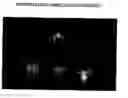
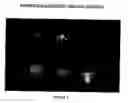
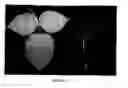
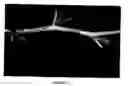
4. BRIEF DESCRIPTION OF THE DRAWINGSThe accompanying photographs show typical specimens of the primocane fruit, leaves and shoot of the new cultivar, in color as nearly true as it is reasonably possible to make in color illustrations of these characteristics.
FIG. 1 is a photograph of ‘Driscoll Estrella’ primocane flower and fruit in various stages of development.
FIG. 2 is a photograph of ‘Driscoll Estrella’ primocane leaves showing upper and lower leaf surfaces.
FIG. 3 is a photograph of ‘Driscoll Estrella’ primocane shoot.
5. DETAILED BOTANICAL DESCRIPTIONThe following detailed description of the new raspberry cultivar, ‘Driscoll Estrella’, is based upon observations taken of plants and fruit grown in Watsonville, Calif. between 2001 and 2005, and is believed to apply to plants of the ‘Driscoll Estrella’ cultivar grown in similar conditions of soil and climate elsewhere.
Throughout this specification, color names beginning with a small letter signify that the name of the color, as used in common speech, is aptly descriptive. Color data beginning with a capital letter and followed by an alphanumeric code indicate the most similar color designations as provided by The Royal Horticultural Society (RHS) Colour Chart published by The Royal Horticultural Society of London, England. Color designations, color descriptions, and other phenotypical descriptions may deviate from the stated values and descriptions depending upon variation in environmental, seasonal, climatic and cultural conditions.
Table 1 provides information on the plant and fruit characteristics of the new cultivar ‘Driscoll Estrella’ compared with characteristics of the unpatented raspberry cultivar ‘Heritage’. Observations of the cultivars were taken in comparisons under similar conditions.
The new variety is particularly characterized and distinguished from other cultivars by its yellow fruit color, fruit firmness, consistent fruit structure and high yield. The fruit color of ‘Driscoll Estrella’ is a bright yellow at harvest. Fruit of ‘Driscoll Estrella’ separates easily from the receptacle and is of excellent firmness at harvest. The fruit of ‘Driscoll Estrella’ is very consistent in size and shape throughout the harvest period.
The primocane and floricane yields of ‘Driscoll Estrella’ are high relative to the variety ‘Heritage’. ‘Driscoll Estrella’ is distinguishable from its pollen parent, selection ‘S826.3’, by producing a higher yield of larger, firmer fruit with a brighter yellow color. The new cultivar has similar fruit size, shape and color as its seed parent, selection ‘Q481.7’
5.1 DISEASE AND STRESS RESISTANCE‘Driscoll Estrella’ has exhibited some resistance to Phragmidium rust and Phytophthora root rot. Cold tolerance of the new cultivar has not been established. Post harvest fruit rot resistance is good in comparison with many selections and varieties.
| TABLE 1 |
| PLANT CHARACTERISTICS OF ‘DRISCOLL ESTRELLA’ |
| Driscoll Estrella | Heritage | |
| GENERAL | ||
| Plant Size | Small to Medium | Large |
| Growth habit | Erect | Erect |
| Productivity | High | Medium |
| Self-fruitfulness | Self-fruitful | Self-Fruitful |
| Time of bud burst | Medium | Medium |
| Primocane fruiting | ||
| Percent of cane Length | 50-70 | 20-40 |
| flowering as Primocane | ||
| Percent of total yield | 51 | 50 |
| Primocanes | ||
| Number of young shoots | Many | Medium |
| Young shoot pigmentation | None | Medium |
| Length (cm) | 178 | 195 |
| Time of shoot emergence | Early | Medium |
| Glaucosity (waxy bloom) | Weak | Weak |
| Strength | Medium | Medium |
| Cane cross section (from | Angular | Rounded to angular |
| mid cane of primocane) | ||
| Dormant cane color | 164-A | 166-B |
| Prickles | ||
| Pigmentation | Green | Green to brown-green |
| Density on young shoots | Medium | Dense |
| Attitude of tip | Horizontal | Downward |
| Size | Medium | Medium |
| Size: Length (mm) (base | 1.8 | 2.0 |
| to tip at 1 m height at | ||
| end of harvest) | ||
| Texture | Heavy | Heavy |
| Presence and distribu- | Present, regularly | Present, regularly |
| tion of petioles | distributed | distributed |
| Pubescence on canes | Absent | Absent |
| Internodal distance (cm) | 4.8 | 4.3 |
| (at central 1/3 of cane) | ||
| LEAVES | ||
| Color | ||
| Face | 147-A | 147-A |
| Underside | N138-C | 148-C |
| Relief between veins | Medium | Weak |
| Glossiness | Medium | Medium |
| Petiole | ||
| Length (cm) | 7.3 | 7.0 |
| Pigmentation of upper | Absent | Present |
| surface | ||
| Pigmentation of underside | Absent | Absent |
| Stipule orientation | Reflex | Erect |
| Arrangement | Compound | Compound |
| Number of leaflets | Sometimes 3, | Sometimes 3, |
| Sometimes 5 | sometimes 5 | |
| Overlapping of lateral | Touching | Free to touching |
| leaflets | ||
| Lateral leaflet: length | Very short | Very short |
| to stalklet (lower pair) | ||
| Terminal leaflet | ||
| Length (cm) | 12.6 | 14.8 |
| Width (cm) | 10.0 | 8.8 |
| Shape | Ovate | Ovate |
| Tip | Acuminate | Acuminate |
| Base | Cordate | Rounded |
| Margin | Doubly serrate | Doubly serrate |
| Lateral leaflets | ||
| (basal pair) | ||
| Length (cm) | 10.7 | 13.7 |
| Width | 7.3 | 7.8 |
| Orientation | Opposite | Opposite |
| Shape | Ovate | Ovate |
| Tip | Acuminate | Acuminate |
| Base | Oblique | Oblique |
| Margin | Doubly serrate | Doubly serrate |
| Rachis length between | 2.1 to 4.4 | 3.7 to 5.8 |
| terminal leaflet and | ||
| adjacent lateral | ||
| leaflet (cm) | ||
| FLOWERS | ||
| Flowering period | ||
| Primocane | Late May to late | Early July to |
| September | Early October | |
| Floricane | Early April to | Mid April to |
| Mid June | Mid June | |
| Flower size | Medium | Medium |
| Petal | ||
| Length (cm) | 0.9 | 0.7 |
| Width (cm) | 0.5 | 0.3 |
| Pedicel | ||
| Coloration | None | Medium |
| Length | Medium | Medium |
| FRUIT | ||
| Harvest Season | ||
| Primocane | Late June to | Early August to |
| Late October | Early November | |
| Floricane | Early May to | Late May to |
| Mid July | Mid July | |
| Fruiting Lateral | ||
| Number of fruit per | 14 | 23 |
| lateral | ||
| Color | Yellow | Medium Red |
| Immature | 11-B | 180-A |
| Maturing | 162-B | 185-B |
| Mature fruit | 162-A | 185-A |
| Glossiness | Medium | Medium |
| Shape | Ovate | Ovate |
| Dimensions | ||
| Size | Medium | Small |
| Length (mm) | 22 | 19 |
| Width (mm) | 23 | 19 |
| Length:width | 0.95 | 1.0 |
| Weight (g/Fruit) | ||
| Primocane | 4.5 | 3.4 |
| Floricane | 4.4 | 2.6 |
| Soluble Solids (%) | 11.1 | 10.5 |
| Titratable acidity | 1.3 | 1.50 |
| (% as citric acid) | ||
| Seeds | ||
| Weight (mg/seed) | 1.87 | 1.62 |
| Number druplets/fruit | 82 | 75 |
| Adherence to plug (1-9) | Medium | Medium |
| Firmness | Very firm | Firm |
| Yield | High | Medium |
Claims
What is claimed:1. A new and distinctive cultivar of raspberry plant, substantially as shown and described.
Images & Drawings included:
Sources:
- United States Patent and Trademark Office - verify current appl. status at the USPTO↗
Recent applications in this class:
- » 20240292771 2024-08-29
Campanula plant named 'Twilight' - » 20240251691 2024-07-25
HYDRANGEA PLANT NAMED 'HYLV17520' - » 20240251690 2024-07-25
Vaccinium Plant Named 'BWPBLUE02' - » 20240251689 2024-07-25
BLUEBERRY PLANT NAMED 'FC13-113' - » 20240251688 2024-07-25
BLUEBERRY PLANT NAMED 'FCM14-057' - » 20240237567 2024-07-11
PONGAMIA VARIETIES - » 20240224827 2024-07-04
PELARGONIUM PLANT NAMED 'PEQZ0103' - » 20240215470 2024-06-27
Agapanthus plant named 'Monsapho' - » 20240215469 2024-06-27
plant named ‘LOCORA3519’ - » 20240206359 2024-06-20
CORYLUS PLANT NAMED 'BWM01'