Method and apparatus for deactivating a hillholder function
US20070164608A1
2007-07-19
10/557,212
2004-05-08
✅ Patent granted
US 7,641,291 B2
2010-01-05
WO; PCT/DE2004/000965; 20040508
WO; WO2004/103785; 20041202
Thomas J Williams
2025-06-26
Abstract:
A method for controlling the braking system of a motor vehicle in which, in order to prevent the vehicle from rolling away after a stopping action, a first braking force value is established at at least one wheel of the vehicle, independently of the driver, and is held for a predefined limited holding time; a transverse variable characterizing a transverse motion of the vehicle is ascertained; and as a function of the transverse variable, a release of the braking force is accomplished even before the predefined holding time has elapsed.
Inventors:
- Andreas Streit 2 🇩🇪 Schwieberdingen, Germany
- Toni Braeuer 3 🇩🇪 Ludwigsburg, Germany
- Andreas Streit 1 🇩🇪 Schiberdiager, Germany
Assignee:
- Robert Bosch GMBH 19,123 🇩🇪 Stuttgart, Germany
Interested in similar patents?
Get notified when new applications in this technology area are published.
Classification:
B60T7/122 » CPC main
Brake-action initiating means for automatic initiation; for initiation not subject to will of driver or passenger for locking of reverse movement
B60T2201/06 » CPC further
Particular use of vehicle brake systems; Special systems using also the brakes; Special software modules within the brake system controller Hill holder; Start aid systems on inclined road
B60W30/18118 » CPC further
Purposes of road vehicle drive control systems not related to the control of a particular sub-unit, e.g. of systems using conjoint control of vehicle sub-units, or advanced driver assistance systems for ensuring comfort, stability and safety or drive control systems for propelling or retarding the vehicle; Propelling the vehicle related to particular drive situations; Braking Hill holding
B60W2520/125 » CPC further
Input parameters relating to overall vehicle dynamics; Lateral speed Lateral acceleration
B60W2520/14 » CPC further
Input parameters relating to overall vehicle dynamics Yaw
B60W2710/18 » CPC further
Output or target parameters relating to a particular sub-units Braking system
B60T8/32 IPC
Arrangements for adjusting wheel-braking force to meet varying vehicular or ground-surface conditions, e.g. limiting or varying distribution of braking force responsive to a speed condition, e.g. acceleration or deceleration
B60T8/1755 IPC
Arrangements for adjusting wheel-braking force to meet varying vehicular or ground-surface conditions, e.g. limiting or varying distribution of braking force; Using electrical or electronic regulation means to control braking Brake regulation specially adapted to control the stability of the vehicle, e.g. taking into account yaw rate or transverse acceleration in a curve
Description
FIELD OF THE INVENTIONThe present invention relates to a method and an apparatus for deactivating a hillholder function in a motor vehicle.
BACKGROUND INFORMATIONGerman Patent Application No. DE 199 50 034 describes a method and an apparatus for controlling a braking system in which in at least one operating state, when the brake pedal is actuated, braking force is held at at least one wheel of the vehicle regardless of the extent of pedal actuation. Various conditions are provided in this context, together or alternatively, for activation or deactivation of the function.
German Patent Application No. DE 199 50 028 describes a method and an apparatus for controlling a vehicle in which, at least when the vehicle is at a standstill, braking force is held at at least one wheel of the vehicle regardless of the extent of pedal actuation. When a shutoff condition exists, the braking force is released, whereas when slippage of the vehicle is detected, braking force is released independently of that condition. Features for detecting slippage of the vehicle, and a risk of slippage, are furthermore presented.
SUMMARY OF THE INVENTIONThe present invention relates to a method for controlling the braking system of a motor vehicle
-
- in which, in order to prevent the vehicle from rolling away after a stopping action, a first braking force value is established at at least one wheel of the vehicle, independently of the driver, and is held for a predefined limited holding time, or is held in general until a release condition exists.
This refers, in particular, to a so-called “hillholder.” An essence of the present invention is that
-
- a transverse variable characterizing a transverse motion of the vehicle is ascertained; and
- as a function of the transverse variable, a release of the braking force is accomplished even before the predefined holding time has elapsed.
As a result, the hillholder can be deactivated upon detection of a rotational motion of the vehicle. An improvement in safety for the vehicle and its occupants is thereby achieved.
An advantageous embodiment of the present invention is characterized in that the release condition is the expiration of a holding time interval of predefined length. The beginning of the holding time interval is characterized by initiation of the hillholder.
An advantageous embodiment of the present invention is characterized in that the yaw rate is incorporated into the ascertaining of the transverse variable. The yaw rate is a particularly clear indication of a rotational motion of the vehicle.
Also usable for this, however, is the transverse acceleration, ascertained, e.g., by a transverse acceleration sensor.
An advantageous embodiment of the present invention is therefore also characterized in that a release of the braking force is accomplished, even before the predefined holding time has elapsed, if the yaw rate or the transverse acceleration or a variable correlated with them exceeds a predefined limit value.
An advantageous embodiment of the present invention is characterized in that
-
- after the holding action has been achieved, the value of the yaw rate is ascertained and stored; and
- a release of the braking force is accomplished, even before the predefined holding time has elapsed, if the absolute value of the difference between the instantaneously ascertained yaw rate and the stored yaw rate exceeds a predefined limit value.
It is thereby possible, in particular, to prevent erroneous deactivation of the hillholder because of a possible offset value of the yaw rate signal.
An advantageous embodiment of the present invention is characterized in that
-
- a slipping action of the motor vehicle is detected as a function of the transverse variable; and
- the event a slipping action is detected, a release of the braking force is accomplished even before the predefined holding time has elapsed.
The apparatus for controlling the braking system of a motor vehicle contains
-
- rollaway prevention means with which, in order to prevent the vehicle from rolling away after a stopping action, a first braking force value is established at at least one wheel of the vehicle, independently of the driver, and is held for a predefined limited holding time.
The apparatus furthermore contains
-
- ascertaining means which ascertain a transverse variable characterizing a transverse motion of the vehicle; and
- braking force release means with which, as a function of the transverse variable, a release of the braking force is accomplished even before the predefined holding time has elapsed.
An advantageous embodiment of the present invention is characterized in that
-
- the ascertaining means are a sensor or a sensor system for ascertaining the yaw rate; and
- the transverse variable is the yaw rate.
An advantageous embodiment of the present invention is characterized in that the ascertaining means are a yaw rate sensor.
An advantageous embodiment of the present invention is characterized in that the braking force release means are configured so that a release of the braking force is accomplished, even before the predefined holding time has elapsed, if the yaw rate exceeds a predefined limit value.
An advantageous embodiment of the present invention is characterized in that
-
- storage means are present in which a value of the yaw rate, ascertained after the holding action has been achieved, is stored; and
- the braking force release means are configured so that a release of the braking force is accomplished, even before the predefined holding time has elapsed, if the absolute value of the difference between the instantaneously ascertained yaw rate and the yaw rate stored in the storage means exceeds a predefined limit value.
The advantageous embodiments of the method according to the present invention are also expressed as advantageous embodiments of the apparatus according to the present invention, and vice versa.
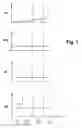
BRIEF DESCRIPTION OF THE DRAWINGSFIG. 1 shows the sequence of the method according to the present invention with reference to sensor signals.
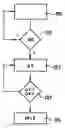
FIG. 2 shows the sequence of the method according to the present invention with reference to a flow chart.
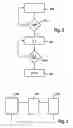
FIG. 3 shows the configuration of the apparatus according to the present invention.
DETAILED DESCRIPTIONWhen the driver of a motor vehicle brakes to a stop on an incline in the longitudinal direction of the vehicle and then releases the brake, a hillholder function then immobilizes all the wheels during a time interval of definable length (brake pressure is “locked in”). If the vehicle is on an incline having a low coefficient of friction (e.g. an icy road surface), slippage of the vehicle can then occur and the vehicle slides backward with four locked wheels. The driver has no ability to steer the vehicle during this time, since no force can be transferred via the wheels. An advantage of the present invention is to detect a rotation of the vehicle and thus an uncontrolled slippage, and to terminate the hillholder function.
A rotation of the vehicle, and therefore an uncontrolled slippage, is therefore detected In the context of the present invention. As a consequence of detection of a rotation, the hillholder function is terminated. The wheels are then once again free to move, and the driver can perform a directional correction and bring the vehicle back under control.
A determination is made, via evaluatable signals, as to whether a rotation of the vehicle is taking place while a hillholder function is active. This is done by investigating, by way of an evaluation of signals that sense a transverse component of the vehicle motion, whether a rotational motion of the vehicle is present.
The profile of the output signals of the rotation rate sensor or yaw rate sensor is of particular interest in this context, but the output signal of, for example, the transverse acceleration sensor can also be considered.
Typical changes over time in sensor signals and other variables during execution of the method according to the present invention are depicted in FIG. 1. The time t is plotted on the abscissa in each case; plotted on the ordinate are
-
- in the topmost diagram, the change (labeled Δψ) in the yaw rate;
- in the second diagram from the top, the hillholder status (labeled HHC), where HHC=1 indicates an activated hillholder and HHC=0 a non-activated hillholder;
- in the third diagram from the top, the pressure pR in a wheel brake cylinder; and
- in the bottommost diagram, the pressure pHz in the main brake cylinder.
Four time intervals labeled 1, 2, 3, and 4 are indicated along the time axis t drawn at the very bottom.
Time Interval 1:
The vehicle comes to a stop on an incline. The driver actuates the brake pedal (pHz>0) and the hillholder is activated (HHC=1). The output signal ψ of the yaw rate sensor is stored. By comparing the stored yaw rate to the present yaw rate, its change Δψ is ascertained. Δψ is approximately zero.
Time Interval 2:
The driver releases the brake pedal (pHz drops to zero). The hillholder remains activated, however (HHC=1) to prevent the vehicle from rolling away.
Time Interval 3:
Δψ increases slightly, but does not yet exceed a limit value.
Time Interval 4:
The value of Δψ exceeds a limit value, i.e. a rotational motion of the vehicle that can be attributed only to a slipping action is detected. As a consequence thereof, the hillholder is deactivated (HHC=0), and the pressure pR in the wheel brake cylinder (or in all the wheel brake cylinders) is released.
The sequence of the method according to the present invention is depicted in FIG. 2. Block 200 indicates the beginning of the method. Block 201 (HHC) then checks whether the activation conditions for the hillholder are met (e.g. inclined road surface and vehicle at a standstill). If the result is No (labeled “n” in FIG. 2), execution then branches back to the beginning of the method. If the result is Yes, however (labeled “y” in FIG. 2), the variable Δψ is then ascertained in block 202. Block 203 then queries whether Δψ exceeds a limit value Δψ0, i.e. whether Δψ>Δψ0. If the response is No, the variable Δψ is ascertained again in block 202. If the response is Yes, then in block 204 the brake pressure pR in the wheel brake cylinders is prematurely deactivated.
The configuration of the apparatus according to the present invention is depicted in FIG. 3. Block 300 contains the rollaway prevention means, which in turn control ascertaining means 301. As a function of the result of the ascertaining means, braking force release means 302 are controlled and in turn prematurely deactivate rollaway prevention means 300.
Claims
1-12. (canceled)
13. A method for controlling a braking system of a motor vehicle, the method comprising:
in order to prevent the vehicle from rolling away after a stopping action, establishing a first braking force value at at least one wheel of the vehicle, independently of a driver, and holding the first braking force value until a release condition exists;
ascertaining a transverse variable characterizing a transverse motion of the vehicle; and
as a function of the transverse variable, providing a release of a braking force even before the release condition exists,
wherein a yaw rate is incorporated into the ascertaining of the transverse variable, and
wherein the release condition is an expiration of a holding time interval of predefined length.
14. The method according to claim 13, wherein a release of the braking force is accomplished, even before the release condition exists, if the yaw rate exceeds a predefined limit value.
15. The method according to claim 13, further comprising, after a holding action has been achieved, ascertaining and storing a value of the yaw rate, and wherein a release of the braking force is accomplished, even before the release condition exists, if an absolute value of a difference between an instantaneously ascertained yaw rate and a stored yaw rate exceeds a predefined limit value.
16. The method according to claim 13, wherein a transverse acceleration is incorporated into the ascertaining of the transverse variable.
17. The method according to claim 13, further comprising detecting a slipping action of the motor vehicle as a function of the transverse variable, and wherein, in the event a slipping action is detected, a release of the braking force is accomplished even before the release condition exists.
18. An apparatus for controlling a braking system of a motor vehicle, comprising:
rollaway prevention means for preventing the vehicle from rolling away after a stopping action, in that a first braking force value is established at at least one wheel of the vehicle, independently of a driver, and is held until a release condition exists;
ascertaining means for ascertaining a transverse variable characterizing a transverse motion of the vehicle; and
braking force release means for providing, as a function of the transverse variable, a release of a braking force even before the release condition exists,
wherein a yaw rate is incorporated into the ascertaining of the transverse variable, and
wherein the release condition is an expiration of a holding time interval of predefined length.
19. The apparatus according to claim 18, wherein the ascertaining means includes at least one of a sensor and a sensor system for ascertaining the yaw rate, and the transverse variable is the yaw rate.
20. The apparatus according to claim 19, wherein the ascertaining means includes a yaw rate sensor.
21. The apparatus according to claim 20, wherein the braking force release means is configured so that a release of the braking force is accomplished, even before the release condition exists, if the yaw rate exceeds a predefined limit value.
22. The apparatus according to claim 19, further comprising storage means for storing a value of the yaw rate, ascertained after a holding action has been achieved, and wherein the braking force release means is configured so that a release of the braking force is accomplished, even before the release condition exists, if an absolute value of a difference between an instantaneously ascertained yaw rate and a yaw rate stored in the storage means exceeds a predefined limit value.
Images & Drawings included:
Sources:
- United States Patent and Trademark Office - verify current appl. status at the USPTO↗
Recent applications in this class:
- » 20250121804 2025-04-17
DRIVING ASSISTANCE APPARATUS, DRIVING ASSISTANCE METHOD, AND NON-TRANSITORY STORAGE MEDIUM - » 20230202433 2023-06-29
Rotation restriction control device, rotation restriction device, and vehicle - » 20220258704 2022-08-18
System and method for vehicle stop control - » 20220242376 2022-08-04
Braking control device - » 20220185245 2022-06-16
Hill-hold assist - » 20210380084 2021-12-09
Method and control system for controlling machine - » 20210009093 2021-01-14
Device/method for parking brake assistance - » 20200114885 2020-04-16
Method and system for vehicle control - » 20180319379 2018-11-08
VEHICLE SAFETY BRAKING SYSTEM - » 20180065602 2018-03-08
Electronic control brake system and method for controlling the same
Recent applications for this Assignee:
- » 20250154889 2025-05-15
PRESSURE CONTROL IN AN EXHAUST AFTERTREATMENT SYSTEM - » 20250154580 2025-05-15
ENZYME TRANSLOCATORS IN NANOGAP WITH 3' -ESTERS - » 20250147582 2025-05-08
METHOD FOR DETERMINING AN EYE DISTANCE IN A PAIR OF DATA GLASSES, AND DATA GLASSES - » 20250146568 2025-05-08
DRIVE ASSEMBLY AND VEHICLE HAVING SUCH A DRIVE ASSEMBLY - » 20250146495 2025-05-08
Flexible Pump Assembly for Use in a Fan Drive - » 20250140882 2025-05-01
FUEL CELL SYSTEM HAVING ENERGY RECUPERATION - » 20250137810 2025-05-01
METHOD FOR MATCHING A DIGITAL ROAD MAP - » 20250137033 2025-05-01
DNA UNFOLDING USING A FREE-END TAG FLOW MODIFIER - » 20250119751 2025-04-10
A BLUETOOTH COMMUNICATION METHOD AND SYSTEM - » 20250118116 2025-04-10
Diagnostic Protocol Search With Improved Efficiency