Low frequency equalization for loudspeaker system
US20070172082A1
2007-07-26
11/324,650
2006-01-03
Abstract:
A method of optimizing the low frequency audio response emanating from a pair of low frequency transducers housed within a cabinet. The low frequency transducers are electrically connected to a power amplifier and source of audio content. The resonant frequency (Fs) and amplitude (Q) are characterized as to the high-pass pole of the low frequency transducers as they are mounted within the cabinet. An equalizer is placed between the amplifier and source of audio content for canceling the complex pole of the low frequency transducers and for establishing a new complex pole as a cut off point in which no low frequency sound would be generated by the low frequency transducers.
Inventors:
- J. CRAIG OXFORD 35 🇺🇸 Nashville, TN, United States
- D. MICHAEL SHIELDS 33 🇺🇸 ST. PAUL, MN, United States
Interested in similar patents?
Get notified when new applications in this technology area are published.
Classification:
H04R3/04 » CPC main
Circuits for transducers, loudspeakers or microphones for correcting frequency response
H04R1/227 » CPC further
Details of transducers, loudspeakers or microphones; Arrangements for obtaining desired frequency or directional characteristics for obtaining desired frequency characteristic only using transducers reproducing the same frequency band
H04R1/2873 » CPC further
Details of transducers, loudspeakers or microphones; Arrangements for obtaining desired frequency or directional characteristics for obtaining desired frequency characteristic only; Transducer mountings or enclosures modified by provision of mechanical or acoustic impedances, e.g. resonator, damping means; Reduction of undesired resonances, i.e. standing waves within enclosure, or of undesired vibrations, i.e. of the enclosure itself for loudspeaker transducers
H03G5/00 IPC
Tone control or bandwidth control in amplifiers
Description
TECHNICAL FIELD
The present invention involves a method of optimizing the low frequency audio response emanating from a pair of low frequency transducers housed within a cabinet. It has now been ascertained that when the proper equalization circuit is installed within the audio chain, the woofer portion of a speaker system can be optimized to an extent not previously achievable.
BACKGROUND OF THE INVENTION
Loudspeaker systems including those intended for residential two channel audio or multi-channel theater systems intend to embrace a substantial portion of the audio frequency range discernable by a listener. An important part of this range are low frequencies produced by relatively large loudspeaker transducers, generally known as woofers.
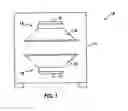
An excellent woofer system is shown schematically in FIG. 1. Woofer system 10 is comprised of cabinet 11 housing low frequency transducers 12 and 13. These low frequency transducers ideally operate in phase with each other whereby diaphragms 14 and 15 face each other being driven by motor assemblies 16 and 17. When low frequency transducers 12 and 13 are mounted opposite to one another as shown in FIG. 1, large reactive forces associated with high power woofers located in cabinet structure 11 need not rely on mechanical grounding of the cabinet to woofer assembly 10.
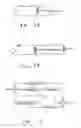
In analyzing the low frequency transducer model of FIG. 1, one could create an electrical equivalent circuit of this assembly in free air. This is shown in FIG. 2A as a second-order resonant circuit with a natural frequency determined by the stiffness of the suspension and mass of the moving system. The amplitude (Q) of this resonance is determined by the damping due to mechanical loss. The resonance can be defined in terms of frequency and Q, and it constitutes a complex high-pass pole in the response of the loudspeaker.
Notwithstanding the above discussion, the electrical equivalent circuit shown in FIG. 2A does not tell the entire story. In this regard, reference is made to FIG. 2B. In this regard, when low frequency transducers 12 and 13 are placed within cabinet 11 which can be, for example, a sealed box, the stiffness of the air in the box is added to the stiffness of the suspension of the low frequency transducers and is shown as a parallel inductor. The consequence of this is that both the resonant frequency and Q are raised in value by approximately the square root of 1 plus the stiffness of the speaker divided by the stiffness of the air in the box. This can graphically be depicted by comparing FIGS. 2C and 2D.
A design goal of a woofer system is to maintain a low resonant frequency. Traditionally, this was done by increasing the moving mass (diaphragms 14 and 15), decreasing diaphragm stiffness or both. Stiffness has traditionally been decreased by making suspension components employed in such transducers more flexible or “limp” or by making enclosure 11 larger. Again, moving mass can only be increased by making diaphragms 14 and 15 heavier. However, adopting any of these traditional expedients represent a significant compromise as they tend to degrade performance of the woofer system. Softer suspension parts are not reliable, particularly if they are carrying a greater mass. Increased mass further requires a corresponding increase in motor strength if the ability to accelerate diaphragms 14 and 15 is to be maintained. A larger motor translates directly to higher production costs and a larger enclosure 11 may not be a suitable solution as cabinet size is generally considered to be a design constraint on any loudspeaker system. As a result, those engaged in loudspeaker design generally simply choose appropriately sized low frequency transducers, enclose them in an available volume and accept the resulting response.
It is thus an object of the present invention to provide a novel technique for dealing with the resonance of a low frequency transducer system.
It is yet a further object of the present invention to reduce resonant frequency of a woofer system by providing an electrical circuit as an equalizer within the audio chain.
These and further objects will be more readily apparent when considering the following disclosure and appended claims.
SUMMARY OF THE INVENTION
The present invention involves a method of optimizing the low frequency audio response emanating from a pair of low frequency transducers housed within a cabinet, said low frequency transducers being electrically connected to a power amplifier and source of audio content, said method comprises characterizing the resonant frequency (Fs) and amplitude (Q) of the high-pass pole of the low frequency transducers as they are mounted within said cabinet, placing an equalizer between said amplifier and source of audio content. Said equalizer canceling the complex pole of the low frequency transducers and establishing a new complex pole and further establishing a cut off point at which no low frequency sound will be generated by said low frequency transducers.
BRIEF DESCRIPTION OF THE FIGURES
FIG. 1 is a side cut away view of a typical woofer cabinet and enclosed low frequency transducers which can be employed in benefiting from the present invention.
FIGS. 2A and 2B are electrical equivalent circuits of the woofer assembly of FIG. 1 in free air (FIG. 2A) and in a sealed cabinet (FIG. 2B).
FIGS. 2C and 2D correspond to FIGS. 2A and 2B, respectively, showing a graphical equivalent of the relationship between the output or response (dB) and frequency of woofer systems.
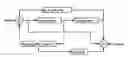
FIG. 3 is a block diagram of the equalizer system made the subject of the present invention.
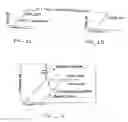
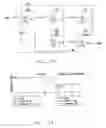
FIGS. 4A and 4B are schematic layouts and graphical depictions of the equalizer system shown in FIG. 3.
FIG. 5 is a graphical depiction of the relationship between woofer output (dB) and frequency showing the effect of the equalizer system shown in FIGS. 3 and 4.
DETAILED DESCRIPTION OF THE INVENTION
The present design approach or method of optimizing low frequency transducer response in a loudspeaker system bears little or no parallel to loudspeaker design methodology engaged in previously. In the past, a designer would select what is believed to be properly sized and dimensioned transducers placed in what is hoped to be an appropriately sized cabinet fed by low frequencies emanating from a power amplifier through an appropriate cross over network. In practicing the present invention, however, a designer could begin with a preconfigured woofer system and by inserting the appropriate equalization circuit between the power amplifier and the audio content source, this woofer system can be optimized.
All woofer systems have a natural resonance or preferred natural frequency. In an electric circuit, resonance occurs because of the exchange of energy between the reactive elements, i.e., capacitance and inductance, of the circuit. It is recognized that the resistive elements of a circuit are dissipative, noting if there was no resistance in a circuit (which is obviously a physical impossibility), the resonant exchange of energy or oscillation would persist indefinitely. As resistance is introduced into this ideal model, the quality of the resonant circuit or its amplitude (Q) deteriorates. Obviously, the opposite of Q is damping (d) so that d=1/Q. As such, any single resonance can be characterized by its frequency and its Q (or d), the mathematical description of a resonant system can be described as follows:
S=jω+Ø
wherein
-
- S—mathematical description of resonant systems
- j=
- ω=2πf, where f is in Hz=1/sqrt (mass×compliance)
The notation of this equation denotes a real and an imaginary axis for S. When a resonant circuit is expressed in S, the roots of the equation in the numerator represent “0” and in the “S-plane” and the roots of the denominator represent “poles” in the S-plane. In solving the transfer function for a system with both poles and zeros noting that not all systems have both, if there are identical coefficients for a pole and a zero, they cancel each other. A complex pole in S is a resonance and can be described in terms of F and Q.
It is recognized herein that any speaker, by itself, has a fundamental resonant frequency (Fs) related to the mass of the diaphragm or cone oscillating on the compliance of the transducer suspension. The sharpness of this resonance is determined by the friction losses in the parts and by the electromagnetic drag from the motor which both drives and brakes the diaphragm.
It is further recognized that if one places a transducer in a cabinet, the stiffness of whose air volume is significant, generally characterized by a relatively small cabinet, the ω radiant frequency will increase because compliance decreases. The result is a new resonant frequency for the complete system, denoted as Ftc, Qtc. It is a property of direct radiator loudspeakers that below their resonant frequency, response diminishes. For a closed-box system, the response falls asymptotically to 12 dB/octave below the resonance. As such, if the resonance has been pushed up in frequency by a too-small of a box, the useful low frequency response will be diminished.
These characteristics were previously discussed with regard to FIGS. 2A and 2B and the corresponding FIGS. 2C and 2D. As to FIGS. 2A and 2C, the woofer or low frequency transducer in free air shows that it is a second-order resonant circuit with a natural frequency determined by the stiffness of the suspension and the mass of the moving system. The amplitude of this resonance (Q) is determined by damping due to mechanical losses and, as noted above, is defined in terms of frequency and Q as it constitutes a complex high-pass pole in the response of the loudspeaker. By contrast, as noted in reference to FIGS. 2B and 2D, the stiffness of the air in the box is added to the stiffness of the suspension of the speaker shown as a parallel inductor. The consequence of this is that both the resonant frequency and its Q are raised in value by approximately the square root of 1 plus the stiffness of the speaker divided by the stiffness of air in the box. Designers in the past have attempted to keep resonant frequency low by increasing moving mass and decreasing stiffness of the transducer, or both. However, as noted above, these design goals are difficult to achieve. By contrast, the present invention optimizes the transducers enclosed in an available volume by providing an equalizing circuit imposed between the source of an audio signal and power amplifier used to drive the lowest frequency transducers.
Although the equalizing circuit will be described in detail hereinafter, broadly, it operates by 1) characterizing the enclosed woofer system as to its resonant frequency (Fs) and Q of its high-pass complex pole, 2) placing a matching complex 0 in the signal path to cancel the speaker characteristic and 3) establishing a new complex pole at an arbitrarily chosen low frequency which defines the new low frequency cut off of the woofer system. This latter characteristic of the equalizing circuit is desired to prevent the woofer system from being overrun by large sub-audible signals.
FIG. 3 provides a conceptual diagram of the equalizer of the present invention. This is a two integrator state-variable filter which is topologically well known in the art of filter design. The conjugated equalizer shown in FIG. 3 is illustrated schematically in FIG. 4. In the example of FIG. 4, resistor values are normalized to 10.0 KΩ. For example R11 =Qp(Fz/Fp)×10 KΩ. The radiant frequency (ω) equals 2 πf so that, for example, given C1=C2=100 ηF and given Fz=80 Hz, then R2=R3=19.89 KΩ. The functions are U1 U5 are inverting summing amplifiers. U2 and U3 are integrators. U4 is a unity-gain inverting amplifier. As such, Fz, Qz of the equalizer cancels the complex pole of the speaker denoted as Fs, Qs. The combined response then remains flat down to Fp, Qp which is the new cut off frequency for the complete system.
Graphically, the effect of the equalizer circuit is shown in FIG. 5. It is noted that the equalizer response creates a new pole while the response vs. frequency characterization of the speaker in its cabinet shifts as depicted in FIG. 5.
Because the entire arrangement substitutes amplifier power for moving mass (as a way of overcoming the increased stiffness), it is important to recognize that the transducers must be constructed so as to withstand very high power inputs at low frequencies. The rate of increase of response of the equalizer with decreasing frequency is 12 dB/octave. Put another way, if the equalization extends from 80 Hz downward to 20 Hz (typical values) then the required amplifier power at 20 Hz will be 24 dB greater than at 80 Hz (in a Bode straight-line approximation). This is a power ratio of 251:1. This is not a significant issue because the previously optimized woofers can have very high sensitivity. The elevated sensitivity comes from the fact that the conversion efficiency is proportional to the resonant frequency cubed, and inversely proportional to the stiffness.
There is a further advantage to this arrangement. In a conventional unequal zed woofer system, the entire useful operating range is above the fundamental resonance of the enclosed system and is therefore mass-controlled. In a mass-controlled system, the acoustic output lags the electrical input by 90 degrees. At long wavelengths this is significant because 90 degrees at 50 Hz is equivalent to a 5 foot distance, i.e., temporarily the woofer is 5 feet more distant. In a conjugately-equalized system as the one described, the behavior is effectively resistance-controlled over most of the operating range. In the example cited above the system will be resistive from about 20 Hz to about 80 Hz which is the entire operating range in many applications. In such a system, the acoustic output is in-phase with the electrical input so no additional delay is present.
The present invention represents a significantly powerful technique because it turns the design process on its head.
Usually one would:
a. Choose the box size
b. Choose a desired lower frequency limit
C. Try to find (or design) a driver which will get you there.
Usually, and especially for a small box and a low cutoff frequency, the driver has to have a loose suspension and a high moving-mass. This is the only way the resonance can be held to a low frequency. Unfortunately, this combination of attributes leads directly to poor electro acoustic conversion efficiency. The tradeoffs for remedying this in an unequalized system are unyielding.
With the present invention, however, one would:
a. Optimize the driver with respect to motor strength, low mass and high suspension stability;
b. Choose the box size;
c. Choose the lower frequency limit;
d. Measure the Ftc, Qtc of the speaker in the box; and
e. Set up the equalizer accordingly.
The use of equalization increases the power demand below Fz compared to Fz and above. This is not the liability it might seem. This is because the efficiency due to the high Ftc is substantially increased so the starting point for looking at the power demand is much lower. Given the statistics of low-frequency content in music and movies, the average power required for a woofer system employing the present invention is usually less than for a conventional one.
EXAMPLE
The following assumptions are made in the present example:
-
- 1. The total box volume is 90 litres (3.18 cubic feet)
- 2. Two woofers are mounted identically on opposite sides of the box
- 3. The woofer nominal diameter is 300 mm(12″)
- 4. The woofers are identical
- 5. The lower cutoff frequency is to be 20 Hz
The driver is then optimized:
-
- 1. A low moving mass is chosen consistent with adequate structural strength in the diaphragm. A value of 45 grams is reasonable based on experience.
- 2. A mechanical compliance (Cm) is chosen which will give good stability to the suspension of the diaphragm. A value of 4.59E-4 meters/Newton is reasonable based on experience. For a 12″ driver this equates to a compliance equivalent volume (Vas) equal to Cm×ρ0×c2×Sd2 where ρ0 is the density of air, usually taken to be 1.18 kg/cubic meter, c is the velocity of sound usually taken to be 345.45 m/s and Sd is the surface area of the diaphragm which for a 300 mm nominal driver is about 0.045 square meters. Vas represents the volume of air whose compressibility is equal to the mechanical compliance. Vas in this case is equal to 131 litres.
- 3. The mass and compliance chosen above will result in a fundamental resonance frequency of 35 Hz.
- 4. The total damping of the driver resonant system is established by the motor strength expressed as the product of B, flux density in the gap and L, the length of voice-coil conductor in the gap. Actually there are two sources of damping, the pure mechanical losses of the moving system (Qm) and the force exerted by the motor. In a well optimized driver the motor damping completely dominates. The motor damping alone is called Qe, the electrical Q. It is established by the relationship Qe=DCR/((B×L)2×2πFs×Cm. Since Cm and Fs have already been determined, the Qe depends on DCR, the voice coil resistance and B×L.
- 5. Motor design in loudspeakers is superficially simple but actually requires considerable experience, and/or the use of assistive software which is commercially available. Those skilled in the art will recognize that a motor with a B×L product of about 20 Tesla meters and a DCR of 7 Ohms is quite feasible. These values, along with the determinations made above will yield Qe=0.173.
- 6. In the woofer system of the present example the drivers are connected electrically in parallel. The result is that the DCR drops in half and B×L remains unchanged.
However, total force developed by the two motors is equal to B×L×I, where I is the current through the voice coil. For a fixed applied voltage, I doubles because DCR dropped in half. Therefore the total force is double.
-
- 7. To summarize the resulting driver parameters:
- a. Nominal diameter=300 mm
- b. DCR=7 Ohms, 3.5 Ohms for 2 drivers in parallel
- c. B×L=20 Tesla meters
- d. Fs=35 Hz
- e. Qe=0.173, and assuming Qm=5, then
- f. Qt=0.167. Qt is the parallel combination of Qe and Qm.
- g. Vas=262 litres for 2 drivers
- 7. To summarize the resulting driver parameters:
There is now sufficient information to design the equalizer.
It is well known to those skilled in the art, that the parameters of the drivers as modified by the enclosure is easily calculated. The required computational inputs are:
-
- 1. The box volume
- 2. The Vas of the intended drivers
- 3. The Qt of the intended drivers
The compliance ratio, α (alpha) is equal to Vas/Vbox. In this case α=262/90=2.911
Then the term sqrt(α+1) is found equal to 1.978 (2 for practical purposes).
This means that when the two optimized drivers are mounted in the 90 litre box, the new values Ftc and Qtc will appear. These are the modified values of the fundamental resonance due to the stiffness of the air in the box. They are found by multiplying Fs and Qt by 1.978. Thus, Qtc=0.334 and Ftc=70.
Taken by themselves, these are unattractive parameters for a complete system. The Ftc is too high and in this case the Qtc is too low. The result will be deficient low frequency response.
Referring to the equalizer circuit of FIG. 4A, the design objectives are met as follows:
-
- 1. Qz is set equal to Qtc=0.334. Thus R8 is set for 3.34 Kω.
- 2. Fz is set equal to Ftc=70 Hz. Thus, assuming C1 and C2 are arbitrarily chosen to be 100 nanoFarads (nF), then R2 and R3 must equal 22.74 Kω.
- 3. The values indicated for R8, C1, C2, R2 and R3 cancel the driver characteristic.
- 4. The new low frequency pole is set according to the system design objectives given. For a maximally flat response with a lower limit of 20 Hz, Fpole=20 Hz and Qpole=0.71, a so-called Butterworth alignment.
- 5. Thus R5=(70/20)2×10 Kω=120.2 Kω, and R11=0.71(70/20)×10 Kω=24.8 Kω.
- 6. The total resulting boost between frequencies >>70 Hz and <20 Hz, in dB, will be equal to 40 log (70/20)=21.7 dB. This corresponds to a power ratio of 147:1. It can be seen that this approach requires significant power and the design details to handle such power reliably. The means to do this will be well known to those skilled in the art.
Claims
1. A method of optimizing the low frequency audio response emanating from a pair of low frequency transducers housed within a cabinet, said low frequency transducers being electrically connected to a power amplifier and source of audio content, said method comprising characterizing the resonant frequency (Fs) and amplitude (Q) of the high-pass pole of the low frequency transducers as they are mounted within said cabinet, placing an equalizer between said amplifier and source of audio content, said equalizer canceling the complex pole of the low frequency transducers and establishing a new complex pole for establishing a lower cut off frequency below which the output generated by said low frequency transducers diminishes.
2. The method of claim 1 wherein said pair of low frequency transducers are physically mounted in a closed cabinet in opposition to one another.
3. The method of claim 1 wherein said pair of low frequency transducers are physically mounted in separate closed cabinets in opposition to one another.
4. The method of claim 1 wherein said pair of low frequency transducers are wired electrically in parallel with one another.
5. The method of claim 1 wherein said pair of low frequency transducers are wired electrically in series with one another.
6. A method of optimizing the low frequency audio response emanating from a low frequency transducer housed within a cabinet, said low frequency transducer being electrically connected to a power amplifier and source of audio content, said method comprising characterizing the resonant frequency (Fs) and amplitude (O) of the high-pass pole of the low frequency transducer as it is mounted within said cabinet, placing an equalizer between said amplifier and source of audio content, said equalizer canceling the complex pole of the low frequency transducer and establishing a new complex pole for establishing a lower cut off frequency below which the output generated by said low frequency transducer diminishes.
Images & Drawings included:
Sources:
- United States Patent and Trademark Office - verify current appl. status at the USPTO↗
Similar patent applications:
- » 20070172081
Low frequency equalization for loudspeaker system - » 20130016857
Low frequency equalization for loudspeaker system - » 20170111019
LOW FREQUENCY EQUALIZATION FOR LOUDSPEAKER SYSTEM
Recent applications in this class:
- » 20250175736 2025-05-29
HEARING-ASSIST SYSTEMS AND METHODS FOR AUDIO QUALITY ENHANCEMENTS IN PERFORMANCE VENUES - » 20250168564 2025-05-22
Methods and apparatus for audio equalization based on variant selection - » 20250168563 2025-05-22
Compression drivers - » 20250159408 2025-05-15
METHOD AND SYSTEM FOR SUPPORTING WALKING IN VIRTUAL ENVIRONMENT - » 20250142255 2025-05-01
Audio Playback Device, Audio Playback Method Thereof and Storage Medium - » 20250119687 2025-04-10
CONTEXT-BASED MANAGEMENT OF TRANSPARENCY PROFILES FOR AUDIO HEADSETS - » 20250097639 2025-03-20
Low Frequency Sound Reproduction - » 20250097638 2025-03-20
DYNAMIC CORRECTION METHOD FOR SOUND RECEPTION AND ELECTRONIC SYSTEM - » 20250088800 2025-03-13
AUTOMATIC AUDIO EQUALIZATION FOR ONLINE CONFERENCES - » 20250088799 2025-03-13
VIBRATION DEVICE AND VIBRATION METHOD