Hearing aid with active noise canceling
US20070172087A1
2007-07-26
10/580,038
2004-11-18
✅ Patent granted
US 7,590,254 B2
2009-09-15
WO; PCT/DK2004/000796; 20041118
WO; WO2005/052911; 20050609
Brian Ensey
2025-05-05
Abstract:
The invention relates to a hearing aid comprising a signal path with an input transducer, a signal processor and an output transducer, the signal processor being adapted to produce a compensation signal capable of at least partly attenuating acoustic signals bypassing the signal path and entering the ear canal.
Assignee:
- OTICON A/S 744 🇩🇰 Smorum, Denmark
- OTICON A/S 15 🇩🇰 Hellerup, Denmark
Interested in similar patents?
Get notified when new applications in this technology area are published.
Classification:
H04R25/00 IPC
Deaf-aid sets, i.e. electro-acoustic or electro-mechanical hearing aids; Electric tinnitus maskers providing an auditory perception
H04R25/453 » CPC main
Deaf-aid sets, i.e. electro-acoustic or electro-mechanical hearing aids; Electric tinnitus maskers providing an auditory perception; Prevention of acoustic reaction, i.e. acoustic oscillatory feedback electronically
G10K11/17821 » CPC further
Methods or devices for transmitting, conducting or directing sound in general; Methods or devices for protecting against, or for damping, noise or other acoustic waves in general; Methods or devices for protecting against, or for damping, noise or other acoustic waves in general using interference effects; Masking sound by electro-acoustically regenerating the original acoustic waves in anti-phase characterised by the analysis of input or output signals, e.g. frequency range, modes, transfer functions characterised by the analysis of the input signals only
G10K11/1783 » CPC further
Methods or devices for transmitting, conducting or directing sound in general; Methods or devices for protecting against, or for damping, noise or other acoustic waves in general; Methods or devices for protecting against, or for damping, noise or other acoustic waves in general using interference effects; Masking sound by electro-acoustically regenerating the original acoustic waves in anti-phase handling or detecting of non-standard events or conditions, e.g. changing operating modes under specific operating conditions
G10K11/17857 » CPC further
Methods or devices for transmitting, conducting or directing sound in general; Methods or devices for protecting against, or for damping, noise or other acoustic waves in general; Methods or devices for protecting against, or for damping, noise or other acoustic waves in general using interference effects; Masking sound by electro-acoustically regenerating the original acoustic waves in anti-phase; Methods, e.g. algorithms; Devices Geometric disposition, e.g. placement of microphones
G10K11/17881 » CPC further
Methods or devices for transmitting, conducting or directing sound in general; Methods or devices for protecting against, or for damping, noise or other acoustic waves in general; Methods or devices for protecting against, or for damping, noise or other acoustic waves in general using interference effects; Masking sound by electro-acoustically regenerating the original acoustic waves in anti-phase; General system configurations using both a reference signal and an error signal the reference signal being an acoustic signal, e.g. recorded with a microphone
G10K11/17885 » CPC further
Methods or devices for transmitting, conducting or directing sound in general; Methods or devices for protecting against, or for damping, noise or other acoustic waves in general; Methods or devices for protecting against, or for damping, noise or other acoustic waves in general using interference effects; Masking sound by electro-acoustically regenerating the original acoustic waves in anti-phase; General system configurations additionally using a desired external signal, e.g. pass-through audio such as music or speech
H04R3/005 » CPC further
Circuits for transducers, loudspeakers or microphones for combining the signals of two or more microphones
H04R25/407 » CPC further
Deaf-aid sets, i.e. electro-acoustic or electro-mechanical hearing aids; Electric tinnitus maskers providing an auditory perception; Arrangements for obtaining a desired directivity characteristic Circuits for combining signals of a plurality of transducers
G10K2210/1081 » CPC further
Details of active noise control [ANC] covered by but not provided for in any of its subgroups; Applications; Communication systems, e.g. where useful sound is kept and noise is cancelled Earphones, e.g. for telephones, ear protectors or headsets
H04R2225/025 » CPC further
Details of deaf aids covered by , not provided for in any of its subgroups In the ear hearing aids [ITE] hearing aids
Description
AREA OF THE INVENTIONThe invention relates to hearing aids, more specifically to hearing aids including means for receiving non-audio input signals.
BACKGROUND OF THE INVENTIONIn hearing aids, which beside the transducers for receiving an audio input include means for receiving a non-audio input signal, e.g. a RF receiver, a telecoil for receiving magnetically transmitted signals, there is a possibility of loosing the information transmitted and received as a non-audio signal due to disturbance from the surrounding audio environment.
Hearing aids including noise reduction are well known. The noise reduction is hereby implemented in a way that enables the reduction of unwanted audio signal parts in the audio signal that is processed in the hearing aid, i.e. in the audio signal that is being processed in the hearing aid, by a spectral subtraction. A requirement for performing such noise or audio signal reduction is that the unwanted signal propagates through the hearing aid signal path.
This may in many situations provide a satisfactory result, however in situations where the signal cancellation is not sufficient there is still room for improvement. Especially in situations where a possibility exists for a significant part of the audio signal to propagate into the ear canal bypassing the hearing aid signal path, which normally includes a microphone, a processor and a receiver.
The objective of the present invention is therefore to provide a hearing aid, which provides noise reduction in situations where the previously known noise reduction will not provide a satisfactory result.
SUMMARY OF THE INVENTIONAccording to the invention this is achieved by means of the hearing aid as defined in claim 1.
By means of such hearing aid it is possible to at least attenuate sound signals that may bypass the signal path and enter the ear canal where the sound signal despite the hearing aid users hearing loss may cause disturbance in case an auxiliary signal is received, e.g. through a wireless or wired connection. This problem becomes increasingly important when a so-called open canal fitting is used in order to reduce the occlusion phenomena.
In an advantageous embodiment the hearing aid further comprises an internal input transducer for obtaining a sound signal within an ear canal, the internal input transducer being connected to the signal path.
When an auxiliary input is provided to the signal path, switching means are advantageously provided for switching to a state where the compensation signal is generated. The switching means are advantageously adapted for automatically generating the compensation signal upon receiving the additional input.
The invention will be explained more detailed in connection with the following description of a preferred embodiment with reference to the drawings.
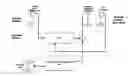
BRIEF DESCRIPTION OF THE DRAWINGSFIG. 1 is a schematic drawing showing the principles of the invention;
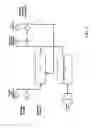
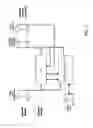
FIG. 2 is a schematic drawing showing the principles of a second embodiment of the invention.
DESCRIPTION OF A PREFERRED EMBODIMENTFrom FIG. 1 a schematic representation of a hearing aid appears featuring the noise cancellation according to the invention. The hearing aid comprises a signal path with one or more external input transducers 1-N1, a signal processor performing compensation for hearing loss as well as the Noise cancellation part (ANC) and one or more output transducers 1-N3. In addition to this the signal path comprises one or more further input transducers 1-N2 placed internally, i.e. facing the interior of the ear canal or being integrated into the receiver, when the hearing aid is mounted. The internal input transducer(s) or error microphone(s) provides the signal present in the ear canal and feeds this to the signal processor, which generates a error signal capable of adjusting the attenuation signal and hence at least partly attenuate the undesired signal present in the ear canal. One or more separate output transducers are provided for the output of the compensating signal, wheer these correspond to those used for the normal hearing aid function. The compensation signal may be based on the input to the external input transducers 1-N1, which input correspond to the signal that is undesirable and where the compensation signal may be established based on this, e.g. by changing the phase of this and further adjusting this based on the actual conditions present.
The hearing aid comprises further electrical input means 1-N4, e.g. a wireless receiver or a direct audio input receiver, which may be of any kind, e.g. a telecoil receiver or a radio frequency receiver. Means are preferably provided for attenuating the external input transducer signal, or switching this off.
From FIG. 2 a further embodiment appears where additional communication is established between the input and the hearing loss compensation and between the ANC and the hearing loss compensation.
In connection with the use of hearing aids there is most often a need for snugly fitting the hearing aid itself or an ear mould to the shape of the ear canal in order to avoid acoustic feedback. This normally existing requirement will to some extent provide remedy for the reduction of the level of the sound signal bypassing the signal path from the outside. In some systems there is however signal processing capabilities, including feedback cancellation, that enables the use of so-called open fittings, where a totally open ear canal or at least a significant opening in the hearing aid or the ear mould or around a tubing leading into the ear canal may be provided and hereby reduce the occlusion phenomena. It is obvious that such open fitting significantly will increase the possibility of sound signals bypassing the signal path. Hence the invention in this situation will have an even more significant impact.
Claims
1. A hearing aid comprising a signal path with an input transducer, a signal processor and an output transducer, the signal processor being adapted to produce a compensation signal capable of at least partly attenuating acoustic signals bypassing the signal path and entering the ear canal.
2. A hearing aid according to claim 1, where the hearing aid further comprises at least one internal input transducer for obtaining a sound signal within the ear canal, the internal input transducer being connected to the signal path.
3. A hearing aid according to claim 1 or 2, where an auxiliary input is provided to the signal path.
4. A hearing aid according to claim 1, 2 or 3, where switching means are provided for switching the signal processor to a state where the compensation signal is generated.
5. A hearing aid according to claim 4, where the switching means are adapted for automatically generating the compensation signal upon receiving the auxiliary input.
Images & Drawings included:
Sources:
- United States Patent and Trademark Office - verify current appl. status at the USPTO↗
Similar patent applications:
Recent applications in this class:
- » 20250294298 2025-09-18
HEARING AID SYSTEM AND A METHOD OF OPERATING A HEARING AID SYSTEM - » 20250220363 2025-07-03
SIGNAL PROCESSING METHOD AND ACOUSTIC SYSTEM - » 20250211923 2025-06-26
PROXIMITY SENSOR USED FOR FEEDBACK CANCELLATION ADJUSTMENT IN A HEARING DEVICE - » 20250184674 2025-06-05
IN-USE FEEDBACK PATH CHARACTERIZATION FOR HEARING DEVICE - » 20250168572 2025-05-22
HEARING DEVICE WITH ACTIVE NOISE CANCELLATION - » 20250133355 2025-04-24
Feedback cancellation in a hearing aid device using tap coherence values - » 20250056167 2025-02-13
HEARING AID DEVICE WITH IMPROVED FEEDBACK SUPPRESSION AND A SUPPRESSION METHOD - » 20250048040 2025-02-06
HEARING DEVICE COMPRISING AN AMPLIFIER SYSTEM FOR MINIMIZING VARIATION IN AN ACOUSTICAL SIGNAL CAUSED BY VARIATION IN GAIN OF AN AMPLIFIER - » 20250030991 2025-01-23
TELECOIL SYSTEM PERIODIC INTERFERENCE CANCELLER - » 20250030990 2025-01-23
TELECOIL PREDICTED REPEATING SYSTEM INTERFERENCE CANCELLER
Recent applications for this Assignee:
- » 20250254463 2025-08-07
HEARING DEVICE OR SYSTEM COMPRISING A COMMUNICATION INTERFACE - » 20250220365 2025-07-03
RF ANTENNA AND HEARING DEVICE WITH RF ANTENNA - » 20250220362 2025-07-03
HEARING AID DEVICE COMPRISING A SENSOR MEMBER - » 20250211926 2025-06-26
HEARING AID HAVING A SENSOR - » 20250211891 2025-06-26
NOISE REDUCTION METHOD AND SYSTEM - » 20250184672 2025-06-05
HEARING DEVICE COMPRISING AN INPUT TRANSDUCER IN THE EAR - » 20250184648 2025-06-05
METHOD, CHARGING SYSTEM AND COMPUTER PROGRAM PRODUCT FOR CHARGING A BATTERY OF A HEARING INSTRUMENT - » 20250159419 2025-05-15
HEARING AID WITH TRANSMISSION POWER ADAPTATION - » 20250142266 2025-05-01
HEARING AID COMPRISING A PHYSIOLOGICAL SENSOR - » 20250111860 2025-04-03
HEARING DEVICE COMPRISING AN ADAPTIVE FILTER BANK