Simple approach to precisely 02 consumption, and anesthetic absorption during low flow anesthesia
US20070173729A1
2007-07-26
10/545,481
2004-02-18
Abstract:
A process for determining gas(x) consumption, wherein said gas(x) is selected from; a) an anesthetic such as but not limited to; i) N2O; ii) sevoflurane; iii) isoflurane; iv) halothane; v) desflurame; or the like b) Oxygen (O2).
Inventors:
- Joseph Fisher 7 🇨🇦 Toronto, Canada
- EITAN PRISMAN 9 🇨🇦 TORONTO, Canada
- Ron Somogyi 7 🇨🇦 Toronto, Canada
- Alex Vesely 4 🇨🇦 Toronto, Canada
- David Prebes 1 🇨🇦 Toronto, Canada
- Takekumi Azami 1 🇨🇦 Toronto, Canada
- Steve Coe 1 🇨🇦 Toronto, Canada
Interested in similar patents?
Get notified when new applications in this technology area are published.
Classification:
A61B5/083 » CPC main
Measuring for diagnostic purposes ; Identification of persons; Detecting, measuring or recording devices for evaluating the respiratory organs Measuring rate of metabolism by using breath test, e.g. measuring rate of oxygen consumption
A61B5/4821 » CPC further
Measuring for diagnostic purposes ; Identification of persons; Other medical applications Determining level or depth of anaesthesia
A61M16/206 » CPC further
Devices for influencing the respiratory system of patients by gas treatment, e.g. mouth-to-mouth respiration; Tracheal tubes; Valves specially adapted to medical respiratory devices; Controlled valves Capsule valves, e.g. mushroom, membrane valves
A61M16/22 » CPC further
Devices for influencing the respiratory system of patients by gas treatment, e.g. mouth-to-mouth respiration; Tracheal tubes Carbon dioxide-absorbing devices ; Other means for removing carbon dioxide
A61B5/08 IPC
Measuring for diagnostic purposes ; Identification of persons Detecting, measuring or recording devices for evaluating the respiratory organs
A61M16/00 IPC
Devices for influencing the respiratory system of patients by gas treatment, e.g. mouth-to-mouth respiration; Tracheal tubes
A62B7/00 IPC
Respirators; Gas-masks, including breathing apparatus, e.g. for high altitude, or masks therefor; Devices affording protection against harmful chemical agents
A62B7/00 IPC
Respiratory apparatus
F16K31/02 IPC
Operating means Actuating devices; ; Releasing devices electric ; magnetic
Description
FIELD OF THE INVENTIONThis invention relates to a method of intraoperative determination of O2 consumption ({dot over (V)}O2) and anesthetic absorption (VN2O among others), during low flow anesthesia to provide information regarding the health of the patient and the dose of the gaseous and vapor anesthetic that the patient is absorbing. In addition to the monitoring function, this information would allow setting of fresh gas flows and anesthetic vaporizer concentration such that the circuit can be closed in order to provide maximal reduction in cost and air pollution.
The method provides an inexpensive and simple approach to calculating the flux of gases in the patient using information already available to the anesthesiologist The {dot over (V)}O2 is an important physiologic indicator of tissue perfusion and an increase in {dot over (V)}O2 may be an early indicator of malignant hyperthermia. The {dot over (V)}O2 along with the calculation of the absorption/uptake of other gases would allow conversion to closed circuit anesthesia (CCA) and thereby save money and minimize pollution of the atmosphere.
BACKGROUND OF THE INVENTIONA number of techniques exist which may be utilized to determine various values for oxygen flow or the like. Current methods of measuring gas fluxes breath-by-breath are not sufficiently accurate to close the circuit without additional adjustment of flows by trial and error. These prior techniques are set out below in the appropriate references. In the past many attempts have been made to measure VO2 during anesthesia. The methods can be classified as:
- 1) Empirical formula based on body weight e.g.,
- a) The Brody equation (1) {dot over (V)}O2=10*BW3/4 is a ‘static’ equation that cannot take into account changes in metabolic state.
- 2) Determination of oxygen loss (or replacement) in a closed system
- Severinghaus (2) measured the rate of N2O and O2 uptake during anesthesia. Patients breathed spontaneously via a closed breathing circuit (gas enters the circuit but none leaves). The flow of N2O and O2 into the circuit was continuously adjusted manually such that the total circuit volume and concentrations of O2 and N2O remain unchanged over time. If this is achieved, the flow of N2O and O2 will equal the rate of N2O and O2 uptake.
- Limitations: Unsuitable for clinical use.
- 1. Method only works with closed circuit, which is seldom used clinically.
- 2. Requires constant attention and adjustment of flows. This is incompatible with looking after other aspects of patient care during surgery.
- 3. The circuit contains a device, a spirometer, that is not generally available in the operating room.
- 4. Because the spirometer makes it impossible to mechanically ventilate patients, the method can be used only with spontaneously breathing patients.
- 5. Method too cumbersome and imprecise to incorporate assessment of flux of other gases that are absorbed at smaller rates, such as anesthetic vapors.
- 3) Gas collection and measurement of O2 concentrations:
- a) Breath-by-breath: measurement of O2 concentration and expiratory flows at the mouth
- For this method, one of the commercially available metabolic carts can be attached to the patient's airway. Flow and gas concentrations are measured breath-by-breath. The device keeps a running tally of inspired and expired gas volumes.
- Limitations:
- 1. Metabolic carts are expensive, costing US $30,000-$50,000.
- 2. The methods they use to measure O2 flux (VO2) are fraught with potential errors. They must synchronize both flow and gas concentration signals. This requires the precise quantification of the time delay for the gas concentration curve and corrections for the effect of gas mixing in the sample line and time constant of the gas sensor. The error is greatest during inspiration when there are large and rapid variations in gas concentrations. We have not found any reports of metabolic carts used to measure {dot over (V)}O2 during anesthesia with semi-closed circuit
- 3. Metabolic carts do not measure fluxes in N2O and anesthetic vapor.
- Our method measures flux of O2 (VO2), N2O (VN2O), and anesthetic vapor (VAA) with a semi-closed anesthesia circuit using the gas analyzer that is part of the available clinical set-up.
- b) Collecting gas from the airway pressure relief (APL) valve and analyzing it for volume and gas concentration. This will provide the volumes of gases leaving the circuit This can be subtracted from the volumes of these gases entering the circuit. This requires timed gas collection in containers and analysis for volume and concentration.
- Limitations
- i) The gas containers, volume measuring devices, and gas analyzers are not routinely available in the operating room.
- ii) The measurements are labor-intensive, distracting the anesthetist's attention from the patient.
- a) Breath-by-breath: measurement of O2 concentration and expiratory flows at the mouth
- 4) Tracer gases
- Henegahan (3) describes a method whereby argon (for which the rate of absorption by, and elimination from, the patient is negligible) is added to the inspired gas of an anesthetic circuit at a constant rate. Gas exhausted from the ventilator during anesthesia is collected and directed to a mixing chamber. A constant flow of N2 enters the mixing chamber. Gas concentrations sampled at the mouth and from the mixing chamber are analyzed by a mass spectrometer. Since the flow of inert gases is precisely known, the concentrations of the inert gases measured at the mouth and from the mixing chamber can be used to calculate total gas flow. This, together with concentrations of O2 and N2O, can be used to calculate the fluxes of these gases.
This method uses the principles of the indicator dilution method. It requires gases, flowmeters, and sensors not routinely available in the operating room, such as argon, N2, precise flowmeters, a mass spectrometer, and a gas-mixing chamber.
- 5) {dot over (V)}O2 from variations of the Foldes (1952) method:
Foldes
formula
:
F
I
O
2
=
O
2
flow
-
V
O
2
FGflow
-
V
O
2
- Where FIO2 is the inspired fraction of O2; O2flow is the flow setting in ml/min (essentially equivalent to VO2); VO2 is the O2 uptake as calculated from body weight and expressed in ml/min (essentially equivalent to VO2); and FG flow is the fresh gas flow (FGF) setting in ml/min.
- a) Biro (4) reasoned that since modern sensors can measure fractional airway concentrations, the Foldes equation can be used to solve for VO2.
V
.
O
2
=
O
2
flow
-
(
F
I
O
2
*
FGflow
)
1
-
F
I
O
2
where FGflow and O2flow are obtained from the settings of the flowmeters.
- Drawbacks of the approach:
- 1. This approach requires knowing the FIO2. FIO2 varies throughout the breath and must be expressed as a flow-averaged value. This requires both flow sensors and rapid O2 sensors at the mouth; it therefore has the same drawbacks as the metabolic cart type of measurements.
- 2. Even if FIO2 can be measured and timed volumes of O2 calculated, its use in the equation given in the article is incorrect for calculating VO2. Biro calculated VO2 of 21 patients during elective middle ear surgery using his modification of the Foldes equation. His calculations were within an expected range of VO2 as calculated from body weight but he did not compare his calculated VO2values to those obtained with a proven method. Recently Leonard et al (5) compared the VO2 as measured by the Biro method with a standard Fick method in 29 patients undergoing cardiac surgery. His conclusion was the Biro method is an “unreliable measure of systemic oxygen uptake” under anesthesia. We also compared the VO2 as calculated by the Biro equation with our data from subjects in whom VO2 was measured independently and found a poor correlation.
- b) Viale et al (6) calculated VO2 from the formula
VO2=VE*(FIO2*FEN2/FIN2−FEO2) - Where FIO2 and FEO2 are inspired and expired fractional concentrations of O2, respectively; FIN2 and FEN2 are inspired and expired N2 fractional concentrations, respectively.
- The method requires equipment not generally available in the operating room—a flow sensor at the mouth to calculate VE and a mass spectrometer to measure FEN2 and FIN2. Furthermore, it is then like the breath-by-breath analyzers in that means must be provided to integrate flows and gas concentrations in order to calculate flow-weighted inspired concentrations of O2 and N2.
- c) Bengston's method (7) uses a semi-closed circle circuit with constant fixed fresh gas flow consisting of 30% O2 balance N2O. VO2 is calculated as
{dot over (V)}O2={dot over (V)}fgO2−0.45({dot over (V)}fgN2O)−(kg: 70.1000.t−0.5))
where {dot over (V)}fgO2 is oxygen fresh gas flow; {dot over (V)}fgN2O is the N2O fresh gas flow and kg is the patient weight in kilograms. The method was validated by collecting the gas that exited the circuit and measuring the volumes and concentrations of component gases. - Limitations of the method:
- i) N2O absorption/uptake is not measured but calculated from patient's weight and duration of anesthesia.
- ii) The equation is valid only for a fixed gas concentration of 30% O2, balance N2.
- iii) The validation method requires collection of gas and measurement of its volume and gas composition.
- 6) Anesthetic absorption/uptake predicted from pharmacokinetic principles and characteristics of anesthetic agent
- a) The equation described by Lowe H J. The quantitative practice of anesthesia. Williams and Wilkins. Baltimore (1981), p 16
{dot over (V)}AA=f*MAC*λB/G*Q*t−1/2- where VAA is the uptake of the anesthetic agent, f*MAC represents the fractional concentration of the anesthetic as a fraction of the minimal alveolar concentration required to prevent movement on incision,, λB/G is the blood-gas partition coefficient, Q is the cardiac output and t is the time.
- Limitations:
- i) In routine anesthesia, cardiac output (Q) is unknown.
- ii) The formula is based on empirical averaged values and does not necessarily reflect the conditions in a particular patient. For example, it does not take into account the saturation of the tissues, a factor that affects VAA.
- b) Lin C Y. (8) proposes the equation for uptake of anesthetic agent ({dot over (V)}AA)
{dot over (V)}AA={dot over (V)}A*FI*(1−FA/FI)
Where {dot over (V)}AA is the uptake of the anesthetic agent; VA is the alveolar ventilation, FA is the alveolar concentration of anesthetic, and FI is the inspired concentration of anesthetic. - Limitations:
- i) This formula cannot be used as VA is unknown with low flow anesthesia;
- ii) FI is complex and may vary throughout the breath so a volume-averaged value is required.
- iii) FI is not available with standard operating room analyzers.
- a) The equation described by Lowe H J. The quantitative practice of anesthesia. Williams and Wilkins. Baltimore (1981), p 16
- 7) Calculations directly from invasively-measured values
- a. Pestana (9) and Walsh (10) placed catheters into a peripheral artery and into the pulmonary artery. They used the oxygen content of blood sampled from these catheters and the cardiac output as measured by thermodilution from the pulmonary artery to calculate VO2. They compared the results to those obtained by indirect calorimetry.
- Limitations
- i) The method uses monitors not routinely available in the operating room.
- ii) The placement of catheters in the vessels has associated morbidity and cost.
Summary Table
| Measures | Can | ||||||||
| Uses | gas not | Based on | measure | ||||||
| Standard | Requires | expired | available | Wrong | prediction | absorpion | |||
| Anesthetic | Additional | additional | gas | on clinical | Uses | assumptions | from | of other | |
| Circuit | Manipulation | measurements | collection | monitor | “F1O2” | or equation | pooled data | anesthtic | |
| Empirical | Brody | Yes body | No | |||||||
| formula | weight | |||||||||
| needed | ||||||||||
| Severinghaus | No. Uses | Yes. | Yes. | Yes | No | |||||
| closed | Constant | Circuit | ||||||||
| circuit | adjustment | volume | ||||||||
| of flow | ||||||||||
| Metabolic | Yes. Flow | Yes | Yes | No | ||||||
| carts | at the | |||||||||
| mouth. | ||||||||||
| Timed gas | No. | Yes. | Yes | Yes, | Yes | |||||
| collection | Volume. | volumes | ||||||||
| Tracer | Vaile | No. | Yes. | Yes | Yes, | Yes | Yes- | No | ||
| gases | Inserted | {dot over (V)}β | —N2 | assumes | ||||||
| nonre- | RQ | |||||||||
| breathing | ||||||||||
| valve to | ||||||||||
| separate | ||||||||||
| gases | ||||||||||
| Heneghan | Yes. | Yes | Yes. | Yes | Possiby | |||||
| Foldes | Biro | Yes | Yes | No | ||||||
| Bengson | No. | Yes. | Yes-only | Yes- | No. | |||||
| For | valid for | weight | ||||||||
| validation | fixed | |||||||||
| inspired | ||||||||||
| gas ratio | ||||||||||
| Pharmco- | Lowe | Yes. | Yes | Yes | Yes | Yes. | ||||
| kinetic | {dot over (Q)}-time | |||||||||
| principles | ||||||||||
| Lin | Yes. {dot over (V)}A | Yes | Yes | No | ||||||
Text missing or illegible when filed |
- (1) Brody S. Bioenergetics and Growth. New York: Reinhold, 21945.
- (2) Severinghaus J W. The rate of uptake of nitrous oxide in man. J Clin Invest 1954; 33:1183-1189.
- (3) Heneghan C P, Gillbe C E, Branthwaite M A. Measurement of metabolic gas exchange during anaesthesia. A method using mass spectrometry. Br J Anaesth 1981; 53(1):73-76.
- (4) Biro P. A formula to calculate oxygen uptake during low flow anesthesia based on FIO2 measurement. J Clin Monit Comput 1998; 14(2):141-144.
- (5) Leonard I E, Weitkamp B, Jones K, Aittomaki J, Myles P S. Measurement of systemic oxygen uptake during low-flow anaesthesia with a standard technique vs. a novel method. Anaesthesia 2002; 57(7):654-658.
- (6) Viale J P, Annat G J, Tissot S M, Hoen J P, Butin E M, Bertrand O J et al. Mass spectrometric measurements of oxygen uptake during epidural analgesia combined with general anesthesia. Anesth Analg 1990; 70(6):589-593.
- (7) Bengtson J P, Bengtsson A, Stenqvist O. Predictable nitrous oxide uptake enables simple oxygen uptake monitoring during low flow anaesthesia. Anaesthesia 1994; 49(1):29-31.
- (8) Lin C Y. [Simple, practical closed-circuit anesthesia]. Masui 1997; 46(4):498-505.
- (9) Pestana D, Garcia-de-Lorenzo A. Calculated versus measured oxygen consumption during aortic surgery: reliability of the Fick method. Anesth Analg 1994; 78(2):253-256.
- (10) Walsh T S, Hopton P, Lee A. A comparison between the Fick method and indirect calorimetry for determining oxygen consumption in patients with fulminant hepatic failure. Crit Care Med 1998; 26(7):1200-1207.
- 11. Baum J A and Aitkenhead R A. Low-flow anaesthesia. Anaesthesia 50 (supplement): 37-44, 1995
It is therefore a primary object of this invention to provide an improved method of intraoperative determination of O2 consumption ({dot over (V)}O2) and anesthetic absorption (VN2O, among others), during low flow anesthesia to provide information regarding the health of the patient and the dose of the gaseous and vapor anesthetic that the patient is absorbing.
It is yet a further object of this invention to provide, based on determination of O2 consumption ({dot over (V)}O2) and anesthetic absorption (VN2O, among others), the setting of fresh gas flows and anesthetic vaporizer concentration such that the circuit can be substantially closed in order to provide maximal reduction in cost and air pollution.
Further and other objects of the invention will become apparent to those skilled in the art when considering the following summary of the invention and the more detailed description of the preferred embodiments illustrated herein.
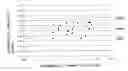
BRIEF DESCRIPTION OF THE FIGURESFIG. 1 is a Bland-Altman plot showing the precision of the calculated oxygen consumption compared to the actual “oxygen consumption” simulation in a model, labeled as “virtual {dot over (V)}O2”.
SUMMARY OF THE INVENTIONAccording to a primary aspect of the invention, there is provided a method to precisely calculate the flux of O2 (VO2) and anesthetic gases such as N2O (VN2O) during steady state low flow anesthesia with a semi-closed or dosed circuit such as a circle anesthetic circuit or the like. For our calculations, we require only the gas flow settings and the outputs of a tidal gas analyzer. We will consider a patient breathing via a circle circuit with fresh gas consisting of O2 and/or air, with or without N2O, entering the circuit at a rate substantially less than the minute ventilation ({dot over (V)}E). We will refer to the total fresh gas flow (FGF) as “source gas flow” (SGF). Our perspective throughout will be that the circuit is an extension of the patient and that under steady state conditions, the mass balance of the flux of gases with respect to the circuit is the same as the flux of gases in the patient.
We present an approach that increases the precision of gas flux calculations for determining gas pharmacokinetics during low flow anesthesia, one application of which is to institute CCA. According to one aspect of the invention there is provided a process for determining gas(x) consumption, wherein said gas(x) is selected from;
-
- a) an anesthetic such as but not limited to;
- i) N2O;
- ii) sevoflurane;
- iii) isoflurane;
- iv) halothane;
- v) desflurame; or the like
- b) Oxygen (O2);
- a) an anesthetic such as but not limited to;
for example, in a semi-closed or closed circuit, or the like comprising the following relationships;
wherein said relationships are selected from the groups covering the following circumstances;
Model 1
As an initial simplifying assumption, we consider that the CO2 absorber is out of the circuit and the respiratory quotient (RQ) is 1.
We can make a number of statements with regard to Model 1:
-
- 1) The flow of gas entering the circuit is SGF and the flow of gas leaving the circuit is equal to SGF.
- 2) The gas leaving the circuit is predominantly alveolar gas. This is substantially true as the first part of the exhaled gas that contains anatomical dead-space gas would tend to bypass the pressure relief valve and enter the reservoir bag. When the reservoir bag is full, the pressure in the circuit will rise, thereby opening the pressure relief valve, allowing the later-expired gas from the alveoli to exit the circuit.
- 3) The volume of any gas ‘x’ entering the circuit can be calculated by multiplying SGF times the fractional concentration of gas x in SGF (FSX). The volume of gas x leaving the circuit is SGF times the fractional concentration of x in end tidal gas (FETX). The net volume of gas x absorbed by, or eliminated from, the patient is SGF (FSX−FETX). For example, {dot over (V)}O2=SGF (FSO2−FETO2) where SGF and FSO2 can be read from the flow meter and FETO2 is read from the gas monitor. Similar calculations can be used to calculate {dot over (V)}CO2 and the flux of inhaled anesthetic agents.
Model 2
We will now consider a circle circuit with a CO2 absorber in the circuit. As an initial simplifying assumption, we will assume that all of the expired gas passes through the CO2 absorber and RQ is 1 (see FIG. 1b).
With this model, all of the CO2 produced by the patient is absorbed, so the total flow of gas out of the circuit (Tfout; equivalent to the expiratory flow, VE) is no longer equal to SGF but equal to SGF minus {dot over (V)}O2.
TFout=SGF−{dot over (V)}O2 (1)
{dot over (V)}O2 is calculated as the flow of O2 into the circuit (O2in; equivalent in standard terminology to VO2in) minus the flow of O2 out of the circuit (O2out; equivalent in standard terminology to VO2out).
{dot over (V)}O2=O2in−O2out (2)
Since,
O2out=TFout*FETO2 (3)
then simply by substituting (3) for O2out in (2) we can calculate {dot over (V)}O2 from the gas settings and the O2 gas monitor reading:
{dot over (V)}O2═SGF*(FSO2−FETO2)/(1−FETO2) (4)
Model 3
We will again consider the case of anesthesia provided via a circle circuit with a CO2 absorber in the circuit. In this model we will take into account that some expired gas escapes through the pressure relief valve (FIG. 2) and some passes through the CO2 absorber. The RQ is still assumed to be 1. We will ignore for the moment the effect of anatomical dead-space and assume all gas entering the patient contributes to gas exchange. We will assume that during inhalation the patient receives all of the SGF and the balance of the inhaled gas in the alveoli comes from the expired gas reservoir after being drawn through the CO2 absorber.
An additional simplifying assumption is that the volume of gas passing through the CO2 absorber is the difference between {dot over (V)}E and the SGF (i.e., {dot over (V)}E−SGF)1. The proportion of previous exhaled gas passing through the CO2 absorber that is distributed to the alveoli is 1−SGF/{dot over (V)}E2. We will call this latter proportion ‘a’.
1 In fact, it is the {dot over (V)}E−SGF+{dot over (V)}CO2 abs. The difference between this value and our assumption is so small that we will ignore it for now
2 Why this is not strictly true is described in the discussion about Model 4; absorption of CO2 increases the concentrations of other gases.
a=1−SGF/{dot over (V)}E (5)
As before, we know the flows and concentrations of gases entering the circuit. To calculate the flow of individual gases leaving the circuit we need to know the total flow of gas out of the circuit. In this model we account for the volume of CO2 absorbed by the CO2 absorber. We still assume RQ=1. The flow out of the circuit is equal to the SGF minus the {dot over (V)}O2 plus the {dot over (V)}CO2, minus the volume of CO2 in the gas that is drawn through the CO2 absorber ({dot over (V)}CO2abs):
Tfout=SGF−{dot over (V)}O2+{dot over (V)}CO2−{dot over (V)}CO2abs (6)
Recall that {dot over (V)}CO2abs=a {dot over (V)}CO2
TFout=SGF−{dot over (V)}O2+{dot over (V)}CO2−a {dot over (V)}CO2
{dot over (V)}O2=O2in−O2 out
{dot over (V)}O2=O2 in−(SGF−{dot over (V)}O2+{dot over (V)}CO2−a {dot over (V)}CO2)FETO2
As the RQ is assumed to be 1, we can substitute {dot over (V)}O2 for {dot over (V)}CO2 and VE for VI and solve for {dot over (V)}O2: V . O 2 = O 2 in - SGF × F ET O 2 1 - ( 1 - SGF V . E ) F ET O 2 ( 7 )
In addition, we amend the equations to account for the actual RQ, if known. When we assumed that RQ=1, we were able to simply substitute {dot over (V)}O2 for {dot over (V)}CO2. To correct for RQ other than 1, we now use {dot over (V)}CO2=RQ*{dot over (V)}O2 and {dot over (V)}CO2 abs is therefore equal to a*RQ*VO2. Therefore
TFout=SGF−{dot over (V)}O2+{dot over (V)}CO2−{dot over (V)}CO2abs (6)
becomes
TFout=SGF−{dot over (V)}O2+RQ {dot over (V)}O2−a*RQ*{dot over (V)}O2 (8)
In the case of a second gas being absorbed, such as N2O or anesthetic vapor, a similar equation can be written in which the total flow out (TFout) also includes a term correcting for the flux of N2O ({dot over (V)}N2O) and/or anesthetic agent (VAA).
Therefore for Model 3 with calculations of {dot over (V)}N2O absorption ({dot over (V)}N2O) and RQ=1
In model 3, adding terms for the calculation of {dot over (V)}N2O to equation (6) while assuming RQ=1,
TFout=SGF−{dot over (V)}O2−{dot over (V)}N2O+{dot over (V)}CO2−{dot over (V)}CO2abs (AA1)
In order to determine the {dot over (V)}N2O, a second mass balance equation about the circuit with respect to N2O is required. For {dot over (V)}CO2abs=a*{dot over (V)}CO2 and a=1−SGF/{dot over (V)}E
{dot over (V)}N2O=N2O in−(SGF−{dot over (V)}O2−{dot over (V)}N2O+{dot over (V)}CO2−a*{dot over (V)}CO2)*FETN2O (AA2)
As RQ is still assumed to equal 1, {dot over (V)}O2={dot over (V)}CO2 V . N 2 O = N 2 O in - ( SGF - V . O 2 - V . N 2 O + V . O 2 - a V . O 2 ) * F ET N 2 O = N 2 O i n - ( SGF - a V . O 2 - V . N 2 O ) * F ET N 2 O ( AA 3 )
Therefore when taking {dot over (V)}N2O into account, {dot over (V)}O2 can be recalculated as
V
.
O
2
=
O
2
i
n
-
(
SGF
-
V
.
O
2
-
V
.
N
2
O
+
V
.
CO
2
-
a
*
V
.
CO
2
)
*
F
ET
O
2
=
O
2
i
n
-
(
SGF
-
V
.
O
2
-
V
.
N
2
O
+
V
.
O
2
-
a
V
.
O
2
)
*
F
ET
O
2
=
O
2
i
n
-
(
SGF
-
a
V
.
O
2
-
V
.
N
2
O
)
*
F
ET
O
2
(
AA
4
)
Basically, we have two equations, (AA3) and (AA4) with two unknowns, {dot over (V)}O2 and {dot over (V)}N2O.
Solving equation (AA3) for {dot over (V)}N2O,
V
.
N
2
O
=
N
2
O
i
n
-
(
SGF
-
a
V
.
O
2
)
*
F
ET
N
2
O
1
-
F
ET
N
2
O
(
AA
5
)
Substituting (AA5) into equation (AA4) and solving for {dot over (V)}O2,
V
.
O
2
=
(
1
-
F
ET
N
2
O
)
*
O
2
i
n
-
(
SGF
-
N
2
O
i
n
)
*
F
ET
O
2
1
-
(
1
-
SGF
V
.
E
)
*
F
ET
O
2
-
F
ET
N
2
O
(
AA
6
)
And calculating {dot over (V)}N2O taking into account {dot over (V)}O2, CO2 absorption and RQ=1:
V
.
N
2
O
=
(
1
-
(
1
-
SGF
V
.
E
)
*
F
ET
O
2
)
*
N
2
O
i
n
-
(
SGF
-
O
2
i
n
)
*
F
ET
N
2
O
1
-
(
1
-
SGF
V
.
E
)
*
F
ET
O
2
-
F
ET
N
2
O
(
AA
7
)
V
.
O
2
=
(
1
-
F
ET
N
2
O
-
F
ET
AA
)
*
O
2
i
n
-
(
SGF
-
N
2
O
i
n
-
AA
i
n
)
*
F
ET
O
2
1
-
a
*
F
ET
O
2
-
F
ET
N
2
O
-
F
ET
AA
(
AA
8
)
V
.
N
2
O
=
(
1
-
a
*
F
ET
O
2
-
F
ET
AA
)
*
N
2
O
i
n
-
(
SGF
-
a
*
O
2
i
n
-
AA
i
n
)
*
F
ET
N
2
O
1
-
a
*
F
ET
O
2
-
F
ET
N
2
O
-
F
ET
AA
(
AA
9
)
V
.
AA
=
(
1
-
a
*
F
ET
O
2
-
F
ET
N
2
O
)
*
AA
i
n
-
(
SGF
-
a
*
O
2
i
n
-
N
2
O
i
n
)
*
F
ET
AA
1
-
a
*
F
ET
O
2
-
F
ET
N
2
O
-
F
ET
AA
where
a
=
1
-
SGF
V
.
E
(
AA
10
)
Model 3 with N2O, RQ
Taking into account the actual RQ while calculating {dot over (V)}N2O, equation 9 becomes,
TFout=SGF−{dot over (V)}O2−{dot over (V)}N2O+RQ {dot over (V)}O2−a*RQ* {dot over (V)}O2 (AA11)
Therefore equation (AA2) becomes,
{dot over (V)}N2O=N2O in −(SGF−{dot over (V)}O2−{dot over (V)}N2O+RQ {dot over (V)}O2−a*RQ*{dot over (V)}O2)*FETN2O (AA12)
And equation (AA4) becomes,
{dot over (V)}O2=O2in −(SGF−{dot over (V)}O2−{dot over (V)}N2O+RQ {dot over (V)}O2−a*RQ*{dot over (V)}O2)*FETO2 (AA13)
Now, we have two equations, (AA12) and (AA13) with two unknowns, {dot over (V)}O2 and {dot over (V)}N2O.
Solving equation (AA12) and (AA13) for {dot over (V)}O2 and {dot over (V)}N2O,
V
.
O
2
=
(
1
-
F
ET
N
2
O
)
*
O
2
i
n
-
(
SGF
-
N
2
O
i
n
)
*
F
ET
O
2
1
-
b
*
F
ET
O
2
-
F
ET
N
2
O
(
AA
14
)
V
.
N
2
O
=
(
1
-
b
*
F
ET
O
2
)
*
N
2
O
i
n
-
(
SGF
-
O
2
i
n
)
*
F
ET
N
2
O
1
-
b
*
F
ET
O
2
-
F
ET
N
2
O
(
AA
15
)
where b is the fraction of the CO2 production (VCO2) passing through the CO2 absorber. “b” is analogous to “a” and is formulated to account for the actual RQ.
b
=
1
-
RQ
(
1
-
(
1
-
SGF
V
.
E
)
)
=
1
-
RQ
*
SGF
V
.
E
Model 3 with N2O and Anesthetic Agent, RQ
Similarly, the flux of gases can be calculated taking into account the actual RQ.
V
.
O
2
=
(
1
-
F
ET
N
2
O
-
F
ET
AA
)
*
O
2
i
n
-
(
SGF
-
N
2
O
i
n
-
AA
i
n
)
*
F
ET
O
2
1
-
b
*
F
ET
O
2
-
F
ET
N
2
O
-
F
ET
AA
(
AA16
)
V
.
N
2
O
=
(
1
-
b
*
F
ET
O
2
-
F
ET
AA
)
*
N
2
O
i
n
-
(
SGF
-
b
*
O
2
i
n
-
AA
i
n
)
*
F
ET
N
2
O
1
-
b
*
F
ET
O
2
-
F
ET
N
2
O
-
F
ET
AA
V
.
AA
=
(
1
-
b
*
F
ET
O
2
-
F
ET
N
2
O
)
*
AA
i
n
-
(
SGF
-
b
*
O
2
i
n
-
N
2
O
i
n
)
*
F
ET
AA
1
-
b
*
F
ET
O
3
-
F
ET
N
2
O
-
F
ET
AA
(
AA17
)
Model 4
The one remaining simplifying assumption is that we have ignored the effects of the anatomical dead-space.
We know the portion of the inspired gas that passes through the CO2 absorber as {dot over (V)}E-SGF. However, the net amount of CO2 absorbed by the CO2 absorber will be equal to that contained in the portion of the {dot over (V)}E-SGF that originated from the alveoli on a previous breath. The gas from the alveoli has a FCO2 equal to FETCO2. Therefore, the proportion of inhaled gas drawn through the CO2 absorber we had previously designated as ‘a’ is actually equal to 1−SGF/{dot over (V)}A. To avoid confusion in subsequent derivations we will designate 1−SGF/{dot over (V)}A as a′.
We now amend equation (7) removing simplifying assumptions about RQ and using a′ as the proportion of gas passing the CO2 absorber.
Now,
{dot over (V)}O2abs=a*{dot over (V)}O2=(1−SGF/{dot over (V)}A)*{dot over (V)}O2 (9)
From equation (8), TFout = SGF - V . O 2 + V . CO 2 - V . CO 2 abs = SGF - V . O 2 + ( 1 - a ′ ) * V . CO 2 = SGF - V . O 2 + ( 1 - ( 1 - SGF / V . A ) ) * V . CO 2 = SGF - V . O 2 + ( SGF / V . A ) * V . CO 2 = SGF - V . O 2 + SGF * ( V . CO 2 / V . A ) ( 10 )
As the standard definition of FETCO2 is {dot over (V)}CO2/{dot over (V)}A, we substitute {dot over (V)}CO2/{dot over (V)}A for FETCO2 in (10) TFout = SGF - V . O 2 + SGF * FET CO 2 V . O 2 = O 2 i n - TFout * FET O 2 = O 2 i n - ( SGF - V . O 2 + SGF * FET CO 2 ) * FET O 2
After isolating {dot over (V)}O2
V
O
2
=
O
2
i
n
-
(
SGF
+
SGF
*
FET
CO
2
)
*
FET
O
2
1
-
FET
O
2
(
11
)
Model 4 Amended for VN2O
Amending equation (11) for {dot over (V)}N2O
TFout=SGF−{dot over (V)}O2−{dot over (V)}N2O+{dot over (V)}CO2−{dot over (V)}CO2abs
In order to determine the {dot over (V)}N2O, a second mass balance about N2O is required: where {dot over (V)}CO2abs=a′*{dot over (V)}CO2 and a′=1−SGF/{dot over (V)}A
V
.
N
2
O
=
N
2
O
i
n
-
(
SGF
-
V
.
O
2
-
V
.
N
2
O
+
V
.
CO
2
-
a
′
*
V
.
CO
2
)
*
F
ET
N
2
O
=
N
2
O
i
n
-
(
SGF
-
V
.
O
2
-
V
.
N
2
O
+
(
1
-
a
′
)
*
V
.
CO
2
)
*
F
ET
N
2
O
=
N
2
O
i
n
-
(
SGF
-
V
.
O
2
-
V
.
N
2
O
+
(
1
-
(
1
-
SGF
/
V
.
A
)
*
V
.
CO
2
)
)
*
F
ET
N
2
O
=
N
2
O
i
n
-
(
SGF
-
V
.
O
2
-
V
.
N
2
O
+
SGF
/
V
.
A
*
V
.
CO
2
)
*
F
ET
N
2
O
=
N
2
O
i
n
-
(
SGF
-
V
.
O
2
-
V
.
N
2
O
+
SGF
*
F
ET
CO
2
)
*
F
ET
N
2
O
(
28
)
In the same way,
V
.
O
2
=
O
2
i
n
-
(
SGF
-
V
.
O
2
-
V
.
N
2
O
+
V
.
CO
2
-
a
′
*
V
.
CO
2
)
*
F
ET
O
2
=
O
2
i
n
-
(
SGF
-
V
.
O
2
-
V
.
N
2
O
+
SGF
*
F
ET
CO
2
)
*
F
ET
O
2
(
29
)
Now, we have two equations, (28) and (29) with two unknowns, {dot over (V)}O2 and {dot over (V)}N2O. Solving equation (28) and (29) for {dot over (V)}O2 and {dot over (V)}N2O,
V
.
O
2
=
O
2
i
n
*
(
1
-
F
ET
N
2
O
)
-
(
SGF
*
(
1
+
F
ET
CO
2
)
-
N
2
O
i
n
)
*
F
ET
O
2
1
-
FET
N
2
O
-
FET
O
2
(
30
)
V
.
N
2
O
=
N
2
O
i
n
*
(
1
-
F
ET
O
2
)
-
(
SGF
*
(
1
+
F
ET
CO
2
)
-
O
i
n
)
*
F
ET
N
2
O
1
-
F
ET
N
2
O
-
F
ET
O
2
(
31
)
Note that RQ and {dot over (V)}A are not required to calculate flux. We present the equations where equation 11 is further amended to take into account {dot over (V)}N2O and {dot over (V)}AA.
V
.
O
2
=
O
2
in
*
(
1
-
FET
2
NO
-
FETAAFET
2
NO
*
FETAA
2
)
(
SGF
*
(
1
+
FET
2
CO
)
-
N
2
Oin
-
AAin
2
FET
2
NO
*
FETAA
*
(
1
-
N
2
Oin
-
AAin
)
*
)
FET
2
O
(
1
-
FET
2
NO
)
*
(
1
-
FETAA
2
)
(
1
-
FET
2
NO
*
FETAA
*
)
FET
2
O
VNO
=
N
2
Oin
*
(
1
-
FET
2
O
-
FETAA
-
FET
2
O
*
FETAA
)
-
(
SGP
*
(
1
+
FET
2
CO
)
-
O
2
in
-
AAin
-
FET
2
O
*
FETAA
*
(
1
-
O
2
in
-
AAin
)
*
)
FET
2
N
?
(
1
-
FET
2
O
)
*
(
1
-
FETAA
)
-
(
1
-
FET
2
O
*
FETAA
)
*
FET
2
NO
?
indicates text missing or illegible when filed
(
11
)
Model 4 with N2O and Anesthetic Agent
Similarly, the flux of additional anesthetic agents can be calculated by adding more
V
.
O
2
=
O
2
in
*
(
1
-
FET
2
NO
-
FETAAFET
2
NO
*
FETAA
2
)
(
SGF
*
(
1
+
FET
2
CO
)
-
N
2
Oin
-
AAin
2
FET
2
NO
*
FETAA
*
(
1
-
N
2
Oin
-
AAin
)
*
)
FET
2
O
(
1
-
FET
2
NO
)
*
(
1
-
FETAA
2
)
(
1
-
FET
2
NO
*
FETAA
*
)
FET
2
O
VNO
=
N
2
Oin
*
(
1
-
FET
2
O
-
FETAA
-
FET
2
O
*
FETAA
)
-
(
SGP
*
(
1
+
FET
2
CO
)
-
O
2
in
-
AAin
-
FET
2
O
*
FETAA
*
(
1
-
O
2
in
-
AAin
)
*
)
FET
2
N
?
(
1
-
FET
2
O
)
*
(
1
-
FETAA
)
-
(
1
-
FET
2
O
*
FETAA
)
*
FET
2
NO
V
.
AA
=
AAin
*
(
1
-
FET
2
NO
-
FET
2
O
-
FET
2
NO
*
FET
2
O
)
-
(
SGF
*
(
1
+
FET
2
CO
)
-
N
2
Oin
-
O
2
in
-
FET
2
NO
*
FET
2
O
*
(
1
-
N
2
Oin
-
O
2
in
)
)
*
FETAA
(
1
-
FET
2
NO
)
*
(
1
-
FET
2
O
)
-
(
1
-
FET
2
NO
*
FET
2
O
)
*
FETAA
?
indicates text missing or illegible when filed
Advantages of this method compared to the prior art:
In our method compared to Severinghause (#2)
-
- iv) Patients are maintained with low fresh gas flows (FGF) in a semi-closed circuit, the commonest method of providing anesthesia. No further manipulations by the anesthetist are required.
- v) Method uses information normally available in the operating room without additional equipment or monitors.
- vi) The calculations can be made with any flow, or combination of flows, of O2 and N2O.
- vii) Patients can be ventilated or be breathing spontaneously.
- viii) Our method can be used to calculate low rates of uptake/absorption such as those of anesthetic vapors Compared to metabolic carts, our method, does not require equipment on addition to that required to anesthetize the patient and there is no need to collect exhaled gas or gas leaving the circuit.
Our method does not require breathing an externally supplied tracer gas. We monitor only routinely available information such as the settings of the O2 and N2O flowmeters and the concentrations of gases in expired gas as measured by the standard operating room gas monitor.
Compared to Biro, our approach:
VO2=O2in−O2out (where O2in and O2out are
O2out=TFout*FETO2TFout=TFin−VO2
VO2=O2in−(TFin−VO2)*FETO2
Solving for {dot over (V)}O2
VO2=(O2in−TFin*FETO2)/1−FETO2
where
-
- {dot over (V)}O2 is oxygen consumption
- TFin is total flow of gas entering the circuit (equivalent to inspiratory flow, VI)
- TFout is total flow of gas leaving the circuit (equivalent to expiratory flow, VE)
- O2Out is total flow of O2 leaving the circuit (equivalent to VO2out)
- O2in is total flow of O2 entering the circuit (equivalent to VO2in)
- FETO2 is the fractional concentration of O2 in the expired (end-tidal) gas
Our equation takes the same form as that presented by Biro except that Biro's has FIO2 instead of FETO2 in analogous places in the numerator and denominator of the term on the right side of the equation. This will clearly result in different values for VO2 compared to our method. In addition, the difference is that FETO2 is a steady number during the alveolar phase of exhalation and therefore can be measured and its value is representative of alveolar gas whereas FIO2 is not a steady number; FIO2 varies during inspiration and no value at any particular time during inspiration is representative of inspired gas.
Compared to Viale, our method does not require FIO2, FEN2, FIN2 or the patient's gas flows.
Compared to Bengston, our method does not require knowledge of the patient's weight or duration of anesthesia. Our method can be performed with any ratio of O2/N2O flow into the circuit. Our method does not require expired gas collection or measurements of gas volume.
Compared to methods by Lowe, Lin or Pestana, our method uses only routinely available information such as the flowmeter settings and end tidal O2 concentrations. It does not require any invasive procedures.
With these equations, the limiting factor for the precise calculation of gas fluxes is the precision of flowmeters and monitors on anesthetic machines. In addition, leaks, if any, from the circuit and the sampling rate of the gas monitor must be known and taken into account in the calculation. As commercial anesthetic machines are not built to such specifications, we constructed an “anesthetic machine” with precise flowmeters and a lung/circuit model with precisely known flows of O2 and CO2 leaving and entering the circuit respectively. We then compared the known fluxes of O2 and CO2 with that calculated from the SGF, minute ventilation and the gas concentrations as analyzed by a gas monitor. FIG. 1 shows the Bland-Altman analysis of the results.
Claims
We claim:1) A precise method for determining gas flux calculations and gas pharmacokinetics during low flow anesthesia, one example of which is to institute for dosed circuit anesthesia and for example for a process for determining gas(x) consumption, wherein said gas(x) is selected from;
a) an anesthetic such as but not limited to;
i) N2O;
ii) sevoflurane;
iii) isoflurane;
iv) halothane;
v) desflurame; or the like
b) Oxygen (O2);
and further comprising the relationships described in relation to Models I to IV and variations thereof described in the disclosure.
2) A method of determining oxygen consumption, and/or CO2 production in a subject breathing via a partial rebreathing circuit by the use of information derived from gas flow and composition of gas entering a partial rebreathing circuit and tidal monitor gas concentration readings.
3) A method of determining of oxygen consumption, anesthetic gas absorption and CO2 production in a subject breathing via a partial rebreathing circuit by the use of information derived from gas flow and composition of gas entering a partial rebreathing circuit and tidal monitor gas concentration readings.
4) The method of claim 2 where the circuit is a circle anesthetic circuit or any anesthetic circuit with CO2 absorber in the circuit
5) The method of claim 3 where the circuit is a circle anesthetic circuit or any anesthetic circuit with CO2 absorber in the circuit
6) The process of claim 1 with the use of any of the equations disclosed herein in models 14, including any of the intermediate equations used.
7) Use of any of the following equations or their intermediate equations, for determination of {dot over (V)}O2
V . O 2 = SGF * ( FsO 2 - FETO 2 ) / ( 1 - FETO 2 ) ( 4 ) V . O 2 = O 2 in - SGF × FETO 2 1 - ( 1 - SGF V . E ) FETO 2 ( 7 ) V . O 2 = ( 1 - FETN 2 O ) * O 2 in - ( SGF - N 2 Oin ) * FETO 2 1 - ( 1 - SGF V . E ) * FETO 2 - FETN 2 O ( AA6 ) V . O 2 = ( I - FETN 2 O - FETAA ) * O 2 in - ( SGF_N 2 Oin - AAin ) * FETO 2 1 - a * FETO 2 - FETN 2 O - FETAA ( AA8 ) V . O 2 = ( 1 - FETN 2 O - FETAA ) * O 2 in - ( SGF - N 2 Oin - AAin ) * FETO 2 1 - b * FETO 2 - FETN 2 O - FETAA ( AA16 ) VO 2 = O 2 in - ( SGF + SGF * FETCO 2 ) * FETO 2 1 - FETO 2 ( 11 ) V . O 2 = O 2 in * ( 1 - FETN 2 O ) - ( SGF * ( 1 + FETCO 2 ) - N 2 Oin ) * FETO 2 1 - FETN 2 O - FETO 2 ( 30 ) V . O 2 = O 2 in ( 1 - FETN 2 O - FETAAFETN 2 O * FETAA ) ( SGF ( 1 + FETCO ) - N 2 Oin - AAinFETN 2 ) * FETAA ( 1 - N 2 Oin - AAin ) FETO ( 1 - FETN 2 O ) * ( 1 - FETAA ) ( 1 - FETN 2 O * FETAA ) FETO 2 V . O 2 = O 2 in * ( 1 - FETN 2 O - FETAA - FETN 2 O * FETAA ) - ( SGF * ( 1 + FETCO 2 ) - N 2 Oin - AAin - FETN 2 O * FETAA * ( 1 - N 2 Oin - AAin ) ( 1 - FETN 2 O ) * ( 1 - FETAA ) - ( 1 - FETN 2 O * FETAA ) * FETO 2 ( 11 )
8) Use of any of the following equations or their intermediate equations, for determination of {dot over (V)}N2O
V . N 2 O = N 2 Oin - ( SGF - a V . O 2 ) * FETN 2 O 1 - FETN 2 O ( AA5 ) V . N 2 O = ( 1 - ( 1 - SGF V . E ) * FETO 2 ) * N 2 Oin - ( SGF - O 2 in ) * FETN 2 O 1 - ( 1 - SGF V . E ) * FETO 2 - FETN 2 O ( AA7 ) V . N 2 O = ( 1 - a * FETO 2 - FETAA ) * N 2 Oin - ( SGF - a * O 2 in - AAin ) * FETN 2 O 1 - a * FETO 2 - FETN 2 O - FETAA ( AA9 ) V . N 2 O = ( 1 - b * FETO 2 ) * N 2 Oin - ( SGF - O 2 in ) * FETN 2 O 1 - b * FETO 2 - FETN 2 O Where b = 1 - RQ ( 1 - ( 1 - SGF V . E ) ) = 1 - RQ * SGF V . E ( AA15 ) V . N 2 O = ( 1 - b * FETO 2 - FETAA ) * N 2 Oin - ( SGF - b * O 2 in - AAin ) * FETN 2 O 1 - b * FETO 2 - FETN 2 O - FETAA VNO = N 2 Oin * ( 1 - FETO 2 - FETAA - FETO 2 * FETAA ) - ( SGF ( 1 + FETCO 2 ) - O 2 in - AAin - FETO 2 * FETAA * ( 1 - O 2 in - AAin ) ) FETN 2 O ( 1 - FETO 2 ) * ( 1 - FETAA ) - ( 1 - FETO 2 * FETAA ) * FETN 2 O ( AA17 )
9) Use of any of the following equations or their intermediate equations, for determination of {dot over (V)}AA
V . AA = ( 1 - a * FETO 2 - FETN 2 O ) * AAin - ( SGF - a * O 2 in - N 2 Oin ) * FETAA 1 - a * FETO 2 - FETN 2 O - FETAA where a = 1 - SGF V . E V . AA = ( 1 - b * FETO 2 - FETN 2 O ) * AAin - ( SGF - b * O 2 in - N 2 Oin ) * FETAA 1 - b * FETO 2 - FETN 2 O - FETAA Where b = 1 - RQ ( 1 - ( 1 - SGF V . E ) ) = 1 - RQ * SGF V . E V . AA = AAin * ( 1 - FETNO - FETO - FETNO * FETO ) - ( SGF * ( 1 + FETCO ) - N 2 Oin - O 2 in - FETNO * FETO * ( 1 - N 2 Oin - O 2 in ) ) * FETAA ( 1 - FETNO ) * ( 1 - FETO ) - ( 1 - FETNO * FETO ) * FETAA ( AA10 )
Images & Drawings included:























Sources:
- United States Patent and Trademark Office - verify current appl. status at the USPTO↗
Recent applications in this class:
- » 20240180444 2024-06-06
SYSTEM OF MEASURING EXHALATION METABOLISM - » 20240065575 2024-02-29
Metabolic and Cardiopulmonary Monitor - » 20230248260 2023-08-10
DEVICES, SYSTEMS, AND METHODS FOR AIDING IN THE DETECTION OF A PHYSIOLOGICAL ABNORMALITY - » 20230210454 2023-07-06
Breath analysis system - » 20230157574 2023-05-25
END TIDAL CARBON DIOXIDE MEASUREMENT DURING HIGH FLOW OXYGEN THERAPY - » 20210307642 2021-10-07
SYSTEMS, APPARATUS, AND METHODS RELATED TO MODELING, MONITORING, AND/OR MANAGING METABOLISM - » 20210228105 2021-07-29
METHODS FOR DETERMINING STOMACH FULLNESS AND RELATED METHODS OF MEDICAL SAFETY - » 20200170543 2020-06-04
Devices, systems, and methods for aiding in the detection of a physiological abnormality - » 20200100702 2020-04-02
Breath sensing system and methods of use - » 20190357807 2019-11-28
Breathing-driven flexible respiratory sensor and preparation method thereof