Self-chilling beverage container and method
US20070175233A1
2007-08-02
11/699,311
2007-01-26
Abstract:
An iceless method of providing a chilled beverage to a customer by supplying a container that not only contains the beverage but also contains a compartment filled with a compressed gas for selectively cooling the liquid in the container before consuming it. The apparatus is characterized by the fact that the end of the gas compartment adjacent the mouth of the beverage compartment occupies less than the entire mouth of the beverage compartment so that when the closure member is removed, a liquid contained in the beverage compartment may be conveniently poured out, whether or not the frangible cover of the gas compartment has first been punctured for releasing the gas.
Interested in similar patents?
Get notified when new applications in this technology area are published.
Classification:
F25D7/00 » CPC main
Devices using evaporation effects without recovery of the vapour
F25D3/107 » CPC further
Devices using other cold materials; Devices using cold-storage bodies using liquefied gases, e.g. liquid air portable, i.e. adapted to be carried personally
F25D31/007 » CPC further
Other cooling or freezing apparatus specially adapted for cooling receptacles, e.g. tanks Bottles or cans
F25D2331/803 » CPC further
Details or arrangements of other cooling or freezing apparatus not provided for in other groups of this subclass; Type of cooled receptacles Bottles
F25D9/00 IPC
Devices not associated with refrigerating machinery and not covered by groups - ; Combinations of devices covered by two or more of the groups -
F25D3/10 IPC
Devices using other cold materials; Devices using cold-storage bodies using liquefied gases, e.g. liquid air
Description
PRIORITY CLAIM
This application claims priority of my U.S. Provisional Application Ser. No. 60/762,228 filed Jan. 27, 2006.
BACKGROUND OF THE INVENTION
There are situations in which a person would like to have a cool drink, but ice or refrigeration is not available. That kind of situation is amply described in my U.S. Pat. No. 6,530,235 issued Mar. 11, 2003, entitled “Self-Chilling Portable Beverage Container Assembly, and Method”.
SUMMARY OF THE INVENTION
The present invention is an iceless method of providing a chilled beverage to a customer by supplying a container that not only contains the beverage but also contains a compartment filled with a compressed gas, the gas compartment being closed by a frangible member, wherein the customer can conveniently puncture the frangible member to release the gas and thereby cool the liquid in the container before consuming the liquid.
More specifically, the invention provides an apparatus system in which a beverage container has an elongated configuration and forms a beverage compartment with a mouth at one end thereof. A separate compartment extends longitudinally within the beverage compartment for receiving and storing compressed gas, the gas compartment having an end adjacent the mouth of the beverage container and a frangible member that normally covers that end of the gas compartment. A closure member normally closes the mouth of the beverage compartment and also extends over the frangible cover of the adjacent end of the gas compartment. The end of the gas compartment adjacent the mouth of the beverage compartment occupies less than the entire mouth of the beverage compartment so that when the closure member is removed, a liquid that is contained in the beverage compartment may be poured out whether or not the frangible cover of the gas compartment has first been punctured for releasing the gas in order to cool the liquid in the container.
DRAWING SUMMARY
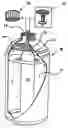
FIG. 1a is a perspective view, partially in cross-section and partially exploded, showing a form of apparatus for carrying out my novel method, in which the puncturing device is normally retained in the beverage container;
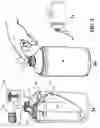
FIG. 1b is a perspective view of the apparatus of FIG. 1a when the frangible cover has been punctured and gas is escaping from the gas compartment;
FIG. 1c is a perspective view showing the pouring of liquid from the beverage compartment after the frangible cover of the gas compartment has been punctured;
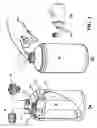
FIG. 2a is a perspective view, partially in cross-section and partially exploded, showing a form of apparatus for carrying out my novel method in which the puncturing device, shown in a separate mini-view, is normally separate from the beverage container;
FIG. 2b is a perspective view of the apparatus of FIG. 2a when the frangible cover has been punctured by the puncturing device and gas is escaping from the gas compartment; and
FIG. 2c is a perspective view showing the pouring of liquid from the beverage compartment after the frangible cover of the gas compartment has been punctured and the puncturing device removed.
DETAILED DESCRIPTION
FIGS. 1a, 1b, and 1c
As shown in FIGS. 1a, 1b, and 1c, the apparatus of the present invention includes a beverage container 10 having an elongated configuration and forming a beverage compartment 12 with a mouth 14 at one end thereof. A separate compartment 20 extends longitudinally within the beverage compartment for receiving and storing compressed gas. The gas compartment 20 has an end 22 which is adjacent the mouth of the beverage container. A frangible member 25 normally securely covers the compartment end 22.
A closure member 30 normally closes the mouth of the beverage compartment 12 and also extends over the frangible cover 25 of the adjacent end of the gas compartment. Closure member 30 is preferably threaded to the top of container 10. The end 22 of the gas compartment occupies less than the entire inner area of the mouth of the beverage compartment. When the closure member 30 is removed, as shown in FIG. 1c, a liquid 40 contained in the beverage compartment may be poured out, whether or not the frangible cover 25 of the gas compartment has first been punctured for releasing the gas and thereby cooling the liquid in the container.
A puncturing device 50 is normally secured inside the closure member 30, and is operable after removal of the closure member for puncturing the frangible cover of the gas compartment. FIG. 1a has a separate miniview showing a typical form of the device 50. It may, for example, be spring-loaded to prevent any inadvertent operation. The puncturing device 50 does not need a guard for its cutting point to prevent accidental injury to a user.
DETAILED DESCRIPTION
FIGS. 2a, 2b, and 2c
In the alternate embodiment of FIG. 2 a puncturing device 60 is not permanently associated with the beverage container. This device is preferably kept by the consumer in the same manner as a can-opener or other such standard device. Again, the device preferably is spring-loaded, and may also have guard for its cutting point to prevent accidental injury to the user.
Alternate Forms
A significant feature of my invention is that the end of the gas compartment within the mouth of the beverage compartment occupies less than the entire width of the mouth of the beverage compartment, so that when the closure member or cap is removed, a liquid contained in the beverage compartment may be poured out whether or not the frangible cover of the gas compartment has first been punctured for releasing the gas and thereby cooling the liquid in the container. In other words, the beverage container may still be used either as an iceless container for a cooled drink, or for a drink that is not cooled.
While the presently preferred embodiment of my invention has been disclosed in detail in order to comply with the requirements of the patent laws, there are possible modifications and alternative forms that would be understood by those persons skilled in the art. The scope of my invention, therefore, is to be limited only in accordance with the appended claims.
PARTS LIST
- 10 beverage container
- 12 beverage compartment
- 14 mouth of beverage compartment 12
- 20 separate compartment for storing compressed gas
- 22 End of gas compartment adjacent the mouth 14 of the beverage container 12.
- 25 A frangible member normally securely covering compartment end 22
- 30 closure member closes the mouth of the beverage compartment 12
- 40 liquid 40 contained in beverage compartment
- 50 puncturing device secured in the container 10
- 60 puncturing device that is separate and independent
Claims
I claim:1. An iceless method of providing a chilled beverage to a customer by supplying a container that not only contains the beverage but also contains a compartment filled with a compressed gas, the gas compartment being closed by a frangible member, and wherein the customer punctures the frangible member to release the gas and thereby cool the liquid in the container before consuming the liquid.
2. An apparatus for providing a chilled beverage to a customer, comprising:
a beverage container for not only containing the beverage but that also has a compartment to be filled with a compressed gas;
the gas compartment being closed by a frangible member; and
the apparatus being adapted for the customer to puncture the frangible member to release the gas and thereby cool the liquid in the container before consuming the liquid.
3. Apparatus as in claim 2 which further includes a puncturing device adapted to operate cooperatively with the beverage container for puncturing the frangible member.
4. Apparatus as in claim 3 wherein the puncturing device is not normally attached to the beverage container.
5. Apparatus as in claim 3 wherein the puncturing device is normally attached to the beverage container.
6. An apparatus system for providing a chilled beverage to a customer, comprising:
a beverage container having an elongated configuration and forming a beverage compartment with a mouth at one end thereof;
a separate compartment extending longitudinally within the beverage compartment for receiving and storing compressed gas, the gas compartment having an end adjacent the mouth of the beverage container and a frangible member which normally covers that end;
a closure member normally closing the mouth of the beverage compartment and also extending over the frangible cover of the adjacent end of the gas compartment; and
the end of the gas compartment adjacent the mouth of the beverage compartment occupying less than the entire mouth of the beverage compartment so that when the closure member is removed, a liquid contained in the beverage compartment may be poured out whether or not the frangible cover of the gas compartment has first been punctured for releasing the gas and thereby cooling the liquid in the container.
7. Apparatus as in claim 6 which additionally includes a puncturing device normally secured inside the closure member and operable after removal of the closure member for puncturing the frangible cover of the gas compartment.
8. Apparatus as in claim 6 which additionally includes a puncturing device normally separate from the beverage container and which is operable after the closure member has been removed for puncturing the frangible cover of the gas compartment.
Images & Drawings included:
Sources:
- United States Patent and Trademark Office - verify current appl. status at the USPTO↗
Recent applications in this class:
- » 20240011695 2024-01-11
PORTABLE COOLING UNIT AND A PORTABLE STORAGE UNIT - » 20220074639 2022-03-10
Semi-passive cooling using hierarchical vasculature - » 20210310718 2021-10-07
Portable Misting Fan - » 20190219321 2019-07-18
Electricity free portable evaporative cooling device - » 20150072424 2015-03-12
CRYOGENIC COOLING THIN FILM EVAPORATOR - » 20140311176 2014-10-23
PHASE TRANSFER HEAT DISSIPATING DEVICE AND PHASE TRANSFER HEAT DISSIPATING SYSTEM - » 20140157813 2014-06-12
TEMPERATURE CONTROL SYSTEM - » 20130219934 2013-08-29
Cooling system, substrate processing apparatus having cooling system and cooling method - » 20130213080 2013-08-22
Heat exchange unit for self-cooling containers - » 20130104572 2013-05-02
Downhole refrigeration using an expendable refrigerant