OPACITY CONTROL OF UNPAINTED PIXELS
US20070177172A1
2007-08-02
11/539,530
2006-10-06
Abstract:
A method and a system to create either a white default background or any other selected default color without the need to coat the whole region or section of the medium upon which the object or image is to be printed on under the object with the desired media color. This is done by determining for each pixel within the region if there is colorant to be applied, and if not, to apply the default colorant. This could be achieved in more than one approach.
Assignee:
- CADLINK TECHNOLOGY CORP. 1 🇨🇦 Ottawa, Canada
Interested in similar patents?
Get notified when new applications in this technology area are published.
Classification:
B41J2/2107 » CPC main
Typewriters or selective printing mechanisms characterised by the printing or marking process for which they are designed characterised by bringing liquid or particles selectively into contact with a printing material; Ink jet for multi-colour printing characterised by the ink properties
G06K15/02 » CPC further
Arrangements for producing a permanent visual presentation of the output data, e.g. computer output printers using printers
H04N1/62 » CPC further
Scanning, transmission or reproduction of documents or the like, e.g. facsimile transmission; Details thereof; Colour picture communication systems; Processing of colour picture signals; Colour correction or control Retouching, i.e. modification of isolated colours only or in isolated picture areas only
H04N1/60 IPC
Scanning, transmission or reproduction of documents or the like, e.g. facsimile transmission; Details thereof; Colour picture communication systems; Processing of colour picture signals Colour correction or control
Description
CROSS-REFERENCE TO RELATED APPLICATIONSThe present application claims the benefit of U.S. Provisional Patent Application Ser. No. 60/726,197 filed Oct. 14, 2005, the contents of which are hereby incorporated in its entirety by reference.
STATEMENT REGARDING FEDERALLY SPONSORED RESEARCH OR DEVELOPMENTNot applicable.
REFERENCE TO A “SEQUENCE LISTING”Not applicable.
FIELD OF INVENTIONThe invention relates to printing methods and systems and, in particular, it relates to ensuring a background color on per object bases independent of the media color.
BACKGROUNDIn a printing system there is a number of colorants. At any location (pixel) any combination of the colorants can be laid down. The actual number of colorants that are applied depends on input artwork and dithering or half toning method to achieve the colors in the input artwork. For light colours it is common to have pixels with no colorants being applied.
The assumption that users are printing on white media is no longer valid. Many people are printing on colour stock or clear film. When printing light colours on colour stock, the colour of the stock will be visible through the clear pixels (unpainted pixels); when printing light colours on clear film, the viewer will be able to see through the clear pixels. In both cases, the output artwork will be affected by the color or lack of color of the media.
The current solution to this problem is to print the artwork in two phases. First lay down in the region where the desired image is to be applied (hereinafter referred to as “the region”) a solid coat of the desired default color (primer or background colour). Then print the image on top of the primer.
This solution is not ideal in terms of outcome and/or efficiency. One issue with excess ink usage is that the image is applied on top of the primer. On some printing systems the inks—the primer ink and the image ink—mix, which causes the colour to change. In other printing systems, this method works; however, there will always be wastage of colorant. (The area of the image will have two layers of colorant superimposed.) Also, when printing on thin media, excess ink might cause the media to ruffle.
Further, it is noted that some printers would not be able to rewind and therefore would not have the option of putting down a primer first, followed by an image on top. It is also noted that if a white primer, for instance, is applied, it may be difficult to control dryness hence to control the colour of the top image as the white will tend to mix with the process and make colours look washed out. It is therefore important to select the pixel location at the time of screening in order to ensure better colour integrity which is not afforded by the prior art. A very precise way to place white pixels is therefore required.
A further drawback with the solutions of the prior art is that artwork painted on clear film will not be visible from both sides.
SUMMARY OF THE INVENTIONThe present invention provides a method and a system to create either a white default background or any other selected default color without the need to coat the whole region or section of the medium upon which the object or image is to be printed on under the object with the desired media colour. This is done by determining for each pixel within the region if there is colorant to be applied, and if not, to apply the default colorant. This could be achieved in more than one approach.
The present invention provides advantages over the techniques above discussed and will suggest themselves to those skilled in the art upon reading of the following.
BRIEF DESCRIPTION OF THE DRAWINGSThe invention, its organization, construction and operation will be best understood by reference to the following detailed description taken into conjunction with the accompanying drawings, in which:
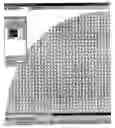
FIG. 1 shows a sectional, exploded view without the default colorant applied to the clear pixels.
FIG. 2 shows the areas of the circle of FIG. 1 with the default colorant applied.
DETAILED DESCRIPTION OF THE INVENTIONFor purpose of clarity, a Raptor Image Processor [RIP] is a software that takes the computers graphics data and converts it into data for the printer. It converts 256 shades of RGB to the pixel depth required for the printer and typically CMY—and sometimes to additional channels such as orange, green, or light cyan and magenta.
First approach:
- 1. In the RIP, a location in memory or on disk is set up to hold for each pixel which colorant(s) is/are to be applied.
- 2. All the pixels under the dark and light-colour objects are set to be painted with the default colorant—that is, the default colorant is turned on for each pixel in the region by default.
- 3. Then the object is painted. For each pixel set to have a CMYK colorant, the default colorant is turned off.
Second approach:
- 1. In the RIP, a location in memory or on disk is set up to hold for each pixel which colorant(s) is/are to be applied.
- 2. The image is painted.
- 3. The region is painted with the default colour. Each pixel is examined to determine if the CMYK pixel is set, and if it is, the default colour would not be applied to that pixel.
Third approach:
In the first approach, the pixels that are not set to have a CMYK colorant are painted with the default colorant, and then the pixels that are set to have a CMYK colorant are painted with the desired colorant. In the second approach, the pixels that are set to have a CMYK colorant are painted with the desired colorant, and then the pixels that are not set to have a CMYK colorant are painted with the default colorant.
A third approach exists where the pixels are painted with respect to a pixel-painting order. The order could be top-to-bottom, left-to-right, or it could be any other predetermined order. Each pixel is examined in turn, and painted with either a CMYK colorant or the default colorant, depending on the RIP.
Once the object is painted using any of the three approaches, each pixel would have been set to have some amount of CMYK ink or white ink. FIG. 1 shows a sectional, exploded view of a light-colored yellow and blue circle without the default colorant applied to the clear pixels. One can see pixels that have yellow and blue turned on. FIG. 2 shows—in black, for demonstrative purposes—the areas of the same circle of FIG. 1 that would be painted with the default colorant.
The amount of default colorant being applied could be reduced: the default colorant could be set to a tint (e.g., 50% tint of white) instead of a solid colour (e.g., solid white). Then for the unpainted pixels, the default color will be a tint.
Although various preferred embodiments of the present invention have been described herein in detail, it will be appreciated by those skilled in the art, that variations may be made thereto without departing from the spirit of the invention or the scope of the appended claims.
Claims
I claim:1. A method for obscuring the background region of an object by applying a default colorant to each pixel within the region that is not set to have a desired colorant applied to it.
2. The method of claim 1, wherein the pixels that are not set to have a CMYK colorant are painted with the default colorant, and then the pixels that are set to have a CMYK colorant are painted with the desired colorant.
3. The method of claim 1, wherein the pixels that are set to have a CMYK colorant are painted with the desired colorant, and then the pixels that are not set to have a CMYK colorant are painted with the default colorant.
4. The method of claim 1, wherein the pixels are painted with the desired colorant or the default colorant with respect to a predetermined order.
5. A system for implementing the method of claim 1.
Images & Drawings included:
Sources:
- United States Patent and Trademark Office - verify current appl. status at the USPTO↗
Recent applications in this class:
- » 20250065641 2025-02-27
APPARATUS, SYSTEM AND METHOD OF AUTOMATIC REGISTRATION AND COLOR ADJUSTMENT BASED UPON MACHINE ELEMENTS AND AMBIENT PARAMETERS - » 20240408888 2024-12-12
INK JET RECORDING METHOD, INK JET RECORDING DEVICE AND AQUEOUS INK - » 20240326460 2024-10-03
PRINTING DEVICE AND PRINTING METHOD - » 20240308233 2024-09-19
COLORANT COMPENSATION USING RELATIVE COLORANT VOLUMES - » 20240198691 2024-06-20
PRINTING APPARATUS, CONTROL METHOD, AND STORAGE MEDIUM - » 20240190139 2024-06-13
PRINTING SYSTEM AND PRINTING METHOD WITH INTELLIGENT COLOR-MATCHING - » 20240140105 2024-05-02
INKJET RECORDING APPARATUS - » 20240140104 2024-05-02
Ink Jet Printing Method And Ink Jet Printing Set - » 20240116296 2024-04-11
IMAGE RECORDING METHOD - » 20240025183 2024-01-25
IMAGE FORMING METHOD, IMAGE-FORMED ARTICLE MANUFACTURING METHOD, AND IMAGE FORMING SYSTEM