Light module
US20070177379A1
2007-08-02
11/345,251
2006-02-01
Abstract:
A light module includes a printed circuit board, a plurality of lamps and a connector. The printed circuit board has a conductive wire surface. Each lamp has a connecting portion electrically connected to the printed circuit board. The connector is installed between the printed circuit board and the lamp for electrically connecting the connecting portion and the printed circuit board.
Interested in similar patents?
Get notified when new applications in this technology area are published.
Classification:
H01R33/02 » CPC main
Coupling devices specially adapted for supporting apparatus and having one part acting as a holder providing support and electrical connection via a counterpart which is structurally associated with the apparatus, e.g. lamp holders; Separate parts thereof Single-pole devices, e.g. holder for supporting one end of a tubular incandescent or neon lamp
H01J5/54 » CPC further
Details relating to vessels or to leading-in conductors common to two or more basic types of discharge tubes or lamps; Means forming part of the tube or lamps for the purpose of providing electrical connection to it supported by a separate part, e.g. base
H01J5/62 » CPC further
Details relating to vessels or to leading-in conductors common to two or more basic types of discharge tubes or lamps; Means forming part of the tube or lamps for the purpose of providing electrical connection to it supported by a separate part, e.g. base Connection of wires protruding from the vessel to connectors carried by the separate part
H01R4/02 » CPC further
Electrically-conductive connections between two or more conductive members in direct contact, i.e. touching one another; Means for effecting or maintaining such contact; Electrically-conductive connections having two or more spaced connecting locations for conductors and using contact members penetrating insulation Soldered or welded connections
H01R12/57 » CPC further
Structural associations of a plurality of mutually-insulated electrical connecting elements, specially adapted for printed circuits, e.g. printed circuit boards [PCBs], flat or ribbon cables, or like generally planar structures, e.g. terminal strips, terminal blocks; Coupling devices specially adapted for printed circuits, flat or ribbon cables, or like generally planar structures; Terminals specially adapted for contact with, or insertion into, printed circuits, flat or ribbon cables, or like generally planar structures; Fixed connections for rigid printed circuits or like structures characterised by the terminals surface mounting terminals
H05K1/182 » CPC further
Printed circuits; Printed circuits structurally associated with non-printed electric components associated with components mounted in the printed circuit board, e.g. insert mounted components [IMC]
H05K1/182 » CPC further
Printed circuits; Printed circuits structurally associated with non-printed electric components associated with components mounted in the printed circuit board, e.g. insert mounted components [IMC]
F21S4/00 IPC
Lighting devices or systems using a string or strip of light sources
Description
BACKGROUNDThe invention relates to a light module, and more particularly, to a light module of a display.
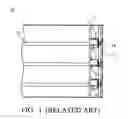
FIG. 1 discloses a conventional light module 10 comprising a frame 11, a plurality of lamps 12 in the frame 11, a connector 14, and a copper sheet 13 electrically connected to the lamps 12. The lamps 12 are fixed on the copper sheet 13 via the connector 14. A feedback circuit (not shown) connects to the copper sheet 13 and controls the lamps 12. In a conventional light module 10, lamps 12 are connected to the same copper sheet 13, and connected to the feedback circuit. The lamps 12 are not divided into several groups but are controlled via the feedback circuit. Because the brightness of each lamp may be different, the feedback circuit connecting the lamps 12 is not able to control lamps 12 regionally, thus, an average level of brightness of the light module 12 cannot be maintained across all the lamps 12.
SUMMARYA light module comprises a printed circuit board, a plurality of lamps and a connector. The printed circuit board has a conductive wire surface. Each lamp comprises a connecting portion electrically connected to the printed circuit board. The connector is installed between the printed circuit board and the lamp for electrically connecting the connecting portion and the printed circuit board. An extension direction of the lamp is substantially parallel to the surface of the conductive wires.
BRIEF DESCRIPTION OF THE DRAWINGSThe invention can be more fully understood by reading the subsequent detailed description in conjunction with the examples and references made to the accompanying drawings, wherein:
FIG. 1 is a schematic diagram of a conventional light module.
FIG. 2 is a schematic diagram of a light module of the present invention.
FIG. 3 shows an end of a lamp of the light module connected to a printed circuit board of FIG. 2.
DETAILED DESCRIPTIONReferring to FIGS. 2 and 3, a light module 20 comprises a frame 21, a plurality of lamps 22, a printed circuit board 23, a connector 24, and an electrode cover 25. The printed circuit board 23 comprises a conductive wire surface 231 on which a feedback circuit (not shown) for controlling the lamps 22 regionally (shown by region A, region B and region C) is provided. Each lamp 22 comprises a connecting portion 221 and an electrode 222. The connecting portion 221 is electrically connected to the printed circuit board 23. The electrode 222 is electrically connected to the connecting portion 221. The electrode cover 25 covers the electrode 222 for protecting the electrode 222. An extension direction (shown by an arrow D) of the lamps 22 is substantially parallel to the conductive wire surface 231. The connector 24 is located between the printed circuit board 23 and the lamps 22 to electrically connect the connecting portion 221 and the printed circuit board 23. The printed circuit board 23 may lie parallel to the lamps 22 or the connecting portion 221. In this embodiment, the connector 24 may comprise copper, tin or a combination thereof. The lamps 22 may be cold cathode fluorescent lamps (CCFLs) or external electrode fluorescent lamps (EEFLs).
The conductive wire surface 231 has a regional feedback circuit to connect and control the lamps 22 regionally (shown as region A, region B and region C). The invention provides a plurality of lamps 22 which can be divided into several groups to be separately controlled by the printed circuit board 23. Besides, all the lamps may be controlled by a single feedback circuit on the printed circuit board. In the invention, lamp regions (shown as region A, region B and region C) can be controlled individually by the printed circuit board and can average the brightness of the light module to increase the luminous efficiency.
While the invention has been described by way of example and in terms of preferred embodiment, it is to be understood that the invention is not limited thereto. To the contrary, it is intended to cover various modifications and similar arrangements (as would be apparent to those skilled in the art). Therefore, the scope of the appended claims should be accorded the broadest interpretation so as to encompass all such modifications and similar arrangements.
Claims
What is claimed is:1. A light module comprising:
a printed circuit board having a conductive wire surface;
a lamp having a connecting portion electrically connected to the conductive wire surface in a manner that the lamp is substantially parallel to the conductive wire surface; and
a connector, disposed between the printed circuit board and the lamp, for electrically connecting the connecting portion and the printed circuit board.
2. The light module of claim 1, wherein the connector comprises copper, tin, or a combination thereof.
3. The light module of claim 1, wherein the lamp comprises an electrode electrically connected to the connecting portion.
4. The light module of claim 3, further comprising an electrode cover adapted to accommodate the electrode.
5. The light module of claim 1, wherein the lamp is a cold cathode fluorescent lamp (CCFL).
6. The light module of claim 1, wherein the lamp is an external electrode fluorescent lamp (EEFL).
Images & Drawings included:



Sources:
- United States Patent and Trademark Office - verify current appl. status at the USPTO↗
Similar patent applications:
- » 20070211458
Light module, light multiple module and use of a light module or light multiple module for illumination or backlighting - » 20120206917
Lighting module, lighting device comprising a lighting module, method for assembling a lighting module and method for assembly of a lighting device - » 20190025686
METHOD FOR PRODUCING A LIGHT MODULE, LIGHT MODULE AND METHOD FOR OPERATING A LIGHT MODULE AND COMPUTER PROGRAM PRODUCT - » 20210048692
Spatial light modulator, light modulating device, and method for driving spatial light modulator - » 20240004225
Spatial light modulator, light modulating device, and method for driving spatial light modulator - » 20150185523
LIGHT MODULATION METHOD, LIGHT MODULATION PROGRAM, LIGHT MODULATION DEVICE, AND ILLUMINATION DEVICE - » 20220236599
Manufacturing method of light modulation panel, light modulation panel and light modulation device - » 20240369199
Lighting system for emitting light comprising two connectable lighting modules, a lighting module, a method of operating a lighting module as well as a corresponding method - » 20110095242
Thermochromic microparticles, dispersions thereof, and manufacturing method thereof, as well as light-modulating coatings, light-modulating films and light-modulating inks - » 20190292444
Light-modulating material, light-modulating film, and light-modulating laminate
Recent applications in this class:
- » 20180351313 2018-12-06
Electrically conductive wall connector - » 20180278001 2018-09-27
Electrically conductive wall connector - » 20160248207 2016-08-25
Light bulb socket assembly - » 20120302097 2012-11-29
Lamp holder connector - » 20120015562 2012-01-19
Multi-slot connector - » 20110306220 2011-12-15
Lamp socket having board supporting means - » 20110242795 2011-10-06
Lamp socket, backlight assembly having the same and display device having the same - » 20110194032 2011-08-11
LIGHTING DEVICE FOR DISPLAY DEVICE, DISPLAY DEVICE AND TELEVISION RECEIVER - » 20110171854 2011-07-14
Connector - » 20110168230 2011-07-14
APPARATUS AND METHODS FOR CONNECTING MULTIPLE PHOTOVOLTAIC MODULES