Combination I/O modules in a modular automation controller
US20070183169A1
2007-08-09
11/625,343
2007-01-22
✅ Patent granted
US 7,565,459 B2
2009-07-21
-
-
Crystal J Barnes Bullock
2027-08-30
Abstract:
The invention describes combination I/O modules for automation. Various combinations of inputs and output with different electrical interfaces are offered providing greater flexibility in controller hardware selection.
Inventors:
- Shalabh Kumar 5 🇺🇸 Kildeer, IL, United States
- Shalabh Kumar 1 🇺🇸 Bettendorf, IL, United States
Interested in similar patents?
Get notified when new applications in this technology area are published.
Classification:
H02J1/00 IPC
Circuit arrangements for dc mains or dc distribution networks
G01R27/28 IPC
Arrangements for measuring resistance, reactance, impedance, or electric characteristics derived therefrom Measuring attenuation, gain, phase shift or derived characteristics of electric four pole networks, i.e. two-port networks; Measuring transient response
H02H5/00 IPC
Emergency protective circuit arrangements for automatic disconnection directly responsive to an undesired change from normal non-electric working conditions with or without subsequent reconnection
G05B19/0423 » CPC main
Programme-control systems electric; Programme control other than numerical control, i.e. in sequence controllers or logic controllers using digital processors Input/output
G05B2219/21115 » CPC further
Program-control systems; Pc systems; Pc I-O input output Same connector can represent either input or output
G05B2219/21116 » CPC further
Program-control systems; Pc systems; Pc I-O input output Universal cabling; control interface between processor and devices
G05B2219/25428 » CPC further
Program-control systems; Pc systems; Pc structure of the system Field device
G06F3/00 IPC
Input arrangements for transferring data to be processed into a form capable of being handled by the computer; Output arrangements for transferring data from processing unit to output unit, e.g. interface arrangements
G06F13/12 IPC
Interconnection of, or transfer of information or other signals between, memories, input/output devices or central processing units; Program control for peripheral devices using hardware independent of the central processor, e.g. channel or peripheral processor
G06F13/38 IPC
Interconnection of, or transfer of information or other signals between, memories, input/output devices or central processing units Information transfer, e.g. on bus
G01R31/00 IPC
Arrangements for testing electric properties; Arrangements for locating electric faults; Arrangements for electrical testing characterised by what is being tested not provided for elsewhere
H03M7/00 IPC
Conversion of a code where information is represented by a given sequence or number of digits to a code where the same, similar or subset of information is represented by a different sequence or number of digits
H02H3/00 IPC
Emergency protective circuit arrangements for automatic disconnection directly responsive to an undesired change from normal electric working condition with or without subsequent reconnection ; integrated protection
H02J3/00 IPC
Circuit arrangements for ac mains or ac distribution networks
H02M3/22 IPC
Conversion of dc power input into dc power output with intermediate conversion into ac
H02M5/40 IPC
Conversion of ac power input into ac power output, e.g. for change of voltage, for change of frequency, for change of number of phases with intermediate conversion into dc
Description
CROSS REFERENCE TO RELATED APPLICATIONS
This application is entitled to the benefit of Provisional Patent Application Ser. No. 60/766475 submitted on Jan. 21, 2006.
FEDERALLY SPONSORED RESEARCH
Not applicable.
SEQUENCE LISTING OR PROGRAM
Not applicable
FIELD OF THE INVENTION
The present invention relates to the field of industrial control or automation, particularly I/O (input/output) modules.
BACKGROUND OF INVENTION
The current modular automation controller offers a variety of discrete input and output (I/O) modules, such as DC Input, DC Output, AC Input, AC Output, etc. However a module offers only one type of functionality: input or output, and only one type of electrical interface for that functionality: such as DC or AC. For example an input module will provide only input, and output module will provide only output functionality, and all the points of a module will have same electrical characteristics. This many times forces users to buy more hardware than necessary. For example if a controller offers 32-point modules and a user requires only, say, 1 input and 1 output, the user would need to buy two modules: one input module and one output module, even though physically one module would have served the purpose. In addition, some times need for additional I/O may necessitate going to a larger controller rack or adding a remote rack, though many I/O points in the existing rack may be unused because of wrong functionality type.
Similar situation exist with respect to electrical interface. A module offers all the discrete point of same electrical type. For example a 32 point DC output module will have same electrical characteristics for all the 32 points. If a user needs one DC output and one AC output, the user needs to buy a two modules.
Current invention presents combination I/O modules that offer input and output functionality on the same module, and modules with more than one type of electrical interface to field devices on the same module. By offering judicious combinations of various input and output type, the invention allows users select optimal hardware for their controller.
BRIEF DESCRIPTION OF DRAWINGS
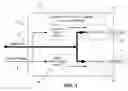
FIG. 1 shows a block diagram of an I/O module that provides both inputs and outputs.
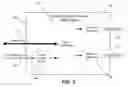
FIG. 2 shows an output module with more than one type of electrical interface to field devices.
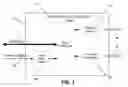
FIG. 3 shows an input module with more than one type of electrical interface to field devices.
DESCRIPTION OF INVENTION
Currently available Modular Automation Controllers provide variety of I/O modules each offering only one type of functionality: Input or Output. This invention presents I/O modules with a variety of combinations. That is the same module supports inputs as well as outputs. In addition the inputs and outputs of different electrical types are mixed, such as DC and AC. Combination I/O modules offer flexibility to users to optimize their controller hardware.
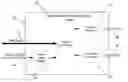
FIG. 1 shows architecture of an I/O module 10 with combination of inputs and outputs. Automation Controller Signals coming to the module are divided in data bus 11 and control bus 12. Control bus 12 has all the signals necessary to address the module and read as well as write to the module. Input Control Signal Decoder 13 decodes signals from control bus 12 to control the Input block 15. Input block 15 provides necessary signal conditioning and interface to field inputs 18. Output Control Signal Decoder 14 provides decoding of control bus 12 signals to control the output block 16. The output block 16 provides necessary interface to field devices 17. Data Bus 11 can be a parallel bus or a serial bus, such as SPI or I2C.
FIG. 2 shows an output module with two different types of electrical interfaces to field devices. Examples of different electrical interfaces types are DC, TTL, AC, Relay, etc. Although only two types are shown in the figure, a module can have more than two types of electrical interfaces. Module 20 connects to a controller using data bus 21 and control signals 22. Control signal decoder 24 decodes control bus signals to control signal conditioner 23. Signal Conditioner 23 may include output latches, optical isolators, etc as per requirements. Electrical interface A 25 interfaces with compatible field devices 28, while electrical interface B 26 provides signals to devices of that type. For example interface A 25 may provide 24 VDC outputs while interface B 26 may provide 120 VAC output.
FIG. 3 shows an input module with two different types of electrical interfaces to field devices. Examples of different electrical interfaces types are DC, TTL, AC, etc. Although only two types are shown in the figure, a module can have more than two types of electrical interfaces. Module 30 connects to a controller using data bus 31 and control signals 32. Control signal decoder 34 decodes control bus signals to control signal conditioner 33. Signal Conditioner 33 may include buffers, optical isolators, etc as per requirements. Electrical interface A 35 interfaces with compatible input field devices 38, while electrical interface B 36 provides signals to devices 37 of that type. For example interface A 25 may provide 24 VDC input while interface B 26 may provide 120 VAC input.
The concept of combining electrical interfaces may also be used in the module of FIG. 1. That is the module can offer input of different electrical types, as well as outputs of different electrical types of on the same module.
A variety of combination modules are offered using general architecture described in FIG. 1, FIG. 2 and FIG. 3. These include:
(1) DC Inputs and DC Outputs
(2) DC Outputs and AC Outputs
(3) AC Inputs and DC Outputs
(4) DC Inputs and AC Outputs
(5) AC Inputs and Relay Outputs
(6) DC Inputs and Relay Outputs
(7) Analog Inputs and Analog Outputs (Voltage)
(8) Analog Inputs and Analog Outputs (Current)
In addition, the outputs of these modules are short circuit protected. The modules effectively shut off when the current drawn is above the rated current of the module. This is done by sensing the current. The output current is sensed by passing current through a low value series resistor. The value of resistor is so chosen that it would trigger shutdown if more than rated current is passed through the resistor. Once in shut down, the output tries to recover continuously. When the current drawn is lower than modules rated current, the module outputs starts working again. This feature prevents damages to the outputs that commonly occur in field if the outputs are not protected.
Claims
What is claimed is:1. An I/O module for use in a modular automation controller, said I/O module having means to:
a. electrically connect to said automation controller,
b. transmit variety of electrical signals from plurality of input devices to said automation controller simultaneously,
c. transmit variety electrical signals from said automation controller to plurality of output devices simultaneously
2. The I/O module of claim 1 having means to interface with plurality of DC input devices and plurality of DC output devices.
3. The I/O module of claim 1 having means to interface with plurality of AC inputs devices and plurality of DC outputs devices.
4. The I/O module of claim 1 having means to interface with plurality of DC input devices and plurality of AC output devices.
5. The I/O module of claim 1 having means to interface with plurality of AC input devices and plurality of Relay output devices.
6. The I/O module of claim 1 having means to interface with plurality of DC input devices and plurality of relay output devices.
7. An output module for use in a modular automation controller, said output module having means to:
a. electrically connect to said automation controller,
b. transmit electrical signals from said automation controller to variety of output devices simultaneously
c. detect an overload or short circuit condition in said output devices.
8. An output module of claim 7 having means to prevent damage to said module in case of overload or short circuit condition in the output device.
9. An output module of claim 7 having means to turn back on properly when the overload or short circuit condition is removed.
Images & Drawings included:
Sources:
- United States Patent and Trademark Office - verify current appl. status at the USPTO↗
Recent applications in this class:
- » 20250251707 2025-08-07
Method and Electronic Assembly for an Automation System - » 20250244735 2025-07-31
METHODS AND APPARATUS TO DISPLAY SHIFT CHANGE NOTES GENERATED VIA NATURAL LANGUAGE PROCESSING MODELS - » 20250231543 2025-07-17
MANUFACTURING APPARATUS AND OPERATING METHOD OF MANUFACTURING APPARATUS - » 20250216830 2025-07-03
CONTROL SYSTEM AND PROCESSING METHOD FOR INTELLIGENT WALL SWITCH, AND THE INTELLIGENT WALL SWITCH - » 20250216829 2025-07-03
CONTROL CHIP, STORAGE CIRCUIT, AND PROTECTION METHOD - » 20250155862 2025-05-15
GENERAL PURPOSE COMMAND SYSTEM AND INTERFACE - » 20250138500 2025-05-01
Systems and Methods for Controlling Dynamic Environments - » 20250130544 2025-04-24
ARBITRARILY CONFIGURABLE SENSORS AND ELECTRICAL DEVICES - » 20250110463 2025-04-03
I/O CARRIER AND BACKPLANE FOR INDUSTRIAL PROCESS CONTROL SYSTEMS - » 20250110462 2025-04-03
MULTI-CHANNEL ACTUATOR FOR DRIVING A LOW-SIDE DEVICE