Phthalate ester as metal working lubricant
US20070184994A1
2007-08-09
10/538,592
2003-12-05
Abstract:
A water-based lubricant is provided that includes a phthalate ester in an amount of about 2% to about 20% based on the weight of the final composition and water in an amount of about 60% to about 93% based on the weight of the final composition. Also provided are a method of making the water-based lubricant and a method of metalworking using the water-based lubricant.
Interested in similar patents?
Get notified when new applications in this technology area are published.
Classification:
C10M173/02 » CPC main
Lubricating compositions containing more than 10% water not containing mineral or fatty oils
C10M2201/003 » CPC further
Inorganic compounds or elements as ingredients in lubricant compositions used as base material
C10M2201/02 » CPC further
Inorganic compounds or elements as ingredients in lubricant compositions Water
C10M2207/285 » CPC further
Organic hydrocarbon compounds containing hydrogen, carbon and oxygen as ingredients in lubricant compositions; Esters of aromatic polycarboxylic acids
C10M2207/289 » CPC further
Organic hydrocarbon compounds containing hydrogen, carbon and oxygen as ingredients in lubricant compositions; Esters; Partial esters containing free hydroxy groups
C10M2209/102 » CPC further
Organic compounds containing oxygen as ingredients in lubricant compositions; Macromolecular compoundss obtained otherwise than by reactions only involving carbon-to-carbon unsaturated bonds Polyesters
C10M2209/104 » CPC further
Organic compounds containing oxygen as ingredients in lubricant compositions; Macromolecular compoundss obtained otherwise than by reactions only involving carbon-to-carbon unsaturated bonds; Polyethers, i.e. containing di- or higher polyoxyalkylene groups of alkylene oxides containing two carbon atoms only
C10M2209/106 » CPC further
Organic compounds containing oxygen as ingredients in lubricant compositions; Macromolecular compoundss obtained otherwise than by reactions only involving carbon-to-carbon unsaturated bonds; Polyethers, i.e. containing di- or higher polyoxyalkylene groups of alkylene oxides containing four carbon atoms only
C10M2209/108 » CPC further
Organic compounds containing oxygen as ingredients in lubricant compositions; Macromolecular compoundss obtained otherwise than by reactions only involving carbon-to-carbon unsaturated bonds; Polyethers, i.e. containing di- or higher polyoxyalkylene groups etherified
C10M2207/142 » CPC further
Organic hydrocarbon compounds containing hydrogen, carbon and oxygen as ingredients in lubricant compositions; Carboxylix acids; Neutral salts thereof having carboxyl groups bound to carbon atoms of six-membered aromatic rings polycarboxylic
C10M2209/109 » CPC further
Organic compounds containing oxygen as ingredients in lubricant compositions; Macromolecular compoundss obtained otherwise than by reactions only involving carbon-to-carbon unsaturated bonds; Polyethers, i.e. containing di- or higher polyoxyalkylene groups esterified
C10M2209/112 » CPC further
Organic compounds containing oxygen as ingredients in lubricant compositions; Macromolecular compoundss obtained otherwise than by reactions only involving carbon-to-carbon unsaturated bonds; Complex polyesters having dihydric acid centres
C10M2215/042 » CPC further
Organic compounds containing nitrogen as ingredients in lubricant compositions; Amines, e.g. polyalkylene polyamines; Quaternary amines having amino groups bound to acyclic or cycloaliphatic carbon atoms containing hydroxy groups; Alkoxylated derivatives thereof
C10N2030/06 » CPC further
Specified physical or chemical properties which is improved by the additive characterising the lubricating composition, e.g. multifunctional additives Oiliness; Film-strength; Anti-wear; Resistance to extreme pressure
C10N2030/66 » CPC further
Specified physical or chemical properties which is improved by the additive characterising the lubricating composition, e.g. multifunctional additives Hydrolytic stability
C10N2040/20 » CPC further
Specified use or application for which the lubricating composition is intended Metal working
C10M2207/022 » CPC further
Organic hydrocarbon compounds containing hydrogen, carbon and oxygen as ingredients in lubricant compositions; Hydroxy compounds having hydroxy groups bound to acyclic or cycloaliphatic carbon atoms containing at least two hydroxy groups
C10L1/10 IPC
Liquid carbonaceous fuels containing additives
Description
RELATED APPLICATIONS[Not Applicable]
FEDERALLY SPONSORED RESEARCH OR DEVELOPMENT[Not Applicable]
MICROFICHE/COPYRIGHT REFERENCE[Not Applicable]
BACKGROUND OF THE INVENTIONThe metalworking industry requires lubricants in many of its operations. Water-based lubricants are particularly desirable because of the ease of using and disposing of the water base. Adipate esters have also been used as successful lubricants in the metalworking industry. Adipate esters, however, are unstable in water solutions and thus less desirable than water-based lubricants. In the past, it has been determined that esters having groups with steric bulk immediately adjacent the ester group may lend some hydrolytic stability to lubricants. The metalworking industry has gone to utilizing isopropyl and 2-ethylhexyl esters as a source of hydrolytic stability due to the steric bulk of the groups adjacent to the ester linkage. However, there continues to be a need for hydrolytically stable lubricants for use in the metalworking industry.
BRIEF SUMMARY OF THE INVENTIONThe present invention provides a hydrolytically stable phthalate ester lubricant and a method of metalworking with a hydrolytically stable phthalate ester lubricant. The phthalate esters used in the present invention have shown superior hydrolytic stability versus other esters and have shown successful lubrication results in ASTM testing for lubricants.
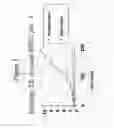
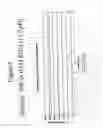
BRIEF DESCRIPTION OF SEVERAL VIEWS OF THE DRAWINGSFIG. 1 compares the hydrolytic stability of the propoxylated Stepanpol PS-2002 with adipic ester in an acidic system.
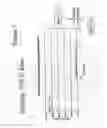
FIG. 2 demonstrates the hydrolytic stability of adipate polyol in a basic system.
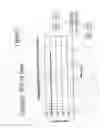
FIG. 3 demonstrates the hydrolytic stability of the propoxylated Stepanpol PS-2002 in a basic system.
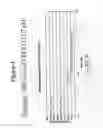
FIG. 4 illustrates the hydrolytic stability of adipate polyol in a KOH system.
FIG. 5 illustrates the hydrolytic stability of the propoxylated Stepanpol PS-2002 in a KOH system.
DETAILED DESCRIPTION OF THE INVENTIONThe phthalate esters that may be used in the lubricant of the present invention include (I) a phthalate polyester-ether polyol, (II) a phthalic anhydride reacted with an equivalent of a fatty alcohol which is then ethoxylated with a variety of moles of ethylene oxide (or propylene oxide), and (IV) the amine-neutralized salts of item (II).
Referring to (I), the phthalate polyester-ether polyol is the reaction product of:
-
- (1) about 2-60% based on the weight of the polyester-ether polyol of phthalic anhydride or phthalic acid;
- (2) about 40-98% based on the weight of the polyester-ether polyol of at least one polyol of the formula:
HO—R1—OH
wherein R1 represents:
-
-
- (a) alkylene groups of about 2 to 10 carbon atoms;
- (b) —CH2—R2—CH2—
- where R2 represents:
- (c) —(R3O)n—R3—
- where each R3 independently is an alkylene group of about 2 to about 4 carbon atoms, and n is an integer of from about 1-200; and
- (3) about 10-80% based on the weight of the polyester-ether polyol of an alkoxylating agent
-
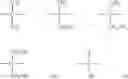
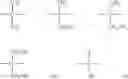
A preferred phthalate polyester-ether polyol is a propoxylated diethylene glycol-phthalic anhydride-based polyester polyol. The diethylene glycol-phthalic anhydride-based polyester polyol is sold by the Stepan Company under the tradename Stepanpol PS-2002. Stepanpol PS-2002 has the following structural formula
Regarding (II), the phthalic anhydride - fatty alcohol reaction is described as follows.
where R is C4 to C22, branched or linear.
The ethoxylation reaction of the product of the phthalic anhydride—fatty acid reaction proceeds by ethoxylating the product with a variety of moles of ethylene oxide (or propylene oxide or butylene oxide) resulting in the following structure.
where R1═H, CH3, CH2CH3, and n=1-20, preferably 1-10.
Regarding (III), the amine-neutralized salts of (II) can also be used as the phthalate ester in the present invention. The amines that may be used to accomplish this neutralization include triethanolamine, triethylamine, triethanolamine, monoethanolamine, 2-ethylhexylamine, tallow amine ethoxylates or any other amine in general.
The stability of the phthalate esters of the present invention was investigated in both acidic and basic conditions and compared to adipic ester, a known lubricant often used in the metalworking industry.
FIG. 1 compares the hydrolytic stability of the propoxylated Stepanpol PS-2002 with adipic ester in an acidic system. FIG. 1 depicts the increase in acid value of the adipic ester versus the propoxylated Stepanpol PS-2002 as the acid value increase is indicative of ester breakdown. The results reported in FIG. 1 confirm that the phthalate esters of the present invention provide the hydrolytic stability in acidic conditions desirable for lubricants in the metalworking industry.
FIG. 2 and FIG. 3 demonstrate the hydrolytic stability of adipate polyol and the propoxylated Stepanpol PS-2002, respectively, in a basic system. Base stability can be observed by measuring the breakdown in molecular weight of the ester over time. FIGS. 2 and 3 illustrate the breakdown in molecular weight via gel permeation chromatography (GPC) of adipate polyol and the propoxylated Stepanpol PS-2002, respectively, in 0.50M KOH and 0.50M TEA (triethyl amine) by measuring the area percent of the highest molecular weight species in the GPC graph. FIG. 2 demonstrates that the area percent of the adipate polyol decreases drastically over time. In contrast, FIG. 3 demonstrates that the area percent of the propoxylated Stepanpol PS-2002 does not decrease over the same time period.
FIG. 4 and FIG. 5 illustrate the hydrolytic stability of adipate polyol and the propoxylated Stepanpol PS-2002, respectively, in a KOH system. FIGS. 4 and 5 directly measure the average molecular weight of the systems to demonstrate the respective stability in a basic system. FIG. 4 demonstrates that the average molecular weight of the adipate polyol decreases drastically over time. In contrast, FIG. 5 demonstrates that the average molecular weight of the propoxylated Stepanpol PS-2002 does not decrease over the same time period, confirming the hydrolytic stability of the pthalate ester
All of FIGS. 2, 3, 4, and 5 confirm that the phthalate esters of the present invention provide the hydrolytic stability in basic conditions desirable for lubricants in the metalworking industry.
The lubricant of the present invention was compared to metalworking industry lubricant standards (isopropyl oleate and 2-ethylhexyl oleate). In particular, the tests run were a 4ball wear, Extreme Pressure Pin and Vee, and a Tapping Torque. All tests were run via an ASTM method.
Table I sets forth the results for the ASTM D-4172 4-ball wear testing.
| TABLE I | ||
| Product | Wear Diameter (mm) | |
| Stepan MWA-560 HS | 0.598 | |
| 2-ethylhexyl oleate | 0.752 | |
| isopropyl oleate | 0.628 | |
Table II sets forth the results for the ASTM D-3233 Extreme Pressure Pin and Vee testing.
| TABLE II | ||
| Product | Failure Load (lbs) | |
| Stepan MWA-560 HS | 1000 | |
| 2-ethylhexyl oleate | 1250 | |
| isopropyl oleate | 1250 | |
Table III sets forth the results for the ASTM D-5619 Tapping Torque testing.
| TABLE III | ||
| Product | Efficiency (%) | |
| Stepan MWA-560 HS | 96.20 | |
| isopropyl oleate | 110.28 | |
The results as set forth in Tables I, II, and III demonstrate that the lubricants of the present invention provide lubricating properties comparable to those of the metalworking industry standards. As such, the lubricants of the present invention may be utilized in any application in the metalworking industry that requires a lubricant such as isopropyloleate or 2ethylhexyl oleate.
A typical lubricant formulation useful in the metalworking industry may consist of up to about 90% water, about 5% phthalate ester, and about 5% triethanolamine. Those skilled in the art recognize that many lubricant formulations are maintained as proprietary trade secret information, and that the phthalate esters disclosed above may be utilized as the main lubricating ingredient in those proprietary lubricant formulations. Thus, the present invention includes such lubricant formulations that utilize the phthalate ester as the main lubricating ingredient. In other words, a person skilled in the art may take his or her proprietary formulation and in the place of the prior main lubricating ingredient utilize the phthalate esters to arrive with a lubricant formulation of the present invention. Such proprietary formulation usually include water, the main lubricating ingredient and at least one other ingredient. The at least one other ingredient may be a single ingredient, as described in the formulation above where the at least one other ingredient is triethanolamine, or may include any number of components.
Typical water-based lubricants presently include water in an amount between about 60% and about 93% by weight of the total composition, preferably about 75 to about 87%, and a main lubricating ingredient in an amount between about 2% and about 20% by weight of the total composition, preferably about 5 to about 10%. The phthalate esters disclosed above may be used as the main lubricating ingredient in such water-based lubricants and in such amounts. Typical water-based lubricants presently further include at least one other ingredient in a total weight of about 2% and about 20% based on the final composition. One typical component of the at least one other ingredients is an amine in an amount of between about 2% and about 10% by weight of the total composition. The amine is typically used to regulate the pH of the lubricant. Thus, the phthalate esters disclosed above can be used in presently used lubricants by replacing the main lubricating ingredient in those present day lubricants with the disclosed phthalate esters to provide the lubricant of the present invention.
The phthalate esters disclosed above may also be used as the main lubricating ingredient in such water-based lubricants including this at least one other ingredient.
The invention has been described with reference to preferred and alternate embodiments. Modifications and alterations will occur to others upon the reading and understanding of the specification. It is intended to include all such modifications and alterations insofar as they come within the scope of the appended claims or equivalents thereof.
Claims
1. A method of making a water-based lubricant composition comprisng the steps of
providing waters
providing a phthalate ester having at least one terminal hydroxyl group, wherein the phthalate ester is a reaction product that has been formed by
a. reacting phthalic anhydride with at least one alcohol, wherein the alcohol is either
(1) a fatty alcohol having the formula ROH, where R is C4 to C22 branched or linear; or
(2) a polyol having the formula HO—R1—OH, wherein R1 represents:
(a) alkylene groups of 2 to 10 carbon atoms;
(b) —CH2—R2 —CH2— wherein R2 represents:
(c) —(R3O)n—R3—
where each R3 independently is an allylene group of 2 to 4 carbon atoms, and n is an integer of from 1-200; and
b. reacting the product resulting from the phthalic anhydride alcohol reaction with an alkoxylating agent to produce the phthalate ester reaction product having at least one terminal hydroxyl group; and
mixing the phOhalate ester and water.
2. The method of claim 1 further comprising the steps of:
providing at least one other desirable ingredient; and
mixing the phthalate ester, water and at least one other desirable ingredient.
3. The method of claim 1 wherein the phthalate ester is provided in an amount of 2% to 20% based on the weight of the final composition; and
the water is provided in an amount of 60% to 93% based on the weight of the final composition.
4. The method of claim 2 wherein:
the phthalate ester is provided in an amount of 2% to 20% based on the weight of the final composition;
the water is provided in an amount of 60% to 93% based on the weight of the final composition; and
the at least one other desirable ingredient is provided in a total amount of 2% to 20% based on the weight of the final composition.
5. A water-based lubricant composition comprising:
water in an amount of 60% to 93% based on the weigh. of the final composition; and
phthalate este in an amount of 2% to 20% based on the weight of the final composition, wherein the phthalate ester has at least one terminal hydroxyl group and is a reaction product that bas been forned by
a reacting phthalic anhydride with at least one alcohol, wherein the alcohol is either:
(1) a fatty alcohol having the fomula ROH, where R is C4 to C22 branched or linear; or
(2) a polyol having the formula HO—R1—OH, wherein R1 represents:
(a) alkylene groups of 2 to 10 carbon atoms;
(b) —CH2—R2—CH2— wherein R2 represents:
(c) —(R3O)n—R3—
where each R3 independently is an alkylene grup of 2 to 4 carbon atoms, and n is an integer of *om 1-200; and
b. reacting the product resulting from the phthalic anhydride alcohol reaction with an alkoxylating agent to produce the phthalate ester reaction product having at least one terminal hydroxyl group.
6. The water-based lubricant of claim 5 further comprising:
at least one other desirable ingredient in a total amount of 2% to 20% based on the weight of the final composition.
7. The water-based lubricant of claim 6 wherein the phthalate ester comprises 5% by weight of the final composition; water comprises 90% by weight of the final composition; and the at least one other desirable ingredient comprises a total of 5% of the final composition.
8. The water-based lubricant of claim 5 wherein the at least one other desirable ingredient is triethanolamine.
9. A method of metalworking comprising the step of,
utilizing a water-based lubricant composition comprising:
water in an amount of 60% to 93% based on the weight of the final composition;
a phthalate ester in an amount of 2% to 20% based on the weight of the final composition wherein the phthalate ester has at least one terminal hydroxyl group and is a reaction product that has been formed by
a. reacting phthalic anhydride with at least one alcohol, wherein the alcohol is either:
(1) a fatty alcohol having the formula ROH, where R is C4 to C22 branched or linear; or
(2) a polyol having the formula HO—R1—OH, wherein R1 represents:
(a) alkylene groups of 2 to 10 carbon atoms;
(b) CH2—R2—CH2— wherein R2 represents;
(c) —(R3O)n—R3—
where each R3 independently is an alkylene group of 2 to 4 carbon atoms, and n is an integer of from 1-200; and
b. reacting the product resulting from the phthalic anhydride alcohol reaction with an alkoxylating agent to produce the phthalate ester reaction product having at least one terminal hydroxyl group.
10. The method of claim 9 wherein, the water-based lubricant further comprises at least one other desirable ingredient in a total amount of 2% to 20% based on the weight of the final composition.
Images & Drawings included:
Sources:
- United States Patent and Trademark Office - verify current appl. status at the USPTO↗
Recent applications in this class:
- » 20250059460 2025-02-20
COATING METHOD OF A COMPOSITE COATING ON A SLIDE, SLIDE AND USE METHOD THEREOF - » 20250034479 2025-01-30
AQUEOUS GRAPHITE LUBRICANT COMPOSITIONS - » 20250027008 2025-01-23
AQUEOUS GRAPHITE LUBRICANT COMPOSITIONS COMPRISING DISPERSANTS - » 20250019616 2025-01-16
LUBRICANT COMPOSITIONS INCLUDING POLYMERIC DISPERSANTS - » 20240384199 2024-11-21
AMINE CONTAINING AQUEOUS FLUIDS AND METHOD OF PRODUCING SAME - » 20240327746 2024-10-03
AQUEOUS SUSPENSION AND CUTTING FLUID INCLUDING THE SAME - » 20240309287 2024-09-19
AQUEOUS LUBRICANT COMPOSITION FOR METALWORKING - » 20240301316 2024-09-12
AQUEOUS LUBRICATING COMPOSITION COMPRISING MoS2 NANOSHEET - » 20240271056 2024-08-15
BORON-FREE WATER-BASED LUBRICANT FOR PLASTIC WORKING - » 20240228906 2024-07-11
AQUEOUS LUBRICATING COMPOSITION COMPRISING MoS2 NANOSHEET