Device for fitting seats and the like to the chassis of baby carriages
US20070187914A1
2007-08-16
11/702,862
2007-02-06
✅ Patent granted
US 7,681,894 B2
2010-03-23
-
-
Paul N Dickson | Bryan A Evans
2028-03-15
Abstract:
A device for fitting seats and the like to the chassis of baby carriages includes at each side of the seat a respective anchoring mechanism for a direct anchoring at corresponding attachments provided at the chassis of the baby carriage. The anchoring mechanism is housed in a body inferiorly having a projection having a slanted edge adapted to shift a transverse pin slidably fitted in a box making up the attachment provided at the chassis when the aforementioned body is fitted to the box. The transverse pin is linked to a spring adapted to take said transverse pin back to its initial position when the action of the aforementioned projection having a slanted edge has ceased. A control is exteriorly fitted to the body housing the anchoring mechanism, the control being linked to said mechanism and when actuated releasing the anchored state.
Assignee:
- Jane, S.A. 12 🇪🇸 Barcelona, Spain
Interested in similar patents?
Get notified when new applications in this technology area are published.
Classification:
B62B7/142 » CPC main
Carriages for children; Perambulators, e.g. dolls' perambulators having more than one wheel axis; Steering devices therefor with detachable or rotatably-mounted body Means for securing the body to the frame
Y10S24/51 » CPC further
Buckles, buttons, clasps; Separable-fastener or required component thereof including receiving member having cavity and mating member having insertable projection guided to interlock thereby
Y10S24/52 » CPC further
Buckles, buttons, clasps; Separable-fastener or required component thereof including receiving member having cavity and mating member having insertable projection guided to interlock thereby having divergent interlock means distinct from cavity or projection of its member
Y10T24/45215 » CPC further
Buckles, buttons, clasps, etc.; Separable-fastener or required component thereof [e.g., projection and cavity to complete interlock]; Each mating member having similarly shaped, sized, and operated interlocking or intermeshable face Slot and tab or tongue
Y10T24/45241 » CPC further
Buckles, buttons, clasps, etc.; Separable-fastener or required component thereof [e.g., projection and cavity to complete interlock] including member having distinct formations and mating member selectively interlocking therewith Slot and tab or tongue
Y10T24/45487 » CPC further
Buckles, buttons, clasps, etc.; Separable-fastener or required component thereof [e.g., projection and cavity to complete interlock] including member having distinct formations and mating member selectively interlocking therewith; Projection having movable connection between components thereof or variable configuration and operator therefor including camming or wedging element on projection member
Y10T24/45623 » CPC further
Buckles, buttons, clasps, etc.; Separable-fastener or required component thereof [e.g., projection and cavity to complete interlock] including member having distinct formations and mating member selectively interlocking therewith; Receiving member includes either movable connection between interlocking components or variable configuration cavity and operator therefor
Y10T24/4566 » CPC further
Buckles, buttons, clasps, etc.; Separable-fastener or required component thereof [e.g., projection and cavity to complete interlock] including member having distinct formations and mating member selectively interlocking therewith; Receiving member includes either movable connection between interlocking components or variable configuration cavity and operator therefor including slidably connected and guided element on receiving member
Y10T24/45743 » CPC further
Buckles, buttons, clasps, etc.; Separable-fastener or required component thereof [e.g., projection and cavity to complete interlock] including member having distinct formations and mating member selectively interlocking therewith; Receiving member includes either movable connection between interlocking components or variable configuration cavity having slidably connected, nonself-biasing interlocking component Requiring manual force thereon to interlock or disengage
Y10T24/45785 » CPC further
Buckles, buttons, clasps, etc.; Separable-fastener or required component thereof [e.g., projection and cavity to complete interlock] including member having distinct formations and mating member selectively interlocking therewith; Receiving member includes either movable connection between interlocking components or variable configuration cavity having resiliently biased interlocking component or segment Requiring manual force applied against bias to interlock or disengage
B62B7/00 IPC
Carriages for children; Perambulators
B62B7/00 IPC
Carriages for children; Perambulators, e.g. dolls' perambulators
B62B7/14 IPC
Carriages for children; Perambulators, e.g. dolls' perambulators having more than one wheel axis; Steering devices therefor with detachable or rotatably-mounted body
Description
BACKGROUND OF THE INVENTION
A device for fitting seats and the like to the chassis of baby carriages.
There exist several devices for fitting seats, carrycots and the like to the chassis of baby carriages in order to arrange in these latter the carrycot when the child is very small and to later on arrange the seat when the child has already grown to a bigger size, said devices being each adapted to be removably fitted to a respective holder being provided at each side of the chassis.
From among those of this kind of devices those are known which comprise an anchoring mechanism allowing to carry out a direct anchoring at the transverse pin being provided in a box being integral with each side of the chassis, the seat or the like being fitted thereby being thus arranged in one only sense, i.e. generally facing the rear side of the baby carriage, this latter side being the one being pushed by the person moving the baby carriage about.
SUMMARY OF THE INVENTION
It is the object of this invention to improve this kind of devices in order to in a quick, practical and simple way have the seat or the like removably fitted in such an arrangement that it faces the rear side of the baby carriage or the front side of this latter, i.e. the forward moving direction.
A characterizing feature for such a purpose lies in the fact that the anchoring mechanism is housed in a body inferiorly having a projection having a slanted edge being fit to shift the transverse pin being slidably fitted in the box when the aforementioned body is fitted to said box.
Another characterizing feature lies in the fact that the transverse pin is linked to a spring being fit to take said transverse pin back to its initial position when the action of the aforementioned projection having a slanted edge has ceased.
An also characterizing feature lies in the fact that a control is exteriorly fitted to the actual body housing the anchoring mechanism, said control being linked to said mechanism and when being actuated bringing about an unlocking action causing the release of the anchored state in order to thus be in a position to remove the seat or the like.
These and other characterizing features will be best made apparent by the following detailed description whose understanding will be made easier by the accompanying two sheets of drawings showing a practical embodiment being cited only by way of example not limiting the scope of the present invention.
BRIEF DESCRIPTION OF THE DRAWINGS
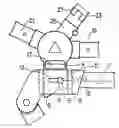
FIG. 1 shows in a plan-view the detail of the box with the shiftable transverse pin;
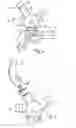
FIG. 2 illustrates in a side elevation the detail of the device having been lockedly engaged for a positioning of the seat as per a sitting position facing the rear side of the baby carriage;
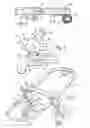
FIG. 3 depicts in a perspective view the seat frame facing the forward moving direction before being fitted to the chassis of the baby carriage;
FIG. 4 is a side elevational view of the device having been lockedly engaged as per the position of FIG. 3; and
FIG. 5 shows in a perspective view the detail of the fitting of a handrail to the seat.
DETAILED DESCRIPTION OF THE INVENTION
According to the drawings this device for fitting seats and the like to the chassis of baby carriages comprises at each side of the seat frame (1), concretely at a central hub (2), a respective conventional anchoring mechanism being housed in a respective body (3) and (4) inferiorly having a projection (5) having a slanted edge (6).
A respective box (9) and (10) is fitted to each of the armrests (7) and (8) and has a respective transverse pin (11) and (12) fitted to it in a sliding arrangement in corresponding horizontal slots (13) and (14) being provided in said boxes.
Said transverse pins (11) and (12) are each linked to a respective spring (15) and (16) being at its free end securely attached to the pin (28) where the armrests (7) and (8) are linked in a pin-jointed connection to the corresponding branches (29) of the handlebar of the baby carriage.
The anchoring mechanisms (not shown) are already known and comprise a catch being located at the vertical notch (E) being provided in the bodies (3) and (4), said catch being fit to engagedly seize the transverse pins (11) and (12), said notch being arranged in an offset arrangement and thus determining two portions of different width.
In this case the lower projection (5) corresponds to the wider portion, and when placing the seat in its normal position facing the rear side (FIG. 2) the anchoring mechanism in a direct manner engagedly seizes the pins (11) and (12).
When wishing to fit the seat facing the forward moving direction (FIGS. 3 and 4) the lower projection (5) abuttingly bumps against the aforementioned transverse pins (11) and (12), and thanks to the slanted edge (6) said pins are shifted as per arrow (F) till being put in register with the notches (E), the catch of the anchoring mechanism then carrying out its catching action in said position.
When releasing the seat the pins (11) and (12) are made to regain their initial position by virtue of the returning force of the springs (15) and (16).
The locked engagement of the anchoring mechanism is brought about in an automatic manner, and in order to be released said anchoring mechanism is linked to an outer control (17) which when being manually actuated in an upward direction releases it from the pins (11) and (12), said control being biased towards the active position of the anchoring mechanism by virtue of the biasing action of a spring being installed inside the bodies (3) and (4).
The seat frame comprises two lateral lengths (18) and (19) being fitted to the hubs (2) and having articulately fitted to their ends a U-shaped member (20) for forming a legrest, and a U-shaped member (21) for forming the backrest, this latter being fitted in an articulated arrangement and being thus in a position to assume different inclined positions that are to be stabilized with a control (22) by using means being already known.
A handrail (23) is linked to the hubs (2) and is fit to have each of its ends removably fitted to a respective tubular trunnion (24) and (25) being integral with said hubs, for said fitting means (26) having been provided which are fit to act as a by way of ball joint in order to allow the handrail (23) being fitted at one of its ends to effect a turning motion, each of the handrail ends besides comprising an articulated link (27).
Claims
1. A device for fitting seats and the like to the chassis of baby carriages, said device comprising at each side of the seat a respective anchoring mechanism for a direct anchoring at corresponding attachments being provided at the chassis of the baby carriage; wherein the anchoring mechanism is housed in a body inferiorly having a projection having a slanted edge being fit to shift a transverse pin being slidably fitted in a box making up the attachment being provided at the chassis when the aforementioned body is fitted to said box.
2. A device for fitting seats and the like to the chassis of baby carriages as per claim 1, wherein the transverse pin is linked to a spring being fit to take said transverse pin back to its initial position when the action of the aforementioned projection having a slanted edge has ceased.
3. A device for fitting seats and the like to the chassis of baby carriages as per claim 1, wherein a control is exteriorly fitted to the body housing the anchoring mechanism, said control being linked to said mechanism and when being actuated bringing about an unlocking action causing the release of the anchored state.
Images & Drawings included:
Sources:
- United States Patent and Trademark Office - verify current appl. status at the USPTO↗
Similar patent applications:
Recent applications in this class:
- » 20250263103 2025-08-21
CARRYCOT WITH COUPLER FOR ATTACHING TO A CARRIAGE, STAND, OR OTHER SUPPORT STRUCTURE - » 20250178658 2025-06-05
ADAPTOR, ADAPTOR APPARATUS, AND CHILD CARRIER - » 20250033685 2025-01-30
LOCKING DEVICE, LOCKING STRUCTURE, CHILD CARRIER AND SEAT OF CHILD CARRIER - » 20240409148 2024-12-12
Baby seat assembly - » 20240308567 2024-09-19
STROLLER - » 20240067252 2024-02-29
INFANT CARRIER AND HEIGHT ADJUSTMENT MECHANISM - » 20240034383 2024-02-01
CHILD CARRIAGE AND CHILD CARRIER WITH COUPLERS FOR REMOVABLY COUPLING TO ONE ANOTHER - » 20230406389 2023-12-21
FOLDABLE CHILD CARRIER - » 20230382445 2023-11-30
ASSEMBLING STRUCTURE, ASSEMBLING MECHANISM, AND CARRIER - » 20230365180 2023-11-16
CHILD CARRYING MECHANISM AND RELATED CHILD CARRIER
Recent applications for this Assignee:
- » 20180029507 2018-02-01
Structure for child safety seats - » 20090160233 2009-06-25
Infant seat for motorcars - » 20080295554 2008-12-04
Device for locking and unlocking the folded and unfolded positions of an infant pushchair - » 20080231021 2008-09-25
FOLDABLE PUSHCHAIR FOR BABIES AND SMALL CHILDREN - » 20080012408 2008-01-17
Base for fitting infant seats to motorcars - » 20070284921 2007-12-13
Device for the articulated linking of handles to infant seats, carrycots and the like - » 20070246976 2007-10-25
Device for removably fitting to prams carrycot seats and carrycots being provided with an articulated handle - » 20070188002 2007-08-16
Infant chair - » 20070035097 2007-02-15
Foldable chassis for baby carriages - » 20060125211 2006-06-15
Foldable chassis for baby carriages