Method that achieves the theft-proof function of a car by detecting the parking light system of a car
US20070188309A1
2007-08-16
11/350,801
2006-02-10
✅ Patent granted
US 7,432,798 B2
2008-10-07
-
-
Julie Lieu
2026-07-07
Abstract:
This invention is about a method that can detect the parking light system of a car to achieve the theft-proof function. It can detect and learn the how many flashes, the turn on/off time in each period and the induced voltage value of the parking light, which is produced when using a keyless transmitter module to lock/unlock the car door. And the system can be easily installed by setting up just one line collaborating with a smart learning module with a CPU inside and without corrupting the original structure of a car.
Assignee:
- Advance Security Inc. 1 🇹🇼 Taipei Hsien, Taiwan
Interested in similar patents?
Get notified when new applications in this technology area are published.
Classification:
B60L1/00 IPC
Supplying electric power to auxiliary equipment of vehicles
B60R25/1004 » CPC main
Fittings or systems for preventing or indicating unauthorised use or theft of vehicles actuating a signalling device Alarm systems characterised by the type of sensor, e.g. current sensing means
B60R25/1001 » CPC further
Fittings or systems for preventing or indicating unauthorised use or theft of vehicles actuating a signalling device Alarm systems associated with another car fitting or mechanism, e.g. door lock or knob, pedals
G05B19/00 IPC
Programme-control systems
H04L9/32 IPC
arrangements for secret or secure communications Cryptographic mechanisms or cryptographic ; Network security protocols including means for verifying the identity or authority of a user of the system or for message authentication, e.g. authorization, entity authentication, data integrity or data verification, non-repudiation, key authentication or verification of credentials
B60R25/10 IPC
Fittings or systems for preventing or indicating unauthorised use or theft of vehicles actuating a signalling device
B60R25/00 IPC
Fittings or systems for preventing or indicating unauthorised use or theft of vehicles
G08B1/08 IPC
Systems for signalling characterised solely by the form of transmission of the signal using electric transmission ; transformation of alarm signals to electrical signals from a different medium, e.g. transmission of an electric alarm signal upon detection of an audible alarm signal
B60L1/14 IPC
Supplying electric power to auxiliary equipment of vehicles to electric lighting circuits
Description
BACKGROUND OF THE INVENTION1. Field of the Invention
A method that achieves the theft-proof function of a car by detecting the parking light system of a car. Especially, a method that can detect how many flashes, the turn on/off time in each period and the induced voltage value of the parking light produced when using a keyless transmitter module to lock/unlock the car door. By comparing the detected results with the conditions stored in the smart learning module, the module could react properly according to which condition is satisfied and to arm or disarm the theft-proof system.
2. Prior Art
Theft-proof system is used widely in our life to prevent cars from stolen. Usually, a car does not have a theft-proof system inside when it is just produced. In order to preserve the original structure of a car, the designer of the theft-proof system devises a kind of theft-proof device attached to the car, which can arm or disarm the theft-proof system when the user lock or unlock the car door using the keyless transmitter module. This kind of theft-proof device is so called Factory OEM Alarm.
Factory OEM alarms are commonly used as the theft-proof system when one want to utilize the locking system to arm or disarm the theft-proof system. In other words, the theft-proof system is directly connected to the locking system to detect the signal that lock or unlock the car door. However, one big disadvantage of this kind of theft-proof system is it is not easy to install, because the locking system of each car differ from kind to kind. And it is much more complicated about connection of wires in the computer car, once you misconnect the wire, not only the theft-proof system can not function but also the car door could not be opened.
In order to improve the disadvantage described above, this invention offer a kind of method that can detect and learn how many flashes, the turn on/off time in each period and the induced voltage value of the parking light produced when using a keyless transmitter module to lock/unlock the car door. By comparing the detected results with the conditions stored in the smart learning module, the module could react properly according to which condition is satisfied and to arm or disarm the theft-proof system. It has the advantage of being setup easily, because the system can be easily installed by setting up one line collaborating with a smart learning module with a CPU inside and without corrupting the original structure of a car. Moreover, no matter the traditional analog signal from a conventional car or the digital signal from the computer car, we can use this method to achieve the theft-proof function.
SUMMARY OF THE INVENTIONThis invention offers a kind of method that can detect and learn how many flashes, the turn on/off time in each period and the induced voltage value of the parking light produced when using a keyless transmitter module to lock/unlock the car door. By comparing the detected results with the conditions stored in the smart learning module, the module could react properly according to which condition is satisfied and to arm or disarm the theft-proof system.
It has the advantage of being set up easily, because the system can be easily installed by setting up one line collaborating with a smart learning module with a CPU inside without corrupting the original structure of a car. No matter the traditional analog signal or the digital signal from the computer car, we can use this method to achieve the theft-proof function.
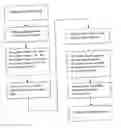
BRIEF DESCRIPTION OF THE DRAWINGSFIG. 1. Shows the steps to initializing and completing the learning routine of the smart learning module prior to the activation of the theft-proof function from the parking light system.
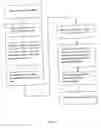
FIG. 2. Shows the condition the parking light system will response when the smart learning module is completed successfully.
FIG. 3. Shows the preferred embodiment for the smart learning module.
FIG. 4. Shows another preferred embodiment for the smart learning module.
DETAIL DESCRIPTION OF THE PREFERRED EMBODIMENTThe method to achieve theft-proof function of a car by detecting the parking light system of a car as followed:
FIG. 1 illustrates the steps to initializing and completing the learning routine of the smart learning module prior to activate the theft-proof function from the parking light system of a car; the steps are:
-
- (1) Turn the ignition switch “ON/OFF” 2 times and stay in OFF position. Within 15 seconds.
- (2) Push the Valet switch 7 times and holding in on 7th push until the parking light flashing once & one long chirp is hearing then release the valet switch.
- (3) Press and release the “Lock button” on the key chain transmitter first, then press and release the “Unlock button” on the key chain transmitter to unlock the vehicle's door.
- (4) Press the valet switch once. One long chirp to confirm this enter.
- The above 4 steps will set the smart learning module into the learning mode
- (5) Press the “Lock button” on the key chain transmitter to lock the vehicle; one chirp to indicate the arm signal is learned.
- (6) Press the valet switch once. One long chirp to confirm this enter.
- (7) Press the “Unlock button” on the key transmitter to unlock the vehicle; two chirp to indicate the disarm signal is learned.
- (8) Turn on the ignition switch to exit the learning routine, three long chirps from siren to confirm exit.
FIG. 2 illustrates the condition the parking light system will response when the smart learning module has successful learned the arm/disarm signal:
-
- (1) Judge if the parking light satisfies all the conditions (how many flashes, the turn on/off time in each period and the induced voltage value of the parking light) that activate theft-proof system; if it does, the theft-proof system will be activated; if it does not, the theft-proof system will move to step (2).
- (2) Judge if the parking light satisfies all the conditions (how many flashes, the turn on/off time in each period and the induced voltage value of the parking light) that deactivate theft-proof system; if it does, the theft-proof system will be deactivated; if it does not, the theft-proof system will move to step (3).
- (3) The theft-proof system will remain the status.
Claims
What is claimed is:1. A method that can detect the parking light system to achieve the theft-proof function of a car, which includes the following steps:
(1) Detect and learn the conditions that activate the theft-proof system;
(2) Detect and learn the conditions that deactivate the theft-proof system;
(3) Induce the parking light that satisfies the conditions in (1) to arm theft-proof system;
(4) Induce the parking light that satisfies the conditions in (2) to disarm theft-proof system.
2. As claimed in the claim 1, a method that can detect the parking light system to achieve the theft-proof function of a car; the way to detect and learn the conditions that activate the theft-proof system is: Using a smart learning module to detect and learn how many flashes of the parking light, the turn on/off time of the parking light in each period and the induced voltage value of the parking light produced when using a keyless transmitter module to lock and unlock the car door to be the conditions that activate the theft-proof system.
3. As claimed in the claim 1—a method that can detect the parking light system to achieve the theft-proof function of a car; the way to detect and learn the conditions that deactivate the theft-proof system is: using a smart learning module to detect and learn how many flashes, the turn on/off time in each period and the induced voltage value of the parking light which is produced when using a keyless transmitter module to lock/unlock the car door to be the conditions that deactivate the theft-proof system.
4. As claimed in the claim 1—a method that can detect the parking light system to achieve the theft-proof function of a car; the way to induce the parking light that satisfies the conditions in (1) to arm theft-proof system is: Use the smart learning module to detect how many flashes of the parking light, the turn on/off time of the parking light in each period and the induced voltage value of the parking light produced when using a keyless transmitter module to lock the car door and compare the conditions stored in it to decide activate the theft-proof system or not.
5. As claimed in the claim 1—a method that can detect the parking light system to achieve the theft-proof function of a car; the way to induce the parking light that satisfies the conditions in (2) to arm theft-proof system is: Use the smart learning module to detect how many flashes of the parking light, the turn on/off time of the parking light in each period and the induced voltage value of the parking light produced when using a keyless transmitter module to unlock the car door and compare the conditions stored in it to decide deactivate the theft-proof system or not.
6. As claimed in the claim 1—a method that can detect the parking light system to achieve the theft-proof function of a car; the way to realize the method is to install a smart learning module with a CPU inside to detect and learn the analog or digital signal from the parking light system when using a keyless transmitter module to lock and unlock the car door, and then the module will execute command to arm/disarm the theft-proof system of the car.
Images & Drawings included:


Sources:
- United States Patent and Trademark Office - verify current appl. status at the USPTO↗
Recent applications in this class:
- » 20250206258 2025-06-26
SYSTEMS AND METHODS OF USING A MACHINE LEARNING MODEL TO CLASSIFY CATALYTIC CONVERTER THEFT TAMPER EVENTS BASED ON AUDIO DATA - » 20250206257 2025-06-26
SYSTEMS AND METHODS OF PROPERTY PROTECTION BASED ON AUDIO AND ACCELERATION-RELATED DATA - » 20250111760 2025-04-03
WEIGHT SENSING PARKING PAD DEVICE - » 20250050838 2025-02-13
AUTONOMOUS VEHICLE EXTENDED REALITY ENVIRONMENTS - » 20240157910 2024-05-16
METHOD FOR MONITORING A TRANSPORTATION VEHICLE AND TRANSPORTATION VEHICLE - » 20240083387 2024-03-14
TECHNIQUES TO DETECT THEFT OF GOODS IN VEHICLES - » 20230303031 2023-09-28
Vehicle security device with primary alarm and display alarm - » 20230158997 2023-05-25
Method and apparatus for preventing theft of catalytic converter - » 20220289138 2022-09-15
AUTONOMOUS VEHICLE AUTHORIZED USE DETERMINATION - » 20220194315 2022-06-23
Vehicle sensor system including barometric pressure sensors