Fabrics made of fibers having square cross section
US20070190884A1
2007-08-16
11/707,890
2007-02-20
Abstract:
Fibers of square cross sections are presented in the invention. The square fiber leads to higher packing density and results in higher wind resistance in fabrics as compared to the conventional round fibers and other polygonal fibers. Therefore, the square fiber is more suitable for manufacture of the windproof clothing. In addition, the square fibers exhibit higher luster than the round fibers and other polygonal fibers due to the flat and shiny fiber surface.
Inventors:
- Shu-Hui Cheng 16 🇹🇼 Hsinchu County, Taiwan
- Kai-Jen Hsiao 4 🇹🇼 Miaoli County, Taiwan
- Lien Tai Chen 5 🇹🇼 Taoyuan County, Taiwan
- Zhi Feng Jue 1 🇹🇼 Yunlin County, Taiwan
Assignee:
- INDUSTRIAL TECHNOLOGY RESEARCH INSTITUTE 7,431 🇹🇼 HSINCHU, Taiwan
Interested in similar patents?
Get notified when new applications in this technology area are published.
Classification:
D04H1/435 » CPC main
Non-woven fabrics formed wholly or mainly of staple fibres or like relatively short fibres from fleeces or layers composed of fibres without existing or potential cohesive properties characterised by the use of certain kinds of fibres insofar as this use has no preponderant influence on the consolidation of the fleece; Condensation or reaction polymers Polyesters
D01D5/253 » CPC further
Formation of filaments, threads, or the like with a non-circular cross section; Spinnerette packs therefor
D01F6/06 » CPC further
Monocomponent artificial filaments or the like of synthetic polymers; Manufacture thereof from homopolymers obtained by reactions only involving carbon-to-carbon unsaturated bonds from polyolefins from polypropylene
D01F6/60 » CPC further
Monocomponent artificial filaments or the like of synthetic polymers; Manufacture thereof from homopolycondensation products from polyamides
D01F6/62 » CPC further
Monocomponent artificial filaments or the like of synthetic polymers; Manufacture thereof from homopolycondensation products from polyesters
D03D15/00 » CPC further
Woven fabrics characterised by the material, structure or properties of the fibres, filaments, yarns, threads or other warp or weft elements used
D03D15/44 » CPC further
Woven fabrics characterised by the material, structure or properties of the fibres, filaments, yarns, threads or other warp or weft elements used characterised by the structure of the yarns or threads with specific cross-section or surface shape
D03D15/47 » CPC further
Woven fabrics characterised by the material, structure or properties of the fibres, filaments, yarns, threads or other warp or weft elements used characterised by the structure of the yarns or threads multicomponent, e.g. blended yarns or threads
D04B1/14 » CPC further
Weft knitting processes for the production of fabrics or articles not dependent on the use of particular machines; Fabrics or articles defined by such processes Other fabrics or articles characterised primarily by the use of particular thread materials
D04H1/4291 » CPC further
Non-woven fabrics formed wholly or mainly of staple fibres or like relatively short fibres from fleeces or layers composed of fibres without existing or potential cohesive properties characterised by the use of certain kinds of fibres insofar as this use has no preponderant influence on the consolidation of the fleece; Addition polymers Olefin series
D04H1/4334 » CPC further
Non-woven fabrics formed wholly or mainly of staple fibres or like relatively short fibres from fleeces or layers composed of fibres without existing or potential cohesive properties characterised by the use of certain kinds of fibres insofar as this use has no preponderant influence on the consolidation of the fleece; Condensation or reaction polymers Polyamides
D04H1/43912 » CPC further
Non-woven fabrics formed wholly or mainly of staple fibres or like relatively short fibres from fleeces or layers composed of fibres without existing or potential cohesive properties characterised by the use of certain kinds of fibres insofar as this use has no preponderant influence on the consolidation of the fleece characterised by the shape of the fibres fibres with noncircular cross-sections
D04H3/011 » CPC further
Non-woven fabrics formed wholly or mainly of yarns or like filamentary material of substantial length; Synthetic yarns or filaments; Condensation or reaction polymers Polyesters
D04H3/16 » CPC further
Non-woven fabrics formed wholly or mainly of yarns or like filamentary material of substantial length characterised by the method of strengthening or consolidating with bonds between thermoplastic filaments produced in association with filament formation, e.g. immediately following extrusion
D10B2321/02 » CPC further
Fibres made from polymers obtained by reactions only involving carbon-to-carbon unsaturated bonds polyolefins
D10B2321/022 » CPC further
Fibres made from polymers obtained by reactions only involving carbon-to-carbon unsaturated bonds polyolefins polypropylene
D10B2331/02 » CPC further
Fibres made from polymers obtained otherwise than by reactions only involving carbon-to-carbon unsaturated bonds, e.g. polycondensation products polyamides
D10B2331/04 » CPC further
Fibres made from polymers obtained otherwise than by reactions only involving carbon-to-carbon unsaturated bonds, e.g. polycondensation products polyesters, e.g. polyethylene terephthalate [PET]
D10B2401/041 » CPC further
Physical properties; Heat-responsive characteristics thermoplastic; thermosetting
Y10T428/2915 » CPC further
Stock material or miscellaneous articles; Coated or structually defined flake, particle, cell, strand, strand portion, rod, filament, macroscopic fiber or mass thereof; Rod, strand, filament or fiber including textile, cloth or fabric
Y10T428/2973 » CPC further
Stock material or miscellaneous articles; Coated or structually defined flake, particle, cell, strand, strand portion, rod, filament, macroscopic fiber or mass thereof; Rod, strand, filament or fiber Particular cross section
Y10T442/3089 » CPC further
Fabric [woven, knitted, or nonwoven textile or cloth, etc.]; Woven fabric [i.e., woven strand or strip material]; Including strand which is of specific structural definition Cross-sectional configuration of strand material is specified
Y10T442/3114 » CPC further
Fabric [woven, knitted, or nonwoven textile or cloth, etc.]; Woven fabric [i.e., woven strand or strip material]; Including strand which is of specific structural definition; Cross-sectional configuration of strand material is specified Cross-sectional configuration of the strand material is other than circular
Y10T442/431 » CPC further
Fabric [woven, knitted, or nonwoven textile or cloth, etc.]; Knit fabric [i.e., knit strand or strip material]; Including strand which is of specific structural definition Cross-sectional configuration of strand material is specified
Y10T442/608 » CPC further
Fabric [woven, knitted, or nonwoven textile or cloth, etc.]; Nonwoven fabric [i.e., nonwoven strand or fiber material] Including strand or fiber material which is of specific structural definition
Y10T442/609 » CPC further
Fabric [woven, knitted, or nonwoven textile or cloth, etc.]; Nonwoven fabric [i.e., nonwoven strand or fiber material]; Including strand or fiber material which is of specific structural definition Cross-sectional configuration of strand or fiber material is specified
Y10T442/611 » CPC further
Fabric [woven, knitted, or nonwoven textile or cloth, etc.]; Nonwoven fabric [i.e., nonwoven strand or fiber material]; Including strand or fiber material which is of specific structural definition; Cross-sectional configuration of strand or fiber material is specified Cross-sectional configuration of strand or fiber material is other than circular
Y10T442/68 » CPC further
Fabric [woven, knitted, or nonwoven textile or cloth, etc.]; Nonwoven fabric [i.e., nonwoven strand or fiber material] Melt-blown nonwoven fabric
D04H13/00 IPC
Other non-woven fabrics
D04H1/56 IPC
Non-woven fabrics formed wholly or mainly of staple fibres or like relatively short fibres from fleeces or layers composed of fibres without existing or potential cohesive properties by welding together the fibres, e.g. by partially melting or dissolving in association with fibre formation, e.g. immediately following extrusion of staple fibres
Description
CROSS REFERENCE TO RELATED APPLICATIONSThis application is a Continuation-In-Part of application Ser. No. 10/282,083, filed Oct. 29, 2002, which claims the benefit of Taiwanese Application No. 90126697, filed Oct. 29, 2001.
BACKGROUND OF THE INVENTION1. Field of the Invention
The present invention relates to a method of fabricating non-hollow fibers having regular polygonal cross-sections. In particular, the present invention relates to a method of fabricating a non-hollow fibers having a square cross-section with approximately equilateral sides. The present invention also relates to fabrics manufactured by the fibers, which demonstrate superior brightness, and windproof characteristics.
2. Description of the Related Art
Many efforts have been made to improve the characteristics of synthetic filaments or fibers so as to impart fabrics or textiles with enhanced performance and functions, such as moisture transport, thermal insulation, air permeability, antistatic, sustained release, antibacterial, and windproof properties.
U.S. Pat. No. 5,057,368 issued to Largman et al, disclosed trilobal or quardrilobal filaments for use in various applications such as filtration, insulation, moisture transport and others.
U.S. Pat. No. 5,279,879 issued to Goodall et al, disclosed a hollow synthetic filament having a four sided cross-section and four substantially evenly spaced continuous holes. The filament is suitable for making thermal wear and carpets which require extra thermal insulation or bulkiness.
High density fabrics in which yarns are woven in a compact manner are more desirable for windproof wears. Such clothes are conventionally made of ultra-fine round filaments to reduce interfiber spaces and to achieve high fabric density. The present invention discovers that fibers of square cross section lead to even less interfiber spaces as compared to the conventional fine round filaments.
SUMMARY OF THE INVENTIONThe primary objective of the present invention is therefore to provide fabrics or textiles that demonstrate superior windproof (i.e., lower air permeability) characteristics and can be made at a lower cost.
To attain the objective, the invention provides non-hollow fibers having square cross-section where each side has approximately equal length. The square fibers can be arranged in a denser manner, which has reduced interfiber spaces, when woven and finished properly. Therefore, the resultant fabrics or clothes possess superior windproof characteristics.
Another advantage of this invention is that the dense fabrics made of the square fiber may impart superior thermal insulation due to reduction of air flow and thus heat loss by convection.
A third unique attribute of this invention is that the fabrics made of the square fibers are more lustrous than conventional fabrics due to the flatter surface, which in turn is the result of the flat surface of the square cross section. The superior luster of the fabrics renders the designer an additional dimension in fashion design.
The fibers or filaments of the present invention are made by using a spinneret orifice having a contoured quasi-polygonal cross-section.
Specifically, the fibers or filaments of the invention are made by melting a thermoplastic polymer; extruding the melted polymer through a spinneret orifice having a contoured quasi-square cross-section to form molten filaments; and solidifying the molten filaments. The solidified filaments are subsequently drawn to achieve desired properties.
BRIEF DESCRIPTION OF THE DRAWINGSThe present invention can be more fully understood by reading the subsequent detailed description in conjunction with the examples and references made to the accompanying drawing, wherein:
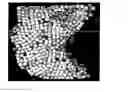
FIG. 1 is a photo showing the cross-section of the square fibers made in Example 1.
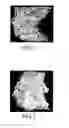
FIG. 2 is a photo showing the cross-section of the triangular fibers made in Example 3.
DETAILED DESCRIPTION OF THE INVENTIONThe fibers or filaments of the invention are non-hollow fibers and filaments having square cross-section.
The term “square” indicates that each side of the tetrahedral polygon has approximately equal length. It is noted, however, each side of square may have a variation less than 50%, preferably less than 5%, from the mean value
The filaments are prepared by spinning molten polymer through spinneret capillaries or orifices designed to provide the desired configuration of the cross-section of the filaments. That is, the orifices are designed and formed in a configuration having a corresponding contoured polygonal cross-section.
The filaments may be prepared from synthetic thermoplastic polymers. Examples of these polymers include but are not limited to polyester, polyamide and polyolefin.
Polyesters that are suitable for use in this invention are those derived from the condensation of aromatic and cycloaliphatic dicarboxylic acids and may be cycloaliphatic, aliphatic or aromatic polyesters. Examples or these polyesters are poly(ethylene terephthalate), poly(proylene terephthalate), poly(cyclohexylenedimethylene terephthalate), poly(lactide), poly(butylene terephthalate), poly(glycolic acid) and poly(ethylene adipate). Among these, poly(ethylene terephthalate) is most frequently used. Other examples of suitable polyesters are those mentioned in U.S. Pat. Nos. 4,454,196, 4,410,073 and 4,359,557 incorporated herein for references.
Polyamides of the above description are well known in this art and include, for example nylon 6 (poly(6-aminohexanoic acid)), nylon 66 (poly(hexamethyleneadipamide)), nylon 4 (poly(4-aminobutyric acid)), nylon 11 (poly(11-amino-undecanoic acid) and the like. The preferred polyamides are nylon 6 and nylon 66. Other examples of suitable polyamides can be seen from “Textile Fiber Handbook”, 5th edition, Trowbridge GB (1984), pp 19-20.
Examples of polyolefin that can be used in this invention as raw material include, but are not limited to polyethylene, polypropylene, polyisobutene, poly(4-methyl-1-pentene), poly(3-methyl-1-butene), and poly(1-hexene). Among these polyolefins, polypropylene is the most commonly used. Other examples of useful polyolefins can be found from U.S. Pat. Nos. 4,137,391, 4,562,869, 4,567,092 and 4,559,862 included herein for reference. Also, a blend of the above-mentioned polymers is also suitable for use according to the present invention.
The manufacturing method of the fibers or filaments of the invention are substantially the same as conventional melt spinning techniques except that a spinneret orifice having a configuration sufficient to provide a fiber having regular polygonal cross-section is used. The raw material, i.e., the thermoplastic polymer, is melted and is extruded through the spinneret to form molten filaments. The spinning temperature is usually set between 150-300° C., depending on the melting point of the polymer and the type of the spinneret. For example, if polyethylene terephthalate is used as raw material, it is heated to 270-300° C. to melt the polymer. However, if polypropylene is employed, the spinning temperature is preferably set in the range of 200-280° C.
In the melt spinning process, the molten polymer is extruded into air or other gases, or into a suitable liquid to quench and solidify the molten filaments. The solidification process is conducted by using quenching gas, usually cooling air, at a temperature of about 10-25° C. The setting of the temperature and the velocity of the quenching air blown to the molten filaments depend on the polymer and the filament properties desired. The filaments may be lubricated with oil at about 100-120 cm below the spinneret to facilitate solidification. The amount of oil (OPU, oil per unit) applied is about 0.5-0.8% and may vary depending on the polymer used and spinning conditions. Before being taken up, the filaments may be subjected to further processing such as drawing or texturing to achieve desired properties.
The fibers or filaments produced by the above process have a regular polygonal cross-section, in which all sides are of approximately equal length. Preferably, variation of each side of the polygonal cross-section of the fabricated fiber is less than 50%, more preferably less than 5% from the mean value. The fibers of the invention can be employed in many applications, and are not limited to the fabrication of woven, non-woven, and knitted fabrics or clothes. The fibers of the invention are particularly suited for use in the fabrication of fabrics or textiles that require superior wind resistance, luster, and thermal insulation.
The following examples are presented to further illustrate the invention and are not to be construed as limitations thereon.
EXAMPLE 1 The Preparation of PET Fiber Having Square Cross-section (1)A melt dope was prepared by melting regular polyester resin (R-PET) of intrinsic viscosity of 0.64 (manufactured by Shinkong Synthetic Fibers Co. Taiwan) at 285° C. The melt was then spun at 42.7 grams/minute through a spinneret having 48 contoured quasi-square orifices. The filaments extruded from the spinneret were then cooled by blowing with a quenching air of 16° C. at a velocity of 0.55 m/sec. After quenching, the filaments were treated with an aqueous liquid containing 10% oil by contacting an applicator located at a distance of 110 cm below the spinneret to facilitate the solidification of the hot filaments. The amount of oil applied onto the fiber was 0.83% of the fiber weight. The cooled and solidified filaments were then passed through a set of driven take-up rolls and winded up at a speed of 3200 meter/minute to obtain a partially oriented yarn (POY). The obtained yarn bundles have 48 filaments and 120 deniers in linear density. The partially oriented yarn is further drawn to become fully oriented yarn (FOY). The FOY bundles have 48 filaments and 75 deniers in linear density. The properties of POY and FOY yarns are summarized in Table 1. The cross-section of the resultant fiber is shown in FIG. 1.
EXAMPLE 2 The Preparation of PET Fiber Having Square Cross-section (2)A melt dope was prepared by melting regular polyester resin (R-PET) of intrinsic viscosity of 0.64 (manufactured by Shinkong Synthetic Fibers Co. Taiwan) at 285° C. The melt was then spun at 28.4 grams/minute through a spinneret having contoured quasi-square orifice. The filaments extruded from the spinneret were then cooled by blowing with a quenching air of 16° C. at a velocity of 0.45 meter/sec. After quenching, the filaments were treated with an aqueous liquid containing 10% oil by contacting an applicator located at a distance of 110 cm below the spinneret to facilitate the solidification of the hot filaments. The amount of oil applied onto the fiber was 0.81% of the fiber weight. The cooled and solidified filaments were then passed through a set of driven take-up rolls and winded up at a speed of 3200 meter/minute to obtain a partially oriented yarn (POY). The obtained yarn bundles have 48 filaments and 80 deniers in linear density. The partially oriented yarn is further drawn to become fully oriented yarn (FOY). The FOY bundles have 48 filaments and 50 deniers in linear density. The properties of POY and FOY yarns are summarized in Table 1 below.
COMPARATIVE EXAMPLE 1 The Preparation of PET Fiber Having Round Cross-section (1)A melt dope was prepared by melting regular polyester resin (R-PET) of intrinsic viscosity of 0.64 (manufactured by Shinkong Synthetic Fibers Co. Taiwan) at 285° C. The melt was then spun at 42.7 grams/minute through a spinneret with 48 round orifices. The filaments extruded from the spinneret were then cooled by blowing with a quenching air of 16° C. at a velocity of 0.55 meter/sec. After quenching, the filaments were treated with an aqueous liquid containing 10% oil by contacting an applicator located at a distance of 110 cm below the spinneret to facilitate the solidification of the hot filaments. The amount of oil applied onto the fiber was 0.83% of the fiber weight. The cooled and solidified filaments were then passed through a set of driven take-up rolls and winded up at a speed of 3200 meter/minute to obtain a partially oriented yarn (POY). The obtained yarn bundles have 48 filaments and 120 deniers in linear density. The partially oriented yarn is further drawn to become fully oriented yarn (FOY). The FOY bundles have 48 filaments and 75 deniers in linear density. The properties of POY and FOY yarns are summarized in Table 1.
COMPARATIVE EXAMPLE 2 The Preparation of PET Fiber Having Round Cross-section (2)A melt dope was prepared by melting regular polyester resin (R-PET) of intrinsic viscosity of 0.64 (manufactured by Shinkong Synthetic Fibers Co. Taiwan) at 285° C. The melt was then spun at 28.4 grams/minute through a spinneret with 48 round orifices. The filaments extruded from the spinneret were then cooled by blowing with a quenching air of 16° C. at a velocity of 0.45 meter/sec. After quenching, the filaments were treated with an aqueous liquid containing 10% oil by contacting an applicator located at a distance of 110 cm below the spinneret to facilitate the solidification of the hot filaments. The amount of oil applied onto the fiber was 0.81% of the fiber weight. The cooled and solidified filaments were then passed through a set of driven take-up rolls and winded up at a speed of 3200 meter/minute to obtain a partially oriented yarn (POY). The obtained yarn bundles have 48 filaments and 80 deniers in linear density. The partially oriented yarn is further drawn to become fully oriented yarn (FOY). The FOY bundles have 48 filaments and 50 deniers in linear density. The properties of POY and FOY yarns are summarized in Table 1.
| TABLE 1 | ||
| Before drawing | After drawing |
| Linear | Tenacity | Elongation | Linear | Tenacity | Elongation | |
| density | (g/d) | (%) | density | (g/d) | (%) | |
| Example (1) | 120 | d | 2.64 | 123 | 75 | d | 4.79 | 34.5 |
| square | ||||||||
| Example (2) | 80 | d | 2.53 | 121 | 50 | d | 4.57 | 32.1 |
| square | ||||||||
| Comp. Exam. | 120 | d | 2.72 | 120 | 75 | d | 4.86 | 32.3 |
| (1) round | ||||||||
| Comp. Exam. | 80 | d | 2.65 | 118 | 50 | d | 4.65 | 30.2 |
| (2) round | ||||||||
Note: |
||||||||
d: denier |
A melt dope was prepared by melting regular polyester resin (R-PET) of intrinsic viscosity of 0.64 (manufactured by Shinkong Synthetic Fibers Co. Taiwan) at 285° C. The melt was then spun at 28.4 grams/minute through a spinneret with 48 round orifices. The filaments extruded from the spinneret were then cooled by blowing with a quenching air of 16° C. at a velocity of 0.45 meter/sec. After quenching, the filaments were treated with an aqueous liquid containing 10% oil by contacting an applicator located at a distance of 110 cm below the spinneret to facilitate the solidification of the hot filaments. The amount of oil applied onto the fiber was 0.82% of the fiber weight. The cooled and solidified filaments were then passed through a set of driven take-up rolls and winded up at a speed of 3200 meter/minute to obtain a partially oriented yarn (POY). The obtained yarn bundles have 48 filaments and 80 deniers in linear density. The partially oriented yarn is further drawn to become fully oriented yarn (FOY). The FOY bundles have 48 filaments and 50 deniers in linear density. The cross-section of the resultant fiber is shown in FIG. 2.
One of the unique characteristics of the fibers with equilateral polygonal cross section is related to stacking of the fiber. As shown in Table 2, in the case of the equilateral polygonal fiber, the wind resistance of the fabric, in terms of pressure drop at a certain air flux, is significantly higher than the fabrics made of conventional round fibers. Especially, the wind resistance of the fabric of square fiber is much higher than the fabrics made of triangular fibers. At higher air fluxes, the trends are the same with slightly different ratios. In some embodiments, the fabric of square fibers may have a wind resistance of more than 3 times higher than a fabric made of round fibers, and more than 50% higher than that of triangular fibers.
It is surprising and unexpected that the square fiber results in remarkably higher wind resistance in fabrics as compared to triangular fiber, since it was originally held that the square fiber and triangular fiber would have the same packing behavior due to their flat surfaces.
| TABLE 2 |
| Comparison of wind resistance of PET woven fabrics |
| Air flux | Square fiber | Triangular | Round fiber | |
| (l/min) | (mm H2O) | fiber (mm H2O) | (mm H2O) | |
| 20 | 37 | 24 | 11 | |
| 40 | 96 | 59 | 23 | |
| 60 | 136 | 88 | 39 | |
| 80 | 148 | 104 | 59 | |
| 100 | 150 | 122 | 93 | |
Remarks□fiber spec: 50 d/48 f; fabric structure□1/1 plain weave, weft 200 threads/inch, warp 110 threads/inch. |
The luster, measured as the percentage of the light reflection from the fabric surface, is also shown in Table 3. Fabrics of both square and triangular fibers show higher luster than that of the round fiber. This is due to the light reflection from the flat surface of either the square or the triangular fiber. The fabric of square surface has the highest luster because of the better fiber stacking on the fabric surface, which results in a flatter and shinier surface. Specially, the fabric of square fibers has a luster of more than 2 times higher than that of round fibers, and surprisingly, more than 50% higher than that of triangular fibers.
| TABLE 3 |
| Comparison of air permeability and luster of PET woven fabrics |
| Pressure | Square fiber | Triangular fiber | Round fiber |
| (Pa) | Air permeability (cc/cm2□ sec) | |
| 25 | 0.132 | 0.160 | 0.188 | |
| 50 | 0.169 | 0.224 | 0.279 | |
| 75 | 0.198 | 0.336 | 0.474 | |
| 100 | 0.240 | 0.520 | 0.660 | |
| 125 | 0.276 | 0.575 | 0.773 | |
| 150 | 0.331 | 0.691 | 0.850 | |
| Luster (%) | 5.78 | 3.24 | 2.56 | |
Remarks□(1) Fiber spec.: 50 d/48 f; fabric structure□ 1/1 plain weave, weft 200 threads/inch, warp 110 threads/inch. |
||||
(2) Luster is measured in terms of light reflection from the fabrics. All fabrics are not colored. |
While the invention has been described by way of examples and in terms of the preferred embodiments, it is to be understood that the invention is not limited to the disclosed embodiments. To the contrary, it is intended to cover various modifications and similar arrangements (as would be apparent to those skilled in the art). Therefore, the scope of the appended claims should be accorded the broadest interpretation so as to encompass all such modifications and similar arrangements.
Claims
What is claimed is:1. A fabric of high wind resistance, made of melt-spinning fibers having square cross-section, wherein each side of the square cross-section has approximately equal length.
2. The fabric as claimed in claim 1, wherein variation of each side of the polygonal cross-section of the fibers is less than 50% from the mean value.
3. The fabric as claimed in claim 2, wherein variation of each side of the polygonal cross-section of the fibers is less than 5% from the mean value.
4. The fabric as claimed in claim 1, in the form of woven fabric, knitted fabric or non-woven fabric.
5. The fabric as claimed in claim 1, having a wind resistance higher than a fabric made of round fibers.
6. The fabric as claimed in claim 5, having a wind resistance of more than 3 times higher than a fabric made of round fibers.
7. The fabric as claimed in claim 1, having a luster higher than a fabric made of round fibers.
8. The fabric as claimed in claim 7, having a luster of more than 2 times higher than a fabric made of round fibers.
9. The fabric as claimed in claim 1, having a wind resistance higher than a fabric made of triangular fibers.
10. The fabric as claimed in claim 9, having a wind resistance of more than 50% higher than a fabric made of triangular fibers.
11. The fabric as claimed in claim 1, having a luster higher than a fabric made of triangular fibers.
12. The fabric as claimed in claim 11, having a luster of more than 50% higher than a fabric made of triangular fibers.
13. The fabric as claimed in claim 1, wherein the fiber is formed of a material selected from the group consisting of polyester, polyamide and polyolefin.
14. The fabric as claimed in claim 13, wherein the polyester comprises poly(ethylene terephthalate), poly(proylene terephthalate), poly(cyclohexylenedimethylene terephthalate), poly(lactide), poly(butylene terephthalate), poly(glycolic acid), or poly(ethylene adipate).
15. The fabric as claimed in claim 13, wherein the polyamide comprises nylon 6 (poly(6-aminohexanoic acid)), nylon 66 (poly(hexamethyleneadipamide)), nylon 4 (poly(4-aminobutyric acid)), nylon 11 (poly(1l-amino-undecanoic acid).
16. The fabric as claimed in claim 13, wherein the polyolefin comprises polyethylene, polypropylene, polyisobutene, poly(4-methyl-1-pentene), poly(3-methyl-1-butene), or poly(1-hexene).
Images & Drawings included:
Sources:
- United States Patent and Trademark Office - verify current appl. status at the USPTO↗
Recent applications in this class:
- » 20250059689 2025-02-20
FILL COMPOSITION FOR REDUCING FILLING WEIGHT OF RESILIENT PRODUCTS - » 20250027237 2025-01-23
MELT-BLOWN NONWOVEN FABRIC, METHOD OF PRODUCING THE SAME, LAYERED BODY, FILTER FOR FACE MASK, AND FACE MASK - » 20240352636 2024-10-24
Biodegradable Nonwoven Fabric and Use of Same - » 20240229312 2024-07-11
HIGH TEMPERATURE TREATED MEDIA - » 20240150945 2024-05-09
BIODEGRADABLE THREE-DIMENSIONAL NETWORK STRUCTURE - » 20240133092 2024-04-25
HIGH TEMPERATURE TREATED MEDIA - » 20230416957 2023-12-28
POLYESTER STAPLE YARN FOR WET NON-WOVEN FABRIC, WET NON-WOVEN FABRIC COMPRISING SAME, AND PREPARATION METHOD THEREFOR - » 20230287611 2023-09-14
Biodegradable Nonwoven Fabric - » 20230193533 2023-06-22
POLYESTER/POLY(METHYL METHACRYLATE) ARTICLES AND METHODS TO MAKE THEM - » 20230067250 2023-03-02
Substituted thiol melt additives
Recent applications for this Assignee:
- » 20250176079 2025-05-29
MICROWAVE ANNEALING PROCESS AND MICROWAVE ANNEALING DEVICE - » 20250175107 2025-05-29
PROCESSOR, MOTOR CONTROL DEVICE AND CONTROL METHOD FOR CONTROLLING MOTOR - » 20250174609 2025-05-29
PACKAGE STRUCTURE AND MANUFACTURING METHOD THEREOF - » 20250173998 2025-05-29
DEVICE AND METHOD FOR PREDICTING COLLISION AREA OF HIGH SPEED SMALL OBJECT - » 20250173300 2025-05-29
SEMICONDUCTOR DEVICES AND COMMUNICATION METHOD BETWEEN SEMICONDUCTOR DEVICES - » 20250173184 2025-05-29
DEVICE AND METHOD FOR RECOMMENDING PIPELINES FOR ENSEMBLE MODEL - » 20250172453 2025-05-29
MONITORING SYSTEM AND METHOD - » 20250171867 2025-05-29
MICROWAVE ANNEALING PROCESS AND MICROWAVE ANNEALING DEVICE - » 20250171664 2025-05-29
DOUBLE-SIDED ADHESIVE AND MULTILAYER STRUCTURE - » 20250171643 2025-05-29
POLYMER AND COATING MATERIAL