Electronic apparatus having infrared communication function
US20070190936A1
2007-08-16
11/441,066
2006-05-26
✅ Patent granted
US 7,653,411 B2
2010-01-26
-
-
Marceau Milord
2028-01-19
Abstract:
The infrared communication unit of the mobile phone receives a first data series transmitted from the other-party mobile phone by infrared communication, and, when transmitting a second data series by infrared communication, the controller of the mobile phone controls the infrared communication unit so as to transmit the second data series in response to completion of reception of the first data series. Alternatively, the controller controls the infrared communication unit so as to receive the first data series in response to completion of transmission of the second data series.
Assignee:
- FUJITSU LIMITED 26,672 🇯🇵 Kawasaki, Japan
Interested in similar patents?
Get notified when new applications in this technology area are published.
Classification:
H04M1/2757 » CPC main
Substation equipment, e.g. for use by subscribers; Devices for calling a subscriber; Devices whereby a plurality of signals may be stored simultaneously with provision for storing more than one subscriber number at a time, e.g. using toothed disc using static electronic memories, e.g. chips providing data content by data transmission, e.g. downloading
H04M1/737 » CPC further
Substation equipment, e.g. for use by subscribers; Mobile telephones; Cordless telephones, i.e. devices for establishing wireless links to base stations without route selection; Cordless telephones Characterised by transmission of electromagnetic waves other than radio waves, e.g. infra-red waves
H04B5/00 IPC
Near-field transmission systems, e.g. inductive loop type
H04B7/00 IPC
Radio transmission systems, i.e. using radiation field
H04M1/00 IPC
Substation equipment, e.g. for use by subscribers
Description
CROSS-REFERENCE TO RELATED APPLICATIONSThis application is based upon and claims the benefit of priority from the prior Japanese Patent Application No. 2006-38300, filed on Feb. 15, 2006, the entire contents of which are incorporated herein by reference.
BACKGROUND OF THE INVENTION1. Field of the Invention
This invention relates to a mobile phone having an infrared communication function, and in particular relates to a mobile phone which is capable of automatically switching between transmission and reception when exchanging data between electronic terminals by means of infrared communication.
2. Description of the Related Art
Recent years have seen the appearance of mobile phones which adopt IrDA (Infrared Data Association) standards to perform data communication over short distances using infrared rays, and various services using the IrDA standard are beginning to be developed. By means of the IrDA standard, for example, data can be exchanged between mobile phones. IrDA is an industry organization established in 1993 in order to implement technical standards for data communication over short distances using infrared rays, and also refers to the standards for infrared communication introduced by that organization; at present, specifications include version 1.0 specifications, for communication distances of up to 1 meter and communication speeds up to 115.2 kbps; version 1.1 specifications, for communication distances within 1 meter and communication speeds up to 4 Mbps; and version 1.2 specifications (low-power consumption), for communication distances within 0.2 m and communication speeds up to 115.2 kbps.
When for example profile information (name of the user himself, telephone number, e-mail address, and other information) and address books (registered user telephone numbers, mail addresses and similar) stored in a mobile phone are to be exchanged between mobile phones, infrared communications using IrDA standards are employed. First, user A on the initial transmission side selects data for transmission, and sets his mobile phone to transmission mode. At this time, user B on the initial reception side sets his mobile phone to reception mode. When user A on the initial transmission side performs a transmission operation, data is transmitted from the mobile phone of user A on the initial transmission side, and the transmitted data is received by the mobile phone of user B on the initial reception side.
Next, the initial transmission side and initial reception side are switched, and the same operation is repeated. That is, the initial transmission side becomes the reception side, and the initial reception side becomes the transmission side. Specifically, after receiving data from the mobile phone of user A on the initial transmission side, user B on the initial reception side, which has become the transition side, selects data for transmission, and sets his mobile phone to transmission mode. On the other hand, after the end of data transmission, user A on the initial transmission side, which has become the reception side, sets his mobile phone to the reception mode. Then, when user B on the initial reception side performs a transmission operation, data is transmitted from the mobile phone of user B on the initial reception side, and the transmitted data is received by the mobile phone of user A on the initial transmission side.
When data is exchanged between mobile phones in this way using infrared communications, (1) after communication of the form user A transmission→user B reception, it is then necessary to perform (2) communication of the form user B transmission→user A reception, and in order to exchange data between users A and B the users must alternate between transmission and reception, so that two communication operations must be performed.
Japanese Patent Laid-open No. 2000-91980 discloses a mobile phone comprising an infrared communication function, which comprises communication mode switching means to switch the communication mode according to signals from the other-party system performing infrared communication.
As described above, in order to exchange data, user A performs an operation to transmit his own data, and after transmission is completed, performs an operation to receive data from user B. User B performs an operation to receive data from user A, and after reception is completed, must perform an operation to transmit his own data. That is, user operations are required once again during data exchange, so that some inconvenience is experienced in data exchange.
An object of this invention is to provide a mobile phone which, when performing data exchange between mobile phones using an infrared communication function, enables easier data exchange.
SUMMARY OF THE INVENTIONA first configuration of a mobile phone of this invention to attain the above object is a mobile phone having an infrared communication function, characterized in having an infrared communication unit which receives a first data series transmitted by infrared communication from the other-party mobile phone and transmits a second data series by infrared communication, and a controller which, in response to completion of reception of the first data series, controls the infrared communication unit so as to transmit the second data series.
A second configuration of a mobile phone of this invention is a mobile phone having an infrared communication function, characterized in having an infrared communication unit which receives a first data series transmitted by infrared communication from the other-party mobile phone and transmits a second data series by infrared communication, and a controller which, in response to completion of transmission of the second data series, controls the infrared communication unit so as to receive the first data series.
A third configuration of a mobile phone of this invention is characterized in having an infrared communication unit, which receives a first data series transmitted by infrared communication from the other-party mobile phone and transmits a second data series by infrared communication, and a controller which has a first mode of controlling the infrared communication unit so as to transmit the second data series in response to completion of reception of the first data series, and a second mode of controlling the infrared communication unit so as to receive the first data series.
By means of this invention, data exchange can be performed through a single operation for infrared communication, operations for data exchange can be simplified, and the time required for data exchange can be shortened.
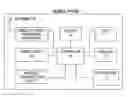
BRIEF DESCRIPTION OF THE DRAWINGSFIG. 1 shows a block diagram of the configuration of the mobile phone in an aspect of the invention;
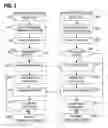
FIG. 2 is a flowchart of data exchange processing based on infrared communication in an aspect of the invention; and,
FIG. 3 is an example of screens displayed on the display of a mobile phone during data exchange processing.
DESCRIPTION OF THE PREFERRED EMBODIMENTSBelow, aspects of the invention are explained, referring to the drawings. However, the aspects in no way limit the technical scope of the invention.
In the aspects of the invention, mobile phones are explained as examples; but in addition to mobile phones, this invention can also be applied to PDAs, notebook personal computers, and other portable terminals, as well as to stationary desktop personal computers and other electronic terminals.
FIG. 1 shows a block diagram of the configuration of the mobile phone of an aspect of the invention. The controller 10 controls the voice communication function, e-mail function, Internet connection function, infrared communication function, and all other functions of the mobile phone 1, and is provided with a CPU and with memory in which to store programs to be executed by the CPU. The keys 11 are input means for input of numerals and characters; the speaker 12 is voice output means; the microphone 13 is voice input means; and the display 14 is display means.
The wireless signal processing portion 15 processes signals sent to and received from an earth station via the antenna 16, and handles the signals used in voice communication, e-mail, and Internet connections.
The infrared communication unit 17 sends and receives data by infrared communications according to IrDA standards. The power supply 18 supplies power to components requiring power within the mobile phone. Standards for infrared communication are not limited to the IrDA standards, and other standards may be employed. Moreover, communication is not limited to infrared communication, if the standard provides for short-distance communication within distances of several meters.
In an aspect of the invention, when exchanging data using infrared communications with an other-party mobile phone, the controller 10 automatically switches the infrared communication unit 17 between transmission and reception, so that data exchange can be performed through a single operation of the mobile phone by the user.
FIG. 2 is a flowchart of data exchange processing based on infrared communication in an aspect of the invention. FIG. 3 is an example of screens displayed on the display of a mobile phone during data exchange processing. An explanation is given according to FIG. 2 for an example of the exchange of address book data between the mobile phone 1a of user A and the mobile phone 1b of user B, referring to FIG. 3. The controller 10 controls infrared communication during the data exchange processing, and data is sent and received by the infrared communication unit 17 based on control by the controller 10.
User A operates the keys 11 of the mobile phone 1a to cause the address book to be displayed on the display 14, and selects an address to be transmitted (S100). User B similarly operates the keys 11 of the mobile phone 1b, causing display of the address book on the display 14, and selects an address to be transmitted (S200). In FIG. 3, (a) is an example of an address book display screen on the mobile phone 1a of user A; here “Mr. C” is selected.
Upon selecting an address to be transmitted, user A selects the infrared communication mode from the screen menu (see (b) of FIG. 3), and from the submenu selects the “transmit→receive” mode (S101) ((c) in FIG. 3). This “transmit→receive” mode is a characteristic mode of this invention, in which initially the transmission mode of transmitting data by infrared communication is entered, and after the completion of data transmission, the transmission mode and reception mode are automatically switched, and the reception mode in which data is received from the other party is entered.
Upon selecting an address to be transmitted, user B selects the infrared communication mode from the screen menu ((b) in FIG. 3), and selects the “receive→transmit” mode from the submenu (S201) ((d) in FIG. 3). This “receive→transmit” mode is a characteristic mode of this invention, in which initially the reception mode of receiving data by infrared communication is entered, and after the completion of data reception, the reception mode and transmission mode are automatically switched, and the transmission mode in which data is transmitted to the other party is entered. Switching from this transmission mode to the reception mode and from the reception mode to the transmission mode is performed automatically by the controller 10.
The “transmission” mode, for example, is simply a mode in which selected data is transmitted by infrared communication, and is not a mode in which data is received. And, the “reception” mode is simply a mode in which data is received by infrared communication, and is not a mode in which data is transmitted.
Next, users A and B each operate keys 11 to input a password (S102, S202) ((e) in FIG. 3). Passwords are determined in advance between users A and B, and user A and user B each input the same password, determined in advance. The input passwords are transmitted to the other-party mobile phone by infrared communication, and are confirmed to match. That is, the mobile phone 1a of user A confirms that the password input by user A and the password transmitted from the mobile phone 1b of user B match (S103), and the mobile phone 1b of user B confirms that the password input by user B and the password transmitted from the mobile phone 1a of user A match (S203). If there is a failure to match, infrared communication of selected data is not initiated, and processing ends (S1O8, S208).
If the passwords match, infrared communication of the selected data is initiated. First, the mobile phone 1a of user A is in transmission mode, and initiates transmission of data selected by user A (S104). The mobile phone 1b of user B is in reception mode, and initiates reception of data transmitted from the mobile phone 1a (S204).
Upon completing transmission of selected data (S105), the mobile phone 1a switches into receive mode to receive data, and initiates reception of data transmitted from the mobile phone 1b of user B (S106). Upon completing reception of data transmitted from the mobile phone 1a (S205), the mobile phone 1b switches into transmit mode to transmit data, and initiates transmission of data selected by user B (S206).
Upon completion of data transmission by mobile phone 1b (S207), and upon completion of data reception by mobile phone 1a (S107), infrared communication ends (S108, S208).
In this way, as is clear from the processing of S104 and beyond for mobile phone 1a and the processing of step S204 and beyond for mobile phone 1b, when infrared communication for data exchange is initiated, both data transmission and reception (or reception and transmission) are executed automatically in sequence, and both user A and user B can transmit data to the other party, and can receive data from the other party, by means of a single operation. Hence whereas two operations, which were a transmit operation and a receive operation, were required for data exchange in the prior art, by means of this invention data transmission and reception can be completed by means of a single operation before the start of infrared communication, and by this means the operation of data exchange can be simplified. Moreover, because data exchange is possible through a single operation, the time required for data exchange can be shortened.
In addition to the address book data used in the example, the data exchanged (selected data) can also be, for example, one's own profile information (one's own name, telephone number, e-mail address, and similar); image data (still image, video); music or voice data; schedule data; e-mail data, or other data which is stored in a mobile phone, or which is stored in external memory which can be removably inserted.
Claims
What is claimed is:1. A mobile phone having an infrared communication function, comprising:
an infrared communication unit for receiving a first data series transmitted by infrared communication from the other-party mobile phone and for transmitting a second data series by infrared communication; and,
a controller for controlling said infrared communication unit so as to transmit said second data series in response to completion of reception of said first data series.
2. A mobile phone having an infrared communication function, comprising:
an infrared communication unit for receiving a first data series transmitted by infrared communication from the other-party mobile phone and for transmitting a second data series by infrared communication; and,
a controller for controlling said infrared communication unit so as to receive said first data series in response to completion of transmission of said second data series.
3. A mobile phone having an infrared communication function, comprising:
an infrared communication unit for receiving a first data series transmitted by infrared communication from the other-party mobile phone and for transmitting a second data series by infrared communication; and,
a controller, having a first mode of controlling said infrared communication unit so as to transmit said second data series in response to completion of reception of said first data series, and a second mode of controlling said infrared communication unit so as to receive said first data series in response to completion of transmission of said second data series.
4. A method of communication of a mobile phone having an infrared communication function, comprising:
an infrared communication step of receiving a first data series transmitted from the other-party mobile phone by infrared communication, and of transmitting a second data series by infrared communication; and,
a control step of controlling said infrared communication step so as to transmit said second data series in response to completion of reception of said first data series.
5. A method of communication of a mobile phone having an infrared communication function, comprising:
an infrared communication step of receiving a first data series transmitted from the other-party mobile phone by infrared communication, and of transmitting a second data series by infrared communication; and,
a control step of controlling said infrared communication step so as to receive said first data series in response to completion of transmission of said second data series.
6. A method of communication of a mobile phone having an infrared communication function, comprising:
an infrared communication step of receiving a first data series transmitted from the other-party mobile phone by infrared communication, and of transmitting a second data series by infrared communication; and,
a control step of controlling said infrared communication step so as to transmit said second data series in response to completion of reception of said first data series, and of controlling said infrared communication step so as to receive said first data series in response to completion of transmission of said second data series.
7. A computer program, executed by a mobile phone having an infrared communication function, said computer program causing the mobile phone to execute:
an infrared communication step of receiving a first data series transmitted from the other-party mobile phone by infrared communication, and of transmitting a second data series by infrared communication; and,
a control step of controlling said infrared communication step so as to transmit said second data series in response to completion of reception of said first data series.
8. A computer program, executed by a mobile phone having an infrared communication function, said computer program causing the mobile phone to execute:
an infrared communication step of receiving a first data series transmitted from the other-party mobile phone by infrared communication, and of transmitting a second data series by infrared communication; and,
a control step of controlling said infrared communication step so as to receive said first data series in response to completion of transmission of said second data series.
9. A computer program, executed by a mobile phone having an infrared communication function, said computer program causing the mobile phone to execute:
an infrared communication step of receiving a first data series transmitted from the other-party mobile phone by infrared communication, and of transmitting a second data series by infrared communication; and,
a control step of controlling said infrared communication step so as to transmit said second data series in response to completion of reception of said first data series, and of controlling said infrared communication step so as to receive said first data series in response to completion of transmission of said second data series.
Images & Drawings included:


Sources:
- United States Patent and Trademark Office - verify current appl. status at the USPTO↗
Recent applications in this class:
- » 20250039291 2025-01-30
DATA TRANSMISSION METHOD AND RELATED DEVICE - » 20240065194 2024-02-29
METHOD AND DEVICE FOR MANAGING PHONE NUMBER AND CONTACTS IN WIRELESS COMMUNICATION SYSTEM - » 20220210258 2022-06-30
System and method of managing contact information of a terminal recognized by a vehicle - » 20220174141 2022-06-02
TRANSFERRING, OBTAINING, STORING AND USING TELEPHONE NUMBERS - » 20220094774 2022-03-24
Personnel contact history recording method, electronic device and computer program product - » 20210400130 2021-12-23
Private contact sharing - » 20210051225 2021-02-18
System and method for using a secondary device to access information stored remotely - » 20210014349 2021-01-14
Contact information exchanging and content system and method for networking and marketing - » 20200177721 2020-06-04
CLOUD-BASED CONTACTS MANAGEMENT - » 20140082092 2014-03-20
METHOD OF RESOLVING A CONTACT WHILE COMPOSING TEXT AND/OR EMAIL MESSAGE
Recent applications for this Assignee:
- » 20250284769 2025-09-11
ARITHMETIC PROCESSING DEVICE AND ARITHMETIC PROCESSING METHOD - » 20250278454 2025-09-04
COMPUTING SYSTEM AND METHOD FOR CONTROLLING COMPUTING SYSTEM - » 20250238593 2025-07-24
COMPUTER-READABLE RECORDING MEDIUM STORING INFORMATION PROCESSING PROGRAM AND INFORMATION PROCESSING METHOD - » 20250141547 2025-05-01
OPTICAL TRANSMISSION LINE MONITORING DEVICE AND OPTICAL TRANSMISSION LINE MONITORING METHOD - » 20250141543 2025-05-01
OPTICAL TRANSMISSION LINE MONITORING DEVICE AND OPTICAL TRANSMISSION LINE MONITORING METHOD - » 20250139433 2025-05-01
MODEL GENERATION METHOD AND INFORMATION PROCESSING APPARATUS - » 20250131194 2025-04-24
COMPUTER-READABLE RECORDING MEDIUM STORING INFORMATION PROCESSING PROGRAM, INFORMATION PROCESSING METHOD, AND INFORMATION PROCESSING DEVICE - » 20250130843 2025-04-24
COMPUTER-READABLE RECORDING MEDIUM STORING INFORMATION PROCESSING PROGRAM, INFORMATION PROCESSING METHOD, AND MANAGEMENT DEVICE - » 20250124710 2025-04-17
NON-TRANSITORY COMPUTER-READABLE RECORDING MEDIUM STORING GENERATION PROGRAM, GENERATION METHOD, AND INFORMATION PROCESSING DEVICE - » 20250037000 2025-01-30
COMPUTER-READABLE RECORDING MEDIUM STORING PARTITIONING PROGRAM FOR MULTI-QUBIT OBSERVABLES, PARTITIONING METHOD FOR MULTI-QUBIT OBSERVABLES, AND INFORMATION PROCESSING DEVICE