Method and apparatus for providing a picture in picture service
US20070192816A1
2007-08-16
11/672,188
2007-02-07
✅ Patent granted
US 8,473,999 B2
2013-06-25
-
-
Joshua Taylor
Andrea Bauer | Hoffman Warnick LLC
2029-03-04
Abstract:
A method of forming a picture in picture (PIP) service over an internet protocol (IP) transmission to one or more users, the method comprising the steps of: receiving a request for a PIP channel comprising a first predetermined channel superimposed with a second predetermined channel; determining if the PIP channel already exists; forming the PIP channel if it does not already exist; and transmitting the PIP channel on a dedicated channel to any users who have requested that PIP channel.
Assignee:
- INTERNATIONAL BUSINESS MACHINES CORPORATION 136,239 🇺🇸 ARMONK, NY, United States
Applicant:
Interested in similar patents?
Get notified when new applications in this technology area are published.
Classification:
H04N21/2365 » CPC further
Selective content distribution, e.g. interactive television or video on demand [VOD]; Servers specifically adapted for the distribution of content, e.g. VOD servers; Operations thereof; Processing of content or additional data; Elementary server operations; Server middleware; Assembling of a multiplex stream, e.g. transport stream, by combining a video stream with other content or additional data, e.g. inserting a URL [Uniform Resource Locator] into a video stream, multiplexing software data into a video stream; Remultiplexing of multiplex streams; Insertion of stuffing bits into the multiplex stream, e.g. to obtain a constant bit-rate; Assembling of a packetised elementary stream Multiplexing of several video streams
H04N21/4316 » CPC further
Selective content distribution, e.g. interactive television or video on demand [VOD]; Client devices specifically adapted for the reception of or interaction with content, e.g. set-top-box [STB]; Operations thereof; Processing of content or additional data, e.g. demultiplexing additional data from a digital video stream; Elementary client operations, e.g. monitoring of home network or synchronising decoder's clock; Client middleware; Generation of visual interfaces for content selection or interaction ; Content or additional data rendering involving specific graphical features, e.g. screen layout, special fonts or colors, blinking icons, highlights or animations for displaying supplemental content in a region of the screen, e.g. an advertisement in a separate window
H04N21/4347 » CPC further
Selective content distribution, e.g. interactive television or video on demand [VOD]; Client devices specifically adapted for the reception of or interaction with content, e.g. set-top-box [STB]; Operations thereof; Processing of content or additional data, e.g. demultiplexing additional data from a digital video stream; Elementary client operations, e.g. monitoring of home network or synchronising decoder's clock; Client middleware; Disassembling of a multiplex stream, e.g. demultiplexing audio and video streams, extraction of additional data from a video stream; Remultiplexing of multiplex streams; Extraction or processing of SI; Disassembling of packetised elementary stream Demultiplexing of several video streams
H04N21/443 » CPC further
Selective content distribution, e.g. interactive television or video on demand [VOD]; Client devices specifically adapted for the reception of or interaction with content, e.g. set-top-box [STB]; Operations thereof; Processing of content or additional data, e.g. demultiplexing additional data from a digital video stream; Elementary client operations, e.g. monitoring of home network or synchronising decoder's clock; Client middleware OS processes, e.g. booting an STB, implementing a Java virtual machine in an STB or power management in an STB
H04N21/6125 » CPC further
Selective content distribution, e.g. interactive television or video on demand [VOD]; Network structure or processes for video distribution between server and client or between remote clients; Control signalling between clients, server and network components; Transmission of management data between server and client, e.g. sending from server to client commands for recording incoming content stream ; Communication details between server and client ; Network physical structure; Signal processing specially adapted to the downstream path of the transmission network involving transmission via Internet
H04N21/6405 » CPC further
Selective content distribution, e.g. interactive television or video on demand [VOD]; Network structure or processes for video distribution between server and client or between remote clients; Control signalling between clients, server and network components; Transmission of management data between server and client, e.g. sending from server to client commands for recording incoming content stream ; Communication details between server and client ; Control signaling related to video distribution between client, server and network components; Network processes for video distribution between server and clients or between remote clients , e.g. transmitting basic layer and enhancement layers over different transmission paths, setting up a peer-to-peer communication via Internet between remote STB's; Communication protocols; Addressing; Addressing Multicasting
H04L12/18 » CPC further
Data switching networks; Details; Arrangements for providing special services to substations for broadcast or conference, e.g. multicast
H04N21/426 » CPC further
Selective content distribution, e.g. interactive television or video on demand [VOD]; Client devices specifically adapted for the reception of or interaction with content, e.g. set-top-box [STB]; Operations thereof; Structure of client; Structure of client peripherals Internal components of the client ; Characteristics thereof
H04N5/45 » CPC main
Details of television systems; Receiver circuitry for the reception of television signals according to analogue transmission standards for displaying additional information Picture in picture, e.g. displaying simultaneously another television channel in a region of the screen
H04N7/173 IPC
Television systems; Analogue secrecy systems; Analogue subscription systems with two-way working, e.g. subscriber sending a programme selection signal
Description
FIELD OF THE INVENTION
The present invention relates to a method and apparatus for providing a picture in picture service to a user, and to a system and a computer program product for providing a picture in picture service.
BACKGROUND OF THE INVENTION
In the Internet Protocol Television (IPTV) environment where a plurality of multicast transmissions are transmitted to a user, there exist several service providers which provide a picture in picture (PIP) service. PIP services are those in which two or more video streams are displayed simultaneously. Generally one is smaller than the other (or others) and the smaller one overlays the larger.
In these current services the PIP is provided in an analogue format and the set top box (STB) or television (TV) at the user end of the transmission is where the PIP is formed.
In the digital format and with services such as internet protocol TV (IPTV) each picture requires a tuner and sufficient bandwidth for each. For example to have a PIP based on three channels, three tuners or decoders would be required at the STB or TV and a bandwidth of >10 Mb/s (3×3.75 Mb/s). This is costly in terms of equipment and bandwidth costs and overheads. Accordingly this functionality is rarely made available to users.
One object of the present invention is to provide a PIP method and apparatus which overcomes at least one of the problems of the prior art.
SUMMARY OF THE INVENTION
The present invention is directed to the method and system as defined in the independent claims.
According to a first aspect of the present invention, there is provided a method of forming a picture in picture (PIP) service over an internet protocol (IP) transmission to one or more users, the method comprising the steps of: receiving a request for a PIP channel comprising a first predetermined channel superimposed with a second predetermined channel; determining if the PIP channel already exists; forming the PIP channel if it does not already exist; and transmitting the PIP channel on a dedicated channel to any users who have requested that PIP channel.
According to a second aspect of the present invention, there is provided a system of forming a picture in picture (PIP) service over an internet protocol (IP) transmission to one or more users, the system comprising: means for receiving a request for a PIP channel comprising a first predetermined channel superimposed with a second predetermined channel; means for determining if the PIP channel already exists; means for forming the PIP channel if it does not already exist; and means for transmitting the PIP channel on a dedicated channel to any users who have requested that PIP channel.
According to a third aspect of the present invention, there is provided a computer program product stored on a computer readable medium for forming a picture in picture (PIP) service over an internet protocol (IP) transmission, the computer readable medium comprising program code for performing the steps of: receiving a request for a PIP channel comprising a first predetermined channel superimposed with a second predetermined channel; determining if the PIP channel already exists; forming the PIP channel if it does not already exist; and transmitting the PIP channel on a dedicated channel to any users who have requested that PIP channel.
Further embodiments of the invention are provided in the appended dependent claims.
The result of preparing the PIP channel in this way is that the STB or TV at the user end only needs one tuner. As the PIP is created, encoded as a single channel and sent as a signal channel there is no need for the STB or TV to have additional tuners at the user location. Apart from the PIP client, all other resources for this invention will be found at the headend equipment and will be used for multiple users, thereby minimizing the overhead in equipment for the system as a whole.
BRIEF DESCRIPTION OF THE DRAWINGS
Reference will now be made by way example, to the accompanying drawing, in which:
FIG. 1 is an example of a picture in picture (PIP);
FIG. 2 is a block diagram of a system for delivering a PIP service to a user, according to the present invention;
FIG. 3 is a block diagram for explaining the functionality of the PIP service, according to the present invention;
FIG. 4 is a table for showing the PIP table of information; and
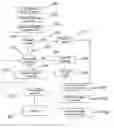
FIG. 5 is a flow chart of the steps carried out in the present invention.
DETAILED DESCRIPTION OF THE INVENTION
FIG. 1 shows a picture in picture service which has been generated, for example as part of an IPTV service providing a plurality of multicast transmissions to a plurality of users. The picture in picture service shows a main picture 100 and a picture in picture (PIP) 102. This shows the nature of PIP, but clearly many variations are possible (e.g., more PIP's, different sizes, formats, etc.).
FIG. 2 is a block diagram of a system 200 for providing a PIP to a user location 202. The user location 202 includes a residential gateway 204 connected to, for example, a personal computer (PC) 206, a telephone (either internet protocol or normal telephony) 208, a STB 210 and TV 212. The gateway receives information from the Network 214. The information may be in the form of multicast transmission 216 from a headend equipment 218 or other type of transmission 220 from so called middleware equipment 222. The multicast transmission 216 may be in the form of TV transmission to multiple users all subscribing to the same multicast channels. This may be carried out by any appropriate headend equipment 218 including encoders, transcoders, etc. The multicast streaming 216 uses the Internet Group Management Protocol (IGMP).
A unicast may also be a TV unicast which offers a different stream to each user. The video on demand (VOD) real time streaming protocol (RTSP) is used for the unicast. This unicast can be produced by the middleware equipment 222, which can take on any appropriate type. Using a unicast a user may also obtain Time Shift TV or Network Personal Video Recorder (NPVR) services through a portal. This allows time user to have pause, fast-forward and remind functions on a unicast made broadcast.
The middleware 222 may also include a soft switch 224 which may provide a telephony service, such as Voice Over Internet Protocol (VOIP) from Public Switch Telephone Network (PSTN) 225.
The system 200 also includes server 226 at the headend which is a Picture in Picture protocol (PIPP) server 226 and a PIPP client 228 at the user end. The detailed operation of this server 226 and client will be described in great detail below.
The PIPP server 226 may form part of the encoders or part of the control equipment or software. The PIPP client 228 is most likely to be located in the STB 210 or TV receiver 212 as appropriate.
FIG. 3 outlines how the new protocol PIPP will allow a user to enquire about the availability of IGMP allowing a PIP request on a particular channel, and, how the network encoder can build an appropriate PIP multicast channel.
The user is viewing a multicast of a specific channel (this will be referred to herein as “channel A”) using a STB 300 which includes a connection with a PIPP client 302. The client may be located on a PC 304 or perhaps within the gateway or as part of the STB or TV. The user wishes to view a further channel (this will be referred to as “channel B”) as a PIP within channel A. The user makes a request 306 via the PIP client 302 and the network 308. The request 306 is received at the PIPP server 310 and entered into the PIPP server table 312. The table 312 details are shown in FIG. 4 and will be described in more detail below. The server table 312 makes a request for formation of the required channel to the PIP encoder 314. The encoder 314 monitors the network 308 to identify the existing channels which are currently being transmitted on the network 308. The encoder 314 can then re-encode the required combination of channels to build the necessary PIP channel. A video recorder and player 316 may be used to store the PIP channel prior to transmitting to the user. The table 312 is updated with each change, amendment, variation, etc. to the PIP channels.
An enquiry is then made to the IGMP protocol to determine if there is already a PIP channel containing channel A with a PIP of channel B. If such a PIP channel exists, the PIP table 312 is updated with the details of the IGMP port carrying the required PIP channel and the user is notified of the same so that they can turn the turner of the STB 300 or TV to this channel. If the IGMP enquiry determines that no relevant PIP channel exists a determination is made as to whether the available bandwidth, either to the user or in total, to support the creation of a new PIP channel. If there are sufficient resources for creation of a new channel a new PIP channel will be created by the PIP encoder 314 and the PIP table 312 will be updated. The updated PIP table 312 will then be communicated to the PIPP client 302 via the PIPP server 310. The user may then connect to the newly created PIP channel.
If there is not sufficient bandwidth available to create a new PIP channel at the present time, a request may be entered in the IGMP server for notification of when sufficient bandwidth is available. When notification is received a determination is made as to whether or not the new channel is still required and if so it is formed and the PIP table 312 is updated.
The PIPP server table 312 is used to ensure that details of available PIP channels are communicated with the PIP client 302 at the user end. If the request 306 for a particular PIP channel indicates that the particular PIP channel already exists the STB 300 or TV may be returned directly without need for the request to go to the PIPP server 310.
Referring now to FIG. 4, an example of PIP table 400 information is shown. The table 400 sets out details of the main channel (e.g., channel A) 402, the sub channel (e.g., channel B) 404 and the IGMP port 406 on which the PIP channel may be transmitted.
The result of preparing the PIP channel in this way is that the STB or TV at the user end only needs one tuner. As the PIP is created, encoded as a single channel and sent as a signal channel there is no need for the STB or TV to have additional tuners at the user location. Apart from the PIPP client all other resources for this invention will be found at the headend equipment and will be used for multiple users, thereby minimizing the overheads in equipment for the system as a whole.
Referring now to FIG. 5, the main steps of the present invention are set out.
The user enters a request for a PIP service comprising channel A and channel B (500) to the PIPP client. The request is transmitted to the PIPP server and received there 502. A request for the required PIP server is made via the PIP table and the IGMP. A determination is made to determine if the service already exists (506).
If yes, 508 the user is connected to the service by connecting to the correct channel as notified to the PIPP server by IGMP server (510).
If the service does not already exist (no, 512) a determination is made as to whether there is available bandwidth (514). If there is not sufficient bandwidth (no, 516) a request for this service is queued to await available bandwidth 518. The check for available bandwidth (determination at step 514) continues until there is available bandwidth (yes, 520) or until the user request is cancelled (522). At that point the process stops 524 and all entries in the PIPP client and server relating to required PIP channel are deleted as will be described in greater detail below (530, 532, 534, 524).
If there is sufficient bandwidth to form a PIP channel (yes, 520) a new PIP channel is formed in any appropriate way, for example using encoder, recorded material, etc. to produce the required channel 526. Once the channel is formed the PIP table is updated at both the PIPP server and client. By updating the PIPP server, other users requesting the same combination of channels in PIP can be notified of the same by the PIPP server without another channel that is the same being created (526). The user (or users) can then be connected to the PIPP channel 528.
Once all users connected to a given PIP channel have disconnected from the channel, by turning to a different channel, for example, (530) the PIPP server and client are updated to terminate the service (532). The PIP table is cleared of all details of the PIP channel and if appropriate the IGMP server is notified (534). The process then stops (524).
While the invention has been particularly shown and described with reference to a preferred embodiment, it will be understood that various changes in form and detail may be made therein without departing from the spirit, and scope of the invention.
Claims
1. A method of forming a picture in picture (PIP) service over an internet protocol (IP) transmission to one or more users, the method comprising the steps of:
receiving a request for a PIP channel comprising a first predetermined channel superimposed with a second predetermined channel;
determining if the PIP channel already exists;
forming the PIP channel if it does not already exist; and
transmitting the PIP channel on a dedicated channel to any users who have requested that PIP channel.
2. The method of claim 1, wherein the step of receiving a request comprises requesting a PIP channel comprising more than two channels.
3. The method of claim 1, wherein if a PIP channel matching the request already exists then further comprising notifying the user of the dedicated channel on which the PIP channel is transmitted.
4. The method of claim 1, further comprising:
entering the details of each predetermined channel required for the PIP channel in a table; and
using the table to determine if the PIP channel exists.
5. The method of claim 4, wherein the step of entering details comprises entering details of the dedicated channel for the PIP channel in the table.
6. The method of claim 4, further comprising updating the table with any new requests for a PIP channel.
7. The method of claim 4, further comprising transmitting the contents of the table to a client table at the user location.
8. The method of claim 7, further comprising using the client table to make the request for the PIP channel.
9. The method of claim 1, further comprising stopping transmission of the dedicated channel carrying the PIP channel if no users still require the particular combination of the first and second channels.
10. A system of forming a picture in picture (PIP) service over an internet protocol (IP) transmission to one or more users, the system comprising:
means for receiving a request for a PIP channel comprising a first predetermined channel superimposed with a second predetermined channel;
means for determining if the PIP channel already exists;
means for forming the PIP channel if it does not already exist; and
means for transmitting the PIP channel on a dedicated channel to any users who have requested that PIP channel.
11. The system of claim 10, wherein the means for receiving a request comprises a means for requesting a PIP channel comprising more than two channels.
12. The system of claim 10, wherein if a PIP channel matching the request already exists then further comprising a means for notifying the user of the dedicated channel on which the PIP channel is transmitted.
13. The system of claim 10, further comprising:
means for entering the details of each predetermined channel required for the PIP channel in a table; and
means for using the table to determine if the PIP channel exists.
14. The system of claim 13, wherein the means for entering details comprises means for entering details of the dedicated channel for the PIP channel in the table.
15. The system of claim 13, further comprising means for updating the table with any new requests for a PIP channel.
16. The system of claim 13, further comprising means for transmitting the contents of the table to a client table at the user location.
17. The system of claim 16, further comprising means for using the client table to make the request for the PIP channel.
18. The system of claim 10, further comprising means for stopping transmission of the dedicated channel carrying the PIP channel if no users still require the particular combination of the first and second channels.
19. A computer program product stored on a computer readable medium for forming a picture in picture (PIP) service over an internet protocol (IP) transmission, the computer readable medium comprising program code for performing the steps of:
receiving a request for a PIP channel comprising a first predetermined channel superimposed with a second predetermined channel;
determining if the PIP channel already exists;
forming the PIP channel if it does not already exist; and
transmitting the PIP channel on a dedicated channel to any users who have requested that PIP channel.
20. The computer program product of claim 19, the program code further performing the steps of:
entering the details of each predetermined channel required for the PIP channel in a table; and
using the table to determine if the PIP channel exists.
Images & Drawings included:





Sources:
- United States Patent and Trademark Office - verify current appl. status at the USPTO↗
Similar patent applications:
Recent applications in this class:
- » 20240333867 2024-10-03
SYSTEMS AND METHODS FOR RESIZING CONTENT BASED ON A RELATIVE IMPORTANCE OF THE CONTENT - » 20240223720 2024-07-04
DISPLAY DEVICE AND CONTROL METHOD THEREFOR - » 20230412758 2023-12-21
Systems and Methods for Selectively Modifying a Video Frame of a Video Conference Meeting - » 20230388447 2023-11-30
Subject-based smart segmentation of video feed on a transmitting device - » 20230108426 2023-04-06
METHOD AND APPARATUS FOR DYNAMIC DASH PICTURE-IN-PICTURE STREAMING - » 20230007210 2023-01-05
Signaling the Purpose of Preselection - » 20220247968 2022-08-04
Display device and control method therefor - » 20220030191 2022-01-27
Display system and display apparatus - » 20210337158 2021-10-28
Controlling a pan-tilt-zoom camera - » 20210250540 2021-08-12
Method of performing video call and display device
Recent applications for this Assignee:
- » 20250294045 2025-09-18
THREAT POLICY FINE-TUNING BASED ON THE VULNERABILITY OF A SUBNET AS A SOURCE OF A MALICIOUS ATTACK - » 20250294041 2025-09-18
DEVICE POPULATION ANOMALY DETECTION - » 20250292574 2025-09-18
SCENE PARSING - » 20250292026 2025-09-18
A GENERATIVE ARTIFICIAL INTELLIGENCE COMMENTARY - » 20250291689 2025-09-18
MACHINE LEARNING MODEL TRAINING TO ASSIST IN SYSTEM DEBUG - » 20250287215 2025-09-11
PORTABLE MEDIA GEOFENCE AND DEVICE PAIRING SECURITY - » 20250285610 2025-09-11
RECIPIENT-SPECIFIC VOICE TONE ADJUSTMENT IN TELEPHONY - » 20250284728 2025-09-11
CONTEXT LARGE LANGUAGE MODEL OUTPUT EXPLANATION - » 20250278669 2025-09-04
COUNTERFACTUALS WITH FEATURE PREFERENCES FOR CONSISTENT AND DIVERSE EXPLANATIONS - » 20250274345 2025-08-28
MULTI-LAYER EDGE ARCHITECTURE SIMULATION