Orange tree named 'Alvarina'
US20070192914P1
2007-08-16
11/705,713
2007-02-14
Abstract:
A new and distinct Citrus cultivar is provided which is capable of forming attractive large pleasantly tasting fruit having a light yellow-orange external coloration. The fruit when compared to that of the ‘Valencia Late’ Sweet Orange cultivar (non-patented in the United States) is lighter in coloration, generally more flattened, commonly possesses a greater diameter, and peels more readily. Also, the leaves tend to be larger, generally more rounded, and less elongated than those of the ‘Valencia Late’ cultivar. The fruit matures for consumption at approximately the same time as that of the ‘Valencia Late’ cultivar. The new cultivar is well suited for the commercial production of a late-maturing fruit crop.
Interested in similar patents?
Get notified when new applications in this technology area are published.
Classification:
A01H5/00 IPC
Products
A01H5/00 IPC
Angiosperms, i.e. flowering plants, characterised by their plant parts; Angiosperms characterised otherwise than by their botanic taxonomy
Description
BOTANICAL/COMMERCIAL CLASSIFICATIONCitrus sinensis/Orange Tree
VARIETAL DENOMINATIONcv. ALVARIÑA
BACKGROUND OF THE NEW VARIETYCitrus crops including Citrus sinensis Sweet Oranges are important to the agricultural economy in many parts of the world. Among Citrus plants commonly grown in California and Texas, U.S.A., is the ‘Valencia Late’ orange cultivar (non-patented in the United States) which is well recognized for its quality fruit.
The new cultivar of Citrus sinensis of the present invention was discovered during 1999 as a single branch mutation on a tree of the ‘Valencia Late’ cultivar at Valencia, Spain. The new cultivar is believed to be a significant mutation of the ‘Valencia Late’ cultivar of unknown causation.
I was primarily attracted to a single plant of the new cultivar in view of its distinctive fruit and leaf characteristics which were substantially different than those of the ‘Valencia Late’ cultivar. Had I not discovered and preserved the single branch of the new cultivar it would have been lost to mankind.
The new cultivar displays characteristics of both an Orange tree and a Tangarine tree.
It was found that the new Orange Tree of the present invention possesses the following combination of characteristics:
-
- (a) forms attractive large seedless fruit which when compared to that of the ‘Valencia Late’ cultivar bears a lighter yellow-orange external coloration, a generally more flattened configuration, commonly a greater diameter, and peels more readily,
- (b) forms larger leaves which generally are more rounded in configuration and less elongated than those of the ‘Valencia Late’ cultivar,
- (c) bears late-maturing fruit that matures for consumption at approximately the same time as that of the ‘Valencia Late’ cultivar, and
- (d) is well suited for the commercial production of a fruit crop.
The new cultivar of the present invention also can be readily distinguished from the ‘Nova’ cultivar (non-patented in the United States). More specifically, the ‘Nova’ cultivar forms smaller fruit, and the leaves are smaller and more elongated.
The new cultivar of the present invention has been found to undergo asexual propagation at Valencia, Spain, by the rooting of cuttings and by grafting. Such asexual propagation has been shown that the characteristics of the new cultivar are strictly transmissible from one generation to another. Accordingly, the new cultivar undergoes asexual propagation in a true to type manner.
The new cultivar has been named ‘Alvariña’.
BRIEF DESCRIPTION OF THE PHOTOGRAPHSThe accompanying photographs show as nearly true as it is reasonably possible to make in color illustrations of this character typical specimens of the new variety. The plants were being grown at Valencia, Spain.
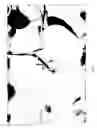
FIG. 1 illustrates a cluster of typical fruit wherein the light yellow-orange external coloration and the generally flattened configuration are illustrated.
FIG. 2 illustrates the typical foliage of the new cultivar. The generally rounded configuration of the leaves is illustrated.
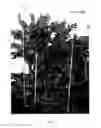
FIG. 3 illustrates the compact growth habit of a typical tree of the new cultivar while grafted on the ‘Navel Late’ cultivar (non-patented in the United States). The photograph was obtained on Jul. 15, 2005.
DETAILED DESCRIPTIONThe description is based on the observation of plants of the new cultivar growing outdoors at Valencia, Spain. Reference to color is to be accorded ordinary dictionary significance.
- Classification: Citrus sinensis.
- Tree:
-
- Growth habit.—vigorous and generally compact.
-
- Leaves:
-
- Size.—large.
- Configuration.—large, rounded and generally elliptic, and larger and more rounded and less elongated than the leaves of the ‘Valencia Late’ cultivar.
- Apex.—generally cuspidate.
- Base.—cuneate to obtuse.
- Texture.—rugose with some glossiness.
- Coloration.—light to medium green.
-
- Fruit:
-
- Time of maturity.—late, and matures for consumption at approximately the same time as the ‘Valencia Late’ cultivar.
- Size.—large.
- Configuration.—generally flattened unlike the ‘Valencia Late’ cultivar, commonly of a greater diameter than the ‘Valencia Late’ cultivar, and similar to that of a Tangerine.
- External coloration.—yellow-orange and generally lighter in coloration than the ‘Valencia Late’ cultivar.
- Internal flesh coloration.—light orange and generally comparable to that of the ‘Valencia Late’ cultivar.
- Ability to peel.—peels with ease when compared to the ‘Valencia Late’ cultivar.
- Naval.—absent or very rare.
- Parthenocarpy.—seedless fruit is formed.
- Eating quality.—excellent.
-
The new ‘Alvariña’ cultivar has not been observed under all possible environmental conditions to date. Accordingly, it is possible that the phenotypic expression may vary somewhat with changes in light intensity and duration, cultural practices, and other environmental conditions.
Claims
I claim:1. A new distinct Citrus plant characterized by the following combination of characteristics:
(a) forms attractive large seedless fruit which when compared to that of the ‘Valencia Late’ cultivar bears a lighter yellow-orange external coloration, a generally more flattened configuration, commonly a greater diameter, and peels more readily,
(b) forms larger leaves which generally are more rounded in configuration and less elongated than those of the ‘Valencia Late’ cultivar,
(c) bears late-maturing fruit that matures for consumption at approximately the same time as the ‘Valencia Late’ cultivar, and
(d) is well suited for the commercial production of a fruit crop; substantially as herein shown and described.
Images & Drawings included:

Sources:
- United States Patent and Trademark Office - verify current appl. status at the USPTO↗
Recent applications in this class:
- » 20240292771 2024-08-29
Campanula plant named 'Twilight' - » 20240251691 2024-07-25
HYDRANGEA PLANT NAMED 'HYLV17520' - » 20240251690 2024-07-25
Vaccinium Plant Named 'BWPBLUE02' - » 20240251689 2024-07-25
BLUEBERRY PLANT NAMED 'FC13-113' - » 20240251688 2024-07-25
BLUEBERRY PLANT NAMED 'FCM14-057' - » 20240237567 2024-07-11
PONGAMIA VARIETIES - » 20240224827 2024-07-04
PELARGONIUM PLANT NAMED 'PEQZ0103' - » 20240215470 2024-06-27
Agapanthus plant named 'Monsapho' - » 20240215469 2024-06-27
plant named ‘LOCORA3519’ - » 20240206359 2024-06-20
CORYLUS PLANT NAMED 'BWM01'