Aqua weed tiller
US20070193238A1
2007-08-23
11/699,619
2007-04-12
✅ Patent granted
US 7,475,527 B2
2009-01-13
-
-
Árpád Fábián-Kovács
2027-04-12
Abstract:
An aqua tiller device.
Assignee:
- Cabin - Gear, Inc. 1 🇺🇸 Shell Lake, WI, United States
Interested in similar patents?
Get notified when new applications in this technology area are published.
Classification:
A01M21/02 » CPC further
Apparatus for the destruction of unwanted vegetation, e.g. weeds Apparatus for mechanical destruction
A01D44/00 » CPC main
Harvesting of underwater plants, e.g. harvesting of seaweed
Description
BACKGROUND OF THE INVENTION1. Field of the Invention
The present invention relates, generally, to aquatic vegetation control devices and methods. Particularly, the invention relates to a device for abating or controlling aquatic vegetation in bodies of water such as lakes, ponds, rivers, and streams.
2. Background Information
The state of the art includes mechanical and chemical means of cutting or killing aquatic vegetation. Existing devices are believed to include a ROTEX, towing spring beds or makeshift drags behind boats, Lake Rakes or weighted rakes, an Aquatic Weed Eradicator or double sided serrated edge blade attached to a handle, a Weed Roller motorized rotating drum or cylinder attached to a dock with a motor, and mechanical cutters located on pontoons or transoms. This technology is believed to have significant limitations and shortcomings, including but not limited to requiring motors, being limited to small areas and shallow depths, and being expensive. For this and other reasons, a need exists for the present invention.
All US patents and patent applications, and all other published documents mentioned anywhere in this application are incorporated by reference in their entirety.
BRIEF SUMMARY OF THE INVENTIONThe invention provides a lake weed removal apparatus, method of manufacture therefor and method of use therefor, which are practical, reliable, accurate and efficient, and which are believed to fulfill the need and to constitute an improvement over the background technology.
The device and method of use therefor creates a unique vibrating, gyrating and rotating motion that digs tines into a lake bottom and uproots plants quickly using relatively little energy. The vibrating motion changes frequency in relation to changes in RPM. A motor is not required for use. Chemicals are not required for use.
The aspects, features, advantages, benefits and objects of the invention will become clear to those skilled in the art by reference to the following description, claims and drawings.
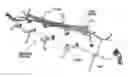
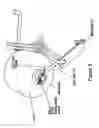
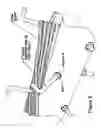
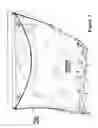
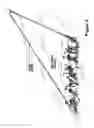
BRIEF DESCRIPTION OF THE SEVERAL VIEWS OF THE DRAWINGFIG. 1 is a perspective view of an embodiment of the device of the present invention.
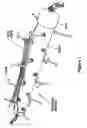
FIG. 2 is a perspective view of the device from the opposite side.
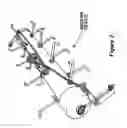
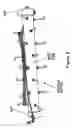
FIG. 3 is a side view of the device.
FIG. 4 is an end view of the device.
FIG. 5 is a detailed view of the end of the device.
FIG. 6 is a detailed view of a central portion of the device.
FIG. 7 illustrates the device deployed with a watercraft for use.
FIG. 8 illustrates the device deployed for pulling manually by a user.
FIG. 9 shows the device after use to pull or cut weeds.
FIG. 10 illustrates the device being loaded with gravel for weight prior to use.
FIG. 11 is an end view of another embodiment of the device, with the cap off and the center rod removed for clarity.
FIG. 12 is an end view of the device of FIG. 11 with the center rod installed.
DETAILED DESCRIPTIONEmbodiments of the device and methods of the invention are shown in the drawings.
The aqua tiller device works essentially like an underwater roto-tiller. Short weeds float to surface and longer weeds collect on housing It easily rolls to shore. The device can be used to clean swimming areas in lakes, ponds and the like. The device is portable. No motor or chemicals are needed so it is environmentally friendly. The device and method loosen sediment and muck allowing sand to settle and firm up. The device operates from dock or lake, and works in shallow or deep water.
the Aqua-Tiller is ruggedly constructed of rust resistant materials i.e. double chrome steel tines, galvanized steel shaft and zinc-plated steel hardware. It weighs approximately 27 lbs. empty. After adding rock it weighs up to 80 lbs. It's easy to pull because it has a high center of gravity that helps it to “tip” from one position to the next, the rock inside becomes a “live” load and the motion helps it to move. Each tine digs in with a static force of 10 to 20 lbs. per tine, depending on how much weight is inside.
Device Materials List
| 4″ PVC caps (2) |
| PVC pipe - 4 × 55″ (1) |
| ½ × 60″ galvanized pipe with threaded ends (1) |
| ½″ pipe locknuts galvanized (2) |
| ½″ × 6″ bent anchor bolts galvanized or zinc plated (24) |
| ½″ zinc plated nuts (48) |
| zinc plated lock washers (24) |
| eyebolts ¾ × ⅜ × 10″ (2) |
| ⅜″ rod ends or “L” brackets with eyes for rope (2) |
| ⅜″ zinc plated lock washers (2) |
| 25′ rope, ⅜″ dia. polyethylene yellow or high visibility (1) |
| 1/16″ SS cotter pins (2) |
| 50 lbs. minus ½: pebbles, pea gravel or taconite pellets or concrete (1) |
| 8 oz. Dupont Krylon PVC paint OSHA bright yellow (1) |
The device is made by bolting the tines with ½ inch outer nut, lock washer and the 1½ inch inner nut to the PVC housing. The housing is predrilled with ½ inch holds placed at predetermined points. If an outer force hits a tine, the force is absorbed by the entire steel framework. A 4 inch hub is slid onto either end of the housing, followed by a washer and 1½×⅜×8 inch eyebolt, a ½ inch pipe lock nut and a 1/16 inch cotter pin. Prior to use, the assembly is set on end and filled with up to 30 pounds of material. The remaining cap is installed following same procedure above.
The Aqua-Tiller is used by adding gravel 1″ or smaller (available on-site or at your local Home Center) This allows you to adjust the weight in the machine to your lake bottom conditions all Lake bottoms are different. The Aqua-Tiller works best in soft bottom (sand or mucky) lakes. After loading, the device is pulled slowly and evenly through the weedy area. Rock cascades inside the device housing and is jolted by the continual impact of the tines, creating a unique “gyratory” motion. The amount of weight in the housing can be adjusted to suit individual lake-bottom conditions. It is steered by adjusting the rope in the direction that is desired to go. At the end of an area, the rope is flipped back over the unit to go back over the area again, it works in both directions.
Motion is created by a live or static load inside the housing combined with tines which are strategically placed so that the load shifts from one position to the next, first slowly and then quickly, causing the device to jerk. During speed changes, the device vibrates and differing frequencies as the material inside the body changes position. The device essentially walks over obstacles such as rocks.
The descriptions above and the accompanying materials should be interpreted in the illustrative and not the limited sense. While the invention has been disclosed in connection with the preferred embodiment or embodiments thereof, it should be understood that there may be other embodiments which fall within the scope of the invention.
Claims
1. A weed tiller device for submerged use comprising;
a hollow, liner body member having interior and exterior surfaces and open ends;
a plurality of tine members each having an L-shaped end, each tine member protruding radially from the hollow, linear body member with the L-shaped end opposite thereto;
a linear, axle member interior the hollow, linear body member and extending beyond the ends thereof;
a pair of end cap members, each attachable at one end of the hollow, linear body member, the end cap members each having an aperture therein allowing the axle member to protrude there through and rotate therein; and
a pair of eye bolt assemblies, each assembly rotatably attached at one end of the axle member, the eye bolt assemblies adapted for attachment of a length of rope thereto for moving the weed tiller device over a submerged surface, the hollow, linear body member and end cap members adapted for receiving fill material therein, thereby adding weight to the weed tiller device.
2. The weed tiller device for submerged use of claim 1, wherein the hollow, liner body member and the pair of end cap members are fabricated from polymeric resin material.
3. The weed tiller device for submerged use of claim 1, wherein the hollow, liner body member is cylindrical.
4. The weed tiller device for submerged use of claim 1, wherein the linear, axle member is positioned on a cylindrical axis of the hollow, linear body member.
5. The weed tiller device for submerged use of claim 1, wherein each tine member includes a threaded end opposite the L-shaped end, the threaded end penetrating the hollow, linear body member, the tine members secured thereto by nuts and washers contacting the interior and exterior surfaces of the hollow, linear body member.
6. The weed tiller device for submerged use of claim 1, wherein the tine members are arranged in six linear rows, each row parallel to the axle member, the rows having sixty degree intervals there between, with tine members of a selected linear row offset from the tine members of adjacent rows.
7. The weed tiller device for submerged use of claim 1, wherein each eye bolt assembly includes an eye bolt member with a circular aperture in at least one end thereof, the axle member rotatably positioned within the circular aperture.
8. The weed tiller device for submerged use of claim 1, wherein each end cap member includes a concave surface fitting over the open end of the hollow, linear body member.
9. The weed tiller device for submerged use of claim 1, further including a length of rope attached to each eye bolt assembly, the rope adapted for moving the weed tiller device over a submerged surface.
10. A weed tiller device for submerged use comprising;
a hollow, cylindrical body member having interior and exterior surfaces and open ends;
a plurality of tine members each having an L-shaped end, each tine member protruding radially from the hollow, linear body member with the L-shaped end opposite thereto;
a linear, axle member interior and on a cylindrical axis of the hollow, linear body member and extending beyond the ends thereof;
a pair of end cap members, each attachable at one end of the hollow, linear body member, the end cap members each having an aperture therein allowing the axle member to protrude there through and rotate therein; and
a pair of eye bolt assemblies, each assembly rotatably attached at one end of the axle member, the eye bolt assemblies adapted for attachment of a length of rope thereto for moving the weed tiller device over a submerged surface, the hollow, linear body member and end cap members adapted for receiving fill material therein, thereby adding weight to the weed tiller device.
11. The weed tiller device for submerged use of claim 10, wherein the hollow, liner body member and the pair of end cap members are fabricated from polymeric resin material.
12. The weed tiller device for submerged use of claim 10, wherein each tine member includes a threaded end opposite the L-shaped end, the threaded end penetrating the hollow, linear body member, the tine members secured thereto by nuts and washers contacting the interior and exterior surfaces of the hollow, linear body member.
13. The weed tiller device for submerged use of claim 10, wherein the tine members are arranged in six linear rows, each row parallel to the axle member, the rows having sixty degree intervals there between, with tine members of a selected linear row offset from the tine members of adjacent rows.
14. The weed tiller device for submerged use of claim 10, wherein each eye bolt assembly includes an eye bolt member with a circular aperture in at least one end thereof, the axle member rotatably positioned within the circular aperture.
15. The weed tiller device for submerged use of claim 10, wherein each end cap member includes a concave surface fitting over the open end of the hollow, linear body member.
16. A weed tiller device for submerged use comprising;
a hollow, cylindrical body member having interior and exterior surfaces and open ends;
a plurality of tine members each having an L-shaped end, each tine member protruding radially from the hollow, linear body member with the L-shaped end opposite thereto;
a linear, axle member interior and on a cylindrical axis of the hollow, linear body member and extending beyond the ends thereof;
the tine members arranged in six linear rows, each row parallel to the axle member, at sixty degree intervals there between, with tine members of a selected linear row offset from the tine members of adjacent rows;
a pair of end cap members, each attachable at one end of the hollow, linear body member, the end cap members each having an aperture therein allowing the axle member to protrude there through and rotate therein; and
a pair of eye bolt assemblies, each assembly rotatably attached at one end to the axle member, the eye bolt assemblies adapted for attachment of a length of rope thereto for moving the weed tiller device over a submerged surface, the hollow, linear body member and end cap members adapted for receiving fill material therein, thereby adding weight to the weed tiller device.
17. The weed tiller device for submerged use of claim 16, wherein the hollow, liner body member and the pair of end cap members are fabricated from polymeric resin material.
18. The weed tiller device for submerged use of claim 16, wherein each tine member includes a threaded end opposite the L-shaped end, the threaded end penetrating the hollow, linear body member, the tine members secured thereto by nuts and washers contacting the interior and exterior surfaces of the hollow, linear body member.
19. The weed tiller device for submerged use of claim 16, wherein each eye bolt assembly includes an eye bolt member with a circular aperture in at least one end thereof, the axle member rotatably positioned within the circular aperture.
20. The weed tiller device for submerged use of claim 16, wherein each end cap member includes a concave surface fitting over the open end of the hollow, linear body member.
Images & Drawings included:



Sources:
- United States Patent and Trademark Office - verify current appl. status at the USPTO↗
Recent applications in this class:
- » 20250212729 2025-07-03
SYSTEM AND METHOD FOR AQUATIC PLANT HARVESTING - » 20250176465 2025-06-05
ADJUSTABLE HARVESTER SYSTEMS AND METHODS FOR USE IN LIQUID ENVIRONMENTS - » 20240298573 2024-09-12
METHOD AND SYSTEM FOR COMPUTER-ASSISTED HARVESTING - » 20240147902 2024-05-09
APPARATUS AND METHODS OF SEAWEED FARMING AND HARVESTING - » 20240081184 2024-03-14
CLEANING SHIP FOR WATER SURFACE TREATMENT FOR HARVESTING WATER PLANTS - » 20230134283 2023-05-04
Full-hydraulic chain reversing and remote control water-power harvesting equipment for lotus roots - » 20230082558 2023-03-16
Retrofitting Small Watercraft as Collection Boats for Sargassum Seaweed - » 20230021925 2023-01-26
WEEDING MACHINE AND WEEDING METHOD FOR SEEDLINGS IN PADDY FIELD - » 20220361406 2022-11-17
Device and method for picking and collecting based on machine vision - » 20220272899 2022-09-01
APPARATUS FOR HARVESTING MICROALGAE CULTURED TO PRODUCE BIOFUEL AND METHOD OF HARVESTING MICROALGAE USING THE SAME